
In July 2024, the Neuroscience Research Australia (NeuRA) in Sydney was given a new leader: Matthew Kiernan. Who soon proceeded with mass-sacking everyone he didn’t approve of. But what about Kiernan’s own science, especially his clinical research, is it really as great as they say?
As part of the NeuRA directorship package, Kiernan was appointed Scientia Professor of Neuroscience at the University of New South Wales (UNSW). Prior to his arrival to NeuRA, Kiernan was co-Director of the Brain and Mind Centre and Chair of Neurology at the University of Sydney. He also used to be President of the Australian and New Zealand Association of Neurologists and President of the Australian Brain Foundation.
Quite a list of achievements for a dude whose papers contain hand-fudged graphs.
The Lancet, UNSW and Khachigian’s cancer cure
A dishonest cancer researcher. A dud cancer drug based on rigged lab data. A clinical trial in The Lancet. A greedy university which finds no misconduct. And a medical journal which tramples over patients.

The UNSW announcement quoted NeuRA Chair James MacNevin lauding Kiernan as someone who will “bring superlative standards of scientific, clinical, and academic excellence“. Vlado Perkovic, Provost and Dean of UNSW Medicine & Health described Kiernan as “a global leader in neurology and neuroscience“.
Kiernan himself was quoted complimenting NeuRA’s “stellar team of research scientists and clinicians“. Which he is now cleaning out with an iron broom, on the occasion of the new 10-year partnership agreement between UNSW and NeuRA, which will take force on 1 January 2026. In this regard, Kiernan announced “increasingly profound breakthroughs in diagnosis and the treatment of society’s most pressing concerns“, and there are people at NeuRA who (in his view) stood in the way of progress.
I obtained this recent email by Kiernan, the authenticity of which he did not deny. Highlights mine:
“Dear colleagues,
I am writing to you to provide an update regarding an important decision recently made by the NeuRA Board.
After careful consideration of our priorities, funding environment and strategic direction, the Board has decided to divest from the research carried out by the Gandevia and Butler groups, effective 31 December this year. What this means is two of our long-standing research leaders, Professor Simon Gandevia and Professor Jane Butler, will be leaving NeuRA at the end of 2025.
Simon of course was one of the four Founding Scientists of the Prince of Wales Medical Research Institute (in 1992), which was later renamed NeuRA, and was elected a member of the Australian Academy of Science in 1998. His record of service to Australian science, and to its ethical practices, is one of which he can be rightly proud.
Jane has similarly been at NeuRA for more than two decades, now as a Senior Principal Research Scientist and conjoint academic at UNSW Medicine. In 2018, Jane won a NHMRC Research Excellence Award for outstanding contributions to health and medical research, and has supervised many doctoral and postdoctoral students across her career.
I would like to take this opportunity to thank Simon and Jane for their long service to NeuRA.
We will work with Simon and Jane to finalise their research projects and talk to their teams about future opportunities.
I would also like to acknowledge the dedication of Simon, Jane and their respective teams to improving the lives of people with spinal cord injury.
Sincerely,
Matthew”
It seems, Kiernan sacked not only Simon Gandevia (archived NeuRA profile) and Jane Butler (archived NeuRA profile), but also everyone working in their labs. He also didn’t deny this.
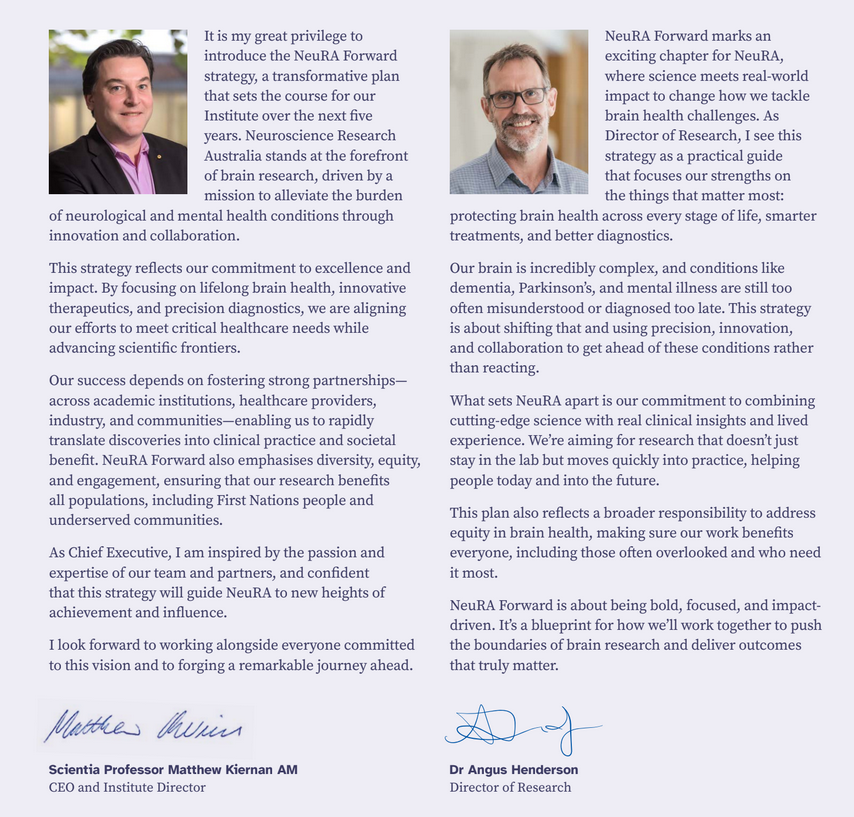
all populations, including First Nations people and underserved communities.“: NeuRA Forward 2025 to 2030
Heads had to roll also because Kiernan and his Director of Research Agnus Henderson announced in their grand scheme “NeuRA Forward
2025 to 2030” that from now on, only research on the brain will be allowed at NeuRA, the new buzzword missions will be:
- “Protect brain health across the lifespan”,
- “Maximise brain function”
- “Advance precision brain diagnostics“
Those who study wrong aspects of neurology and neuroscience (e.g. spinal injury, pain, or motor-neuron disorders) will be shown the door. As you will see, Kiernan actually built his career on the exact kind of “useless” neurology for which he now sacks people.
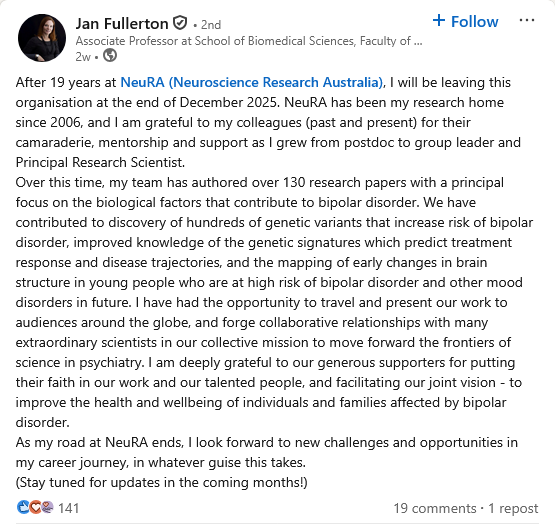
Here is another sacked NeuRA scientist – Jan Fullerton (archived NeuRA profile), UNSW associate professor, who worked at NeuRA for the last 19 years, in fact on brain disorders. Still, this didn’t protect her, she also will be out by the end of this year and is looking for a new job, as she wrote on LinkedIn:
Now, to Kiernan’s own science. He has 45 papers on PubPeer, almost all are clinical studies with patients, in many of which Kiernan pronounced to have found a clear interventional effect despite the p-value between control and treated groups being way above 0.05. You may wonder why such pathetic bullshit managed to pass peer review, but let I remind you about all this power positions Kiernan holds, and it seems, he destroys people’s careers for much less.

Neanderthals abused to support bully Alan Cooper
The journal Science and the anthropology community manage an amazing feat of celebrating bullying, harassment and bad science while urinating upon Douglas Adams’ grave.
Here a good example of Kiernan’s fishing for significance, from a very fresh clinical study with 58 patients suffering from motor neuron disease:
Srestha Mazumder , Antonia S. Carroll , Hannah C. Timmins , Matthew C. Kiernan , Colin J. Mahoney Impact of the COVID-19 pandemic on the mental and physical wellbeing of patients with motor neuron disease and other neuromuscular disease Frontiers in Neurology (2025) doi: 10.3389/fneur.2025.1514983
“A Mann–Whitney U test was used to determine if MND and non-MND patients differed in their experiences of mental and physical wellbeing (see Tables 3, 4). With regards to mental health the most significant difference was observed on a measure of loneliness (U = (221), p = 0.005, 95% CI [−16.0, −3.0]), where non-MND patients (mean = 49.04) expressed more feelings of loneliness compared to MND patients (mean = 39.38). This was followed by anxiety (U = (264), p = 0.054, 95% CI [−4.0, 0.001]) where non-MND patients showed higher levels of anxiety (mean = 6.63) compared to MND patients (mean = 4.68).
The two groups did not differ in their resilience (U = 42.50, p = 0.051, 95% CI [−0.001, 60.00]), but approached significance.”
The highlights are by the PubPeer commenter, who wondered why in one case p=0.054 indicated a clear difference, but in another case, p=0.051 proved the absence of any difference between patient groups.

David Argyle – brave, resilient and progressive
“I have worked at several universities in my career, and never have I encountered the degree of bullying, harassment, intimidation, and discrimination that I have here. The atmosphere is utterly toxic, and everyone is scared to say anything in case it is heard and reported to [David Argyle] or [Richard Mellanby]. It is like working…
Another one, with 49 dementia patients:
Rebekah M. Ahmed , Cassandra Kaizik , Muireann Irish , Eneida Mioshi , Nadene Dermody , Matthew C. Kiernan , Olivier Piguet , John R. Hodges Characterizing Sexual Behavior in Frontotemporal Dementia Journal of Alzheimer’s disease (2015) doi: 10.3233/jad-150034
“As shown in Fig. 2, 80% of the bvFTD group were less affectionate toward their partners, versus 60% in SD and 40% in AD (p = 0.104). […]
In terms of receiving affection, 65% of the bvFTD group showed a decrease in liking to receive affection versus only 46% in SD and 12% in the AD group (p = 0.320). […]
There was no difference between the groups in terms of caregivers ratings of overall effect of changes in sexual behavior on their relationship (χ22 = 5.3; p = 0.254)”
See, p-values of 0.1 and even 0.32 show a clear difference, while p=0.25 does not. That’s why Kiernan earns a huge salary as NeuRA director and decides on whom to fire.
Also in this study with 28 human participants, the authors claimed an effect where there obviously was none (p=0.06), and there were other issues:
Parvathi Menon , Matthew C. Kiernan, Steve Vucic Cortical excitability varies across different muscles Journal of Neurophysiology (2018) doi: 10.1152/jn.00148.2018

Catesbaea holacantha: “Figure 3. Error bars do not appear to be symmetrical relative to data markers. Also, in some regions of figure, part of a maker can be seen behind white squares. Is this the original marker (behind) and a square that was added post-hoc on top?”
The last author Steve Vucic wasn’t fired by Kiernan, but promoted: he is now Northcott Chair of Neurology and Director of Brain and Nerve Research Center at University of Sydney. More by Vucic and Kiernan, a clinical study with 7 patients suffering from spinobulbomuscular atrophy:
Steve Vucic, Matthew C. Kiernan Pathophysiologic insights into motor axonal function in Kennedy disease Neurology (2007) doi: 10.1212/01.wnl.0000279521.81846.59


“With regards to the line connecting the black data markers, the line connecting the first and second marker does not appear to be pointing to the center of the second marker.”
This was never drawn by a computer, but by a human. But which human, and why did he do it?
Maybe Kiernan is a Luddite and doesn’t trust computers? Maybe he and his lab members still draw all their graphs by hand on paper? Actually nope, Kiernan even makes money with IT!
In the clinical study Vucic et al 2025 (where p-values of 0.077 and 0.09 somehow proved “significant correlations“), Kiernan and Vucic declared to be developers of the MagXite software. They also simultaneously insisted to have “no known competing financial interests or personal relationships that could have appeared to influence the work reported in this paper“. Which is not true: MagXite is marketed by the US company Soterix Medical, and advertised to deliver “Unprecedented early Amyotrophic lateral sclerosis (ALS) detection“.

It is still peculiar that Vucic and Kiernan, the inventors of the ALS detection software, work with manually-drawn graphs like in this study with 11 ALS patients:
Steve Vucic, Matthew C Kiernan Abnormalities in cortical and peripheral excitability in flail arm variant amyotrophic lateral sclerosis Journal of Neurology Neurosurgery & Psychiatry (2007) doi: 10.1136/jnnp.2006.105056
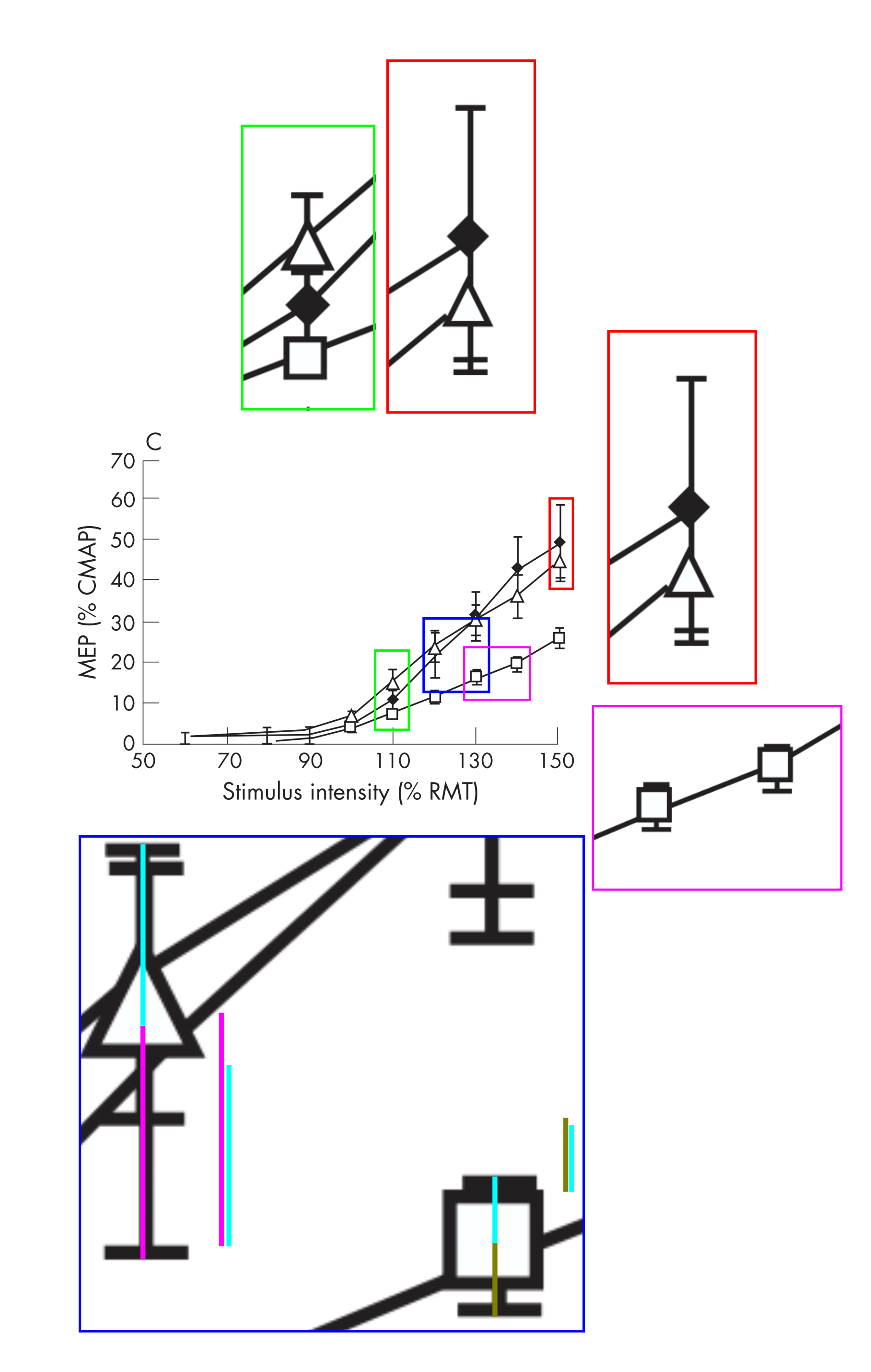
Paraparatrechina pallida: “Figure 1C […] Comparing the red and green highlighted areas (top), we note that the error bar align slightly to the left of the diamond with green but to the right of the diamond in red.
The connect line, in the red area, does not extend to the centre of the triangle marker. In the magenta region, the connecting lines do not go through the center of the square marker on the left, but it does for the marker on the right.
The error bars of some markers are asymmetrical”
Another work of Vucic with his mentor, with 70 paediatric and adult patients with spinal muscular atrophy, where some data points look as if they were drawn-in by hand:
Michelle A. Farrar, Steve Vucic, Heather M. Johnston , Desirée Du Sart , Matthew C. Kiernan Pathophysiological insights derived by natural history and motor function of spinal muscular atrophy The Journal of Pediatrics (2013) doi: 10.1016/j.jpeds.2012.05.067

One of the open circular markers is different to all the others.”

Kiernan’s mentee Michelle Farrar was not sacked for such dodgy work, she is now professor at UNSW and specialist child neurologist at Sydney Children’s Hospital. Maybe, on the Red Nose day, Dr Farrar and Dr Kiernan can cheer up sick kids by teaching them to draw graphs? Another work of theirs with Vucic, on 11 patients with spinal muscle atrophy:
Michelle A Farrar , Steve Vucic, Heather M Johnston , Matthew C Kiernan Corticomotoneuronal integrity and adaptation in spinal muscular atrophy Archives of Neurology (2012) doi: 10.1001/archneurol.2011.1697
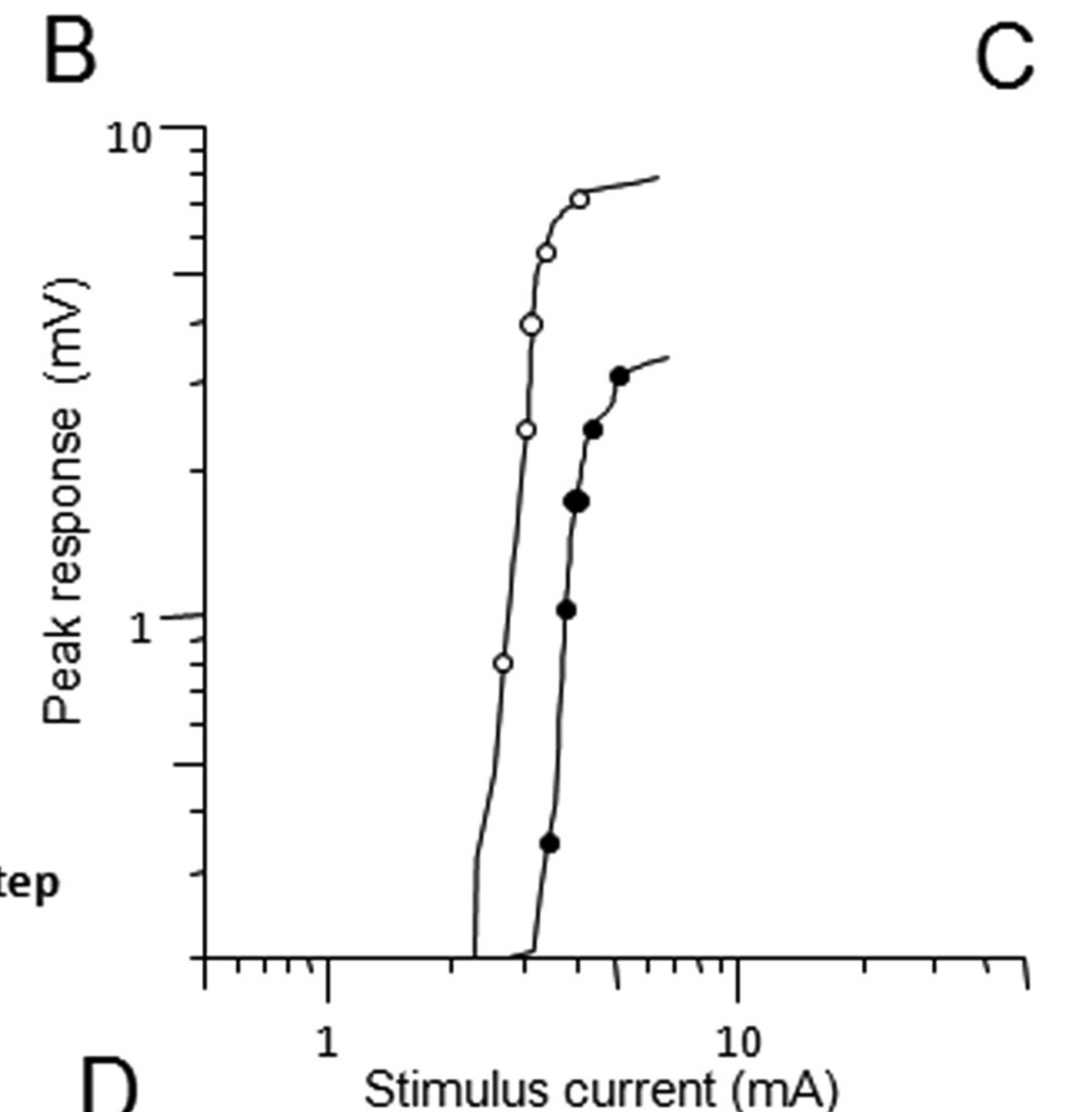

Why, why, why. Goodness gracious, you try to draw all this by hand, let’s see then if your drawings will come out any straighter.
Another case, with 22 spinal cord injury patients. There, an effect was claimed at p=0.25 (and no effect elsewhere at p=0.26), also the provided Standard Error values made no sense:
Michael Lee , Matthew C. Kiernan , Vaughan G. Macefield , Bonne B. Lee , Cindy S.-Y. Lin Short-term peripheral nerve stimulation ameliorates axonal dysfunction after spinal cord injury Journal of Neurophysiology (2015) doi: 10.1152/jn.00839.2014


It seems, also here the graphs were hand-drawn, apparently by the same trembling hand as in Farrar et al 2012:
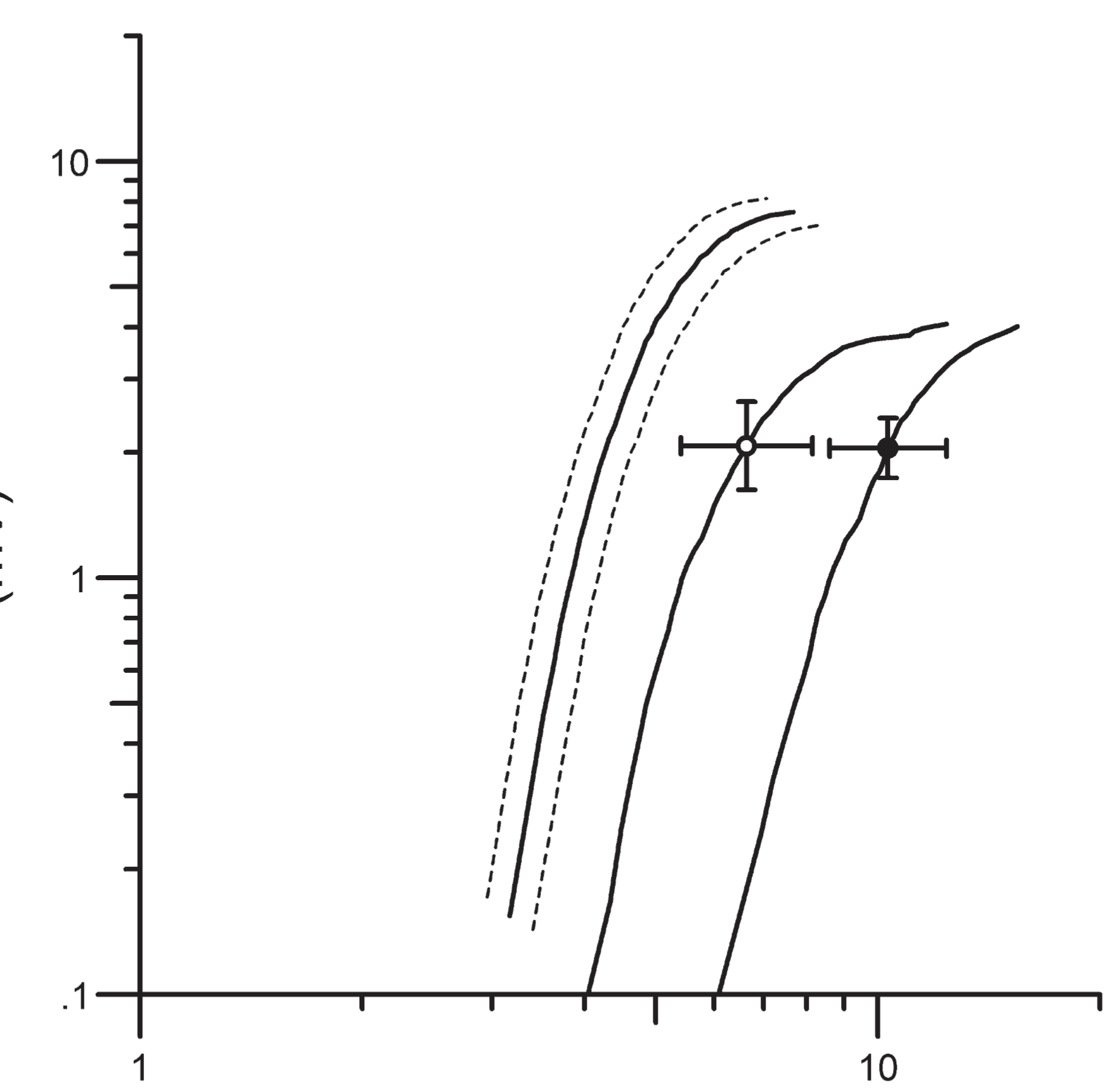
Kiernan being the only common author might be a clue as to whose hand that was, if he replied to my emails, that is. He did not, and neither did his coauthors.
Again by Kiernan with another one of his mentees, Cindy Shin-Yi Lin, a clinical case report of lead neuropathy:
Arun V. Krishnan, Susanna B. Park , William Huynh , Cindy S.‐Y. Lin , Robert D. Henderson , Matthew C. Kiernan Impaired energy‐dependent processes underlie acute lead neuropathy Muscle & Nerve (2012) doi: 10.1002/mus.23425

Xestocephalus superbus: “What is the reason for the bends in the curves between the data points in Fig. 1B? (red arrows) Why do some of the filled and empty circles differ is size? (blue arrows) Why are some of the axis markings at an angle? (green arrows)”
You want to know the reason for those bends? Go ask Kiernan, he will give you some bends. More by Lin and Kiernan, a study of 15 patients with spinal cord injury:
Cindy Shin-Yi Lin , Vaughan G Macefield , Mikael Elam , B Gunnar Wallin , Stella Engel , Matthew C Kiernan Axonal changes in spinal cord injured patients distal to the site of injury Brain (2006) doi: 10.1093/brain/awl339

It’s a wave function not a graph. Someone should cut down on his drinking.
Now, some randomly drawn bollocks balls by Lin and Kiernan, a clinical study with 24 healthy individuals:
Yoshimitsu Shimatani , Cindy Shin-Yi Lin, José Manuel Matamala , Matthew C. Kiernan Strength-duration properties and excitability of motor and sensory axons across different target thresholds Journal of Neurophysiology (2023) doi: 10.1152/jn.00456.2022

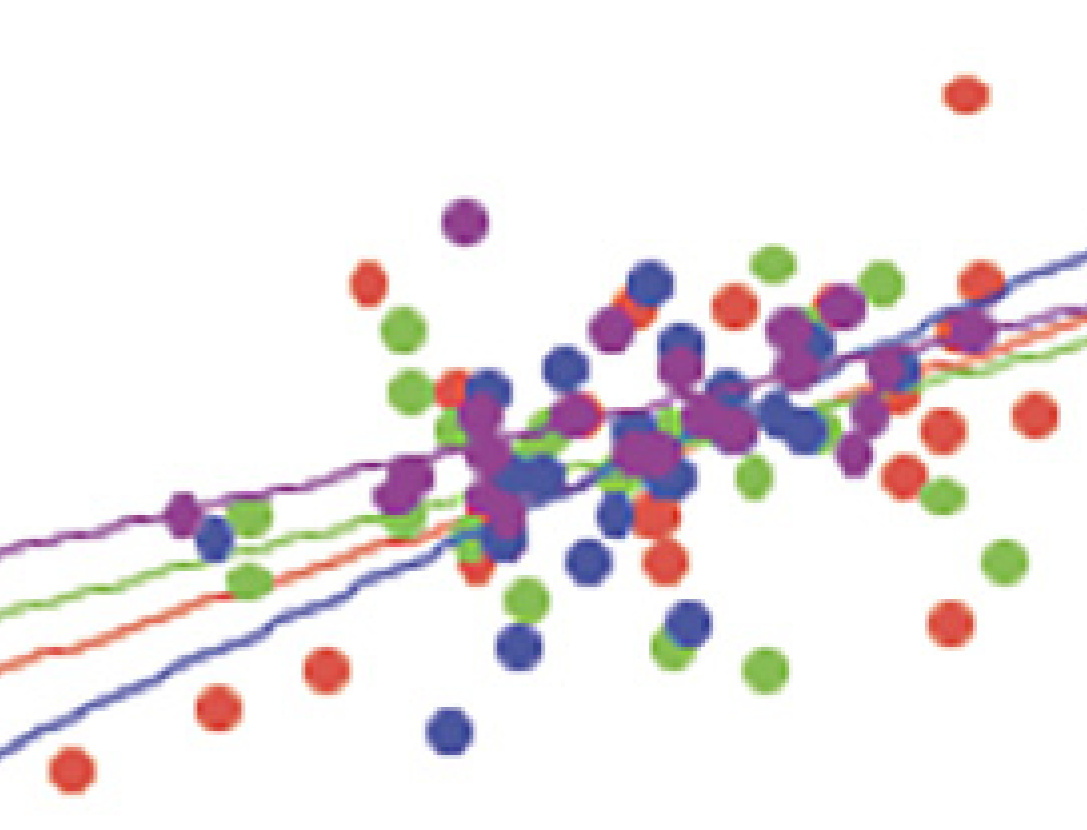
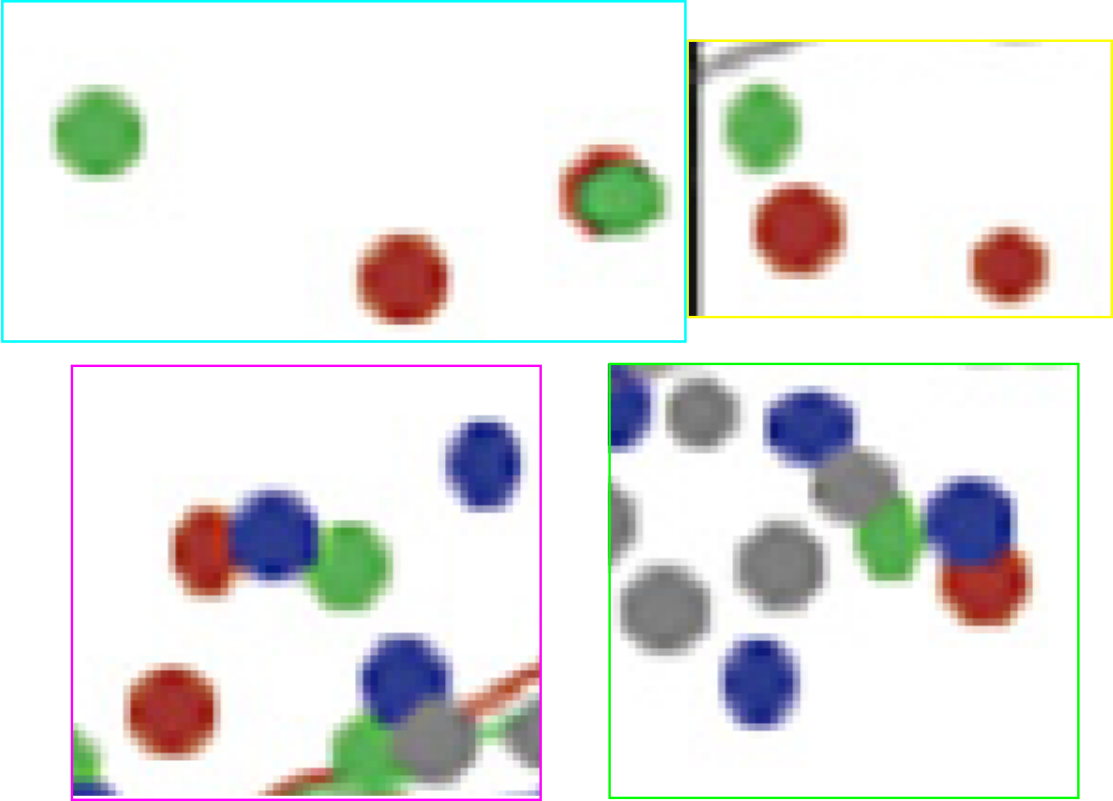
More dodgy error bars by Lin, and another mentee of Kiernan’s, Susanna Park. A foray into oncology, where 25 patients with colorectal cancer were studied:
Susanna B. Park, David Goldstein , Cindy S.-Y. Lin , Arun V. Krishnan, Michael L. Friedlander , Matthew C. Kiernan Acute abnormalities of sensory nerve function associated with oxaliplatin-induced neurotoxicity Journal of Clinical Oncology (2009) doi: 10.1200/jco.2008.19.3425

Paraparatrechina pallida: “Figure 3A […] The errors bars are not symmetrical with regards to the markers (magenta). The error bars are not centered on the markers (green and cyan box). The connecting lines do not pass through center of the markers.”
Lin was not fired for such sloppy work of course, but promoted. She is now the inaugural Kam Ling Barbara Lo Chair in Neurodegenerative Disorders at the University of Sydney. Also Park wasn’t fired, she is now associate professor at the University of Sydney.

Same trio, including another mentee of Kiernan’s you already encountered, Arun Krishnan. He of course also made it to full professor, at University of Sydney. A study on 17 patients with in limbic encephalitis and acquired neuromyotonia, plus 20 healthy controls:
Susanna B. Park, Cindy S.-Y. Lin, Arun V. Krishnan, Neil G. Simon , Hugh Bostock , Angela Vincent , Matthew C. Kiernan Axonal dysfunction with voltage gated potassium channel complex antibodies Experimental Neurology (2014) doi: 10.1016/j.expneurol.2014.06.002
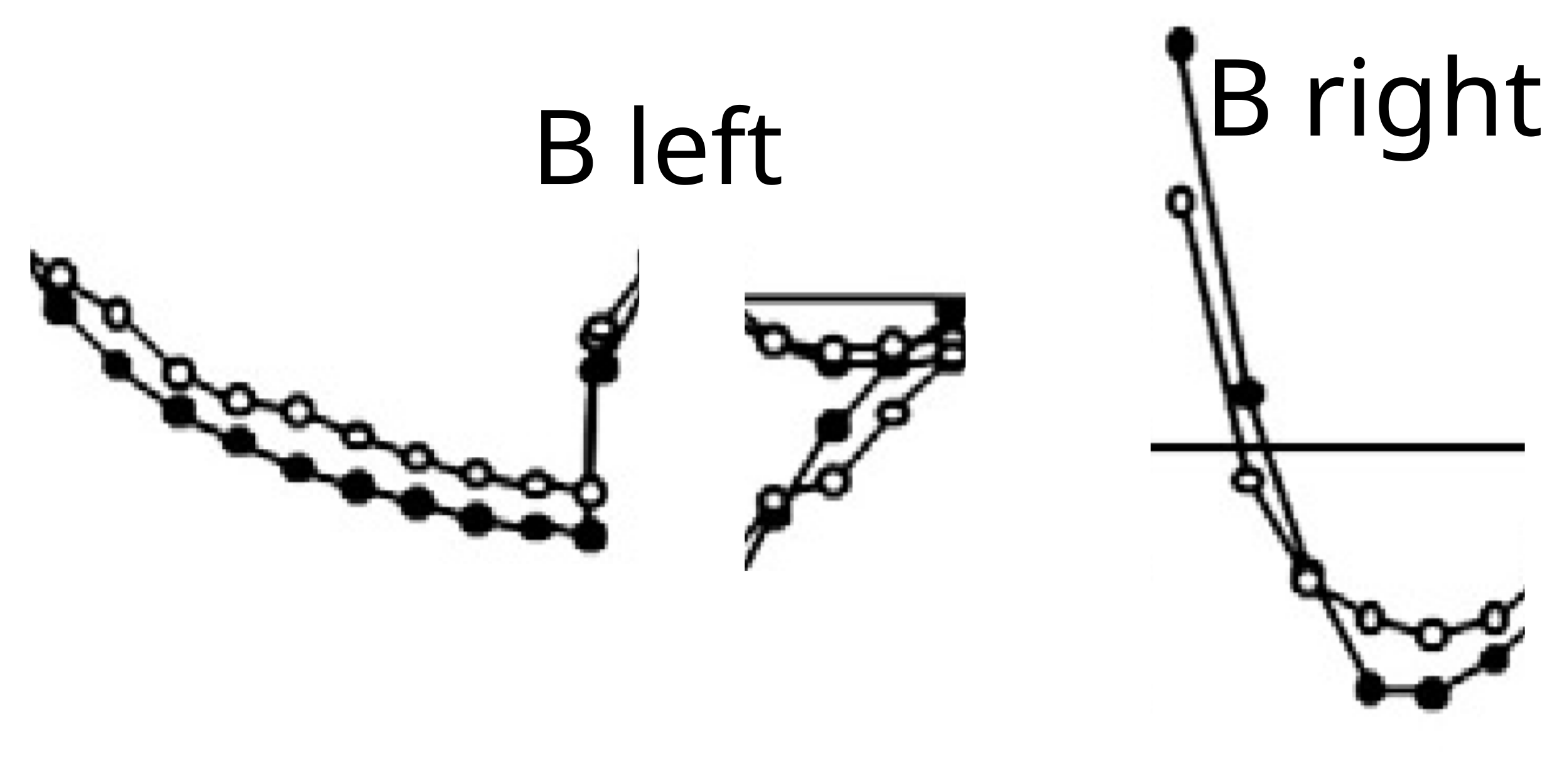
Returning to oncology, similar problem of hand-drawn data points in this study on 28 breast cancer patients, by Lin, Park and Kiernan:
Susanna B. Park, Cindy S.‐Y. Lin, Arun V. Krishnan , Michael L. Friedlander , Craig R. Lewis , Matthew C. Kiernan Early, progressive, and sustained dysfunction of sensory axons underlies paclitaxel‐induced neuropathy Muscle & Nerve (2011) doi: 10.1002/mus.21874

Markers in Figure 2C for the ‘Final’ timepoint differ in shape (square vs rectangle) and size.”
Kiernan with Vucic, Lin, Park and Farrar, a study on 25 patients with spinal muscular atrophy:
Michelle A Farrar , Steve Vucic, Cindy S-Y Lin, Susanna B Park, Heather M Johnston , Desirée Du Sart , Hugh Bostock , Matthew C Kiernan Dysfunction of axonal membrane conductances in adolescents and young adults with spinal muscular atrophy Brain (2011) doi: 10.1093/brain/awr229


Figure 3 in that paper has same problems, with data points being of varying size and shape. Rascals.
Another artwork of Lin’s with her mentor who can’t draw a straight line, on patients with demyelinating polyneuropathy:
Jia-Ying Sung , Jowy Tani , Susanna B Park , Matthew C Kiernan , Cindy Shin-Yi Lin Early identification of ‘acute-onset’ chronic inflammatory demyelinating polyneuropathy Brain (2014) doi: 10.1093/brain/awu158
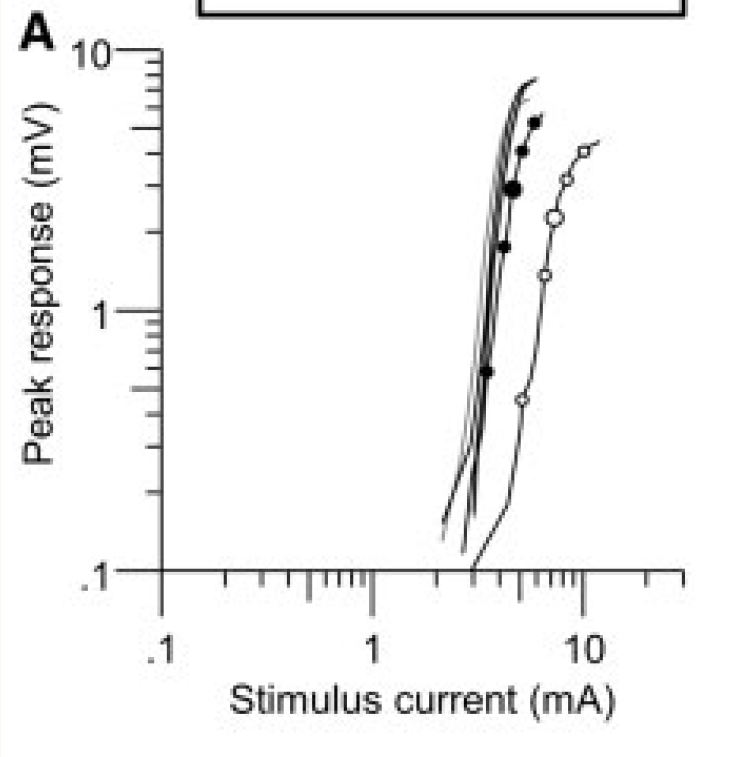
Catesbaea holacantha: “Figure 1A. Do the two large markers (one AIDP open circle, one A-CIDP black circle), double in size to other markers, signify something special about data points?”
Next case, where Lin, Park, Vucic together help Kiernan study 21 healthy volunteers. Plots have very different resolutions, this and other evidence suggests they are most likely manual drawings saved as pictures:
Antonia S Carroll , James Howells , Cindy S Y Lin, Susanna B Park, Neil Simon , Mary M Reilly , Steve Vucic, Matthew C Kiernan Differences in nerve excitability properties across upper limb sensory and motor axons Clinical Neurophysiology (2022) doi: 10.1016/j.clinph.2021.12.006
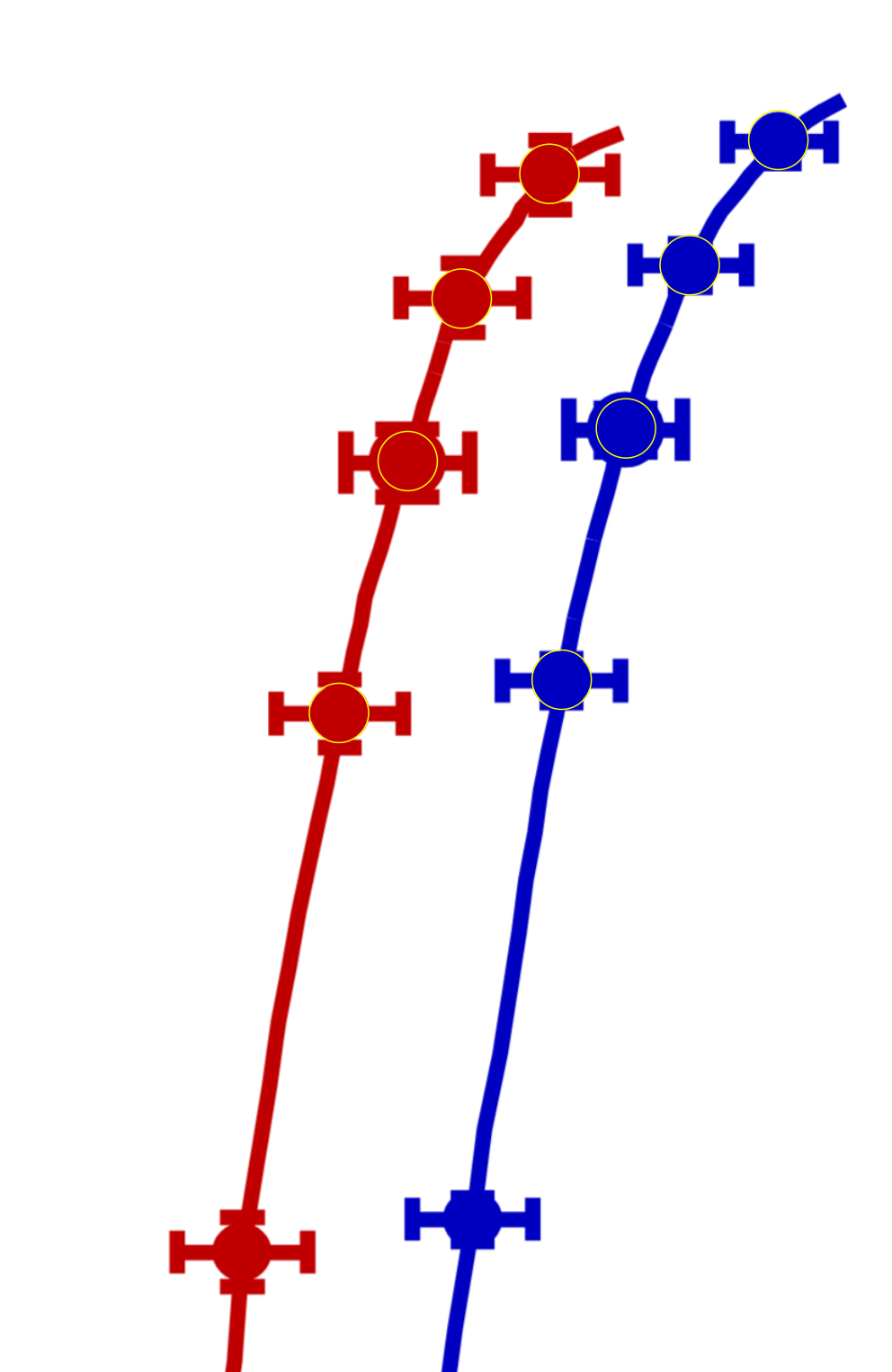
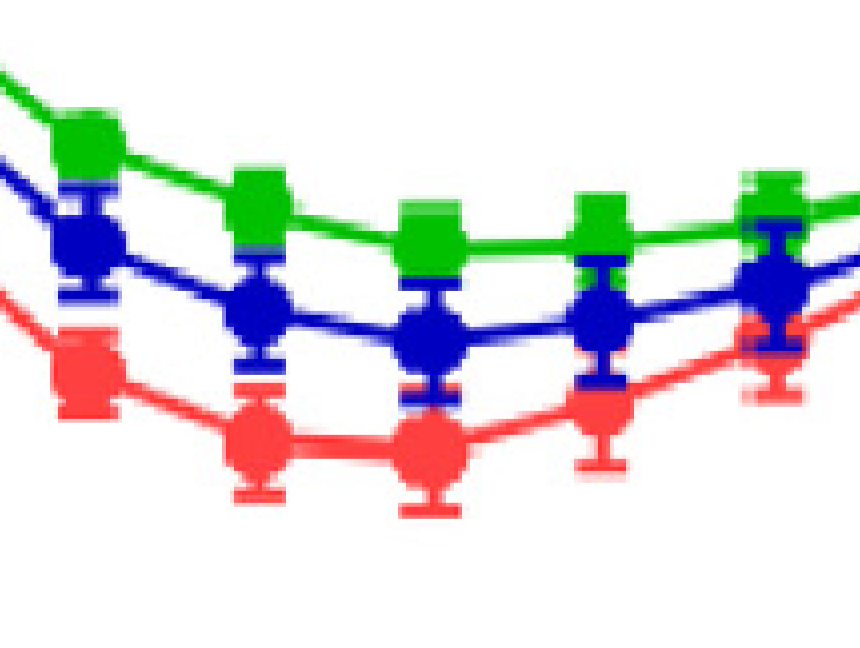

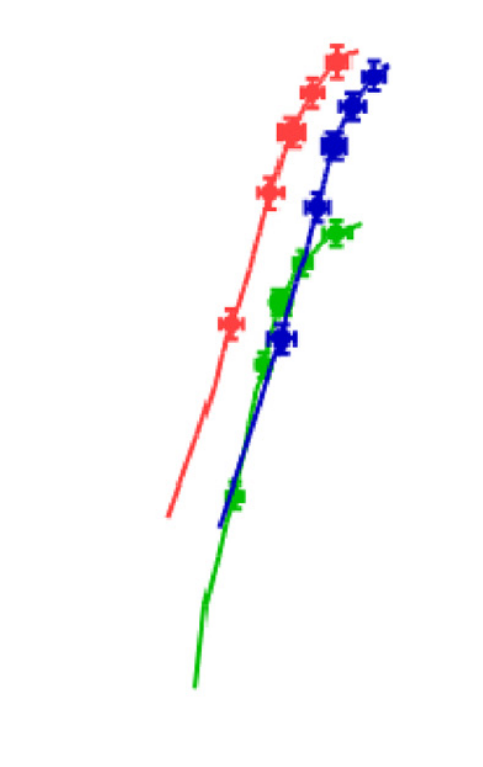


Evil tongues might say that all this manual graph-painting might help bring otherwise insignificant effect sizes into the required high significance area.
Now, Kiernan and his three highly successful ladies, studying motor nerve excitability in 57 subjects from newborn babies to young adults:
Michelle A. Farrar , Susanna B. Park, Cindy S.‐Y. Lin, Matthew C. Kiernan Evolution of peripheral nerve function in humans: novel insights from motor nerve excitability The Journal of Physiology (2013) doi: 10.1113/jphysiol.2012.240820
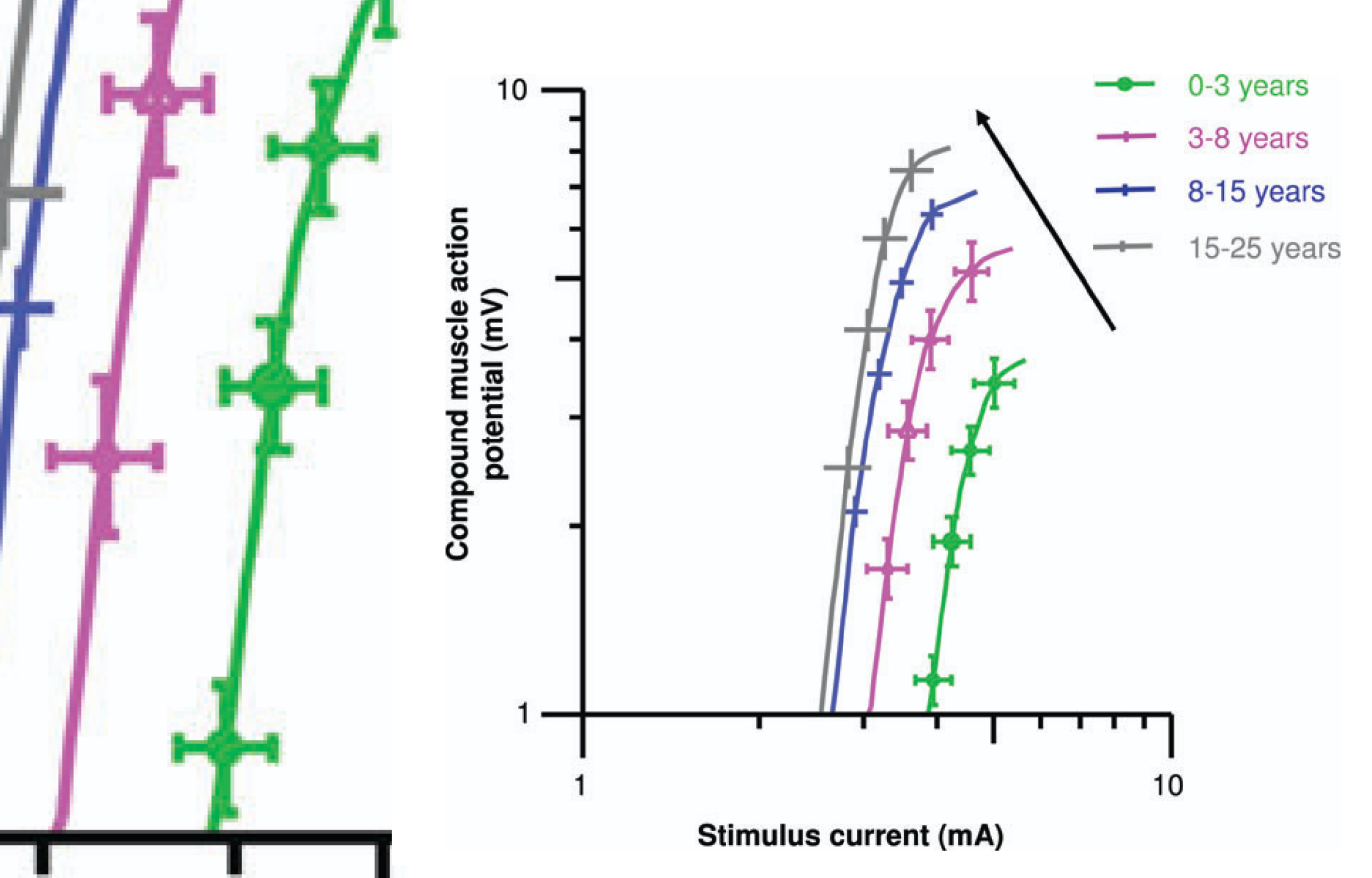


I’m not sure, is this artistry really covered by the informed consent of the patients?
It is really only Kiernan’s name which keeps recurring on all these papers with exact same kind of dodgy graphs. Here a study of neural excitability on 5 healthy volunteers:
David Burke, James Howells , Louise Trevillion , Penelope A. McNulty , Stacey K. Jankelowitz , Matthew C. Kiernan Threshold behaviour of human axons explored using subthreshold perturbations to membrane potential The Journal of Physiology (2009) doi: 10.1113/jphysiol.2008.163170
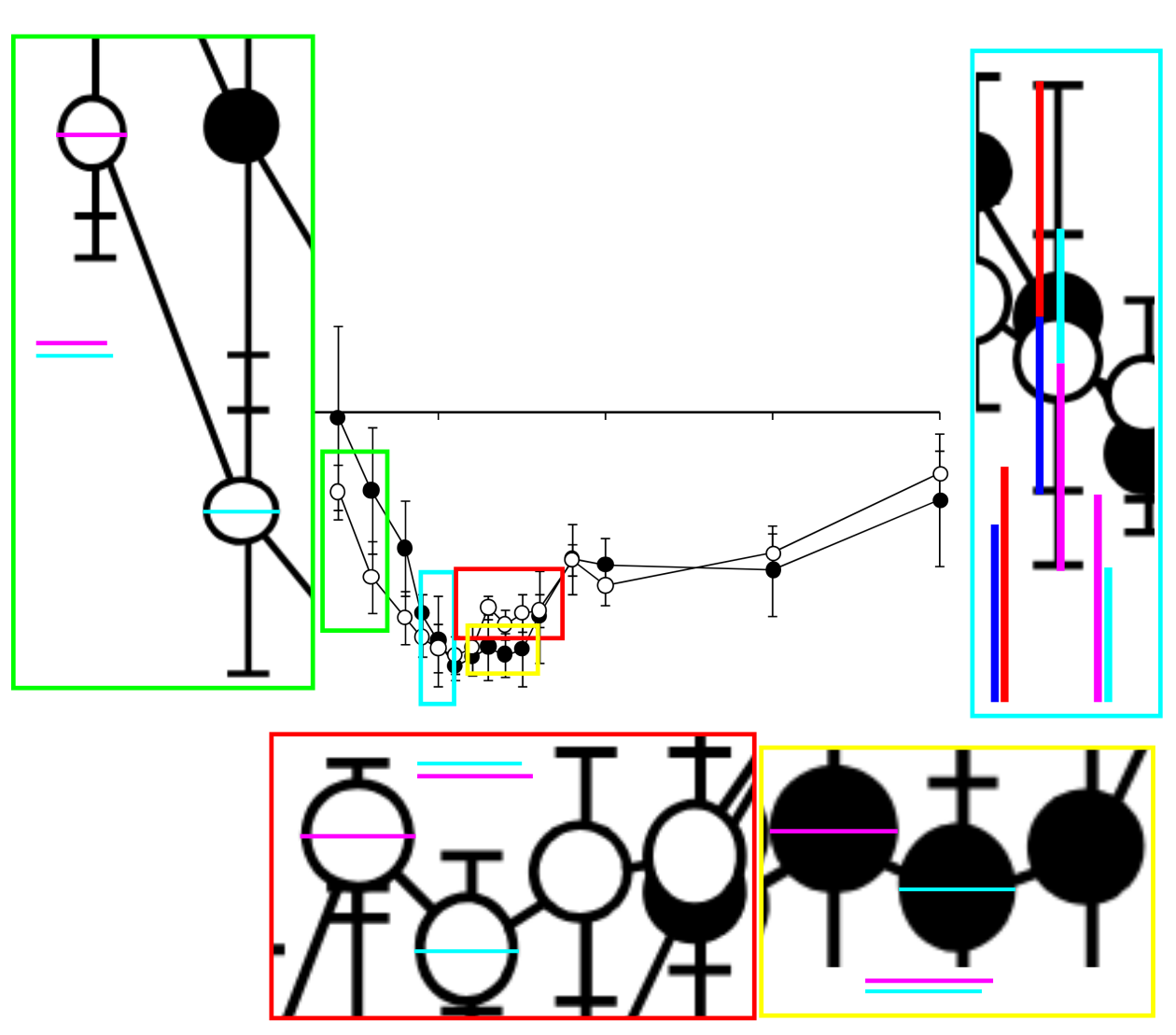
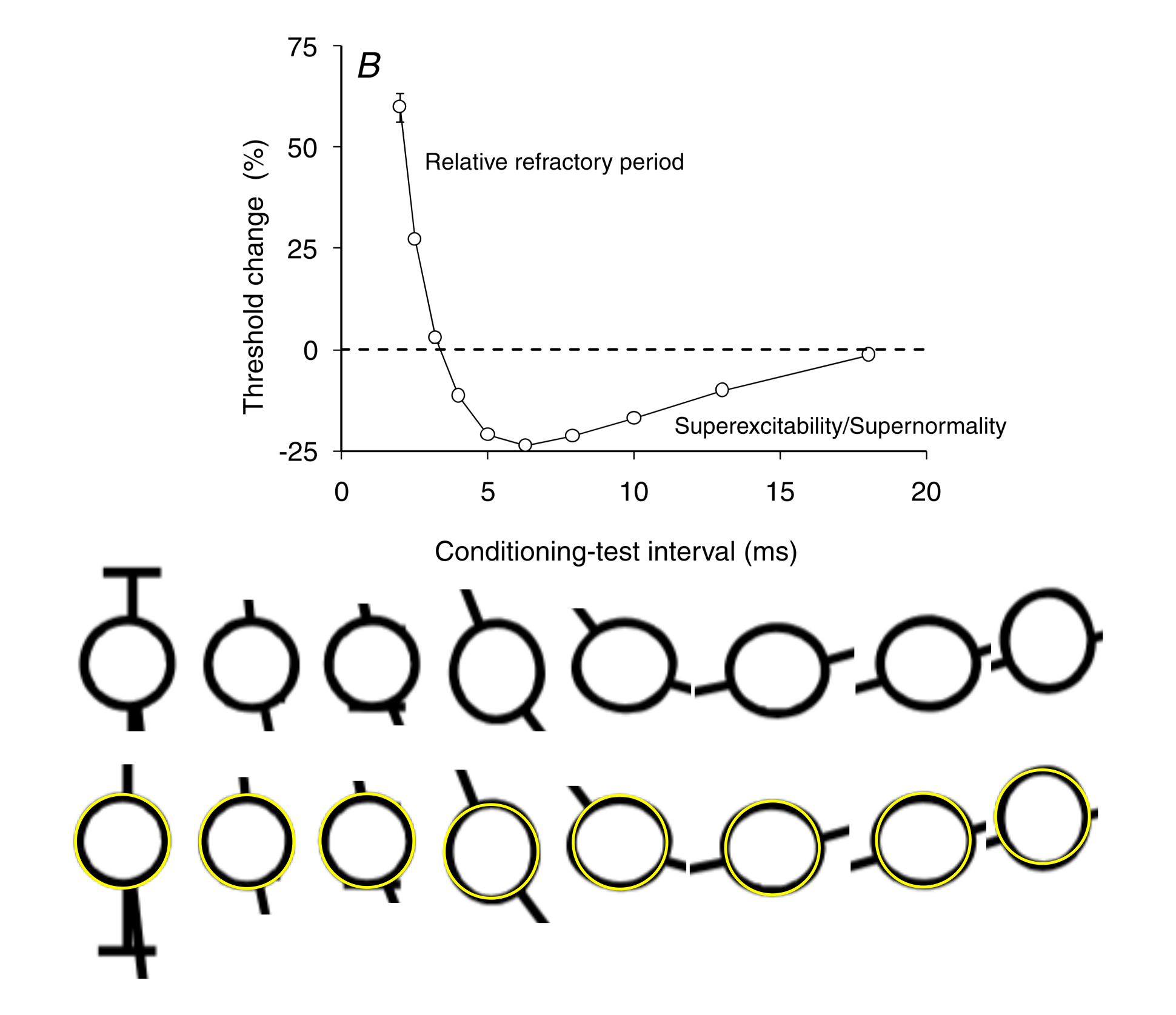

Magenta box. (top right) The error bar is not centered on the white triangle marker, whereas other error bars do appear to be centered. Also, the error bars of the the two black squares appear to have different alignment. Finally, the error bars are not symmetrical.
Cyan box. (right) The two circle markers differ in shape; the top marker is more oval in shape. Also, in the bottom cyan box, the error bars are not symmetrical.
Green boxes. (bottom) Circular markers differ slightly in shape and size.”
Look mum, I drew some beads on a string.
Even Elisabeth Bik found something in a paper by Kiernan with his Sydney colleagues. This is a mouse study, something Kiernan normally doesn’t engage in:
Yazi D. Ke , Gabriella Chan , Kristie Stefanoska , Carol Au , Mian Bi , Julius Müller , Magdalena Przybyla , Astrid Feiten , Emmanuel Prikas , Glenda M. Halliday , Olivier Piguet , Matthew C. Kiernan , Michael Kassiou , John R. Hodges , Clement T. Loy , John S. Mattick , Arne Ittner , Jillian J. Kril, Greg T. Sutherland , Lars M. Ittner CNS cell type–specific gene profiling of P301S tau transgenic mice identifies genes dysregulated by progressive tau accumulation The Journal of biological chemistry (2019) doi: 10.1074/jbc.ra118.005263

Let me end with a bizarrely narcissistic newspiece which Kiernan had published in Australian media a few days ago:
“In 1990, my mother told me she had been diagnosed with motor neurone disease (MND), and the outlook was bleak to say the least. As a junior clinician studying for my PhD, I hurriedly looked through the medical textbooks to see what treatments might be available.
There was nothing. Within six months my mother had passed away, and I had decided what path my medical career would take.”
The path of drawing graphs by hand and claiming clinical discoveries with p-values of 0.1 and more.

Misinformed and Damaged – victim of unethical trial hits back
“I don’t ask TGA staff to risk their lives at work, only that they don’t risk mine and others’ lives by withholding public health information.” – Robert Cockburn
Again, neither Kiernan nor any of his relevant coauthors replied to my emails. They are probably busy saving children.
My suggestion on how Kiernan could deliver those “superlative standards of scientific, clinical, and academic excellence” to NeuRA: he should sack himself.
Donate!
If you are interested to support my work, you can leave here a small tip of $5. Or several of small tips, just increase the amount as you like (2x=€10; 5x=€25). Your generous patronage of my journalism will be most appreciated!
€5.00

 For Better Science
Something contagious affecting UNSW neuroscientists? Nady Braidy and University’s Centre for Healthy Brain Ageing (CHeBA) also featured in FBS posts.
LikeLike
Just hours before my article was published, Simon Gandevia was physically escorted from the NeuRA building and placed on suspension pending an internal investigation.
LikeLike
Gandevia is the organiser of the upcoming International Research Integrity Conference in Sydney, 16-18 November 2025
https://researchintegrityconf.com/
It is sponsored by Retraction Watch and co-organised by Jennifer Byrne. I am 100% sure that they both will now step up to defend their colleague.
https://bsky.app/profile/deevybee.bsky.social/post/3lzksa2xbj22m
LikeLiked by 2 people
This is an illuminating article, which will push me to pay more attention on graphs when I scrutinize papers.
LikeLiked by 3 people
[Q] What statistics software do you use?
[A] Microsoft Paint.
LikeLiked by 3 people
in case Paint is unavailable, good old 4-color ballpen maybe used
https://pubpeer.com/publications/B3DFF9E46549339B4BE940654C3D21
LikeLike
Bamboozling as to how this trash made it through peer review in the first place
LikeLike
Would you dare to reject Kiernan’s paper? What if the editor tells him about your complaints?
Last I heard, people at NeuRA treat Kiernan like a mafia don, afraid he will literally do them in if they disobey.
LikeLike
Deeply Concerning Patterns in Scientific and Clinical Reporting
This recent post is both eye-opening and unsettling. It sheds light on several troubling patterns that deserve serious scrutiny.
Attention to Detail—Or Lack Thereof
Scientific publications are the public face of a researcher’s work—the version they choose to present to the world. When that public face reveals sloppy reporting or flawed statistical reasoning, it raises serious concerns about the rigor and integrity of the underlying work. If this is what passed through peer review and made it to publication, what was left on the cutting room floor? How carefully was the original research conducted? Were critical steps skipped, misunderstood, or manipulated—intentionally or not—due to poor training or a culture that tolerates mediocrity?
These aren’t minor issues. They suggest a systemic failure to uphold the standards that should define good science. Journals need to take these concerns seriously. Authors should be required to show their data, not just make claims. Trust is earned, not assumed.
Even more concerning is that many of these authors are also clinicians. If the same lax approach to detail is applied in clinical settings, it’s not just scientific integrity at stake—it’s patient safety. Let’s hope that’s not the case, but the parallels are hard to ignore.
LikeLike
‘On Monday this week, Gandevia wrote an email to colleagues pointing to a website where anonymous, unproven allegations of research misconduct had been made against Kiernan.’
‘“We are aware of defamatory allegations made in the last month on the basis of an anonymous, unverified website against various papers authored by a number of academics. Like most medical research institutes, NeuRA has processes in place to address allegations of misconduct,” an institute spokesman said.’
https://archive.ph/Ksqna
LikeLiked by 1 person
Liam Mannix is an expert of never mentioning FBS..
LikeLike
The next challenge is to get the issues raised in these papers addressed.
No response from Kiernan
Clearly Kiernan and those under his thumb have not responded to any of the issues (51 is the latest count!) raised on PubPeer.
Journals don’t want to know about it
Then, when particularly problematic cases are raised with journals, they don’t want to know about it. For example, this paper, a phase II clinical trial, is entirely made up of spin. A p-value of 0.6 is even interpreted as providing evidence of an effect!
Cheah BC, Boland RA, Brodaty NE, Zoing MC, Jeffery SE, McKenzie DK, Kiernan MC. INSPIRATIonAL–INSPIRAtory muscle training in amyotrophic lateral sclerosis. Amyotroph Lateral Scler. 2009 Oct-Dec;10(5-6):384-92. Doi: 10.3109/17482960903082218.
Issues with this paper have been flagged on PubPeer: https://pubpeer.com/publications/DC59FE66405DF77CACB3B0EAD0C682
The current Editor of this journal, Prof.Orla Hardiman, herself a neurologist, had this to say when she was informed of the problem:
“Thank you for your message
The paper was peer reviewed-
However, in the interests of scientific integrity, perhaps you would be willing to write a “Letter to the Editor” which we could review and publish, raising the issues you have outlined below?”
Thus, to Prof Hardiman, every paper that is peer review is correct, contains no mistakes, errors or fraud?! With all due respect, this is a misguided and naive view of scientific publishing. Journals have a mandate to correct the public record. But, rather than tackle the issue herself, Prof Hardiman suggest that someone put their name to a Letter in her journal. Well, we all know Kiernan and what he would do to someone who dared stand up to him.
It is true that Kiernan sites on the editorial board of Prof Hardiman’s journal, and she might not want to investigate one of her own. In fact, she herself might be worried about what Kiernan would do to her if she actually did her job and investigated this matter.
To no be willing to investigate these types of issues is letting those who perpetrate them win.
LikeLike
Update 1 – Editor in severe conflict of interest
The issue raised about the paper in question by Cheah et al (2009) will not get a second look by the journal.
Why? It turns out the Editor Prof Hardiman has published 32 papers with Kiernan.
Update 2 – Associate editor towing the party line
Because of the severe conflict of interest with the Editor, I considered contacting the two associate editors. Well, one of the has also published extensively with Kiernan, so then all hopes were on Professor Sharon Abrahams (Chair of Neuropsychology & Consultant Clinical Neuropsychologist Associate Editor of Amyotrophic Lateral Sclerosis and Frontotemporal Degeneration Psychology – PPLS, University of Edinburgh). Unfortunately, Prof Hardiman and Prof Abrahams are both at the University of Edinburgh, so the response I received was not all that surprising:
“Thank you for your email.
The comments are then sent to the authors for revision to answer the issues raised, and only once these have been satisfied are they accepted for publication.
If you would like to express your views more formally I would suggest submitting a letter to the editor for publication, which will also be sent for independent review should this be appropriate.
Best wishes
Professor Sharon Abrahams“
The response from Prof Abrahams is amazing! First, it assumes that all peer reviewed papers are of the highest standard and could not contain errors, spin, etc. Surely Prof Abrahams is aware that scientific fraud and sloppiness is relatively common.
The response goes on to pat the journal and its editors on the back. I guess this type of self-confidence and superiority is to be expected.
Finally, Prof Abrahams indicates that because Prof Hardiman is not an author on the paper there is no conflict of interest. Imagine if we were allowed to review the grants and papers of our close colleagues, people we have collaborated with over decades and published 30+ papers with! With all due respect, to say there is no conflict of interest is necessarily what someone with a conflict of interest would say.
I guess this issue highlights that finding and highlighting the bad science is only the tip of the iceberg. Yes, Kiernan and his people have published a highly questionable paper. But to get it corrected, may prove impossible in cases like these when everyone is in on it together.
LikeLiked by 1 person
To be fair, the University of Edinburgh is a cesspool of fraud and bullying. They also seem to decide about your qualifications based on your pedigree and ethnicity.
This is the worst:
LikeLike
Collusion, bias and conflicts of interests
I received yet another reply from Prof Hardiman.
“Thank you for your responseI see you have also reached out to Prof.Abrahams.As Editor, I am precluded from providing any formal review of manuscripts. Editors rely on independent peer reviewers, drawn from expertise in the field, to provide an unbiased assessment of each publication.My role as Editor is to select reviewers, make an assessment of the quality of the review, collate the comments from at least 2 independent reviewers, and notify the authors as to the decision.That I as a key opinion leader in the field have published with other key opinion leaders on topics related to ALS is not a conflict.As offered by myself and and my colleague Prof.Abrahams, I invite you to submit a letter outlining your concerns regarding the paper, which will then be be peer reviewed by independent reviewers.Best wishesOrla Hardiman.”
Prof Hardiman does not seem to understand that the the journal (and its editor) have the mandate to investigate concerns raised about papers published in her journal.
Apparently the only recourse is for me to write a letter to the journal. I can guarantee that they would not accept an anonymous letter, and thus I would have to divulge my identify if I wanted to comply with Prof Hardiman’s request. Divulging my identity seems like something Kiernan would like very much; in fact, he may have requested this action to identify one of the people who take issue with all of the bad science he has published over the years.
As a reputable journal, I would assume this journal adheres to COPE (https://publicationethics.org/), in which case Prof Hardiman would be in breach of its guidelines.
A small incestuous field that seems to protects its own, regardless of how much bad science they have published.
LikeLiked by 1 person
Red nose day all year round at Neuroscience Research Australia
Recently announced on Facebook, Kiernan will be joined by his previous PhD student Professor Michelle Farrar. I guess loyalty has its perks.
What is curious about this appointment is that, based on the post on Facebook:
“Crucially we sought appointments to help bring to life the three missions in our new research strategy, NeuRA 2025-30 – Protecting Brain Health Across the Lifespan, Maximising Brain Function and Advancing Precision Brain Diagnostics.”
Yet Farrar’s main research interest is in a children’s disease called spinal muscle atrophy (SMA). Isn’t spinal-related research the reason given for sacking Prof. Gandevia and Prof Butler? While other diseases are also named in Farrar’s bio (e.g. childhood dementia), both Prof. Gandevia and Prof Butler have a long-standing history of publishing impactful research (without figures that are hand edited) in various diseases and functions that involve the brain.
Hypocrisy at its best.
LikeLike
Michelle Farrar obviously has been much more to Kiernan than just a PhD student.
Maybe other ladies at NeuRA now take notice of what performance is expected.
LikeLike
The MND community would like an update as we are finding it difficult to get honest answers. We are dying whilst this festival of egos, peacocking carry’s on. The waste of time, the waste of money, the waste of research. Is immoral and removes hope which frankly is all we have. Can any of you update me?
LikeLike