

Schneider Shorts of 30 May 2025 – Czech university names a building, British doctor cures neuro disorders, Dutch editor impressed by Neapolitan honesty, when even preprints aren’t safe, with retractions in India and Cameroon, and finally, London scholars lose a plastic ear.
Table of Discontent
Science Elites
- The grand opening will be in June – Vojtech Adam’s memory will live forever
- All of them are genuine mistakes – how Zubair Ahmed cures neurological disorders
Scholarly Publishing
- Here it stops for us – Dutch editor impressed by Neapolitan honesty
Retraction Watchdogging
- Unintentional mistakes – Martin Birchall and Alex Seifalian lose a plastic ear
- He strongly apologizes for not paying enough attention – Patrick Kouotou loses a paper
- Unusual features of the FTIR spectra – Mika Sillanpää, Fatih Sen and Hassan Karimi-Maleh lose a paper
- No ill intention behind it – Chitra Mandal loses another paper
- More than just embarrassing – MIT ordered retraction a preprint endorsed by a Nobelist
Science Elites
The grand opening will be in June
Some of you might fondly remember Vojtech Adam, once Czechia’s greatest scientist and cancer nanotheranostics superstar, who died in May 2024 aged only 42 (read July 2024 Shorts for the obituary).
In late 2021, Adam almost became Rector of the Mendel University in Brno, but then was found guilty of research misconduct instead, with 9 retractions ordered (read January 2022 Shorts), later on he saw his lab dissolved (read January 2023 Shorts). The original story is here:

Moravian Rhapsody
“Please, can you tell me more about the web page and mechanism behind? Is there any “scheme” of scanning published papers?” asks Professor Vojtech Adam. Yes, it’s Elisabeth Bik.

Well, Adam’s memory in Brno will be eternal. Czech newspaper Metro reported on 30 April 2025 (google-translated):
“The modernized building D in the campus of Mendel University in Brno will be named Vojtěch Adam. The academic community will be commemorated by a chemist who died a year at 42 years ago after a short serious illness. The building houses the Institute of Chemistry and Biochemistry, where Adam worked, said the University spokeswoman Tereza Pospíchalová. The grand opening will be in June. […]
They are thematically covering a wide area of activities from humane and veterinary diagnostics, therapy, microbiology, animal and plant biotechnologies or the development of technologies for extra-curricular applications,” said Zbyněk Heger head of the Institute. The Institute continues to be a place supporting scientific independence and creative thinking.”
Zbynek Heger is a former mentee of Adam and coauthor on most of Adam’s fraudulent papers. Like this one, which was the university asked to retract, but ACS refused:
Simona Dostalova , Tereza Cerna , David Hynek , Zuzana Koudelkova , Tomas Vaculovic , Pavel Kopel , Jan Hrabeta , Zbynek Heger , Marketa Vaculovicova , Tomas Eckschlager , Marie Stiborova , Vojtech AdamSite-Directed Conjugation of Antibodies to Apoferritin Nanocarrier for Targeted Drug Delivery to Prostate Cancer Cells ACS Applied Materials & Interfaces (2016) doi: 10.1021/acsami.6b04286
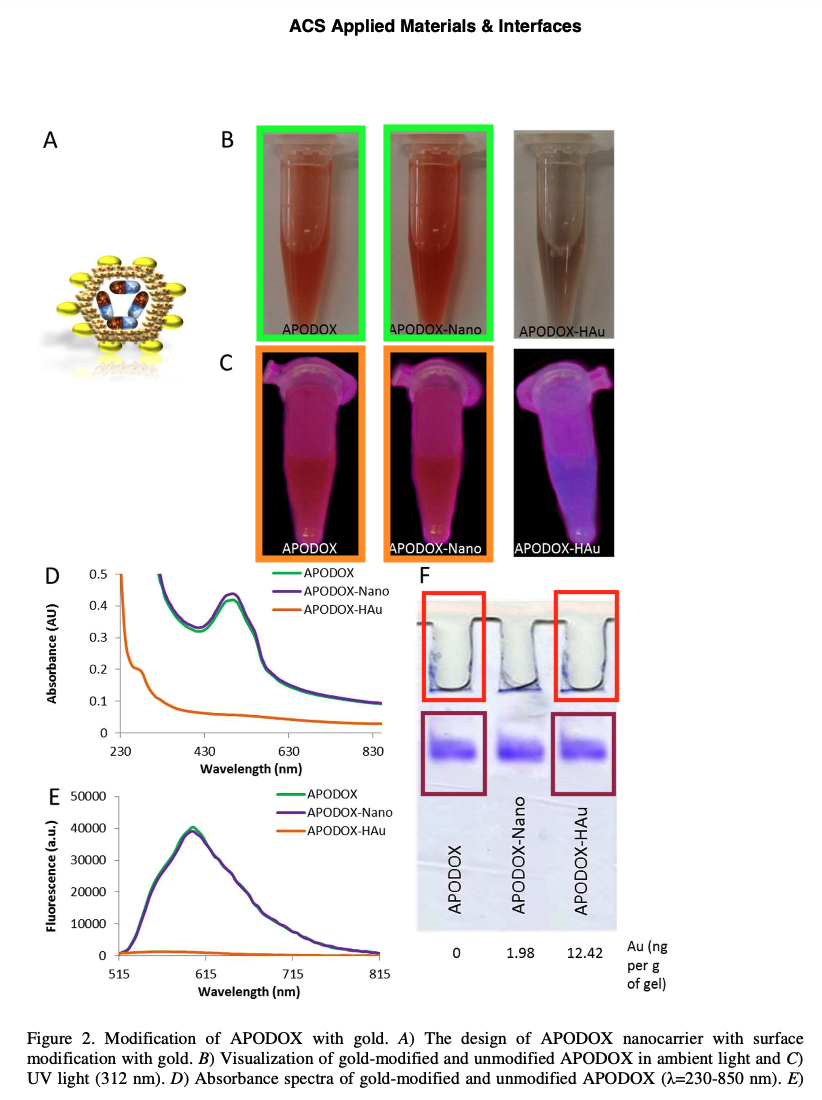
Green boxes: In Figure 2B, the APODOX and APODOX-Nano panels look remarkably similar
Orange boxes: In Figure 2C, the APODOX and APODOX-Nano panels look remarkably similar
Red and dark red boxes: In In Figure 2F, parts of the APODOX and APODOX-Hau lanes look remarkably similar”
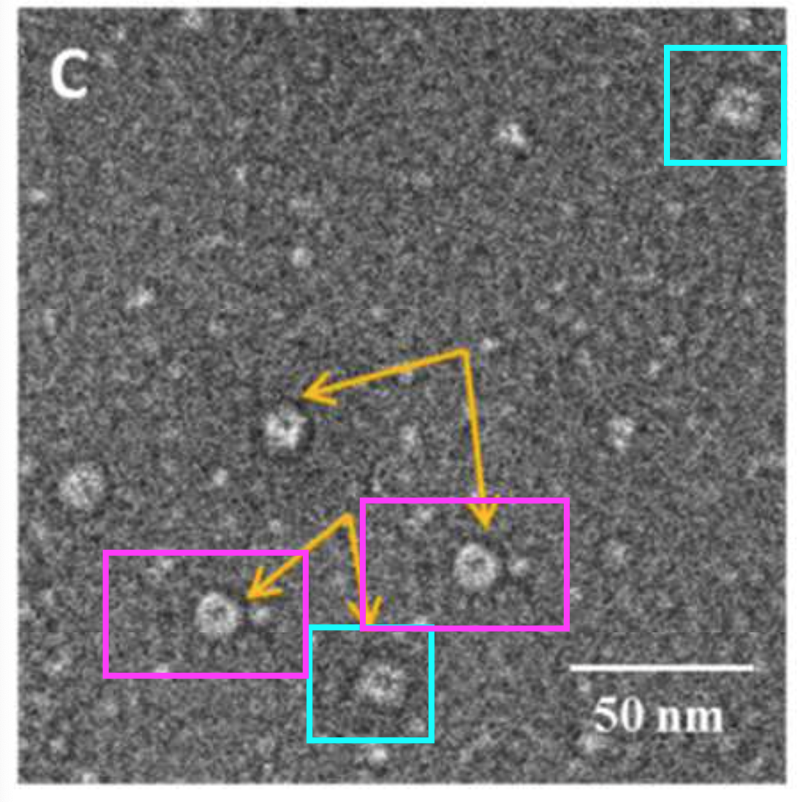
“Figure 4C raises some concerns too.
Cyan and pink boxes: Some of the nanoparticles appear to be visible multiple times.
The yellow arrows were part of the original figure.”
As I reported in January 2022 Shorts, the Czech university found Adam guilty of research misconduct in a report which was first publicly available, and then deleted. But there are archived copies, and I saved it here:
For that specific Dostalova et al 2016 paper, the committee determined “an intentional image manipulation” and concluded “that the failure to provide convincing replacement images for the problematic figure panel reinforces the need to retract the paper.“
The American Chemical Society decided that Czechia is not a real country and did this Correction instead, on 29 June 2022:
“It was brought to the authors’ attention that the photographs of tubes containing APODOX and APODOX-Nano in Figure 2B were the same. Similarity between lanes containing APODOX and APODOX-HAu was also found in Figure 2F. The original photographs were identified and are used to correct the corresponding panels in Figure 2 below.
In addition, concerns were raised regarding the originality of the transmission electron microscope data in Figure 4C. The original data were used to correct the corresponding panel in the corrected Figure 4 below.
The authors confirm that these errors do not affect the major conclusions of the paper.”
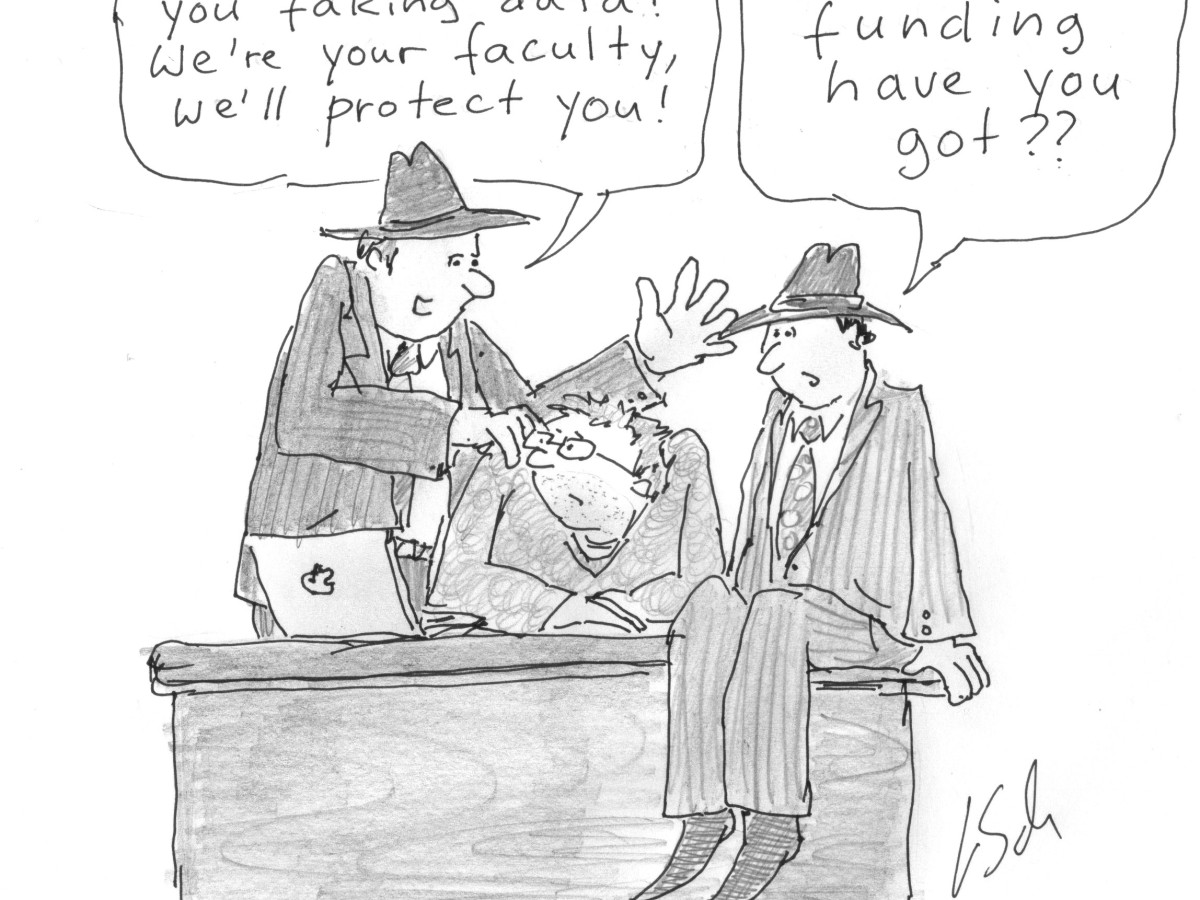
To be fair, not just ACS failed. The Metro article does mention Adam’s history of research misconduct, but explains that the European Research Council (ERC) declared him to have acted merely negligently and continued his €1.3 million grant. That is actually what ERC does in EVERY case of proven research fraud, see for example the case of Maria Fousteri.
Does ERC help cheaters pay protection money?
Did you ever wonder why certain zombie scientists were still in academic jobs? Despite having been caught on data manipulation or biomedical ethics breach? It seems the answer is simpler than you thought. They are paying for their protection, by giving pizzo to their crooked research institutions, just as in some unoriginal mafia film. Well,…
So you see that there is indeed an urgent need to name buildings, and soon probably streets in Brno after the late nanofabricator.
The decision was not made by Heger alone. As it happens, a certain Pavlina Adam (née Sobrova) is Mendel University’s Prorector for Research. Yes dear reader, Pavlina is the widow of Vojtech Adam. One can’t make such shamelessly nepotist crap up.
Pavlina Adam graduated with PhD in 2013, her PhD supervisor was Rene Kizek, who until his sacking for research misconduct was professor of pharmacology at the Masaryk University in Brno (read January 2022 Shorts). As it happens, Kizek was also the PhD mentor of Vojtech Adam. Between 2007 and her PhD graduation in 2013, Pavlina Adam published 53 research papers, soon after she became associate professor.
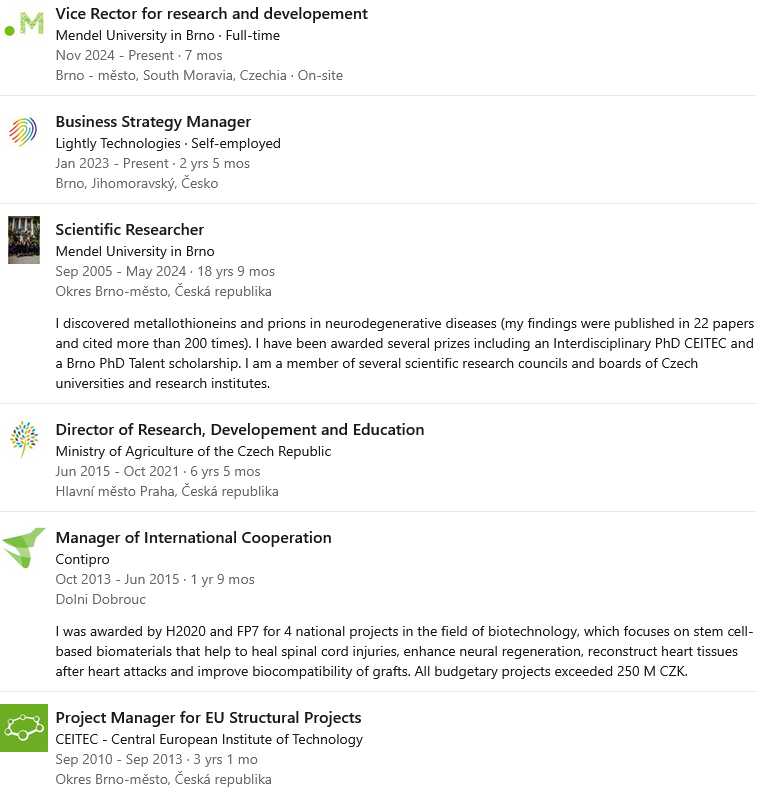
Pavlina used to work in her husband’s group until May 2024, then she left academia to explore independence, but was brought back to Mendel University in November 2024. As Vice Rector. For Research. Thus, in charge of presiding over recruitments, scientific evaluations and research misconduct investigations. If you work in Brno, I would not blow any whistles.
The Mendel University eventually replied to my inquiry with this statement, which I reproduce in full because every word is just hilarious:
“Professor Adam was one of the most important scientific talents of recent times. His scientific focus significantly exceeded the thematic areas of our university, especially in the field of clinical oncology, the use of modern bioanalytical methods and advanced materials for biochemical and biological purposes. During his scientific work at the Department of Chemistry and Biochemistry, he received several awards, for example, in 2008 he received the League Against Cancer Prague Award for publications in the field of clinical oncology. His contribution to the University in the form of scientific activities, energy and diligence is difficult to quantify. His long tenure at the head of the Department of Chemistry and Biochemistry has left an indelible mark on the direction and scientific performance of this department. The same is true of his tenure as Vice-Rector for Creative Activities at our University.
Suggestions for naming a building on the university campus after Professor Adam came not only from the Faculty of Agronomy or the Department of Chemistry and Biochemistry, but also from colleagues from other departments and the university management. It was the Pavilion D, its modernisation and the development of a state-of-the-art facility that was the heart of Professor Adam’s work. The university management decided on the name.
The conclusions of the committee confirmed certain errors in the published articles, but they were not errors that would confirm a systematic and deliberate influence on the presented results. What is called scientific integrity. Such misconduct, when it occurs, needs to be identified and worked to eliminate, whether in the selection and management of the team or in the storage and processing of the data. And thanks to Professor Adam’s proactive approach, this has indeed happened. Our conclusions are therefore in line with the position of the European Commission.”
All of them are genuine mistakes
Meet Zubair Ahmed, professor of neuroscience at the University of Birmingham in UK. He is also a successful biotech entrepreneur, as his university informs us:
“Zubair is a non-executive Board member and a co-founder of Neuregenix, a University of Birmingham-based spin-off company that seeks to exploit his work. He and his colleagues at Neuregenix have already demonstrated the preclinical efficacy of an anti-apoptotic gene-based medicine in protecting retinal neurons from injury-induced death. The target is now being assessed in Phase III clinical trials. He is also co-founder of Midland Pharmaceuticals, a clinical stage company developing treatments for spinal cord injury.”
Well, not quite. Neuregenix was dissolved in January 2025 (the website is defunct now, but there are archived copies). But Ahmed’s Midland Pharmaceuticals was set up by Ahmed and Arshad Majid (Deputy Dean az Sheffield University) right after, in February 2024, formed by NLC Ventures and AstraZeneca. The company informs us that their drug “MLP-1236 is a First in class dual inhibitor of matrix metalloproteinases (MMP) 9 and MMP 12 and has already completed Phase 1 and Phase 2a clinical studies“.
Indeed, MLP-1236 is in reality Astra Zeneca’s product AZD1236 which the authors promoted in this study:
Zubair Ahmed, Sharif Alhajlah , Adam M. Thompson , Rebecca J. Fairclough Clinic‐ready inhibitor of MMP‐9/‐12 restores sensory and functional decline in rodent models of spinal cord injury Clinical and Translational Medicine (2022) doi: 10.1002/ctm2.884

Sholto David: “Figure 1M: Unexpected similarity between images that should show different experimental conditions.”
Ahmed has several papers on PubPeer (careful, there are name sakes). Here is his paper with his fellow University of Birmingham professor Ann Logan (now retired), who also used to be Scientific Director at Neuregenix until the company was dissolved:
Zubair Ahmed, Michael R. Douglas , Gabrielle John , Martin Berry , Ann Logan AMIGO3 is an NgR1/p75 co-receptor signalling axon growth inhibition in the acute phase of adult central nervous system injury PLOS One (2013) doi: 10.1371/journal.pone.0061878

Their coauthor, the University of Birmingham emeritus professor Martin Berry, died in 2021 aged 85, an obituary was published by Ahmed and Logan. Now a set of two papers by Ahmed, Logan and Berry:
- Vasanthy Vigneswara , Nsikan Akpan , Martin Berry , Ann Logan , Carol M. Troy , Zubair Ahmed Combined suppression of CASP2 and CASP6 protects retinal ganglion cells from apoptosis and promotes axon regeneration through CNTF-mediated JAK/STAT signalling Brain (2014) doi: 10.1093/brain/awu037
- Vasanthy Vigneswara , Maryam Esmaeili , Louise Deer , Martin Berry , Ann Logan , Zubair Ahmed Eye drop delivery of pigment epithelium-derived factor-34 promotes retinal ganglion cell neuroprotection and axon regeneration Molecular and cellular neurosciences (2015) doi: 10.1016/j.mcn.2015.08.001

More bad ophthalmology by Logan, Ahmed and Berry:
Lisa J Hill , Ben Mead , Chloe N Thomas , Simon Foale , Elena Feinstein , Martin Berry , Richard J Blanch , Zubair Ahmed , Ann Logan TGF-β-induced IOP elevations are mediated by RhoA in the early but not the late fibrotic phase of open angle glaucoma Molecular vision (2018) 24:712-726

Whom to blame here? Berry? Or Ahmed?
Martin L. Read , Surjeet Singh , Zubair Ahmed , Mark Stevenson , Simon S. Briggs , David Oupicky , Lee B. Barrett , Rachel Spice , Mark Kendall , Martin Berry , Jon A. Preece , Ann Logan , Leonard W. Seymour A versatile reducible polycation-based system for efficient delivery of a broad range of nucleic acids Nucleic Acids Research (2005) doi: 10.1093/nar/gni085

Data from another paper by Ahmed, Logan and Berry resurfaced 8 years later in another study and different context (no conflicts of interests about Neuregenex were declared):
- Vasanthy Vigneswara , Martin Berry , Ann Logan , Zubair Ahmed Pigment epithelium-derived factor is retinal ganglion cell neuroprotective and axogenic after optic nerve crush injury Investigative Ophthalmology & Visual Science (2013) doi: 10.1167/iovs.13-11803
- Sharif Alhajlah , Adam M Thompson , Zubair Ahmed Overexpression of Reticulon 3 Enhances CNS Axon Regeneration and Functional Recovery after Traumatic Injury Cells (2021) doi: 10.3390/cells10082015

The paper in MDPI shared data with another study in a Science journal (Ahmed and his Birmingham colleague Richard Tuxworth declared patents on Chk2 inhibitors):
Matthew J. Taylor , Adam M. Thompson , Sharif Alhajlah , Richard I. Tuxworth , Zubair Ahmed Inhibition of Chk2 promotes neuroprotection, axon regeneration, and functional recovery after CNS injury Science Advances (2022) doi: 10.1126/sciadv.abq2611

The Science Advances data in turn appeared in yet another paper by Ahmed and Tuxworth in a Wiley journal (“The authors report no competing interests.”):
Richard I Tuxworth , Matthew J Taylor , Ane Martin Anduaga , Alaa Hussien-Ali , Sotiroula Chatzimatthaiou , Joanne Longland , Adam M Thompson , Sharif Almutiri , Pavlos Alifragis , Charalambos P Kyriacou , Boris Kysela , Zubair Ahmed Attenuating the DNA damage response to double-strand breaks restores function in models of CNS neurodegeneration Brain Communications (2019) doi: 10.1093/braincomms/fcz005

This is Ahmed’s most recent on PubPeer, done with the Finnish-Lithuanian company Experimentica:
Inesa Lelyte , Vidhya R. Rao , Giedrius Kalesnykas , Symantas Ragauskas , Simon Kaja , Zubair Ahmed Prospects and limitations of cumate-inducible lentivirus as a tool for investigating VEGF-A-mediated pathology in diabetic retinopathy Scientific Reports (2024) doi: 10.1038/s41598-024-63590-y

Sholto David: “Figure 4: Images from different time points and different experimental conditions overlap.”
Ahmed declared to have “no conflicts of interest.”
I asked Ahmed to comment on his PubPeer record. His reply was:
“Rest assured that I am dealing with all of the issues mentioned in the Pubpeer posts. All of them are genuine mistakes and there has been no attempt to “manipulate data”. We have already asked the Journals concerned to issue erratum’s or corrigendum’s, some are being prepared, and I am cooperating with other Journals to rectify the issues.”
Ahmed didn’t reply after I asked to explain his omitted Neuregenex COIs. Also his university remained silent.
Scholarly Publishing
Here it stops for us
In May 2025, the pseudonymous sleuth Aneurus Inconstans reported a problematic paper to the journal’s editor. Its coauthor is a certain professor at the Second University of Naples, Gabriella Marfe, who often generates her fraudulent research papers from figures stolen from other people’s publications. You can read about Marfè and her retractions in November 2024 Shorts. The last authors are Ugo Pagnini and Giuseppe Iovane of the First University of Naples are Marfe’s regular coauthors:
M. Longo , F. Fiorito , G. Marfè , S. Montagnaro , G. Pisanelli , L. De Martino, G. Iovane , U. Pagnini Analysis of apoptosis induced by Caprine Herpesvirus 1 in vitro Virus research (2009) doi: 10.1016/j.virusres.2009.07.008


After the sleuth notified the Editor-in-Chief of the Elsevier journal Virus Research Ben Berkhout (professor at the Amsterdam UMC in The Netherlands), the latter immediately contacted the corresponding author Luisa De Martino at the First University of Naples with this request:
“Some issues were raised about your previous work published in Virus Research, see the link below. Could you look into this matter and inform us.“
De Martino replied to the editor, in an email which he shared with the sleuth:
“the work was published already in 2009 and the personnel who performed the western blotting are no longer in service and all their documentation is not available.
However, I can confirm the validity of all the results of the publication, because it is my habit to check carefully and require that all experiments be repeated at least three or four times. In any case, I emphasize that the results are confirmed by different methods and other types of experiments as shown and described in the work (Fig. 1, 2, 3, 5, 7).
I’m sorry for what happened.”
Before we continue: De Martino has a horrible PubPeer record of fake science, often with Marfe. This atrocity was just retracted:
Gabriella Marfè , Marco Tafani , Filomena Fiorito, Ugo Pagnini, Giuseppe Iovane , Luisa De Martino Involvement of FOXO transcription factors, TRAIL-FasL/Fas, and sirtuin proteins family in canine coronavirus type II-induced apoptosis PLoS ONE (2011) doi: 10.1371/journal.pone.0027313


Hongyu Liu , Chuanbing Zang , Martin H Fenner , Dachuan Liu , Kurt Possinger , H Phillip Koeffler , Elena Elstner Growth inhibition and apoptosis in human Philadelphia chromosome-positive lymphoblastic leukemia cell lines by treatment with the dual PPARalpha/gamma ligand TZD18 Blood (2006) doi: 10.1182/blood-2005-05-2103

The retraction from 6 May 2025 went:
“After this article [1] was published, concerns were raised regarding results presented in Figures 1, 2, 3, 7, 8, 9, 10, and 11. […]
The authors’ responses did not resolve the concerns with this article.
In light of the above concerns that question the integrity and reliability of the reported results and conclusions, the PLOS One Editors retract this article.
All authors did not respond to the final editorial decision.
The Figure 1A results report material that appears similar to results previously reported in [2] published in 2006 by The American Society of Hematology, which is not offered under a CC BY license. Due to restrictions that apply to the original article’s license, Figure 1A is excluded from the PLOS article’s [1] CC BY 4.0 license.”
Of course De Martino has many fake papers also without Marfe. For example, with the same fellow professor at First University of Naples, Filomena Fiorito, whom you met above:
Filomena Fiorito, Carlo Irace , Antonio Di Pascale , Alfredo Colonna , Giuseppe Iovane , Ugo Pagnini , Rita Santamaria, Luisa De Martino 2,3,7,8-Tetrachlorodibenzo-p-dioxin promotes BHV-1 infection in mammalian cells by interfering with iron homeostasis regulation PLOS One (2013) doi: 10.1371/journal.pone.0058845

The next one reuses a figure from the above PLOS One paper, and it features next to Beppe Iovane also a Vale Iovane – his sister or daughter or whatever (wives don’t take husbands’ names in Italy):
Filomena Fiorito, Valentina Iovane , Antonietta Cantiello , Annarosaria Marullo , Luisa De Martino, Giuseppe Iovane MG-132 reduces virus release in Bovine herpesvirus-1 infection Scientific Reports (2017) doi: 10.1038/s41598-017-13717-1


Blue boxes: The Control and MG-132 panel appear to show the same specimen, although shown at a different zoom factor, and rotated 90 degrees.”

This seems almost honest in comparison:
Filomena Fiorito , Antonietta Cantiello , Giovanna Elvira Granato , Luigi Navas , Carmine Diffidenti , Luisa De Martino , Veeramani Maharajan , Fabio Olivieri , Ugo Pagnini , Giuseppe Iovane Clinical improvement in feline herpesvirus 1 infected cats by oral low dose of interleukin-12 plus interferon-gamma Comparative immunology, microbiology and infectious diseases (2016) doi: 10.1016/j.cimid.2016.07.006

Elisabeth Bik: “Figure 2. Green boxes: Two GAPDH bands in the T=0 gel look remarkably similar to two GAPDH bands in the T=12 gel. Of note, the bands are vertically stretched”
Or this, again De Martino, Fiorito and Vale Iovane, on this women-only paper which presumably counts as a great feminist achievement in Italy:
Filomena Fiorito , Francesca Paola Nocera , Antonietta Cantiello , Valentina Iovane , Sara Lambiase , Marialuisa Piccolo , Maria Grazia Ferraro , Rita Santamaria , Luisa De Martino Bovine herpesvirus-1 infection in mouse neuroblastoma (Neuro-2A) cells Veterinary Microbiology (2020) doi: 10.1016/j.vetmic.2020.108762

Boxes of the same color highlight bands that look unexpectedly similar.”

And so on. It is safe to assume that De Martino, Fiorito, Marfè, Pagnini and the Iovane family probably never did any real experiments in their lives. Who needs those when you have a computer with Photoshop.
All this PubPeer information was at the fingertips of the EiC Berkhout, who wrote to the sleuth on 23 May 2025:
“Dear Aneurus Inconstans,
I informed the leading scientist of the publication in our journal in Virus Research. She is not aware of any mistakes (see below), but of course that does not proof that the images were not manipulated. In general, her response was quick and seems to be honest. I guess here it stops for us. Can you let us know for what organization you work for?“
Did Berkhout expect the sleuth to reveal their identity, so that those dear honest Italian authors could take revenge? Aneurus and myself both wrote to Berkhout, but he must have decided that we are bad, evil, fraudulent people, and never replied again.
Retraction Watchdogging
Unintentional mistakes
Just when Britain’s most pathetic degenerative medicine enthusiast Martin Birchall, otolaryngology professor UCL, former buddy of Paolo Macchiarini and responsible for disastrous trachea transplant experiments on juvenile patients, must have felt safe and untouchable, a retraction arrived. For that Birchall must thank his former associate, UCL’s former nanotechnology professor Alexander Seifalian, who in the wake of the trachea transplant investigation at UCL was charged for everybody’s sins and sacked in 2017. Read here:
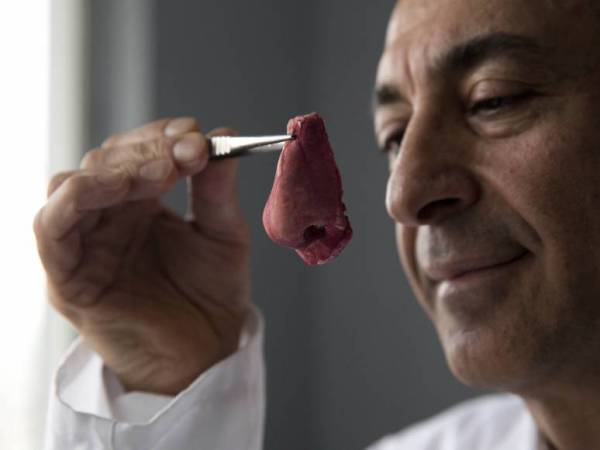
UCL trachea transplant inquiry: scapegoating, obfuscation and a lost nose
In 2017, UCL invited an external expert commission to investigate the deadly trachea transplants performed by the former UCL honorary professor Paolo Macchiarini. An already sacked UCL nanotechnology professor, Alexander Seifalian, whose lab made the two UCL plastic POSS-PCU tracheas in 2011, was announced as the main culprit on UCL side. All this despite Seifalian’s…
The now retracted paper featured in my article from December 2024. Further coauthors, next to Seifalian and Birchall, are Gavin Jell, UCL professor of nanotechnology & degenerative medicine (whose institutional website has just been deleted for some reason), Ali Esmaeili, UCL lecturer and surgeon at affiliated Royal Free Hospital, and Seifalian’s former PhD student Leila Nayyer. The groundbreaking study announced the development of plastic ears.
Leila Nayyer , Gavin Jell, Ali Esmaeili , Martin Birchall, Alexander M. Seifalian A Biodesigned Nanocomposite Biomaterial for Auricular Cartilage Reconstruction Advanced Healthcare Materials (2016) doi: 10.1002/adhm.201500968


The evidence was posted on PubPeer in November 2024, the retraction arrived on 27 May 2025:
“The retraction has been agreed due to inappropriate image processing observed in elements of Figures 4b and 5a and Figure S4 (Supporting Information). The authors could not provide the original data due to the time that has elapsed but stated that the image inconsistencies were unintentional mistakes. The authors believe the overall conclusions are not affected and apologize for their errors. The editors consider the results and conclusions reported in this article unreliable. The authors were informed of the retraction.”
There is much more for Seifalian and Birchall to retract, together and separately.
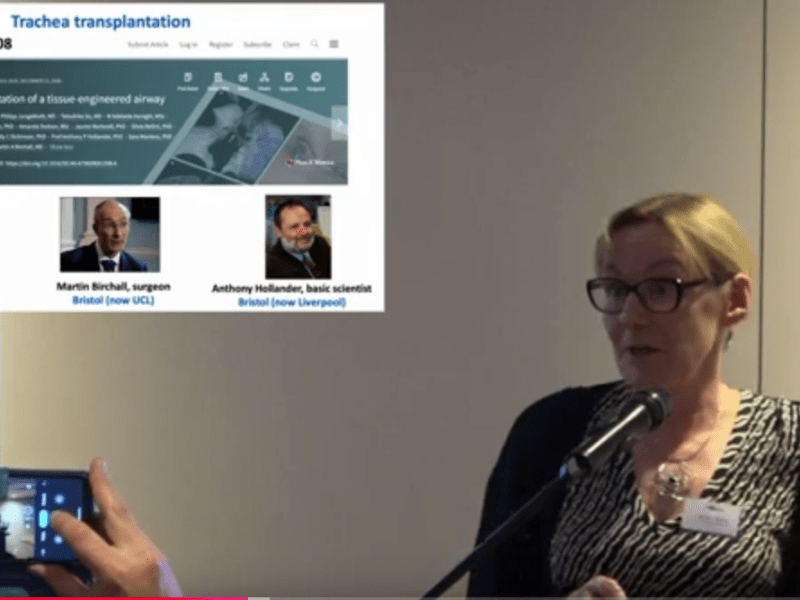
Martin Birchall, Paolo De Coppi, and other clowns of UCL’s degenerative medicine
Several years ago, UCL investigated the Macchiarini affair and found their surgeon Martin Birchall was not only innocent, but also entitled to more money and more patients to experiment upon. Now, Patricia Murray was awarded for exposing this UCL malfeasance, and Sholto David scrutinised UCL papers for data manipulation.
He strongly apologizes for not paying enough attention
A retraction for a certain Patrick Mountapmbeme Kouotou, former PhD student at the University of Bielefeld in Germany (mentored by the academician Katharina Kohse-Höinghaus, now Associate Professor at the University of Maroua and director of a research centre at the University of Ebolowa, Cameroon. He was declared to be completely innocent and a victim of my slander by the Bielefeld Ombudsman in early 2024, the German Academic Exchange Service (DAAD) which sponsored Kouotou’s stay in Bielefeld not only refused to investigate but warned me never to write to them again. Read here:
The Bielefeld Conspiracy
“During your studies, it should be taught that, for example, you critically question your data, handle it transparently and immediately disclose weak points.” – Prof Katharina Kohse-Höinghaus
The Bielefeld papers are safe as houses, but the German authorities didn’t bother to fight for the trash Kouotou published afterwards. So this was retracted:
Daniel Onana Mevoa , Stephane Kenmoe, Muhammad Waqas , Dick Hartmann Douma , Daniel Manhouli Daawe , Katia Nchimi Nono , Ralph Gebauer , Patrick Mountapmbeme Kouotou Investigation of the effect of thermal annealing of Ni-cobaltite nanoparticles on their structure, electronic properties and performance as catalysts for the total oxidation of dimethyl ether Catalysis Science & Technology (2023) doi: 10.1039/d3cy00807j


Dicksonia gigantea: “There are some anomalies in the EDS spectra including sudden contrast changes and repetitive noise in the baseline.“
Back in February 2024, Koutou admitted on PubPeer that the spectra were forged. By a student!
“The data analysis and graphics were performed by the first author currently student under my Supervision. We thank the reviewer for this remarque. […] The unusual fragment observed in the published version of the graph may due to the poor experience in XRD data processing by the student. […] I am already in contact with the RSC Publishing Ethics about that issue.”
Worth noting that other coauthors are in Congo, Pakistan, and Germany: the Cameroon-natives Stéphane Kenmoe is still working as postdoc at the University of Duisburg-Essen, Katia Nchimi Nono is postdoc at University of Kiel in Germany. Ralph Gebauer is Senior Research Scientist at the Abdus Salam International Centre for Theoretical Physics in Trieste, Italy. Here is the retraction from 20 May 2025:
“The Royal Society of Chemistry, after several exchanges on this issue with the authors, hereby wholly retracts this Catalysis Science & Technology article due to concerns with the reliability of the data.
In Fig. 1c and e, the XRD patterns contain unexpected features. In addition, segments of the XRD pattern in Fig. 1b have been duplicated from a previously published work by Zigla et al.1
In Fig. 5 the EDS spectrum contains repeating patterns and evidence of irregularities in the background.
Patrick Mountapmbeme Kouotou has provided corrected figures from the original data but they have been unable to satisfactorily explain the irregularities.
Given the significance of the concerns about the data, the findings presented in this paper are no longer reliable.
The authors have been informed about the retraction of this article. […]
Ralph Gebauer, Stephane Kenmoe and Dick Hartmann Douma have stated that as theoreticians involved in the computational part of the work, they cannot comment on the irregularities of the XRD and EDS spectra.
Patrick Mountapmbeme Kouotou has stated he was involved in designing the experimental conditions, improving the explanation and revising the context, but was not involved in taking and evaluating the XRD/EDS data nor drawing the figures. As the supervisor of the experimental part he strongly apologizes for not paying enough attention to detect the anomalies in question.
Katia Nchimi Nono has stated that her role in the preparation of this article was limited to reviewing the manuscript draft, and she was not involved in the experimental work and data collection. Therefore, she cannot comment on the irregularities of the XRD and EDS spectra.”
No, of course nobody paid for the authorship.
Unusual features of the FTIR spectra
Another papermill retraction. The paper by celebrity papermill fraudsters Fatih Sen from Turkey and Mika Sillanpää (sacked in Finland for sexual harassment and theft), already featured in this article:

Issues of global relevance
“I like ImageTwin, but seeing things with just eyes is like hand-to-hand combat….” – Mu Yang
Elsevier is now cleaning up its journal Environmental Research, so this hand-drawn trash was first flagged with an Expression of Concern and then retracted:
Hassan Karimi-Maleh, Sara Ranjbari , Bahareh Tanhaei, Ali Ayati , Yasin Orooji, Marzieh Alizadeh , Fatemeh Karimi, Sadegh Salmanpour , Jalal Rouhi , Mika Sillanpää , Fatih Sen Novel 1-butyl-3-methylimidazolium bromide impregnated chitosan hydrogel beads nanostructure as an efficient nanobio-adsorbent for cationic dye removal: Kinetic study Environmental Research (2021) doi: 10.1016/j.envres.2021.110809

In that paper, there are other professional papermillers on board: Yasin Orooji and Sen’s associate Fatemeh Karimi. The first author is a certain Hassan Karimi-Maleh, professor at University of Electronic Science and Technology of China, who now has over 70 papers on PubPeer (excluding those citing his papermilled trash).

Don’t mess with Fatih Sen
Fake nanotechnology is always fun, but it does get extreme here. Word of advice: if you are in Turkey, better don’t point fingers at Professor Fatih Sen’s research. Things get broken easily.
An Expression of Concern “regarding potential manipulation of images in the article” was added on 1 February 2025. A retraction was issued on 27 May 2025 (highlights mine):
“Concerns were raised on PubPeer at https://pubpeer.com/publications/09646A60AB7C93F65D14DB89C6A5E3, and the authors provided extensive documentation in an attempt to explain these concerns. The editor investigated the supporting data behind the unusual features of the FTIR spectra, Fig. 1, for example the observation that one wavenumber appears to have two absorbance values, contrary to the principles of FTIR spectrometry and understanding of the IR absorbance mechanism. Inspection of the excel data file of the FTIR spectrum (b) revealed that: (1) the interval between each wavenumber is inconsistent, (2) there is a missing gap between 1788 and 2975, which is significant, (3) the decimal formatting is inconsistent with that of the other three spectra, (4) there is evidence of backtracking, as reported on PubPeer, and (5) the date of this file is 2025, four years after the publication of the article. The editor therefore concludes that the FTIR spectrum (b) is unreliable.
The editor also assessed the supporting data for Fig. 2, the XRD pattern of CS-BmImBr. In this case, the features observed in the PubPeer comment could possibly be attributed to issues which arose when the image was converted to black and while.
Additionally, an unauthorised authorship change was made when the revised version of this paper was submitted, following suggestions for relatively minor revisions from the reviewers and Guest Editor, with author Yasin Orooji, who was suggested as a potential reviewer when the original submission was made, being added to the paper as a fourth corresponding author. No satisfactory explanation was given for this change, nor was it approved by the editor. This authorship change breaches the policies of the journal and as a result of this and the unreliability of the FTIR data, the editors no longer have confidence in this paper and are retracting it. The journal apologises for not having identified the problematic authorship change during the review process and for any resulting inconvenience.
Authors Yasin Orooji and Mika Sillanpää do not agree with the retraction and dispute the grounds for it.”

Karimi-Maleh was seen with the worst of papermill fraudsters, you name them and he published or manipulated the peer review with them, or sold citations to their papers, or paid them to cite his papers. This was retracted last month:
Mehdi Baghayeri, Hojat Veisi, Hamed Veisi , Behrooz Maleki , Hassan Karimi-Maleh , Hadi Beitollahi Multi-walled carbon nanotubes decorated with palladium nanoparticles as a novel platform for electrocatalytic sensing applications RSC Advances (2014) doi: 10.1039/c4ra08536a


The Expression of Concern from 30 September 2024 was followed by a Retraction from 28 April 2025:
“The Royal Society of Chemistry hereby wholly retracts this RSC Advances article due to concerns with the reliability of the data.
In the XRD data in Fig. 2, there are sections with repeating patterns. In the FT-IR spectra in Fig. 3, there are duplicating segments in traces c, d and e. In Fig. 4, there are duplicating sections between trace a and c, and between trace b and c.
The authors were contacted but did not provide a response to the concerns.
Given the significance of these concerns, the Editor has lost confidence that the findings presented in this paper are reliable.”

Do papermillers dream of eclectic journals?
“I focus on the sprawling parody literature devoted to the three Es of Energy, Economy and the Environment. Together they […] freeload on the authentic literature on energy efficiency and pollution reduction (while diluting, distracting and discrediting them).” – Smut Clyde

This however is in no danger of retraction because it’s ACS:
Jamil A. Buledi , Amber R. Solangi, Arfana Mallah, Syeda Sara Hassan , Sidra Ameen , Ceren Karaman, Hassan Karimi-Maleh A Reusable Nickel Oxide Reduced Graphene Oxide Modified Platinum Electrode for the Detection of Linezolid Drug Industrial & Engineering Chemistry Research (2023) doi: 10.1021/acs.iecr.2c03334

Blue boxes: The noise of the orange (NiO) and green (NiO/rGO) plots looks remarkably similar, except for the area around a peak at 25 degrees.”

No ill intention behind it
Yet another retraction for the Indian academician Chitra Mandal, former director of the CSIR-Indian Institute of Chemical Biology in Kolkata, making it her sixth. She has a huge PubPeer record of fake science, almost 50 papers. You can read about Mandal’s fake science in this article by R Prasad, and his reporting in The Hindu, also from June 2019. I reported about some of her past retractions in March 2024 Shorts.
So here is the most recently retracted paper, flagged on PubPeer already in 2017. It features as coauthors a Chandan Mandal who is possibly Chitra’s son or nephew or whatever, and a Brit called Paul Crocker, emeritus professor at the University of Dundee:
Biswajit Khatua , Angana Ghoshal , Kaushik Bhattacharya , Chandan Mandal , Bibhuti Saha , Paul R. Crocker , Chitra Mandal Sialic acids acquired by Pseudomonas aeruginosa are involved in reduced complement deposition and siglec mediated host-cell recognition FEBS Letters (2010) doi: 10.1016/j.febslet.2009.11.087


The retraction was issued by Wiley with a small delay of 8 years, on 27 May 2025:
“The retraction has been agreed due to concerns raised by a third party. Further investigation revealed the unattributed duplication of nearly all of the data presented in Figures 1 and 2 from Figures 2 and 3 from a now-retracted article by the same authors (DOI: 10.1128/IAI.01083-08). In addition, there is duplication of data within the MALDI-TOF-MS data in Figure 3b and within the flow cytometry-based binding assay data in Figure 5. These concerns undermine the journal’s confidence in the results and conclusions presented. Therefore, the parties agree that the article must be retracted.”
Here are Mandal’s 5th and 4th retractions. Flagged in 2017 and 2019:
Suchandra Chowdhury , Sarmila Chandra , Chitra Mandal 9-O-acetylated sialic acids differentiating normal haematopoietic precursors from leukemic stem cells with high aldehyde dehydrogenase activity in children with acute lymphoblastic leukaemia Glycoconjugate journal (2014) doi: 10.1007/s10719-014-9550-x


The retraction from 16 July 2024 went:
“The Editor-in-Chief has retracted this article. After publication, concerns were raised regarding some irregularities in the flow cytometry plots presented in the figures. Specifically, the plots in Fig. 4 (top right and middle right) and 6j appear to show some repetitive patterns that are unlikely to occur naturally in flow cytometry.
The Editor-in-Chief therefore no longer has confidence in the presented data.
None of the authors have responded to any correspondence from the publisher about this retraction notice.”
Cell Death and Depravity
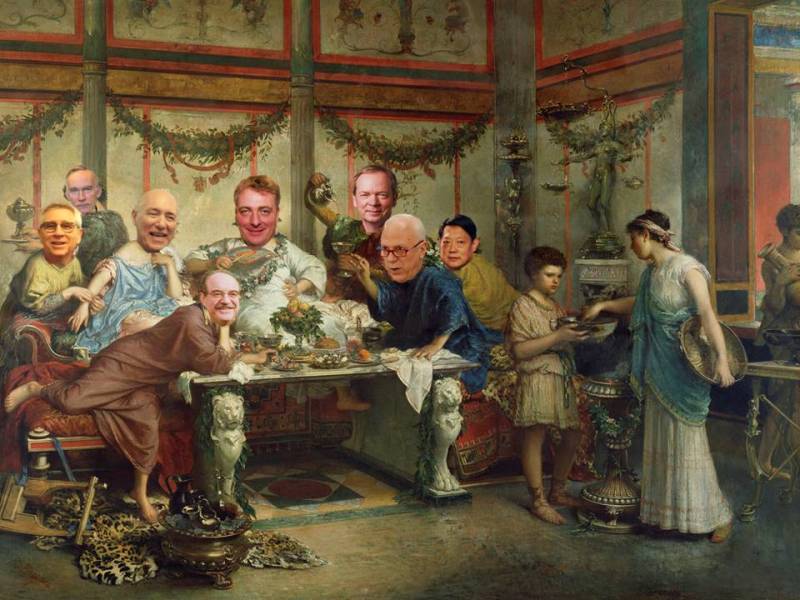
Is the journal Cell Death and Disease a disease itself, parasitised by Chinese paper mills? Can it be cured? Not with this team of doctors on editorial board.
Shockingly, even the fraudster-friendly Springer Nature journal Cell Death and Depravity retracted Mandal’s paper. Maybe because she is a)a woman and b) Asian, and not a white European man like the editors of this journal.
Samarpan Maiti , Susmita Mondal , Eswara M Satyavarapu , Chitra Mandal mTORC2 regulates hedgehog pathway activity by promoting stability to Gli2 protein and its nuclear translocation Cell Death & Disease (2017) doi: 10.1038/cddis.2017.296

Elisabeth Bik: “Figure 3g. Two U87MG 0h panels look very similar. Shown with green boxes. Two LN229 0h panels look very similar. Shown with red boxes.”
That one was retracted on 21 May 2024:
“The Editors-in-Chief have retracted this article. After publication, concerns were raised regarding some of the data presented in the figures, specifically:
- In Fig. 3g, two pairs of 0h images (U87MG shRictor and Hedgehog inhibitor; LN229 Rictor overexpressed and Rictor overexpressed + Hedgehog inhibitor) appear to overlap.
- Fig. 2f Ptch1 lane 1 appears highly similar to Fig. 4b LN229 Gli2-FL lane 3.
- Fig. 4e Cyclin D1 blot appears highly similar to Fig. 5a IP: mTOR IB: Rictor.
- Fig. 5e Oct4 blot appears highly similar to Supplementary Fig. S2c Sox2.
The authors have stated that these images were selected by mistake during final figure preparation. Due to the number of errors in the figures, the Editors-in-Chief no longer have confidence in the presented data.
Chitra Mandal does not agree to this retraction. None of the other authors have responded to any correspondence from the publisher about this retraction.”
Mandal must have retired years ago. In February 2019, just before her fraud was reported, CSIR and their business partner Kudos Ayurveda announced an Ayuervedic cancer drug called Kudos CM9, which was developed by Mandal from curry leaves, and declared to prevent and cure literally all cancers in all stages.

“Prof. Chitra Mandal, Senior Scientist, Cancer Biology & Inflammatory Disorder Division, CSIR- IICB said, “Kudos CM9 is the result of 30 years of extensive research by Ministry of Science & Technology, CSIR-IICB to find the first ever ayurvedic cancer cure drug which has no side effects and has been proven to be the most effective and the safest medicine for the dreadful disease Cancer.””
BioSpectrum India
The curry leave ingredient is mahanine, and Mandal of course proved its amazing efficiency against cancer. One such study (Das et al 2014) was already retracted in 2024, two were corrected:


The Figure 2D in the 2010 paper was corrected already in 2019, the Figure 4D in the 2010 paper was fixed with a Corrigendum in February 2024, because ” this error does not change the scientific outcome of this paper, and there was no ill intention behind it“.
So maybe curry leaves do cure all cancers after all.
More than just embarrassing
A high profile preprint from MIT which made big news has been retracted as fraudulent on order from MIT, which is also big news.
Wall Street Journal (WSJ) reported on 16 May 2025:
“The Massachusetts Institute of Technology said Friday it can no longer stand behind a widely circulated paper on artificial intelligence written by a doctoral student in its economics program.
The paper said that the introduction of an AI tool in a materials-science lab led to gains in new discoveries, but had more ambiguous effects on the scientists who used it. […]
In a press release, MIT said it “has no confidence in the provenance, reliability or validity of the data and has no confidence in the veracity of the research contained in the paper.”
The university said the author of the paper is no longer at MIT.”
In December 2024, WSJ explained that Toner-Rodgers examined “the randomized introduction of an AI tool to 1,018 scientists at a materials-science research lab“, which was not named. With the help of that AI tool, “researchers discovered 44% more materials, their patent filings rose by 39% and there was a 17% increase in new product prototypes.” WSJ also quoted two MIT professors, the 2024 Nobel Prize in Economics laureate Daron Acemoglu and David Autor, on that preprint:
““It’s fantastic,” said Acemoglu.
“I was floored,” said Autor.”
This is the preprint, it was also celebrated in Nature and The Atlantic:
Aidan Toner-Rodgers Artificial Intelligence, Scientific Discovery, and Product Innovation arXiv (2025) doi: 10.48550/arXiv.2412.17866
Toner-Rogers was quoted by WSJ in December 2024 with:
“Maybe the most exciting thing about AI is that it could accelerate scientific discovery and innovation,” said Toner-Rodgers. […] “A key, creative part of the process was automated […] People just might be unhappy with that permanently.””
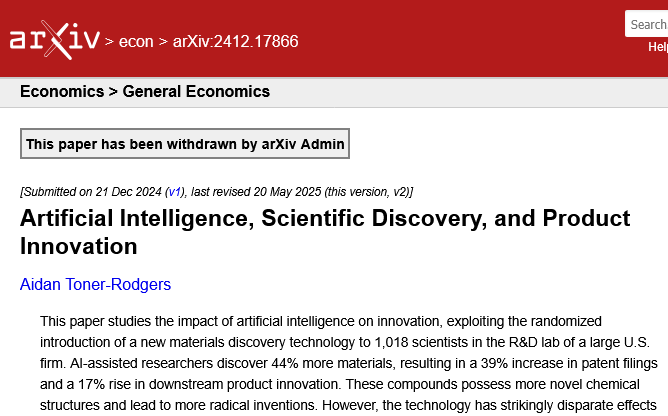
The MIT press release from 16 May 2025 stated:
“In an effort to correct the research record, MIT has contacted arXiv to formally request that the paper be withdrawn and The Quarterly Journal of Economics, where it had been submitted. The letter on behalf of the Committee on Discipline to arXiv states:
“Earlier this year, the COD conducted a confidential internal review based upon allegations it received regarding certain aspects of this paper. […] MIT has no confidence in the provenance, reliability or validity of the data and has no confidence in the veracity of the research contained in the paper. […]
“Our understanding is that only authors of papers appearing on arXiv can submit withdrawal requests. We have directed the author to submit such a request, but to date, the author has not done so. Therefore, in an effort to clarify the research record, MIT respectfully request that the paper be marked as withdrawn from arXiv as soon as possible.””
Indeed, preprints are no supposed to be retracted against authors’ wish unless they contain highly unethical material: e.g., human or animal abuse, private data of third parties, or hateful ideologies. Preprint “just” being fraudulent is in principle NOT a valid reason to retract it, simply to prevent the abuse of the system by those in academic power. If MIT is so keen on retracting fake science, they can start with Nature papers of their sacked superstar David Sabatini. Or other fraudsters MIT still employs.

MIT review closed and decision final
“MIT’s receipt and review of allegations of possible research misconduct by my office are treated as confidential under MIT and, to the extent applicable, federal policies. MIT does not intend to disclose its receipt and review of these allegations to others. By the same token, you therefore may not disclose to others that you brought…

The May 2025 WSJ article mentions that Acemoglu and Autor “were approached in January by a computer scientist” who remains unnamed, and whose concerns the duo then “brought it to the attention of MIT, which began conducting a review“. Funny, until then these two super-experts had no concerns, quite the opposite. Autor’s new assessment:
“More than just embarrassing, it’s heartbreaking”
Futurism commented: “That a paper evidently so flawed passed under so many well-educated eyes with little apparent pushback is, on the one hand, pretty shocking.” Indeed.
I personally think that Toner-Rodgers has a point. We must at some point admit that science is not about actual research and gain of knowledge, but about producing many papers in fancy journals and headlines in mass media, plus of course attracting lots of grant money and advancing careers of academics. Nobody reads those papers beyond the title and journal’s name anyway.
My modest proposal is: let’s embrace papermills and do away with wasteful stuff like labs. Let us let AI generate bullshit about curcumin-loaded chitosan nanoparticles against testicular cancer or banana-peel MOF composites for radioactive heavy metal removal from industrial sludge, which will then be peer-reviewed by AI, published by AI, popularised in the news by AI, rewarded by further “research” grants with AI, thus closing the fully automated research circle. Human professors can spend their days drinking cocktails on a beach and only employ PhD students and postdocs as someone to bully or sexually harass.
Donate!
If you are interested to support my work, you can leave here a small tip of $5. Or several of small tips, just increase the amount as you like (2x=€10; 5x=€25). Your generous patronage of my journalism will be most appreciated!
€5.00

 For Better Science
Zubair Ahmed, professor of neuroscience at the University of Birmingham jogged my memory.
Farida Latif (Univerity of Birmingham) and frequent co-author, Eamonn Maher (the latter now back at the University of Cambridge).
Farida Latif’s research works | University of Birmingham and other places
PubPeer – Search publications and join the conversation.
Eamonn Richard Maher | Institute of Continuing Education (ICE)
PubPeer – Search publications and join the conversation.
LikeLiked by 1 person
ACS are really developing new lows to sink to. An active area of research. Perhaps they can open a journal dedicated to excavating the basement of scientific misconduct?
LikeLiked by 3 people
‘I personally think that Toner-Rodgers has a point.’
He sure has. The conclusion — “AI tool made scientists less happy about their work” — seems remarkably valid, at the very least for certain individuals at MIT.
The same is very likely true for ‘researchers’ who have the misfortune of having their ‘data’ screened by the Sholto/TwinImage team.
LikeLike
And indeed it was withdrawn https://arxiv.org/abs/2412.17866. How this paragraph from the MIT statement should be understood:
Preprints, by definition, have not yet undergone peer review. MIT took this step in light of the publication’s prominence in the research conversation and because it was a formal step it could take to mitigate the effects of revealing of misconduct. The author is no longer at MIT.
And now it all makes sense.
LikeLike
Your favorite other website has successfully appointed two new sleuths-in-residence. An attempt to leave a comment on the announcement post regarding the political leanings of the person bankrolling this (and linking to your piece about him) was not successful.
LikeLike
Paul, RW generally forbids all references to Leonid Schneider or For Better Science.
But this passed!
Anyway, pecunia non olet.
About the sleuths:
I don’t think Grimes is there to learn sleuthing from Ivan Oransky. I believe his job is to write a book about the Watchdogs.
LikeLiked by 1 person
why hasn’t there been an article on Jony Kipnis yet?
LikeLike
Because Kipnis paid me not to write.
LikeLiked by 1 person
11 September 2025 retraction for Chitra Mandal.Retraction notice to “9-O-Acetylated GD3 triggers programmed cell death in mature erythrocytes” [Biochem. Biophys. Res. Commun. 362 (2007) 651–657] – ScienceDirect
LikeLiked by 1 person
30th March 2026 retraction for Chitra Mandal RETRACTION: A Perspective on the Emergence of Sialic Acids as Potent Determinants Affecting Leishmania Biology – International – 2026 – Molecular Biology International – Wiley Online Library
LikeLike