
Csaba Szabo wrote a review of the book “Doctored” by Charles Piller, a journalist working for Science magazine. Its topic is fraud in neuroscience and in particular in Alzheimer’s research.
I once met and spoke to Piller in person. When the book and the associated Science reporting came out, I was personally not just witness but part of bitter conflicts which arose over credit attribution and re-distribution, also regarding this book.
The result is a testimony to the intellectual greatness of the American white male, the central heroes are Piller himself and especially Matthew Schrag, a neurologist at Vanderbilt University. So much that the book should have been best titled “The Matthew Effect”, because this is what the book often does, crediting Schrag with every investigation, with almost everyone else being portrayed as a sidekick or a pathetic amateur.
A male superhero like Schrag needs a wise old male mentor, and this is where the Nobel Prize laureate and Stanford professor Thomas Südhof features prominently, a kind of Jedi Master Yoda to Schrag’s Luke Skywalker. In Doctored, our Nobel Yoda even manages to declare Adriano Aguzzi an honest scientist. Well, these two German-speaking divas have a lot in common: bad science on PubPeer, retractions, and hurling insults and threats against critics. At least Südhof’s PhD degree is not made-up like Aguzzi’s.
Many of the science fraud cases from Doctored were previously published on For Better Science, I link to those (and some other) articles below. And for the other cases: the details which I would be interested to know, are unlikely to be in Piller’s book, or they may be misrepresented like the incorrect details I am aware of.
I myself received 3 short paragraphs in Piller’s book, and even there, things are not entirely correct:
“His penchant for hyperbole—at the meeting, he compared some scientists who might have engaged in doctoring images to Nazi doctor Josef Mengele, and journals to cigarette makers—has enraged his targets.”
I never compared science cheaters to Mengele. Never, not even indirectly. I do refer to Mengele in an utterly unrelated context, as example of science not being outside of politics, an issue very relevant today. Piller never checked that horrid (mis)quote with me. Was it really just an honest mistake of oversight?
But I understand that false facts do make a better story. Both in science and in science journalism.
Update 14.03.2025: I repeatedly tried to request a review copy of Doctored from the author Charles Piller and the publisher Simon & Schuster. All my requests were ignored without any reply.
Book review of Doctored: Fraud, Arrogance, and Tragedy in the Quest to Cure Alzheimer’s
By Csaba Szabo
Charles Piller is a seasoned journalist who has worked as an investigative reporter for STAT and the Los Angeles Times. However, he is likely best known to readers of For Better Science for his in-depth investigative articles published in Science, many of which focus on neuroscience research, particularly Alzheimer’s. His reports include a series on the beta-amyloid clinical trials for Aduhelm and Lequembi, several deep dives into the misdeeds of Cassava Biosciences and its affiliated CUNY investigator Hoau-Yan Wang, and his famous Blots on a Field article, which led to the retraction of a highly cited Nature paper by Sylvain Lesné and Karen Ashe on a supposedly unique but ultimately dubious or non-existant form of beta-amyloid.

Facts and Fiction of Cassava Sciences
Attack is the best form of defence. Especially when your commercial clinical research is tainted by preclinical Photoshop fraud.

Other Charles Piller articles in Science have scrutinized the research and clinical development of Berislav Zlokovic at the University of Southern California and the published body of work of Eliezer Masliah at the NIH, both of whom manipulated data that may have influenced clinical trials, with devastating consequences for patients and wasted public funding. Each of Piller’s articles sent shock waves through the scientific community, triggering misconduct investigations, resignations, and firings.
Now, Piller has compiled and expanded upon his Alzheimer’s-related investigations in a well-researched, wide-ranging book, Doctored: Fraud, Arrogance, and Tragedy in the Quest to Cure Alzheimer’s, published by Simon & Schuster this month.
Sylvain Lesné is a failed scientist
From Lesné’s public shame to successful role models of neuroscience like Aguzzi and Tessier-Lavigne.
The book covers major controversies, including the Cassava Biosciences debacle, Biogen’s questionable amyloid antibody programs (Aduhelm and Lequembi), the unraveling of Lesné’s Nature paper, and the cases of Berislav Zlokovic’s ZZ Therapeutics and Eliezer Masliah’s extensive record of image manipulations. With respect to the former investigator, the book reveals that the clinical trials that were based on apparently doctored data may have exacerbated post-stroke damage in patients. With respect to the latter investigator, the book reveals the highly disturbing fact that “image-irregularity-spiked” work by Masliah underpins over 200 patents owned by several companies, many of which have ongoing clinical programs. Other problematic individuals, e.g. the affair of the infamous Stanford President Marc Tessier-Lavigne, are also mentioned in the book. Regular readers of this blog will likely be familiar with many of these stories, so I won’t rehash them here.
Cerebrolysin: Sharmas, Masliah, and EVER Pharma
“Poking around PubMed (Dysdera the spider is always on the hunt for new hornet’s nests) [..], I came across one image in two papers by Eliezer Masliah. […] By a conservative count, I contributed to about 160 out of 300 slides in the final dossier” – Mu Yang

Piller went the extra mile in his research, traveling across Europe and the United States to interview colleagues, students, and supervisors of key players. He spoke to everyone willing to talk — though, unsurprisingly, many refused. Still, there is more than enough here to reach conclusions that will not shock For Better Science readers. In academia, Piller exposes a hypercompetitive environment that prizes novelty over replication, fosters hubris among lead investigators, and enables entrenched networks — what he dubs the “amyloid mafia” — to dictate the field’s direction.
None of this is news to those familiar with academic politics. What did surprise me was learning that about 10% of the NIH’s nearly $40 billion budget is allocated to Alzheimer’s research, the vast majority of it directed at a single hypothesis: the beta-amyloid (later “amyloid cascade”) model.

Science misconduct
Scholarly publishing is broken, and no repair is possible. At least let’s point fingers at the elites and laugh. Can science trust Science?
Beyond academia, Piller dissects the perverse incentives of the publishing industry, including its resistance to retracting fraudulent work and the frequent conflicts of interest between journal editors and favored authors. He also highlights the biotech industry’s greed, herd mentality, and reliance on post-hoc data manipulations when trials fail. The Cassava story, in particular, is jaw-dropping in its level of misconduct. The book illustrates how industry insiders routinely escape accountability, walking away with massive payouts, getting away with paying nominal settlements and fines, while leaving behind wreckage — both financial and medical. Meanwhile, the FDA’s decisions remain baffling, from approving Aduhelm and Lequembi despite weak clinical efficacy data (sometimes against expert recommendations) to rejecting a Citizen’s Petition to halt Cassava’s questionable trials on a mere technicality. The infamous revolving door between pharma executives and regulatory decision-makers is, as ever, alive and well. Piller describes these agencies as “rife with irregularities,” an understatement if ever there was one.
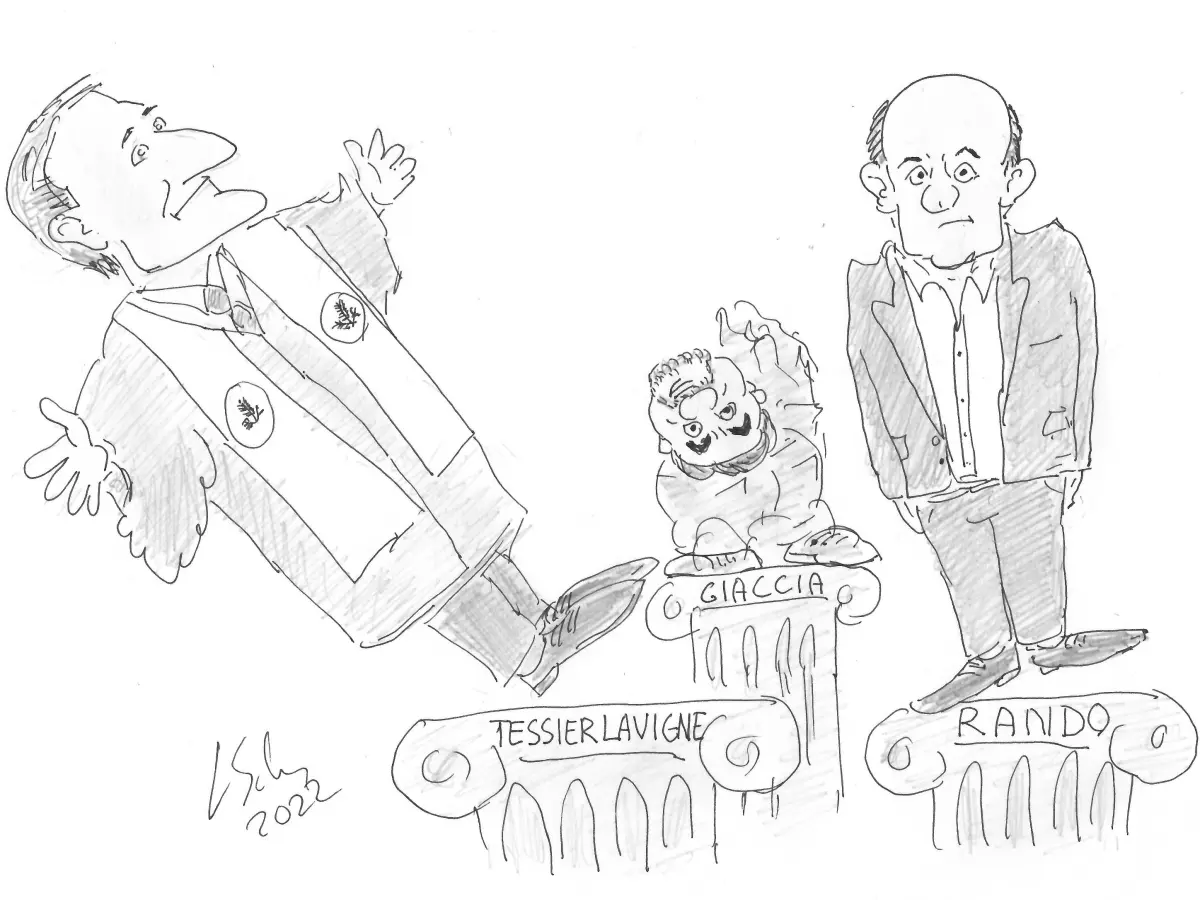
Toppling Giants in Stanford
Everyone is talking about Stanford’s President Marc Tessier-Lavigne now. OK, let’s talk about him, and how Stanford deals with research fraud. And then let’s talk about Thomas Rando.
The book also shines a light on many dedicated scientific sleuths who have worked to expose this multi-billion-dollar waste of public and private funding around Alzheimer’s research. Piller devotes significant attention to Vanderbilt professor Matthew Schrag, his collaborator over the past five years, who played a crucial role in image analysis of various publications, and helped Piller to put the findings in the proper context to bring misconduct to light. He also acknowledges other investigative scientists, including Elisabeth Bik, David Bimler, Sholto David, Mu Yang, Leonid Schneider, Cheshire, and others. At one point, Piller refers to Schneider as a “successful science terrorist” who “sometimes beats mainstream journalists to the punch.” (Here one can only disagree with the word “sometimes”.)
The Pratfalls of Domenico Pratico
Next time you wonder why mouse research does not translate to humans, think of Domenico Pratico work on Alzheimer’s and other brain diseases.
One of the most compelling sections of the book is More Blots, a project in which Piller and Schrag analyzed papers from a number of prolific and highly cited Alzheimer’s researchers. In late 2022, they reached out to PubPeer and requested a database of entries related to Alzheimer’s. They received 5500 entries. They then narrowed down the selection to 65 investigators, and in each case they examined 20-50 papers from them (some of which were already flagged on PubPeer, while others were not). With the help of several additional sleuths who participated in the project, they confirmed many of the original PubPeer posters’ suspicions and identified a shocking number of additional problematic figures not only in papers of previously already mentioned individuals (Lesné, Masliah, Zlokovic etc.) but many additional high- or mid-profile investigators including Adriano Aguzzi, Steven Arnold, Anuska Andjelkovic-Zochowska, Yongliang Cao, Frederic Checler, Webying Fan, Peter St. George-Hyslop, Frank LaFerla, Jarin Hongpasian, Myeong Ok Kim, Salvatore Oddo, Domenico Pratico, P. Hemachadra Reddy, Miao-Kun Sun, Bing-Qiao Zhao. Piller’s group presented massive dossiers to these investigators.
Unsurprisingly, the vast majority of them did not even respond, two exceptions being LaFerla and Aguzzi. LaFerla said that he was “embarrassed, confused and perplexed“. LaFerla and also Aguzzi agreed to initiate retractions and corrections of the problematic papers. In an additional follow-up work Piller also examines who has cited these dubious papers, concluding that the field of Alzheimer’s may be full of concepts that are based on irreproducible or problematic findings.

Aguzzi and the Lowlifes
The prion researcher Adriano Aguzzi used to describe his Pubpeer critics as “lowlifes”, and himself as a victim of a lynch mob. But after Elisabeth Bik helped him find even more mistakes in his papers, Aguzzi changed his stance.
Because the entire More Blots project started out of PubPeer records, many of the individuals named above have already been put into the spotlight via various blogs or articles. The book does not credit individual PubPeer commenters (who, anyway are using pseudonames only), nor does it credit many of the science sleuths who have already exposed some of these investigators. The fact that Aguzzi has already been exposed on For Better Science is, however, mentioned, and the prior work of Clare Francis on exposing St. George-Hyslop and Checler is also mentioned in brackets. Surely, after reading the book, many sleuths will be upset that Piller does not fully credit their work.

The English science supremacy
England leads the world in science, any fule kno. Meet some more of the star jesters: Nick Lemoine, Peter St George-Hyslop and Xin Lu. They are curing cancer and Alzheimer with Photoshop.
I would like to stress that the More Blots analysis focuses solely on image manipulations and duplications and does not consider the possibility that even papers without obvious image issues may contain fabricated or irreproducible data. Schrag’s lab assistant bitterly quips:
“If you cheat, cheat professionally. You cannot be so lazy.”
In other words, image detection only exposed the sloppy cheaters — those who know how to cover their tracks are still undetected and it is anybody’s guess how many of those are hiding in this messy area of research. Indeed, when reading various parts of the book, it almost seems that any Alzheimer’s investigator Piller scrutinizes results in the discovery of problematic papers. When Piller, with the help of Mu Yang, looked at Karen Ashe’s papers that were published without Lesné’s co-authorship, several problems cropped up. When Pillar looked at the papers of Lesné’s French mentors from his PhD days, the same thing. Loose handling of data, problematic analysis and presentation. Even an examination of Schrag’s undergraduate papers on beta-amyloid identified several problems, which, then, led to the discovery of dozens of problematic papers by Schrag’s former mentor, Othman Ghibri, an investigator at the University of North Dakota, whom Schrag always trusted and even lionized. (There are now 13 Ghibri retractions in PubMed, 2 of which have Schrag as a co-author.)
The Claudio Hetz Blues
“…Dr. Hetz seems rather to regret that he did not have better tools for editing the figures, so that the undeclared interventions would have gone unnoticed.” – University of Chile investigative report.
For many readers, the above chapter may be the breaking point for their faith in the “amyloid hypothesis.” Up to this point, one could still hold on to the hypothesis that amyloid accumulation plays a key role in Alzheimer’s pathogenesis. Maybe, some might argue, Aduhelm and Lequembi, which, indeed, remove the plaques, have only marginal clinical efficacy on memory because they were given too late in the disease process. (Indeed, the “amyloid mafia” is now pushing for earlier interventions in pre-symptomatic individuals). Maybe those clinical cases that describe people who have documented extensive amyloid plaques but experience no cognitive decline are protected by some, yet unknown mechanisms. Maybe, maybe, maybe… After reading about the scale of fraud and unreliability in this entire field of research, it becomes impossible not to wonder whether the entire field is built on shaky foundations.
Piller quotes Nobel laureate Thomas Südhof, who suggests that many scientists who produce fraudulent papers are simply trying to follow or build upon existing dogmas — dogmas that may be unfounded. (This situation reminds me of the stem cell therapy / myocardial infarction fiasco by Piero Anversa, which will be familiar to all For Better Science readers and the implications of which, which reverberate to present day, are well exposed in an excellent Reuters investigation from 2022.)
Thomas Südhof and AI-powered weapons of micro-duplication
Thomas Südhof, victim of racist and sexist persecution, announced to retract a second paper, “even though the quantitative analyses and conclusions are correct”.
By the end of the book, Piller switches over to phrasings like “…even if amyloid plays a role…” a tacit acknowledgment that the theory’s credibility has been severely undermined. He devotes his final chapter to a handful of “renegade” scientists who are exploring alternative theories of neurodegeneration.
Overall, I highly recommend this book to For Better Science readers. If you follow this blog, some of the content will be familiar, but the book is quite an eye-opener as it sheds light on the highly problematic “amyloid scientific ecosystem”. Some readers might find that certain topics — like the Lesné affair — are overemphasized, given that it did not directly lead to clinical trials. To me, that infamous, now-retracted Lesné paper feels nothing but a highly publicized, flashy train station on the amyloid railway leading nowhere.
On the other hand, if you closely follow the Cassava and Hoau-Yan Wang saga, you may feel the book is already outdated; since the book went into print, Hoau-Yan Wang has been indicted on criminal charges – indeed a rare event in the field of scientific misconduct. Since the book’s publication, we also learned that Lesné “resigned” from his professorship at the University of Minnesota, and Masliah disappeared from NIH while his retraction count continues to climb. Some readers might also be puzzled that Piller includes commentary from scientists like Südhof and Christian Hölscher, who decry misconduct while carrying significant PubPeer records themselves. Nevertheless, taken together, this is an excellent and much-needed book which paints a damning, deeply depressing portrait of the state of Alzheimer’s research.
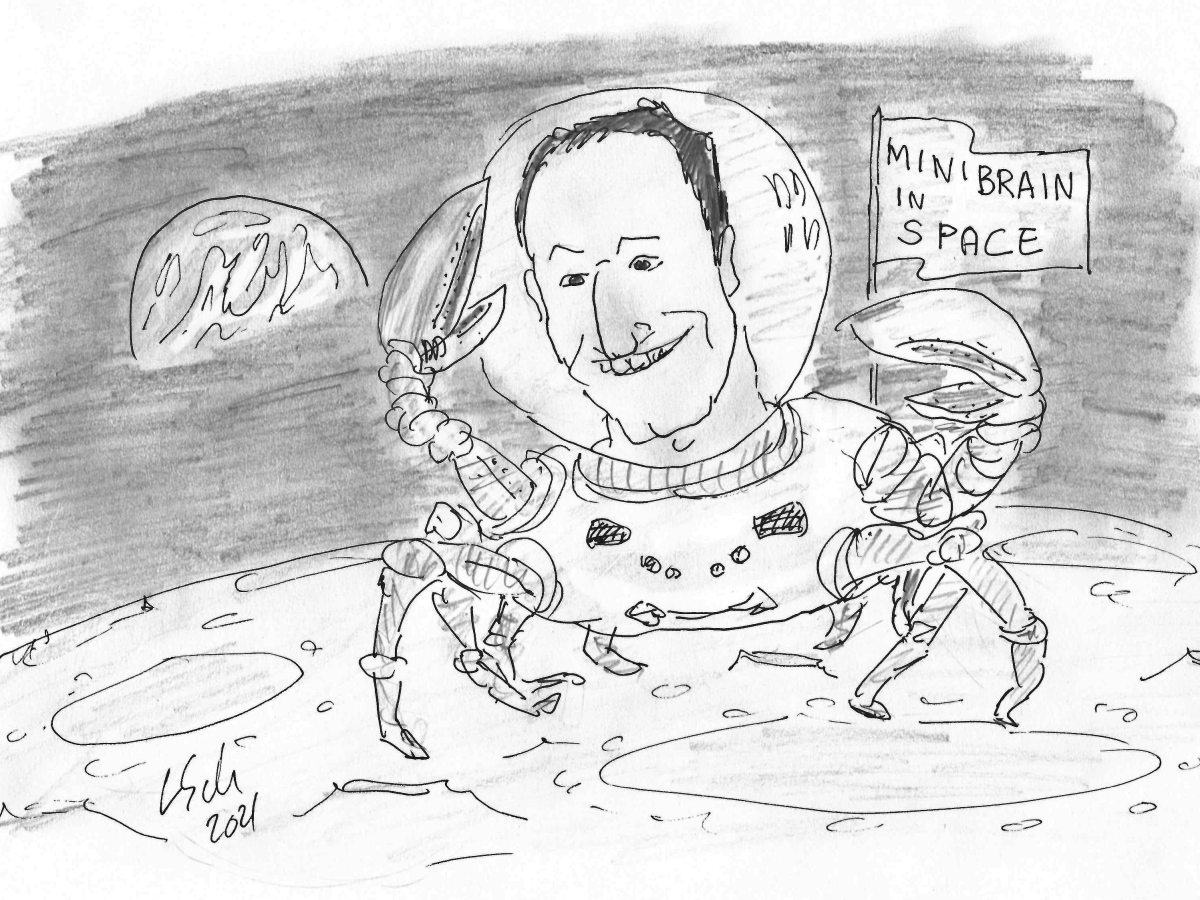
Alysson Muotri, a minibrain
Autistic Neanderthal minibrains operating crab robots via brain waves of newborn babies are to be launched into outer space for the purpose of interstellar colonization. No, I am not insane. Science Has Spoken.
Who, then, should read this book? I think this book is essential for those in the broader scientific community who still believe that the research enterprise is largely self-correcting and that fraud and bias are isolated occurrences rather than systemic issues. It is also crucial for policymakers, funders, and journal editors — those in positions of power who could implement reforms but often remain oblivious to the scale of the problem. And, of course, it should be read by patients and their families, who deserve to know the truth about the scientific and corporate forces that shape the treatments they are offered. If this book accomplishes anything, it should be to shatter the illusion that Alzheimer’s research is on solid footing and to prompt a long-overdue reckoning in the field. Let’s hope that this book will serve as (yet another) wake-up call for urgent scientific reform.
Finally, a few disclosures:
(1) My own book, Unreliable is coming out very soon. It also focuses on the reproducibility crisis – though it covers strictly preclinical research and does not cover translational or clinical Alzheimer’s research.

“Unreliable” by Csaba Szabo – book review and excerpt
Csaba Szabo’s book “Unreliable: Bias, Fraud, and the Reproducibility Crisis in Biomedical Research” – review by Zoltan Ungvari and excerpt.
(2) I do not have any training or background in Alzheimer’s research. And (3) on a personal note, my father passed away from Alzheimer’s seven years ago. So I am especially bitter and resentful to see how Cassava-type execs can build multibillion dollar companies on doctored data, and when the house of cards collapses, they ride into the sunset with nominal fines. My father could have been treated better if this field had been in a different state than what Piller so extensively documents in this book.
Donate!
If you are interested to support my work, you can leave here a small tip of $5. Or several of small tips, just increase the amount as you like (2x=€10; 5x=€25). Your generous patronage of my journalism will be most appreciated!
€5.00

 For Better Science
“…image detection only exposed the sloppy cheaters — those who know how to cover their tracks are still undetected and it is anybody’s guess how many of those are hiding in this messy area of research.“
Exactly, what is detected is just the tip of the iceberg.
In his own book “Unreliable” Dr Csaba Szabo reported illuminating numbers that say all. From Szabo’s book “Unreliable” I copy-paste here below an interesting paragraph:
“The magnitude of the reproducibility crisis had not been tested systematically until recently. When it finally was tested, the results were mind-boggling. In 2011, scientists at the German pharmaceutical giant Bayer made a splash with news that they could not replicate 75 to 80 percent of the sixty-seven preclinical academic publications that they took on.2 In 2012, the hematology and oncology department of the American biotechnology firm Amgen selected fifty-three cancer research papers that were published in leading scientific journals and tried to reproduce them in their laboratory. In 89 percent of the cases, they were unable to do so.3 Several systematic reproducibility projects have been launched subsequently. The “Reproducibility Project: Cancer Biology” selected key experiments from fifty-three recent high-impact cancer biology papers. Although the replicators used the same materials and methods as the original paper, 66 percent of the published work could not be replicated.4 “
LikeLike
David Sabatini is a good example of this – although he’s infamous for blot duplication, he has a considerable number of works that have proven to be irreproducible.
https://pubpeer.com/publications/FF16434DD29EF043FABDDC2F0B5C5B#2
https://pubpeer.com/publications/445D22DC570CE8EA40D82859866EF9#2
https://pubpeer.com/publications/29B225E0B21C50427496F79347F55D#1
https://pubpeer.com/publications/28C1387B5B1CB79B80DA24074061F8#1
https://pubpeer.com/publications/457A1D26443CB105F7B1F471AC3EC4#2
https://pubpeer.com/publications/E6E0D415D9720691C6BFCAA4AFE792#1
https://pubpeer.com/publications/404D69F242438AE190E7BA3E3FA875
LikeLiked by 1 person
Indeed. And the system works: The first author of that first irreproducible paper is an assistant professor: https://cvrc.massgeneral.org/gregory-a-wyant-phd/
That’s right: work for a famous person, be assigned a sexy project, create a narrative that can get into Science, Nature, Cell (that is where the real work and creativity of the project are), and then cherry-pick data or commit fraud to support your hypothesis. Go ahead, that’s the way you do it! I want my MTV!
LikeLike
I finished the book last week, and An Occasional Human Sacrifice a week before. I am working to expose a type of fraud that involves intentionally misrepresenting certain experimental data to create the fraudulent belief that a certain type of (imaginary) pathological cell type exists, that can then be drugged (while making millions developing and selling these compounds). In the book I was struck by the avalanche of obvious image manipulation that it took to rouse those involved. In my situation, meeting this threshold will be much more difficult, as will proving fraudulent intent, as it relies on a sinister and widespread misinterpretation of experimental data rather than Photoshop. I was struck, not surprised, in the book when Piller commented that not one scientist provided raw data. Business as usual.
LikeLike