

There are numerous stories of research integrity officers in universities who publish fake science and then abuse their position to cover it up. But with Professor George we have a very special case of a English fox guarding the British research integrity hen-house.
Meet Andrew John Timothy George, Deputy Vice-Chancellor (Educational and International) at Brunel University London and Emeritus Professor of Immunology at Imperial College London.
“He is a Non-Executive Director of the Health Research Authority, and was previously Chair for the National Research and Ethics Advisors’ Panel (NREAP), for which he received an MBE in 2017. He chaired the advisory group for the Make it Public strategy on research transparency.
(HRA)
He is also co-chair of the UK Committee on Research Integrity and on the Workforce, Training and Education Committee of NHS England.”
On top of supervising all of clinical research in UK as HRA director, in February 2022 George was appointed as one of two chairs of the newly established UK Committee on Research Integrity, UK CORI, its other chair is an anthropologist. UK CORI is funded by the national funder UKRI, and thus the announcement quoted the UKRI Chief Executive Professor Dame Ottoline Leyser:
“I am delighted to announce the appointment of Professor George and Professor Gooberman-Hill as the UK CORI co-chairs.
They are exemplary researchers who will bring both energy and wide experience to the role.”
Professor George was quoted:
“As co-chairs, our vision is for UK CORI to contribute to a values-based approach to research integrity, and we believe in recognising and involving the public as co-owners of research.”

George has his own blog, where he shares his lectures and articles on research integrity. In one post from November 2024, he writes:
“Research that has integrity is carried out in a way that is trustworthy, rigorous, ethical and responsible, which includes rigour and openness. Research that is carried out with poor integrity is not high quality and impacts can be harmful rather than beneficial. “
How very true. And so much wisdom. Britain is so lucky to have such a clever man as Professor George as its highest research integrity authority.
You know where this is going, right? To PubPeer, because two sleuths had a look at George’s papers. And to how George and his Imperial College deal with it. Which may be breathtaking but not really surprising, knowing whom Imperial College installed as its President: Hugh Brady, who has a small PubPeer record of his own. Never corrected.
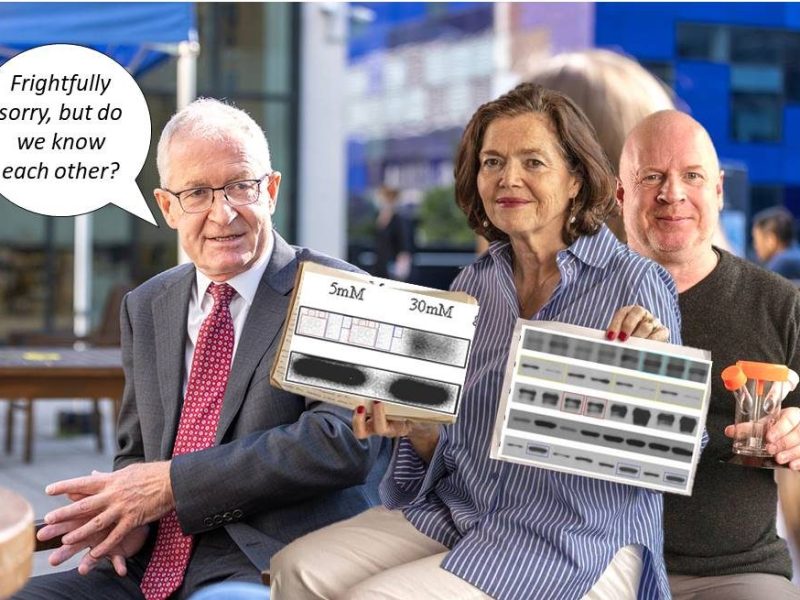
Imperial Irishman Hugh Brady (and his Dublin leprechauns)
When your Irish past catches up with your English future.

Here a new finding for Brady and his protege back in Ireland, Catherine Godson, flagged by the pseudonymous Claire Francis:
Debra F Higgins , David W P Lappin , Niamh E Kieran , Hans J Anders , Ronald W G Watson , Frank Strutz , Detlef Schlondorff , Volker H Haase, John M Fitzpatrick , Catherine Godson, Hugh R Brady DNA oligonucleotide microarray technology identifies fisp-12 among other potential fibrogenic genes following murine unilateral ureteral obstruction (UUO): modulation during epithelial-mesenchymal transition Kidney International (2003) doi: 10.1046/j.1523-1755.2003.00306.x

But we are here to talk about Professor George. He has currently 7 papers on PubPeer, mostly as corresponding author. Still, this could have happened to every senior scientist with many duties outside of the lab. It is however how such senior scientists deal with the evidence of data forgery which matters. Especially if this senior scientist is the nation’s top advocate and authority of research integrity.
Let us begin then. The first author and George’s former mentee Peng H Tan is currently consultant surgeon at Royal Free Hospital in London, the penultimate author Giovanna Lombardi is professor at King’s College London.
Peng H. Tan , Pervinder Sagoo , Cliburn Chan , John B. Yates , Jamie Campbell , Sven C. Beutelspacher , Brian M. J. Foxwell , Giovanna Lombardi, Andrew J. T. George Inhibition of NF-κB and Oxidative Pathways in Human Dendritic Cells by Antioxidative Vitamins Generates Regulatory T Cells The Journal of Immunology (2005) doi: 10.4049/jimmunol.174.12.7633

Mycosphaerella arachidis: “Figure 6B: There are some parts of these western blots that appear to have been spliced together (red triangles). There is one area that was duplicated (blue rectangles, please examine closely, size and brightness is slightly different).”
George replied on PubPeer in May 2024:
“thank you , i will respond when we have had the opportunity to review the information that we have
I wrote to George about these and other PubPeer threads of his, and received on 13 May 2024 this reply:
“I was approached on Friday with questions around figures in publications that I was an author on. There are established processes to investigate concerns of this nature, led by the institution at which the research was carried out. I have proactively sought to initiate the relevant investigations to ensure that the scientific record is accurate and any errors or wrong doing are identified and addressed. I will respond fully when I have had a chance (together with the university) to investigate this.
One of the UK research system’s strengths is having established processes that allow for this review so that we maintain an accurate and robust research record. Promoting and improving this system, and encouraging more openness and transparency, is why I became involved in the UK Committee on Research Integrity.“
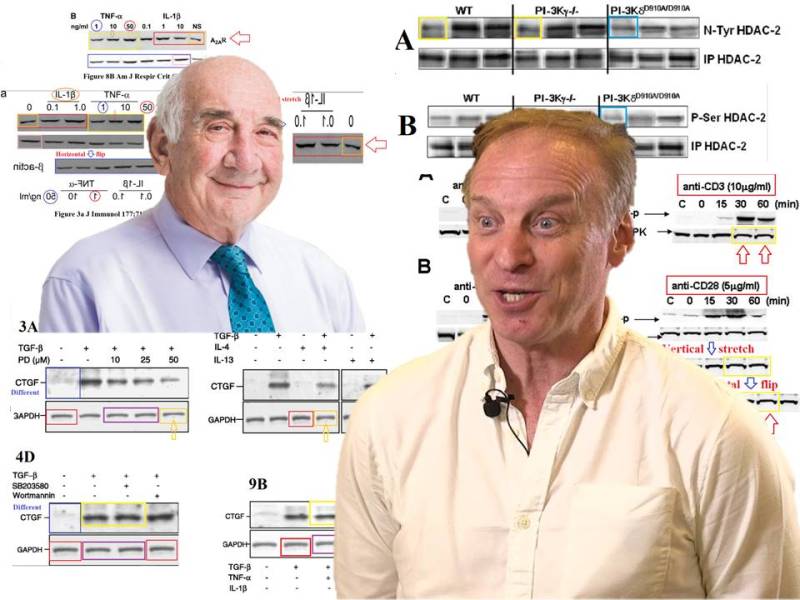
Imperial Adcock – from Barnes to Iran!
“the College would have been well within its rights to reject all of your allegations…”
The famed British established processes delivered as promised. On 1 February 2025, George posted the outcome on PubPeer:
“The authors thank PubPeer reviewers for bringing their concerns about these figures to our attention. We asked Imperial College London to review the figures. They reviewed the processes used to obtain photographs of western blots at the time. While the original data is no longer available, the review considered that the perceived anomalies were most likely to be artifacts of these processes. The review noted that there were some horizontal bands that ran across the alleged vertical splice lines and that this suggested that no splicing had occurred. Enlarging the alleged duplicated bands also showed small differences between them. We have alerted the editors of the journal to the PubPeer comments and shared the findings of the review with them. Given these findings we do not consider it appropriate to take any further action.”
As I said before, that is outrageous, but not unexpected from both George and his Imperial College. In any case, the gel bands are clearly duplicated and the splice lines are evident. George probably behaves like this because this Journal of Immunology and the society publisher American Association of Immunologists (AAI) assured him that they hate PubPeer and everyone who comments there.
How Andrea Cerutti molested and defiled Journal of Immunology
Spain is where dishonest research gets rewarded, with awards, grants and media fame. No wonder the New York-based immunologist Andrea Cerutti opened a second lab in Barcelona.
Another paper by George, this time published in a journal by the European Federation of Immunological Societies. The first author Adnan Khan is now a Fulbright Scholar at University of Iowa in USA, further coauthors include King’s College professor Lombardi, George’s most regular collaborator UCL professor Daniel Larkin, and George’s fellow Imperial professor, Myra McClure. There’s also again a German ophthalmologist named Sven Beutelspacher, who trained at Imperial and at Hammersmith Hospital in London, before returning to Germany to open a private practice where he began to call himself “Professor” (without revealing at which university).
Adnan Khan , Hongmei Fu , Lee Aun Tan , Jennifer E. Harper , Sven C. Beutelspacher , Daniel F. P. Larkin , Giovanna Lombardi , Myra O. McClure , Andrew J. T. George Dendritic cell modification as a route to inhibiting corneal graft rejection by the indirect pathway of allorecognition European Journal of Immunology (2013) doi: 10.1002/eji.201242914

In February 2025, George posted this on PubPeer:
“The authors thank PubPeer reviewers for bringing their concerns about this figure to our attention. We asked Imperial College London to review the figure. Neither we nor the reviewer could reproduce the findings of similarity observed by the PubPeer reviewer. We have alerted the editors of the journal to the PubPeer comments, and shared the findings of the review with them. Given these findings we do not consider it appropriate to take any further action.“
The two gels are clearly identical, except that the second one contains the same fragment TWICE. But then again, George is a wealthy, very influential, and very white and English man, and not some little cheater in Pakistan.

Imperial Piss-Take
“Having reviewed the Conflict of Interest disclosures made by Professor Frost, Professor Holmes and Dr Garcia-Perez, and having also reviewed additional information concerning their company, Melico, […] the College is satisfied that they have no undisclosed or unmanageable conflicts of interests” – Arts Bachelor (Honours)
At another learned society, things were almost this perfect. This paper by George, McClure, Tan and Professor Beutelspacher was stealthily corrected:
Peng H Tan, Shao-An Xue , Maria Manunta , Sven C Beutelspacher , Henrieta Fazekasova , A K M Shamsul Alam , Myra O McClure , Andrew J T George Effect of vectors on human endothelial cell signal transduction: implications for cardiovascular gene therapy Arteriosclerosis Thrombosis and Vascular Biology (2006) doi: 10.1161/01.atv.0000200083.95349.9e
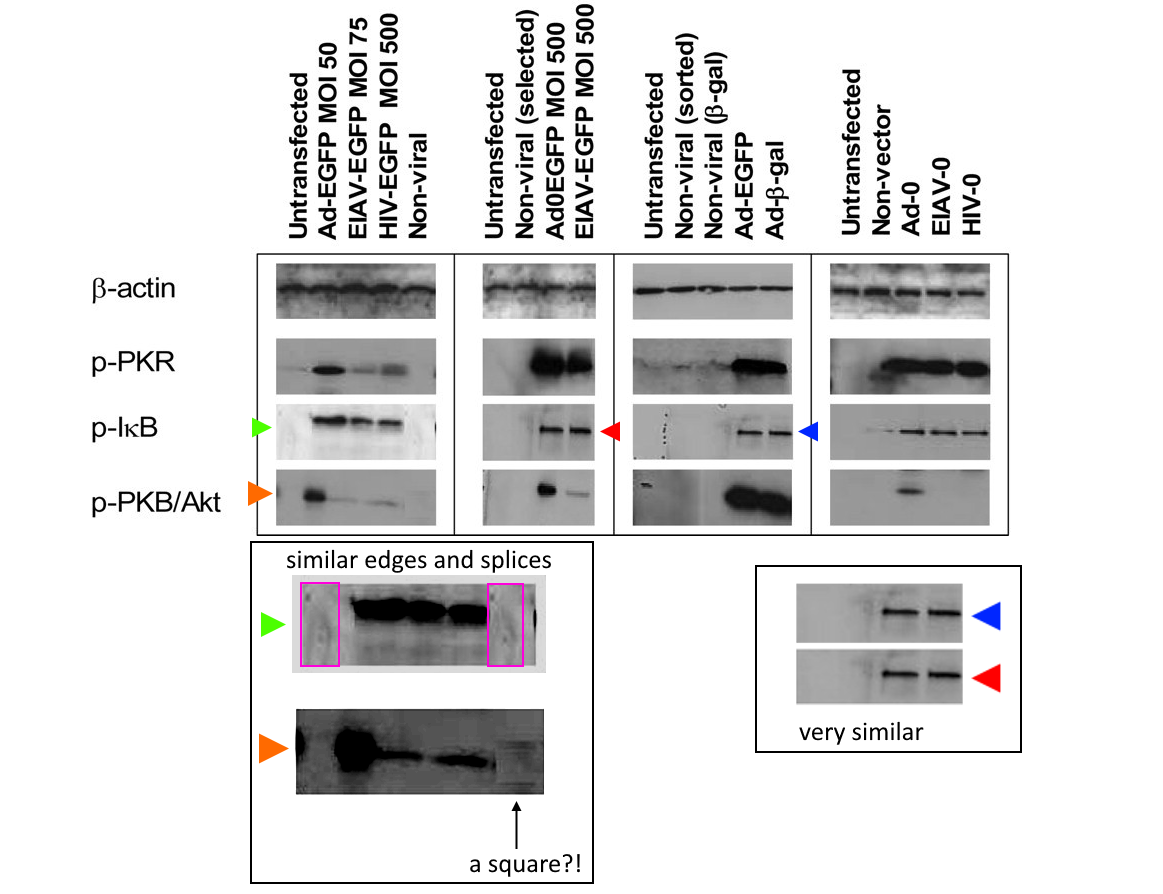
On 1 February 2025, George announced on PubPeer:
“We like to thank PubPeer reviewers for raising these issues. The publication has been reviewed by Imperial College London. As a result of this a correction has been published by the journal.”
In that stealth correction, the publisher American Heart Association simply removed the falsified p-IkB and p-PKB/AKT panels completely, and the main text was modified to refer in this regard to “data not shown“. This is how it looks now:

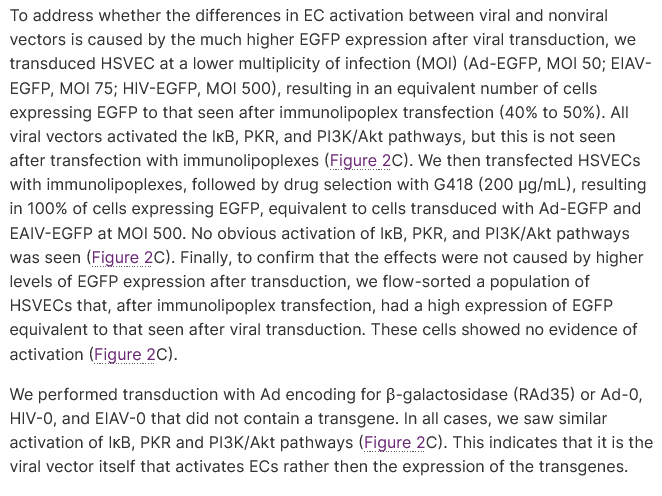
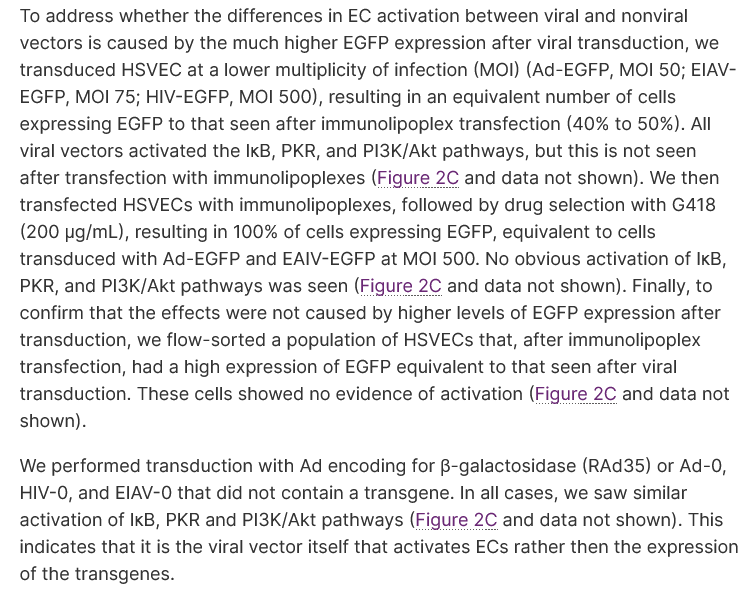
The correction notice was hidden as a pdf in the “Supplemental Material”:
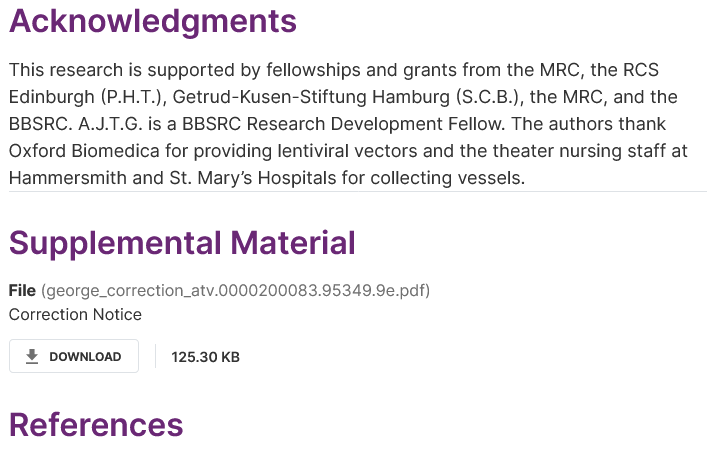
Here is the hidden notice:
“In the article by Tan et al, […] corrections were needed. Upon discovering that Figure 2C included possibly duplicated or anomalous images, the authors, in consultation with the institution, requested a correction. The authors have acknowledged the irregularities but are unable to provide original images owing to the passage of time. To address this, they have requested that both potentially duplicated p-IκB and p-PKB/Akt blots in Figure 2C be corrected by removal; the online version of Figure 2C has been replaced and the figure legend and article text adjusted accordingly. Although the original images are no longer available, the authors stand by the findings in their article.”
Did you notice that in this case, Imperial didn’t deny that the gel fragments were duplicated and that gel lanes were spliced. It all apparently depends on how the journal editors react and which deal they offer.

The English science supremacy
England leads the world in science, any fule kno. Meet some more of the star jesters: Nick Lemoine, Peter St George-Hyslop and Xin Lu. They are curing cancer and Alzheimer with Photoshop.
George made another correction with another society publisher which apparently insisted on adhering to COPE guidelines. At least the correction is clearly visible and properly linked! Pervinder Sagoo (now biotech exec) is first author, UCL professor Larkin is also on board:
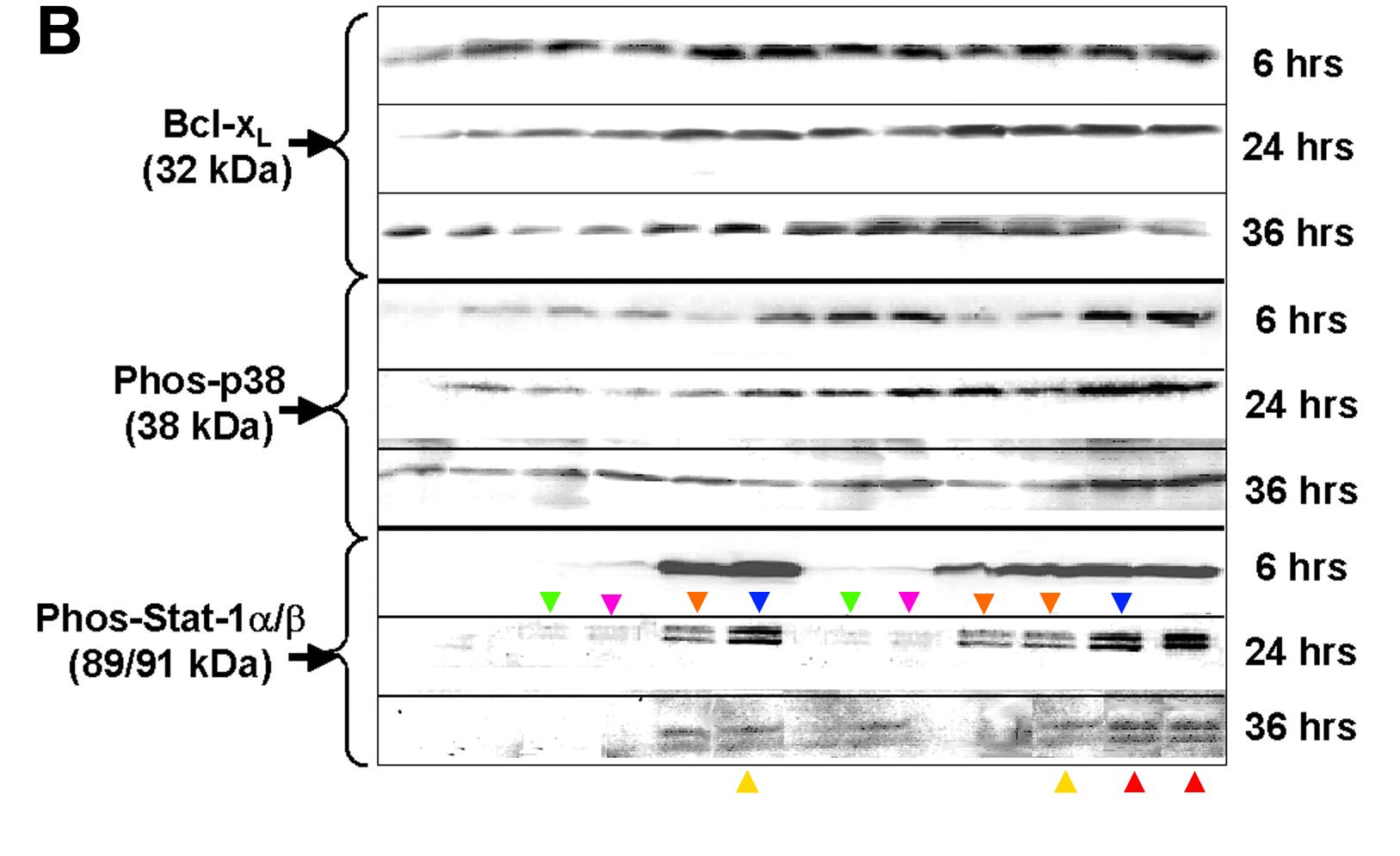
Pervinder Sagoo , Giulia Chan , Daniel F. P. Larkin, Andrew J. T. George Inflammatory Cytokines Induce Apoptosis of Corneal Endothelium through Nitric Oxide Investigative Opthalmology & Visual Science (2004) doi: 10.1167/iovs.04-0439
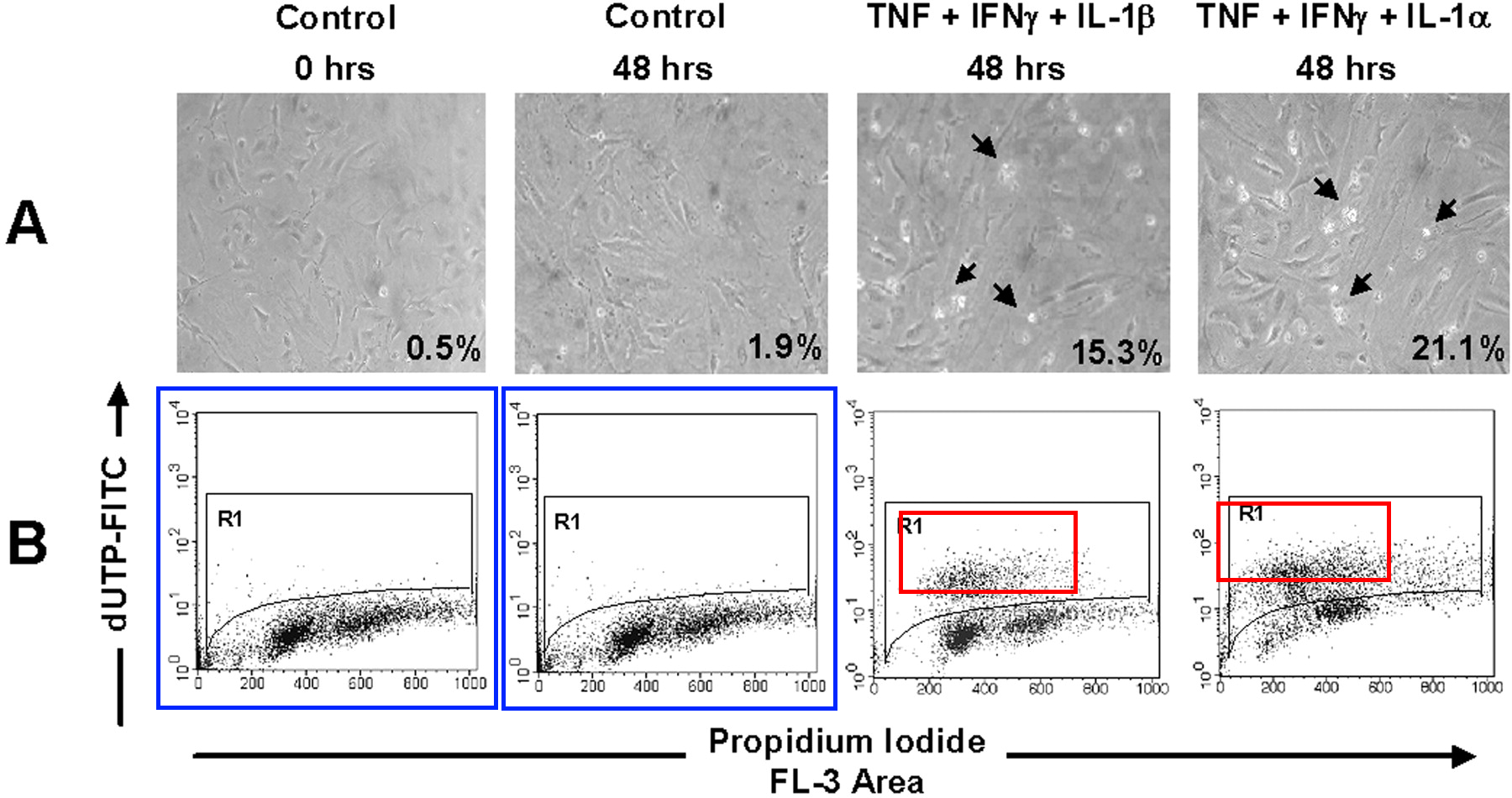

Here, George stated on PubPeer:
“I will raise with the primary author and discuss and then revert when we have had a chance to review the information supplied and that we have.”
The Erratum appeared in January 2025 and admitted most of the findings:
“It has been brought to the attention of the authors that there are anomalies in two of the figures published in this paper. A review by the authors and institution confirms that the following items of the figures are incorrect: In Figure 2, the photographs of cells treated with TNF, IFNγ, and IL1β and with TNF, IFNγ, and IL1α are different pictures of the same culture (right two panels of Fig. 2A). The same negative control flow cytometry profile is shown (left two panels of Fig. 2B), and in Figure 3B there are duplicated bands in the Phos-Stat-1α/β blots at 24 and 36 hours.
The review concluded that these mistakes were due to inadvertent errors when preparing the figures for publication. Unfortunately, as the paper was published 20 years ago, the authors no longer have access to the primary data and so are unable to provide corrections. However, we wish to draw the reader’s attention to these errors. The authors stand by the findings of the paper, noting that these figures are representative of multiple repeat experiments. They would like to apologize to the readers and editors for these mistakes in the preparation of the publication. “
Representative pictures. Of multiple repeat experiments, of which all records are lost.
Dear reader, be reminded that this man is Britain’s research integrity czar, advising all British universities on research misconduct cases. Not just that: George offers his paid constancy services to academic and industry customers with problems in “research ethics”. Rich white men never have any conflicts of interests.

Should we expect any editorial action from this Taylor & Francis journal?
Petros Mouratidis , Andrew J.T. George Regulation of indoleamine 2,3-dioxygenase in primary human saphenous vein endothelial cells Journal of Inflammation Research (2015) doi: 10.2147/jir.s82202
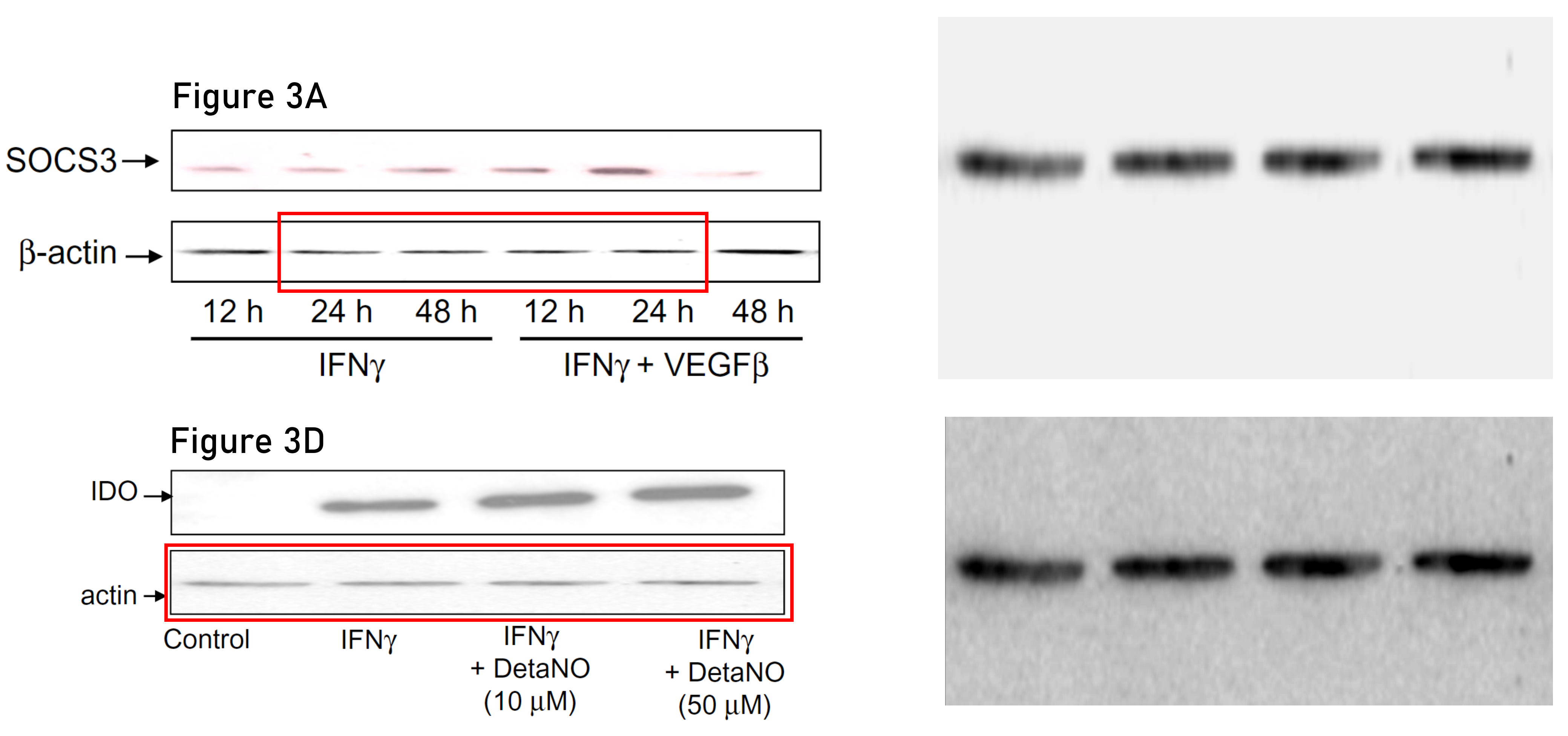
On PubPeer, George announced to “have reached out to my co-author to discuss“. He hasn’t posted any denials of obvious so far, maybe the Imperial College is still negotiating with the editors or searching for an expert to bribe.
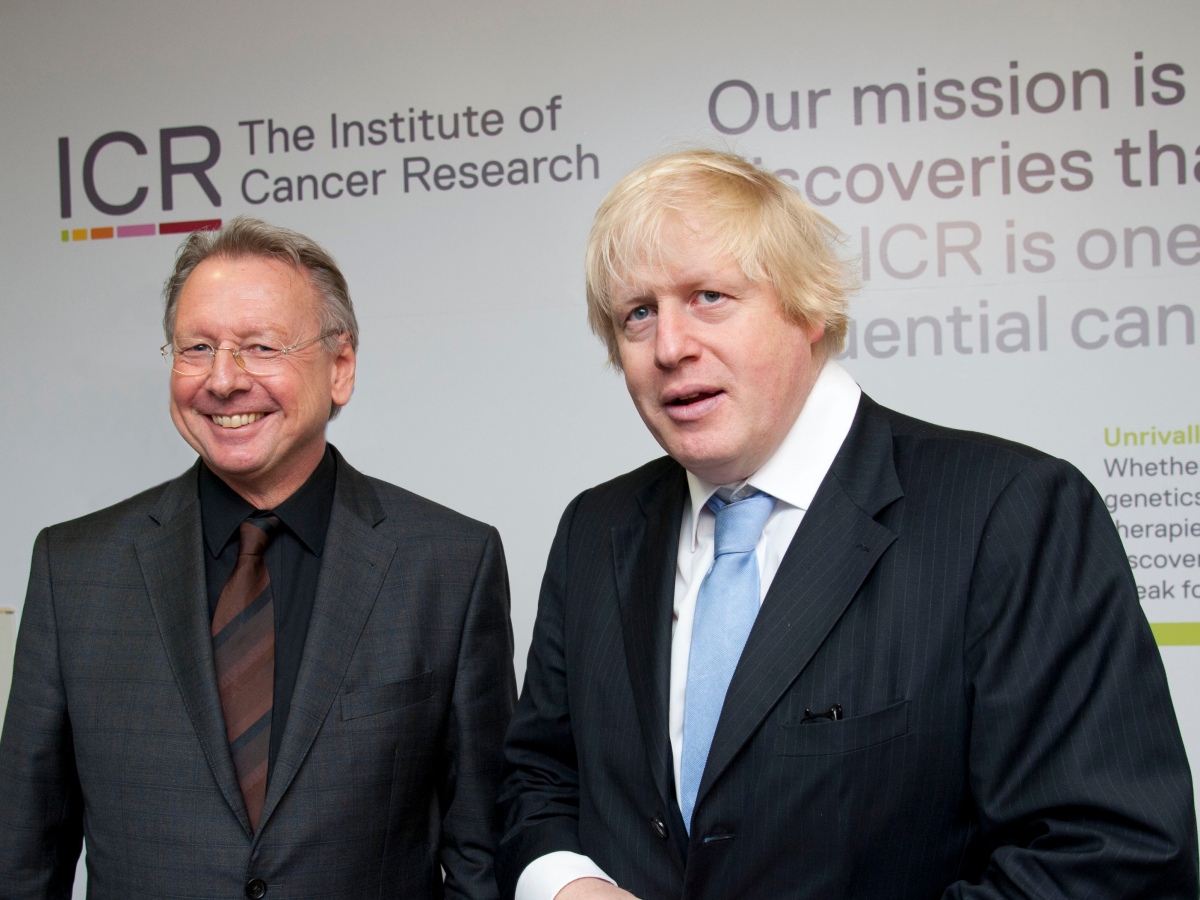
Anyway, George’s only coauthor Petros Mouratidis is currently a Fellow at ICR London, I presume that fudged gel served as his certificate of qualification.
Fake data, untouchable men and guilty women at ICR London
With nobody above him, ICR director Paul Workman was seemingly investigating himself, and found two female colleagues guilty of placing fake data into his papers, primarily the ICR emeritus Ann Jackman. One paper was retracted, another received an outrageous correction. The previous ICR CEO, Alan Ashworth, together with his right-hand man Chris Lord, have their…
Inert gases
One of George’s most regular collaborators is a certain Daqing Ma MD PhD FRCA MAE, full professor of anaesthesia at Imperial College and Executive Vice President of the Association of British Chinese Professors. Here is their common paper, it is about treatment of kidney grafts with xenon before transplantation to prevent chronic allograft nephropathy:
Hailin Zhao , Han Huang , Rele Ologunde , Dafydd G. Lloyd , Helena Watts , Marcela P. Vizcaychipi , Qingquan Lian , Andrew J. T. George, Daqing Ma Xenon Treatment Protects against Remote Lung Injury after Kidney Transplantation in Rats Anesthesiology (2015) doi: 10.1097/aln.0000000000000664
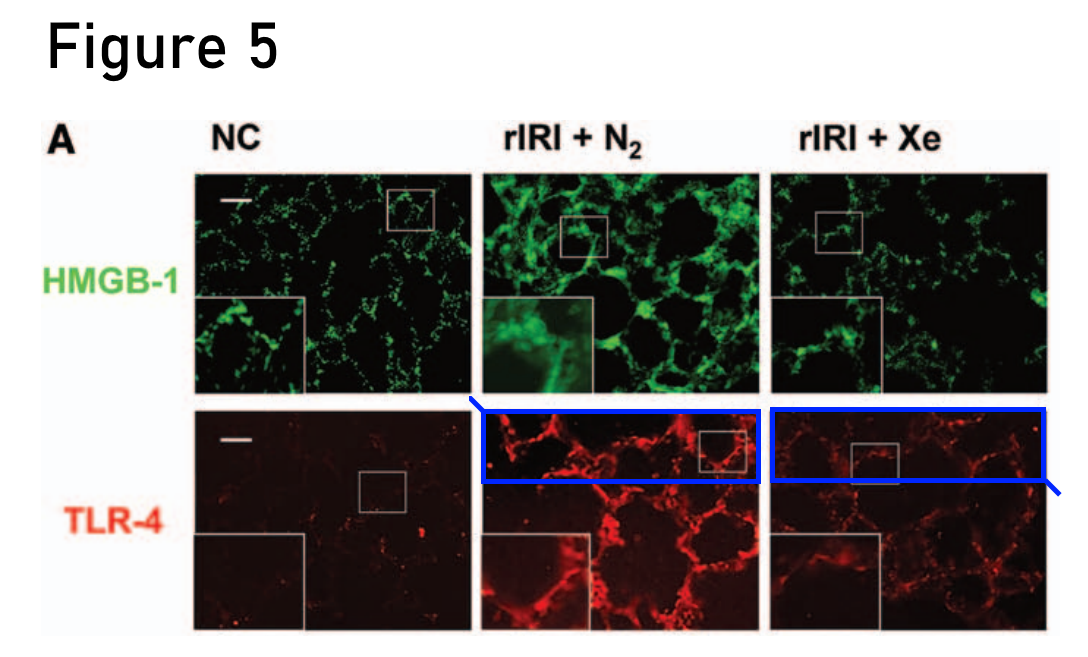
In May 2024, George announced on PubPeer to have “forwarded the email to the collaborator in the laboratory that generated these data” and to “respond once this has been fully investigated“.
The first author Hailin Zhao is a research associate and teaching fellow at Imperial. George, Ma and Zhao have a joint patent issued in 2020 on xenon-based “compositions for organ graft preservation” with “Dexmedetomidine, in combination with/without xenon or argon“. The patent was submitted in 2019 by the US company Nobilis Therapeutics which markets xenon therapies. Ma sits of its scientific advisory board, since April 2016. Ma, Zhao and Nobilis hold together other xenon-related patent, “Stimulation of Regenerative Processes and Factors by Noble Gases“, filed in 2017 and approved in 2019.
Ma and George did correct this paper, again about xenon treatment of kidney transplants:
Hailin Zhao, Xianghong Luo, Zhaowei Zhou, Juying Liu, Catherine Tralau-Stewart, Andrew J.T. George, Daqing Ma Early treatment with xenon protects against the cold ischemia associated with chronic allograft nephropathy in rats Kidney International (2014) doi: 10.1038/ki.2013.334
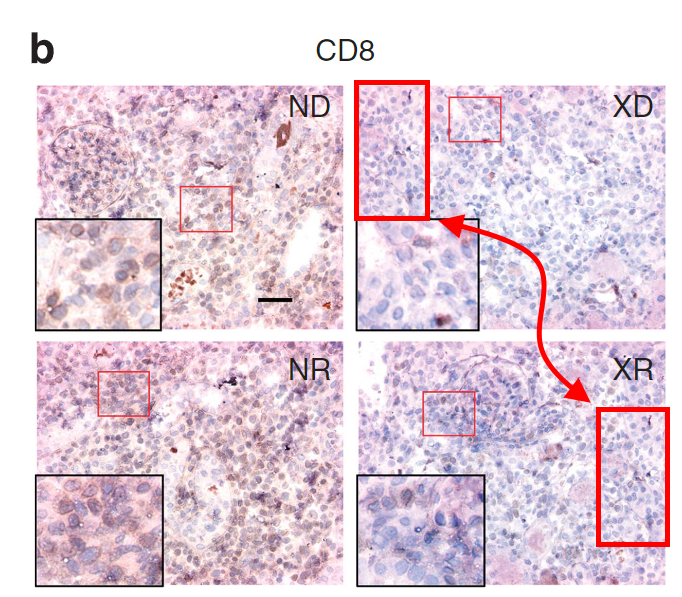
Mycosphaerella arachidis: “Figure 9b: Unexpected overlap between images which should show different experimental conditions.”
The paper was corrected in November 2024:
“After reviewing this article, the authors regret that an error occured in Figure 9b and the incorrect image was used for CD8 XR. The following Figure 9b contains the correct CD8 XR image showing the correct kidney area. The authors would like to apologize for any inconvenience caused.”
There may be a need for a second correction, but then again, Professor George is the expert here:


Fig 9 issues, visualised by Illex illecebrosus

Again, Professor George is the overarching expert here and everything, and yes, the correction kind of closed the case, but maybe this travesty should be retracted? On the other hand, retraction will be bad for the xenon business with Nobilis Therapeutics…
Will it shock you to learn that Ma has other problematic papers on PubPeer? Almost 20 of them!
Again on xenon and kidney transplants, an image reused in two papers about two very different mice and authored by Ma’s collaborator Shuk‐Man Ka, once with Ma and once without:
Shin-Ruen Yang , Kuo-Feng Hua , Lichieh Julie Chu , Yeu-Kuang Hwu , Shun-Min Yang , Chung-Yao Wu , Tsai-Jung Lin , Jui-Chun Weng , Hailin Zhao , Wan-Han Hsu , Feng-Cheng Liu , Wen-Jinn Liaw , Daqing Ma , Shuk-Man Ka , Ann Chen Xenon blunts NF-κB/NLRP3 inflammasome activation and improves acute onset of accelerated and severe lupus nephritis in mice Kidney International (2020) doi: 10.1016/j.kint.2020.02.033

Chung‐Yao Wu , Kuo‐Feng Hua , Shin‐Ruen Yang , Yi‐Shan Tsai , Shun‐Min Yang , Chih‐Yu Hsieh , Chia‐Chao Wu , Jia‐Feng Chang , Jack L. Arbiser , Chiz‐Tzung Chang , Ann Chen , Shuk‐Man Ka Tris DBA ameliorates IgA nephropathy by blunting the activating signal of NLRP3 inflammasome through SIRT1‐ and SIRT3‐mediated autophagy induction Journal of Cellular and Molecular Medicine (2020) doi: 10.1111/jcmm.15663
A related paper by Ma, with his later patented dexmedetomidine method:
Jian Cui , Hailin Zhao , Chunyan Wang , James J Sun , Kaizhi Lu , Daqing Ma Dexmedetomidine attenuates oxidative stress induced lung alveolar epithelial cell apoptosis in vitro Oxidative Medicine and Cellular Longevity (2015) doi: 10.1155/2015/358396

Claire Francis flagged a whole pile of papers by Ma, often for reused western blots like these two recent studies, the first one advocates again for xenon (“The authors declare that the research was conducted in the absence of any commercial or financial relationships that could be construed as a potential conflict of interest“), the other for valproic acid:


More amazing kidney research by Ma:
Rong Chen , Zi Zeng , Yun‐yan Zhang , Chen Cao , Hui‐min Liu , Wei Li , Yang Wu , Zhong‐yuan Xia , Daqing Ma , Qing‐tao Meng Ischemic postconditioning attenuates acute kidney injury following intestinal ischemia-reperfusion through Nrf2-regulated autophagy, anti-oxidation, and anti-inflammation in mice The FASEB Journal (2020) doi: 10.1096/fj.202000274r


Or this, also flagged by Claire Francis, the “corner clones” likely happened because the authors had to edit out the original labels from figures:
Xiongjuan Li , Biqiang Zhou , Han Yang , Xinping Yang , Zhao Zhao , Zhenglong Pan , Xinran Liao , Wenling Jian , Yuqiang Liu , Han Lu , Qingsheng Xue , Yan Luo , Buwei Yu , Huansen Huang , Daqing Ma , Zhiheng Liu Phosphorylation at Ser 727 Increases STAT3 Interaction with PKCε Regulating Neuron–Glia Crosstalk via IL-6-Mediated Hyperalgesia In Vivo and In Vitro Mediators of Inflammation (2022) doi: 10.1155/2022/2782080


Not only blots and microscopy images were inappropriately recycled:
Dan Wang , Yujie Huang , Xinxin Wang , Xinfeng Chen , Jiayan Li , Shuang Zhang , Jiayi Wu , Daiqiang Liu , Daqing Ma, Wei Mei Circadian differences in emergence from volatile anaesthesia in mice: involvement of the locus coeruleus noradrenergic system British Journal of Anaesthesia (2020) doi: 10.1016/j.bja.2020.07.012

In this paper about the benefits of his patented dexmedetomidine (“The authors report no conflicts of interest for this work“), Ma even replied and explained his views:
Qian Chen , Zhigang Qin , Yibing Sun , Xiangfeng Liu , Aurelie Pac Soo , Enqiang Chang , Qizhe Sun , Bin Yi , Dong-Xin Wang , Hailin Zhao , Daqing Ma, Zhigang Qin , Jianteng Gu Dexmedetomidine Activates Akt, STAT6 and IRF4 Modulating Cytoprotection and Macrophage Anti-Inflammatory Phenotype Against Acute Lung Injury in vivo and in vitro Journal of Inflammation Research (2022) doi: 10.2147/jir.s357012
Figure 6G


Ma announced on PubPeer:
“Thanks and the erratum is under processing to correct this minor error.“
People like Ma treat patients and run clinical studies on people, in fact they make huge money with it, what with his industry involvement. Supervised by HTA where George is director.
As reminder, Ma is one of closest collaborators George has, for all we know these men may be close friends. George’s word will be decisive for the direction a possible Investigation of Ma’s papers will take place at Imperial College. Therefore, it is very unlikely to end with misconduct findings, retractions and a sack like with Eric Lam.
Eric Lam: shady research at Imperial to cure breast cancer
Eric Lam is yet another of the many “Curing Cancer with Photoshop” researchers which PubPeer is full of. This professor of molecular Oncology at Imperial College in London is responsible for several papers with duplicated gel bands, but does it matter? He has 250 more.
George is in fact very well connected to China, not just via Ma. This announcement by the Sichuan University (SCU) is from 2018:
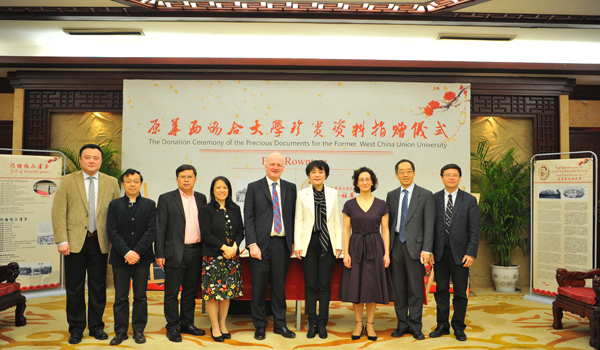
“On March 12th, SCU held a special ceremony for the endowment of documents relating to the former West China Union University (now Huaxi, or West China School of Medicine of Sichuan University) delivered by Andrew George, Deputy Vice-Chancellor of Brunel University London. The documents that the Deputy Vice-Chancellor presented to SCU, and which had been in his family’s possession, are rare materials belonging to the cultural heritage of the university from the correspondence of George’s great-great-grandfather, Scottish architect Fred Rowntree.”
Let me end with a quote from an article George and colleague Gooberman-Hill published last year in a journal of Foundation for Science and Technology, under the title “How can we safeguard trust in science?” :
“Research Integrity is the responsibility of the whole sector. This includes individual researchers, organisations that undertake research, funders, publishers, regulators, and professional or learned societies. One of the dangers is that there can be a tendency for people to blame another party for failings in integrity, whether it be the publishers, funders or universities.”
Note: Some of the above material was previously published in May 2024 Shorts.
Donate!
If you are interested to support my work, you can leave here a small tip of $5. Or several of small tips, just increase the amount as you like (2x=€10; 5x=€25). Your generous patronage of my journalism will be most appreciated!
€5.00

 For Better Science
Should we expect any editorial action from this Taylor & Francis journal?
Petros Mouratidis , Andrew J.T. George Regulation of indoleamine 2,3-dioxygenase in primary human saphenous vein endothelial cells Journal of Inflammation Research (2015) doi: 10.2147/jir.s82202
I think that it is unlikely that the journal will do anything as in most cases the journal will not do anything unless the home institution strongly pushes it to do so.
PubPeer – Regulation of indoleamine 2,3-dioxygenase in primary human s…
The commentator Mycosphaerella arachidis had insight to realise that the very thin actin bands for different sets of experimental conditions might, in fact, be the same. On vertically resizing (that’s the official register way of saying stretching) the bands all the lumps in the same places become apparent.
LikeLiked by 1 person
“Daqing Ma MD PhD FRCA MAE, full professor of anaesthesia at Imperial College and Executive Vice President of the Association of British Chinese Professors.”
Daqing Ma Profile | Imperial College London
“BOC Chair and Head of Anaesthesia of the Division of Anaesthetics”
Exemplary record: PubPeer – Search publications and join the conversation.
I don’t think that imperial is sexist. Here is his female comparator.
Francesca Cordeiro Profile | Imperial College London
M Francesca Cordeiro is “Chair and Professor of Ophthalmology at Imperial College London”
Exemplary record:-
PubPeer – Retinal ganglion cell apoptosis in glaucoma is related to in…
PubPeer – Real-Time Imaging of Retinal Ganglion Cell Apoptosis
PubPeer – Topical Coenzyme Q10 demonstrates mitochondrial-mediated neu…
Exemplary record all round!
LikeLike