

Schneider Shorts of 7 February 2025 – two material science fabricators in Sweden, one established, one just recruited, two innocent white men who fell prey to naughty Pakistani, with a retraction for a Scottish legend, publishers cleaning up, plagiarism from the best, some corrections, and a Springer contractor gaslighting a sleuth.
Table of Discontent
Science Elites
- Internal checkpoints to assure such mishaps – KTH professor Muhammet Toprak announces necessary actions
- An emerging leader – Karlstad University lucky to recruit Salman Raza Naqvi
Scholarly Publishing
- Figures are placed correctly – Springer contractor tells sleuth not to trust his lying eyes
- Due to a production error – PNAS corrects omitted COI
- Targeting pathways – Wafik El Deiry plagiarises from the best
- The authors became aware – Gerry Melino waited a decade to correct a paper
Retraction Watchdogging
- Confirmed independently by others – Sir Philip Cohen loses a paper
- Dr Glass was not aware of the paper – Duke professor framed by papermillers?
- Close to nothing – Raf Dewil’s fairground
- Russell J. Stanford is fictitious – another papermill-invented whitey dies
- Congrats Dr. Nojavan! – Iranian papermiller earns 11 retractions in Elsevier journal which never retracted before
- Incoherent, extraneous text and Tortured phrases – IOS retracts over 400 papers in one go
Science Elites
Internal checkpoints to assure such mishaps
Meet Muhammet Toprak, professor of materials chemistry at Royal Institute of Technology (KTH) in Stockholm, Sweden, where he spent his entire career since his arrival from Turkey for PhD studies almost a quarter a century ago, with a short postdoc break in USA funded by the Wallenberg Foundation.
Toprak works on green chemistry and his eco-friendly research surely will save the world.
U. Kurtan , R. Topkaya, A. Baykal , M.S. Toprak Temperature dependent magnetic properties of CoFe 2 O 4 /CTAB nanocomposite synthesized by sol–gel auto-combustion technique Ceramics International (2013) doi: 10.1016/j.ceramint.2013.01.088

Reese Richardson: “In section 2.1. Chemicals and ıntrumentations, the authors state: “Scanning Electron Microscopy (SEM) analysis was performed […] using FEI XL40 Sirion FEG Digital Scanning Microscope. […]” However, Figure 4 shows images from a JEOL instrument.”
The rest of the data wasn’t convincing either. As if it didn’t come from a Swedish elite university, but from a papermill.
Issues of global relevance
“I like ImageTwin, but seeing things with just eyes is like hand-to-hand combat….” – Mu Yang

Now, to other achievements by Prof Toprak. KTH can pride itself on amazing science like this:
Alaa Khalil, Walaa S. Nasser , T.A. Osman , Muhammet S. Toprak , Mamoun Muhammed , Abdusalam Uheida Surface modified of polyacrylonitrile nanofibers by TiO/MWCNT for photodegradation of organic dyes and pharmaceutical drugs under visible light irradiation Environmental Research (2019) doi: 10.1016/j.envres.2019.108788
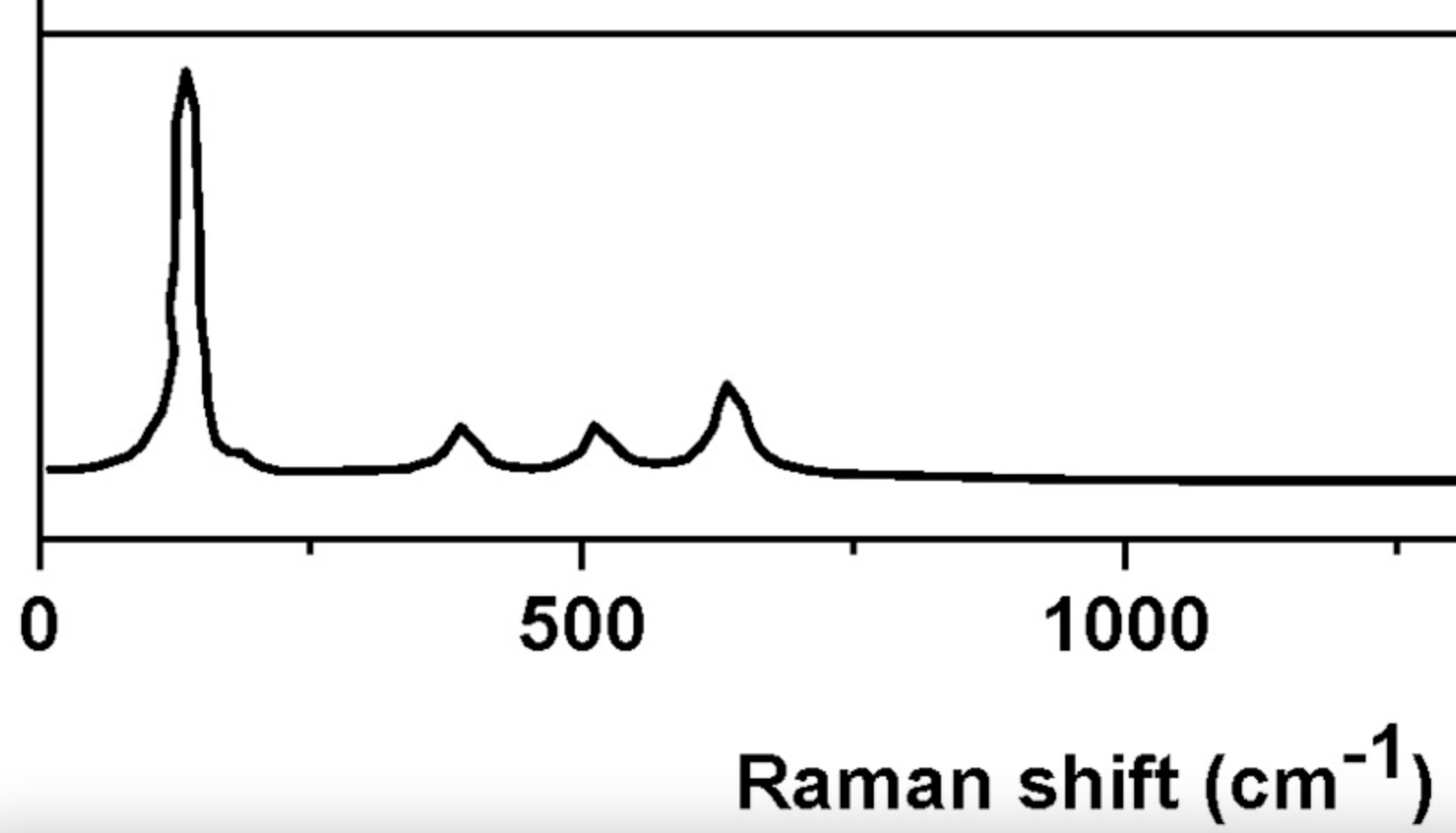
Yes, Fig 4 is clearly hand-drawn. Elisabeth Bik then found more:
“At least five papers now from this research group appear to show the same SEM image of nanofibers, but the experiments appear to be different.“
All have Abdusalam Uheida as coauthor, who is senior researcher at KTH, affiliated with Toprak’s Department of Applied Physics. Another regular coauthor is Alaa Mohamed, who used to be at KTH at some point, but is now postdoc in Aalborg University in Denmark and simultaneously assistant professor at Canadian International College in Egypt.
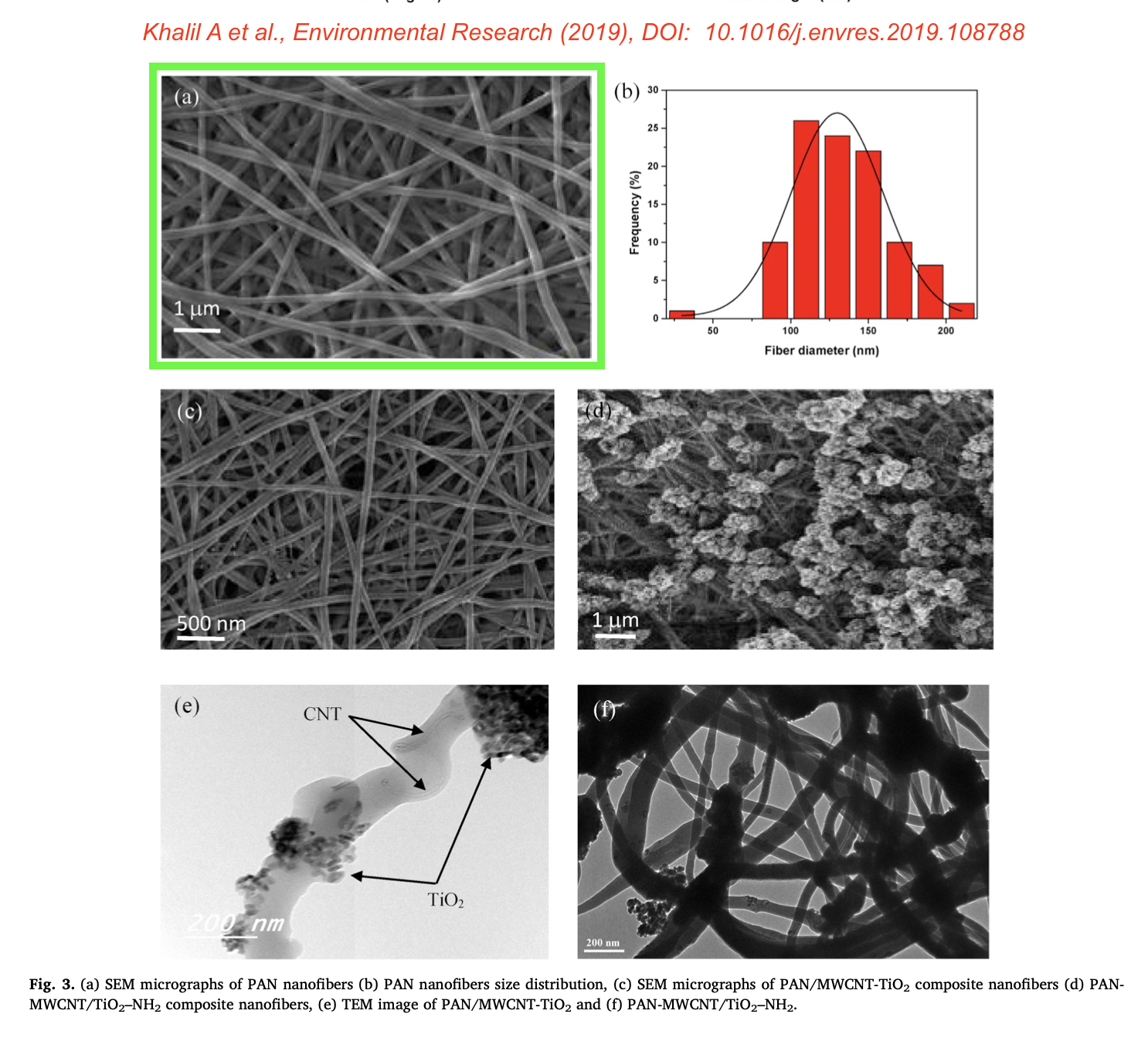
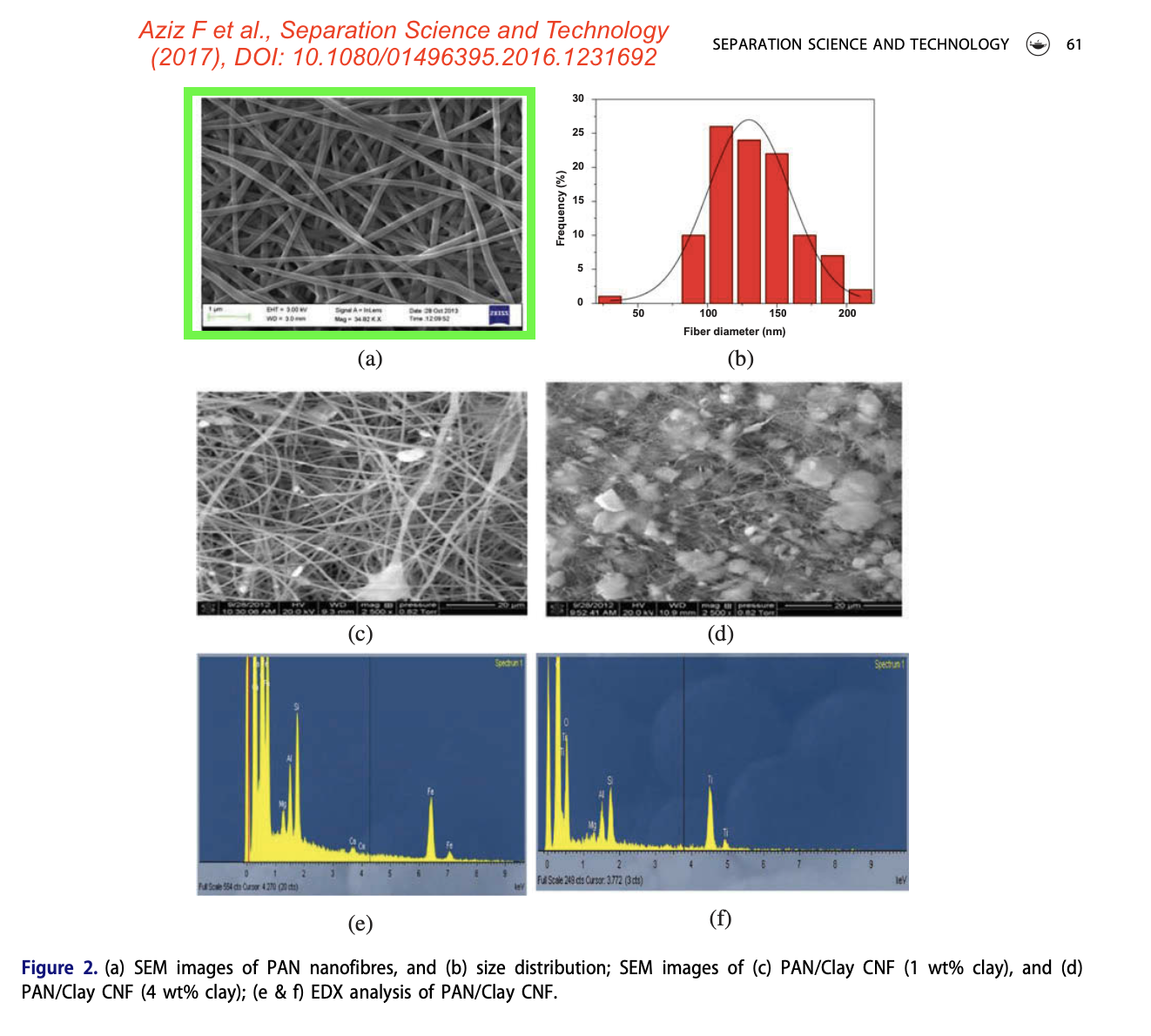

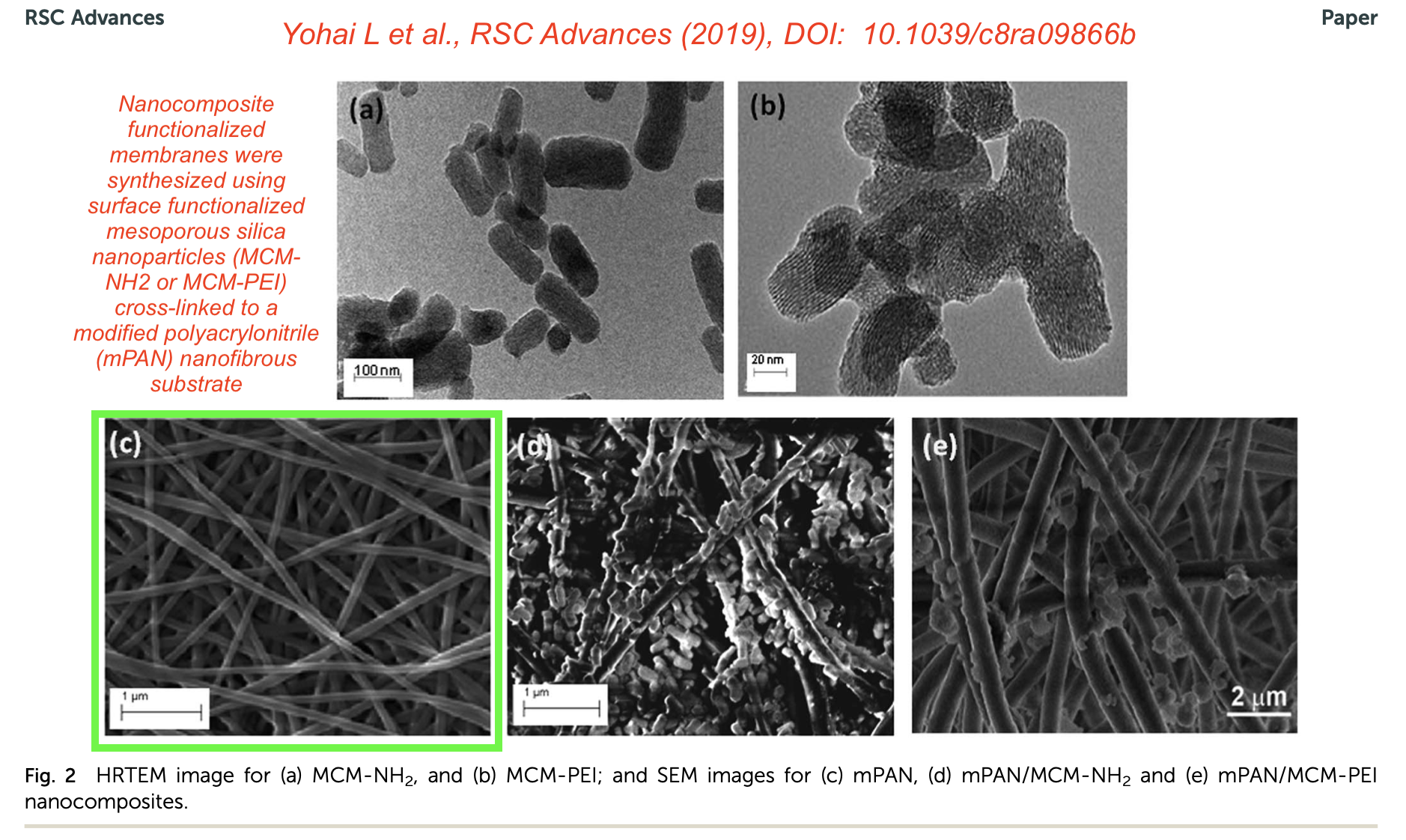
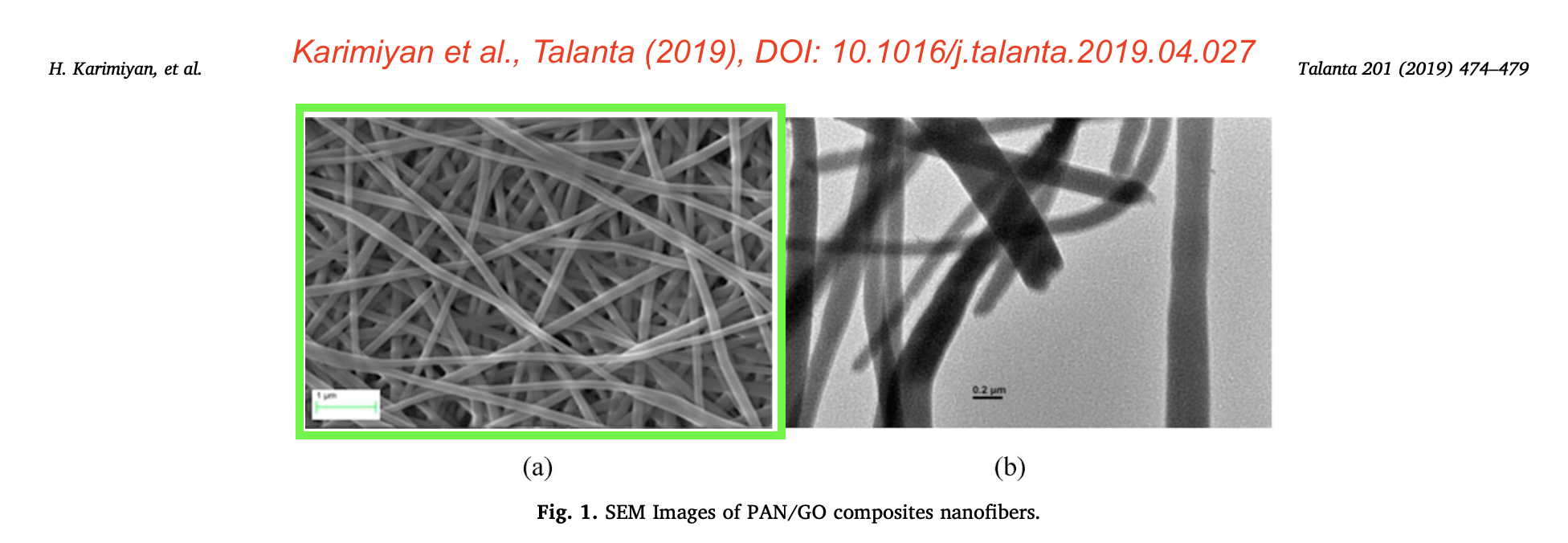
Another PubPeer user found more data reuse in that Khalil et al 2019 paper:

PAN-CNT PAN-TiO2/CNT PAN-CNT/TiO2-NH2″
The other two studies being also authored by Toprak, Uheida and Mohamed:
- Alaa Mohamed , Samy Yousef , Mohammed Ali Abdelnaby , T.A. Osman , B. Hamawandi , M.S. Toprak , M. Muhammed , A. Uheida Photocatalytic degradation of organic dyes and enhanced mechanical properties of PAN/CNTs composite nanofibers Separation and Purification Technology (2017) doi: 10.1016/j.seppur.2017.03.051
- Alaa Mohamed, T.A. Osman , M.S. Toprak , M. Muhammed , A. Uheida Surface functionalized composite nanofibers for efficient removal of arsenic from aqueous solutions Chemosphere (2017) doi: 10.1016/j.chemosphere.2017.04.011
And even more!

The other study being also by Toprak of KTH, again with Uheida and Mohamed:
Alaa Mohamed , W.S. Nasser , T.A. Osman , M.S. Toprak, M. Muhammed , A. Uheida Removal of chromium (VI) from aqueous solutions using surface modified composite nanofibers Journal of Colloid and Interface Science (2017) doi: 10.1016/j.jcis.2017.06.066


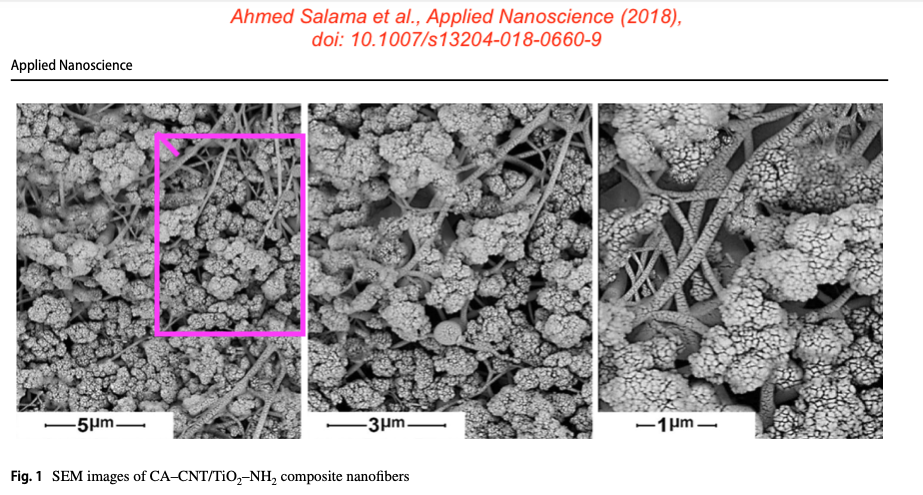
And Mohamed et al 2017 shared data with yet another paper by Toprak and Uheida:
Alaa Mohamed , T.A. Osman , M.S. Toprak , M. Muhammed , Eda Yilmaz , A. Uheida Visible light photocatalytic reduction of Cr(VI) by surface modified CNT/titanium dioxide composites nanofibers Journal of Molecular Catalysis A: Chemical (2016) doi: 10.1016/j.molcata.2016.08.010

If this was not enough papermill fraud, here is Esfahani et al 2024, a fresh publication by Torpak with a certain Rajender S Varma. Who was kicked out in Czechia for papermilling. Twice. And now sports a new affiliation in Brazil.
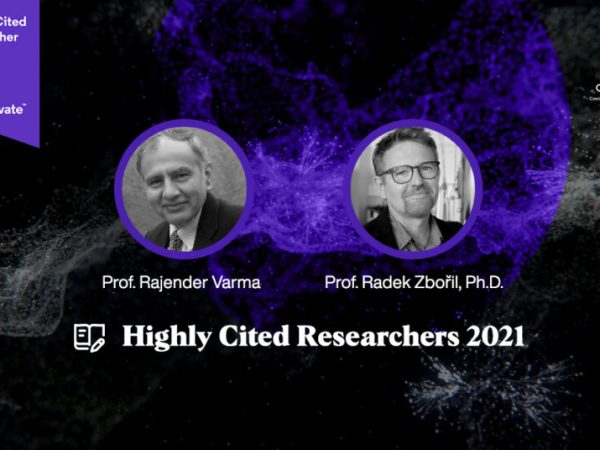
I, Rajender Varma, Highly Cited Researcher
“I could not comprehend the situation where a university picks up on individuals with an extraordinary and sterling performance and basically destroy one of the top European institutions. ” – Raj Varma
The Incorrigible Elsevier
“I woke up seeing Elsevier’s giant middle finger in front of my face.” – Mu Yang

And here is a corrected paper by Toprak with the papermill fraudsters Munirah Almessiere and Alex Trukhanov (read Mu Yang’s article above):
M.A. Almessiere , B. Unal , Y. Slimani , H. Gungunes , M.S. Toprak , N. Tashkandi , A. Baykal , M. Sertkol , A.V. Trukhanov, A. Yıldız , A. Manikandan Effects of Ce–Dy rare earths co-doping on various features of Ni–Co spinel ferrite microspheres prepared via hydrothermal approach Journal of Materials Research and Technology (2021) doi: 10.1016/j.jmrt.2021.07.142
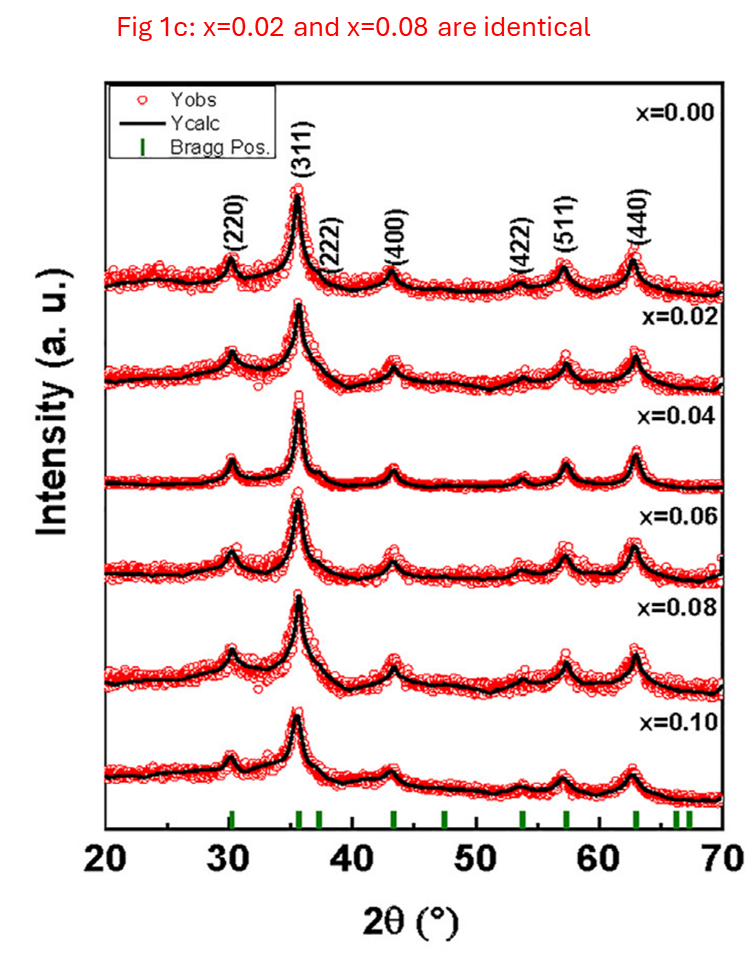
September 2024 Corrigendum: “The authors regret inform that there is an error in Fig. 1c […] as one XRD patent x = 0.02 was unintentionally duplicated with x = 0.08 during the process of copying and pasting multiple times between referment software and origin software. Fortunately, no any of the other results were affected by this unintentional error.”
I wrote to Toprak, but only after I included in cc his university leadership and the Swedish National Board for Assessment of Research Misconduct (NPOF), Toprak replied with this:
“Dear Leonid,
as you can see from the contact details on those articles, I am a collaborator on the works -not the main contact author, contributing to some certain sections depending on where my competence is required. We have internal checkpoints to assure such mishaps would not take place, obviously this has not worked so efficiently in some works.
It is impossible for me to check all the details on the data provided in a drafted manuscript when I receive it, and therefore, I evaluate each article as a standalone document.
I communicated with my colleagues, who are the contact authors, and they have expressed the fact that these were mishaps during insertion of figures, and the original data for the acclaimed samples are in their hand. And also that they would take the necessary actions to do the corrections.“
Anyway, here more mishaps by his valued KTH colleague Uheida (who has much more on PubPeer) and Mohamed:
- Alaa Mohamed, Ahmed Salama , Walaa S. Nasser , Abdusalam Uheida Photodegradation of Ibuprofen, Cetirizine, and Naproxen by PAN-MWCNT/TiO-NH nanofiber membrane under UV light irradiation Environmental Sciences Europe (2018) doi: 10.1186/s12302-018-0177-6
- Abdusalam Uheida, Alaa Mohamed, Majdouline Belaqziz , Walaa S. Nasser Photocatalytic degradation of Ibuprofen, Naproxen, and Cetirizine using PAN-MWCNT nanofibers crosslinked TiO2-NH2 nanoparticles under visible light irradiation Separation and Purification Technology (2019) doi: 10.1016/j.seppur.2018.11.030

NPOF announced to have a look into all this. But Uheida felt there was no need for an investigation, and wrote to me, his university and NPOF:
“We admit this is an honest mistake, not a deliberate action, that does not affect the results of the papers. We have not realized it earlier due to the time stress. Repeatable process for the fabrication of the nanofibrous materials showed that all the SEM images were very similar, which is the reasons that the images have slipped our attention. We acknowledge that these were mishaps during insertion of the figures, and the original data for the acclaimed samples are certainly available in our hand. We regret the lack of attention to details, and will take greater care to ensure distinct images are used for different studies, even when the materials are identical. in order to resolve this issue, we have contacted the journals to do the necessary corrections.”
Uheida also commented on PubPeer, where he “explained” the hand-drawn spectra you saw above:
Abdusalam Uheida: “The unusual feature observed in the first peak of the Raman spectrum in the lower panel may be attributed to experimental conditions, such as baseline noise, laser power instability, or sample properties. In addition, the sample may be contaminated, which could affect the Raman spectrum.”
An emerging leader
Elsewhere in Sweden, another science genius has been just recruited as professor. For the position of university lecturer at the faculty of health, nature and technology science of Karlstad University, Salman Raza Naqvi must have easily pushed outside all his loser competitors with their pathetic CVs.
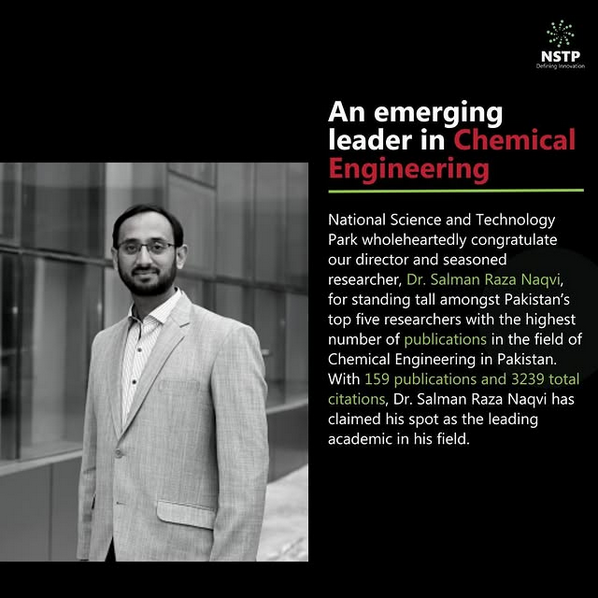
In 2023, Nakvi’s previous employer, the National University of Sciences and Technology (NUST) in Pakistan, proudly extended “warmest congratulations to Engr Dr Salman Raza Naqvi for being honored by the Pakistan Engineering Council PEC) with the PEC Engineers’ Excellence Award — 2023 (Young Technopreneurs).” In 2022, he became director of the National Science & Technology Park (NSTP), due to his “impressive wealth of experience“.
On 5 January 2025, Alexander Magazinov informed the Karlstad University of Nakvi’s horrendous PubPeer record, for papermilling as evident by massively falsified and recycled data, nonsense references or peer review manipulation. These papers were published before Nakvi came to Sweden, thus not subject to an NPOF investigation.

The Highly Cited Researchers of Clarivate
“here is my advice to Clarivate: better get lost. ” – Alexander Magazinov

Is it a clue that Nakvi published together with known papermillers like Rafael Luque (sacked in Spain) while referencing another papermiller and massive citation buyer, Changhe Li (see Nakvi et al 2023)?
Or with Awais Bokhari and the late Jiří Jaromír Klemeš, who even acted as editor of his own paper:
Summaira Malik , Fareena Fatima , Asma Imran , Lai Fatt Chuah , Jiří Jaromír Klemeš , Imran Hameed Khaliq , Saira Asif , Muhammad Aslam , Farrukh Jamil , Abdullah Khan Durrani , Majid Majeed Akbar , Muhammad Shahbaz , Muhammad Usman , A.E. Atabani, Salman Raza Naqvi , Suzana Yusup , Awais Bokhari Improved project control for sustainable development of construction sector to reduce environment risks Journal of Cleaner Production (2019) doi: 10.1016/j.jclepro.2019.118214

All three men published in the Elsevier papermill-infested journal Chemosphere, for example Ahmad et al 2022. Afterwards, Bokhari acted as handling editor of Nakvi’s papers, see Almohammadi et al 2023, Asif et al 2023, Khan et al 2023 etc. Nakvi also ran a peer review ring with the German professor Jörg Rinklebe (according to his University of Wuppertal, never a papermiller!).
Nakvi also had a retraction for plagiarism before Karlstad University recruited him:
Numair Manzoor , Muhammad Sadiq , Muhammad Naqvi , Umair Sikandar , Salman Raza Naqvi Experimental Study of CO2 Conversion into Methanol by Synthesized Photocatalyst (ZnFe2O4/TiO2) Using Visible Light as an Energy Source Catalysts (2020) doi: 10.3390/catal10020163
“Following publication, concerns were brought to the attention of the editorial office by the co-authors regarding overlap with a thesis which was subsequently published [2].
Adhering to our complaints procedure, an investigation was conducted that confirmed the overlap. This retraction was approved by the Editor-in-Chief of the journal Catalysts. All authors except the first author agreed to the retraction.
Retraction 16 March 2022
- Manzoor, N.; Sadiq, M.; Naqvi, M.; Sikandar, U.; Naqvi, S.R. RETRACTED: Experimental Study of CO2 Conversion into Methanol by Synthesized Photocatalyst (ZnFe2O4/TiO2) Using Visible Light as an Energy Source. Catalysts 2020, 10, 163.
- Iqbal, F.; Mumtaz, A.; Shahabuddin, S.; Abd Mutalib, M.I.; Shaharun, M.S.; Nguyen, T.D.; Khan, M.R.; Abdullah, B. Photocatalytic reduction of CO2 to methanol over ZnFe2O4/TiO2 (p–n) heterojunctions under visible light irradiation. J. Chem. Technol. Biotechnol. 2020, 95, 2208–2221.
Then there are fake spectra, flagged by PubPeer user Thallarcha lechrioleuca:


This is also nice:
Ali Ahmad , Salman Raza Naqvi , Muhammad Rafique , Habib Nasir, Ali Sarosh Synthesis, characterization and catalytic testing of MCM-22 derived catalysts for n-hexane cracking Scientific Reports (2020) doi: 10.1038/s41598-020-78746-9

Thallarcha lechrioleuca: “Fig. 2Low angle parts of these patterns are unexpectedly similar. The rest of patterns are different”
Or this, published just before Nakvi arrived to Karlstad:
Muhammad Taqi Mehran , Mutawara Mahmood Baig , Faisal Shahzad , Salman Raza Naqvi , Sajid Iqbal Gamma irradiated structural modification of Ti3C2Tx for high performance supercapacitors and the hydrogen evolution reaction New Journal of Chemistry (2023) doi: 10.1039/d2nj06243g

Veziroglu Journal of Papermill Energy
Mu Yang and other sleuths celebrate the scholarly publishing business of the late T Nejat Veziroglu, laureate of Santilli-Galilei Gold Medal for Lifetime Commitment to True Scientific Democracy
I mean what can you expect from International Journal of Hydrogen Energy:
Umair Sikander , Mohamad Fakhrul Samsudin , Suriati Sufian, KuZilati KuShaari , Chong Fai Kait , Salman Raza Naqvi, Wei-Hsin Chen Tailored hydrotalcite-based Mg-Ni-Al catalyst for hydrogen production via methane decomposition: Effect of nickel concentration and spinel-like structures International Journal of Hydrogen Energy (2019) doi: 10.1016/j.ijhydene.2018.10.224


How about hand-drawn spectra?
Muhammad Shozab Mehdi , Muhammad Taqi Mehran , Salman Raza Naqvi , Shafiq Uz Zaman , Asif Hussain Khoja , Ali Bahadar Catalytic pyrolysis of polyethylene waste with Fuller’s earth clay and metal oxides under mild conditions Materials Today: Proceedings (2022) doi: 10.1016/j.matpr.2021.12.552

And how does this make Karlstad University look?
Tayyaba Noor, Muhammad Mohtashim , Naseem Iqbal, Salman Raza Naqvi , Neelam Zaman, Lubna Rasheed , Muhammad Yousuf Graphene based FeO/NiO MOF composites for methanol oxidation reaction Journal of Electroanalytical Chemistry (2021) doi: 10.1016/j.jelechem.2021.115249

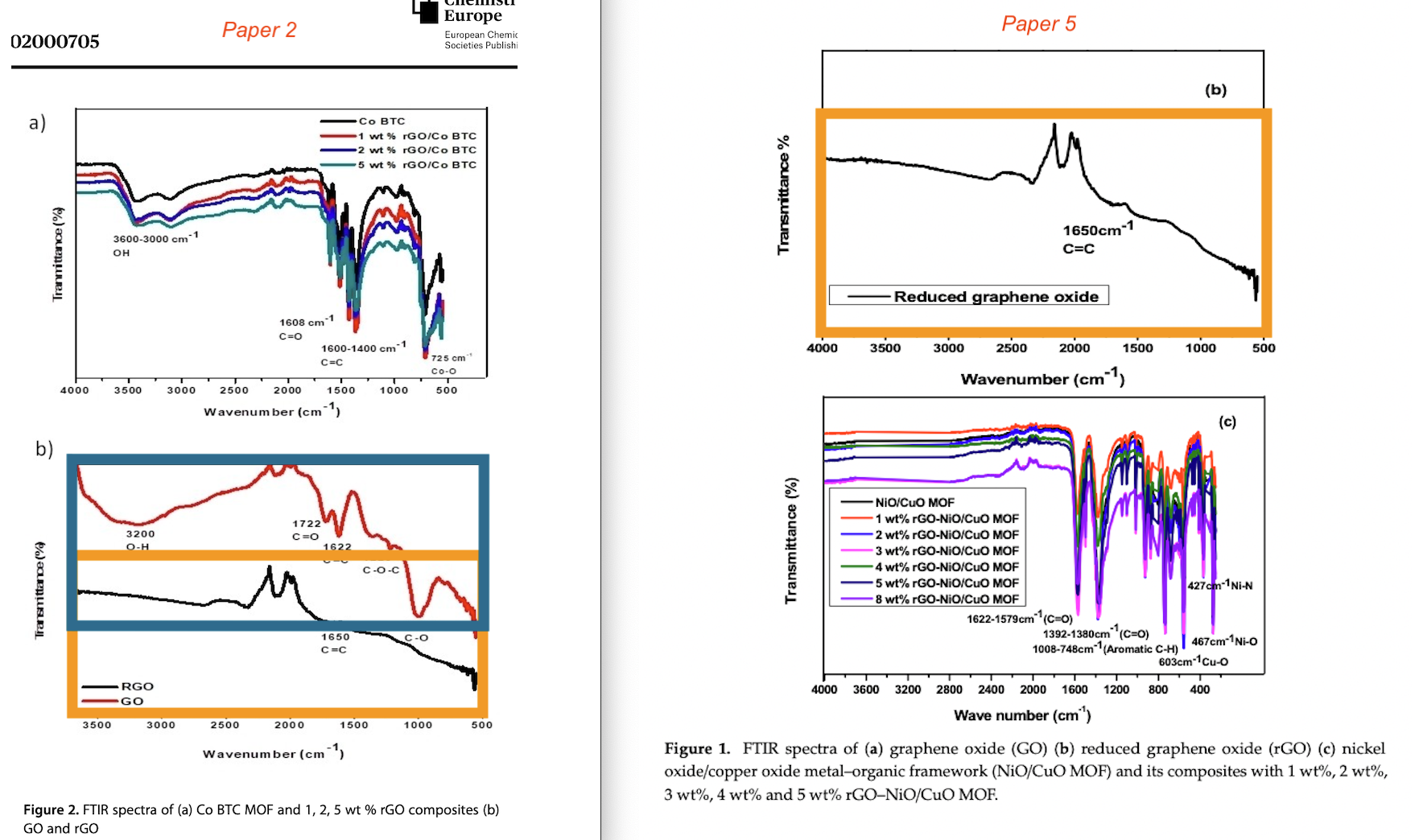

Bik made a list of these 8 papers, I added hyperlinks:
- Lubna Yaqoob et al., Development of Nickel-BTC-MOF-Derived Nanocomposites with rGO Towards Electrocatalytic Oxidation of Methanol and Its Product Analysis, Catalysts (2019), 9, 856; DOI: 10.3390/catal9100856
- Tayyaba Noor et al. – A Highly Efficient and Stable Copper BTC Metal Organic Framework Derived Electrocatalyst for Oxidation of Methanol in DMFC Application – Catalysis Letters (2019), DOI: 10.1007/s10562-019-02904-6
- Lubna Yaqoob et al., Development of an Efficient Non-Noble Metal Based Anode Electrocatalyst to Promote Methanol Oxidation Activity in DMFC, ChemistrySelect 2020, 5, 6023 – 6034, DOI: 10.1002/slct.202000705
- Lubna Yaqoob et al., Nanocomposites of cobalt benzene tricarboxylic acid MOF with rGO: An efficient and robust electrocatalyst for oxygen evolution reaction (OER), Renewable Energy 156 (2020) 1040e1054, DOI: 10.1016/j.renene.2020.04.131
- Tayyaba Noor et al., Nanocomposites of NiO/CuO Based MOF with rGO: An Efficient and Robust Electrocatalyst for Methanol Oxidation Reaction in DMFC, Nanomaterials 2020, 10, 1601, ; DOI: 10.3390/nano10081601
- Lubna Yaqoob et al., Electrochemical synergies of FeeNi bimetallic MOF CNTs catalyst for OER in water splitting, Journal of Alloys and Compounds 850 (2021) 156583, DOI: 10.1016/j.jallcom.2020.156583
- Paper above
- Tayyaba Noor et al., Electro catalytic study of NiO-MOF/rGO composites for methanol oxidation reaction, Electrochimica Acta 307 (2019) 1-12, DOI: 10.1016/j.electacta.2019.03.116
Nakvi is not coauthor on the other 7 papers, but his associate from NUST, Tayyaba Noor, is lead author on all of them.
On 17 January 2025, the registrar of Karlstad University informed Magazinov:
“The matter has been handed to our internal investigation group for examination of deviations from good research practice and will be handled according to Swedish law and our internal guidelines.”
Let’s see how long Nakvi stays.
Scholarly Publishing
Figures are placed correctly
A sleuth reported data manipulation to the publisher. Brace yourself for the response.
This study from Egypt was published in a Springer Nature journal, which self-describes as “a renowned scientific journal committed to advancing Microbiology“:
Radwa N Morgan , Hala A Farrag , Mohammad M Aboulwafa, Sarra E Saleh “Effect of Subinhibitory Concentrations of Some Antibiotics and Low Doses of Gamma Radiation on the Cytotoxicity and Expression of Colibactin by an Uropathogenic Escherichia coli isolate” Current Microbiology (2021) doi: 10.1007/s00284-020-02331-6
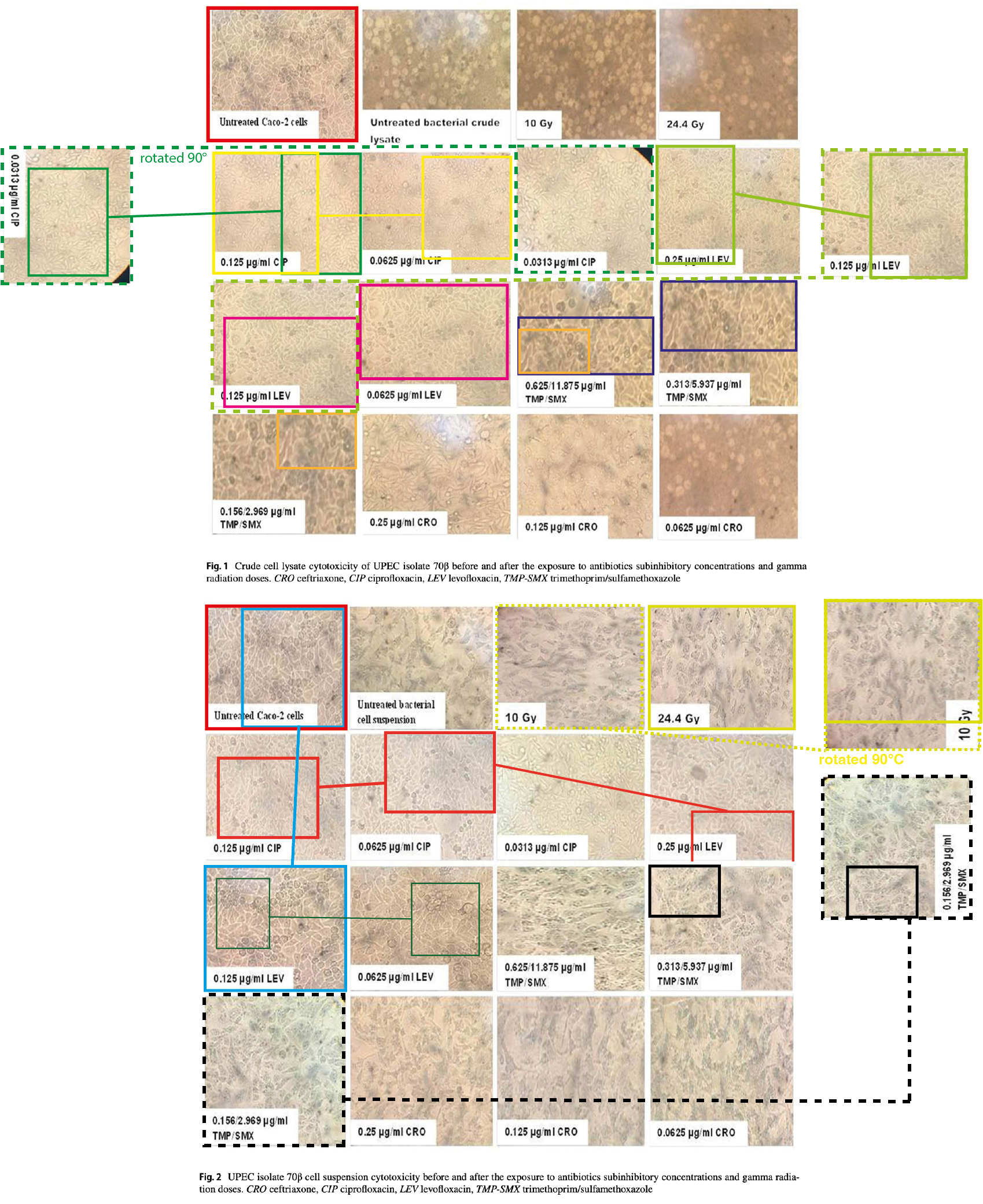
The sleuth contacted the journal, and received on 7 January 2025 this message, not from Springer Nature or the Editor-in-Chief Juan Mondotte of Institut Pasteur, but from an Chennai-based Indian “Production Editor” named Radika Devakumar, working for the data analytics company Straive, which describes itself as “a service provider of Springer Nature“:
“Upon checking, I found that figures are placed correctly and there is no figure overlapping found in the article DOI: 10.1007/s00284-020-02331-6.
Please let me know if you need any further assistance.“
I guess Springer Nature pays Straive a lot of money to cover up fraud and gaslight people like this, something with which this publisher is apparently ashamed to be directly associated.
There is therefore presumably no point to ask Springer Nature or Straive to look into this paper by same authors:
Radwa N. Morgan , Sarra E. Saleh , Hala A. Farrag , Mohammad M. Aboulwafa Prevalence and pathologic effects of colibactin and cytotoxic necrotizing factor-1 (Cnf 1) in Escherichia coli: experimental and bioinformatics analyses Gut Pathogens (2019) doi: 10.1186/s13099-019-0304-y

Archasia belfragei: “Figure 3 shows two panels that are more similar than expected. Panels D and F show different strains / mutants, but D and F are virtually identical once D is resized and rotated.”
Other papers by Mohammad Aboulwafa (Vice dean for Community Service and Environment Development Affairs at Ain Shams University and Chairman of National Organization for Research and Control of Biologicals in Egypt) were flagged by other sleuths, these are in Elsevier:
Mona H. El-Gayar , Khaled M. Aboshanab, Mohammad M. Aboulwafa , Nadia A. Hassouna Antivirulence and wound healing effects of royal jelly and garlic extract for the control of MRSA skin infections Wound Medicine (2016) doi: 10.1016/j.wndm.2016.05.004


And this one:
Amany El-Shahawy Abdel-Maged , Amany M. Gad , Amal Kamal Abdel-Aziz , Mohammad M. Aboulwafa , Samar S. Azab Comparative study of anti-VEGF Ranibizumab and Interleukin-6 receptor antagonist Tocilizumab in Adjuvant-induced Arthritis Toxicology and Applied Pharmacology (2018) doi: 10.1016/j.taap.2018.07.014

Actinopolyspora biskrensis: “The first two lanes of the Western blot in Figure 4A seem like they may be the same, after horizontal flip.”
Due to a production error
The esteemed society journal PNAS corrected a paper, because a reader kept complaining.
The paper promised a new treatment for the incurable and deadly disease Multiple Sclerosis (MS), specifically PIPE-307, “an orally bioavailable, brain-penetrant, small-molecule antagonist” of the M1 muscarinic acetylcholine receptor (M1R):
Michael M. Poon , Kym I. Lorrain , Karin J. Stebbins , Geraldine C. Edu , Alexander R. Broadhead , Ariana J. Lorenzana , Jeffrey R. Roppe , Jill M. Baccei , Christopher S. Baccei , Austin C. Chen , Ari J. Green , Daniel S. Lorrain , Jonah R. Chan Targeting the muscarinic M1 receptor with a selective, brain-penetrant antagonist to promote remyelination in multiple sclerosis Proceedings of the National Academy of Sciences (2024) doi: 10.1073/pnas.2407974121
The reader complained that there was no chemical or structural information provided for PIPE-307, which was strange because the company Contineum Therapeutics where the authors work previously did publish molecular structures in other studies, such as for PIPE-3297 (Schrader et al 2024).

Also, the conflict of interests statements were incomplete or inaccurate with respect to Jonah Chen and Ari Green. A press article by UCSF from 6 August 2024 about this exact publication celebrated these two UCSF professors as the original discoverers who then roped in Continuum as an industry collaborator. The article mentioned:
“Chan and Green also hold financial shares in Contineum Therapeutics but no longer serve in any role.”
Both men are still listed elsewhere as advisors to this company.
It took my reader some time and effort to get PNAS to do something about the omitted COI. On 21 October 2024, the journal issued this Correction:
“Due to a production error, part of the authors’ competing interest statement was omitted during publication. The authors declare the following additional competing interest: “All authors hold financial shares of Contineum Therapeutics.” The online version has been updated.
Competing interest statement: M.M.P., K.I.L., K.J.S., G.C.E., A.R.B., J.R.R., J.M.B., C.S.B., A.C.C., and D.S.L. are current employees of Contineum Therapeutics. All authors hold financial shares of Contineum Therapeutics. Contineum Therapeutics owns patent rights to PIPE-307.”
Production error, seriously?
Targeting pathways
Wafik El Deiry, cancer research professor at Brown University in USA, who became Trump’s anti-qualified candidate to lead the National Cancer Institute (NCI) because El Deiry claimed COVID-19 vaccines would cause cancer, has another achievement. On top of the fact the most if not all of his research papers contain manipulated data.

Wafik El Deiry, the anti-qualified Science Guardian
Both Harvey Risch and Wafik El Deiry are perfectly anti-qualified candidates to lead the National Cancer Institute.
This time is plagiarism. In a literature review, freshly published in a fancy society journal whose editors decided that El Deiry horrible PubPeer record was no cause for any concern. The plagiarism was caught by Sholto David.
Xiaobing Tian , Praveen R. Srinivasan , Vida Tajiknia , Ashley F. Sanchez Sevilla Uruchurtu , Attila A. Seyhan , Benedito A. Carneiro , Arielle De La Cruz , Maximilian Pinho-Schwermann , Andrew George , Shuai Zhao , Jillian Strandberg , Francesca Di Cristofano , Shengliang Zhang , Lanlan Zhou , Alexander G. Raufi , Arunasalam Navaraj , Yiqun Zhang , Nataliia Verovkina , Maryam Ghandali , Dinara Ryspayeva , Wafik S. El-Deiry Targeting apoptotic pathways for cancer therapy The Journal of clinical investigation (2024) doi: 10.1172/jci179570
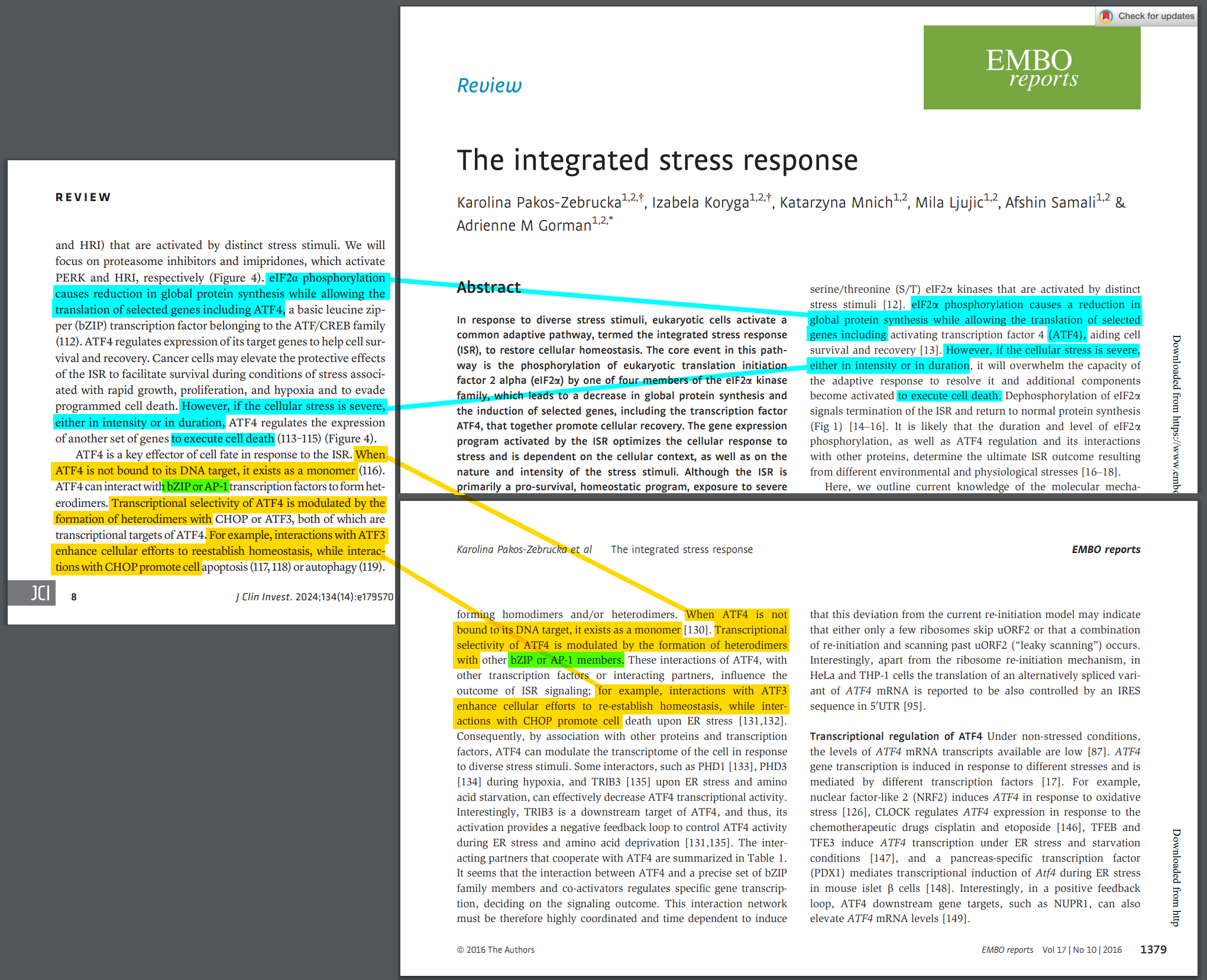
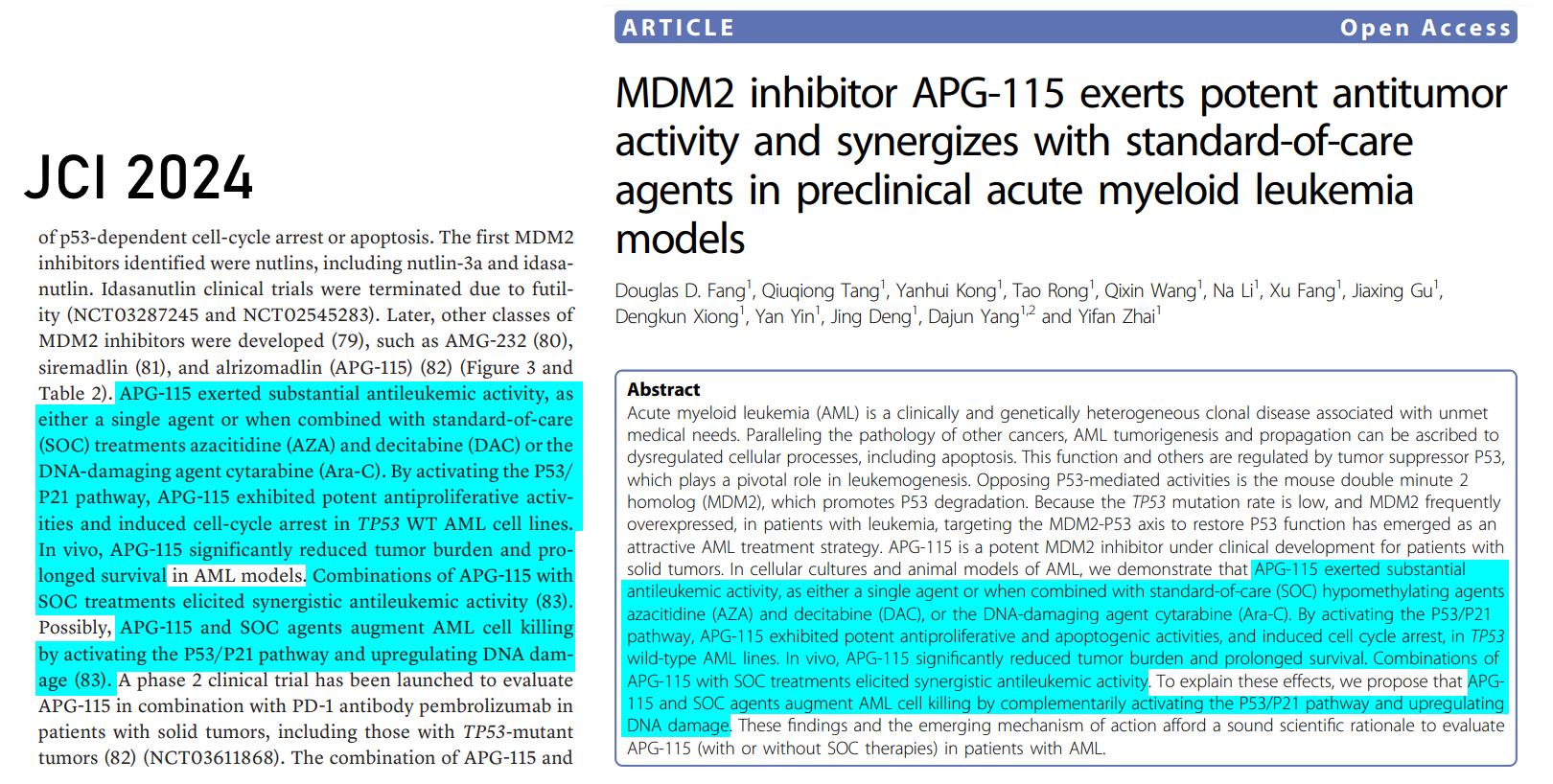
Sholto also found other instances of text copy-pasted verbatim from that Pakos-Zebrucka et al 2016 paper in EMBO Reports from the group in Ireland. Then there was a block of text stolen and slightly modified from a Chinese paper, Fang et al 2021:
And finally, another block of text was stolen from the German study Gieffers et al 2013, coauthored by…. Simone Fulda! Must be some kind of hattip among science cheaters.
Simone Fulda: Open4Work!
“I am taking this step with a heavy heart and a sense of responsibility for the university since a sufficient foundation of mutual trust no longer remained with some parts of the university to ensure successful cooperation”, – Simone Fulda
On that occasion, Sholto checked another very recent El Deiry paper, and found falsified data:
Enguang Yang , Suoshi Jing , Fang Wang , Hanzhang Wang , Shengjun Fu , Li Yang , Junqiang Tian , Dragan J. Golijanin , Wafik S. El-Deiry, Liang Cheng, Zhiping Wang Mesenchymal stem cells in tumor microenvironment: drivers of bladder cancer progression through mitochondrial dynamics and energy production Cell Death & Disease (2024) doi: 10.1038/s41419-024-07068-9
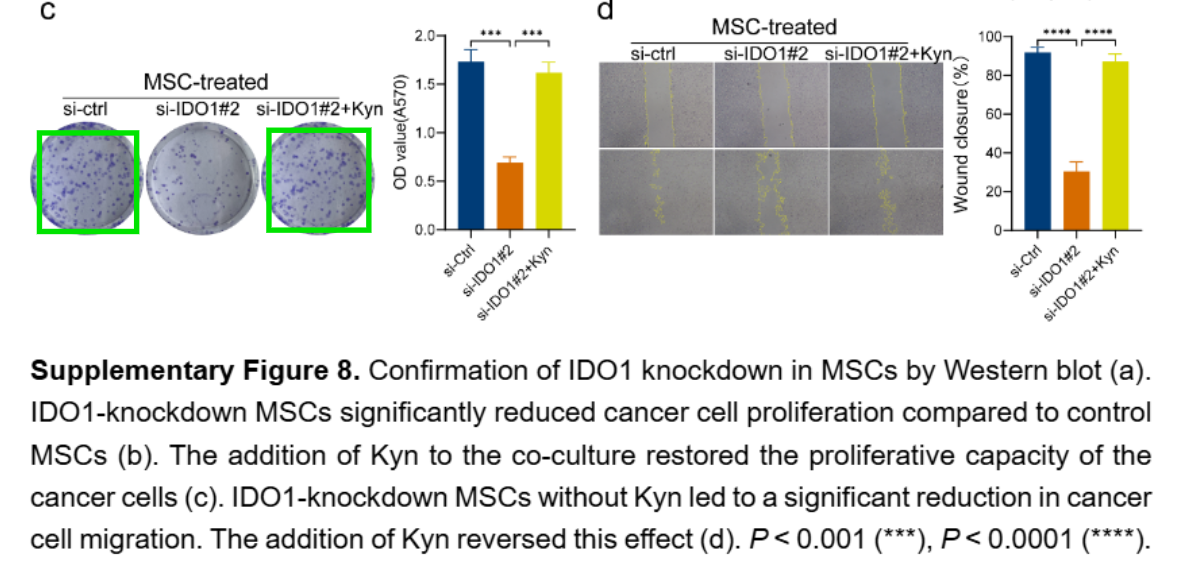
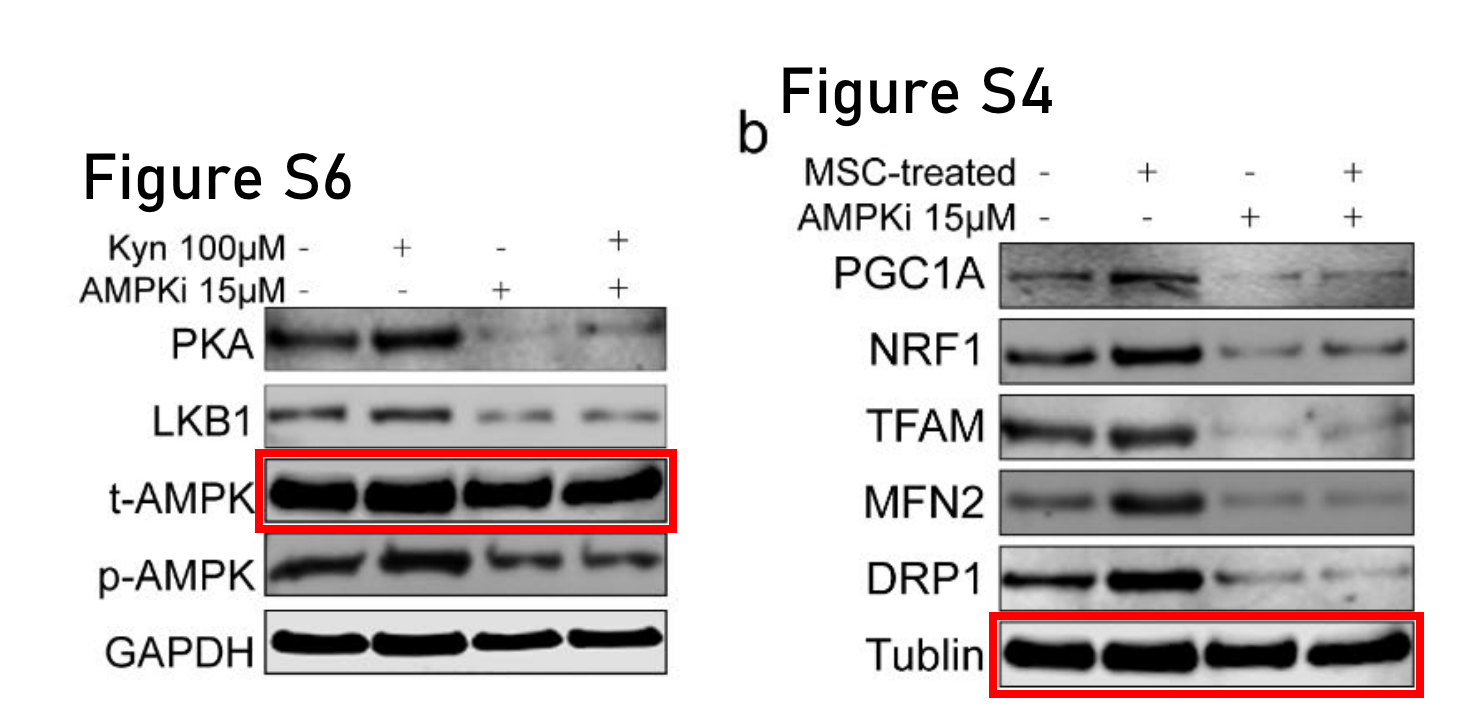
That journal Cell Death & Disease specialises on fraud anyway, but rest assured, no journal and no publisher will dare to retract El Deiry’s papers. The man is protected by Trump. Instead, we will soon see mass retractions of research papers which contained words Trump doesn’t like.
The authors became aware
Speaking of Cell Death & Disease. Its editors Gerry Melino (“MD (Rome), PhD (London), Dr Sci hc (St Petersburg)“), Boris Zhivotovsky and Richard Knight corrected a paper. Another coauthor is Gerald Cohen, Melino’s fellow professor at University of Rome Tor Vergata in Italy. Read about them all here:
Cell Death and Depravity
Is the journal Cell Death and Disease a disease itself, parasitised by Chinese paper mills? Can it be cured? Not with this team of doctors on editorial board.
Here is the masterpiece, in a fellow Springer Nature journal. Its Figure 5a was flagged on PubPeer already in 2015, for a decade Melino was way too busy to bother, after all he has 60 papers on PubPeer:
A E Sayan , B S Sayan , V Gogvadze , D Dinsdale , U Nyman , T M Hansen , B Zhivotovsky , G M Cohen , R A Knight , G Melino P73 and caspase-cleaved p73 fragments localize to mitochondria and augment TRAIL-induced apoptosis Oncogene (2008) doi: 10.1038/onc.2008.64

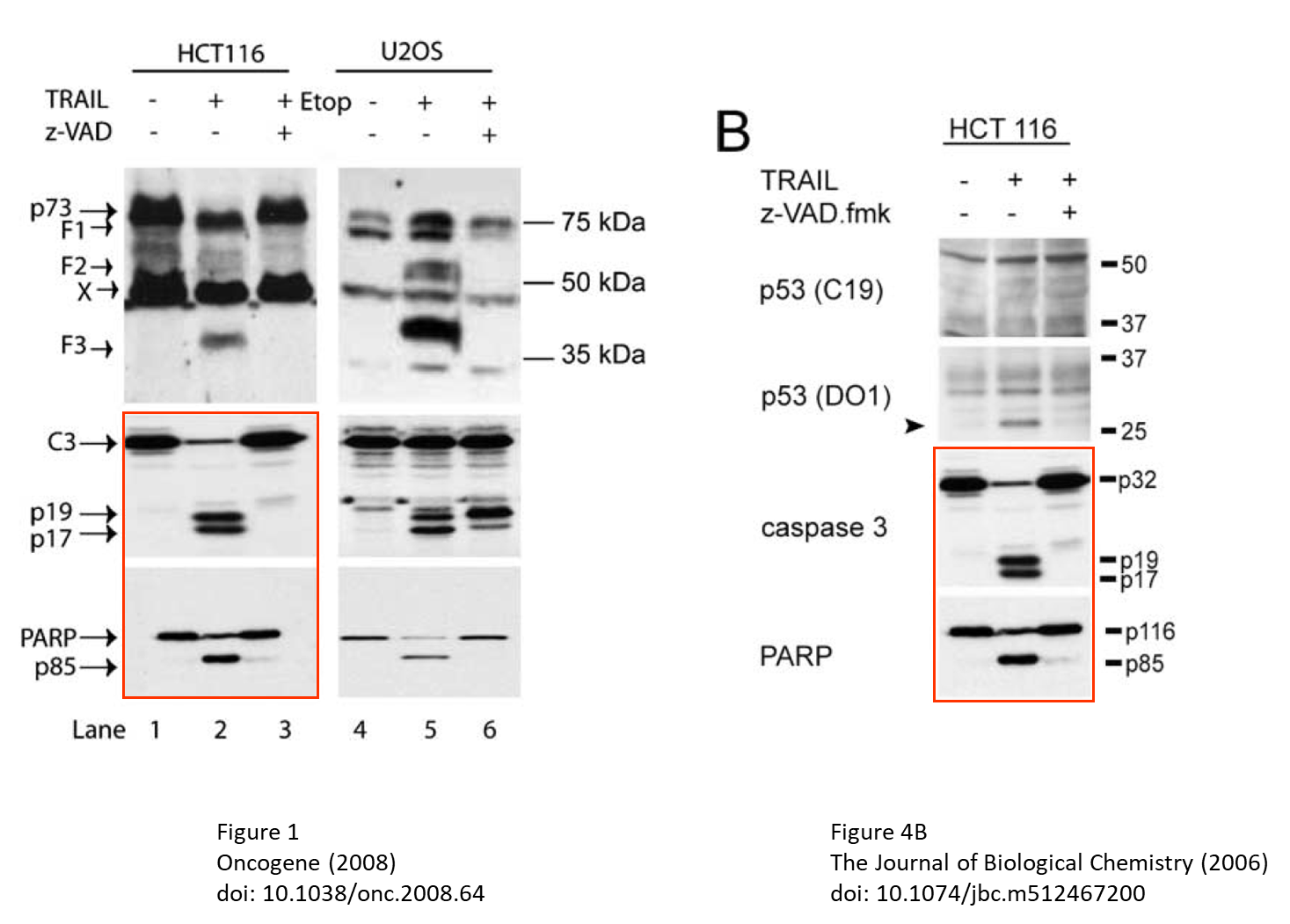
The other paper Sayan et al 2006 has same authors except for Zhivotovsky and the four before him.
On 22 January 2025, a Correction was finally published:
“Following the publication of this article, the authors became aware of an error in the final assembly of Fig. 5a for the image displaying the loading control. The authors have provided the original blots and therefore an updated version of the panel, in which the blot image for loading controls has been replaced with the correct blot. The description of the results and the figure legend remain unchanged. In the same paper, the legend to Figure 1 failed to omit the identity with the reported reference (Sayan et al. 2006). The authors confirm that the conclusions of the article are not affected by this correction. The authors apologize for any inconvenience this may have caused for readers.”
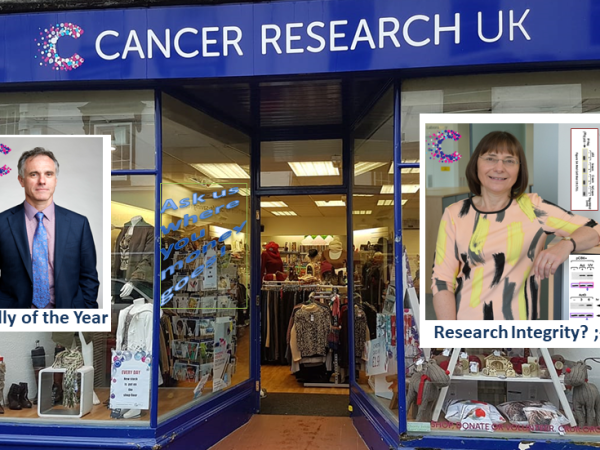
The Crooks of CRUK
Cancer Research UK is a charity which relies on donations, volunteer work and fundraising. What if these citizens knew their money goes to fund bad science?

Dirty Old Men
Does being a science genius entitle you to sexual harassment, as academic authorities in Yale and elsewhere insist? Let’s look at papers by Michael Simons, Joseph Schlessinger and Arnold Levine.
Melino and Knight may need to correct two more papers which they in fact previosuly corrected. Both in PNAS:
- Paola Tucci , Massimiliano Agostini, Francesca Grespi , Elke K. Markert , Alessandro Terrinoni , Karen H. Vousden, Patricia A. J. Muller , Volker Dötsch , Sebastian Kehrloesser , Berna S. Sayan , Giuseppe Giaccone , Scott W. Lowe , Nozomi Takahashi , Peter Vandenabeele , Richard A. Knight , Arnold J. Levine , Gerry Melino Loss of p63 and its microRNA-205 target results in enhanced cell migration and metastasis in prostate cancer Proceedings of the National Academy of Sciences of the United States of America (2012) doi: 10.1073/pnas.1110977109
- Alessandro Terrinoni, Valeria Serra , Ernesto Bruno , Andreas Strasser , Elizabeth Valente , Elsa R. Flores , Hans Van Bokhoven , Xin Lu , Richard A. Knight , Gerry Melino Role of p63 and the Notch pathway in cochlea development and sensorineural deafness Proceedings of the National Academy of Sciences of the United States of America (2013) doi: 10.1073/pnas.1214498110
As you see, the first one has as coauthors Karen Vousden, Scott Lowe, Peter Vandenabeele and Arnold Levine, the latter is not just a science cheater but also a sexual predator (read above). It was corrected in January 2014 because “in Fig. 3D, the control ChIP for MDM2 erroneously duplicated a p53-RE-III panel from an earlier paper (1).“
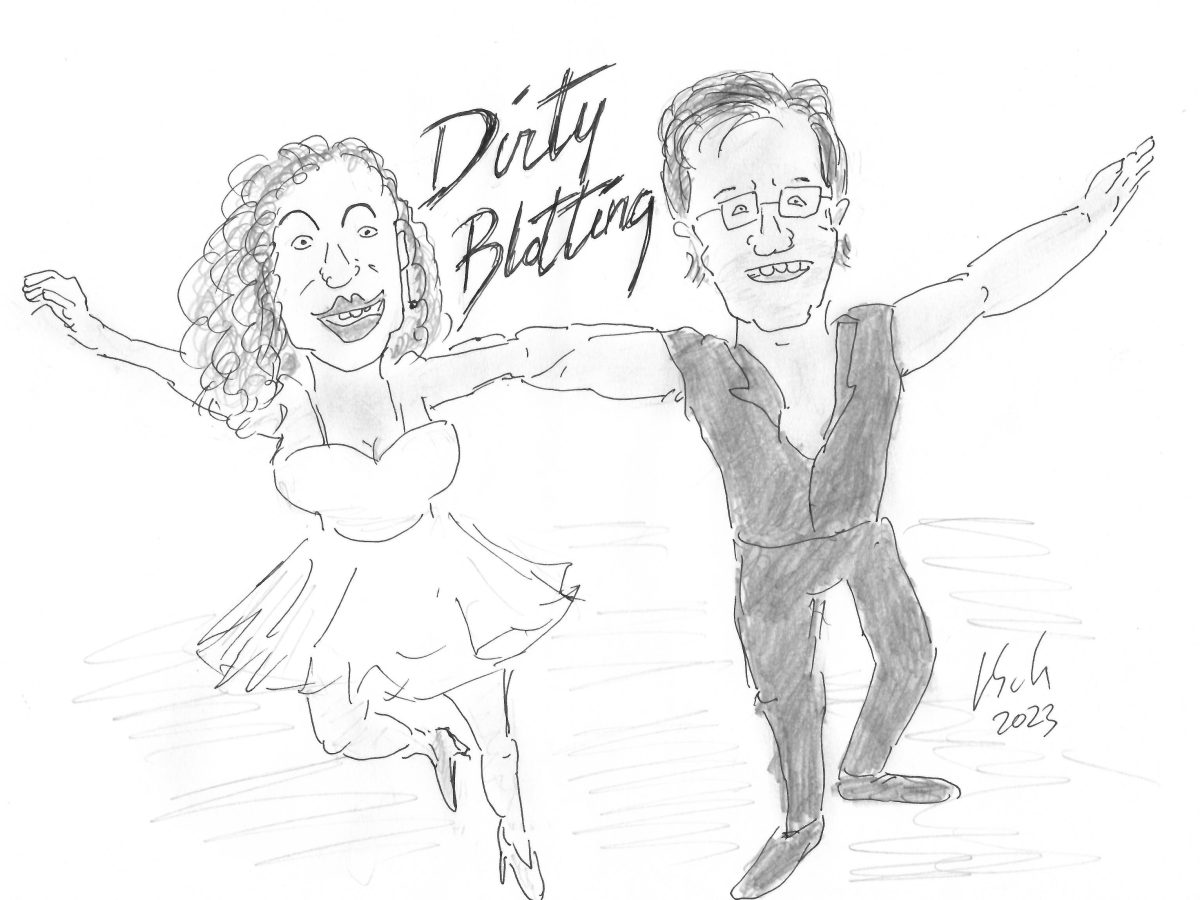
What Elsa Flores and Tyler Jacks taught each other
“PCR reactions run on agarose gels commonly look similar due to artifacts introduced by the agarose gel and comb.” Dr Elsa R Flores, Associate Director, Moffitt Cancer Center
The second paper features Elsa Flores, it was also corrected in January 2014 for a minor issue: “The y-axis label of Fig. 5C is incorrect. Instead of ‘Biochemical Recurrence,’ it should read ‘Biochemical-Free Recurrence.’”
And now, in February 2025, this was found, a gel standing in these two papers for two very different experiments:

The handling editor of the Tucci et al 2012 paper was National Academy of Sciences member Carol Prives, the editor of the Terrinoni et al 2013 paper was an even worse science cheater: Michael Karin.

AACR conjures undead Count Fakula Michael Karin
What better distraction than the COVID-19 pandemic to revive one of the spookiest parasites in cancer research? AACR uses the COVID-19 cover to award Michael Karin, for his over 50-paper-strong record of data fakery.
As it happens, Melino is closely connected to every cancer cheater out there. Starting of course with his fellow Cell Death and Disease editor Guido Kroemer.
Retraction Watchdogging
Confirmed independently by others
The dam may have broken with a retraction for Sir Philip Cohen, professor at the University of Dundee in UK and founding director of the associated MRC Protein Phosphorylation Unit (MRC-PPU). See the story here:
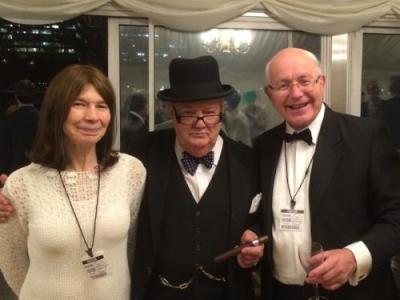
Portrait of Sir Philip Cohen’s Family
Sir Philip and Lady Tricia Cohen, and their heir Dario Alessi, plus other first and second generation offspring. A Scottish soap opera!
Some years ago, Cohen passed on the MRC-PPU reigns to Dario Alessi, who according to Retraction Watch is a hero of research integrity exactly because Alessi heroically fought for 6 years to retract his papers. Will the University of Dundee ask Retraction Watch to write an article about Sir Philip’s heroic fight for this retraction now?
Jose M. LIZCANO , Nick MORRICE , Philip COHEN Regulation of BAD by cAMP-dependent protein kinase is mediated via phosphorylation of a novel site, Ser155 The Biochemical journal (2000) doi: 10.1042/bj3490547


The first author and Cohen’s former PhD student Jose Miguel Lizcano de Vega is now full professor at the Universitat Autonoma Barcelona and the Vall d’Hebron Campus in Spain. Nick Morrice used to be MRC-PPU’s Head of Proteomics and is since 2014 with various biotechs.
In November 2024, University of Dundee posted this reply on PubPeer:
“Thank you for your comments. The University of Dundee School of Life Sciences Research Integrity Group is examining the points raised. Should you wish to contact us directly please email SLS-RIG@dundee.ac.uk to discuss any matters that you would like us to be made aware of.“
A long retraction was published on 30 January 2025:
“This article “Regulation of BAD by cAMP-dependent protein kinase is mediated via phosphorylation of a novel site, Ser155” (DOI: 10.1042/BCJ3490547) is being retracted from the Biochemical Journal at the request of the authors following receipt of a notification from a reader, alerting the Editorial Office to similarities in Western blot images between several figures, namely:
- Figure 3B, areas of similarity within the figure
- Figure 4A BAD (forskolin and IBMX treatment) and Figure 9B BAD (TPA, forskolin and IBMX treatment)
- Figure 4A Ser155 (forskolin and IBMX treatment) and Figure 9B Ser155 (TPA, forskolin and IBMX treatment)
- Figure 4A Ser112 (forskolin and IBMX treatment) and Figure 7 Ser112 (IGF and wortmannin treatment)
- Figure 4B Ser136 (forskolin, H89 and Ro318220 treatment) and Figure 6B BAD (TPA, PD98059, U0126, Ro318220 treatment)
- Figure 4C BAD (forskolin, PD98059, rapamycin and wortmannin treatment) and Figure 6B BAD (TPA, wortmannin, rapamycin and Ro318220 treatment)
- Figure 5A Ser155 (EGF treatment) and Figure 7 Ser155 (IGF and wortmannin treatment)
- Figure 5B BAD (TPA treatment) and Figure 7 BAD (IGF and wortmannin treatment)
The corresponding author and the research integrity group in the School of Life Sciences at the University of Dundee independently analysed the issues raised and agreed with the concerns and, with the agreement of the co-authors, proposed to the journal that the paper should be retracted.
The authors remain confident in the results presented in Figures 1 and 2 and Table 1, and the key finding that cAMP-dependent protein kinase (PKA) phosphorylates mouse BAD at serine 155 in vitro has been confirmed independently by others [Virdee et al, 2000 (DOI: 10.1016 /S0960-9822(00)00702–8) and Zhou et al, 2000 (DOI: 10.1074/jbc.M002526200)].
The other key finding noted in this article that forskolin, acting via cAMP and PKA, stimulates phosphorylation of BAD at serine 155 in cells has been confirmed by several laboratories [Tan et al, 2000 (DOI: 10.1074/jbc.M004199200), Zhou et al, 2000 (10.1074/jbc.M002526200) and Datta et al, 2000 (DOI: 10.1016 /S1097-2765(05)00012–2)].
The authors sincerely apologise for any inconvenience caused. The Editor-in-Chief and Editorial Board agree with the decision to retract the article.”
Which proves the genius of Sir Philip. Without any experimental data, he just knew the TRUTH. Whatever his PhD student Lizcano may have done, Sir Philip’s visionary discoveries remain standing, with or without experimental support.
Unveiling the mystery of fallen microbiologist Robert Ryan
The young star of microbiology Robert Ryan, rose to great heights only to be publicly shot down, without much of an explanation. Instead, newspapers were tipped-off underhand and internal emails discretely forwarded; the only half-way solid information we have is the evidence of image duplications in his papers as posted on PubPeer. Ryan now left the…
Actually, this wasn’t be Sir Philip’s first retraction, according to RW Database. In December 2013 he retracted this paper, in the same journal in fact. The first author Hosea Handoyo got the full blame:
Hosea Handoyo , Margaret J. Stafford , Eamon McManus , Dionissios Baltzis , Mark Peggie , Philip Cohen IRAK1-independent pathways required for the interleukin-1-stimulated activation of the Tpl2 catalytic subunit and its dissociation from ABIN2 Biochemical Journal (2009) doi: 10.1042/bj20091271
“This paper is being retracted at the request of the authors. Three members of the laboratory of the last-named author have tried subsequently to reproduce the result reported in Figure 2B of the paper, but have been unable to do so. Consequently, the authors no longer consider the conclusion that interleukin-1 is able to activate the full-length catalytic subunit of the protein kinase Tpl2 when it is co-transfected into IRAK1-null HEK293 cells that stably express the interleukin-1 receptor to be correct. All of the authors, apart from the first author, have agreed to this retraction.”
Retraction December 2013
Funny, there the fake data was found not reproducible. Apparently, it matters who fakes it?
Dr Glass was not aware of the paper
A paper aptly named “fabrication” was retracted by Elsevier’s Journal of Energy Storage.
Maybe stop accepting submissions, Herr Prof Dr Sauer?
Who needs science if you can have a 75 paper strong special edition by Afrand and Karimi? A guest post by Alexander Magazinov.
There’s also a victim: an innocent white American man named Jeffrey Glass, endowed professor and director of the Institute for Enterprise Engineering at Duke University. His co-authors are Pakistani and Saudi.
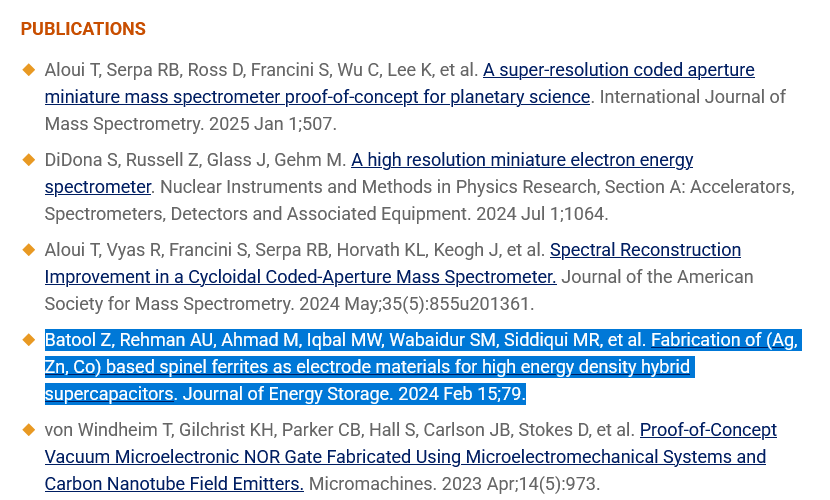
Zahra Batool , Atiq Ur Rehman , Mukhtar Ahmad , Muhammad Waqas Iqbal , Saikh Mohammad Wabaidur , Masoom Raza Siddiqui , Jeffrey T. Glass Fabrication of (Ag, Zn, Co) based spinel ferrites as electrode materials for high energy density hybrid supercapacitors Journal of Energy Storage (2024) doi: 10.1016/j.est.2023.110092
Retraction notice (highlight mine):
“This article has been retracted at the request of the Editor-in-Chief. The corresponding author, Dr Atiq ur Rehman, included Dr Jeff Glass in the author list, although Dr Glass was not aware of the paper and did not contribute to the work presented in the paper. This breaches the authorship policy of the journal and the Editor has decided to retract the article.”
Undated retraction
Yet somehow this naughty ur Rehman managed to hack the servers of Duke University and add this paper to Prof Glass’s official profile, all behind Glass’s honest back!
Close to nothing
Another innocent white man became a victim of Pakistani shenanigans, this time a Belgian.
Raf Dewil is professor at KU Leuven in Belgium, and also visiting professor at the University of Oxford in UK. He is also Editor-in-Chief of the Elsevier journal where this was published:
Tariq Shah , Zeeshan Khan , Muhammad Asad , Ayesha Imran , Muhammad Bilal Khan Niazi , Raf Dewil , Ajaz Ahmad , Parvaiz Ahmad Straw incorporation into microplastic-contaminated soil can reduce greenhouse gas emissions by enhancing soil enzyme activities and microbial community structure Journal of Environmental Management (2024) doi: 10.1016/j.jenvman.2023.119616
Dewil, who just published Askari et al 2025 together with papermill fraudster Mika Sillapää (sacked in Finland for fraud, theft and sexual harassment) wants you to think that in the Shah et al case he naively believed to have been collaborating with a USDA scholar, as the retraction notice stated (highlight mine):
“This article has been retracted at the request of Jason M. Evans, Co-Editor-in-Chief.
The Journal of Environmental Management has learned that this article’s lead and co-corresponding author, Tariq Shah, was never affiliated with the United States Department of Agriculture’s Plant Science Research Unit, as claimed in the authorship credits. Additionally, none of the research presented in this study was sponsored or approved by the United States Department of Agriculture. When asked about these issues during an editorial investigation, Shah’s responses caused the editor to further lose confidence in the validity/integrity of the article. The other corresponding author, Parvaiz Ahmad, cooperated with the investigation in full. The Journal has no evidence indicating that Ahmad or other co-authors were previously aware of Shah’s unethical behavior that necessitated this retraction.”
Good thing Prof Dewil won’t collaborate with that rascal Shah anymore (after that paper and Shah et al Plant Physiology and Biochemistry 2024). But there are no reasons for Dewil to stop collaborating with Parvaiz Ahmad (see also Kaya et al J Environmental Management 2024). Ahmad has two perfectly real affiliations: S.P. College Srinagar in Jammu and Kashmir and King Saud University in Saudi Arabia.
There is a massive PubPeer record for Parvaiz Ahmad, virtually all of almost 60 threads seem to be his. Most criticisms are for editorial conflicts of interests, i.e., peer review networks. In this regard, we can see that Ahmad is a very close associate of Jörg Rinklebe (who according to his University of Wuppertal in Germany is not a papermiller, but a Lion of the World). Read about Rinklebe (and Sillanpää) here:
In November 2023, Ahmad retracted a paper in PLOS One:
“The PLOS ONE Editors retract this article [1] because it was identified as one of a series of submissions for which we have concerns about competing interests and peer review. In addition, the editorial team has serious concerns about a number of citations included in this article, including concerns of extensive self-citation and inclusion of inappropriate citations for statements in the article. We regret that the issues were not addressed prior to the article’s publication.
The PLOS ONE Editors note that primary data were not provided with the article, contrary to the Data Availability statement.”
Retraction notice for Hussain et al 2020
Already in December 2016, Ahmad retracted a paper in Frontiers, Sarwat et al 2016, that time it was over “an undisclosed error in the experimental design (such as the presence of host tomato plants) and crucial experiments missing“.
Here a nice MDPI paper by Ahmad, flagged by Elisabeth Bik in April 2020:
Ambreen Shoaib , Hefazat Hussain Siddiqui , Rakesh Kumar Dixit , Sahabjada Siddiqui , Badrud Deen, Andleeb Khan , Salman H. Alrokayan, Haseeb A. Khan , Parvaiz Ahmad Neuroprotective Effects of Dried Tubers of Aconitum napellus Plants (2020) doi: 10.3390/plants9030356
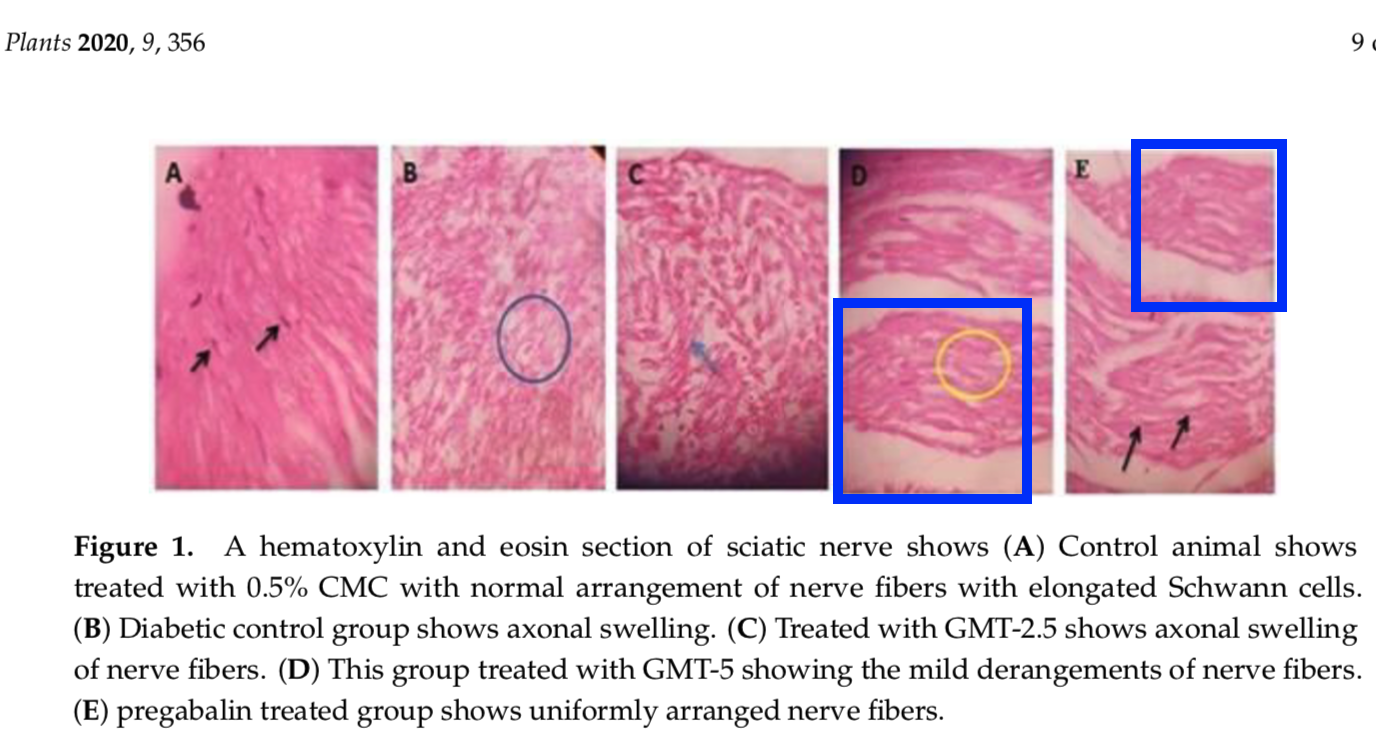
MDPI issued a Correction in December 2021:
“We are sorry to report that some images in Figure 1 reported in our recently published paper [1] were incorrect. There was an error during the formatting of text and the grouping of different frames of images into one single block […] This change has no impact on the caption of Figure 1 and other content of the paper.”
Bik noticed that “the original GMT-2.5 (C) is now GMT-5 (D), and that the original GMT-5 (D) has been replaced by a new GMT-2.4 (C)“. And then another PubPeer user noticed more:


That 2019 paper by Ambreen Shoaib and Hefazat Hussain Siddiqui lacks Ahmad as coauthor, but features another innocent white man, George Barreto, associate professor at the University of Limerick in Ireland.
Don’t expect a correction for these two papers, simply because the Elsevier journal was discontinued by King Saud University in June 2024:
Mudasir A. Mir, Shabir Ahmad Ganai , Sheikh Mansoor , Sumira Jan , P. Mani , Khalid Z. Masoodi , Henna Amin , Muneeb U. Rehman, Parvaiz Ahmad Isolation, purification and characterization of naturally derived Crocetin beta-d-glucosyl ester from L. against breast cancer and its binding chemistry with ER-alpha/HDAC2 Saudi Journal of Biological Sciences (2020) doi: 10.1016/j.sjbs.2020.01.018
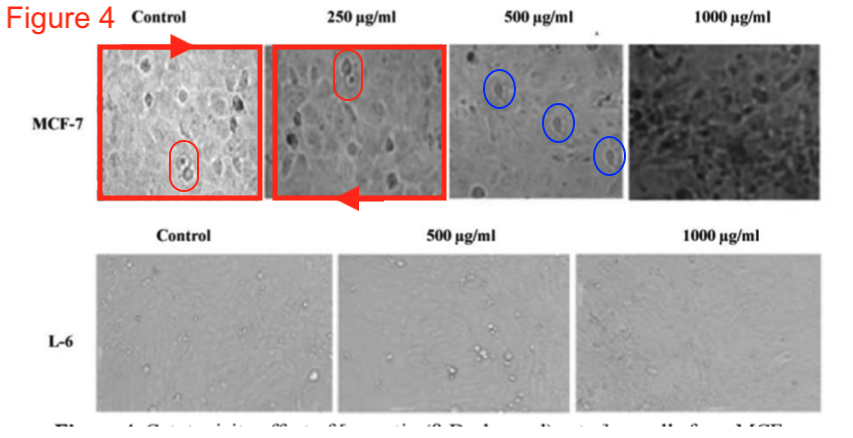
Red boxes: The ‘control’ and ‘250 ug/ml’ panels appear to look similar if one of the two is rotated 180 degrees.
Blue ellipses: In the ‘500 ug/ml’ panel, the same cell appears to be visible three times.
Also, the figure has some parts of text at the bottom, as if it was a screenshot taken from another document, not an assembled figure with 7 photos and labels.”
The other one:
Mudasir A. Mir, Sheikh Mansoor , M. Sugapriya , Mohammed Nasser Alyemeni , Leonard Wijaya , Parvaiz Ahmad Deciphering genetic diversity analysis of saffron ( L.) using RAPD and ISSR markers Saudi Journal of Biological Sciences (2021) doi: 10.1016/j.sjbs.2020.11.063

Mycosphaerella arachidis: “Figure 1: Some of these gels do not appear to be unique.”
Going back to Raf Dewil, he must be really unhappy about his collaboration with papermill fraudsters. In his capacity as Editor-in-Chief, he issued in October 2024 this Corrigendum for a paper of his:
Muhammad Adnan Bashir, Li Qing, Raf Dewil, Zhang Xi, Ummara Razi, Lin Jingting Unpacking the environmental quality through the effects of natural resources, renewable energy consumption, banking development and industrial value addition: An empirical evidence from BRICS countries Journal of Environmental Management (2024) doi: 10.1016/j.jenvman.2024.122058
“The authors regret that printed version of the above article contained the name of the coauthor i.e. Professor Raf Dewil […]
We would like to remove the name of the coauthor Raf Dewil on the base of his request and he believes that his contribution to the current article is close to nothing and we are all apologise for the inconvenience caused.
The correct and final version follows the following authors and their affiliations only, <1,2Muhammad Adnan Bashir,1,2Li Qing*, 3Zhang Xi,4,5Ummara Razi,6Lin Jingting>”
Russell J. Stanford is fictitious
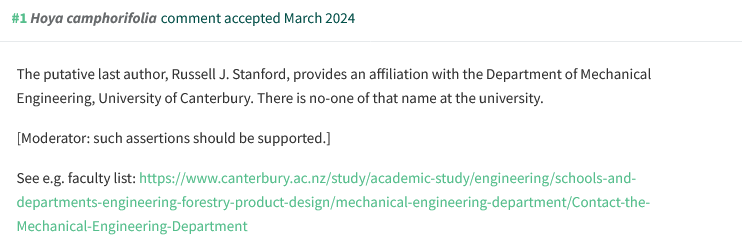
Elsewhere, another fake whitey created for no other purpose but to please racist editors, ceased to exist. The suspicions that “Russell J. Stanford” of Department of Mechanical Engineering, University of Canterbury, was actually a papermill creation, were raised on PubPeer by Smut Clyde in May 2024:
“This possibly-fictional character is in the company of Navid Bohlooli who seems to engage in papermilling / authorship sales. Bohlooli claims an affiliation to a company that doesn’t exist.”
Now these recent retractions in two Elsevier journals make things clear:
- Ya Wei, Russell J. Stanford Parameter identification of solid oxide fuel cell by Chaotic Binary Shark Smell Optimization method Energy (2019) doi: 10.1016/j.energy.2019.07.100 30 January 2025 retraction
- Shanshan Zheng , Qing Hai, Xiao Zhou , Russell J. Stanford A novel multi-generation system for sustainable power, heating, cooling, freshwater, and methane production: Thermodynamic, economic, and environmental analysis Energy (2024) doi: 10.1016/j.energy.2023.130084 1 January 2025 retraction
- Yi Mao , Lei Zhang , Li Wan, Russell J. Stanford Proposal and assessment of a novel power and freshwater production system for the heat recovery of diesel engine Energy (2022) doi: 10.1016/j.energy.2021.122615 1 January 2025 retraction
- Leren Qian , Zhongsheng Chen, Yiqian Huang , Russell J. Stanford Employing categorical boosting (CatBoost) and meta-heuristic algorithms for predicting the urban gas consumption Urban Climate (2023) doi: 10.1016/j.uclim.2023.101647
“This article has been retracted at the request of the Editor-in-Chief.
Post-publication, an investigation conducted on behalf of the journal by the publisher determined that the author, Russell J. Stanford is fictitious.
The Editor has determined that the authorship and the findings of the article cannot be relied upon, and has decided to retract the article.”
Naturally, there are more papers by the fictional “Russel J Stanford”. Elsevier will also need to retract this one:
Ye Wang, Zhaiaibai Ma , Russell J. Stanford The feasibility study of cascade waste heat recovery in a molten carbonate fuel cell-driven system Applied Thermal Engineering (2024) doi: 10.1016/j.applthermaleng.2023.122284
Congrats Dr. Nojavan!
Coincidence or not, but soon after For Better Science reporting Elsevier’s International Journal of Hydrogen Energy (IJHE) finally started to retract papers. And this time, the retraction notices are written in the standard style of Elsevier, and not in the idiotic style of its so-called editor.
Veziroglu Journal of Papermill Energy
Mu Yang and other sleuths celebrate the scholarly publishing business of the late T Nejat Veziroglu, laureate of Santilli-Galilei Gold Medal for Lifetime Commitment to True Scientific Democracy
All retractions affect a certain Iranian gentleman named Sayyad Nojavan:
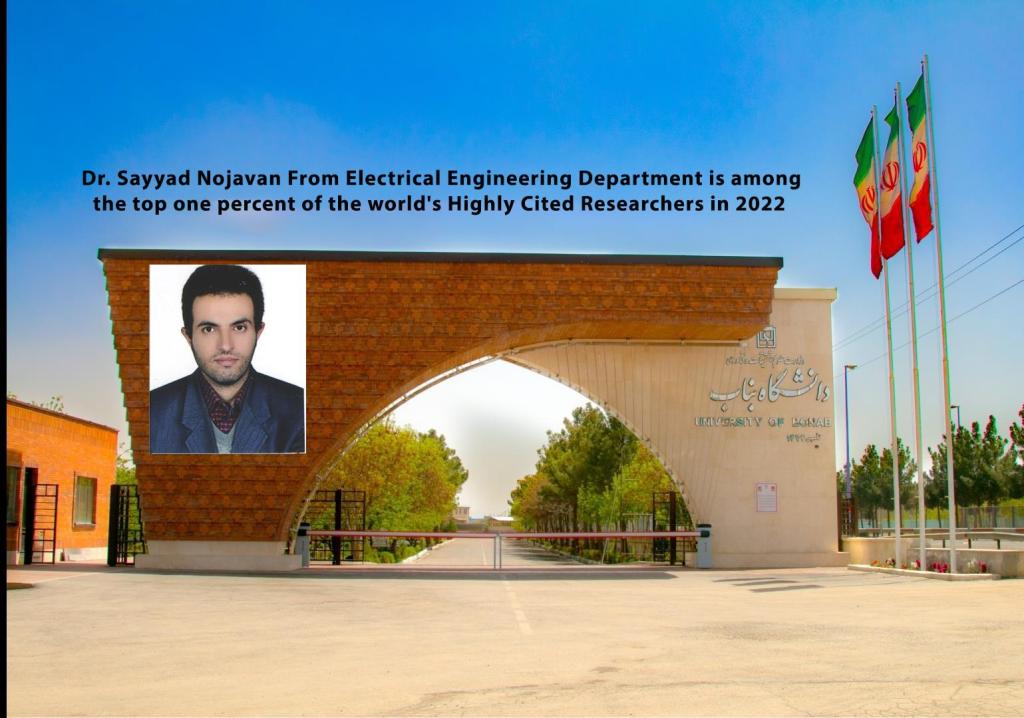
Here is a list of his freshly retracted papers in IJHE, all for selling of authorships:
- Jing Jiang , Liwei Zhang , Xuan Wen , Esmaeil Valipour , Sayyad Nojavan Risk-based performance of power-to-gas storage technology integrated with energy hub system regarding downside risk constrained approach International Journal of Hydrogen Energy (2022) doi: 10.1016/j.ijhydene.2022.09.115. Retraction: “the author’s names Jing Jiang (New First Author), Liwei Zhang and Xuan Wen were added to the revised paper without explanation“
- Jing Jiang , Liwei Zhang , Xuan Wen , Esmaeil Valipour , Sayyad Nojavan Risk-based performance of power-to-gas storage technology integrated with energy hub system regarding downside risk constrained approach International Journal of Hydrogen Energy (2022) doi: 10.1016/j.ijhydene.2022.09.115 Retraction: “the author’s names Jing Jiang (New First Author), Liwei Zhang and Xuan Wen were added to the revised paper without explanation“
- Tingting Cai , Mingyu Dong , Huanan Liu , Sayyad Nojavan Integration of hydrogen storage system and wind generation in power systems under demand response program: A novel p-robust stochastic programming International Journal of Hydrogen Energy (2022) doi: 10.1016/j.ijhydene.2021.10.027 Retraction: “During revision the authors’ names Tingting Cai (New First Author), Mingyu Dong and Huanan Liu were added to the revised paper without explanation“
- Abdolhossein Feiz Marzoghi , Salah Bahramara , Farid Adabi , Sayyad Nojavan Optimal scheduling of intelligent parking lot using interval optimization method in the presence of the electrolyser and fuel cell as hydrogen storage system International Journal of Hydrogen Energy (2019) doi: 10.1016/j.ijhydene.2019.07.226 Retraction: “One author (original First Author) was removed from the paper, and the author’s name Abdolhossein Feiz Marzoghi (New First Author) was added to the revised paper without explanation“
- Hamed Pashaei-Didani , Sayyad Nojavan , Ramin Nourollahi , Kazem Zare Optimal economic-emission performance of fuel cell/CHP/storage based microgrid International Journal of Hydrogen Energy (2019) doi: 10.1016/j.ijhydene.2019.01.201 Retraction: “the author’s name Ramin Nourollahi was added to the revised paper without explanation”
- Yan Cao , Jiang Du , Xueming Qian , Sayyad Nojavan , Kittisak Jermsittiparsert Risk-involved stochastic performance of hydrogen storage based intelligent parking lots of electric vehicles using downside risk constraints method International Journal of Hydrogen Energy (2020) doi: 10.1016/j.ijhydene.2019.11.030 Retraction: “the authors’ names Yan Cao (New First Author), Jiang Du, and Xueming Qian were added to the revised paper without explanation”
- Reza Hadjiaghaie Vafaie , Roya Shafiei Pour , Sayyad Nojavan , Kittisak Jermsittiparsert Designing a miniaturized photoacoustic sensor for detecting hydrogen gas International Journal of Hydrogen Energy (2020) doi: 10.1016/j.ijhydene.2020.05.261 Retraction: “In summary, the author’s name Kittisak Jermsittiparsert was added to the revised paper without explanation”
- Yun Wang , Milad Kazemi , Sayyad Nojavan , Kittisak Jermsittiparsert Robust design of off-grid solar-powered charging station for hydrogen and electric vehicles via robust optimization approach International Journal of Hydrogen Energy (2020) doi: 10.1016/j.ijhydene.2020.05.098 Retraction: “the author’s name Yun Wang (New First Author) was added to the revised paper without explanation”
- Sayyad Nojavan , Alireza Akbari-Dibavar , Amir Farahmand-Zahed , Kazem Zare Risk-constrained scheduling of a CHP-based microgrid including hydrogen energy storage using robust optimization approach International Journal of Hydrogen Energy (2020) doi: 10.1016/j.ijhydene.2020.08.227 Retraction: “the author’s name Amir Farahmand-Zahed was added to the revised paper without explanation”
- Yan Cao , Qiangfeng Wang , Wen Cheng , Sayyad Nojavan , Kittisak Jermsittiparsert Risk-constrained optimal operation of fuel cell/photovoltaic/battery/grid hybrid energy system using downside risk constraints method International Journal of Hydrogen Energy (2020) doi: 10.1016/j.ijhydene.2020.03.090 Retraction: “the author’s names Yan Cao (New First Author), Qiangfeng Wang and Wen Cheng were added to the revised paper without explanation”
- Dongmin Yu , Jiawei Wang , Dezhi Li , Kittisak Jermsittiparsert , Sayyad Nojavan Risk-averse stochastic operation of a power system integrated with hydrogen storage system and wind generation in the presence of demand response program International Journal of Hydrogen Energy (2019) doi: 10.1016/j.ijhydene.2019.09.222 Retraction: “the author’s names Dongmin Yu (New First Author), Jiawei Wang and Dezhi Li were added to the revised paper without explanation”
As you see, many of these Nojavan’s retractions feature the known papermill fraudster and journal pirate Kittisak Jermsittiparsert. Read about him here:
We don’t need no education, We don’t need no thought control
“Of course the sentient rubber-stamps guest-editing Special Issues on behalf of papermills would have accepted anything – they don’t give two tugs on a dead dingo’s dick about content ” – Smut Clyde

Incoherent, extraneous text and Tortured phrases
A huge pile of papers, specifically over FOUR HUNDRED, has been retracted in one go in the Journal of Intelligent & Fuzzy Systems, published by IOS Press. Here the batch retraction statement for the 416 papers, most of them from China:
“Following an investigation in line with the guidance issued by COPE, the publisher has detected one or more of the following indicators in submissions and in the peer review process underlying the acceptance of articles:
1. Anomalies in citations and referencing
2. Incoherent, extraneous text and Tortured phrases [1]
3. Potential unauthorized third-party involvement in the submission process
4. Unverifiable authors and reviewers
5. Duplicated peer review comments by different reviewers across submissions
These indicators raise concerns about the authenticity of the research and the peer review process underlying the following articles. The Publisher regrets that these were not flagged during the journal’s editorial and peer review processes and acknowledges the anonymous volunteers on PubPeer and PPS “Feet of Clay” [2] whose observations complemented our internal investigation.
[List of 416 papers]
References
[1] Cabanac G. , Labbé C. , Magazinov A. , Tortured phrases: A dubious writing style emerging in science. Evidence of critical issues affecting established journals, ArXiv, abs/2107.06751 ((2021) ). [2] Cabanac G. , Chain retraction: how to stop bad science propagating through the literature [Comment], Nature 632: (8027) ((2024) ), 977–979. https://doi.org/10.1038/d41586-024-02747-1
Donate!
If you are interested to support my work, you can leave here a small tip of $5. Or several of small tips, just increase the amount as you like (2x=€10; 5x=€25). Your generous patronage of my journalism will be most appreciated!
€5.00

 For Better Science
I sent this article to Springer Nature’s STraive-employed “Production Editor” Radika Devakumar this article.
Hilarity ensued. This is how she replied:
“Dear Dr. Leonid Schneider,
I am sorry for the inconvenience that has caused to you. I have instructed the proof-preparing team to be more cautious while processing the article and I will make sure that such errors will not occur in any of your future articles.
Once again I apologies for the mistaken happen in the figures 1 and 3.”
Followed by:
“Dear Dr. Leonid Schneider,
Please be informed that I am in process of correcting the figure 1 and figure 2 of your article DOI: 10.1007/s00284-020-02331-6.
Could you please provide the correct figure 1 and figure 2 images?
Look forward to hear from you.”
LikeLiked by 1 person
“Some years ago, Cohen passed on the MRC-PPU reigns to Dario Alessi“
Reigns is the verb, reins is the noun. I think you need the noun.
Reins are the straps used to control a horse, and rein is the word used in the phrases rein in (meaning to restrain or cause to stop) and free rein (meaning complete freedom or control). Reign means to rule, especially as a king or queen, and it can also be used as a noun referring to the period during which a ruler rules.
LikeLiked by 1 person
Thanks.
But even if Sir Philip passed the reins of MRC-PPU to Alessi, isn’t is true that Sir Philip still reigns over MRC-PPU?
LikeLike
Yes, it is true. Correct usage of reins and reigns in the same sentence.
LikeLike
“These papers were published before Nakvi came to Sweden, thus not subject to an NPOF investigation.“
Isn’t this both frustrating and absurd? He does academic shenanigans at another university, boosts his academic resume and then comes to a university in Sweden. The university in Sweden hires him based on the publications, projects, and citations in his academic resume. But when they find out that his papers are fraudulent, they don’t investigate them because he did them before he came to Sweden. This is ridiculous!
When they hired this man, didn’t they hire him on the basis of those articles? Now that so many frauds in those articles are coming to light, shouldn’t they act now?
LikeLiked by 2 people
That’s the thing: fraud gets you into top positions and once there, the university does not care about what happened before because it didn’t happen at the university where (s)he works at that moment. But you have to ask yourself: do they really believe such frauds will all of a sudden become ‘angels’ and not commit fraud anymore? All these institutes defending their frauds are at the basis of why this fraud keeps happening over and over, they enable it!
LikeLiked by 1 person
By turning a blind eye to this fraud, the institutes are not only protecting the fraudster, they are also making the funds that the fraudster receives under that university open to fraud. A fraudulent man will not hire an honest person, but he will keep people like himself who are prone to fraud in his team so that the chain will continue.
And thus this is ridiculous! Because all these scams are supported by funds created with taxpayers’ money. Universities should first and foremost feel responsible to the taxpayers who provide them with this environment.
If it happened in a private sector or specific company, they would not only lose their jobs, but they would have to explain to the judge in court!
LikeLiked by 1 person
In principle, submitting fraudulent research on your CV during application is the same as submitting fake claims about degrees and other achievements.
Not that anyone cares though.
LikeLiked by 2 people
That’s why no one can keep up with the growing number of papermillers!
LikeLike
That’s why no one can keep up with the grow of the number of papermillers!
LikeLike
Your last sentences summarizes it all: nobody really cares!
LikeLike
What I find amazing is that Parvaiz Ahmad is granted somewhat of a royal pardon with the retraction notices. How is this possible? It is crystal clear he is involved in fraud (both as an editor and as a paper mill author), yet in the retraction notices he is cleared completely. How do these people keep getting away with it?
LikeLike
Do you think that when El Deiry becomes head of NCI, he’ll have the guts to tell Trump that the most popular cell line in all of cancer research – HeLa – is derived from a black woman? And will they stop using them?
LikeLiked by 3 people
Is Oncotarget mending its ways? Early days.
Volume 16 (2025) | Oncotarget
LikeLike
I see 6 retractions in this Oncotarget issue, all for Chinese authors. Not a single white person affected.
Wafik the Science Guardian in action.
LikeLiked by 1 person
Your article and comments clearly show how racist you are. Phrases like “white person” and “naughty Pakistani” reflect the prejudice in your thinking. Do you really believe that “fraudulent science” has never been committed by a “white person”?
Consider this: many publishers are based in predominantly white countries, and in order to make money under the name of open access, they often allow publication regardless of the authenticity or quality of the work. As one “white person” once commented on an anonymous post, “when the editor’s loyalty is with $2000.”
I wouldn’t have said anything like this if I hadn’t experienced it myself – but yes, I have. For instance, I once heard a senior “naughty person” telling a junior “naughty person” that open-access journals are only interested in article publication charges. And now, you tell me – who owns most of these publishing companies?
Regarding MDPI and Naqvi’s paper: MDPI retracted Naqvi’s paper long before he was hired by Karlstad University. MDPI retracted his papers on 16 March 2022 (https://www.mdpi.com/2073-4344/10/2/163), while Karlstad University hired him in February 2023. The reasons listed in the Retraction Database (https://retractiondatabase.org/) include: “Euphemisms for Plagiarism, Investigation by Journal/Publisher, Plagiarism of/in Article, Taken from Dissertation/Thesis.”
Do you think Karlstad University knew this when they hired him? Oh yes – at that time, they were probably thinking they were hiring a “Top 2% Scientist” who was conducting very advanced and high-quality research. This also reflects how some Western universities have become increasingly greedy for such questionable or fake research, prioritizing rankings and reputation over genuine academic integrity. I wonder what kind of knowledge Naqvi will be passing on to his students – perhaps teaching them how to commit academic fraud instead of real science.
Instead of bringing race or nationality into the discussion, you should focus only on those who are actually involved. Highlighting someone’s race only reveals how much personal frustration or bias you have – both in general and when working with people of other backgrounds.
LikeLike
Raf Dewil is no longer the EIC of the journal of Environmental Management. Could it be because he got fired? I advise you to check this paper and take a look at figure 1 https://doi.org/10.1016/j.jenvman.2023.119759 and notice the last author as well. Then take a look at https://doi.org/10.1016/j.jenvman.2024.121979 and particularly at the editor and one of the authors… Coincidence or not?
LikeLike
Even better would be those papers getting retracted. But sure, EiC handling his coauthor’s papers means nothing at Elsevier.
LikeLike
you might be interested in this one from Raf Dewil https://doi.org/10.1016/j.jenvman.2026.128884
LikeLike
See, white guys as coauthors protect from retractions.
LikeLike