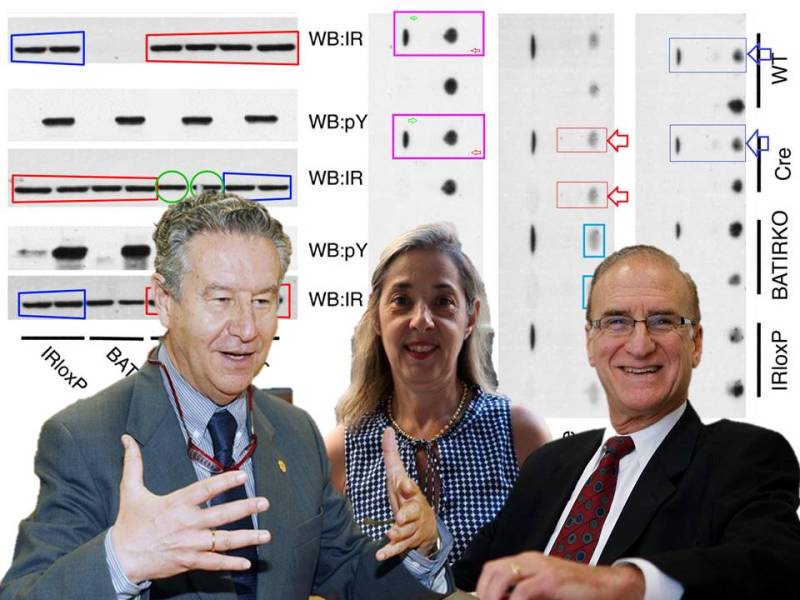
Sir Philip Cohen is God. This biochemistry professor at the University of Dundee in UK is the founding director of the MRC Protein Phosphorylation Unit (MRC-PPU), fellow of various academies, and winner of many national and international awards. In fact, he is one of the most honoured scientists in the UK, author of almost 600 papers and world’s second most cited scientist in biochemistry from 1992 till 2003. Cohen’s academic offspring, most prominently Dario Alessi, are not just themselves professors in Dundee now, they rule science worldwide. That in fact is a serious problem.
In 2023, the University of Dundee celebrated Sir Philip’s Lifetime Achievement Award, for “his outstanding contribution to the industry and the impact of his research, which has helped establish the University as an international centre of excellence in life sciences“.
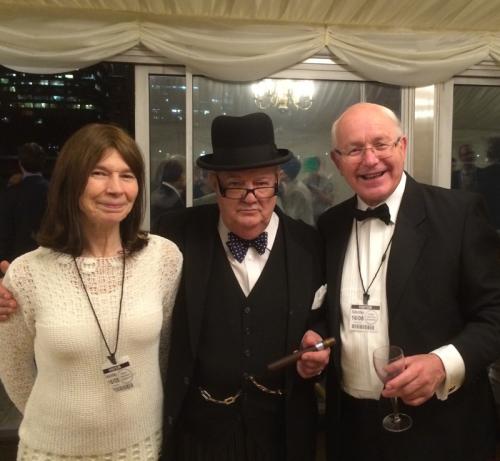
“Professor Sir Philip Cohen gives talk in Parliament […] The talk was followed by a formal dinner in the Churchill rooms, at which Philip and Tricia Cohen were the guests of honour.” Photo: MRC-PPU (2014)
Next year, Sir Philip will be 80. Let’s celebrate his legacy. Most of the evidence was collected by the pseudonymous sleuth Clare Francis.
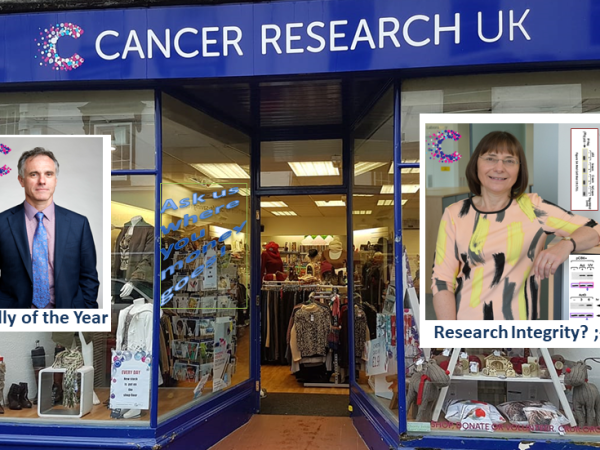
Before we begin, I should mention that the Scientific Advisory Board of MRC-PPU includes a certain Richard Marais of Cancer Research UK in Manchester, whose main problem is not bad science, but his dangerous bullying:
Cancer Research UK is a charity which relies on donations, volunteer work and fundraising. What if these citizens knew their money goes to fund bad science?
Another paper by Rousseau and Cohen was originally flagged for hidden gel splicing. The University of Dundee informed in November 2021 on PubPeer to have “contacted the first author of the article and person responsible for the data in question, Simon Rousseau“, and explained that 2 gel lanes in Fig 1D were “removed based on reviewer’s comments to increase clarity“, that “the Journal has asked us to point out that this publication predates its policy on splicing.”
“there is a logical flaw to the published figure 1D as lanes have been removed from one panel, but not from another panel.”
A Correction was issued on 3 November 2022 to address “an unmarked splice inconsistently applied between the two blots in Fig. 1D”. Actually, the Actin blot doesn’t seem to derive from the same gel as pre-TNFa blot, but obviously nobody cares.
Here another collaboration of Cohen’s with a certain coauthor above, John Lucocq. He used to be a humble Reader at the University of St Andrews, but on his LinkedIn profile he insists he was the “Owner“. In any case, since November 2023 Lucocq is an “Independent researcher and teacher”, i.e. unemployed. The first author and Cohen’s postdoc Peter Cheung is now senior lecturer at Nanyang Technological University in Singapore.
The first author Kristopher Clark used to be Cohen’s postdoc, in 2012 Cohen made sure Clark won a Young Investigator Award to continue at his MRC-PPU. In 2014 Clark won a 5 year grant from Arthritis Research UK and was given an Independent Investigator position in MRC-PPU. In 2016, Clark left academia for biotech industry, where he works now.
Another paper by Clark, Cohen, and Cohen’s superstar mentee, Dario Alessi, who succeeded his mentor as director of MRC-PPU:
Alessi’s postdoc Nicolas Dzamko is now senior research fellow at the University of Sydney in Australia, he has other questionable papers on PubPeer. A very prominent coauthor is the Stanford professor Nathanael Gray, who has many dodgy papers on PubPeer. and who is an associate of such toxic cheaters like David Sabatini and Constantine Mitsiades. Read here:
Another coauthor is the University of Dundee professor Simon Arthur, who also used to be Cohen’s postdoc. Here a paper by Arthur and Gray:
Li Tan , Koshi Akahane , Randall McNally , Kathleen M. S. E. Reyskens , Scott B. Ficarro , Suhu Liu , Grit S. Herter-Sprie , Shohei Koyama , Michael J. Pattison , Katherine Labella , Liv Johannessen , Esra A. Akbay , Kwok-Kin Wong , David A. Frank , Jarrod A. Marto , Thomas A. Look , J. Simon C. Arthur , Michael J. Eck , Nathanael S. Gray Development of Selective Covalent Janus Kinase 3 InhibitorsJournal of Medicinal Chemistry (2015) doi: 10.1021/acs.jmedchem.5b00710
Fig 7
Now a rather recent paper by Arthur, Clark and Cohen:
And this one is rather fresh in comparison, the penultimate author form Ireland, Padraic Fallon, is Trinity College Dublin professor who is said to have “delivered a number of seminal discoveries” and “ranked in top 1% of scientists in the world by citations for publications from 2018-2022 in immunology“:
Arthur is not exactly a science genius. He fell for Rony Seger‘s fraudulent claims that mobile phones would cause cancer – Arthur’s 2007 Commentary “MAPK activation by radio waves” had to be retracted in November 2024 together with Seger’s paper (Friedman et al 2007) which Arthur endorsed. The Dundee professor also had some very hair-raising collaborations. For example, Ho et al 2012 with Eric Lam (who was sacked by Imperial College London for fraud), or Park et al 2005 with Michael Karin, read below:
What better distraction than the COVID-19 pandemic to revive one of the spookiest parasites in cancer research? AACR uses the COVID-19 cover to award Michael Karin, for his over 50-paper-strong record of data fakery.
The first author above, Gopal Sapkota, a mentee of Alessi, is himself full professor now, affiliated of course at MRC-PPU of the University of Dundee. Well, he sure earned it:
Another set of two papers, in one of those Sir Philip’s PhD student, now University of Liverpool professor named Patrick Eyers, whose wife and fellow Liverpool professor Claire Eyers also used to be Cohen’s PhD mentee. The Eyerses also did some sciencing with University of Dundee’s former cheater Neil Perkins (read April 2024 Shorts):
Basically, one gels was used for two different experiments in two different papers, after some image fudgery. But zero concerns for the University of Dundee, which triumphantly declared on PubPeer in November 2021:
“Following consultation with the authors we have been able to retrieve the original lab books from 22 years ago detailing the experiments that were carried out.
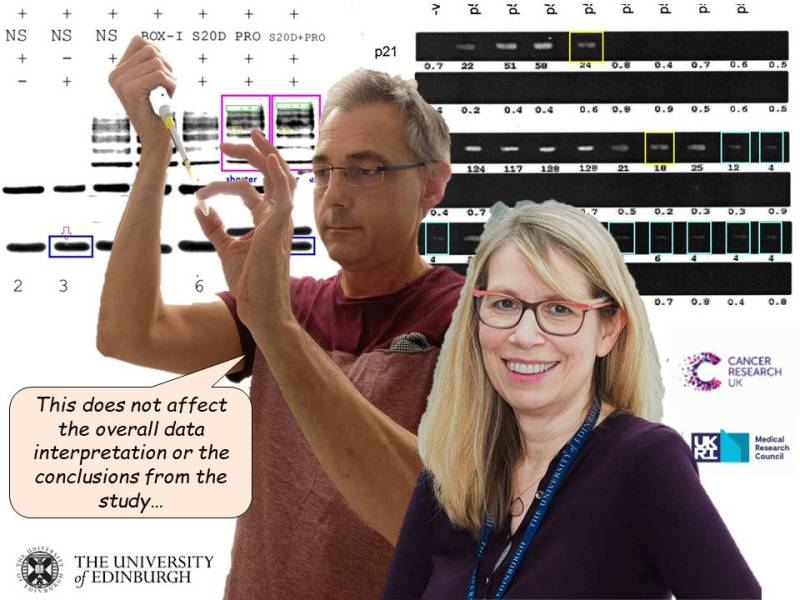
Representative images of the autoradiographs, as shown in the attached photograph, are provided as well as a photograph of the lab book experiment entry. As can be seen, the experiments presented in the two manuscripts were carried out at the same time and thus used the same control data. While data has indeed been duplicated (the control data) in the two manuscripts, it is the correct data that should be associated with the individual treatments. This does not impact interpretation of the results.”
The attached “representative image” does indeed show some autoradiograph, but it doesn’t match any of the two versions of the published gel.
On August 24th I received an anonymous email over my website from a „Concerned Microbiologist”: “I would like to bring the following to your attention on Robert P Ryan at the University of Dundee. https://pubpeer.com/search?q=Robert+P.+Ryan He holds several high profile research grants and has won several awards. He is under investigation at the University of Dundee. He has…
Next, we return to Cohen’s and Alessi’s mentee Jose Lizcano, who arrived at MRC-PPU in 1998. The sleuth Claire Francis was commenting as Suricata suricatta, and failed to save and reuse that amazing PubPeer name, how unfortunate:
In November 2024, University of Dundee posted this reply on PubPeer:
“Thank you for your comments. The University of Dundee School of Life Sciences Research Integrity Group is examining the points raised. Should you wish to contact us directly please email SLS-RIG@dundee.ac.uk to discuss any matters that you would like us to be made aware of.“
A similar statement was posted on many other Dundee-related threads.
Irina Stancheva was investigated in Edinburgh for fraud at least twice, in 2009 and 2017, yet retraction and correction decisions were not implemented. Apparently to protect the reputation of Nobel Prize candidate Sir Adrian Bird and his male mentees, primarily Richard Meehan. One wonders: how much of Bird research in past two decades was actually…
Jose Lizcano did postdoc with Cohen’s most prominent mentee, Dario Alessi, who, as reminder, became Cohen’s successor as MRC-PPU director. Alessi is now subject to a second investigation by the University of Dundee, after two of his papers were retracted due to a previous investigation. Those two retractions prompted the sleuth Claire Frances to screen more of Alessi’s papers, as I reported in November 2024 Shorts. Alessi’s PubPeer record currently stands at 27 papers. Like this, where the first and last authors were both Alessi’s postdocs at that time:
Alessi’s two retracted studies were Mora et al FEBS Letters 2005 and Mora et al Biochemical Journal 2005. Presumably, Alessi’s former postdoc Alfonso Mora got the full blame and the case was considered to be closed. Moro is back in Spain, working at CNIC/CNIO in Madrid, in the group of Guadalupe Sabio.
But now here is Mora again, with Alessi and that weirdo Lucocq:
You may have noticed a special celebrity guest, who is none other but Harvard’s mega-cheater C Ronald Kahn! And as it happens, Mora now collaborates with Kahn’s equally questionable Harvard colleagueBruce Spiegelman and Kahn’s Spanish associate Angela Valverde, who is a massive cheater:
“I do not who is doing this, who is behind this. Papers were not manipulated, please believe me. Someone must want my scientific death. This is scaring Believe me please. I am a modest scientist.”
Since 2004, Jose Miguel Lizcano de Vega is back in Spain, and eventually became full professor at the Universitat Autonoma Barcelona and the Vall d’Hebron Campus. He says that the “ultimate goal of my research is […] to develop new molecular therapies that improve the survival and quality of life of cancer patients.” You saw the tools he uses to achieve that goal.
Speaking of Barcelona, somehow Cohen and the local cheater Angel Nebreda found each other. I wrote about Nebreda here:
The Deputy Head of the Commission for Good Scientific Practice at MHH, Matthias Gaestel, is currently investigating that affair, where he is in fact a coauthor. Now, Gaestel is also coauthor on this paper from the Cohen lab at Dundee:
As it happens, Alessi’s coauthor on the previously retracted paper Mora et al 2005 in Biochemical Journal was his fellow Dundee professor Calum Sutherland, who also happens to be a former mentee of Sir Philip Cohen, as PhD student and postdoc and funded by American Diabetes Association, the Wellcome Trust and Diabetes UK. Sutherland’s PubPeer record is currently at 7 papers, but it’s all quality art.
In December, Sutherland announced on PubPpeer that the paper was corrected while blaming a student:
“I thank you for identifying this error from our paper in 2004. I am embarrassed that I missed this at time of publishing. Dr Patel left immaculate records o his work from 2002 and so I was able to establish where the error occurred. The journal has kindly published a correction with the original data…“
The Correction from 3 December 2024 informed that “these are two genuine errors”, the replacement gels kind of proved that MAPK loading controls derived from different gels, rendering the entire figure pointless at best. Sutherland however decided not to try and explain these two cases:
Now, what happened to young researchers at Sir Philip’s MRC-PPU who didn’t “perform” the way Alessi, Sutherland, Arthur, Lizcano, the Eyerses and others did? Or maybe, given Cohen’s God-like status, maybe biomedical science is supposed to be this kind of phony trash? It’s not like it’s about saving human lives or something, right?
As a bonus, allow me to show you some other papers from MRC-PPU. They belong to Lady Patricia Cohen, who died in 2020 aged 76. She was the wife of, well you can guess. Together Sir Philip and Lady Tricia founded the MRC-PPU in Dundee.
In October 2022 Shorts, I wrote about two expressions of concern for Lady Tricia’s papers. Here is one:
“Background editing of the top Northern blot in Fig. 1 was reported anonymously to the journal. In addition, we identified splices in blots in several other figures. Owing to the period of time that has passed since experiments were conducted, original data are no longer available. However, many full blots for these figures are presented in the PhD thesis of the first author, revealing that most splices were made to excise empty lanes. The blurred blot in Fig. 1 is also present in the thesis, so we cannot determine whether blurring was introduced to obscure non-relevant bands between the two regions of interest.
Both the first and last authors of the paper are deceased; The University of Dundee and authors for whom contact details were available (J.E.S., J.H., A.I.L.) were supportive of the investigation.”
The Dundee scientist who received the full blame here was Lady Tricia’s former PhD student Graeme Carnegie. He died in 2014 aged only 40, a victim of leukaemia.
Here is the other Expression of Concern, coauthor Nick Morrice used to be MRC_PPU’s Head of Proteomics and is since 2014 with various biotechs:
“A reader has contacted the Biochemical Journal Editorial Board to draw attention to a potential concern regarding some of the data Figures in this article. The concerns raised are regarding band similarities in Figure 2B and evidence of gel splicing in this figure, Figure 4, and others. Due to the time elapsed between publication of the article and the concerns being raised, as well as the recent passing of the senior author, Lady Tricia Cohen, it will not be possible to conduct an investigation and source the original data to verify or allay the concerns raised.“
The editors will need to issue a second expression for even more concerns:
Fig 1
The late Lady Tricia has several papers on PubPeer, some were already corrected. Like this one, corrected already in 2011 but it might need a new correction, but with both Lady Tricia and Mark Peggie being dead it is unlikely:
Correction September 2023: “It was recently brought to the editor’s attention that the actin control blots depicted in Fig. 3 […] are the same as those shown in Fig. 3 of an earlier paper published by the same research group: [Munro et al Diabetes 2002]. Although this could not be confirmed through the analysis of original data, given the extensive time that has elapsed since the publication of these papers, it is highly likely that the same commercially purchased northern blots used for the earlier manuscript were reprobed for the later manuscript published in The FEBS Journal, which was standard practice and scientifically acceptable at the time. The results and conclusions are in no way affected and no concerns about image integrity have been raised. Nonetheless, the legend of Fig. 3 has been amended in The FEBS Journal manuscript to mention the reuse of blot images across the two papers.”
That was a very stupid and not really credible explanation, but hey. I’ve seen much worse. No hope to have this corrected:
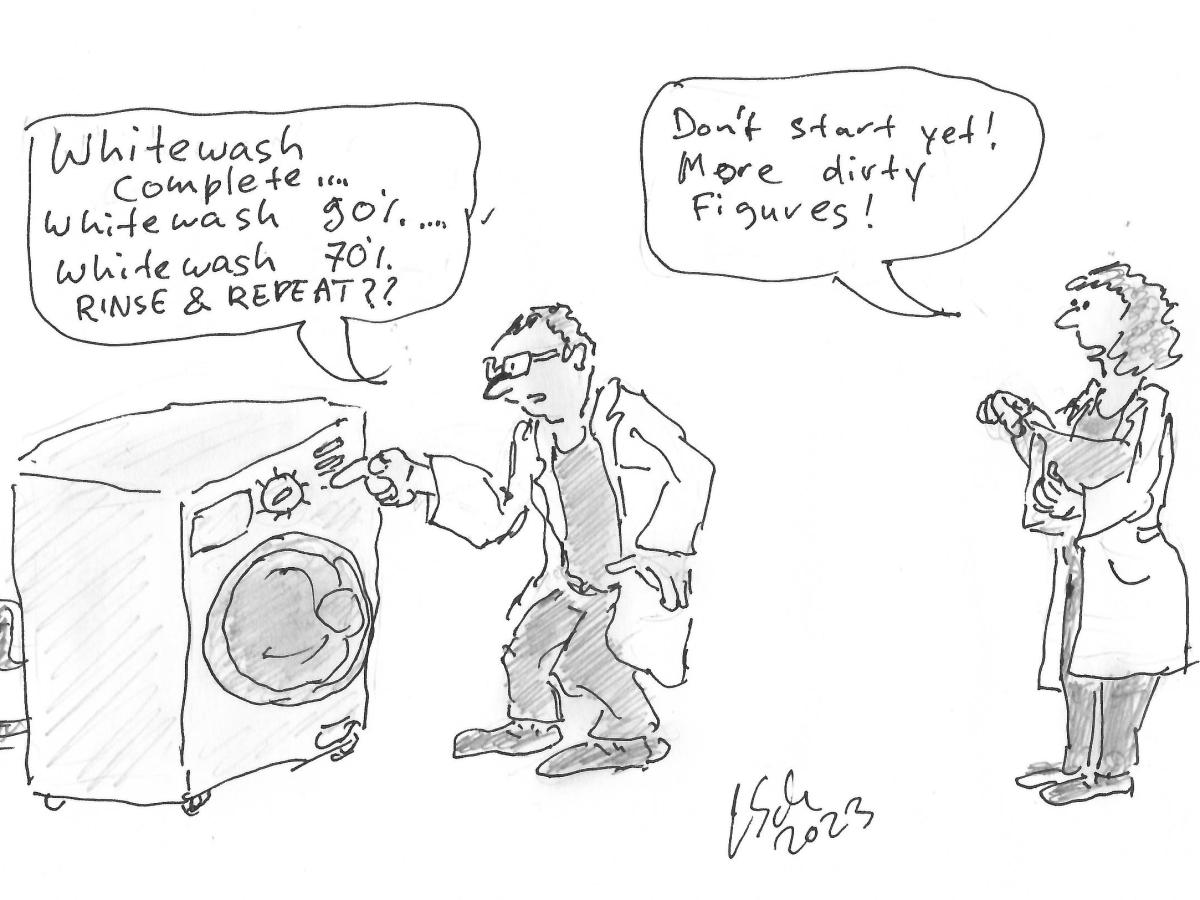
Here is a thought. Maybe Sir Philip and his private and scientific family are not that great. Maybe the University of Dundee has a serious problem.
Note: some of the above material was previously published in various issues of Friday Shorts.
Donate!
If you are interested to support my work, you can leave here a small tip of $5. Or several of small tips, just increase the amount as you like (2x=€10; 5x=€25). Your generous patronage of my journalism will be most appreciated!
This article “Regulation of BAD by cAMP-dependent protein kinase is mediated via phosphorylation of a novel site, Ser155” (DOI: 10.1042/BCJ3490547) is being retracted from the Biochemical Journal at the request of the authors following receipt of a notification from a reader, alerting the Editorial Office to similarities in Western blot images between several figures, namely:
Figure 3B, areas of similarity within the figure
Figure 4A BAD (forskolin and IBMX treatment) and Figure 9B BAD (TPA, forskolin and IBMX treatment)
Figure 4A Ser155 (forskolin and IBMX treatment) and Figure 9B Ser155 (TPA, forskolin and IBMX treatment)
Figure 4A Ser112 (forskolin and IBMX treatment) and Figure 7 Ser112 (IGF and wortmannin treatment)
Figure 4B Ser136 (forskolin, H89 and Ro318220 treatment) and Figure 6B BAD (TPA, PD98059, U0126, Ro318220 treatment)
Figure 4C BAD (forskolin, PD98059, rapamycin and wortmannin treatment) and Figure 6B BAD (TPA, wortmannin, rapamycin and Ro318220 treatment)
Figure 5A Ser155 (EGF treatment) and Figure 7 Ser155 (IGF and wortmannin treatment)
Figure 5B BAD (TPA treatment) and Figure 7 BAD (IGF and wortmannin treatment)
The corresponding author and the research integrity group in the School of Life Sciences at the University of Dundee independently analysed the issues raised and agreed with the concerns and, with the agreement of the co-authors, proposed to the journal that the paper should be retracted.
The authors remain confident in the results presented in Figures 1 and 2 and Table 1, and the key finding that cAMP-dependent protein kinase (PKA) phosphorylates mouse BAD at serine 155 in vitro has been confirmed independently by others [Virdee et al, 2000 (DOI: 10.1016 /S0960-9822(00)00702–8) and Zhou et al, 2000 (DOI: 10.1074/jbc.M002526200)].
The other key finding noted in this article that forskolin, acting via cAMP and PKA, stimulates phosphorylation of BAD at serine 155 in cells has been confirmed by several laboratories [Tan et al, 2000 (DOI: 10.1074/jbc.M004199200), Zhou et al, 2000 (10.1074/jbc.M002526200) and Datta et al, 2000 (DOI: 10.1016 /S1097-2765(05)00012–2)].
The authors sincerely apologise for any inconvenience caused. The Editor-in-Chief and Editorial Board agree with the decision to retract the article.
“Graeme Carnegie. He died in 2014 aged only 40, a victim of leukaemia”.
12 December 2023 retraction of a 2013 paper.
Retraction: AKAP13 Rho-GEF and PKD-Binding Domain Deficient Mice Develop Normally but Have an Abnormal Response to β-Adrenergic-Induced Cardiac Hypertrophy | PLOS ONE
“Sir Philip Cohen is God. This biochemistry professor at the University of Dundee in UK is the founding director of the MRC Protein Phosphorylation Unit (MRC-PPU), fellow of various academies, and winner of many national and international awards.”
“The Unit, directed by Professor Anne Willis, aims to develop new models better able to predict the molecular mechanisms of diseases associated with toxic exposure that will provide insights leading to novel treatments for disease.”
The funniest part is that her “shtick”, mammalian IRES sequences, most likely have a more conventional explanation, such as cryptic splice sites, and don’t exist! That’s what the the thinking people, and those who have done experiments, in that field think and have data for. When you need a “shtick”, you grab whatever looks like a “shtick”.
Exclusive: Dario Alessi innocent champion of research integrity, Watchdogs prove! “In January 2019, following a preliminary investigation, the research integrity group at Dundee’s School of Life Sciences recommended a formal investigation, according to emails Inke Nathke, the interim dean and top research integrity officer at the School of Life Sciences, sent to the journals.
The group came to the conclusion there were “additional issues beyond those flagged on PubPeer at the time,” Alessi told us.”
Note how amazingly uninterested RW is in what exactly the investigation determined and who was found guilty.
Ivan is apparently setting up a side business of Reputation Management for scientists in trouble. Alessi is surely happy with the service RW delivered.
This whole “Sleuth on a Leash” program RW started with the money from a millionaire professor in Stanford starts to sound more and more creepy.
Basically it was Alfonso Mora. Also on those papers by Alessi where he isn’t even coauthor. “In an email to Retraction Watch, Nathke referred to “an appeal by the first author.” In both papers, the first author is Mora, “
Now, two society journals refusing retraction for 6 years just because Mora protested, is unlikely.
What is likely is that Alessi phoned the editors and asked them to ignore the retraction requests. Which they did, and now face Ivan’s wrath.
So unfair this all.
The authors would like to retract their article “Insulin-induced Drosophila S6 kinase activation requires phosphoinositide 3-kinase and protein kinase B” (DOI: 10.1042/bj20030577 )” from the Biochemical Journal, having been alerted by a reader of similarities in Western blot images between several figures. Given the 20 + years that have passed since the work producing these data was carried out in Professor Alessi’s laboratory at the University of Dundee, the corresponding author and the research integrity group in the School of Life Sciences at the University of Dundee have not been able to obtain the original data for this article, so feel that the best course of action given the concerns is to retract the paper. The Publisher agrees with the retraction. The authors sincerely apologise for any inconvenience caused.
The similarities identified are:
Figure 1B dPKB appears as part of Figure 7A dS6K.
Figure 2B dS6K appears as Figure 2B dPKB with horizontal transformation.
Figure 4A Kc167 cells dS6K appear in part as S2 cells dPKB in the same Figure with horizontal transformation.
Figure 4B Kc167 cells dS6K appear as S2 cells dS6K in the same Figure with horizontal transformation.
Figure 7A Kc167 cells p-dPKB appear in part as Figure 7B S2 cells p-dPKB with horizontal transformation.
The authors would like to highlight that the main conclusions reported in this article remain valid. The findings that the activation of dS6K in response to insulin requires dPKB have been thoroughly validated by subsequent research in the Drosophila S2 cell model [Miron et al., 2003 (DOI: 10.1128/MCB.23.24.9117–9126.2003), Potter et al., 2003 (DOI: 10.1042/bst0310584) and Yang et al., 2006 (DOI: 10.1073/pnas.0602282103)] and in mammalian cells by numerous laboratories [reviewed in Panwar et al., 2023 (DOI: 10.1038/s41392-023-01608-z)].
Correction: Ionizing radiation induces ataxia telangiectasia mutated kinase (ATM)-mediated phosphorylation of LKB1/STK11 at Thr-366
It has come to the attention of the authors of the article “Ionizing radiation induces ataxia telangiectasia mutated kinase (ATM)-mediated phosphorylation of LKB1/STK11 at Thr-366” (DOI: 10.1042/bj20021284) that there was a partial duplication of Western blots in Figures 2 and 7, and also a duplication within Figure 2. These were unintentional errors made during the assembly of the Figure. Corrections have been provided for Figures 2 and 7, consistent with the raw data.
With the change in Figure 7, text on page 513 needs to be changed.
Original text: “The ATR activators MMS (Figure 7, middle panel) and hydroxyurea (Figure 7, bottom panel) failed to stimulate significant phosphorylation of LKB1 at Thr-366, whereas they markedly promoted Chk1 phosphorylation within 15 min.”
Revised text: “The ATR activators MMS (Figure 7, middle panel) and hydroxyurea (Figure 7, bottom panel) failed to stimulate significant phosphorylation of LKB1 at Thr-366, whereas they markedly promoted Chk1 phosphorylation in a time-dependent manner.”
The raw data and requested correction have been assessed by and agreed with the Publisher. The authors apologise for the errors and any inconvenience caused.
Fresh correction for Dario Alessi. Everything is O.K.. Correction to: Critical role of the SPAK protein kinase CCT domain in controlling blood pressure | Human Molecular Genetics | Oxford Academic https://share.google/mC084wuP4rITW69HE















 For Better Science
Professor Sir Philip Cohen to receive Millennium Medal | MRC PPU
MRC congratulating itself.
LikeLike
“Dario Alessi, who, as reminder, became Cohen’s successor as MRC-PPU director.”
Nice video, shame about the song!
Video here:
Dario Alessi, winner of the 2023 Jeantet-Collen Prize for Translational Medicine
As for the Jeantet-Collen Foundation, a fool and his money are easily parted.
Nice to see the university of Geneva spouting the same propaganda.
Dario ALESSI | Fondation Louis-Jeantet |
Meet the 2023 Louis-Jeantet Prize Winners – Faculty of Medicine – UNIGE
LikeLike
Got this message from a reader:
“https://pubmed.ncbi.nlm.nih.gov/?term=Alessi+drlast+author
121 results
https://pubmed.ncbi.nlm.nih.gov/?term=Alessi+drlast+author+biochem+jjour
51 results
Alessi D R has been an editor for the journal he has published 51 of his 121 last author articles since at least November 1999.”
LikeLike
09 January 2025 Retraction decision Biochem J . 2000 Jul 15;349(Pt 2):547-57.
doi: 10.1042/0264-6021:3490547.Regulation of BAD by cAMP-dependent protein kinase is mediated via phosphorylation of a novel site, Ser155
J M Lizcano 1, N Morrice, P Cohen
Affiliations
1MRC Protein Phosphorylation Unit, Department of Biochemistry, MSI/WTB Complex, University of Dundee, Dow Street, Dundee DD1 5EH, Scotland, UK.
DOI: 10.1042/0264-6021:3490547
PMCID: PMC1221178
RE: More problematic data Biochem J . 2000 Jul 15;349(Pt 2):547-57. doi: 10.1042/0264-6021:3490547.
11 comments on PubPeer (by: Suricata Suricatta, Brassica Carinata, Inke Näthke, Chloromonas Asteroidea)
Portland Press – Editorial
6:58 AM (1 hour ago)
To whom it may concern,
Following investigation, the decision has been made to retract this paper.
We are currently working with the authors on the retraction statement which will be published as soon as possible.
Thank you for bringing these issues our to our attention.
Best wishes
Portland Press Editorial Office
From: claire Francis Sent: 09 November 2024 08:36To: Portland Press – Editorial Cc: Lemmon Mark A ; CEO@ukri.org; Simone Bryan – UKRI MRC ; c.r.wolf@dundee.ac.uk; ivan.pavlov@mrc.ukri.org; R.Gooberman-Hill@bristol.ac.uk; p.y.davies@dundee.ac.uk; SLS-RIG@dundee.ac.ukSubject: More problematic data Biochem J . 2000 Jul 15;349(Pt 2):547-57. doi: 10.1042/0264-6021:3490547.
LikeLike
30 January 2025 Retraction.
https://portlandpress.com/biochemj/article/doi/10.1042/BJ3490547_RET/235615/Retraction-Regulation-of-BAD-by-cAMP-dependent
Biochem J (2025) 482 (3): BJ3490547_RET.
This article “Regulation of BAD by cAMP-dependent protein kinase is mediated via phosphorylation of a novel site, Ser155” (DOI: 10.1042/BCJ3490547) is being retracted from the Biochemical Journal at the request of the authors following receipt of a notification from a reader, alerting the Editorial Office to similarities in Western blot images between several figures, namely:
Figure 3B, areas of similarity within the figure
Figure 4A BAD (forskolin and IBMX treatment) and Figure 9B BAD (TPA, forskolin and IBMX treatment)
Figure 4A Ser155 (forskolin and IBMX treatment) and Figure 9B Ser155 (TPA, forskolin and IBMX treatment)
Figure 4A Ser112 (forskolin and IBMX treatment) and Figure 7 Ser112 (IGF and wortmannin treatment)
Figure 4B Ser136 (forskolin, H89 and Ro318220 treatment) and Figure 6B BAD (TPA, PD98059, U0126, Ro318220 treatment)
Figure 4C BAD (forskolin, PD98059, rapamycin and wortmannin treatment) and Figure 6B BAD (TPA, wortmannin, rapamycin and Ro318220 treatment)
Figure 5A Ser155 (EGF treatment) and Figure 7 Ser155 (IGF and wortmannin treatment)
Figure 5B BAD (TPA treatment) and Figure 7 BAD (IGF and wortmannin treatment)
The corresponding author and the research integrity group in the School of Life Sciences at the University of Dundee independently analysed the issues raised and agreed with the concerns and, with the agreement of the co-authors, proposed to the journal that the paper should be retracted.
The authors remain confident in the results presented in Figures 1 and 2 and Table 1, and the key finding that cAMP-dependent protein kinase (PKA) phosphorylates mouse BAD at serine 155 in vitro has been confirmed independently by others [Virdee et al, 2000 (DOI: 10.1016 /S0960-9822(00)00702–8) and Zhou et al, 2000 (DOI: 10.1074/jbc.M002526200)].
The other key finding noted in this article that forskolin, acting via cAMP and PKA, stimulates phosphorylation of BAD at serine 155 in cells has been confirmed by several laboratories [Tan et al, 2000 (DOI: 10.1074/jbc.M004199200), Zhou et al, 2000 (10.1074/jbc.M002526200) and Datta et al, 2000 (DOI: 10.1016 /S1097-2765(05)00012–2)].
The authors sincerely apologise for any inconvenience caused. The Editor-in-Chief and Editorial Board agree with the decision to retract the article.
LikeLike
“Graeme Carnegie. He died in 2014 aged only 40, a victim of leukaemia”.
12 December 2023 retraction of a 2013 paper.
Retraction: AKAP13 Rho-GEF and PKD-Binding Domain Deficient Mice Develop Normally but Have an Abnormal Response to β-Adrenergic-Induced Cardiac Hypertrophy | PLOS ONE
PubPeer – AKAP13 Rho-GEF and PKD-binding domain deficient mice develop…
LikeLike
“Sir Philip Cohen is God. This biochemistry professor at the University of Dundee in UK is the founding director of the MRC Protein Phosphorylation Unit (MRC-PPU), fellow of various academies, and winner of many national and international awards.”
Not the MRC’s only problem.
MRC Toxicology Unit – UKRI
“The Unit, directed by Professor Anne Willis, aims to develop new models better able to predict the molecular mechanisms of diseases associated with toxic exposure that will provide insights leading to novel treatments for disease.”
Pubpeer list for Anne E Willis
PubPeer – Search publications and join the conversation.
The funniest part is that her “shtick”, mammalian IRES sequences, most likely have a more conventional explanation, such as cryptic splice sites, and don’t exist! That’s what the the thinking people, and those who have done experiments, in that field think and have data for. When you need a “shtick”, you grab whatever looks like a “shtick”.
LikeLike
Anatomy of a retraction: When cleaning up the literature takes six years – Retraction Watch
Get the grants and awards in in the meantime.
LikeLike
Exclusive: Dario Alessi innocent champion of research integrity, Watchdogs prove!
“In January 2019, following a preliminary investigation, the research integrity group at Dundee’s School of Life Sciences recommended a formal investigation, according to emails Inke Nathke, the interim dean and top research integrity officer at the School of Life Sciences, sent to the journals.
The group came to the conclusion there were “additional issues beyond those flagged on PubPeer at the time,” Alessi told us.”
Note how amazingly uninterested RW is in what exactly the investigation determined and who was found guilty.
Ivan is apparently setting up a side business of Reputation Management for scientists in trouble. Alessi is surely happy with the service RW delivered.
This whole “Sleuth on a Leash” program RW started with the money from a millionaire professor in Stanford starts to sound more and more creepy.
LikeLike
Basically it was Alfonso Mora. Also on those papers by Alessi where he isn’t even coauthor.
“In an email to Retraction Watch, Nathke referred to “an appeal by the first author.” In both papers, the first author is Mora, “
Now, two society journals refusing retraction for 6 years just because Mora protested, is unlikely.
What is likely is that Alessi phoned the editors and asked them to ignore the retraction requests. Which they did, and now face Ivan’s wrath.
So unfair this all.
LikeLike
Fresh proposed retraction Dario Alessi, Biochem J.
https://pubpeer.com/publications/2700B87FAFB7A2601BBB1F32DF2F1E#7
LikeLike
In any case, Alessi won’t be among those to be sacked.
https://www.theguardian.com/education/2025/mar/11/dundee-university-faces-hammer-blow-amid-plans-to-cut-635-jobs
LikeLike
01 April 2025 retraction for Dario Alessi.
Retraction| April 01 2025 Retraction: Insulin-induced Drosophila S6 kinase activation requires phosphoinositide 3-kinase and protein kinase B
Biochem J (2025) 482 (07): 363. https://doi.org/10.1042/BJ20030577_RET
The authors would like to retract their article “Insulin-induced Drosophila S6 kinase activation requires phosphoinositide 3-kinase and protein kinase B” (DOI: 10.1042/bj20030577 )” from the Biochemical Journal, having been alerted by a reader of similarities in Western blot images between several figures. Given the 20 + years that have passed since the work producing these data was carried out in Professor Alessi’s laboratory at the University of Dundee, the corresponding author and the research integrity group in the School of Life Sciences at the University of Dundee have not been able to obtain the original data for this article, so feel that the best course of action given the concerns is to retract the paper. The Publisher agrees with the retraction. The authors sincerely apologise for any inconvenience caused.
The similarities identified are:
Figure 1B dPKB appears as part of Figure 7A dS6K.
Figure 2B dS6K appears as Figure 2B dPKB with horizontal transformation.
Figure 4A Kc167 cells dS6K appear in part as S2 cells dPKB in the same Figure with horizontal transformation.
Figure 4B Kc167 cells dS6K appear as S2 cells dS6K in the same Figure with horizontal transformation.
Figure 7A Kc167 cells p-dPKB appear in part as Figure 7B S2 cells p-dPKB with horizontal transformation.
The authors would like to highlight that the main conclusions reported in this article remain valid. The findings that the activation of dS6K in response to insulin requires dPKB have been thoroughly validated by subsequent research in the Drosophila S2 cell model [Miron et al., 2003 (DOI: 10.1128/MCB.23.24.9117–9126.2003), Potter et al., 2003 (DOI: 10.1042/bst0310584) and Yang et al., 2006 (DOI: 10.1073/pnas.0602282103)] and in mammalian cells by numerous laboratories [reviewed in Panwar et al., 2023 (DOI: 10.1038/s41392-023-01608-z)].
LikeLike
01 April 2025 correction for Dario Alessi
https://portlandpress.com/biochemj/article/482/07/359/235915/Correction-Ionizing-radiation-induces-ataxia
Correction: Ionizing radiation induces ataxia telangiectasia mutated kinase (ATM)-mediated phosphorylation of LKB1/STK11 at Thr-366
It has come to the attention of the authors of the article “Ionizing radiation induces ataxia telangiectasia mutated kinase (ATM)-mediated phosphorylation of LKB1/STK11 at Thr-366” (DOI: 10.1042/bj20021284) that there was a partial duplication of Western blots in Figures 2 and 7, and also a duplication within Figure 2. These were unintentional errors made during the assembly of the Figure. Corrections have been provided for Figures 2 and 7, consistent with the raw data.
With the change in Figure 7, text on page 513 needs to be changed.
Original text: “The ATR activators MMS (Figure 7, middle panel) and hydroxyurea (Figure 7, bottom panel) failed to stimulate significant phosphorylation of LKB1 at Thr-366, whereas they markedly promoted Chk1 phosphorylation within 15 min.”
Revised text: “The ATR activators MMS (Figure 7, middle panel) and hydroxyurea (Figure 7, bottom panel) failed to stimulate significant phosphorylation of LKB1 at Thr-366, whereas they markedly promoted Chk1 phosphorylation in a time-dependent manner.”
The raw data and requested correction have been assessed by and agreed with the Publisher. The authors apologise for the errors and any inconvenience caused.
The corrected Figures 2 and 7 are presented here.
LikeLike
LikeLiked by 1 person
Some news from Dundee. Dundee University bosses quit after damning report into financial collapse – BBC News
LikeLike
Fresh correction for Dario Alessi. Everything is O.K.. Correction to: Critical role of the SPAK protein kinase CCT domain in controlling blood pressure | Human Molecular Genetics | Oxford Academic https://share.google/mC084wuP4rITW69HE
LikeLike
26 August 2025 Expression of Concern for Dario Alesssi in PLoS One. Expression of Concern: The IkappaB Kinase Family Phosphorylates the Parkinson’s Disease Kinase LRRK2 at Ser935 and Ser910 during Toll-Like Receptor Signaling | PLOS One
LikeLike
10 December 2013 retraction for Philip Cohen IRAK1-independent pathways required for the interleukin-1-stimulated activation of the Tpl2 catalytic subunit and its dissociation from ABIN2 | Biochemical Journal | Portland Press
LikeLike
Another first author thrown under the bus. Maybe Sir Philip and Dario should stop appointing people as first author.
LikeLike
17 December 2025 retraction for Biochem J . 2014 Mar 15;458(3):559-73.
doi: 10.1042/BJ20131478.
https://portlandpress.com/biochemj/article/482/24/2011/236934/Retraction-The-WNK-regulated-SPAK-OSR1-kinases
LikeLike