

Some years ago, I broke the news about fake science by Richard Hill, former group leader at the University of Portsmouth in UK. Since then, the story achieved some unexpected turns. The university was sued by its former collaborator, the biotech company Innovate Pharmaceuticals, over Hill’s fraud and lost in court. Then it turned out that the expert witness engaged by Hill and Portsmouth was the University of Glasgow professor Martin Bushell, who is indeed in a certain dyslexic way an expert on fake science.
Hill’s fraud was originally recorded on PubPeer by Clare Francis and reported on For Better Science five years ago:

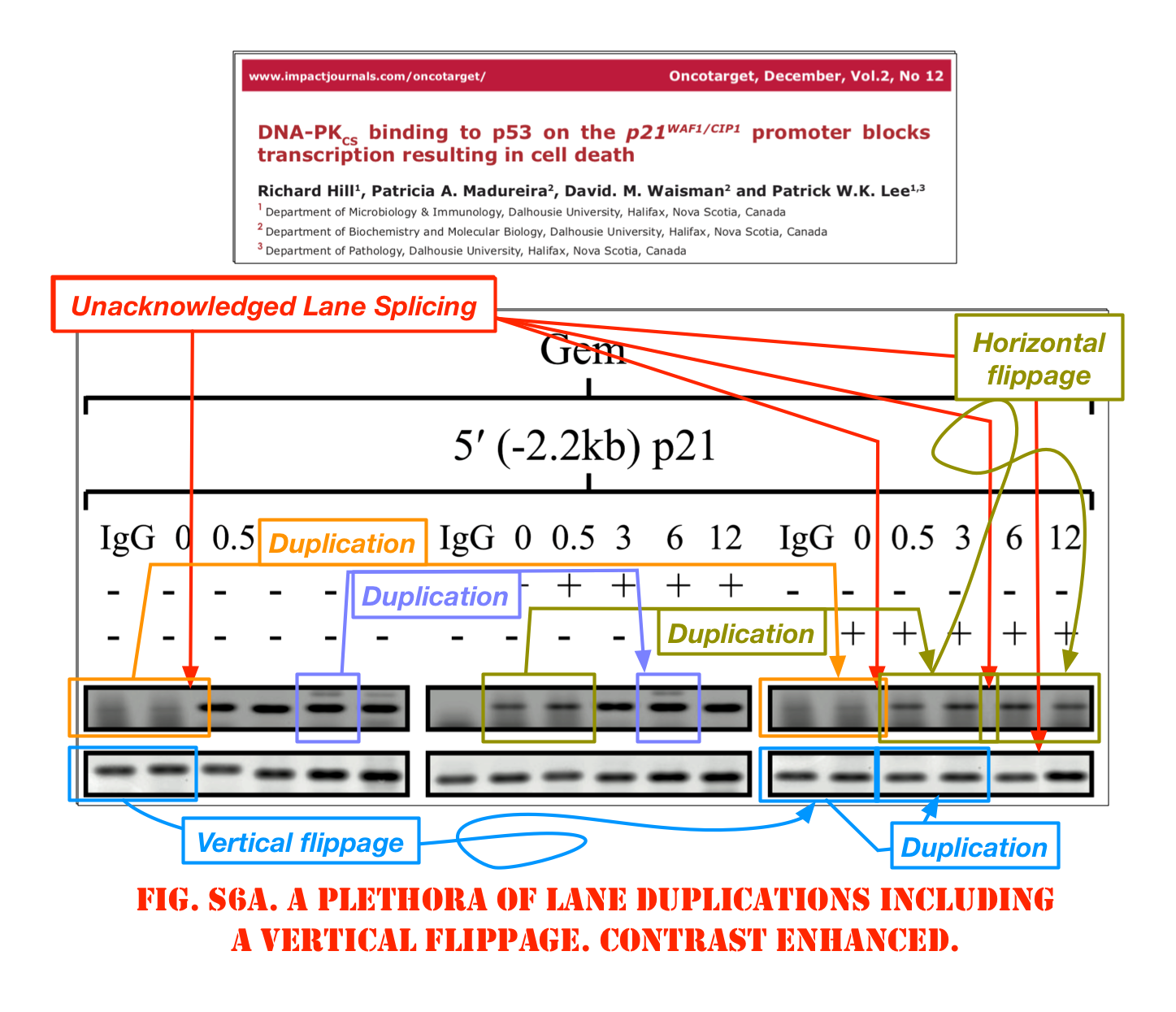
Richard Hill, the man even gels are afraid of
Get ready to meet Dr Richard Hill and his amazing jumping blots. Just don’t stare, or you’ll get hurt.

The lawsuit
In February 2024 Shorts, I quoted an announcement published by the law company TaylorWessing on 1 February 2024:
“Innovate Pharmaceuticals Limited v University of Portsmouth Higher Education Corporation [2023] EWHC 2394 (TCC) involved a dispute between the University of Portsmouth (UOP) and Innovate Pharmaceuticals (IPL). […]
The trial took place on 2 October 2023, and the judgment was handed down on 12 January 2024, finding that UOP was in breach of its obligation to carry out the research under the agreement with reasonable care and skill. The court found UOP liable in principle for both heads of damage claimed by IPL, but went on to hold that the effect of the liability clause in the research agreement was to limit UOP’s liability to £1 million.”
It was Hill who was to blame. No wonder the university tried to cover up his fraud back then. In July 2023, he had to retract his third paper (the two earlier retractions are listed here);
Richard Hill, Patricia A. Madureira , Bibiana Ferreira , Inês Baptista , Susana Machado , Laura Colaço , Marta Dos Santos , Ningshu Liu , Ana Dopazo , Selma Ugurel , Angyal Adrienn , Endre Kiss-Toth , Murat Isbilen , Ali O. Gure , Wolfgang Link TRIB2 confers resistance to anti-cancer therapy by activating the serine/threonine protein kinase AKT Nature Communications (2017) doi: 10.1038/ncomms14687

“The authors have retracted this article as it has come to their attention that several images were inappropriately processed and duplicated in multiple figures. In particular, the data were duplicated, and in some cases inverted, across several panels in Figures 2c, 2b, 3d and Supplementary Figure 5. Erroneous data were also included in Figure 2e, Supplementary Figure 1 and Supplementary Figure 8. We apologize to the scientific community for any confusion this article may have caused.”
Retraction on 19 July 2023:
The Taylor Wessing article continues:
“On 7 July 2016 the parties entered into a written agreement, under which IPL hired OUP to conduct a research programme into the properties of IP1877B, also known as Glioprin™ (the drug), for the treatment of brain tumours (the contract). The research programme was to be undertaken under the direction of Dr Richard Hill, the principal investigator and an employee of UOP at the time. […]
In August 2018 Dr Hill allegedly made numerous false representations of the research programme results to UOP through both oral and electronic communications.
On 26 May 2019 Dr Hill published a scientific paper in the scientific journal ‘Cancer Letters’ (the paper). The paper made representations to the effect that the data obtained from the research programme showed that the drug suppressed resistance to epidermal growth factor receptor (EGFR) inhibitors. “

The retracted Cancer Letters paper
That paper’s coauthor is Hill’s wife Patricia Madureira, group leader at the University of Algarve in Faro, Portugal. He worked there before going to Portsmouth and returned after they kicked him out.
K. Mihajluk , C. Simms , M. Reay , P.A. Madureira , A. Howarth , P. Murray , S. Nasser , C.A. Duckworth , D.M. Pritchard , G.J. Pilkington , R. Hill IP1867B suppresses the insulin-like growth factor 1 receptor (IGF1R) ablating epidermal growth factor receptor inhibitor resistance in adult high grade gliomas. Cancer Letters (2019) doi: 10.1016/j.canlet.2019.05.028


Back in 2019, the University of Portsmouth celebrated “The breakthrough” for “future treatments of brain tumours” with a press release and announced a clinical trial, all while that paper was being debunked on PubPeer.
In August 2019, Hill admitted some mistakes on PubPeer. At the same time, he was applauded on Retraction Watch for his allegedly self-initiated retraction of an Oncotarget paper Hill et al 2011, where he promised: “I do not think that there will be any more retractions for problematic images.” That was of course wishful thinking.

In October 2019, the Cancer Letters paper received a Corrigendum:
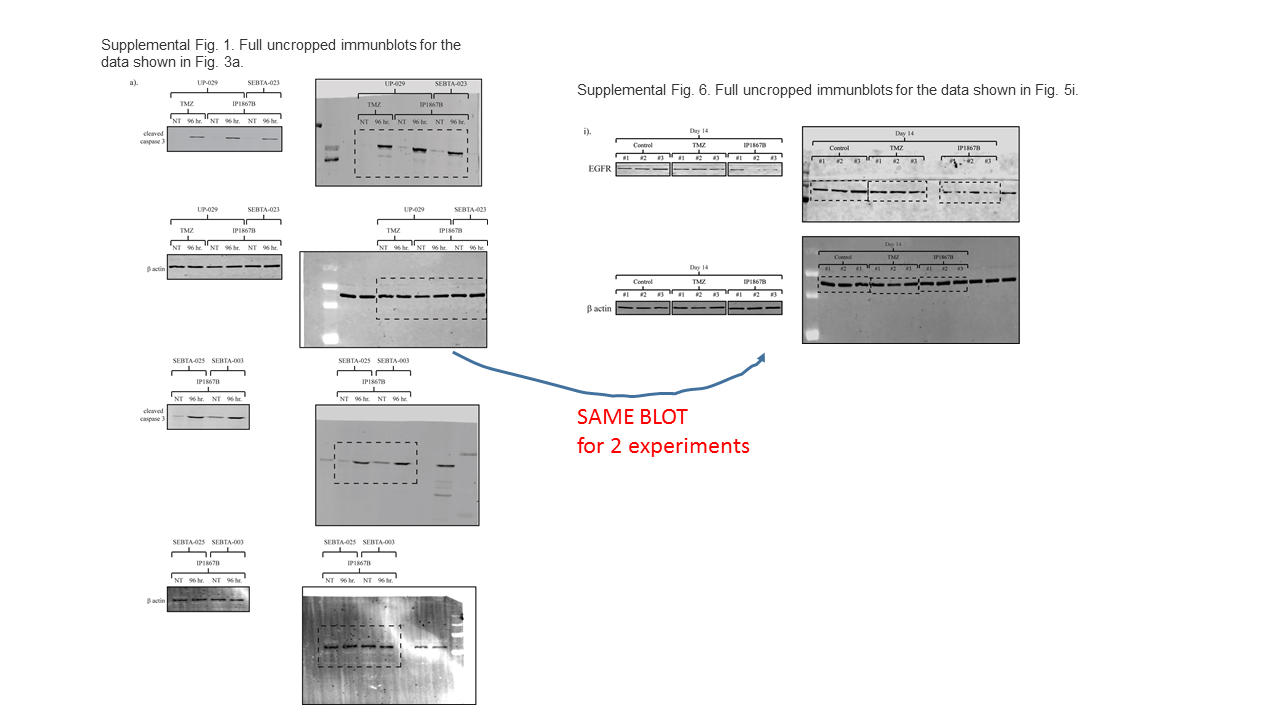
“In the article above, we, the authors, discovered that a single microscopy panel was inadvertently placed in Figure 1f, using the SEBTA-023 panel twice instead of the SEBTA-003 representative image. We discovered that an actin western blot loading control data associated with Figure 3a was also incorrectly placed in Figure 5i. We retrieved the original actin western blot data linked to Figure 5i and corrected this error.
Neither correction alter the conclusions of the original paper; however, we sincerely apologize for any confusion that this may have caused.”
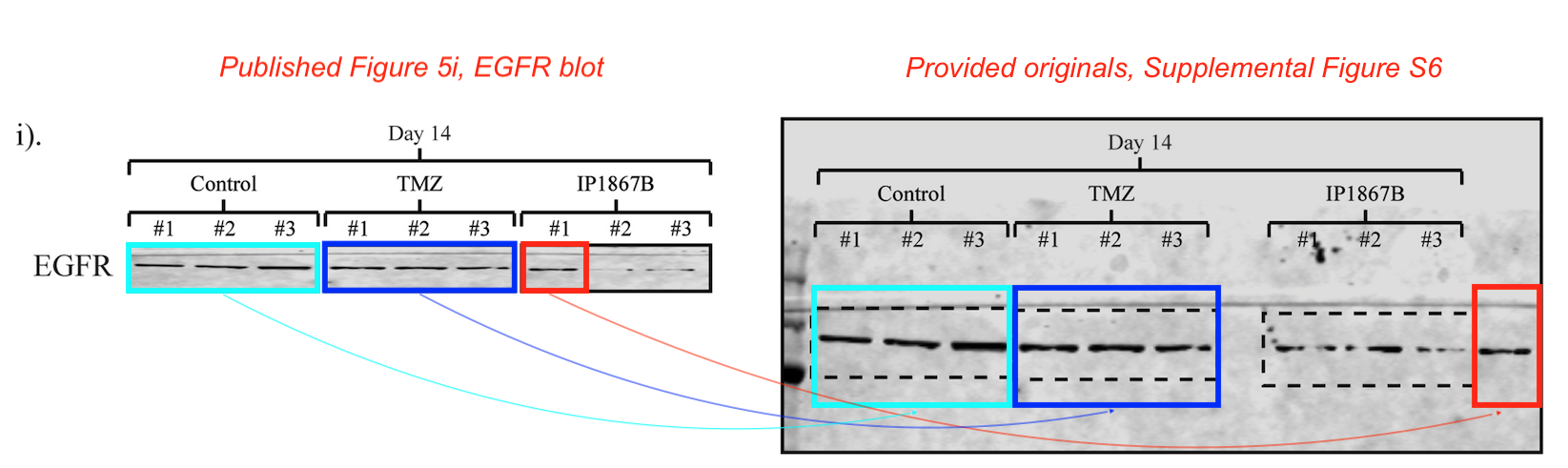
Turned out, the “raw data” he provided with that Corrigendum was fraudulent, Hill submitted an unrelated western blot for “raw data”. Later on, Elisabeth Bik found more issues with Hill’s “raw data”:
The Retraction was published on 1 June 2021:
“The Editor and Publisher received a letter from the University of Portsmouth alerting us to an investigation into alleged research misconduct. The University concluded their investigation with external experts and determined that misconduct did take place in relation to the research involved in this paper.
Upon our separate investigation, it has been determined that the paper headline relies on showing that there was considerable reduction of IGF1R, IL6R and EGFR post treatment in all cell lines. During review, it was determined that this cannot be concluded from the presented data. […]
The corrigendum (https://doi.org/10.1016/j.canlet.2019.10.002) issue is with respect to the Supplemental Figure 6i EGFR, particularly panel IP1867B. The Corrigendum states that the left part is a cut out of the very right part. If so, the bands for IP1867B should show the same staining pattern – but they do not. Also, in the Corrigendum, there are incorrect mentions between day 14 in the Figure and day 19 in the Figure legend.
All authors were informed of the retraction in advance. Drs. Pritchard and Duckworth agreed to the retraction. The corresponding author, Dr Hill, did not agree to the retraction. No response had been received from Drs. Mihajluk, Simms, Reay, Madureira, Howarth, Murray, Nasser and Pilkinton at the time of the retraction being published.”
Hill tried to prevent the retraction. The court documents available to me reference a letter from Cancer Letters to Hill:
“Thank you for your quick response and acknowledgment of our decision. We appreciate your time in sending further explanation, however, our decision to retract is final. […] We have received two more messages […] As more concerns and allegations are raised, it is clear to us that this paper cannot stand and we will move forward with the retraction in the coming days.”
As the retraction notice and court documents confirm, Hill was found guilty of research misconduct by the Portsmouth disciplinary panel in early 2020. The university may have gone bankrupt had the plaintiff been awarded full damages, but Portsmouth got off with paying merely 1 million. The lawsuit can be found here.
The western blot expert
What was not in the public domain so far, was whom the University of Portsmouth engaged as their expert witness to defend Hill’s fraud.
It was Martin Bushell, Professor of Cancer Biology at the University of Glasgow and Senior Group Leader at Beatson Institute for Cancer Research (now CRUK Scotland Institute), also in Glasgow. I obtained a transcript of Bushell’s court testimony (full disclosure: source is Innovate Pharma, but I never received any money from them).

To certify his expertise, Bushell was asked by the Portsmouth’s lawyer Clare Dixon: “how many western blots would you say you have done in your career?” His reply:
“So, I have calculated that number based solely on my PhD work, and I have done many years since then, and that number is somewhere in the region of 14,000, just for my three years of my PhD.“
Innovate’s lawyer Thomas Roe later calculated that it must make “89 western blots per week, assuming you did not have any time off at all.” Bushell clarified: “in total I was doing 24 blots per day.”
Anyone who ever worked in a lab and at least saw a protein gel being run and blotted will know that Bushell is full of crap with his 24 blots per day.
Well anyway, here is how Bushell used to do western blots as PhD student and postdoc of Michael Clemens in London:
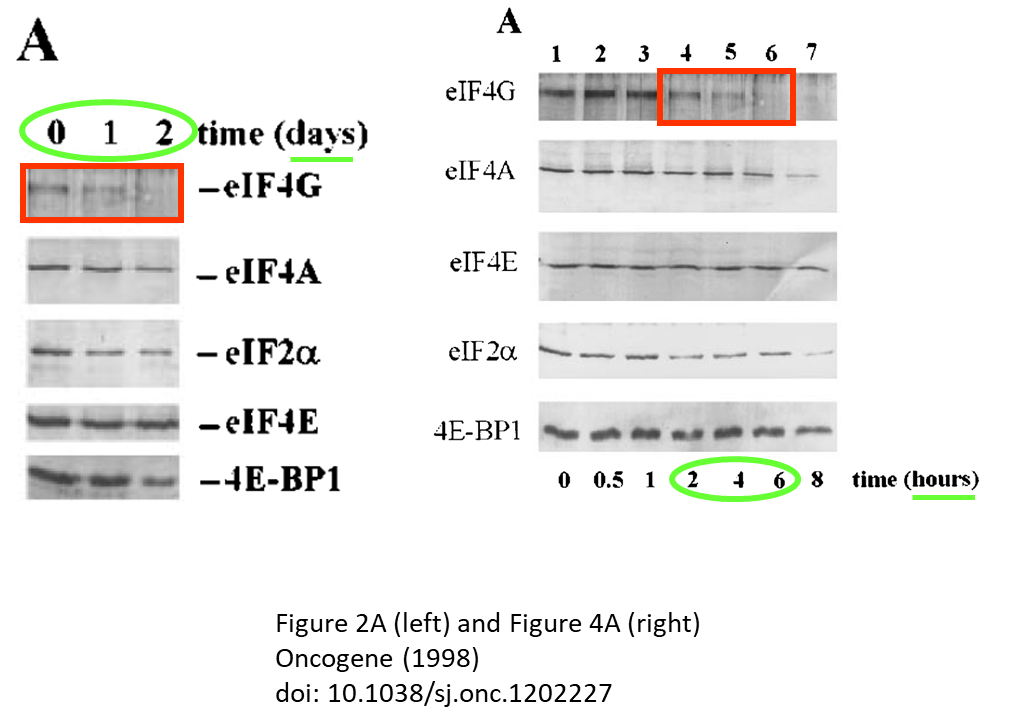
Michael J Clemens , Martin Bushell, Simon J Morley Degradation of eukaryotic polypeptide chain initiation factor (eIF) 4G in response to induction of apoptosis in human lymphoma cell lines Oncogene (1998) doi: 10.1038/sj.onc.1202227
Or this, flagged on PubPeer in 2018:
Simon J. Morley, Ian Jeffrey , Martin Bushell, Virginia M. Pain , Michael J. Clemens Differential requirements for caspase-8 activity in the mechanism of phosphorylation of eIF2alpha, cleavage of eIF4GI and signaling events associated with the inhibition of protein synthesis in apoptotic Jurkat T cells FEBS Letters (2000) doi: 10.1016/s0014-5793(00)01805-6
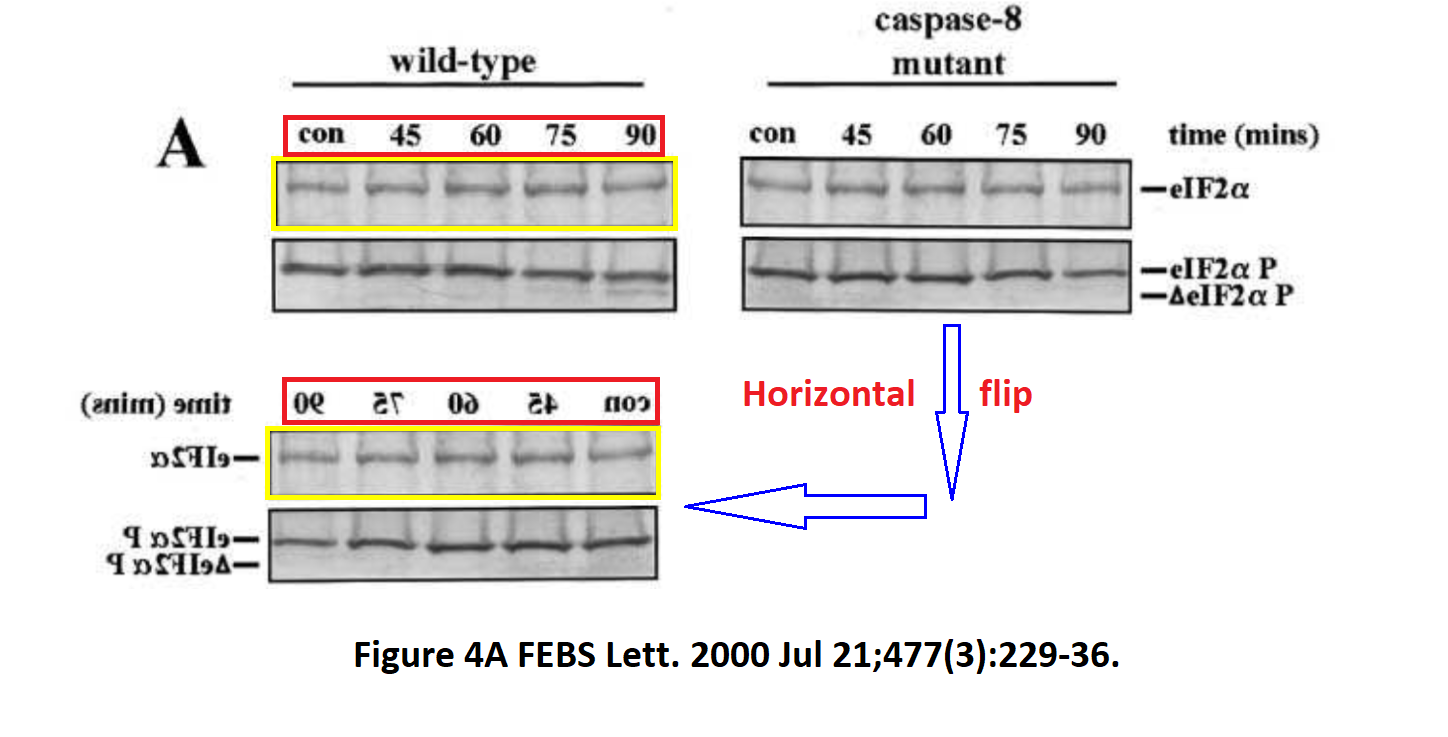
This was flagged on PubPeer in 2013 and visualised in 2017, enjoy the intricate fabrication:
Martin Bushell, Wendy Wood , Gillian Carpenter , Virginia M. Pain , Simon J. Morley , Michael J. Clemens Disruption of the interaction of mammalian protein synthesis eukaryotic initiation factor 4B with the poly(A)-binding protein by caspase- and viral protease-mediated cleavages Journal of Biological Chemistry (2001) doi: 10.1074/jbc.m100384200
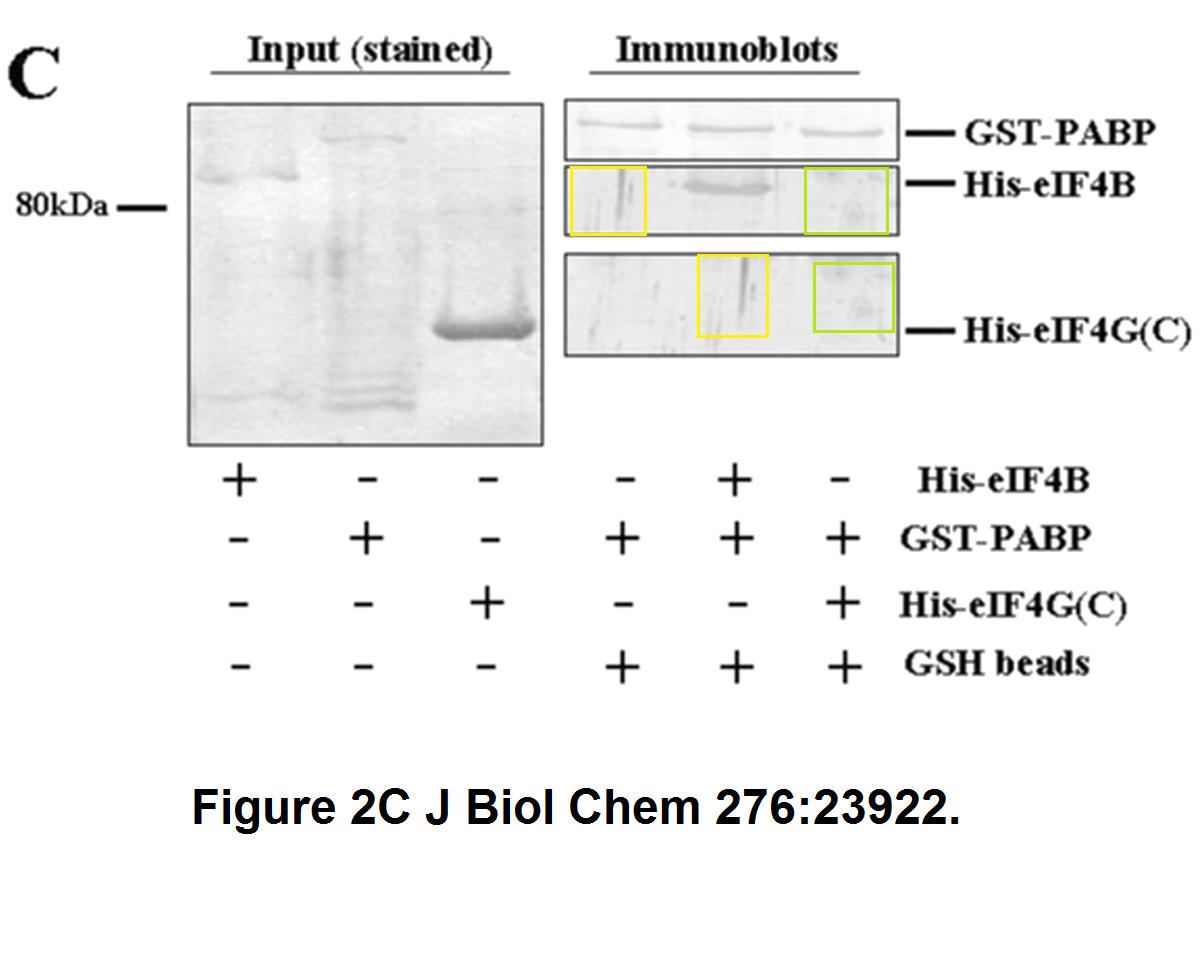
Indeed, with Photoshop one can indeed easily produce 24 western blots per day!
In court, Bushell was asked to opine of Hill’s manipulations. Like, this reuse of a blot for two totally different experiments in Fig 5(i) from Hill’s Cancer Letters paper:
Harmless mistake, according to Bushell:
“Nothing I have observed in relation to this mistake indicates any dishonesty by the authors of the Cancer Letters Paper or any intention to mislead Innovate or any other readers of the Cancer Letters Paper.“
And anyway, Hill didn’t actually have to publish any raw data, so whatever fraud was found there doesn’t count, as Bushell explained:
“I want to remind you he has put these in voluntarily as well so this is very helpful of Hill to have put these uncropped blots into the paper.“
The blot from Cancer Letters paper was reused in Howarth et al 2019 paper in Translational Oncology. It was fraudulent also:
Alison Howarth , Claire Simms , Nitesh Kerai , Olivia Allen , Karina Mihajluk , Patricia A. Madureira , Giannis Sokratous , Simon Cragg, Sang Y. Lee , Andy D. Morley , Ashkan Keyoumars , Paul A. Cox , Geoffrey J. Pilkington , Richard Hill DIVERSet JAG Compounds Inhibit Topoisomerase II and Are Effective Against Adult and Pediatric High-Grade Gliomas Translational Oncology (2019) doi: 10.1016/j.tranon.2019.07.007
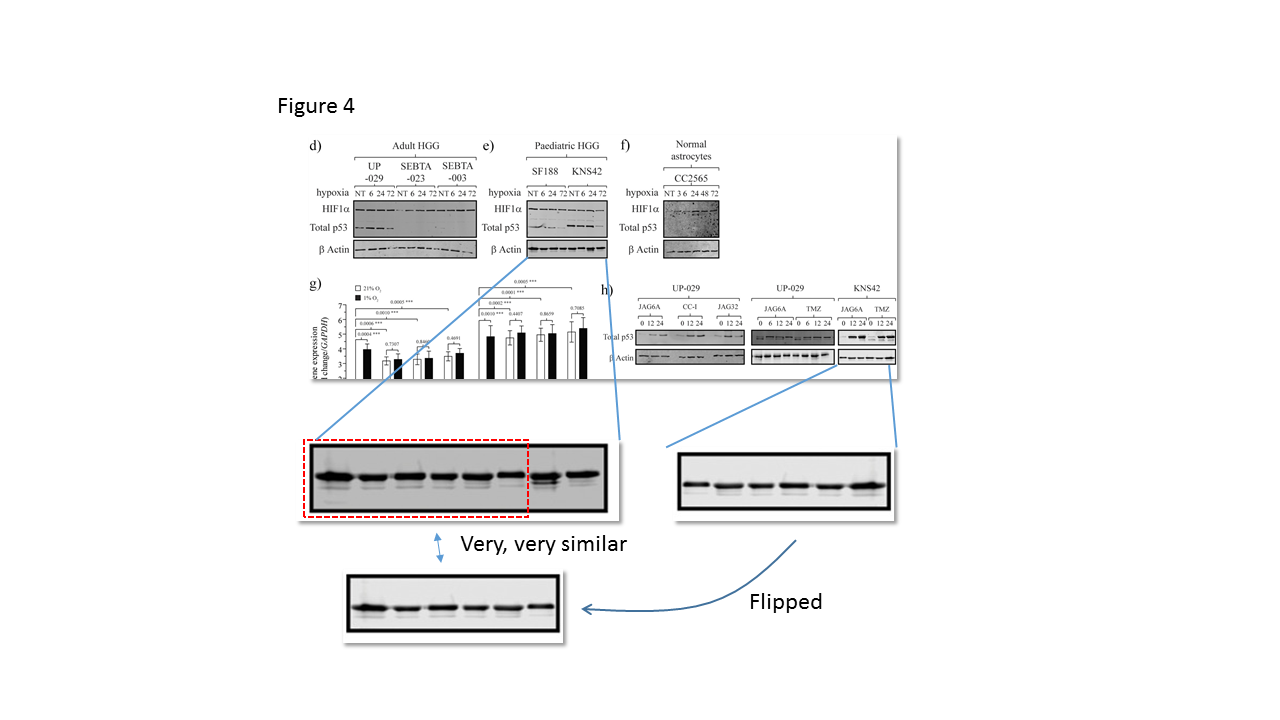

The paper was fixed with a stealth correction because Hill claimed to have spotted the problems all by himself, “prior to any PubPeer comments“. Bushell thought it was all fine:
“...this criticism does not relate to any error or mistake in the Cancer Letters Paper at all, but an error in a pre-publication version of an entirely different paper, which error was corrected during the review phase prior to publication. [….]
Nothing […] indicates any dishonesty by the authors of the Cancer Letters Paper or any intention to mislead readers of the Cancer Letters Paper.“
In fact, Bushell explained, western blots get accidentally flipped all the time, during cropping:
“you might also crop it first and then flip it round, or accidentally flip it round.“
As I mentioned above, in his fraudulent Cancer Letters correction Hill published irrelevant western blots as alleged raw data, and was caught out:

Bushell’s expert opinion was to say SO WHAT:
“In the paper he has put a version of this figure. In the supplementary, he has put another version of this figure. This could have been by accident, completely. Absolutely.“
And for another instance of data manipulation in Cancer Letters, Bushell blamed an unnamed student:
“this mistake is likely to have occurred as a result of a student working under Dr Hill’s supervision having copied and pasted the same image twice. Whilst this mistake should have been picked up by Dr Hill when reviewing the paper and the individual blot images, and I would also expect this mistake to have been identified during the pre-publication peer review and editorial review, I can see how this mistake could have occurred and such errors occur relatively frequently.”“
Yes, the stupid student did it:
“you are doing two experiments at the same point and then you develop and process those western blots at the same time. They could be from two separate experiments on different papers happening at the same point. Those images would then be in one file and that can then lead to mistakes whereby let us say a student takes one of those blots and processes it into a figure and the supervisor, or Hill in this particular instance, may take accidentally — I am just putting it as a scenario here — the same blot and make it into another figure thinking it is from a different experiment. So it is possible.”
The final expert opinion on Hill’s falsifications was:
“if we were to take all of the data into account and perfectly summarise it, I think we would still come out with the same conclusions of this paper.“
The expert’s dirty laundry
Bushell said much more outrageous stuff like that, but I think it is best illustrated with his own papers. Flagged on PubPeer already in 2013:
Julie A. Moreno , Helois Radford , Diego Peretti , Joern R. Steinert , Nicholas Verity , Maria Guerra Martin , Mark Halliday , Jason Morgan , David Dinsdale , Catherine A. Ortori , David A. Barrett , Pavel Tsaytler , Anne Bertolotti , Anne E. Willis , Martin Bushell, Giovanna R. Mallucci Sustained translational repression by eIF2α-P mediates prion neurodegeneration Nature (2012) doi: 10.1038/nature11058
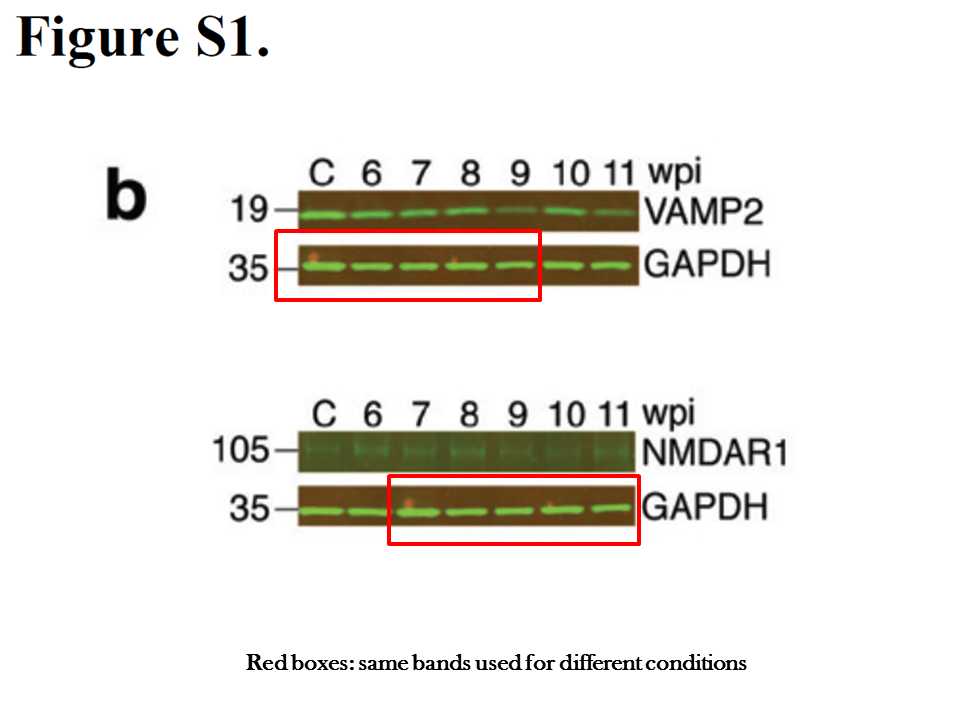


In July 2014, only “an error in Supplementary Fig. 1b” was corrected, the rest ignored. One could use this quote from Bushell he used to defend Hill:
“it is possible for cropped western blot images to be mixed up if they are not labelled correctly or clearly, and this can lead to incorrect images being used or incorrect orientation of the blot.”
Bushell’s collaboration with Anne E. Willis, Director of the MRC Toxicology Unit at the University of Cambridge, was a resounding success. Willis is a role model, in 2017 she was awarded the Order of the British Empire “for services to biomedical sciences and supporting the careers of women scientists“. Be invited to study her PubPeer record to understand the nature of her services to science. Here an example:
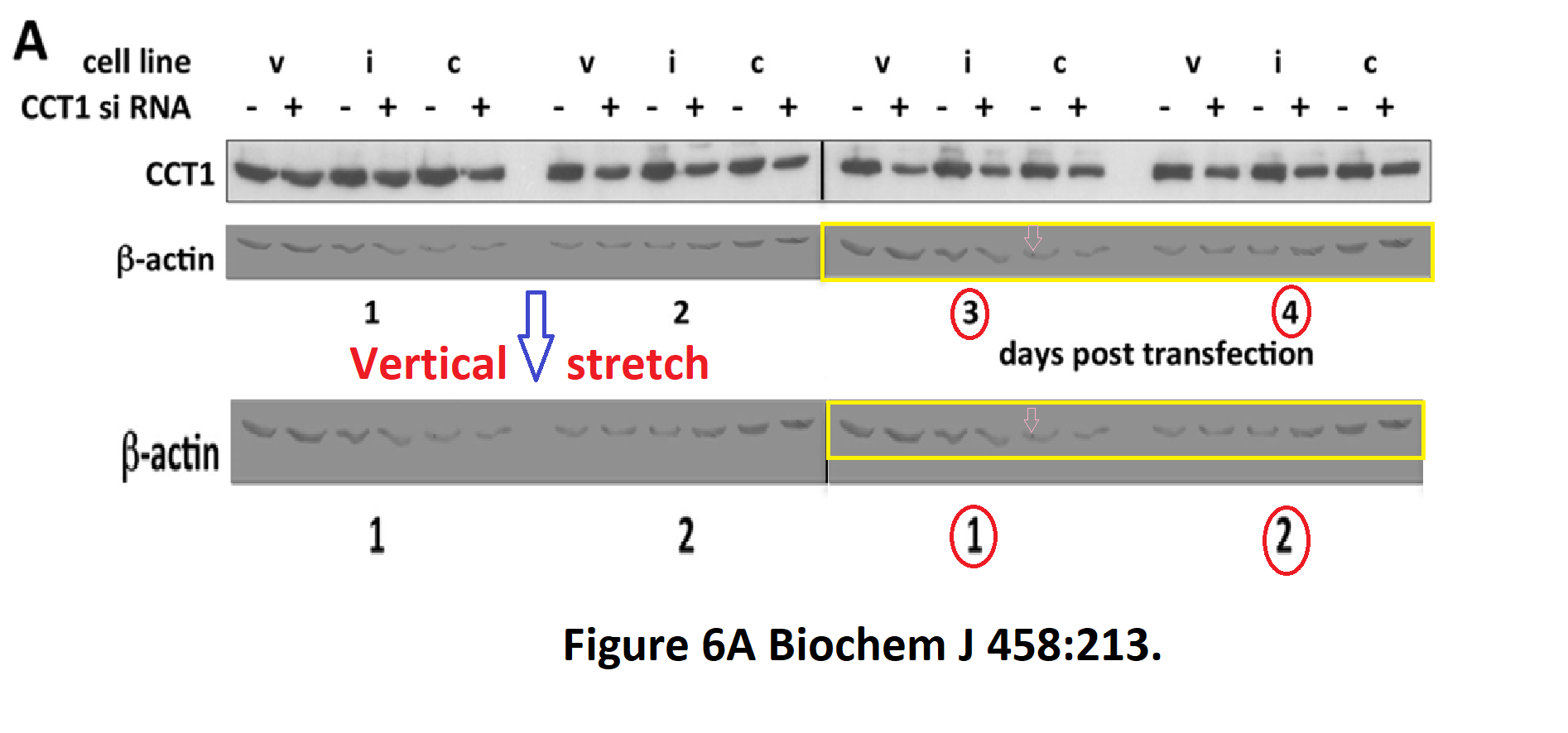
Here an earlier Willis-Bushell collaboration, which last author Kenneth Siddle used to be Vice-Master of the Churchill College at Cambridge University:
Keith A. Spriggs , Laura C. Cobbold , Simon H. Ridley , Mark Coldwell , Andrew Bottley , Martin Bushell, Anne E. Willis, Kenneth Siddle The human insulin receptor mRNA contains a functional internal ribosome entry segment Nucleic Acids Research (2009) doi: 10.1093/nar/gkp623
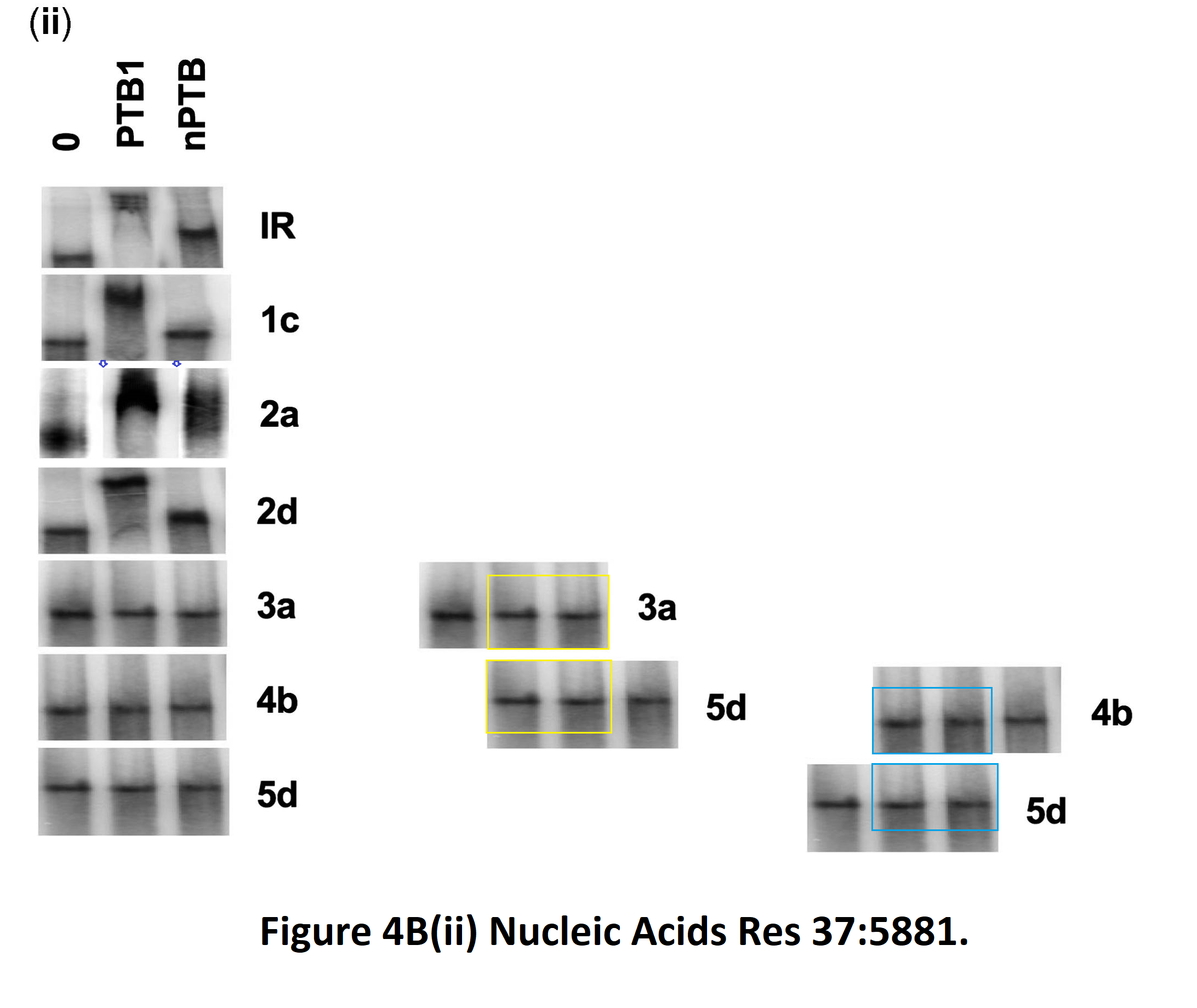
In January 2016, Siddle shared some emails with Clare Francis, blaming Willis’s postdoc Laura Cobbold. In February 2014, Willis wrote to the editor of Nucleic Acids Research:
“The band shifts in question were carried out in my lab by an experimental officer who left science and the UK in 2005 and I am no longer in contact with her. When I left Nottingham, due to the University’s rules all, original data and laboratory books had to remain behind and our computers were wiped. […] That said, this was a time when I was still active in the laboratory and I often carried out some of the repeat experiments. Very fortunately I did take my own lab books with me to Leicester and I have found that I carried out two repeats of these experiments in around January 2006. “
The bad student excuse was plagiarised by Bushell in Hill’s defence:
“the image could be put, as he stated, on a memory stick, so copied on to a memory stick and then copied on to his computer and the student may make a figure out of that same image on a different computer at a different time, so they are just images and they can be made into figures at different points. There is no reason why they cannot be. It is just a duplication of an image that is electronic and then it can be used on several different computers at the same time.“
Willis suggested a Corrigendum, but the editor replied to “confirm that these support the results and conclusion of your article“, that there was “no evidence of unethical manipulation of panels 3a, 4b and 5b“, and that the editors “do not think it necessary to publish a corrigendum“.
Eventually, Nucleic Acids Research changed leadership and policies. Siddle, Willis and Bushell had to publish that Corrigendum 8 years later, in January 2022:
“The Editors were alerted in 2014 that some Electrophoretic Mobility Shift Assays (EMSAs) depicted in Fig4Bii showed unusual levels of similarity (panels 3a, 4b and 5d). The journal investigated the matter at the time and did not find conclusive evidence to support the allegations. The same allegations were brought to the Editors’ attention again in 2021. […] The corresponding authors acknowledge with regret errors in the preparation of panels 3a, 4b and 5d of Figure 4B (ii)”
The Correction also mentioned what Willis: original raw data unavailable, but the authors had some “surviving images of replicate parallel experiments conducted around the same time in 2005/6“.
Bushell and Willis again, flagged by Clare Francis in 2014 and visualised in 2022 by Cheshire:
Keith A. Spriggs , Laura C. Cobbold , Catherine L. Jopling , Rebecca E. Cooper , Lindsay A. Wilson , Mark Stoneley , Mark J. Coldwell , Didier Poncet , Ya-Ching Shen , Simon J. Morley , Martin Bushell, Anne E. Willis Canonical initiation factor requirements of the Myc family of internal ribosome entry segments Molecular and Cellular Biology (2009) doi: 10.1128/mcb.01283-08
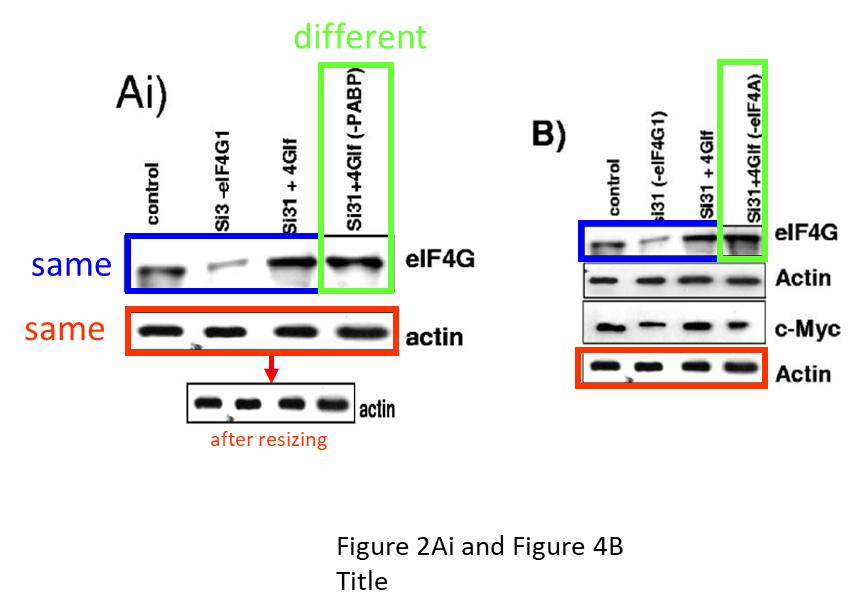
Bushell’s excuse for Hill fits here, I guess:
“these mistakes — and I am not trying to say that they are not important because they are important — but these are all on the control blots. Control blots by definition do look very similar and mistakes can happen in those situations. It is rather remarkable that when you look through a lot of publications out there where there are mistakes of this type, it does tend to be in the control lanes, in the control blots for those. So this is not just a mistake that is just occurring in Hill’s papers. Lots of papers have similar types of mistakes because these blots do look very similar“
On PubPeer since 2013, corrected merely 11 years later:
L C Cobbold , L A Wilson , K Sawicka , H A King , A V Kondrashov , K A Spriggs , M Bushell , A E Willis Upregulated c-myc expression in multiple myeloma by internal ribosome entry results from increased interactions with and expression of PTB-1 and YB-1 Oncogene (2010) doi: 10.1038/onc.2010.31 Fig 1B
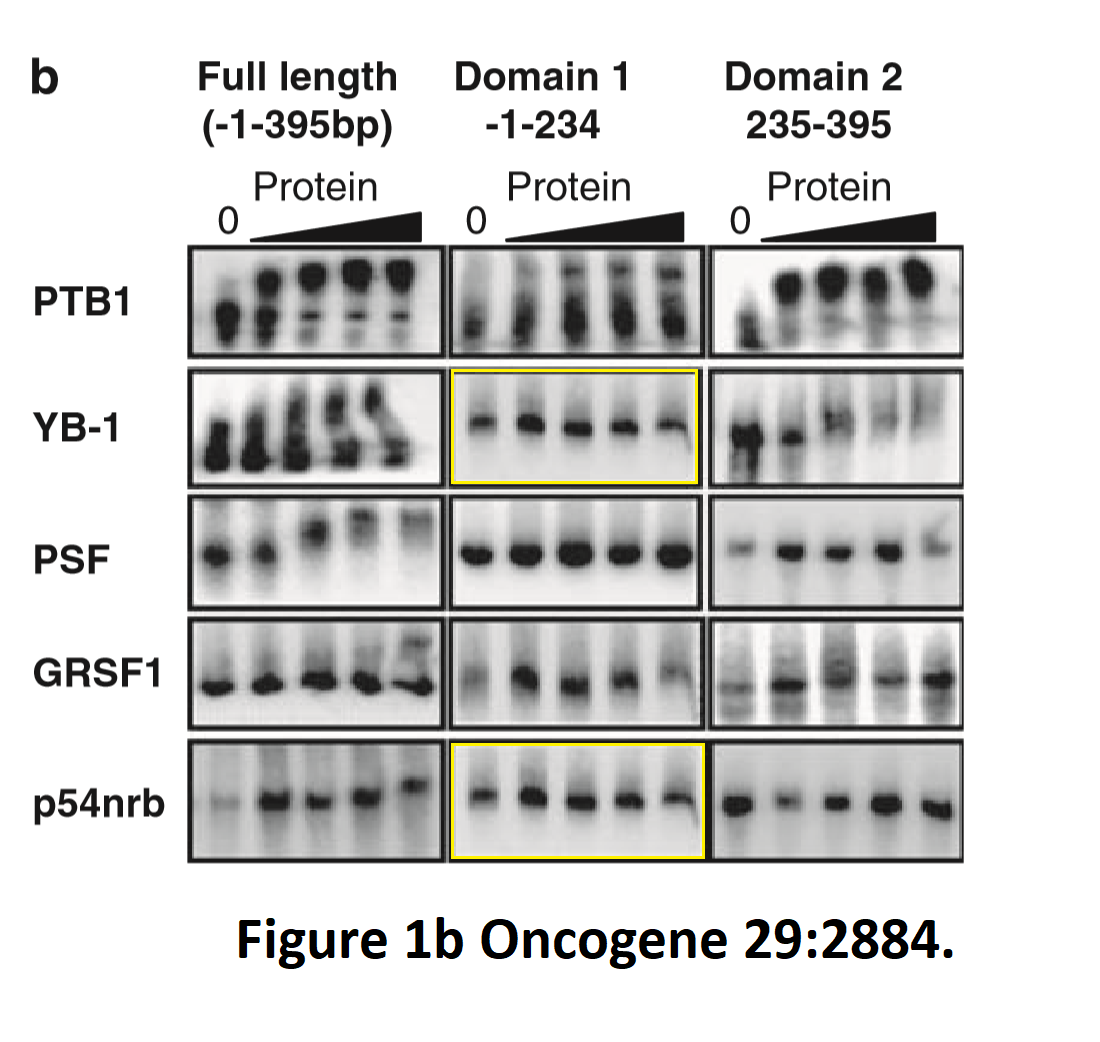
For Bushell, this must have been perfectly “legitimate”, if one follows his arguments in Hill testimony:
“manipulation, as you say, is taking these images and then doing, using them in different context. As I have stated before, that can happen legitimately and inadvertently — not legitimately but inadvertently, by accident, so it is possible that that can take place.”
The Correction from 13 September 2024 credited the authors for having “noted an error in Figure 1b” which they fix by having “referred back to original data” and recovered the “the correct panel for Domain 1 -1-234/YB-1“. Naturally, “this correction has no impact on the conclusions of the paper“. At least they didn’t blame Cobbold again.
The next paper by Bushell and Willis, flagged on PubPeer in 2013, is uncorrectable. It has the same lead author as the papers above. It is Willis’s other postdoc Keith Spriggs, now associate professor at the University of Nottingham:
Laura C. Cobbold , Keith A. Spriggs , Stephen J. Haines , Helen C. Dobbyn , Christopher Hayes , Cornelia H. De Moor , Kathryn S. Lilley , Martin Bushell, Anne E. Willis Identification of internal ribosome entry segment (IRES)-trans-acting factors for the Myc family of IRESs Molecular and Cellular Biology (2008) doi: 10.1128/mcb.01298-07
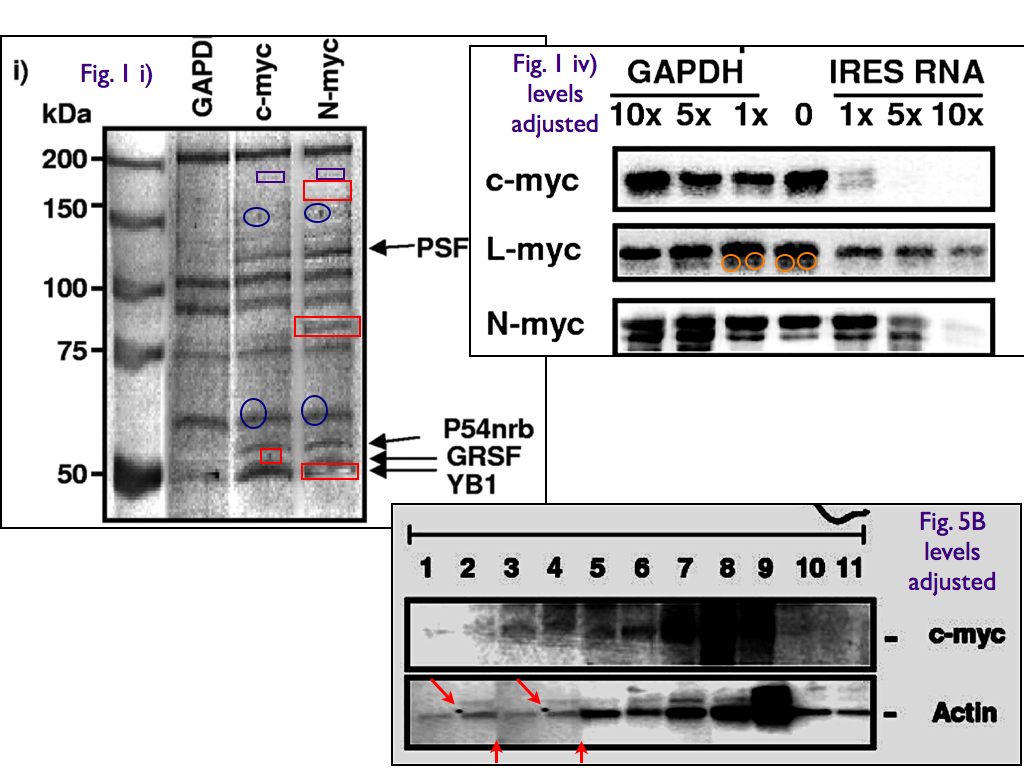
Fig. 1iv. New observation. Lanes 3 and 4 share some pixel features, not limited to those indicated by the orange ovals.
Fig. 5B. Splicing between lanes 2/3 and 4/5 as well as the repeating dark object indicated by red arrows.”

(right) Elisabeth Bik: “Figure 4A: Pink boxes: the c-myc bands in i) and ii) look very similar, albeit shown in mirror image (vertical mirroring)”
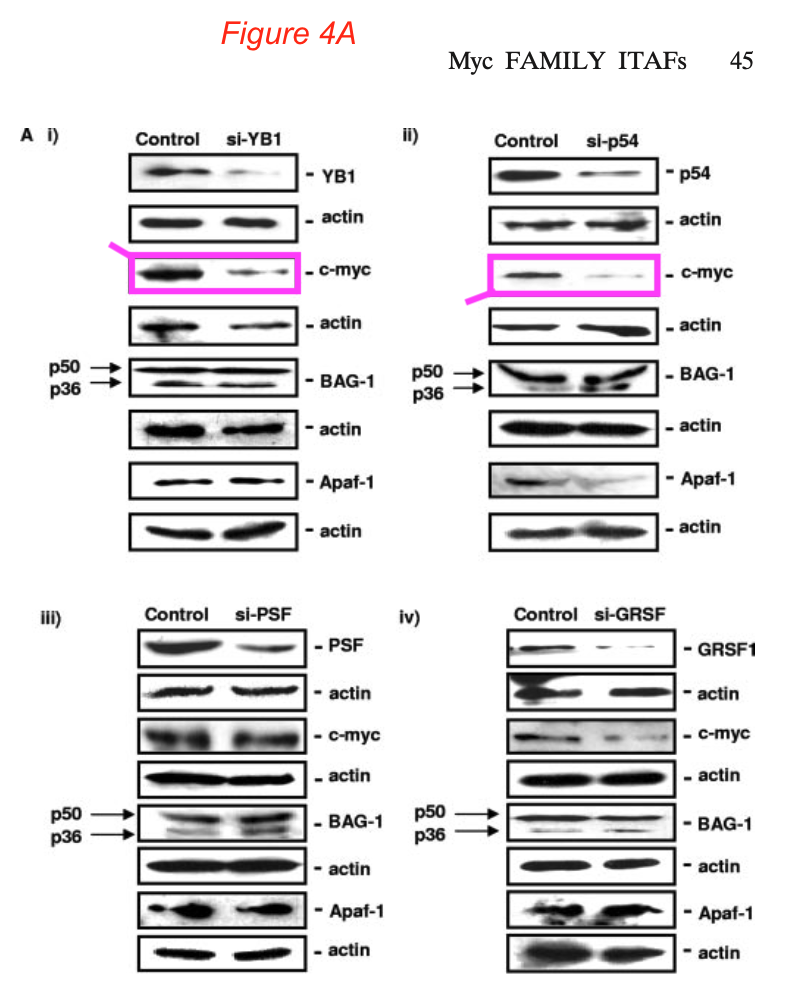
Maybe this Bushell statement fits:
“I think that especially looking at what happened with the final versions of this paper and uploading, I think that there is also the possibility that a lot of these figures were made in a rush last minute and mistakes were possibly made at that stage as well.”
Most of the below evidence was on PubPeer before 2019. Is this why the University of Portsmouth recruited Bushell as expert witness? Professors Bushell, Willis and Spriggs:
Ian R. Powley , Alexander Kondrashov , Lucy A. Young , Helen C. Dobbyn , Kirsti Hill , Ian G. Cannell , Mark Stoneley, Yi-Wen Kong , Julia A. Cotes , Graeme C.M. Smith , Ron Wek, Christopher Hayes , Timothy W. Gant, Keith A. Spriggs, Martin Bushell, Anne E. Willis Translational reprogramming following UVB irradiation is mediated by DNA-PKcs and allows selective recruitment to the polysomes of mRNAs encoding DNA repair enzymes Genes & Development (2009) doi: 10.1101/gad.516509
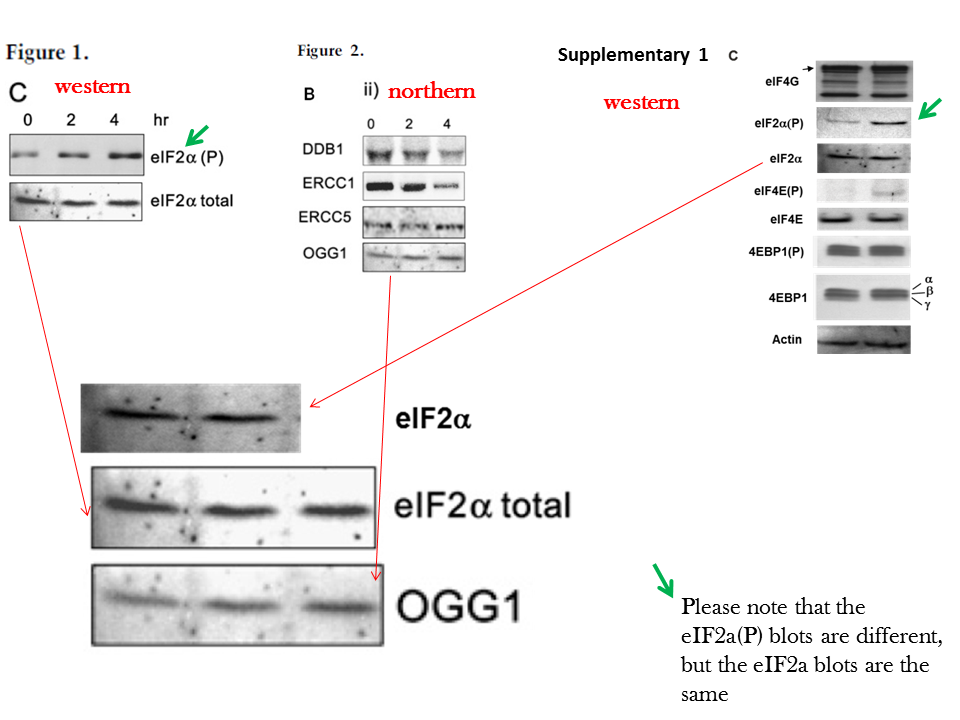

If needed, Bushell can reuse his excuse for Hill’s fraud:
“The more mistakes you have, the more lack of reasonable care there is. That is clear. We all know this. But each of these individually can be made by accident and completely legitimately. It is not — normally it would not be the type of error that, you know — every paper has errors in it, I would say. I know that I said 90% and I think it probably is 90%, maybe even higher. But I really do believe that errors do crop into papers.”
Yes, especially Bushell’s own papers are affected.
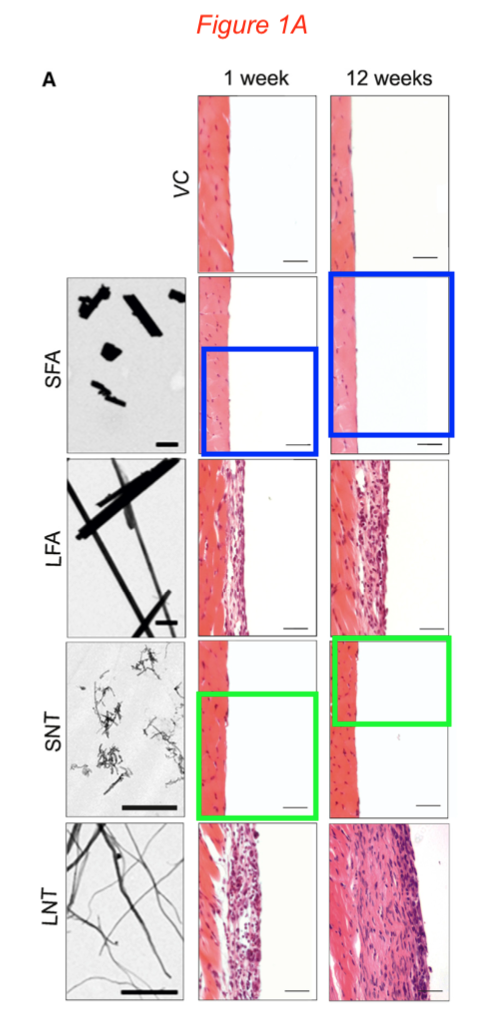
Tatyana Chernova , Fiona A Murphy , Sara Galavotti , Xiao-Ming Sun , Ian R Powley , Stefano Grosso , Anja Schinwald , Joaquin Zacarias-Cabeza , Kate M Dudek , David Dinsdale , John Le Quesne , Jonathan Bennett , Apostolos Nakas , Peter Greaves , Craig A Poland , Ken Donaldson , Martin Bushell, Anne E Willis, Marion MacFarlane Long-Fiber Carbon Nanotubes Replicate Asbestos-Induced Mesothelioma with Disruption of the Tumor Suppressor Gene Cdkn2a (Ink4a/Arf) Current Biology (2017) doi: 10.1016/j.cub.2017.09.007
Elisabeth Bik: “Figure 1A:
- Blue boxes: The 1-week and 12-weeks SFA panels appear to overlap, albeit stretched differently
- Green boxes: The 1-week and 12-weeks SNT panels appear to overlap, albeit stretched differently”
But then again, as Bushell said:
“No paper — I would wager quite heavily that a large percentage, probably over 90% of papers in the public domain, have errors in them. Whether or not they be known, I would suggest that would be the case.“
There is indeed a certain appeal to a theory that because so much data manipulation is being found, this must mean that data manipulation is actually an integral part of scientific process. Bushell seems to believe it.
Well, here is something:

Bushell claims to suffer from “a long-term condition“, which in his case is dyslexia. It can’t be very severe: for example he wrote a report for the University of Portsmouth whitewashing Hill. Somewhat funnily, Bushell is not the only scholar suffering from this condition: the Israeli microbiologist Ilana Kolodkin-Gal also uses the dyslexia excuse to explain her compulsive data manipulation. Read here:
Proofig – the Kolodkin-Gal family business
“Don’t let online controversies and aggressive blogs easily ruin everything you’ve worked for to build your reputation […] Whether the image issue is innocent or intentional, the outcome is still the same. Bloggers will attack that publication with image issues, which will damage your reputation and may even lead to a costly investigation. We are…
Finally, a recent paper from Bushell’s lab, flagged by Bik in September 2023. Note that it is not just a simple image duplication, as brightness was changed. Bushell had to publish a correction one month before his court testimony in Hill’s case:
Aldo S Bader , Janna Luessing , Ben R Hawley , George L Skalka , Wei-Ting Lu , Noel F Lowndes, Martin Bushell DDX17 is required for efficient DSB repair at DNA:RNA hybrid deficient loci Nucleic Acids Research (2022) doi: 10.1093/nar/gkac843
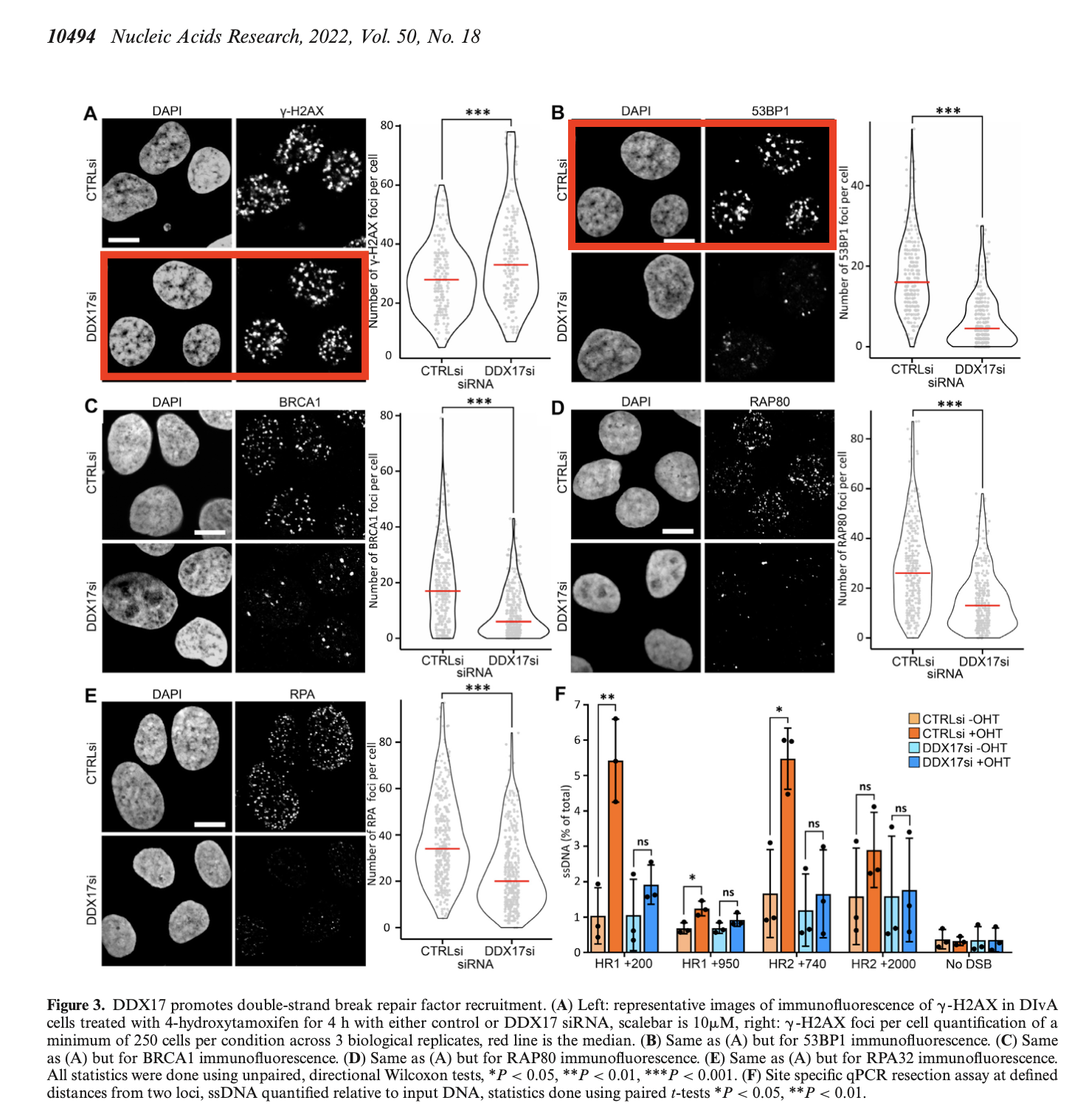
I contacted Bushell, Willis and the University of Portsmouth for a comment. They didn’t reply. But even when specifically asked to, the university never denied having known of Bushell’s PubPeer record and having paid his as their expert witness exactly because of this PubPeer evidence of his skills.
Update 19.09.2024
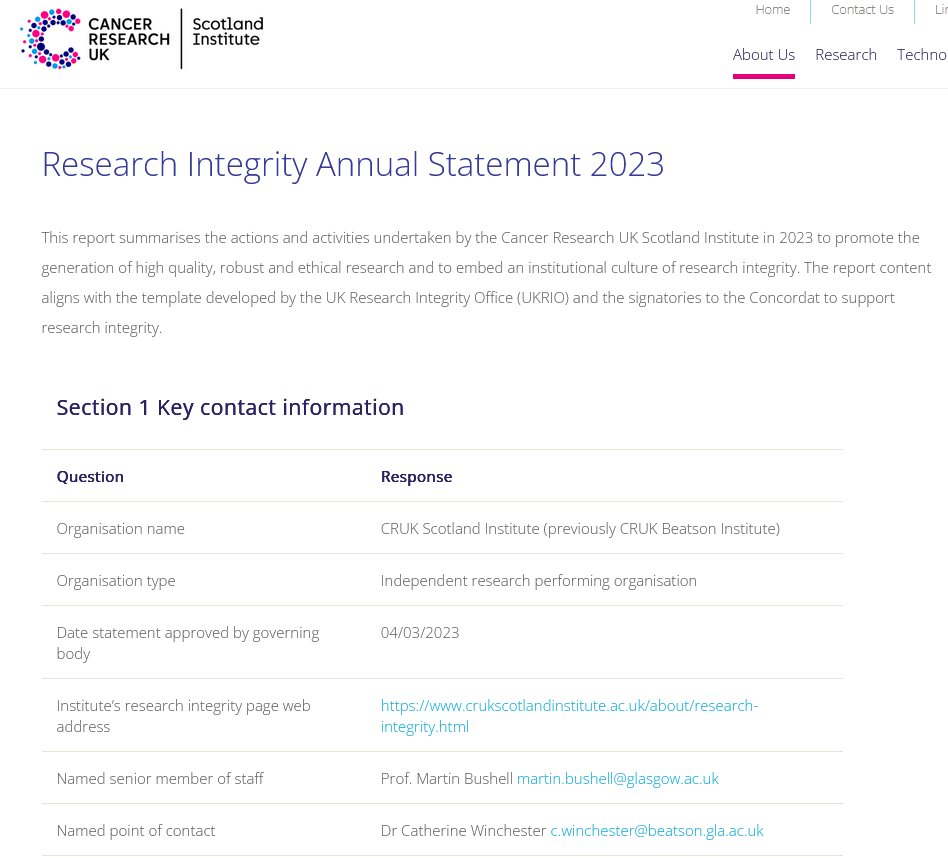
In further news of gardening goats and foxes guarding hen-houses, Bushell is not only Deputy Director but also Research Integrity Officer of his CRUK Scotland Institute. Here Bushell comments in this capacity on how his institute screens manuscripts pre-submission “in a non-judgemental way,” to spot problems “which have accidentally been incorporated” by hapless authors. His RIO subordinate Catherine Winchester announced to me to investigate her boss’ papers “following our robust Misconduct in Research Policy and procedures, which align with those of CRUK and the University of Glasgow.” Totally unbiased.
Donate!
If you are interested to support my work, you can leave here a small tip of $5. Or several of small tips, just increase the amount as you like (2x=€10; 5x=€25). Your generous patronage of my journalism will be most appreciated!
€5.00


All very British! Many point out, with evidence, that Italy is full of crap, the truth is that the British are better at hiding things. Even though the Empire has gone U.K. establishments still run colonial regimes.
Greece was never part of the Empire, but in effect, did become part of the Empire after WWII. The British army helped the Greek central government win the civil war.
Nice modern example from the world’s second oldest university.
PubPeer – Autophagosome Proteins LC3A, LC3B and LC3C Have Distinct Sub…
Older, but still within living memory.
PubPeer – Herpes Simplex Virus Type 1 Blocks the Apoptotic Host Cell D…
LikeLike
“Control blots by definition do look very similar and mistakes can happen in those situations.”
I don’t think that any more true than for other proteins. Control proteins are chosen because they have a relatively similar amount of protein, but that doesn’t mean that the blots themselves should look more similar than other blots.
LikeLike
“Bushell’s collaboration with Anne E. Willis, Director of the MRC Toxicology Unit at the University of Cambridge, was a resounding success.”
Hats off the Martin Bushell and Anne E Willis!!!
Making it up is winning strategy. By the time anybody notices it is years later, and by the time the journals decide to do anything, such as issue corrections, or retractions, it may be years later, if ever! Such a successful strategy. The lag phase by be longer than our lives.
Apart from the problematic data: PubPeer – Search publications and join the conversation.
the more astute think that “mammalian IRES sequences”, Anne E Willis’ main topic, shtick, are artefacts of the assays used, i.e. false positives,
and have more conventional explanations.
Splicing mediates the activity of four putative cellular internal ribosome entry sites – PubMed (nih.gov)
False-positive IRESes from Hoxa9 and other genes resulting from errors in mammalian 5′ UTR annotations – PubMed (nih.gov)
Anyway, it’s Britain where you are not listened to if you think “above your station in life”, and where position and titles are still everything. As most know : “you mustn’t say anything”, not that you will go to the gulag, there are no gulags, but that things may not go so swimmingly. Only the foolish will not get the message.
Instead of addressing the illogical nature of their data, the higher-ups will throw their “reputations” at it, and the university will try to cover up the problem if it involves big, important people with more money than they have.
A case in point. Freedom of Information Act 2000 (Section 50) (ico.org.uk)
Top geneticist ‘should resign’ over his team’s laboratory fraud | Research | The Guardian
LikeLiked by 1 person
What it is is that the U.K., especially London (party city), is very attractive to foreign students, who can be charged 3 to 5 times the amount a British student can be charged. It doesn’t matter that the window dressing hides many warts. The window dressing is the message. Any services to the window dressing are more than welcome by the government.
Dependence on China is putting British values at risk in higher education, says Lord Patten (msn.com)
“The Telegraph analysis shows they contribute around £5.9bn to the UK university sector through tuition fees alone.”
That’s a lot of money!
Any university with any sense senses would ignore human rights abuses for £5.9bn. How else to pay its higher-ups?
I wonder if English being the international language has done the U.K. more harm than good.
LikeLike
Maybe Bushell really meant “over 90% of papers in the public domain, have fraud in them”.
LikeLike
Yes, I think meant that. So why bother.
LikeLike
“…Martin Bushell, Professor of Cancer Biology at the University of Glasgow and its Beatson Institute for Cancer Research and Senior Group Leader at CRUK Scotland Institute, also in Glasgow. “
This was the University of Glasgow.
Martin Bushell, Professor of Cancer Biology at the University of Glasgow and its Beatson Institute for Cancer Research and Senior Group Leader at CRUK Scotland Institute, also in Glasgow.
Glasgow professor leaves post amidst multiple retractions – Retraction Watch
3 retractions.
Retraction Watch Database (retractiondatabase.org)
Martin Bushell’s problematic data arise from his time in England, so it is not obvious what the University of Glasgow might do.
LikeLiked by 1 person
Well, guess who is the Research Integrity Officer at the CRUK Scotland Institute (previously CRUK Beatson Institute).
https://www.crukscotlandinstitute.ac.uk/about/research-integrity/research-integrity-annual-statement-2022.html
MARTIN BUSHELL.
Funny, innit?
LikeLike
Hi Leonid. Thanks for the article. It’s quite funny because a few days ago I was thinking to myself that Richard Hill is the only White British person being dismissed due to research misconduct as far as I know! And now the decision has been overturned.
I think now it’s safe to say that only foreigners are found guilty of misconduct. The fine, noble British gentlemen’s cases never constitute misconduct, as conclusions are not affected! Good ole Britain.
LikeLike
Wait, what decision has been overturned?
LikeLike
By writing this I know that I will only build a coalition of willing helpers for Martin Bushell.
A prominent person at the same institute as Martin Bushell is Owen Samsom.
Owen Sansom Profile | Beatson Cancer Charity
University of Glasgow – University news – Professor Owen Sansom elected to prestigious EMBO Membership
Owen Samsom has a Pubpeer record which at the highest suggests either being very clumsy, or not looking at things, but as we know images don’t count as data.
PubPeer – Search publications and join the conversation.
LikeLike
They are all connected! there is Sansom with Anne Willis, Alan Ashworth, Paul Workman, Valerie Weaver, William Hahn…

Here is a paper by Sansom, last author is David Tosh, professor in Bath.
https://pubpeer.com/publications/9F090DF90B7AA05DC04A59C4241169
Tosh was one of investigators of the Paolo Macchiarini affair, who determined that no English person bore any guilt, and that Martin Birchall was the most innocent of all.
LikeLiked by 1 person
A couple of odd ones here. Does anybody have an explanation?
PubPeer – Invasion of normal human fibroblasts induced by v-Fos is ind…
PubPeer – Similarities and differences between the E5 oncoproteins of…
LikeLike
Ian R. Powley , Alexander Kondrashov , Lucy A. Young , Helen C. Dobbyn , Kirsti Hill , Ian G. Cannell , Mark Stoneley, Yi-Wen Kong , Julia A. Cotes , Graeme C.M. Smith , Ron Wek, Christopher Hayes , Timothy W. Gant, Keith A. Spriggs, Martin Bushell, Anne E. Willis Translational reprogramming following UVB irradiation is mediated by DNA-PKcs and allows selective recruitment to the polysomes of mRNAs encoding DNA repair enzymesGenes & Development (2009) doi: 10.1101/gad.516509
A stroke of genius! Knowing their field and knowing their journals.
Another British stroke of genius! Hats off!
PubPeer – Role of Bak in UV-induced apoptosis in skin cancer and abrog…
15 comments on PubPeer (by: Unregistered Submission, Peer 1, Hoya Camphorifolia, Elisabeth M Bik)
LikeLike
Actin, Tubulin, who cares!
https://pubpeer.com/publications/AC470FE394E1FF2B3938852F10DDD7
LikeLike
08 October 2025 correction for Martin Bushell for a 1998 paper in Oncogene.
Correction to: Degradation of eukaryotic polypeptide chain initiation factor (eIF) 4G in response to induction of apoptosis in human lymphoma cell lines | Oncogene
Following the publication of this article, duplicate eIF4G western blot panels were noted in Figures 2A and 4A. Upon investigation of the original source data, the authors found that during assembly of the manuscript, the wrong western blot panel was included for the expression of eIF4G after serum deprivation in Figure 2A.
The authors have amended Figure 2A with the correct original western blot panel for eIF4G expression after serum deprivation.
LikeLike