Schneider Shorts 10.05.2024 - an abusive archaeology couple kicked out in Leiden, an octogenerian Heidelberg oncologist under spotlight, an Indiana superstar wiped out, Rome papermill about to crash, corrections for various great white men, and a long-awaited retraction at MDPI.
Schneider Shorts of 10 May 2024 – an abusive archaeology couple kicked out in Leiden, an octogenarian Heidelberg oncologist under spotlight, an Indiana superstar wiped out, Rome papermill about to crash, corrections for various great white men, and a long-awaited retraction at MDPI.
The Leiden University in The Netherlands suspended two scientists: Corinne Hofman, professor of Caribbean archaeology, and her partner, for “long-term unacceptable and often transgressive behaviour in the form of abuse of power and manipulation” which created “a culture of fear among staff“.
The suspension was publicly announced by the university on 25 April 2024, but the names of the perpetrators kept secret. The Executive Board made a decision based on an investigation by an independent committee:
“The committee began its investigation at the request of the Executive Board in autumn 2023 after the dean of the faculty in question had received several reports about socially unacceptable behaviour exhibited by the professor and their partner, a former employee of the university.
The investigating committee also deems it plausible that both academics breached academic integrity by arranging access for themselves to data belonging to other staff and monopolising data and access to it. It is also plausible that the two individuals appropriated research material from third parties, without having the required permission/permit. This behaviour also counts as a breach of academic integrity.
The Executive Board considers these behaviours that are deemed ‘plausible’ by the committee to be so serious that it is starting a procedure to terminate the professor’s employment contract as soon as possible. If this is upheld by the court, the employee in question will also be barred from using the title of professor and from supervising PhD candidates. Their partner will also no longer be welcome at the university. Since the start of the committee’s investigation, the professor has been suspended and both individuals have been denied access to the university.”
The press release mentions that “In total 19 informants – including academics, PhD candidates, postdocs and students – made statements about unacceptable behaviour and breaches of academic integrity.”
It is funny, Leiden University used to have another power couple they had to get rid of: Lorenza Colzato and Berhard Hommel. Read here:
“Scientific articles often have more than one author, with different contributions and responsibilities. It cannot be the case that in all events of demonstrated malpractice in publications, where one or more authors have been shown to have breached the scientific integrity, all other authors are therefore suspect without any further indication.” Leiden University defends Bernhard…
Hofman’s identity was revealed by NRC on 30 April 2024. The article also quoted the President of Leiden University’s Executive Board Annetje Ottow (Google-translated):
“Sexually cross-border behaviour was not known, Ottow insists. Not even plagiarism. However, the professor was guilty of ‘socially undesirable behaviour’, together with her life partner, a colleague and former employee of the University.
Ottow speaks of intimidation, discrimination, manipulation, shouting and bullying. The two would also have abused their position of power and openly questioned the quality of employees.”
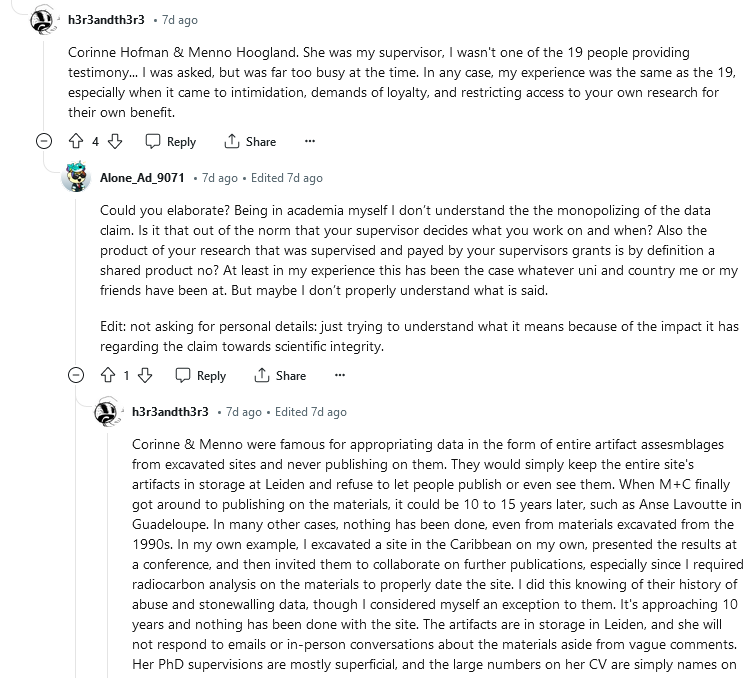
The identity of Hofman’s husband was made known on Reddit, by one of their victims (see above). It’s Menno Hoogland, former associate professor in Caribbean archaeology. Leiden University now deleted his profile page.
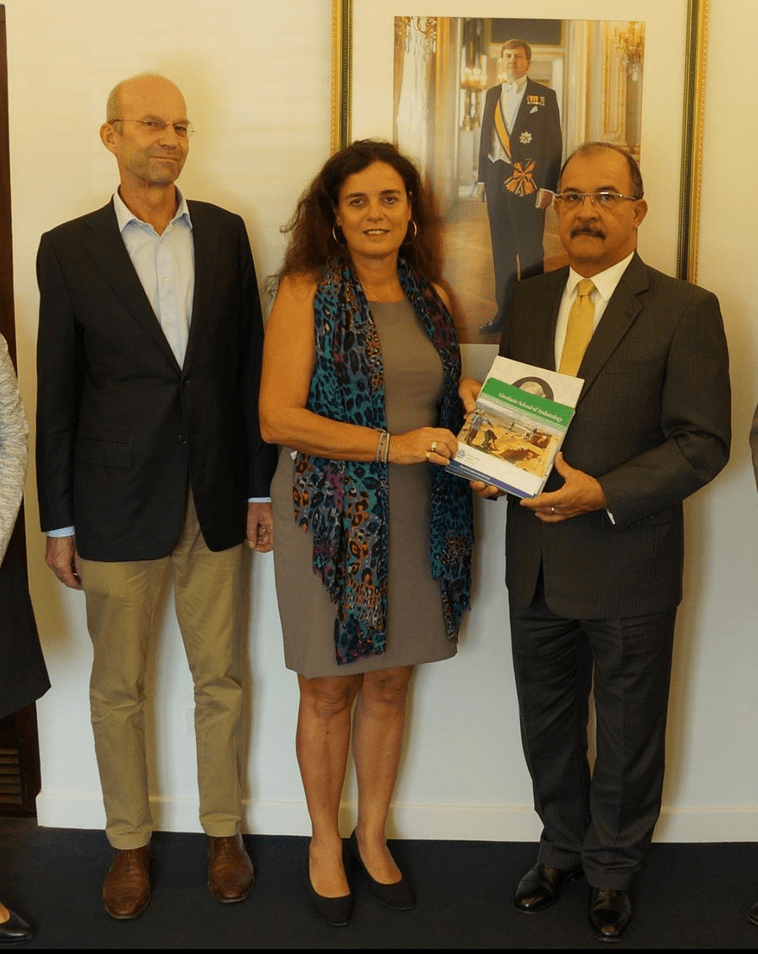
Hoogland, Hofman with the Gouverneur van Aruba in 2014. Source: Facebook
Leiden University announced to release the full and partially de-anonymised report soon:
“The report containing the research committee’s recommendations will be published via the university website on 13 May 2024.”
All data were stored for 5 years and then eliminated
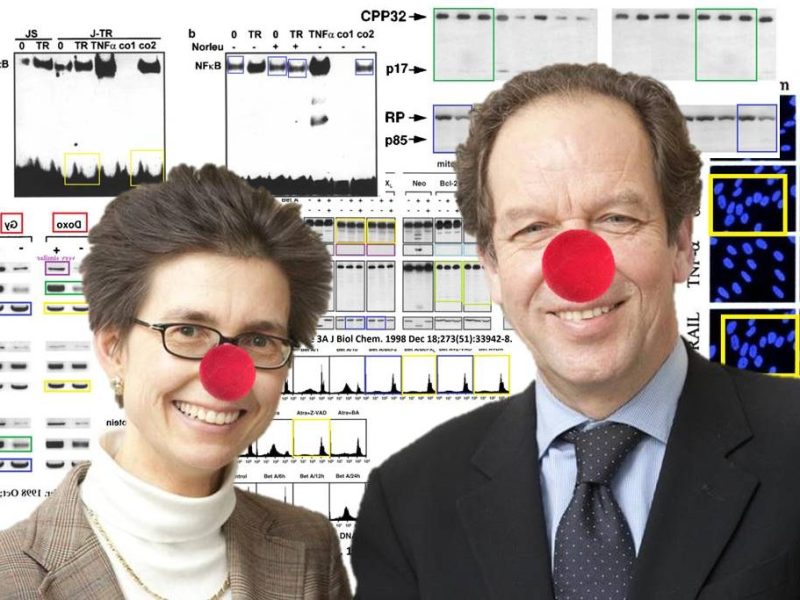
Sholto David flagged several papers by a German emeritus professor, Margot Zöller. This retired oncologist of the University of Heidelberg just turned 81 according to her CV, so I guess Sholto’s posts on PubPeer were meant as a birthday present.
Sholto found many papers with duplicated images, currently there are 18 threads on PubPeer. Not everything can be expected with carelessness. Actually most of the stuff can’t. And what with Zöller’s age, you would think it’s about ancient papers. It isn’t. Here is the oldest on PubPeer, from the time when Zöller was professor at the German Cancer Research Center (DKFZ), also in Heidelberg:
“Figure 3, 4, and 7: Multiple overlapping areas which are not expected to be similar. The blue rectangles should be examined closely, but I do believe they show the same area at different magnification and stretch.”
Zöller’s penultimate coauthor Thilo Hackert is currently Chairman of the Department of General, Visceral and Thoracic Surgery at the University Hospital Heidelberg.
“Figure 5D: Unexpected overlap between images which should show different experimental conditions.”
“One of the western blots in Figure 4B seems to have appeared in another paper by the same authors, where it was described as showing the results of a different experiment.”
Maybe it is a bad idea to let scientists continue to run labs long past their expiry date, pardon, retirement age:
“There are several western blots that are unexpectedly similar in this paper, I will illustrate Figure 6d as an example”
“Figure 1e: Some of the images which should show different experimental conditions or cell types are more similar than expected. I’ve added the yellowish rectangles to show where I mean.”
It is also an unwritten law that every dishonest cancer researcher MUST publish in Oncotarget:
“Figure 9: Unexpected overlap between different treatment conditions and staining.”
“Figure 5E: MMP13 and TIMP2 are similar, […] These aren’t pixel-perfect matches, but they’re quite different MW so I wouldn’t expect those distinct shapes to be shared between them.”
Fig 5
The first Zöller papers were actually flagged in 2018, by Indigofera tanganyikensis. Because apparently the other rule is that you send your worst forgeries to Oncotarget?
Indigofera tanganyikensis: “In figure 1 some of the western immunoblots are blank. Duplication of data in figure 3, 6 and 7.”
Fig 6 & 7
Fig 6
See, even flawed cytometry! Sholto David then found even more:
Worth mentioning that Markus Büchler was before his retirement in March 2023 Hackert’s predecessor as Chairman of the Department of General, Visceral and Thoracic Surgery at the University Hospital Heidelberg. I am sure this German medical tradition of gift authorships to your clinic superiors needs recalibration, because aren’t all authors responsible?
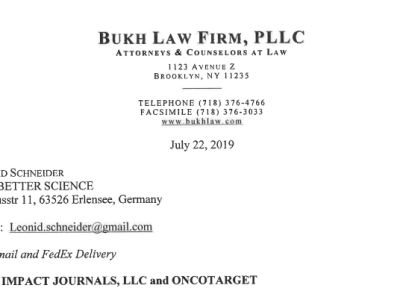
Oncotarget, the somewhat controversial OA journal, switched from pretend-soliciting my services to threatening to sue me for defamation. Their lawyer writes my disrespect caused them financial damage.
There is very little online about Zöller. She had an award or two in the 1990ies like the Landesforschungspreis of Baden-Württemberg, her cancer research occasionally featured in German newspapers, but that was decades ago. In any case, unusually little. The fudged data never led to big money, fame and power in Zöller’s case. Compare to Zöller’s former DKFZ colleague and another questionable (yet male) cancer researcher, Klaus-Michaal Debatin, who made it to the top of everything. And is currently rolling down!
“Figure 1: I appreciate that these are supposed to be the same samples with different staining, but is the level of similarity here really reasonable? In the red, green, and pink rectangles are near pixel-perfect matches.”
“Figure 6: Some of these western blots are more similar than expected for different cell lines.”
Years ago, I tried to reach out to Jürgen Weitz, Head of Department of Visceral, Thoracic and Vascular Surgery at the University Hospital of TU Dresden. It was about his Nature paper with Sonia Melo and Raghu Kalluri. Read about that case here:
Weitz never replied, also now, he is a very important, a very busy, and a very well-paid man. And as such, he has no time to read boring stuff on PubPeer.
Also Zöller never replied. And the University Clinic Heidelberg announced to me: “Unfortunately we have no contact to Professor Zöller“, indicating that the case is closed for them. But soon after my second email to her, Zöller personally replied on PubPeer:
Mycosphaerella arachidis: “Western blots without signal show the same distinctive pattern of noise. The brightness is not always the same. I am concerned that we are not seeing genuine images of negative signal, but the same single negative panel displayed multiple times.”
This is Zöller’s PubPeer reply:
“I, Margot Zöller, retired in 2016. Thus, all data were stored for 5 years and then eliminated. However, all blots were performed by Thorsten Jung and I have seen and evaluated all full length blots. I remember that I was surprised by the similarity of several blots (not only negative ones. But Thorsten Jung showed me the original gels with the date of performance. Thus, without question, the presented data are from independent experiments”
Poor Thorsten Jung. He is not listed on any of the other criticised papers. But the only common name on all PubPeer threads is that of Professor Zöller.
Ex-Vera Bradley Foundation Professor
Xiongbin Lu disappeared in Indiana. His institutional profile page at the Indiana University in USA has been deleted (the last archived version is from February 2024), and a source told me that he resigned.
You can read about this cancer researcher in the article below, it was the basis for my notification to Indiana University, which opened an investigation soon after:
Last year, Lu had to retract a paper which he previously fixed with a correction, I wrote about it in June 2023 Shorts. In between September 2023 and December 2023, Lu transitioned from being a prestigious endowed chair (“Vera Bradley Foundation Professor of Breast Cancer Innovation“) to being a “normal” professor for whose employment the university must pay from its own funds. Not ideal for both sides, especially when a research misocnduct investigation is ongoing.
“In the originally published article, some figures in the Supporting Information were incorrect. In these figures, incorrect images were used by accident for the control conditions of 1% alginate hydrogel of Day 5 in Figure S3a, Ucells in Figure S12b, Day 1 of 2D cells (Passage 3, EGM) in Figure S15, Ucells (Differentiation medium A) and Mcells (Maintenance medium) in Figure S16, and of 1-1 and M-1-1 in Figure S27, which occurred during initial the preparation of the figures. The corrections do not affect the conclusions of the article. Supporting Information file was updated on April 26, 2023. The authors apologize for any inconvenience caused.”
Actually, the Supporting Information file was NOT updated. Because conclusions unaffected anyway.
Lu’s wife Xinna Zhang is still listed as assistant professor by the Indiana University, but I think what with the institutional investigation and her husband’s departure there is little chance she will progress up the tenure ladder or see her employment contract extended. It is not just her husband – look at the other awful men she published with – George Calin, Anil Sood, Gabriel Lopez-Berestein, eww, yuck (face vomitingemoji)…
“The graduate school at University of Texas MD Anderson does not care and keep sending students to his lab, Sood is a member of faculty there. RIO at MDACC doesn’t care because witnesses either left the country or are too afraid to speak.”
Science operates on the Award Principle. It has nothing to do with actual merits, as everyone who tried to apply for any prestigious award uninvited has swiftly experienced. Awards are issued by networking buddies to each other as a way to show support and ensure loyalty. Which is also incidentally why most awards in science are given to men.
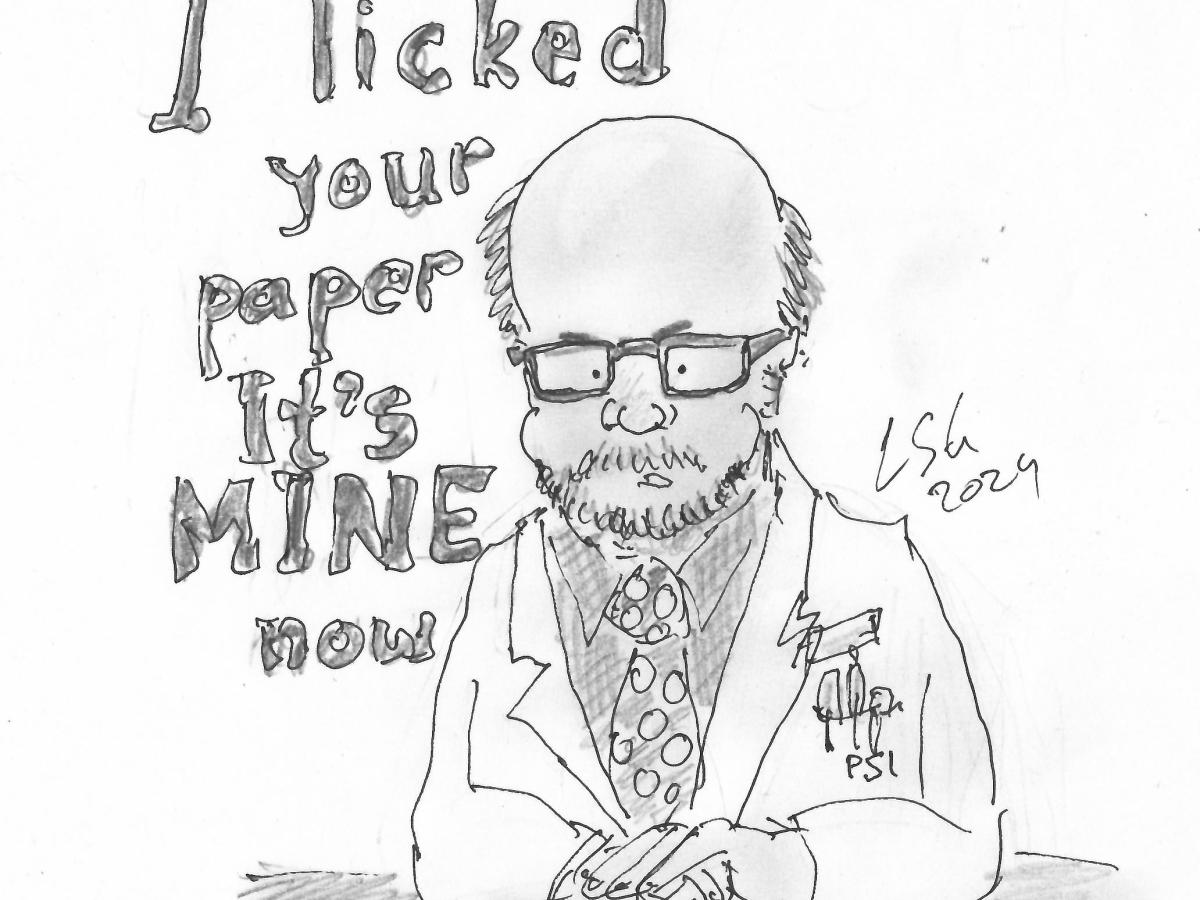
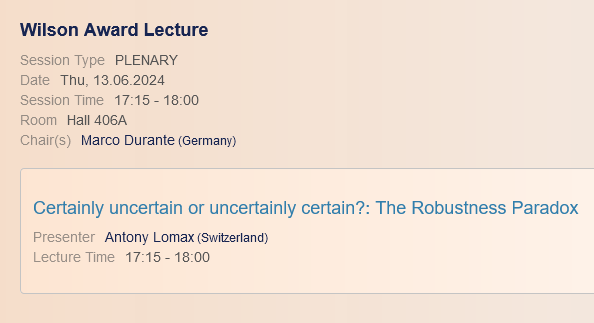
Here, the Particle Therapy Co-Operative Group decided to award “The PTCOG Robert R. Wilson Award for Significant Contributions to the field of Particle Therapy” to someone in urgent need of reputation management: Tony Lomax, professor at ETH Zurich in Switzerland, who was recently exposed as a spineless enabler of bullying and research misconduct at the Paul Scherrer Institute (PSI). According to the whistleblower, Lomax made sure that no PhD student dares to refuse the unethical demands of PSI’s medical director Damien Weber for co-authorship on EVERY paper.
As it happens, Weber is the chairman of PTCOG Publications Subcommittee. Because Weber is so great with PhD students, he is also Chair of the “Educational Program Subcommittee” at the upcoming June 2024 62 PTCOG Conference in Singapore, where Lomax will be awarded with the Wilson Award on 13 June 2024:
Awards often come to scientists when they need them most.
Scholarly Publishing
Mistakenly used
Science (the magazine) started to announce its corrections on PubPeer. This ancient paper was flagged in April 2023:
Lasioglossum marinense: “Figure 1B. Much more similar after horizontal flip than expected.”
In May 2024, Jessica Slater, Research and Data Analyst at Science, posted this Erratum on PubPeer:
“In Fig. 1B of the Report “Phosphorylation-dependent ubiquitination of cyclin E by the SCFFbw7 ubiquitin ligase” (5 October 2001, p. 173), an image of the positive controls showing ubiquitination of cyclin E/Cdk2 in lanes 10, 11, and 12 was mistakenly used in the positive control lanes 4, 5, and 6 during figure assembly. Both experiments were performed under identical conditions. The cognate positive control lanes that correctly correspond to the experimental lanes 7, 8, and 9 are now shown in the revised figure. The conclusions drawn from this figure and the paper itself are not altered by this error.”
How does one “mistakenly” re-use an image in the different experimental context after having flipped it and changed brightness/contrast, especially without ever affecting any of conclusions, is not explained.
The last author Stephen Elledge is professor of genetics at the Harvard Medical School and Brigham and Women’s Hospital. As beholds every successful cancer research bigwig, he has a PubPeer record.
In fact, I wrote about Elledge’s old papers in April 2023 Shorts. In April 2023, Elledge replied to me:
“Dear Dr. Schneider. Thank you for pointing these discrepancies out. I am looking into those where the data was from my lab.”
He obviously found all conclusions unaffected.
Our forensic image proofing software
In another case, an Elsevier journal decided that every fake paper by known mega-fraudsters must be whitewashed on its own merit.
It is about a masterpiece by the Argentinian professors and husband and wife couple, Mario Galigniana and Graciela Piwien-Pilipuk, who probably never published a single paper without fake data. Read about them here:
“Is Beato aware of the countless tons of single-use plastic waste that his institute (and all the others) produce every year for churning out yet more garbage in the form of fake research papers?” – Aneurus Inconstans
“Problematic data figure 8. Much more similar than expected.”
On 8 May 2024, the pseudonymous sleuth received this reply from the Executive Editor and KU Leuven professor Geert Bultynck (highlight mine):
“Dear Claire,
Thank you for your message. I first wish to apologize for the delay in responding, as I only recently became informed about the potential issue.
As current member of Executive Editor team at BBA-MCR, I’ve been assigned to follow-up your message and examine your concern about this publication in more detail. We now concluded our investigation, also in close consultation & discussion with journal staff at BBA-MCR as well as the Chief Editor of the BBA journal family.
We have scrutinized the specific image as well as the full article pdf using our forensic image proofing software used to identify image similarities or alterations (and now standardly applied to all incoming submissions to our journal). Our software tools did not find any suspicious activities or duplications in the figure or complete article.
We therefore wished to inform you about the outcome of our investigations.”
“Don’t let online controversies and aggressive blogs easily ruin everything you’ve worked for to build your reputation […] Whether the image issue is innocent or intentional, the outcome is still the same. Bloggers will attack that publication with image issues, which will damage your reputation and may even lead to a costly investigation. We are…
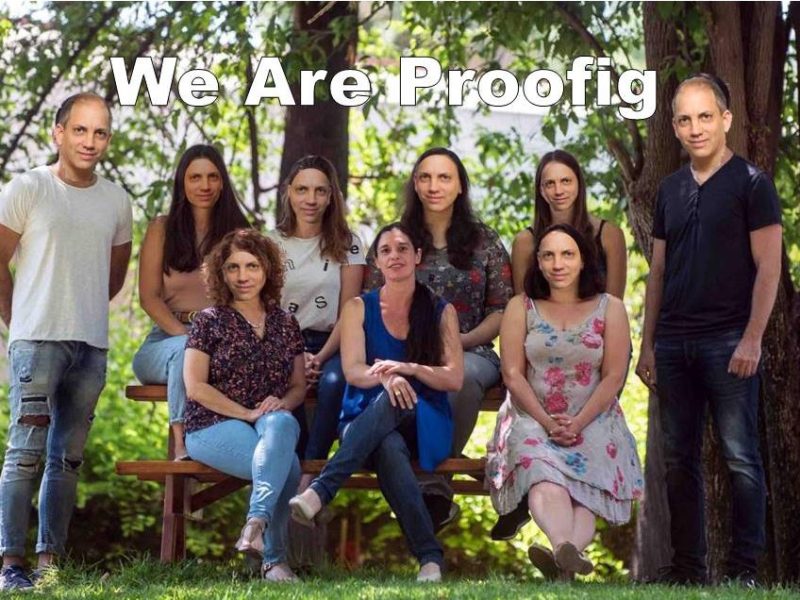
Yes, they used the Proofig software by Dror Kolodkin-Gal. Which obviously does not detect intra-image duplications. The real money for image integrity experts is not in finding fraud, dear reader. It is in NOT FINDING FRAUD. Dror makes more money with this than you can dream of.
An independent expert has viewed
The Royal Society of Chemistry (RSC) now employs “independent experts” on papermilling. Their job is apparently to count the names of white authors on papermilled garbage and then proclaim how reliable the paper is for the advancement of chemical science.
This one lists as coauthor the former editorial board member and the King of Papermillers himself – Rafael Luque, plus a bunch of other Spaniards on it, so the decision was really easy. Scientifically, this “Spent tea leaves” study is insane nonsense, but then again, this is an Impact Factor 10 journal and one must trust independent experts.
Alexander Magazinov: “Figure 2, an overlap is spotted between panels (E) and (G). These panels are supposed to show different materials” “The histogram bins show percentages that add up to well over 100%. How is that possible?”
A Correction was published on 19 February 2024 (highlight mine):
“The authors regret that there are some errors with the TEM images of Fig. 2.
The TEM image and nanoparticle distribution for Fig. 2(G) should be replaced. In addition, the Y-axis of the nanoparticle distribution histograms for Fig. 2(E–G) should read “frequency (count)”. The updated TEM images and nanoparticle distributions are shown here.
Fig. 2 (E–G) TEM images of Co@PC-6, Co@PC-7 and Co@PC-8.
An independent expert has viewed the original and new images and has concluded that they are consistent with the discussions and conclusions presented.
The Royal Society of Chemistry apologises for these errors and any consequent inconvenience to authors and readers.”
Needless to say, the first author Md Ariful Ahsan is a papermilling fraudster. He also published this at RSC, together with none other but Ahmed Shalan (who used to work in Spain):
Orchestes quercus: “Figure 5 of this paper purports to show fluorescence images of stained cells. In each image one can see an oddly regular and repeating pattern. Upon closer inspection this pattern turns out to be identical to that generated by PowerPoint’s “Picture Format:Artistic Effects:Texture” function. I cannot think of any good reason to texturize genuine fluorescence images.”
“Animated overlay of panel (a) and a black image ‘texturized’ using PowerPoint. The powerpoint texture is a perfect match to the pattern seen in the ‘fluorescence’ images”
“PowerPoint file containing panel (a) and a texturized black rectangle.”
RSC did nothing so far about that paper. Hopefully the independent expert is on their way. Another one by Ahsan and Shalan, again in RSC:
Orchestes quercus: “The FACS plots in Fig. 7 show unusual features. For example, Fig. 7E shows a number of sharp edges cutting even through data-points. In panels c and d some quadrants contain points in a different color that also seem stretched. Finally, panels c and d share all data-points in the lower-right quadrant.”
“Panels c and d share all data-points in the lower-right qudrant”
“The Royal Society of Chemistry is publishing this expression of concern in order to alert readers that concerns have been raised regarding the reliability of the FACS data in Fig. 7. An investigation is underway, and an Expression of Concern will continue to be associated with the article until a final outcome is reached.”
Ahsan also published a paper on COVID-19 diagnostics (Sarker et al 2023) where he managed to cite the legendary looneyAlireza Heydari.
RSC knew this all, but then decided that a fake paper with many Spaniards on it must be reliable.
Retraction Watchdogging
Peer-review process was likely manipulated
More fun at Sapienza University of Rome. Previously, their superstar Filippo Bertolost two papers to retractions. And was removed from a number of editorial boards and is currently under investigation by his former university in Norway.
Now, a paper by Sapienza’s other papermilling professor, Annunziata d’Orazio, got retracted. You can read about her, and Berto, and the first author Aliakbar Karimipour in this article:
“The academic career of D’Orazio is tightly coupled to that of Karimipour since she hosted him at Sapienza. Of the 57 papers she declared authorship for, 25 (44%) are published together with Karimipour.” – Maarten van Kmapen
Now, “Aliakbar Karimipour” is not a real person, but a sockpuppet of the Iranian papermiller Arash Karimipour, who is a real external member of the scientific board of the Energy & Environment department of the Sapienza University. D’Orazio is also board member there. Now, to their retracted paper:
It is a nonsense fabrication which was in fact published twice, the other version is Malekahmadi et al 2021, you can read Maarten van Kampen’s analysis here. The common authors are Maboud Hekmatifar, Roozbeh Sabetvand, Azam Marjani and Quang-Vu Bach. Hekmatifar was in turn seen with Berto and another toxic papermiller, Davood Toghraie, on the paper Monfared et al 2023. It was a citation fraud vehicle which contained sentences like “Recently, widespread studies have been performed to predict the steady-state CB of the materials [1,2,3,4,5,6,7,8,9,10,11,12,13,14]” and “On the other hand, nanotechnology and microtechnology were used in many fields due to their special features [15,16,17,18,19,20,21,22,23,24].”
The publisher Springer Nature however decided not to dive into the papermill swamp and issued on 6 May 2024 this short retraction notice for Karimipour et al 2021:
“The Editors-in-Chief have retracted this article. An investigation by the Publisher found evidence to suggest that its peer-review process was likely manipulated. The Editors-in-Chief therefore no longer have confidence in the results and conclusions presented in this article. The authors disagree with this retraction.”
“The business of selling authorships and citations needs a steady supply of paper-shaped vehicles. It is most efficient to produce these in assembly lines that focus on a narrow topic.” – Maarten van Kampen
On 23 April 2024, the Special Issue by Arash Karimipour in the Elsevier journal Engineering Analysis with Boundary Elements (read above) has received its Expression of Concern:
“This temporary Expression of Concern relates to the above article.
Concerns have been brought to the attention of the journal regarding:
•changes to the authorship of the article prior to publication
•potentially compromised or manipulated peer-review of the article
•potential citation manipulation within the article
The journal editors are investigating the article, including contacting the authors, in line with Committee on Publication Ethics (COPE) guidelines and Elsevier’s policies.”
The authors fully cooperated
A retraction at MDPI for a paper from Ukraine, which was reported to MDPI on 22 February 2022 (just before the full-scale war began), then investigated by the Bogomoletz Institute of Physiology in Kyiv in September 2022, then featured in this article from March 2023:
“…the Commission emphasized that some of the members of the author’s team paid lip service to integrity in science, while at the same time consciously or unconsciously allowing deviations from the principles they promoted in their own activities. “
“The Western blot shown in the lower panel of Figure 2 may have some repeated bands (red boxes). […] The smears marked with green boxes also share some similarities after 180-degree rotation.”
The Retraction was published much later, on 7 May 2024 (my reader was informed one day before):
“Following publication, concerns were brought to the attention of the publisher regarding a potential duplication of sections within a western blot presented within this paper [1].
Adhering to our complaints procedure, an investigation was conducted by the Editorial Office and Editorial Board that confirmed duplicated smear patterns contained with the western bots present in Figure 2. While the authors fully cooperated with the investigation, they were unable to satisfactorily explain this duplication, nor could they provide raw material to validate these findings. As a result, the Editorial Office and Editorial Board have lost confidence in the reliability of these findings and have decided to retract this article [1] as per MDPI’s retraction policy (https://www.mdpi.com/ethics#_bookmark30) and in line with the Committee on Publication Ethics retraction guidelines (https://publicationethics.org/retraction-guidelines).
This retraction was approved by the Editor-in-Chief of the journal Int. J. Mol. Sci.
The authors disagree with this retraction.”
In the above article, I also wrote about the illustrious last author of that retracted paper – Victor Dosenko, head of department at the Bogomoletz Institute and member of the Ukrainian National Academy of Sciences. Ukrainian academic salaries are unfortunately a sad joke, luckily Professor Dosenko is also an shrewd businessman who used to sell “Angel Milk” (genetically-tested cow milk which doesn’t poison you like the usual cow milk!) and anti-aging products like the “senolytic” facial cream.
“In her own research, Rachael is a Social Anthropologist by background who applies techniques from anthropology and qualitative approaches in applied health research.”
How well suited is that to understanding faking in biomedicine?
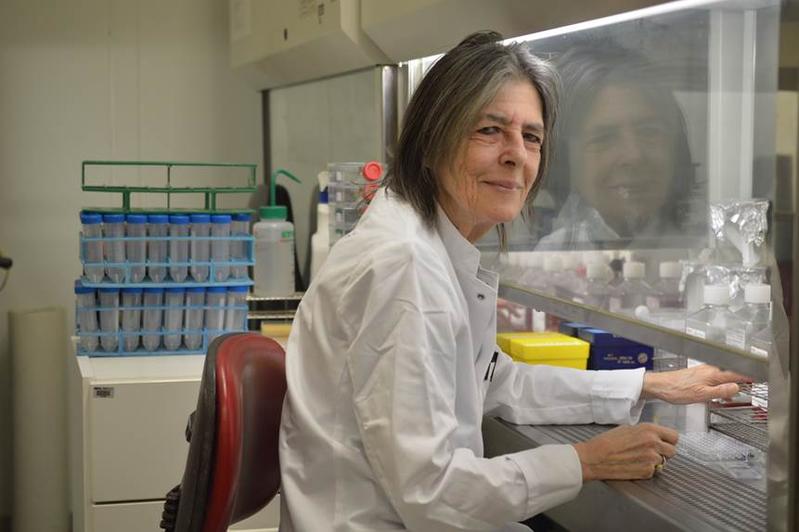
LOL @ the picture of Zoller with her ungloved hands in a frickin’ biosafety cabinet. No wonder they had to make up data, if they don’t even know how to follow basic cell culture protocols!














 For Better Science
Thank god it’s Friday. Otherwise, I’m still stuck on Thursday.
LikeLike
Thank god it’s Friday. I only know from Schneider Shorts,
LikeLike
Zenodo, part of CERN, tolerates until now that authors can republish an identical version of a manuscript, a working paper, which was recently retracted / taken down by Zenodo, details at https://pubpeer.com/publications/40CDD949CAC2DD7A5E2016383BC9C8
LikeLike
Inaugural co-chairs of UK Committee on Research Integrity announced – UKRI
“The new UK Committee on Research Integrity (UK CORI) will be co-chaired by Professor Andrew George MBE and Professor Rachael Gooberman-Hill.”
Professor Rachael Gooberman-Hill – Our People (bristol.ac.uk)
“In her own research, Rachael is a Social Anthropologist by background who applies techniques from anthropology and qualitative approaches in applied health research.”
How well suited is that to understanding faking in biomedicine?
LikeLike
Aliakbar means ‘great one’, Karimipour is taking the piss.
LikeLike
In 2014, Corinne Hofman got the Spinoza price = 2.5 million euro ‘free research money’ from NWO. https://www.nwo.nl/cases/corinne-hofman-een-eiland-is-geen-eiland-het-indiaanse-verleden-van-de-cariben
LikeLike
LOL @ the picture of Zoller with her ungloved hands in a frickin’ biosafety cabinet. No wonder they had to make up data, if they don’t even know how to follow basic cell culture protocols!
LikeLike
That is not so weird… Depending on what you do, you can work without gloves in such a cabinet.
LikeLike
See https://www.mareonline.nl/nieuws/vernietigend-rapport-hoe-twee-archeologen-drieendertig-jaar-wegkwamen-met-wetenschappelijk-wangedrag-intimidatie-diefstal-en-drankmisbruik/ for some details listed in an extensive report of Leiden University about activities of Corinne Hofman and Menno Hofman [in Dutch].
LikeLike
33 years of all possible forms of misconduct including theft and damage of human remains. Nobody did anything until now.
Full report:
Click to access geanonimiseerd–vertrouwelijk-advies-aan-het-college-van-bestuur-van-de-universiteit-leiden-8-april-2024.pdf
LikeLike
Corinne Hofman is not anymore a member of Royal KNAW https://www.knaw.nl/en/news/academys-response-report-inappropriate-behaviour-leiden-university-professor
LikeLike
Three more flagged papers for Margot Zöller:
PubPeer – The metastasis‐associated molecule C4.4A promotes tissue inv…
PubPeer – CD44v7 interferes with activation-induced cell death by up-r…
PubPeer – Apoptosis resistance in peripheral blood lymphocytes of alop…
LikeLike
Two more for magic Margot Zöller:
PubPeer – Ly6 family member C4.4A binds laminins 1 and 5, associates w…
PubPeer – A chronic contact eczema impedes migration of antigen-presen…
LikeLike
Margot Zöller again:
PubPeer – CEBPβ, JunD and c‐Jun contribute to the transcriptional acti…
PubPeer – Anti-CD44-mediated blockade of leukocyte migration in skin-a…
LikeLike