

Schneider Shorts of 12 April 2024 – three Shorts only this time, with a superconductive fraudster who lied about everything, a role model for WomenInSTEM in UK, and a sexual harasser first protected, then sacked by UN research institute.
Table of Discontent
Science Elites
- Dias cannot be trusted – Ranga Dias investigative report revealed in lawsuit
- I would like to thank all my mentors – Neil Perkins’ mentee Sonia Rocha receives an award
- Not a perfect human being – Sexual harassment at UN agriculture organisation
Science Elites
Dias cannot be trusted
Nature obtained the investigative report of the University of Rochester in the case of the superconductor fraudster Ranga Dias. In brief: the dude is a pathological liar and he faked everything. As myself and my colleagues always suspected, but this also why we are not the overpaid editors of Nature, who published (and then retracted) not one but two of his fraudulent papers about not one but two room temperature superconductors. Totally made-up.
From Nature’s “Exclusive” from 6 April 2024:
“The university is now attempting to fire Dias, who is a tenure-track faculty member at Rochester, before his contract expires at the end of the 2024–25 academic year.
The investigation report (see Supplementary information) and numerous other documents came to light as the result of a lawsuit that Dias filed against the university in December last year. […] Documents filed by Rochester with the Monroe County Supreme Court show that the investigation was ordered by the National Science Foundation (NSF), a major funder of US academic research that in 2021 awarded Dias a prestigious US$790,000 CAREER grant.”

Superconductive Fraud: The Sequel
“After the huge box-office success of “Nature 2020: Room-temperature superconductivity in CSH” this March our Nature studios released a sequel with the same star-studded cast: “Nature 2023: Near-ambient superconductivity in N-doped LuHx”. – Maarten van Kampen

The first time Dias was acquitted in full, because Rochester expected to earn billions of dollars and a Nobel Prize with his fraud:
“The first inquiry was initiated after Jorge Hirsch, a condensed-matter theorist at the University of California, San Diego, sent complaints to Rochester. The university asked three unnamed internal reviewers, and Dias contacted one external reviewer to examine Hirsch’s claims. Information in the report suggests that the external reviewer is Maddury Somayazulu, a physicist at Argonne National Laboratory in Lemont, Illinois. […] The inquiry came to the conclusion on 19 January 2022 that there was “no credible evidence to warrant further investigation”.
Somayazulu was Dias’ collaborator on superconductive fraud. Totally unbiased. The second investigation featured another collaborator of Dias’ and the only other person on the planet who managed to independently reproduce Dias’ fake superconductor results:
“The second inquiry was prompted by Dirk van der Marel […] Another reviewer took up the case and judged no formal investigation was warranted on 6 April of that year. Their work was checked by a second reviewer, who appears to be Russell Hemley, a physicist at the University of Illinois Chicago, based on identifying information in the report.”
In June 2023, Hemley’s vindication of Dias and their superconductive breakthrough results were duly celebrated by the New York Times (read earlier Friday Shorts). Of course we must believe that Professor Hemley is an honest and unbiased scholar and not just another rotten cheater in cahoots with Dias.

Anatomy of a Retraction 2 – Superconductive Fraud
Maarten van Kampen dispels the superconductive illusions of Ranga Dias and Ashkan Salamat. Will we also receive a cease-and-desist letter now?
But three times is the charm:
“Rochester was finally forced to launch a full investigation to determine misconduct by the NSF. In October 2022, James Hamlin, a physicist at the University of Florida in Gainesville, submitted concerns about Dias’s work to the NSF. […]
Notably, the investigators confirmed previous analyses by van der Marel, Hirsch, Hamlin and Ramshaw — all of whom found apparent evidence that Dias fabricated magnetic susceptibility data in the CSH paper.
The report clarifies the extent of this misconduct: first Dias fabricated CSH data and published it. Then, when its origins came under scrutiny, Dias and his collaborator and co-author Ashkan Salamat, a physicist at the University of Nevada, Las Vegas (UNLV), released a set of fabricated raw data.”
I obtained the court files as well. here they are for your perusal:
The investigation found out that Dias faked everything and lied to everybody:
“Dias, the investigation committee found, “repeatedly lied” about data during Nature’s review of the paper after concerns came to light. But perhaps the most egregious instance of misconduct, which the report refers to as involving “profuse manipulations” of data, occurred when Dias inverted a set of LuH data so that it demonstrated the Meissner effect — a sharp change in the magnetic properties of a material that is a hallmark of superconductivity.[….]
These manipulated data were key to the LuH paper’s acceptance. And the investigation committee concluded that Dias fabricated data “to convince Nature editors and pre-publication referees that LuH exhibits superconductivity at room temperature”.”
As a reminder, Nature knew at that time that Dias’ first version of superconductor (CSH) was fraudulent and about to be retracted. They published the new LuH forgery anyway. Every paper on its own merit!
Dias’ turned out to be not just a liar and a fraudster, but also a thief:
“The Rochester investigators uncovered another, more recent instance: on 30 July 2020, researchers, including Dias’s colleagues at Rochester, submitted a scientific manuscript7 to the preprint server arXiv. Twelve days later, Dias submitted an NSF grant proposal that included paragraphs copied from that manuscript, as well as two identical figures. That proposal later won Dias the CAREER grant from the agency. “
It seems Dias even lied about having a job offer elsewhere to get a pay-rise of of his University of Rochester. Which he duly got: $200k per year, see page 10 below.
Nature report ends with:
“the investigators recommended that Dias should not be permitted to teach or to carry out public or privately funded research. They added: “Evidence uncovered in this investigation shows that [Dias] cannot be trusted”.”
The news of Dias’ fraud are now all over international media. There will be likely books and TV series, maybe even a Hollywood movie. I hope for “Superconductive Fraud – The Musical”.
I would like to thank all my mentors
Excellent news for the University of Liverpool in UK. One of their leaders won an award. A press release from 4 April 2024:
“A University of Liverpool researcher is the recipient of a Biochemical Society award. Following a record year of nominations, Professor Sonia Rocha is the first female recipient of The Sir Philip Randle Lecture. [….]
Professor Sonia Rocha, Executive Dean of the Institute of Systems, Molecular and Integrative Biology at the University of Liverpool said: “It is an honour to receive this award, especially as the first female recipient. I would like to thank all the members of my team past and present, the scientific community in areas we work in, and all my mentors throughout my career. This award highlights our work into how cells change in response to reduced oxygen availability, a master regulator of metabolism. We will continue to investigate this response, which is so important for health and disease across all multicellular organisms.”
Sonia Rocha is truly a giant of science. She learned her skills in one of the best labs in England.
Sonia Rocha, Michelle D Garrett , Kirsteen J Campbell, Katie Schumm , Neil D Perkins Regulation of NF-kappaB and p53 through activation of ATR and Chk1 by the ARF tumour suppressor The EMBO Journal (2005) doi: 10.1038/sj.emboj.7600608

I previously mentioned Rocha’s mentor Neil Perkins in this article:
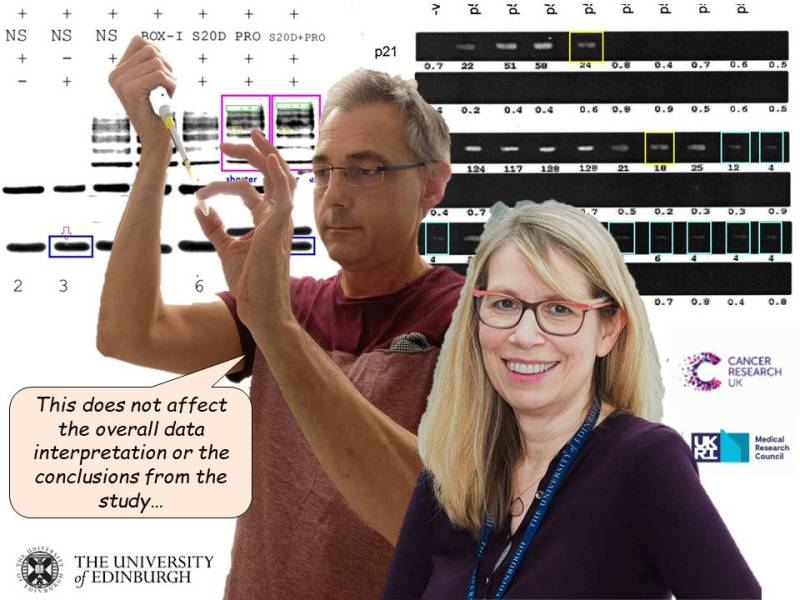
The Hupp and Ball Game
“Ted Hupp and Kathryn Ball may very well feel like kissing David Argyle on both cheeks.”

To spare you looking it up, here is the relevant section:
Neil Perkins, now that name rings a bell. Alarm bells, actually. In 2014, Perkins, then with the Wellcome Centre of University of Dundee, retracted 4 papers, and explained in this regard to Retraction Watch that a) his postdoc Benjamin Barré did it and b) he, Perkins, exposed this fraud all by himself (OK, together with Barre’s PhD mentor). However, Perkins had already at that time several other papers flagged on PubPeer, and those were not co-authored by Barré.
Perkins’ academic career trajectory is interesting. Having spent 12 years as Dundee professor, he suddenly had enough and went to University of Bristol in 2008, but stopped being professor there after less than 2 years. Since 2010, Perkins is with University of Newcastle, where he is now deputy dean of biosciences. Meaning, all misconduct allegations in the faculty go through Perkins’ desk.
The above paper evaded a correction probably because Perkins is advisory board member at EMBO Press.
Another case, no Perkins anymore:
Ana Teresa Pinto , Marta Laranjeiro Pinto , Ana Patrícia Cardoso , Cátia Monteiro , Marta Teixeira Pinto , André Filipe Maia , Patrícia Castro , Rita Figueira , Armanda Monteiro , Margarida Marques , Marc Mareel , Susana Gomes Dos Santos , Raquel Seruca , Mário Adolfo Barbosa , Sónia Rocha , Maria José Oliveira Ionizing radiation modulates human macrophages towards a pro-inflammatory phenotype preserving their pro-invasive and pro-angiogenic capacities Scientific Reports (2016) doi: 10.1038/srep18765

Rocha explained on PubPeer:
“The experiments are the same, and derived from the same set of human donours. So the loading controls are the same. Sorry if this is not clear from the legend.“
In March 2022, an Author Correction was published:
“This Article contains an error in the description of the data presented in Figure 2.
Each blot demonstrating a protein of interest, or of its phosphorylated form, is matched with the expression of β-actin, used as loading control. The majority of the proteins were separated in different gels, apart from proteins p105, p50 and Bcl-xL which were run in the same gel and have the same loading control.”
This is of course one explanation, and certainly not the most likely one.
As it happens, a certain University of Liverpool professor named Patrick Eyers is sitting on the Awards Board of the Biochemical Society which just awarded Rocha. His wife Claire Eyers (nee Haydon) is institute director at the University of Liverpool. Both of them used to work with Perkins at the University of Dundee, the Eyerses authored several joint papers with Perkins. The couple were long established in Liverpool before Rocha was recruited there. One could say it is a big Perkins family. Here is a paper by the Eyerses, without Perkins though:
Giancarlo Barone , Christopher J. Staples , Anil Ganesh , Karl W. Patterson , Dominic P. Bryne , Katie N. Myers , Abhijit A. Patil , Claire E. Eyers , Sarah Maslen , J. Mark Skehel , Patrick A. Eyers, Spencer J. Collis Human CDK18 promotes replication stress signaling and genome stability Nucleic Acids Research (2016) doi: 10.1093/nar/gkw615


In July 2022, the last author and University of Sheffield professor Spencer Collis announced a correction:
“The authors apologise for these minor errors in our published paper, and stress that these do not in any way change any of main scientific findings of our collective data or the conclusions reached in this article.”
He then decided he was too busy and the paper remained as it was. An older yet paradoxical study by Patrick Eyers:
Clare A Hall-Jackson, Patrick A Eyers, Philip Cohen, Michel Goedert, F Tom Boyle , Neil Hewitt , Helen Plant , Philip Hedge Paradoxical activation of Raf by a novel Raf inhibitor Chemistry & Biology (1999) doi: 10.1016/s1074-5521(99)80088-x

To be fair, the second paper (Hall-Jackson et al 1999) was without Eyers. In November 2018, the University of Dundee posted replacement data on PubPeer using “the original lab books from 22 years ago“, and stated:
“While data has indeed been duplicated (the control data) in the two manuscripts, it is the correct data that should be associated with the individual treatments. This does not impact interpretation of the results.”
Neither study was corrected. Let’s end with a Perkins paper:
Aitor G. Granja , Neil D. Perkins , Yolanda Revilla A238L inhibits NF-ATc2, NF-kappa B, and c-Jun activation through a novel mechanism involving protein kinase C-theta-mediated up-regulation of the amino-terminal transactivation domain of p300 The Journal of Immunology (2008) doi: 10.4049/jimmunol.180.4.2429


Not a perfect human being
In 2023, Ronald Vargas, Soils and Land Officer at the United Nations’ Food and Agriculture Organisation (FAO), has been sacked for sexual harassment, after 12 years in service. FAO’s seat is in Rome, Italy, the media outlet Italian Insider reported on the affair at that time (see here and here), later on they printed a rebuttal by Vargas where Vargas openly admitted being sacked and blacklisted by FAO for sexual harassment.
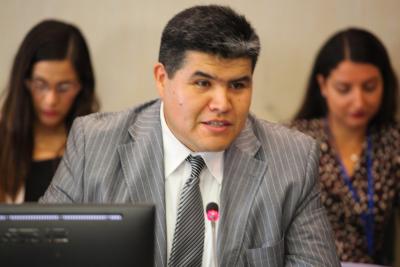
All this is very ironic because the sexual harasser Vargas was responsible at FAO for, among other things, “Mainstreaming gender for sustainable soil management“. And even more ironic is that his name wasn’t publicly revealed until he did it himself with his threats of lawsuits against everyone.
On 23 May 2023, Italian Insider brought an article titled “Whitewashing sexual harassment by FAQ Latin American clique creates culture of fear“. Excerpts:
“A grave case involves a P4 level Land and Water Officer. Despite facing to sexual harassment investigations (cases opened by two female individuals) he has not only maintained his employment but has, shockingly, been granted more influence within the organization”
“Even with indisputable evidence from WhatsApp messages and interview: with employees, this individual managed to dodge any form of disciplinary action. […]‘The senior manager’s “notorious behavior includes making heavy-handed jokes, making inappropriate comment: about female colleague: bodies, intrusive questions into their private lives, and extending unsuitable invitations to his home after work events. He ‘maintain silence by offering contract extensions and promotions.”
“In addition to the sexual harassment allegations, his toxic management style, characterized by favoritism and employing derogatory tactics, has driven five consultants out of the organization”
Vargas is not named in the article. It is stated that he was protected because he attributed someone else’s $20 million grant to himself.
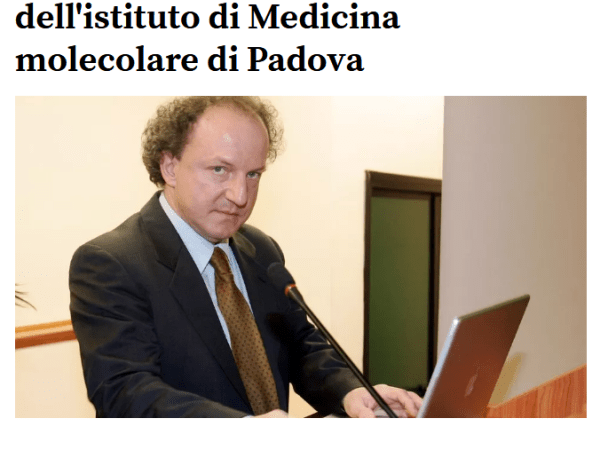
Pier Paolo Pandolfi out of Harvard, spotted in Italy and Nevada
Star cancer researcher Pier Paolo Pandolfi left Harvard. The allegations are very serious, but do his new employers in Nevada and Italy mind?
On 25 May 2023, Italian Insider brought another article about Vargas (again unnamed”, titled: “FAO manager ‘asked female colleagues about sexual encounter”. It contained further details from FAO’s internal investigation:
“A senior FAO soil scientist during a coffee break on the FAO panoramic terrace with female colleagues “openly discussed his preferences about women’s physical attributes” and, at a party he threw at his apartment, ‘teamed up” with another Latin American colleague to grope one of his staff, investigators at the UN agency heard
During the terrace break, the manager, an officer of the water and soil division “made explicit comments about their preference”
Another episode allegedly occurred at a colleague’s birthday party, where the manager “forcefully held and attempted to kiss her against her will,” the investigation heard.”
“He also made derogatory comments about her legs and other body parts. At work at many occasions he made inappropriate comments about her outfits. […]In evidence, staffers who were interviewed provided photos to investigators including one where the manager and another Latin American P4 staffer from Venezuela “teamed up to touch one of his staff.””
Indeed, Italian Insider even printed the photo. The article mentions that an Australian investigator was removed from the case and replaced by an Argentinian who then “exonerated” Vargas of sexual harassment charges.
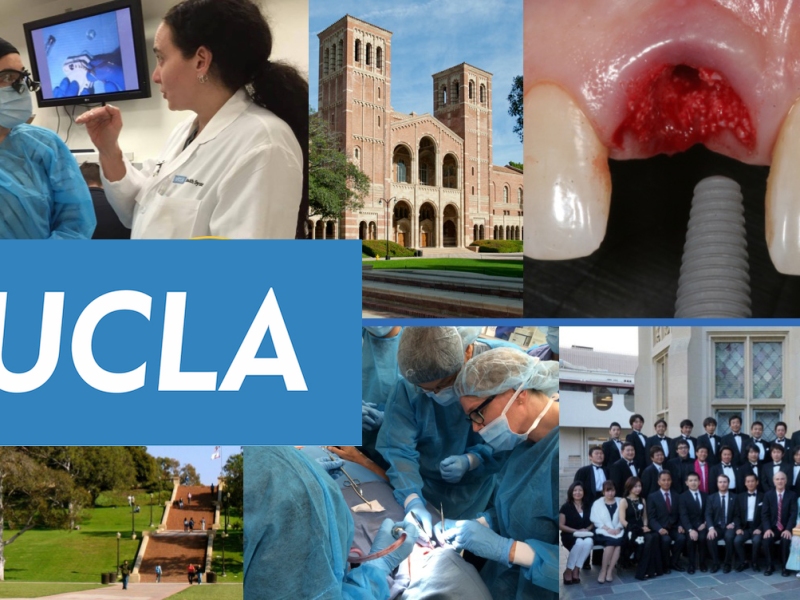
UCLA hunts whistleblowers as student accuses dentistry dean of sexual harassment
A UCLA dentistry student writes in a leaked letter: ” I was having disagreements with my research mentor, and thought that Dr. Tetradis could help. Instead, he distorted the issues to attack my mentor, and sexually harassed me. When I filed the Title IX complaint, his powerful colleagues discouraged me from filing.”
The two women who refused Vargas sexual advances and reported him, suffered his retaliation: he “began undermining their contributions, labeling them as unfit for the team“. Eventually, Vargas fired them, as he openly admits in his rebuttal:
“I was respecting the confidentiality process of such case, however those women broken the rules and came to you and put those articles full of false accusations. This is considered defamation against me by them […]
To be part of this team, you need to be a hardworker, otherwise you will not succeed. There were two colleagues who unfortunately after various opportunities did not perform and I had not to renew their contracts.”
Vargas then admits that he is “not a perfect human being” who “worked very hard” in fact every “working day and night and weekends”. He complains that “the investigation took more than two years (against the rules)”, that “the Investigators did not interview my witnesses”. Vargas lauds his “hard work, seriousness, commitment and very friendly character” and ends with:
“my reputation was damaged and with the dismissal, I have serious problems as they cohorted my right to work as I am included in a global blacklist (clearcheck database).
I am now taking actions and I recruited a lawyer, I will appeal this decision as I need to clear the reputation I gained in 25 years of hardwork. I will also put a case of defamation to the two complainants and also a case against your newspaper for defamation against me.
I just want justice!”
As you can imagine, Vargas did not get his FAO job back. According to his LinkedIn, he works since his sacking in July 2023 as “international consultant”, first in Thailand, now in Saudi Arabia. But Vargas continues pretending he still works at FAO, as he did in a recent Letter to Editor in Nature (his earlier co-authored paper there, Tao et al 2023, was criticised by He et al 2024 for “potential biases” and “misleading, model-dependent results”).
I thank all my donors for supporting my journalism. You can be one of them!
Make a one-time donation:
I thank all my donors for supporting my journalism. You can be one of them!
Make a monthly donation:
Choose an amount
Or enter a custom amount
Your contribution is appreciated.
Your contribution is appreciated.
DonateDonate monthly
 For Better Science
I’m shocked to learn that a tenure-track faculty member in the US can reach a salary of 200k USD a year. In northern European countries a tenure-track position is paid about 80k USD/year, not more. Neither full professors in the EU can reach 200k USD/year.
LikeLike
Dias was about to get a Nobel Prize and earn BILLIONS with his inventions. He threatened to take this all to a different university, you must understand Rochester!
LikeLike
Fraudsters from all over the world should give a thought to go to the US, and rather leave the EU alone. The US is so much more generous!
LikeLiked by 1 person
Occasionally, DHS may enter the scene and shuffle the cards. So there.
LikeLike
Dodgy cancer data Philadelphia.
PubPeer – Suppression of progranulin expression inhibits bladder cance…
LikeLike
(My) Science Breakthrough (of the week)
Is artificial intelligence the great filter that makes advanced technical civilisations rare in the universe?
https://www.sciencedirect.com/science/article/pii/S0094576524001772?dgcid=rss_sd_all
Highlights
LikeLike
Your post is a little cryptic. Do you disagree with the paper’s substance, or the topic, or do you think it’s fraudulent, plagiarized or dodgy in some other way?
I have a bit of a personal issue with the astronomers at Jodrell Bank, I used to work at Manchester and they once mistakenly/carelessly charged a big social function to one of my grants, without inviting me along too, though I don’t think it was this guy. I struggle to see why you highlight this article on a forum discussing fraudulent research papers?
LikeLike
Did anybody realise why there are so many authors from FAO? Did all of them really contribute to these two Nature papers? Just look into the background of these people, you will find something even more interesting
LikeLike
Well, as far as i know, there is one co-author (lady) from FAO was his mistress for few years, it’s an open secret in soil group. In that group, you can get a contract, you can get a paper in nature, you can get everything you want as long as you sleep with your boss. It’s an empire. But If you refuse to sleep with him, you will lose your job like these two ladies who won the case to against him. One of the worst places in this world to work, extremely toxic, the work never was based on the science. You can not believe this is happening in a UN organisation.
LikeLike
Top U.S. swamp.
https://www.thecrimson.com/article/2024/4/15/hms-professor-plagiarized-report/
LikeLike
It does look like a poorly written report, and the indications of plagiarism may get the author into trouble as it’s involved in a legal case. I’d be careful about The Harvard Crimson though. Credit to them for openly discussing issues that most universities clamp down on, but it’s become a toxic battleground between US culture wars activists; between rightwing commentators and leftwing opinion piece editors. Actual analysis and serious debate tend to get lost at the Crimson in the energies both sides spend to prove to themselves that they are ‘in the right’. University politics with all it’s navel gazing perspective.
LikeLike
“I would like to thank all my mentors – Neil Perkins’ mentee Sonia Rocha receives an award”
Neil D Perkins.
PubPeer – NFκB regulates expression of Polo-like kinase 4
Already corrected paper, had many problems that were not corrected, and now some more problematic data come to light.
PubPeer – A238L inhibits NF-ATc2, NF-kappa B, and c-Jun activation thr…
Scroll up!
LikeLike