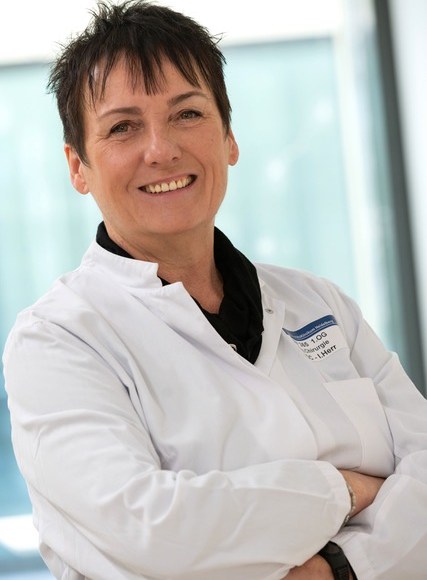

This is a guest post by Ingrid Herr, professor for cancer research at the University Clinic Heidelberg, Germany. Several of her papers were flagged on PubPeer for image duplications. Initially, Herr believed in honest mistakes of oversight, but soon she understood that a few international students have misled her and everyone else. Two retractions ensued, and there might be more, even withdrawals of PhD degrees, since Herr requested her faculty to open a research misconduct investigation.
There was an earlier case of Photoshop forgery at Heidelberg, involving Alexander Bazhin, who published some badly fabricated science with his russian compatriots. Bazhin later went to LMU Munich to follow his Heidelberg mentor, the surgery professor Jens Werner, where he became professor himself. I wrote about this case in 2019:
From Russia, with Photoshop
Germany recruits the very best of the best in international science to its elite institutions. Professor Alexandr Bazhin is one of them.

Only one Bazhin paper got retracted, on orders from the Editor-in-Chief: Bazhin et al Cellular and Molecular Life Sciences 2010. The russian Photoshop artist and former Munich professor is now a German-speaking career coach in the unemployment-suffering Ruhrgebiet city of Duisburg, where he employs an huge team of 30 people. Bazhin’s former collaborator and first author of a falsified study, Svetlana Karakhanova, remains employee of the University Clinic Heidelberg. Another problematic Karakhanova paper was done without Bazhin, but in collaboration with Ingrid Herr.
Which apparently drew scrutiny of Herr’s own papers.
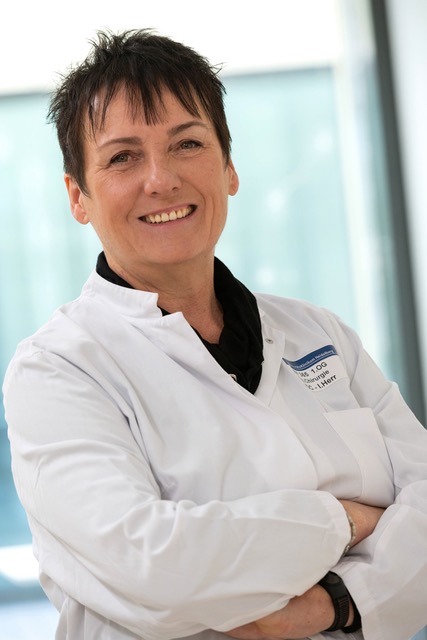
Responding to PubPeer: Full transparency and absolute honesty are the best approach
By Ingrid Herr
Recently, our just published manuscript received an anonymous PubPeer comment. A doctoral student unintentionally has used a duplicated image in one of the figures. Fortunately, we quickly rectified the mistake by analyzing the extensive raw data and identifying the correct image. We immediately responded to the PubPeer comment, apologized to the scientific community for the confusion, posted the corrected figure with raw data, and published a corrigendum.
Liping Bai, Tobias Pfeifer, Wolfgang Gross, Carolina De La Torre, Shuyang Zhao, Li Liu, Michael Schaefer, Ingrid Herr Establishment of Tumor Treating Fields Combined With Mild Hyperthermia as Novel Supporting Therapy for Pancreatic Cancer Frontiers in Oncology (2021) doi: 10.3389/fonc.2021.738801


Just as we resolved the first PubPeer comment, the next comment appeared on one of our previous manuscripts. As if that wasn’t enough, errors were also detected in several other former manuscripts. I immediately mobilized the responsible first authors, some of whom even rushed back to the lab from their vacations to verify the raw data.
Two of the new comments were about simple image duplications, which we easily corrected by publishing revised figures and raw data on PubPeer and submitting corrigenda to the journals. Such corrections are embarrassing, but mistakes happen.
Alia Abukiwan, Clifford C Nwaeburu, Nathalie Bauer , Zhefu Zhao , Li Liu, Jury Gladkich , Wolfgang Gross, Axel Benner , Oliver Strobel , Jörg Fellenberg, Ingrid Herr Dexamethasone-induced inhibition of miR-132 via methylation promotes TGF-β-driven progression of pancreatic cancer International Journal of Oncology (2019) doi: 10.3892/ijo.2018.4616


“Subsequently to the publication of the above article, an interested reader drew to the authors’ attention that two pairs of the culture plate images in Fig. 4A-C on p. 60 appeared to be the same, although the images were shown in different orientations; moreover, the ‘NC/0 and DEX+miR132’ and ‘DEX and miR132’ pairings of images in the scratch-wound assay experiments shown in Fig. 4B also appeared to be overlapping, such that these were apparently derived from the same original source where the results of differently performed experiments were intended to have been portrayed. After re‑examining their original data, the authors have realized that some of the data in Fig. 4A and B were inadvertently assembled incorrectly. […] The authors are grateful to the Editor of International Journal of Oncology for allowing them this opportunity to publish a Corrigendum, and all the authors agree with its publication. Furthermore, the authors apologize to the readership for any inconvenience caused.“
Correction from 3 July 2023.
However, the three other allegations were more critical as they revealed multiple duplications of representative images per manuscript. Moreover, these duplications were partially rotated or had their contrast altered using Photoshop, making them extremely difficult to detect with the naked eye. PubPeer users now employ pattern recognition software to identify such hidden duplications. These cases of duplications in our manuscripts seem odd, and I wonder what was going through the minds of the doctoral students when creating these figures. I don’t want to assume data manipulation, as the correct images could be identified from the extensive raw data, allowing for corrigenda. However, the former doctoral students have truly lacked the necessary precise scientific work style here. Therefore, at this time, the doctoral students had to respond to the PubPeer comments themselves and submit the corrigenda to the journals in their own names. The accumulating carelessness in my research group had made me very upset, and I was no longer willing to cover for the former employees’ mistakes. I did inform the Office for Doctoral Affairs of the Medical Faculty about these somewhat more critical cases since the same errors are also present in the doctoral theses. The chairwoman of the doctoral office was grateful for the information, as most corrigenda, including those related to data in doctoral theses, go unnoticed by them. Upon my request, the Office for Doctoral Affairs will now review these duplications. As the number of similar cases is increasing, the Medical Faculty of the University of Heidelberg and other Universities in Germany are considering tightening the criteria for accepting doctoral candidates from foreign countries, where data manipulation occur frequently.
Retracted: Clifford C Nwaeburu, Alia Abukiwan, Zhefu Zhao, Ingrid Herr Quercetin-induced miR-200b-3p regulates the mode of self-renewing divisions in pancreatic cancer Molecular Cancer (2017) doi: 10.1186/s12943-017-0589-8


The authors have retracted this article because there are overlaps in three figures. Specifically, in Figure 6A, in column 3, two panels are identical but are described as deriving from different cell lines AsPC1 and AsanPaCa; additionally, there is overlap between two panels for AsanPaCa in columns 1 and 2 despite each panel corresponding to different treatments; finally, there is overlap between two panels for PANC1 in columns 3 and 4 despite each panel corresponding to different treatments. In Figure 6B, there is overlap between two panels for AsanPaCa in columns 1 and 2 despite each panel corresponding to different treatments. In Figure 6C, there is overlap between two panels for AsPC1 in columns 3 and 4 despite each panel corresponding to different treatments.
All authors agree to this retraction.
Retraction from 4 August 2023
The most severe cases concerned our manuscripts published in 2016 at Oncotarget and 2017 at Molecular Cancer, where intentional data manipulation was indeed obvious. A former doctoral student had used Photoshop to cut out two different areas from a single image and presented them as separate treatment groups. However, the cut-out areas overlapped, and PubPeer’s users clearly exposed the fraud. Similarly, 11 instances of image duplications were present within a single manuscript. These duplications exhibited partial rotations or were featured in distinct figures, making their detection less straightforward. Neither I nor our internal pre-publication review, nor the external peer review, could detect these data manipulations with the naked eye. Since there were partially no correct images in the raw data, it was evident that not only the scientific community but also the external reviewers, co-authors and I were deceived. Consequently, I immediately withdrew these manuscripts. Next, I informed the Office for Doctoral Affairs, as the duplications were also found in the doctoral thesis. The case is now being investigated.
Retraction requested: Clifford C. Nwaeburu, Natalie Bauer, Zhefu Zhao, Alia Abukiwan, Jury Gladkich, Axel Benner, Ingrid Herr Up-regulation of microRNA let-7c by quercetin inhibits pancreatic cancer progression by activation of Numbl Oncotarget (2016) doi: 10.18632/oncotarget.11122


PubPeer exchange:
“I will withdraw this manuscript immediately.
Ingrid Herr”
“Once again, we would like to emphasize that the images are representative images and have no impact on the overall results, presented as the mean values with statistical evaluations. […]
Clifford Nwaeburu and Ingrid Herr”
“The above comment “Clifford Nwaeburu and Ingrid Herr” unfortunately is not coordinated with me.
Ingrid Herr”
Now, unfortunately, my publication list features eight PubPeer threads, which is certainly not a proud accomplishment. Six comments concern manuscripts where I am the corresponding author, and two comments concern co-author manuscripts. Additionally, two prominent red PubPeer comments stating “Manuscript retracted” looms over my PubMed list, which is extremely embarrassing. To avoid such disasters in the future, all my doctoral students have undergone intensive training. I reported the incidents in our weekly seminar and explained the consequences. We discussed measures together, including having a second doctoral student repeat experiments from another doctoral student as an internal control. I will regularly repeat this talk in the seminar and remind of the rules of Good Scientific Practice.
It is essential to note that my doctoral students received regular supervision during their research work. They had rotational meetings with me and other scientists in small groups, presented their work in department seminars, had additional supervisors through a Thesis-Advisory Committee (TAC), had support for methodology and statistical data analysis, and presented their data independently at international conferences. That’s all a supervisor can do – a doctoral thesis is defined as an independently performed scientific achievement.
Li Liu , XueFeng An , Michael Schaefer , Bin Yan , Carolina De La Torre , Stefan Hillmer , Jury Gladkich , Ingrid Herr Nanosilver inhibits the progression of pancreatic cancer by inducing a paraptosis-like mixed type of cell death Biomedicine & Pharmacotherapy (2022) doi: 10.1016/j.biopha.2022.113511

I suspect that the incidents in my lab may be partially related to differing interpretations of the rules of Good Scientific Practice in different nationalities. Specifically, I refer to China, African and Arab countries. But Italy and Spain also seem to be more frequently included among the black sheep. In some of these countries, it appears to be common practice for supervisors to dictate instructions that subordinate students unconditionally fulfill, even if it involves data manipulation. This cannot and must not be allowed! I firmly believe that we need to move away from such practices. Of course, I am pleased when a doctoral student presents promising data, but I have also become extremely suspicious. We now check lab books and raw data more frequently than before. A scientific colleague has developed a pattern recognition program that allows us to investigate doctoral theses and publications for image duplications before submission. Unfortunately, our self-developed software is not as sensitive as the pattern recognition software used by some PubPeer users. Therefore, I hope for public access to such a sensitive software. Nevertheless, I am aware that data manipulation through image manipulation probably represents only the tip of the iceberg.
Nathalie Bauer, Ll Liu , Ewa Aleksandrowicz , Ingrid Herr Establishment of hypoxia induction in an in vivo animal replacement model for experimental evaluation of pancreatic cancer Oncology Reports (2014) doi: 10.3892/or.2014.3196

Rhodotorula glutinis: “in Figure 3, the two images in red rectangles seem to be identical, but are described as coming from different treatments TRIP and CoCl2.”
What to do when faced with PubPeer accusations? In my opinion, full transparency and absolute honesty are the best approach! If there is suspicion of data manipulation, an immediate response to the allegations is mandatory. Errors can happen, and accidental data duplications can occur even among the most esteemed scientists. However, intentional data manipulation should lead to the retraction of already published manuscripts, and possibly the revocation of a doctoral title, with the relevant faculty being informed. Only in this way will doctoral students and researchers be aware of the consequences of their misconduct. Unfortunately, not all scientific colleagues share my view. Many simply ignore PubPeer comments, even when they concern proven fraud.
I would like to mention Leonid Schneider here, who works closely with other PubPeer users and exposes fraud cases worldwide through his highly informative science blog “For Better Science”. In his purely voluntary work, he understandably does not always make friends, because he reports on data manipulation up to the highest levels by renowned scientists. Even before receiving my own PubPeer comments, I regularly read his important blog with sometimes shocking cases. Leonid also informed me why my publications suddenly came under intense examination by anonymous PubPeer users: I was listed as a co-author on a PubPeer-criticized manuscript of a highly respected colleague who, however, has not yet responded to serious allegations of data manipulation. Once a PubPeer user finds something, as in my case, they do not give up and examine all publications. Elizabeth Bik, the well-known and most famous PubPeer detective, reports that 6% of all publications contain errors that PubPeer users can uncover – the actual number of errors is likely much higher.
Yangyi Wang , Emilia Petrikova , Wolfgang Gross , Carsten Sticht , Norbert Gretz , Ingrid Herr , Svetlana Karakhanova Sulforaphane Promotes Dendritic Cell Stimulatory Capacity Through Modulation of Regulatory Molecules, JAK/STAT3- and MicroRNA-Signaling Frontiers in Immunology (2020) doi: 10.3389/fimmu.2020.589818

So, that was my little PubPeer saga. A wake-up call for all scientists, even if their previous record is impeccable. Dear colleagues, scientists, check your lab members’ raw data, publications, and dissertations even more thoroughly than before to protect scientific ethics and data integrity and maintain trust in science!
Ingrid Herr
Department of General, Visceral, and Transplantation Surgery, Section of Surgical Research, University Clinic of Heidelberg
i.herr@uni-heidelberg.de
Update by IH:
Unfortunately, some readers have complained about alleged racist remarks. I
deeply regret this and it was by no means intentional. Rather, the assumption that the incidents in my laboratory might be partly due to different interpretations of the principles of Good Scientific Practice among various countries is solely based on statistical data regarding research integrity across nations.
References:
- 2023 Financial Times: Global contribution to fake publications within country: High (>30%): China, India, Turkey, Russia, Egypt; Medium (10-30%): Brazil, South Korea, Iran, Mexico; Low (< 10%): US, Europe, Japan
- 2022 Bain et al: Sub-Saharan Africa
- 2021 Nature: The Battle against Papermills: China, Iran, Russia
- 2017 B. Ataie-Ahtiani: World Map of Scientific Misconduct, Ranking based on misconduct ratio: China, Malaysia, Mexico, Taiwan, Pakistan, Iran, Saudi Arabia, Hong Kong, South Korea, Egypt, India…..
- 2013 Ana et al: China, Bangladesh, India, Tunisia, Kenya, South Africa, Mexico, Central America, Peru, Argentina
- 2014 K Amos: Plagiarism rate of retraction per country (2008-2012): 66.7% Italy, 42.9 % Iran, 42.9% Tunisia, 38.5% France, 36.7% India, 33.3% Egypt, 33.3% Brazil, 21.1% Australia, 20% Sweden, 16.7% Spain
2. I would also like to note that my statement regarding the contemplation of stricter admission criteria for accepting foreign students referred solely to the example of the University of Erlangen-Nürnberg. This university is currently no longer admitting students from China who intend to come to Germany with a scholarship from the Chinese government agency CSC, due to concerns about espionage and lack of full academic freedom. This decision is currently unique nationwide in Germany, although other universities in Sweden, Denmark, the Netherlands and the United States have already done so this year.
Update 22.01.2024 by LS
Readers are invited to read the following article about Ingrid Herr’s former mentor of 10 years at the University of Ulm, Klaus-Michael Debatin. Two of their joint publications are mentioned.
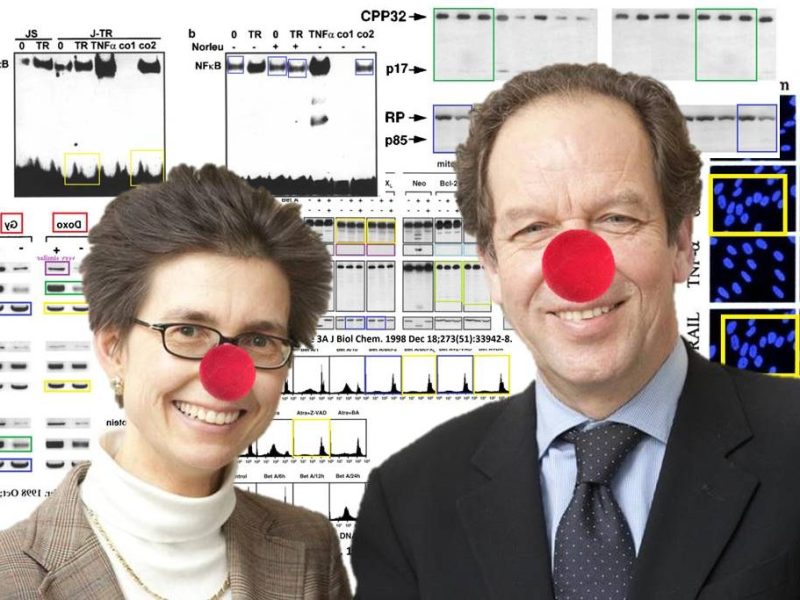
Fulda & Debatin: Reproducibility of Results in Medical and Biomedical Research
“Basic and advanced training for researchers should focus much more on self-reflection, openness and a culture of error acceptance.”

 For Better Science
The whole system is broken. None of these papers are consequential or impactful. Cheating to get a paper in oncotarget would be like me using steroids to perform better in the over 40s football (soccer) league I play in. The current system rewards/expects mindless productivity (enabled by pay to publish journals). Its a disaster.
LikeLiked by 1 person
PubPeer entry #10 for Dr Herr, a collaborative work with naughty Chinese people who betrayed her once more:
https://pubpeer.com/publications/54ED8034DE2A1674E262FF0164FCEF#1
LikeLike
I agree with Dr. Ingrid, Germany should kick all these immigrants back to Croatia and make Germany great again…
https://pubpeer.com/search?q=Ivan+Dikic
LikeLike
I don’t think using “papers with Pubpeer comment counts” is a good metric for scientific integrity. Not all comments are justified, the number of comments will scale with the number of published papers and most importantly, not all are equally severe. A few papers with isolated simple image duplication are not necessarily concerning, I don’t think they even say much about lab work sloppiness. Many researchers use Adobe Illustrator or (shudder) Microsoft Word/PowerPoint to assemble their figures rather haphazardly. It’s easy to accidentally embed an image twice and with often dozens of images per manuscript, easy to overlook. That is the consequence of academic publishers cutting costs by shifting more and more of the layout work to us scientists, essentially design amateurs. Many senior PIs will not have the time or the software skills to train their doctoral students. Hence, many labs lack robust figure assembly pipelines – it’s not seen (nor do I think it should) as a core competency for researchers .
What is more concerning about Prof. Herr’s saga is that the one apparently clear case of fraud is painted as if it occurred out of the blue. Given how brazen the copying is, it’s seems unlikely the doctoral student started faking results for a single paper. Were there any warning signs? Were mistakes made by the PI? Yes, some students are under considerable external pressure (I know that for Chinese MD PhD candidates with state scholarships the expectations can be crushing) – but it’s part of a PIs job to recognise and ameliorate such pressures. Unlike figure editing software skills, supervision is a PI core competency. Some senior PIs just take on too many PhDs to actually mentor and supervise. Yes there is a push to get more grants and take on more PhDs – but when you have the job security and clout of a Professorship, it’s time to challenge the system if you find yourself unable to supervise the students sufficiently. With one “black sheep” identified so far, this might not apply to Prof. Herr. But a good supervisor should not rely on filtering job candidates by “working culture heritage” (origin), but pay attention to how they shape their groups working culture.
LikeLiked by 1 person
Imagine, you come from Lybia. If you discover something, you get a position. Otherwise, way back to Tripoli. Heck, I might be tempted to help the guy fraud. I changed a few things, but this story happened in my university.
Not letting scientist fail is a catastrophe for everyone. Even more for those whose life literally depend on it.
Idea: make the PhD degree a DEGREE. The candidate has to prove he can do the scientific method, not proves the PI pet theory.
Setup a “I am failing committee”. Each PhD should have a kind of mentor outside of their lab to whom talk about their problems.
Make a new kind of dissertation “we investigated and closed a door”. That should be as valuable as the others.
Damn, we are supposed to be the smart guys. Why are we behaving like corrupt politicians?
LikeLiked by 1 person
In theory, all this is part of PhD already now. Practice is of course different
LikeLike
“Damn, we are supposed to be the smart guys. Why are we behaving like corrupt politicians?”
Because many in science who have “succeeded” have the personality of corrupt politicians: big egos, who want fame, power, and tons of money. Maybe not a bad idea to have psychological testing before one gets to grad school to weed some of these people out. On second thought, this wont help, because success in science, IMO creates the narcissism that leads to fraud.
BTW, in Clifford’s linkdin profile: “Mr. Biochemistry (2006), Department of Biochemistry, Abia State University, Nigeria. An award of quintessence to the most outstanding male biochemistry student based on academic excellence, morals and good conduct.” This guy appears to be a real pro at fooling people. And now the west has him. yipee.
LikeLike
Let us have a reality check on the pubpeer records. One of the students (Qaisar Maqbool) who had his own pubpeer records on retraction before and after his meeting of bus in Poznan (https://pubpeer.com/search?q=qaisar+Maqbool) now has obtained his PhD in materials engineering from UNIPVM under the supervision of Prof. Francesca Tittarelli and is working as a postdoc with the famous materials scientist Günther Rupprechter from TU Wien. He is even serving as a brand ambassador of UNIPVM and has more than 1000 followers in linkedin.
https://scholar.google.com.pk/citations?user=r7RcyIEAAAAJ&hl=en
https://it.linkedin.com/in/qaisar-maqbool
The other trainee who met the bus (Agnieszka Sidorowicz from Adam Mickiewicz University), who was then trained by Qaisar Maqbool, is now a PhD student at the University of Cagliari under the supervision of Prof. Alessandro Concas and a visiting PhD student in Günther Rupprechter’s laboratory. She will soon have her PhD.
Click to access Verbale-del-CdD-ScienzeTecn_Innovazione_30042021.pdf
The two have now published more papers in addition to a few jointly with Guenther Rupprechter.
https://www.tuwien.at/en/tch/pc/model-catalysis-and-applied-catalysis/applied-catalysis
These students did not stop after they hit the bus in 2019 in Poznan. The pair continued to publish themselves in the same year, and one of the articles was even retracted by the journal in 2020 because of falsified images and fake affiliations – proves that they did not change even after meeting the bus.
https://link.springer.com/chapter/10.1007/978-981-32-9374-8_8 https://www.sciencedirect.com/science/article/pii/S2352492820312319
Agnieszka Sidorowicz managed to get her master degree from Adam Mickiewicz University in the same year of retraction and published an article with the help of Jakub Dalibor Rybka.
https://www.mdpi.com/2079-7737/10/8/784
Even after all these fakes, these students were able to find a place in good labs. How is that possible? Do you think Profs Jakub Dalibor Rybka, Francesca Tittarelli, Alessandro Concas, Günther Rupprechter, etc. encouraged Qaisar Maqbool and Agnieszka Sidorowicz even if they knew their history? Do you think established scientists want to have black mark in their career by associating with these people? OF COURSE NOT. These professors, too, are likely to hit the bus sooner or later, and the pair will move on to another lab. All professors trust their students and without which it is impossible to work in science in this era of interdisciplinary science and they are not suspicious of the results produced by the students and not aware of that these kinds of manipulations are possible. Some of the students, especially those who come from poor backgrounds, regardless of their nationality, take advantage of this for their career advancement and well-being.
The trust that the supervisors put in these students will eventually backfire and the pain will stay with the supervisors forever, regardless of corrections or retractions. The students, on the other hand, will move on and continue their work in a better way so no one catches them as long as they can. The bottom line is that who is meeting the bus most of the times is not the students, and who is at greater loss is the supervisor. On the contrary, the emphasis FBS places on supervisors allows these students to be better trained fakers for the future.
LikeLike
Well, why don’t you inform Günther Rupprechter and then we see how it goes? Research integrity is a communal grass root thing, despite what authoritative voices say, it can’t work when imposed from above.
LikeLike
More publications from the fraud pair Maqbool and Sidorowicz: Günther Rupprechter‘s fruad profiteering:
Agnieszka Sidorowicz has already published 3 articles in 2024 Super productive! in pubpeer as well.
https://pubs.rsc.org/en/content/articlehtml/2024/ra/d4ra00343h
https://link.springer.com/article/10.1007/s12257-024-00019-3
https://www.mdpi.com/2075-1729/14/2/251
https://pubs.rsc.org/en/content/articlehtml/2023/cy/d2cy01395a
https://onlinelibrary.wiley.com/doi/10.1002/smsc.202300286
Günther Rupprechter proudly sits Maqbool as Postdoc in his lab.
https://www.tuwien.at/en/tch/pc/model-catalysis-and-applied-catalysis/applied-catalysis
LikeLike
Well, that was unexpected. But I guess not all guests can be quality ones, a bit like foreign Ph.D. candidates, and their pesky habits of following orders.
LikeLike
Ingrid’s honesty is awesome, and she should be greatly rewarded for coming forward. The following comment is at the scientific community as a whole, though Ingrid appears to be a good of example of it.
I have to ask, how does Ingrid spend her time? From my experience as a PhD student and a post-doc, PI’s spend most of their time talking with their friends, dealing with university administrators, going to dinners, regurgitating the same lecture they’ve given the last 10 years (if they teach at all), and writing. It seems like a really great job. But then there is the complaining about the stresses of getting grants and pubs or whether they are going to be promoted to this title or other. If you are so stressed out, or if you actually gave a damn about the data, then you would get off your a** and get in the lab. Bench work is not always fun and can be tedious, but if you are as passionate as you all claim to be about your subject then you would relish the opportunity to actually do science rather than playing politician for grant money, endowed positions and the metaphorical attaboy! from your colleagues. You would also be able to effectively mentor students. While I haven’t done the study my bet is that if you were in the trenches with them, and you were interacting with them in the data collection process, you would get more mentees to be proud of and you could rest easy knowing that you did all you could as a mentor. You don’t have to be in there 8 hours a day, but 3 or 4 is more than reasonable. Science has lost its integrity and until PIs and administrators get their priorities straight it will continue to be very corrupt.
Again, I thank you Ingrid for your post, and while I doubt it will be enough to actually cause any of your colleagues to change their behavior it is a speck of optimism for the future. My words are not meant to be personal because I don’t know you or how you run your lab. But given that you had multiple students behave unethically, it suggests that you, like most of your colleagues, have not prioritized the right things.
LikeLike
25 June 2025 retraction for Ingrid Herr. Retraction: Up-regulation of microRNA let-7c by quercetin inhibits pancreatic cancer progression by activation of Numbl | Oncotarget
LikeLike