

This is a guest post by Ingrid Herr, professor for cancer research at the University Clinic Heidelberg, Germany. Several of her papers were flagged on PubPeer for image duplications. Initially, Herr believed in honest mistakes of oversight, but soon she understood that a few international students have misled her and everyone else. Two retractions ensued, and there might be more, even withdrawals of PhD degrees, since Herr requested her faculty to open a research misconduct investigation.
There was an earlier case of Photoshop forgery at Heidelberg, involving Alexander Bazhin, who published some badly fabricated science with his russian compatriots. Bazhin later went to LMU Munich to follow his Heidelberg mentor, the surgery professor Jens Werner, where he became professor himself. I wrote about this case in 2019:
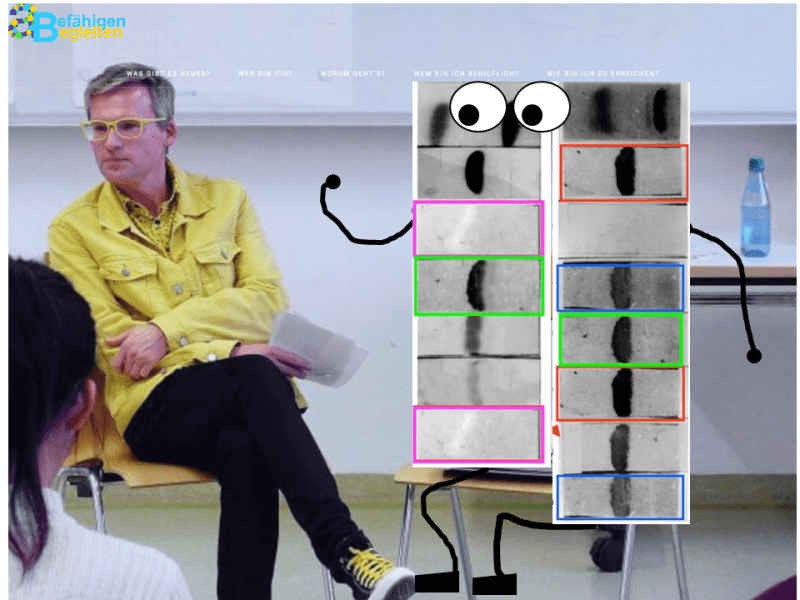
From Russia, with Photoshop
Germany recruits the very best of the best in international science to its elite institutions. Professor Alexandr Bazhin is one of them.

Only one Bazhin paper got retracted, on orders from the Editor-in-Chief: Bazhin et al Cellular and Molecular Life Sciences 2010. The russian Photoshop artist and former Munich professor is now a German-speaking career coach in the unemployment-suffering Ruhrgebiet city of Duisburg, where he employs an huge team of 30 people. Bazhin’s former collaborator and first author of a falsified study, Svetlana Karakhanova, remains employee of the University Clinic Heidelberg. Another problematic Karakhanova paper was done without Bazhin, but in collaboration with Ingrid Herr.
Which apparently drew scrutiny of Herr’s own papers.

Responding to PubPeer: Full transparency and absolute honesty are the best approach
By Ingrid Herr
Recently, our just published manuscript received an anonymous PubPeer comment. A doctoral student unintentionally has used a duplicated image in one of the figures. Fortunately, we quickly rectified the mistake by analyzing the extensive raw data and identifying the correct image. We immediately responded to the PubPeer comment, apologized to the scientific community for the confusion, posted the corrected figure with raw data, and published a corrigendum.
Liping Bai, Tobias Pfeifer, Wolfgang Gross, Carolina De La Torre, Shuyang Zhao, Li Liu, Michael Schaefer, Ingrid Herr Establishment of Tumor Treating Fields Combined With Mild Hyperthermia as Novel Supporting Therapy for Pancreatic Cancer Frontiers in Oncology (2021) doi: 10.3389/fonc.2021.738801


Just as we resolved the first PubPeer comment, the next comment appeared on one of our previous manuscripts. As if that wasn’t enough, errors were also detected in several other former manuscripts. I immediately mobilized the responsible first authors, some of whom even rushed back to the lab from their vacations to verify the raw data.
Two of the new comments were about simple image duplications, which we easily corrected by publishing revised figures and raw data on PubPeer and submitting corrigenda to the journals. Such corrections are embarrassing, but mistakes happen.
Alia Abukiwan, Clifford C Nwaeburu, Nathalie Bauer , Zhefu Zhao , Li Liu, Jury Gladkich , Wolfgang Gross, Axel Benner , Oliver Strobel , Jörg Fellenberg, Ingrid Herr Dexamethasone-induced inhibition of miR-132 via methylation promotes TGF-β-driven progression of pancreatic cancer International Journal of Oncology (2019) doi: 10.3892/ijo.2018.4616


“Subsequently to the publication of the above article, an interested reader drew to the authors’ attention that two pairs of the culture plate images in Fig. 4A-C on p. 60 appeared to be the same, although the images were shown in different orientations; moreover, the ‘NC/0 and DEX+miR132’ and ‘DEX and miR132’ pairings of images in the scratch-wound assay experiments shown in Fig. 4B also appeared to be overlapping, such that these were apparently derived from the same original source where the results of differently performed experiments were intended to have been portrayed. After re‑examining their original data, the authors have realized that some of the data in Fig. 4A and B were inadvertently assembled incorrectly. […] The authors are grateful to the Editor of International Journal of Oncology for allowing them this opportunity to publish a Corrigendum, and all the authors agree with its publication. Furthermore, the authors apologize to the readership for any inconvenience caused.“
Correction from 3 July 2023.
However, the three other allegations were more critical as they revealed multiple duplications of representative images per manuscript. Moreover, these duplications were partially rotated or had their contrast altered using Photoshop, making them extremely difficult to detect with the naked eye. PubPeer users now employ pattern recognition software to identify such hidden duplications. These cases of duplications in our manuscripts seem odd, and I wonder what was going through the minds of the doctoral students when creating these figures. I don’t want to assume data manipulation, as the correct images could be identified from the extensive raw data, allowing for corrigenda. However, the former doctoral students have truly lacked the necessary precise scientific work style here. Therefore, at this time, the doctoral students had to respond to the PubPeer comments themselves and submit the corrigenda to the journals in their own names. The accumulating carelessness in my research group had made me very upset, and I was no longer willing to cover for the former employees’ mistakes. I did inform the Office for Doctoral Affairs of the Medical Faculty about these somewhat more critical cases since the same errors are also present in the doctoral theses. The chairwoman of the doctoral office was grateful for the information, as most corrigenda, including those related to data in doctoral theses, go unnoticed by them. Upon my request, the Office for Doctoral Affairs will now review these duplications. As the number of similar cases is increasing, the Medical Faculty of the University of Heidelberg and other Universities in Germany are considering tightening the criteria for accepting doctoral candidates from foreign countries, where data manipulation occur frequently.
Retracted: Clifford C Nwaeburu, Alia Abukiwan, Zhefu Zhao, Ingrid Herr Quercetin-induced miR-200b-3p regulates the mode of self-renewing divisions in pancreatic cancer Molecular Cancer (2017) doi: 10.1186/s12943-017-0589-8


The authors have retracted this article because there are overlaps in three figures. Specifically, in Figure 6A, in column 3, two panels are identical but are described as deriving from different cell lines AsPC1 and AsanPaCa; additionally, there is overlap between two panels for AsanPaCa in columns 1 and 2 despite each panel corresponding to different treatments; finally, there is overlap between two panels for PANC1 in columns 3 and 4 despite each panel corresponding to different treatments. In Figure 6B, there is overlap between two panels for AsanPaCa in columns 1 and 2 despite each panel corresponding to different treatments. In Figure 6C, there is overlap between two panels for AsPC1 in columns 3 and 4 despite each panel corresponding to different treatments.
All authors agree to this retraction.
Retraction from 4 August 2023
The most severe cases concerned our manuscripts published in 2016 at Oncotarget and 2017 at Molecular Cancer, where intentional data manipulation was indeed obvious. A former doctoral student had used Photoshop to cut out two different areas from a single image and presented them as separate treatment groups. However, the cut-out areas overlapped, and PubPeer’s users clearly exposed the fraud. Similarly, 11 instances of image duplications were present within a single manuscript. These duplications exhibited partial rotations or were featured in distinct figures, making their detection less straightforward. Neither I nor our internal pre-publication review, nor the external peer review, could detect these data manipulations with the naked eye. Since there were partially no correct images in the raw data, it was evident that not only the scientific community but also the external reviewers, co-authors and I were deceived. Consequently, I immediately withdrew these manuscripts. Next, I informed the Office for Doctoral Affairs, as the duplications were also found in the doctoral thesis. The case is now being investigated.
Retraction requested: Clifford C. Nwaeburu, Natalie Bauer, Zhefu Zhao, Alia Abukiwan, Jury Gladkich, Axel Benner, Ingrid Herr Up-regulation of microRNA let-7c by quercetin inhibits pancreatic cancer progression by activation of Numbl Oncotarget (2016) doi: 10.18632/oncotarget.11122


PubPeer exchange:
“I will withdraw this manuscript immediately.
Ingrid Herr”
“Once again, we would like to emphasize that the images are representative images and have no impact on the overall results, presented as the mean values with statistical evaluations. […]
Clifford Nwaeburu and Ingrid Herr”
“The above comment “Clifford Nwaeburu and Ingrid Herr” unfortunately is not coordinated with me.
Ingrid Herr”
Now, unfortunately, my publication list features eight PubPeer threads, which is certainly not a proud accomplishment. Six comments concern manuscripts where I am the corresponding author, and two comments concern co-author manuscripts. Additionally, two prominent red PubPeer comments stating “Manuscript retracted” looms over my PubMed list, which is extremely embarrassing. To avoid such disasters in the future, all my doctoral students have undergone intensive training. I reported the incidents in our weekly seminar and explained the consequences. We discussed measures together, including having a second doctoral student repeat experiments from another doctoral student as an internal control. I will regularly repeat this talk in the seminar and remind of the rules of Good Scientific Practice.
It is essential to note that my doctoral students received regular supervision during their research work. They had rotational meetings with me and other scientists in small groups, presented their work in department seminars, had additional supervisors through a Thesis-Advisory Committee (TAC), had support for methodology and statistical data analysis, and presented their data independently at international conferences. That’s all a supervisor can do – a doctoral thesis is defined as an independently performed scientific achievement.
Li Liu , XueFeng An , Michael Schaefer , Bin Yan , Carolina De La Torre , Stefan Hillmer , Jury Gladkich , Ingrid Herr Nanosilver inhibits the progression of pancreatic cancer by inducing a paraptosis-like mixed type of cell death Biomedicine & Pharmacotherapy (2022) doi: 10.1016/j.biopha.2022.113511

I suspect that the incidents in my lab may be partially related to differing interpretations of the rules of Good Scientific Practice in different nationalities. Specifically, I refer to China, African and Arab countries. But Italy and Spain also seem to be more frequently included among the black sheep. In some of these countries, it appears to be common practice for supervisors to dictate instructions that subordinate students unconditionally fulfill, even if it involves data manipulation. This cannot and must not be allowed! I firmly believe that we need to move away from such practices. Of course, I am pleased when a doctoral student presents promising data, but I have also become extremely suspicious. We now check lab books and raw data more frequently than before. A scientific colleague has developed a pattern recognition program that allows us to investigate doctoral theses and publications for image duplications before submission. Unfortunately, our self-developed software is not as sensitive as the pattern recognition software used by some PubPeer users. Therefore, I hope for public access to such a sensitive software. Nevertheless, I am aware that data manipulation through image manipulation probably represents only the tip of the iceberg.
Nathalie Bauer, Ll Liu , Ewa Aleksandrowicz , Ingrid Herr Establishment of hypoxia induction in an in vivo animal replacement model for experimental evaluation of pancreatic cancer Oncology Reports (2014) doi: 10.3892/or.2014.3196

Rhodotorula glutinis: “in Figure 3, the two images in red rectangles seem to be identical, but are described as coming from different treatments TRIP and CoCl2.”
What to do when faced with PubPeer accusations? In my opinion, full transparency and absolute honesty are the best approach! If there is suspicion of data manipulation, an immediate response to the allegations is mandatory. Errors can happen, and accidental data duplications can occur even among the most esteemed scientists. However, intentional data manipulation should lead to the retraction of already published manuscripts, and possibly the revocation of a doctoral title, with the relevant faculty being informed. Only in this way will doctoral students and researchers be aware of the consequences of their misconduct. Unfortunately, not all scientific colleagues share my view. Many simply ignore PubPeer comments, even when they concern proven fraud.
I would like to mention Leonid Schneider here, who works closely with other PubPeer users and exposes fraud cases worldwide through his highly informative science blog “For Better Science”. In his purely voluntary work, he understandably does not always make friends, because he reports on data manipulation up to the highest levels by renowned scientists. Even before receiving my own PubPeer comments, I regularly read his important blog with sometimes shocking cases. Leonid also informed me why my publications suddenly came under intense examination by anonymous PubPeer users: I was listed as a co-author on a PubPeer-criticized manuscript of a highly respected colleague who, however, has not yet responded to serious allegations of data manipulation. Once a PubPeer user finds something, as in my case, they do not give up and examine all publications. Elizabeth Bik, the well-known and most famous PubPeer detective, reports that 6% of all publications contain errors that PubPeer users can uncover – the actual number of errors is likely much higher.
Yangyi Wang , Emilia Petrikova , Wolfgang Gross , Carsten Sticht , Norbert Gretz , Ingrid Herr , Svetlana Karakhanova Sulforaphane Promotes Dendritic Cell Stimulatory Capacity Through Modulation of Regulatory Molecules, JAK/STAT3- and MicroRNA-Signaling Frontiers in Immunology (2020) doi: 10.3389/fimmu.2020.589818

So, that was my little PubPeer saga. A wake-up call for all scientists, even if their previous record is impeccable. Dear colleagues, scientists, check your lab members’ raw data, publications, and dissertations even more thoroughly than before to protect scientific ethics and data integrity and maintain trust in science!
Ingrid Herr
Department of General, Visceral, and Transplantation Surgery, Section of Surgical Research, University Clinic of Heidelberg
i.herr@uni-heidelberg.de
Update by IH:
Unfortunately, some readers have complained about alleged racist remarks. I
deeply regret this and it was by no means intentional. Rather, the assumption that the incidents in my laboratory might be partly due to different interpretations of the principles of Good Scientific Practice among various countries is solely based on statistical data regarding research integrity across nations.
References:
- 2023 Financial Times: Global contribution to fake publications within country: High (>30%): China, India, Turkey, Russia, Egypt; Medium (10-30%): Brazil, South Korea, Iran, Mexico; Low (< 10%): US, Europe, Japan
- 2022 Bain et al: Sub-Saharan Africa
- 2021 Nature: The Battle against Papermills: China, Iran, Russia
- 2017 B. Ataie-Ahtiani: World Map of Scientific Misconduct, Ranking based on misconduct ratio: China, Malaysia, Mexico, Taiwan, Pakistan, Iran, Saudi Arabia, Hong Kong, South Korea, Egypt, India…..
- 2013 Ana et al: China, Bangladesh, India, Tunisia, Kenya, South Africa, Mexico, Central America, Peru, Argentina
- 2014 K Amos: Plagiarism rate of retraction per country (2008-2012): 66.7% Italy, 42.9 % Iran, 42.9% Tunisia, 38.5% France, 36.7% India, 33.3% Egypt, 33.3% Brazil, 21.1% Australia, 20% Sweden, 16.7% Spain
2. I would also like to note that my statement regarding the contemplation of stricter admission criteria for accepting foreign students referred solely to the example of the University of Erlangen-Nürnberg. This university is currently no longer admitting students from China who intend to come to Germany with a scholarship from the Chinese government agency CSC, due to concerns about espionage and lack of full academic freedom. This decision is currently unique nationwide in Germany, although other universities in Sweden, Denmark, the Netherlands and the United States have already done so this year.
Update 22.01.2024 by LS
Readers are invited to read the following article about Ingrid Herr’s former mentor of 10 years at the University of Ulm, Klaus-Michael Debatin. Two of their joint publications are mentioned.
Fulda & Debatin: Reproducibility of Results in Medical and Biomedical Research
“Basic and advanced training for researchers should focus much more on self-reflection, openness and a culture of error acceptance.”

 For Better Science
Ich bin ein bisschen schockiert von diesem unerwartet vernünftigen und methodischen Vorgehen.
Gut gemacht, Ingrid! Hoffentlich folgen andere deinem Beispiel.
LikeLike
Thanks Ingrid, this was a really good post. Can’t have been easy to write about but the honesty is refreshing. I also agree with your assessment that there is something regional about research misbehaviour. Tough to talk about, but some countries are worse than others.
LikeLike
Agree with the last sentence – not easy to talk about it. Imho, Ingrid did well when indicating that she is an avid “For Better Science”-reader. Because of that, we know that in
“Specifically, I refer to China, African and Arab countries”
the term “Arab” has a highly complex content: it includes Iran as well as Israel…
“Denn eben wo Begriffe fehlen, da stellt ein Wort zur rechten Zeit sich ein.” (Johann Wolfgang von Goethe)
LikeLike
I agree and apologize if I have inadvertently crossed a line here. The sentence should have been “…China and some African and Arab countries.”
LikeLiked by 1 person
This plea for Good Scientific Practice is not convincing at all. The admittance and corrections of the malpractices is always worth of respect, however none the problems leading to them have been identified. And the solution to any problem starts with its identification.
The doctoral students (or postdocs) are conveniently thrown under the bus, a very well known and used practice to whitewash the principal investigators and tenure scientists with good positions and salaries, such cases regularly feature here in the blog. If their nationality is from a poorer country, even better.
And why are such students hired at all? Upon first malpractice they should be fired immediately but here students will control each other and guess what will happen when they find out (and they will very soon) about that. These students will earn their PhDs, will become PostDocs and some finally tenure scientists to continue this “Good Scientific Practice”. From another point of view, why did these students performed a malpractice? Could it be because their principals treat them like modern slaves?
How come an author of a scientific paper has no idea that there is a problematic figure? Even the corresponding author is unaware, it is mildly speaking outrageous. If it were one occasion, it could be attributed to highly improbable miss from all authors. This is no scientific practice at all, a paper should serve to explain what has been achieved, while the corresponding author has no clue what datasets at least some figures represent.
Finally, what does the statement “maintain trust in science” means? Science is not a dogma, religion or totalitarian grand master strategist (dictator, многоходовик) rule. Science is an objective knowledge of the world we live in obtained by experiments, observations and adequate theories and hypotheses supporting the former. And the problem entirely lies in the scientific practices of the “great modern scientists”, not science itself.
A nice start for real Good Scientific Practice would be:
1. Avoid hiring students from suspicious groups, the impeccable record is itself highly suspicious.
2. Pay scholarships for decent living and treat the students with respect, not like slaves.
3. Regularly discuss and analyse with them progress and problems of their tasks.
But in the current situation this means ~2-4 times less papers and therefore the same amount of citations less leading to decrease in H-index growth and losing the next grant(s) to master strategist competitors. For now, anybody who starts paying this price is almost surely automatically out of academia in a couple of years.
LikeLiked by 1 person
“I suspect that the incidents in my lab may be partially related to differing interpretations of the rules of Good Scientific Practice in different nationalities.”
I don’t think that’s it.
I suspect your incidents in the lab occur because immigrants want a good job in the west where living conditions are much better than where they come from, and they know they need a good publication record and good rec’s from advisors to get one. They simply did what they needed to do to accomplish this task. For example:
https://www.linkedin.com/in/cliffordnwaeburu/?originalSubdomain=de
If its a choice between creating a little fraud to reap the riches of the west, or going back to where they come from, what do you think is going to happen?
As long as the west insists on cheap foreign labor this will not stop.
LikeLike
IMO, a solution is to greatly reduce government funded research to universities to about 1/5th to 1/10th as to what it was. In this way, PI’s would have to do their own benchwork (like many research associate professors do at R1 research universities in the USA) and there would only be a little money to fund themselves and 1 or 2 replacements.
What is the point of putting all this money into a system that generates a lot (50% or more (?)) of irreproducible crap? Furthermore, this would put an end to the hire of immigrants, where many have too much ambition beyond their abilities. They should not be in the west creating even more crap.
To understand the problem of bringing in individuals with ambition beyond their abilities, just scale up to what an entire country whose ambition is beyond their ability–China—has given us. Covid, with millions of lives taken and billions of dollars waisted, likely from a lab leak. In addition to papermills and published “work” from Chinese “academia” that is nearly 100% irreproducible crap.
LikeLike
I find this post from Dr. Herr really disconcerting.
Six articles with Dr. Herr being the corresponding author were found by others than her to be highly problematic, however, Dr. Herr did not say a single word about how poor her supervision of several (not just one) PhD students was. No mea culpa whatsoever on any aspect of her job as supervisor. The culprits are solely these foreign students, who betrayed every one there at Uniklinikum Heidelberg. Applause.
Although it’s true that some duplications are difficult to spot, other were actually not. Please have a look at the red boxes here below:
Was this African PhD student the only one deciding which micrographs to include? Was there no discussion among the authors and in particular by Dr Herr which images were the most representative for each experimental condition? I have never been fully in charge of chosing ALL the images of my papers even when I was a senior postdoc, while in Dr Herr’s group PhD students are the sole in charge?
The Oncotarget 2016 paper, for which a retraction has been requested, carries a German name in second position. The same German name appears as first author in another paper with an image duplication, Oncology Reports 2014.
Is that student also a rascal?
From Dr Herr’s words it seems not. The naughty ones are those African, Arab and Chinese students that are first authors in 5 out of 6 of those papers. Two papers have one African first author, two papers have two different Chinese first authors, and one paper has an Arab first author
Dr Herr’s statements about nationalities are truly incredible, to put it mildly. But in particular I wish to discuss the following statement by Dr Herr:
“it appears to be common practice for supervisors to dictate instructions that subordinate students unconditionally fulfill, even if it involves data manipulation.”
Dear Dr Herr, these six fraudulent papers are from YOUR lab. Those PhD students started their careers with you. Wouldn’t that mean YOU, Dr Herr, fall into that category of supervisors who dictate instructions?
Last but not least: WHY just 2 retractions and not 5 or 6?
If you claim those foreign students are used to manipulate data, why did you find convincing that 4 articles are worth to be saved by a simple correction?
LikeLiked by 1 person
On the one hand, good for Dr. Herr that she writes so honestly and openly. But seriously, one cannot just accuse people from other countries as if Germany itself is not leading among bad science and many retractions. This is clear to whoever reads this blog. In the end, there are bad scientists from any country, and this includes Germany and US. One cannot write sentences like “As the number of similar cases is increasing, the Medical Faculty of the University of Heidelberg and other Universities in Germany are considering tightening the criteria for accepting doctoral candidates from foreign countries, where data manipulation occur frequently.” and get away with it.
LikeLiked by 1 person
Science is an industry in need of cheap pliable workforce, ie PhDs and postdocs. All this talk about not recruiting them from that country or another is meaningless. Who will provide all these great results then? ChatGPT?
In rhe worst case, the tightening of selection criteria will result in recruitment of even more foreign fraudsters simply because their CVs are magnitudes better than from their honest compatriots.
LikeLike
very true
LikeLike
Dear Dr. Herr,
You have made a specific claim that Arabs, Chinese, and Africans are a bunch of frauds, and because of that, universities in Germany are tightening their rules for accepting foreigners. We would like to contact Heidelberg University officials and other universities in Germany to verify your claim. The results of the inquiry will be sent to Deutsche Welle.
Best,
NoOne
LikeLike
You are crap in threatening even.
LikeLike
Unfortunately, the Bayerischer Rundfunk has already beaten Deutsche Welle to it.
https://www.br.de/nachrichten/wissen/keine-stipendiaten-aus-china-uni-erlangen-stoppt-aufnahme,Tl8byHL
https://www.universityworldnews.com/post.php?story=20230720113914406
LikeLike
I may have missed it, but did the foreign students come with their own support? Some governments are keen to get their people training abroad, and it’s often tempting to accept “free” lab workers (or medical fellows, etc.). In contrast, many universities charge foreign students more than domestic, making them too expensive for many labs. Certainly not a good deal if they are more prone to faking.
LikeLiked by 2 people
All of my doctoral candidates are kind, educated young individuals, most of whom hold a Master’s degree. They receive a regular income and are entitled to vacation days during their doctoral studies. They are by no means modern-day slaves.
LikeLike
I wasn’t implying they were slaves. I was asking if the high preponderance of foreign students is related to them coming with their own support, as opposed to being paid the same as domestic students, or indeed costing even more owing to differential tuition fees for foreign students. Where I work, up until recently foreign graduate students and fellows cost supporting researchers/departments at least twice as much as domestic students, which essentially meant that the only ones accepted had scholarships and/or other independent support. Many even came with support for accommodation, research supplies, etc. (especially those from the Middle East oil patch), making them all but irresistible to P.I.’s and department heads.
LikeLike
The majority of students had a scholarship for 3 years from China, some had a domestic scholarship, or were funded through research grants. Foreign students at the University of Heidelberg are not more expensive than domestic students, that was not a factor here. We receive applications from China almost daily from master’s students with impeccable CVs and scholarships. That is certainly tempting. As a result, there are a significant number of Chinese doctoral students at our institute, also in other research groups. The students are indeed under pressure, because they have a directive from their government that they must return with a manuscript and their MD.
Albert Varonov had given a comment above and asked if it could be that the students were treated like modern slaves, but I already wrote that was not the case here.
LikeLike
I’m troubled by your phrase “I was no longer willing to cover for the former employees’ mistakes”. My question is, how come you were OK with doing so up to that point?
Nobody should be expected to cover for someone else. We’re all adults here – if someone screws up, they own the problem. People “covering for” others (especially Univ. administrators covering for their wayward PIs, or journal editors covering for overt failures during the peer review process) is what gets us into this mess in the first place.
LikeLike
In the context of ‘cover,’ it means that I was contacted as the corresponding author of the manuscripts by PubPeer, and consequently, I felt responsible to respond on behalf of the students. I. Herr
LikeLike
This reaks of pass the buck and save my own a**. As the PI, you are responsible for educating your students. You are responsible for reviewing every single experiment. You are responsible for making the work environment one in which your students feel empowered to learn from “failed” experiments rather than feeling like they owe you to provide perfect results. I feel that singling out certain countries borders on racism. If you have that particular bias then you should spend additional time with the potentially problematic students and teach them about scientific integrity. My guess is that you tout how may PhD students you have graduated but won’t tout how many have had there PhDs revoked.
LikeLiked by 1 person
Uhm, a professional racist here. Fact is that russia, China and Iran are totalitarian states with no morals. Now, if you assume people who make careers in such regimes do so on honesty and merit, then I suggest you pack your bags and move there.
LikeLiked by 2 people
The best known scandal in my field of nanoelectronics is linked to a German name, Jan Hendrik Schoen. Maybe it had to do with different interpretations of good scientific practice at the U of Konstanz. But I would be rather reluctant to point fingers at certain countries of origin.
Interestingly, the responsibility of the PI was discussed in the Bell Labs report on the scandal already 20 years ago. The conclusion was that no general rules exist, but that the authors of the report thought that the PI should share at least some part of the responsibility. Indeed, the PI had considerable initial benefit from the later retracted publications. AFAIK, there were no consequences for the PI. But this shows that the issue has not been clarified for 20 years and that we are in the same situation still today. Of course, by then, this was assumed to be a very rare exceptional case (which it was, at least in terms of magnitude). But again, most scientists outside this blog still probably think like that today.
As a semi outsider, I think that scientists only have themselves to blame. The main product of academic science today is not knowledge but CVs. Science has created an elaborate system of ersatz currency of publications (further quantified by impact factor), invited talks, prices, grants, etc. It is human that such a system also creates a shadow version of it and that it generates attempts to short-cut it (aka fraud). If you want to change that, you need to change the reward system. Fighting it (e.g. in this blog) is laudable but ultimately futile.
A final remark: students are not slaves but the current system of temporary contracts together with a strict selection at the different stages before scoring a permanent PI position does favor fraudulent behavior. If you hire ten people and tell them that only the “best” two will get a follow-up contract, the team spirit will not in all cases be dominated by fairness and collaboration. And some people will take shortcuts. Maybe there is a cultural component in how people react to this but I doubt that it can be generalized to entire countries.
LikeLike
I think it very well can be generalised to entire countries, especially since with state-funded foreign students we deal here with the exact opposite of dissidents. Those are people whom China, Iran, russia and Middle Eastern oil regimes deem vetted and reliable.
LikeLike
Perhaps Prof Herr could ask for advice on quality development and good scientific practice to Vice-Rector for Quality Development at Uni Heidelberg Prof Karin Schumacher: https://pubpeer.com/search?q=karin+schumacher.
In case Prof Schumacher was too busy on administrative duties or in supervising students (https://pubpeer.com/publications/597F4A6EC25F0EE8787C936C4E7DCD), Prof Herr could contact Schumacher’s spokesperson Dr Nana Keinath (https://pubpeer.com/publications/4C474B2D04EAE293F43D1B2B5E2B03 ; https://pubpeer.com/publications/5FFB36C5EDC851BA90F276F889404E).
These people are German and women, so there will be no cultural, language, nationality boundaries to overcome for effective and fruitful discussion to foster good scientific practice.
LikeLike
Behind each misconduct hides some malpractice from Supervisor’s site. It could be either mobbing, bossing, excessive workload or lack of interest in real research outcome, focusing only on publications and grants.
Unfortunately, foreign students are especially prone to that because of their precarious state. They can be forced to work excessively without knowledge of where to complain and what to do. They sometimes cannot, or are afraid to discuss the thing with their colleagues. Their families and friends are far, so they have even more time to work, which leads to exhaustion and burnout. In case of any disobedience it is possible to blackmail them by stopping their stipendium and expelling them.
And sometimes, foreign students are even hated by home students calling them gastarbeiters just because they have more vacation and leisure time to visit their countries and Foreigners office.
The way how Dr. Herr threw their students overboard indicates, that there was no good environment in this lab.
Btw, one of the Pubpeer comments is nine years old and the same type of mistakes was found there.
LikeLiked by 1 person
I tried to get the other perspective and contacted Clifford Nwaeburu. He played the honest and innocent victim of persecution, lied about having support from publisher, and then tried to bully me.
LikeLiked by 1 person
There are 8 records on Pubpeer, from different years. The oldest one reports paper published in 1999, the rest is from 2014 to 2022, which indicates a consistent problem. And there definitely was not a good environment, if multiple students consistently manipulate their results without noticing.
LikeLike
I’m sorry, but this second comment from curious ladybug below is truly nonsense. Firstly, the publication criticized by PubPeer in 1999 does not originate from my lab. It merely presented a protein marker in various blots, which was common practice at that time. Secondly, the 2014 publication contained a simple image duplication that occurred accidentally during the copy-paste of large files into a figure and could be easily rectified through a corrigendum, like image duplications in other manuscripts. Such mistakes happen. However, the blatant data falsifications in Oncotarget 2016 and Molecular Cancer 2017, involved up to 11 image duplications per manuscript. These were so artfully concealed (portions of an image, rotated direction, altered contrast) that intentional data manipulation must indeed be assumed. This is fraud, and in such a case, I cannot shield the former responsible student, as that would be further deception.
LikeLike
I agree that simple duplications and overlaps may happen and may be undetectable with naked eye, especially in case of scratch assays, but I still dont get, why one would clone cells in a microphotography, such as in https://pubpeer.com/publications/F6CD0497D15651E5CFCFA15A2A60EC#13
LikeLike
Wow, she is guilty herself yet she acts innocent and does not hesitate to impugn other, look at those sentences:
´´the Medical Faculty of the University of Heidelberg and other Universities in Germany are considering tightening the criteria for accepting doctoral candidates from foreign countries, where data manipulation occurs frequently.´´
´´Specifically, I refer to China, African and Arab countries. But Italy and Spain also seem to be more frequently included among the black sheep.´´
Someone can remind our dear Prof. that the biggest physics/Materials Science fraud done in Germany by German scientists? Such things can happen in China etc not because they are cheating more than others but because they have a way higher number of scientists, and we see them more often than others…
LikeLiked by 2 people
typing error: should read:
2023 Financial Times: Global contribution to fake publications within country:
High (>30%): China, India, Turkey, Russia, Egypt
LikeLike
Of course, falsification of scientific data also occurs among Germans. It should be noted that the mention of countries with particularly high rates of falsification is purely based on statistics and by no means reflects a racist attitude. Here is a selection of studies with references:
Research integrity across nations
2023 Financial Times: Global contribution to fake publications within country:
High (
Medium (10-30%): Brazil, South Korea, Iran, Mexico
Low (< 10%): US, Europe, Japan
https://www.ft.com/content/76abf920-effb-4d66-8fb2-3ff842150297
2022 Sub-Saharan Africa
https://www.panafrican-med-journal.com//content/article/43/182/full
2021 Nature: The Battle against Papermills: China, Iran, Russia
https://www.nature.com/articles/d41586-021-00733-5
2017 World Map of Scientific Misconduct, Ranking based on misconduct ratio: China, Malaysia, Mexico, Taiwan, Pakistan, Iran, Saudi Arabia, Hong Kong, South Korea, Egypt, India…..
doi:10.1007/s11948-017-9939-6
2013 China, Bangladesh, India, Tunisia, Kenya, South Africa, Mexico, Central America, Peru, Argentina
https://www.ncbi.nlm.nih.gov/pmc/articles/PMC3608538/
2014 J Med. Lib Assoc 102 (2): Plagiarism rate of retraction per country (2008-2012):
DOI: http://dx.doi.org/10.3163/1536-5050.102.2.005
66.7% Italy, 42.9 % Iran, 42.9% Tunisia, 38.5% France, 36.7% India, 33.3% Egypt, 33.3% Brazil, 21.1% Australia, 20% Sweden, 16.7% Spain
LikeLike
“To avoid such disasters in the future, all my doctoral students have undergone intensive training.”
Sad that it takes a series of embarrassing paper problems before a PI thinks to train their students. Suggests that maybe PIs are woefully unaware about the sorry state of scientific publishing (maybe they should read Leonid’s blog or PubPeer) or they may need training about the duties of a PI.
Furthermore, systemic problems suggest a failure of the system (e.g., the lab), not of just one component (e.g., a student).
LikeLiked by 1 person
When I was a little PhD student, and then a little postdoc, research fraud was not even remotely an issue anyone was concerned with. It was something Hendrik Schön and Diederik Stapel did, maybe some medicine students, but never one of your PhD colleagues. I guess psychiatry calls this collective self-delusion.
LikeLike
I agree Leonid, the lab I worked in was very concerned with research integrity – not making mistakes – but there wasn’t really an expectation that anyone would entirely fabricate something or publish trickery.
LikeLike
From my experience, scientists seem to believe that fraud is where one fakes data without doing any experiments. Again, Schön and Stapel. As long as you fudge existing experimental data to fit the predefined result, you are doing right. And if you succeed to publish this crap in a high ranking journal, you are a hero to emulate!
LikeLiked by 1 person
Thank you very much for these comments, which I fully agree with. As mentioned in the blog post, data integrity is also highly valued in my laboratory. I wouldn’t even have thought that a doctoral student, for whatever reasons, would crop two images from one picture and present them as two different groups, or display image duplicates as excerpts from another image, or rotate one of identical images in different directions, or alter them in contrast. The clarification of these adventurous maneuvers was meant by “intensive training.”
LikeLike
Leonid – I get that there has been a learning curve in scientific publishing about how fraud has grown over time, but some of these papers were published in 2020, 2021, and 2022. As time goes on, this argument should probably move from ignorance towards negligence.
LikeLiked by 1 person
Yep, fully agree. But you’ll be surprised what a conserved bubble academia can be. Not just most never heard of PubPeer, I had to explain many times what a preprint is!
LikeLike
If all fraudsters assembled in one lab, I mean, you can’t fight fate.
LikeLike
I feel some sympathy here, it looks like Ingrid has come in for some further criticism, but I think what she wrote was mostly fair. Usually I have seen authors completely ignoring pubpeer comments, making absurd denials, or wild accusations about the person who pointed out the errors.
Ingrid has done a lot of things that people want to see: retracted and corrected papers, admitted her part, put in place a plan of action to improve. It’s 95% of the way there and if everyone reacted like this the problem would go away quickly.
She has written clumsily about foreign students, but I think there is a real difference in research behaviour, I’m not sure if it will be helpful to shy away from that.
If the ultimate responsibility falls on the PI for research integrity, it seems like you could be alleviated of some of the responsibility if you were also tricked. As for not spotting obvious errors – I think we might all accept how blind we can be to such things unless we are actively looking for them. I certainly never noticed an image duplication until I looked because it didn’t occur to me that anyone would do such a thing.
LikeLiked by 1 person
Thank you!
LikeLike
Me too. I was unhappy with one or another sentence, but I didn’t want to interpret them as negative as possible.
Some commentator wrote “This reaks of pass the buck and save my own a**”. I don’t think you can save yourself that easy by placing a longer statement on FBS, because when doing so, two things will for sure happen:
1) extremely critical and skeptical feedback in the commentary section
2) colleagues, especially from the upper hierarchical level, will most probably not like it
Or in short: you will risk “fire from both sides”. Thus, I don’t expect many professorial “Pub Peer Sagas” on FBS in the years to come. What can we realistically estimate here – five detailed inside reports, written by accused group leaders, in the next five years? I think that would already be a lot…
LikeLike
Uhm, writing a guest post on FBS is the exact opposite of saving one’s ass. People were stoned for reading FBS, I believe.
LikeLiked by 1 person
I wanted to put it more carefully 😉
LikeLike
Dr Herr’s little PubPeer saga gets bigger:
https://pubpeer.com/publications/3747175D575D1D313D562093E81532
LikeLiked by 1 person