Schneider Shorts 2.06.2023 – Systematic manipulation of the publication process
Schneider Shorts 2.06.2023 - how cancer is cured at Stanford and Harvard, mass retractions at Hindawi journal, tricks for life extention, chocolate for Alzheimer's, with a polluted conference, a papermilling Belgian, failed and successful corrections, and a dirty old man's wild trial.
Schneider Shorts of 2 June 2023 – how cancer is cured at Stanford and Harvard, mass retractions at Hindawi journal, tricks for life extention, chocolate for Alzheimer’s, with a polluted conference, a papermilling Belgian, failed and successful corrections, and a dirty old man’s wild trial.
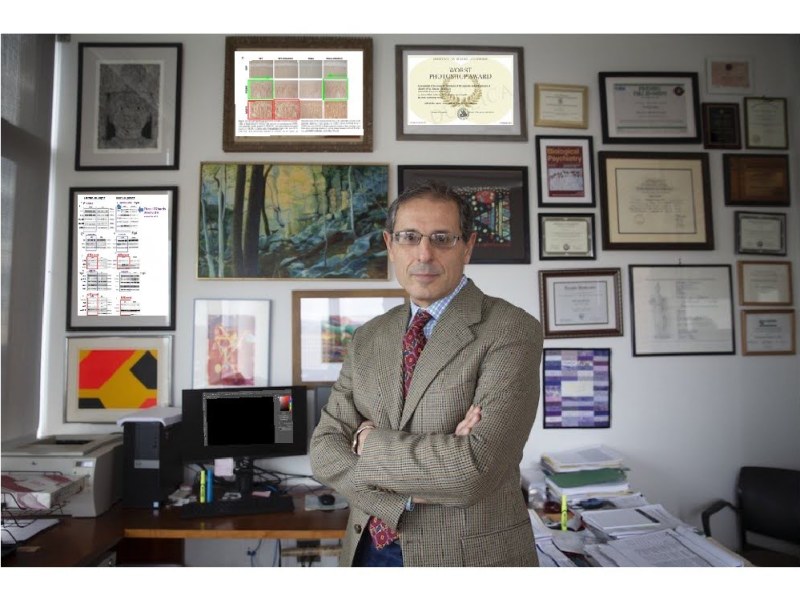
Ramasamy Paulmurugan is research professor of radiology at Stanford. This means he belongs to the best scientists in the world, and all his science is great. Because Stanford.
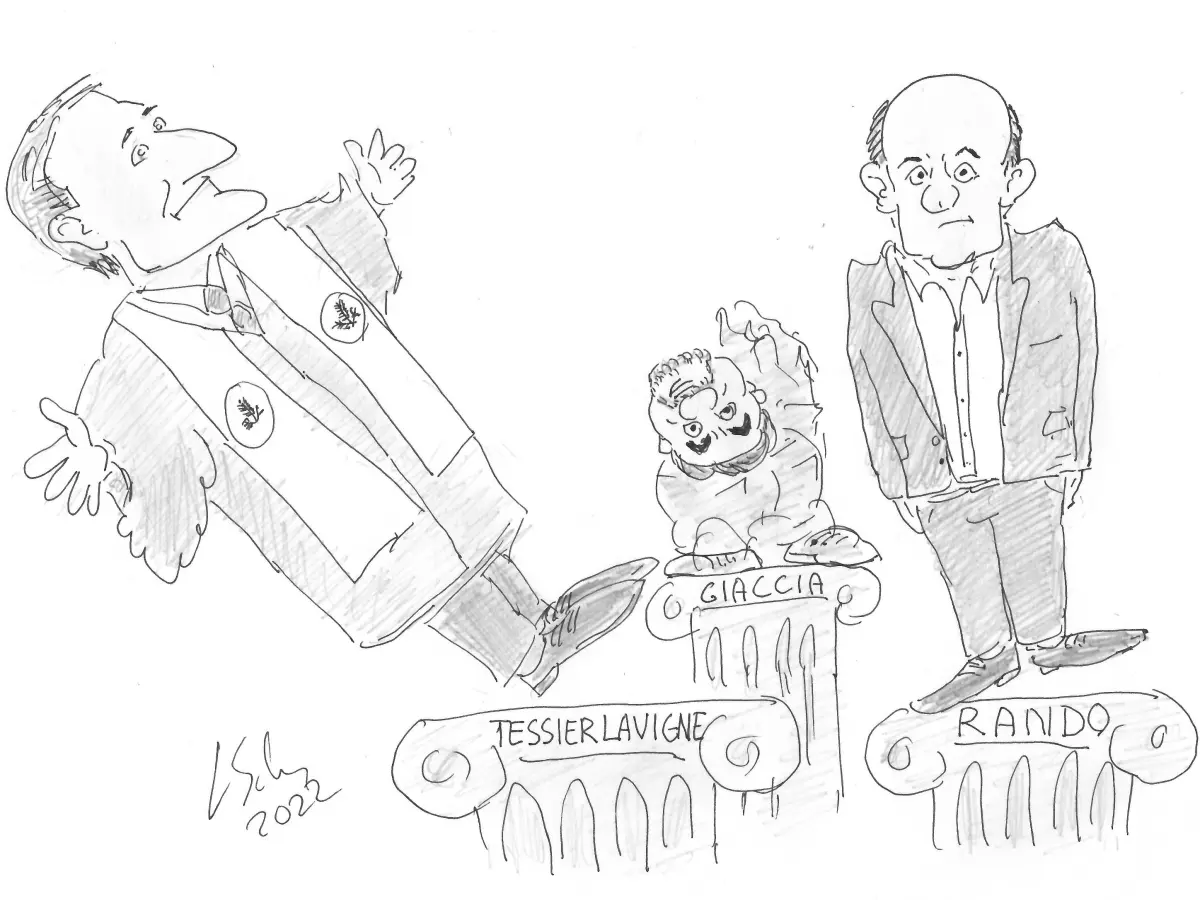
Everyone is talking about Stanford’s President Marc Tessier-Lavigne now. OK, let’s talk about him, and how Stanford deals with research fraud. And then let’s talk about Thomas Rando.
Paulmurugan decided to cure cancer with miRNAs, as his CV declares:
“We are establishing new microRNA-based reprogramming approaches in sensitizing drug-resistant cancers (breast cancer, hepatocellular carcinoma, and glioma) to commonly used chemotherapies.”
Basically, he is standing on the shoulders of cancer miRNA giants, Carlo Croce, George Calin, and the Chinese papermills.
Another buzzword Paulmurugan uses is “nanotechnology”, because nanoparticles are obviously what all the great minds deploy against cancer. And yet another buzzword he uses is “exosomes”, for same reasons. So you can imagine what Paulmurugan’s papers look like, if one needs to adjust research data to bullshit hype.
The evidence was posted on PubPeer by the user Indigofera tanganyikensis, who told me they stumbled upon Paulmurugan’s fake data while reading a review in MDPI. This one:
“In this review, data from another original paper contains questionable data“. The other paper was Bose et al 2018, last author Paulmurugan.
So here you have cheaters stealing data from other cheaters, without noticing that the data was already fraudulent. The Bose et al 2018 paper had even more problems:
“Figure 3a: Many of the images in the dot blot (control serum/pcDNA seem to have been copy-pasted. When adjusting the contrast, some common characteristics are visible Figure 8c: Two panels of images of mice have been duplicated. However, the signals are different.“
This Tarik Massoud is a Professor of Neuroradiology and Molecular Imaging at Stanford, his institutional profile page celebrates him:
“He has published extensively and won numerous awards at scientific meetings. His papers in experimental interventional neuroradiology and molecular imaging are widely cited. […] Until 2022 he was founding Editor-in-Chief of the journal Reports in Medical Imaging, and is an editorial board member for numerous biomedical journals. He is the senior author or editor of eight books[…] In 2016 he was awarded a Special Faculty Permit (’eminent physician license’) by the Medical Board of the state of California. In 2022, he was honored with a Lifetime Achievement Award by the Royal College of Surgeons in Ireland School of Medicine.”
And this is another paper the great Massoud published with Paulmurugan:
“The red arrows points to the figure in the article where the Western blots correspond, according to the figure legend in the supplemenary. The colored rectangles show the real the real context.”
Paulmurugan initially did not reply to my email. So I wrote to Massoud, who reacted:
“Thank you for alerting me to this. I will liaise with Dr. Paulmurugan and quickly respond to the PubPeer website comments. If journal corrections are required, we will consider that too.“
Simultaneously, Paulmurugan answered:
“Thank you for bringing this to my attention. I will work on this get back to the PubPeer website and the journals if necessary to address all these issues as soon I can.“
Note that nobody seems shocked about forged data. They are merely worried if the journals will ask for CORRECTIONS.
We remain on the topic of Ivy League universities and treating cancer with miRNA. Please proceed to Harvard and meet Judy Lieberman, professor of pediatrics at the Harvard Medical School and program chair at Boston Children’s Hospital. Dr Lieberman’s institutional profile informs us:
“Her interest in HIV led to recent work to harness RNA interference (RNAi) as a therapeutic tool. Her laboratory was able to harness this ancient antiviral defense mechanism, originally described in plants and worms, but more recently in mammalian cells, to suppress HIV infection. She was the first to demonstrate in an animal model that RNAi could be used to protect animals from disease. Her laboratory is currently actively working on translating RNAi for therapeutic use for HIV and cancer.
More recently they have been studying how miRNAs regulate cell differentiation and cancer. A recent paper from the Lieberman laboratory identified the miRNA let-7 as a master regulator of stemness of breast cancer stem cells. They are currently working to define the pathways by which let-7 and other miRNAs regulate self-renewal, differentiation, cell division, metastasis and chemosensitivity. They are also working to translate these findings into approaches for cancer therapy.”
Her main interest is the protein Granzyme A, which Lieberman headlined in a 2003 review, together with her former mentee Zuzen Fan (now Deputy Director of the Chinese Academy of Sciences Key Laboratory for Infection and Immunity), as “Nuclear war: the granzyme A-bomb“. Who knows what goes on in her head.
Anyway, this is how Lieberman’s and Fan’s nuclear war works, according to Clare Francis:
Correction October 2003: “In the article by Fan et al. (Cell 112, pp. 659–672), the SET and pp32 controls for Figures 3H and 3I were previously published as controls in another study (Fan, Z., Beresford, P. J., Zhang, D. and Lieberman, J. (2002). Mol. Cell. Biol. 22, 2810–2820).“
Here is the above referenced Nature Immunology paper from 2003:
No wonder that Fan was later evaluated as “Excellent” in his “Hundred Talents Project” fellowship and made a stellar career in China as “Outstanding Professor”. Such talents are definitely much needed there. Still, Fan can’t be blamed for everything.
Of course also this mentee of Lieberman made a great career in China. Erwei Sung is now President of Sun Yat-sen University of Medical Sciences, and a Communist Party’s congress delegate.
“In the version of this article initially published, due to a composition error, the images shown in Fig. 3h, Extended Data Figs. 5d, 6b and 6e were incorrect. The errors were in presentation only, and do not affect any results or discussion in the article. Original and revised images are shown below in Figs. 1–3. The images have been replaced in the HTML and PDF versions of the article.”
However, in April 2023 Cheshire noticed this:
“Could the authors comment on the apparent duplicate measurements of bacteria load in the skin lesions shown in the data for Extended Data Figure 2h? Out of 15 measurements, there are 3 sets of duplicates (orange, yellow, green), as well as two measurements with unusual patterns of repeated digits (44444444.40 and 26666666.70).“
The first author Wanyang Deng explained on PubPeer that “yes, this is expected.” Indeed, without the data fudging magic the strep infection cure won’t work!
Unsustainable chemistry
A scientific conference RRB 2023 has just taken place in my beloved Riga, at the National Library of Latvia:
“The 19th edition of the International Conference on Renewable Resources & Biorefineries will take place in Riga, Latvia from Wednesday 31 May until Friday 2 June 2023. Based on the previous RRB conferences, this conference is expected to welcome about 300 international participants from over 30 countries.”
But Alexander Magazinov took issue with certain organisers and participants.
— April Khademi, PhD, PEng (@aprilkhademi) May 22, 2023
Luque sports an affiliation King Saud University, Saudi Arabia, because recently he was basically sacked at his University of Cordoba in Spain, for papermilling and taking Saudi bribes. Another piquant detail: Luque’s other still valid academic affiliation (next to King Saud University), is at the russian University of Peoples’ Friendship (RUDN) in moscow, where he is said to run a lab. The rascist affiliation is active today, but Luque would rather not flaunt it in Latvia, for obvious reasons.
Magazinov informed the organisers of Luque’s history, and pointed out this papermilled trash in particular:
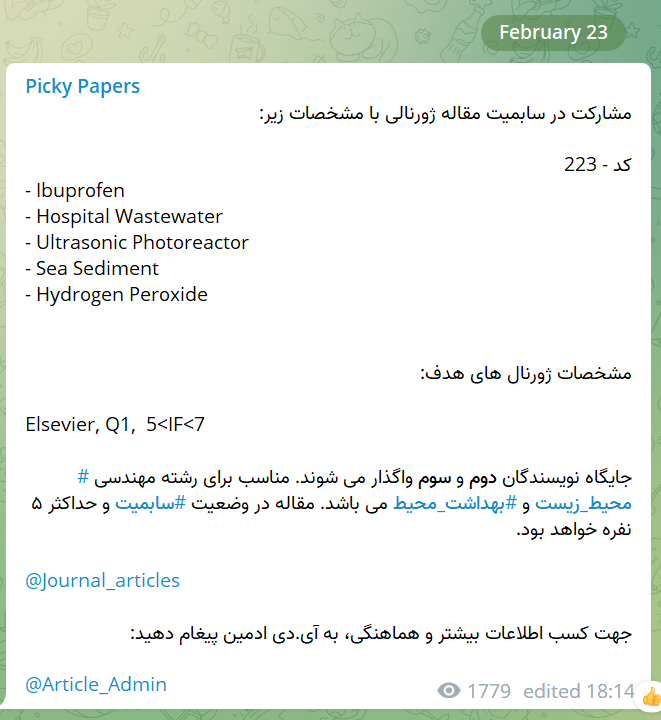
Nick Wise: “On the 23rd of February 2022 an advert was placed on Telegram offering authorship of a paper with keywords matching this one. This is the only paper with these keywords according to Web of Science.“
Also contains tortured phrases like “The structure of the catalyst, as well as the particle size, was determined using vegetative electron microscopy (JSM-6700F and SEM, Hitachi, Japan).”
A certain Christophe Len, Professor at Chimie ParisTech (École Nationale Supérieure de Chimie de Paris) is also participating at RRB 2023, although not as invited speaker or organiser. Len goes to all conferences, even and especially to predatory ones.
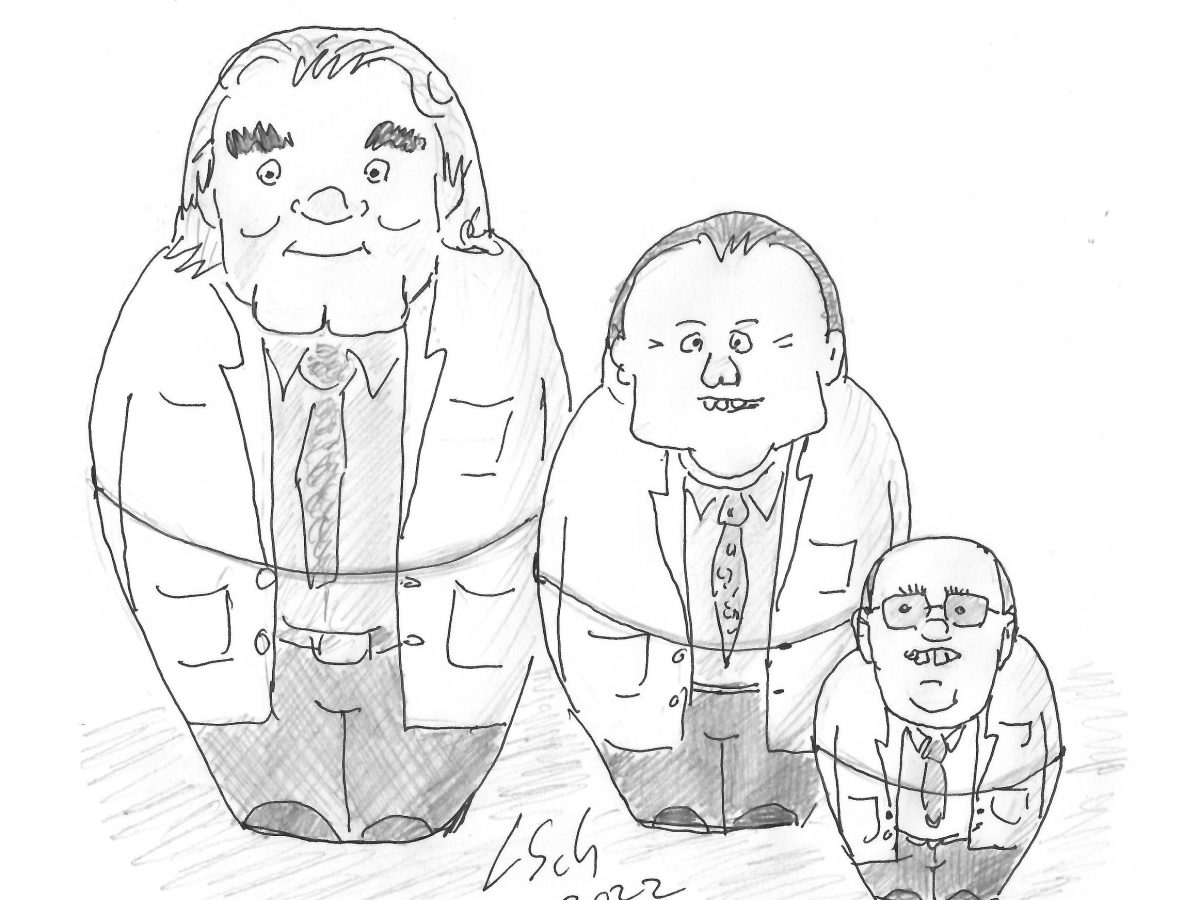
And of course he publishes with Luque, the two men even edited a Frontiers special issue together. Luque contributed his own papermilled trash, and so did his papermilling friend, Rajender S Varma, read about that one here:
“I could not comprehend the situation where a university picks up on individuals with an extraordinary and sterling performance and basically destroy one of the top European institutions. ” – Raj Varma
“Len was spotted as a co-author of a preprint, co-authorship of which had been advertised for sale by a certain Iranian Telegram channel. The advert was online in February, while the preprint appeared in April.”
“This paper matches one whose authorship has been for sale on Telegram:”
If you wonder why papermills sell authorships on preprints: they don’t. But most publishers demand that COVID-19-related manuscripts are published as preprints during submission. Len’s papermill study was at that time of authorship marketing in peer review at an Elsevier journal, hence the SSRN preprint. Magazinov even informed the RRB 2023 organisers:
“On the same advisory committee, there is Klaus Kümmerer. According to the information on Len’s preprint, it has been submitted and underwent revision at “Sustainable Chemistry and Pharmacy” – a journal headed by Kümmerer.”
Indeed, Klaus Kümmerer, professor at the Leuphana University of Lüneburg in Germany and Editor-in-Chief of the Elsevier journal Sustainable Chemistry and Pharmacy, is Luque’s colleague at the RRB 2023 board. And: Kümmerer and Luque probably travelled to Riga together! That’s because on 22-24 May 2023 Kümmerer organised as chair an Elsevier-sponsored “Green and Sustainable Chemistry” conference in Dresden, Germany, and a member of the scientific committee was… well, Rafa Luque of course. Just as in 2019, where Kümmerer organised a conference in China. But not only! Also Raj Varma! Kümmerer is namely friends not just with Luque, but also with Varma, e.g. in 2019 they edited a special issue together, on “Selected papers from the 3rd Green and Sustainable Chemistry Conference 2018” and at another Elsevier journal which Kümmerer is Editor-in-Chief of. Luque published in that issue of course, and Len published there with Varma!
If only German journalists of Deutschlandfunk knew what kind of scientist Kümmerer was before celebrating him in 2019 as the revolutionary saviour of the environment who uses great science to clean wastewater from pollutants. But then again, the German chemistry society GDCh just gave Kümmerer an award for being „Benign by Design“.
Back to Len and his paper at Kümmerer’s journal. Len seems to be also affiliated at RUDN in moscow:
“Senior and corresponding author is listed as affiliated with Moscow-based RUDN, but there is no trace of this affiliation in his website: https://www.lenresearch.com/christophe-len or the RUDN website:”
Nobody at RRB 2023 replied to Magazinov. Or to me.
By the way, judging by the PDF title, it is under review in your journal, @KKuemmererlab. What are your thoughts? Does @ElsevierConnect have anything to say?
Also, chances are high, that the handling editor is a certain Rajender S Varma. pic.twitter.com/M7ko5WyPIP
Nick Wise: “On the 31st of October 2020 an advert was placed on Telegram offering authorship of a paper with a title matching this one. This is the only paper with ‘Rational design of CoNi@C-BTC/rGO nanocomposite coated with PEDOT polymer towards’ in the title according to Dimensions. This paper was submitted on the 22nd of September 2020 and revised on the 19th of November.“
“This article has been retracted at the request of the Editors-in-Chief.
After an investigation, the Editors-in-Chief have concluded that the list of co-authors has been manipulated inappropriately between the time of the original submission and the submission of the manuscript in revised form. Only one author was present in the original submission, whereas three other authors were added to the revised manuscript without satisfactory evidence of their contribution. The corresponding author has not been able to provide an adequate explanation for the changes to the authorship. Manipulation of the authorship represents a clear violation of our publishing policies, and publishing ethics standards. Apologies are offered to the readers of the journal that these manipulations were not detected during the submission, reviewing, and re-submission process.”
Nick Wise and Alexander Magazinov on the authorships-for-sale market on social media. Merely $700 for the 7th position on some paper way outside your expertise!
The corresponding author is Isabelle Huynen, Research Director at the Fund for Scientific Research (FNRS) and Professor at Louvain School of Engineering (EPL) of UCLouvain in Belgium. Her institutional profile also lists her publications, where one notices a strange thing. Until 2020, Prof Huynen was publishing on antennas and microwave radiation, the original main focus of her research. But starting 2021, she discovered herself an expert on chemistry, materials science and nanotechnology. All thanks to Iranian papermills. Here is Huynen’s new expertise, the first papers from the top of the list:
Zhanguo S ; Yiping Su ; Huynen, Isabelle ; Sathish Kannan ; Sadok Mehrez ; Wael Hosny Fouad Aly ; V. Mohanavel ; Ibrahim Mahariq. Decoration of Worm-like Cu2S Particles on CuCo2S4 Micro-Spheres: An Effective Strategy to Improve the Electromagnetic Dissipation Feature. In: Ceramics International, (2023). doi:10.1016/j.ceramint.2022.11.260.
Lakhdar SidiSalah ; Danlée, Yann ; Freddys Beltrán González ; Huynen, Isabelle ; María Ulagares de la Orden. Investigation of mechanical recycling effect on structural, thermal, mechanical and electromagnetic properties of polylactic acid (PLA) – nanoclay nanocomposites: Towards a valorization of recycled PLA nanocomposites. In: Composites Part C: Open Access, (2023). doi:10.1016/j.jcomc.2022.100339.
Yiran Yang ; K. Logesh ; Sadok Mehrez ; Huynen, Isabelle ; Ibrahim Elbadawy ; V. Mohanavel ; Sagr Alamri. Rational construction of wideband Electromagnetic wave absorber using hybrid FeWO4-based nanocomposite structures and tested by free-space method. In: Ceramics International, (2023). doi:10.1016/j.ceramint.2022.09.179.
Dengwu Wang ; Cuihong Zhang ; Achmad Jusuf Zulfikar ; Sadok Mehrez ; Huynen, Isabelle ; Ibrahim Mahariq ; Ibrahim Elbadawy. “Tuning Layer Thickness and Layer Arrangement in a GdMnO3 and GdMnO3-MoSe2 Bi-Layer Absorber to Cover the S, C, and X Band Frequency Range. In: Surfaces and Interfaces, (2023). doi:10.1016/j.surfin.2022.102507.
Lakhdar SidiSalah ; Nassira Ouslimani ; Danlée, Yann ; Huynen, Isabelle. Absorption performances of PLA-montmorillonite nanocomposites thin films in Salisbury and Rozanov configurations: influence of aging and mechanical recycling. In: Micromachines, (2022). doi:10.3390/mi13122152.
The “authors” hail from Asia and Africa, all customers from Iranian papermills. Except for Huynen. She is white and European, and this is why her Belgian university is happy to celebrate her growing “h-index: 36 for 383 publications, 5513 citations).” She didn’t reply to my email.
Another Huynen paper is also flagged by Wise and waiting for its retraction:
Wise: “On the 13th of October 2020 an advert was placed on Telegram offering authorship of a paper with a title matching this one. This is the only paper with ‘Electromagnetic Wave Absorption Characteristics of Single and Double Layer’ in the title according to Dimensions. This paper was submitted on the 15th of September 2020 and revised on the 8th of November.“
High standard for journal publications
A retraction for Xiongbin Lu, professor at the Indiana University School of Medicine in USA. I wrote about his and his wife’s science before, my notification caused an institutional investigation two years ago.
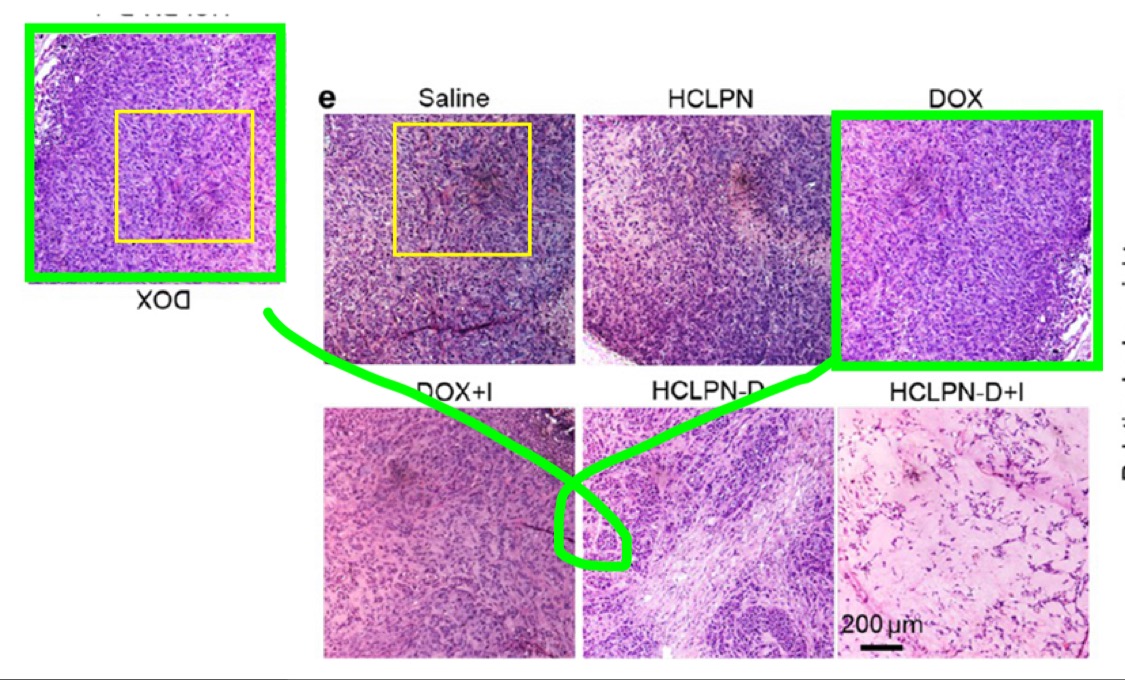
“We would like to make corrections to Figures 6e and 7g and the related Figures S30 (to Figure 6e) and S35 (to Figure 7g) (part of Supporting Information). In the figures, incorrect images were used by accident for the control conditions of either DOX (Figures 6e and S30) for tumor or DOX+I for spleen and lung (Figures 7g and S35), which occurred during the preparation of the figures. The original version (before correction) and corrected version of the images in these figures are provided. The corrections do not affect any conclusions or text (including the figure captions) of the original paper.”
Thank Rod the conclusions were not affected! But then Cheshire found more accidents during the preparations of figures which the well-paid experts employed by ACS didn’t bother to search for. Or maybe not allowed. ACS is such a business, you know.
Figure S15 excerpt
On 11 April 2023, the study was retracted with the notice:
“The authors retract the article due to inappropriate image duplication and image rotation in both the main text and Supporting Information, which occurred during the initial preparation of the figures. On May 17, 2021, a Correction was issued due to concerns about Figures 6e, 7g, S30, and S35 (DOI: 10.1021/acscentsci.1c00530). However, more recently further concerns have been identified and the authors have agreed that due to such errors, the paper does not reach the high standard for journal publications. As such, the article is being retracted.”
Retraction for Florian Stadler, a German nanotechnologist and distinguished professor for materials science at Shenzhen University in China. He is very concerned with the lax research integrity attitude in his country of choice, and even once wrote to me to discuss his experiences with peer review manipulation. But then, around 30 of his own papers got flagged on PubPeer. Read here:
“This article has been retracted at the request of the Editor-in-Chief.
Following a complaint from a reader, the editors have expressed concerns regarding the following images: Figure 2(a) (XRD), Figure 4(a) (XPS), Figure S2 (XRD), and Figure S3 (XPS), which appear to have been manipulated e.g. some of the peaks in the XPS have been truncated; repetitive background noise patterns in XRD data.
The manipulation of images and data in this way is a serious offense to the integrity of the scientific community and casts doubts on all the data, and accordingly also the conclusions based on that data, in this publication. Apologies are offered to readers of the journal that this was not detected during the submission process.”
Back in June 2022, Stadler explained to me:
“These allegations are pretty much the same that I got from RSC where somebody supplied a 115 page document accusing me of data manipulation, pretty much all focused on “too similar noise”. I don’t know who did that but somebody tries to tarnish my reputation.“
An independent expert has viewed
The following paper should have been retracted, but Royal Society of Chemistry (RSC) decided that paying customer is king after all. So all we get is a Correction.
“The authors regret an error in Fig. 4 where a section of the XRD for 4(a) and (b) is identical.
The authors have repeated the experiment and provided new data for Fig. 4. An independent expert has viewed the new data and has concluded that it is consistent with the discussions and conclusions presented. The correct Fig. 4 is shown below:
“Fig. 4 (a) The XRD pattern of sample 3 after adsorption of DBT. (b) The XRD pattern of sample 3 before adsorption of DBT.”
The Royal Society of Chemistry apologises for these errors and any consequent inconvenience to authors and readers.”
RSC and their Independent Expert were absolutely not troubled by the fact that the figure was intentionally faked. They believe what they published now isn’t a forgery either. They also don’t care about Masoud Salavati-Niasari‘s PubPeer record, which can be best summed up as papermilling. Including (in Valian et al 2021) a reference to an editorial on moth pheromones, aka The Vickers Curse:
What do moth pheromones on one side have to do with cancer research, petrochemistry, materials science, e-commerce, psychology, forestry and gynaecology on the other? They are separated by just one citation!
Magazinov: “Figure 1, “XRD pattern of sample” I do not see any difference, even in the noise, for samples (g) and (l).“
“For samples (c) and (d) the patterns are more similar than expected (including noise) within certain bounds (green boxes), while different in other areas.”
Maybe Elsevier can borrow RSC’s Independent Expert?
Systematic manipulation of the publication process
On 24 May 2023, Hindawi retracted 111 papers, all in the Journal of Healthcare Engineering. The retraction notices were identical:
“This article has been retracted by Hindawi following an investigation undertaken by the publisher [1]. This investigation has uncovered evidence of one or more of the following indicators of systematic manipulation of the publication process:
(1)Discrepancies in scope
(2)Discrepancies in the description of the research reported
(3)Discrepancies between the availability of data and the research described
(4)Inappropriate citations
(5)Incoherent, meaningless and/or irrelevant content included in the article
(6)Peer-review manipulation
The presence of these indicators undermines our confidence in the integrity of the article’s content and we cannot, therefore, vouch for its reliability. Please note that this notice is intended solely to alert readers that the content of this article is unreliable. We have not investigated whether authors were aware of or involved in the systematic manipulation of the publication process. Wiley and Hindawi regrets that the usual quality checks did not identify these issues before publication and have since put additional measures in place to safeguard research integrity.
We wish to credit our own Research Integrity and Research Publishing teams and anonymous and named external researchers and research integrity experts for contributing to this investigation.
The corresponding author, as the representative of all authors, has been given the opportunity to register their agreement or disagreement to this retraction. We have kept a record of any response received.”
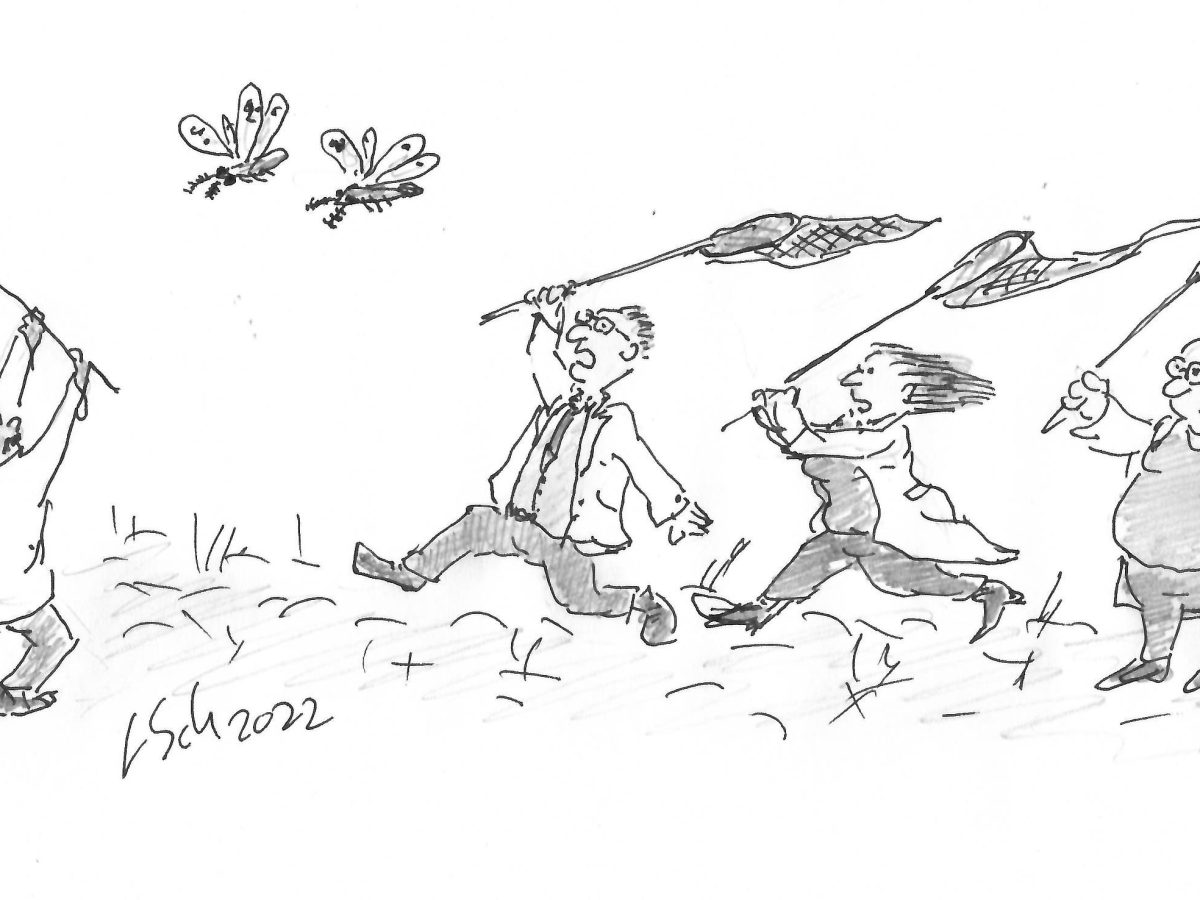
Parashorea tomentella continues their investigation of Hindawi’s uneasy collaboration with Chinese papermills. Can it be solved with the promised 511 retractions?
“I reviewed papers published in special issues of Hindawi journals that had corresponding authors from low- and middle-income countries. It seems, the APC waiver policy may be being abused by papermills” – Parashorea tomentella
Earlier this year, the Editorial Board of this Hindawi journal was led by Chief Editor Loredana Zollo (Universita Campus Bio-Medico, Italy), and Associate Editors Patrick Boissy (Université de Sherbrooke, Canada), Xiao-Jun Chen (Shanghai Jiao Tong University, China), Feng-Huei Lin (National Taiwan University, Taiwan) and Maria Lindén (Mälardalen University , Sweden). The current editorial board lacks Chief Editor completely, Zollo is gone, also Boissy isn’t there anymore. Draw your own conclusions.
An out-of-office auto-reply by Boissy stated that he is “on Continuing Education and Development leave“. No reaction from Zollo, or even from Linden.
“For the first time, researchers have shown that reduced oxygen intake, or “oxygen restriction,” is associated with longer lifespan in lab mice, highlighting its anti-aging potential. Robert Rogers of Massachusetts General Hospital in Boston, US, and colleagues present these findings in a study published May 23rd in the open-access journal PLOS Biology. […]
To explore the anti-aging potential of oxygen restriction in mammals, Rogers and colleagues conducted lab experiments with mice bred to age more quickly than other mice while showing classic signs of mammalian aging throughout their bodies.
The researchers compared the lifespans of mice living at normal atmospheric oxygen levels (about 21%) to the lifespans of mice that, at 4 weeks of age, had been moved to a living environment with a lower proportion of oxygen (11%—similar to that experienced at an altitude of 5000 meters).
They found that the mice in the oxygen-restricted environment lived about 50% longer than the mice in normal oxygen levels, with a median lifespan of 23.6 weeks compared to 15.7 weeks. The oxygen-restricted mice also had delayed onset of aging-associated neurological deficits. […]
Rogers adds, “We find that chronic continuous hypoxia (11% oxygen, equivalent to what would be experienced at Everest Base Camp) extends lifespan by 50% and delays the onset of neurologic debility in a mouse aging model.”
Living in low 11% oxygen (rather than air at 21%) extends a mouse’s lifespan by 50% and delays the onset of neurological debility in an accelerated aging model. Hormesis? https://t.co/rJaURQIqrk
Robert S. Rogers , Hong Wang , Timothy J. Durham , Jonathan A. Stefely , Norah A. Owiti , Andrew L. Markhard , Lev Sandler , Tsz-Leung To , Vamsi K. Mootha Hypoxia extends lifespan and neurological function in a mouse model of agingPLoS Biology (2023) doi: 10.1371/journal.pbio.3002117
Vamsi Mootha is HHMI investigator and Harvard professor, the paper mentions his conflict of interests:
“VKM is on the Scientific Advisory Board of 5am Ventures. VKM is listed as an inventor on patents filed by Massachusetts General Hospital on the therapeutic uses of hypoxia.”
Mootha pushes not only for low oxygen, but also for metformin as anti-aging drug (and he is certainly not alone in this quest!). This Harvard Magazine article from 2018 dedicated to Mootha’s genius supplies his argument for metformin:
““It’s a little bit like Mithridates, the Persian king who was afraid of getting poisoned, so he had his pharmacist mix all the poisons available and then took sublethal doses,” Mootha points out—and perhaps not all that different from a vaccination. Metformin induces “a state called hormesis, a protective response that’s net protective.” The effect is so promising that researchers recently began testing Metformin in human clinical trials to see whether hormesis can slow aging.”
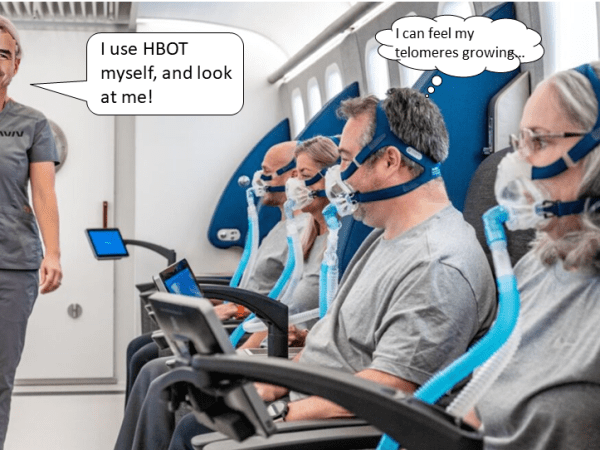
I don’t believe any of Mootha’s claims, but I love how this damages Shai Efrati‘s anti-aging scam with hyperbaric oxygen therapy (HBOT), where paying customers are exposed to very high levels of oxygen as anti-aging promise.
But then again, the real anti-aging therapy is strawberries.
You sure know this kind of clickbait trash of the type “I am [some expert] and that”s what I eat to [live forever, look beautiful, etc]”. Now here is something a somewhat respectable news site, Insider, titled:
“A longevity researcher shares why he takes a strawberry supplement every 2 weeks to slow aging”
[…]
Paul Robbins, co-director of the Institute of the Biology of Aging and Metabolism at the University of Minnesota, has been studying fisetin for years, and he’s been impressed at how it can help lab mice stay healthy. He has already shown in published research that fisetin, which is also found in other red and rust-colored fruits like apples and persimmons, can extend and improve the lives of lab mice.
But during the pandemic he started to wonder: What if fisetin could help him age better, and improve his immunity, by reducing inflammation, and lowering the levels of potent “zombie” cells building up in his body over time? He started taking a dose of fisetin once every two weeks, hoping it might help boost his immunity — and he hasn’t stopped since.
“I have a knee that’s kind of cranky — it always seems to feel better right after I take it. Is that real? Who knows,” Robbins told Insider.”
A longevity researcher shares why he takes a strawberry supplement every 2 weeks to slow aging https://t.co/z7i9iFUbWe
Fisetin is found in strawberries and other fruits and veg, and scientists decided it is a senolytic! For those uninitiated: senolytics is a buzzword great for achieving publication in Nature and Science and raising many millions in investor capital, but any allegedly “senolytic” substance reliably fails in all clinical trials. Basically, senolytics are pseudoscientific bullshit.
Insider continues quoting Paul Robbins:
“”If you’re a healthy human when you’re 20, 30, or 40, you really don’t have a lot of senescent cells, it appears,” Robbins said. In fact, senescent cells are critical for embryonic development, telling our fingers when to stop growing, and they can fight off cancerous tumors, too.
“It’s when you get older that you find it really associated with conditions like frailty or disease,” Robbins said.
In the lab, he is working to develop fisetin-based drugs that may work to clear these zombie cells from the body.
“These trials are ongoing, and I think we will know within the next year or two if there’s any real benefit, or if we need better senolytics, or if we need a senolytic plus another compound,” he said.”
The above linked paper is an MDPI review Wyld et al 2020 by the Mayo Clinic professor James Kirkland, who has major financial interests in senolytics industry. Robbins is his close collaborator and also holds senolytics patents and business stakes. In the fisetin anti-aging study Yousefzadeh et al 2018, Robbins’ and his wife (and fellow University of Minnesota professor) Laura Niedernhofer declared to be, among other things, “co-founders of NRTK Biosciences, a startup focused on the development of novel senolytics“, fisetin in particular. Robbins is also “co-founder and member of the Scientific Advisory Board for Genascence Corporation, a gene therapy company focused on osteoarthritis.” But the expert science and health journos of Insider didn’t deem this information worth mentioning. Mustn’t dent the perfect picture of a professorial nerd with strawberries!
Paul Robbins and Laura Niedernhofer: “We spend 24 hours a day together. We’re usually at work seven days a week. And when we’re at home, we talk about our research.” Source: Steadman Clinic
Robbins, Niedernhofer and Kirkland have been peddling fisetin as anti-aging drug for years. During the pandemic, they started to push it as COVID-19 cure in Verdoom et al 2021 and Camell et al 2021, the latter in Science, which has thus spoken.
Alternatively, Robbins, Niedernhofer and Kirkland also promoted another alleged senoyltic, navitoclax (a cancer chemotherapeutic), as anti-aging agent, ever since Zhu et al 2015, where both men declared “potential financial interest in this research.”
In fact, I wrote about this fisetin and navitoclax research by Kirkland, Robbins, Niederhoger, and their German partners Clemens Schmitt and Soyoung Lee here:
Naturally, senolytics failed also as COVID-19 cure. But brought many millions of dollars and euros to those involved, so you see: SCIENCE WORKS!
Chocolate against Alzheimer’s
A press release by Columbia University Irving Medical Center:
“A large-scale study led by researchers at Columbia and Brigham and Women’s Hospital/Harvard is the first to establish that a diet low in flavanols—nutrients found in certain fruits and vegetables—drives age-related memory loss.
The study found that flavanol intake among older adults tracks with scores on tests designed to detect memory loss due to normal aging and that replenishing these bioactive dietary components in mildly flavanol-deficient adults over age 60 improves performance on these tests. […]
“The identification of nutrients critical for the proper development of an infant’s nervous system was a crowning achievement of 20th-century nutrition science,” says the study’s senior author, Scott A. Small, MD, the Boris and Rose Katz Professor of Neurology at Columbia University Vagelos College of Physicians and Surgeons.”
How important are flavanols? A very interesting question, and our latest study provides more information:
“The current study builds on over 15 years of research in Small’s lab linking age-related memory loss to changes in the dentate gyrus, a specific area within the brain’s hippocampus—a region that is vital for learning new memories—and showing that flavanols improved function in this brain region.”The current study builds on over 15 years of research in Small’s lab linking age-related memory loss to changes in the dentate gyrus, a specific area within the brain’s hippocampus—a region that is vital for learning new memories—and showing that flavanols improved function in this brain region.
Additional research, in mice, found that flavanols—particularly a bioactive substance in flavanols called epicatechin—improved memory by enhancing the growth of neurons and blood vessels in the hippocampus. […]
More than 3,500 healthy older adults were randomly assigned to receive a daily flavanol supplement (in pill form) or placebo pill for three years. The active supplement contained 500 mg of flavanols, including 80 mg of epicatechins, an amount that adults are advised to get from food.”
Small found out that low dietary intake of flavanols causes poor memory performance which can be cured with flavanol supplements. CNNreported that these were extracted from cocoa. This is the paper:
Adam M. Brickman, Lok-Kin Yeung, Daniel M. Alschuler, Javier I. Ottaviani, Gunter G.C. Kuhnle, Richard P. Sloan, Heike Luttman-Gibson, Trisha Copeland , Hagen Schroeter, Howard D. Sesso , JoAnn E. Manson, Melanie Wall , and Scott A. Small “Dietary flavanols restore hippocampal-dependent memory in older adults with lower diet quality and habitual flavanol consumption” Proceedings of the National Academy of Sciences. (2023) DOI: 10.1073/pnas.2216932120
The trial was called COSMOS and it was sponsored “by Mars, Incorporated, a company engaged in flavanol research and flavanol-related commercial activities. ” Yes, the chocolate giant which keeps bribing scientists into advertising for “flavanol-rich” dark chocolate. The co-authors Ottaviani and Schroeter are Mars employees. Small and Brickman “received an unrestricted research grant from Mars“.
Chocolate is good for your health, scientists keep saying. This may sound counter-intuitive; given that chocolate is an extremely calorie-rich confectionery, which mostly contains industrially refined cocoa fat and huge quantities of added sugar, a substance finally about to be recognised as the prime cause for the obesity epidemics. A recent clinical study from the…
In the CNN article, co-author Gunter Kuhnle, professor at University of Reading in UK, recommends green tea as source of flavanols. Maybe he has a different sponsor.
I interacted with Small before. In a recent paper from his lab, Qureshi et al 2022, he referenced two studies by none other but the mega-fraudster Domenico Pratico, namely Li et al 2020 and Vagnozzi et al 2021, the former was corrected, and the latter retracted for fraud. In this regard, Small told me:
“I find this work fascinating. I gather you are interested in something more. But Dr. Practico is not a colleague and I was not a reviewer of these papers.”
Do you think Small’s Alzheimer’s research is more trustworthy than Pratico’s?
News in Tweets
La Provence (Google-translated) reports some Didier Raoult news: “a search is currently being conducted at the Institut Hospitalier Universitaire Méditerranée Infection (IHU) in Marseille by the gendarmes of the Marseille Research Section. The gendarmes showed up at 8 a.m. this Wednesday morning at the IHU to seize documents relating to clinical trials carried out between 2021 and 2022 , officially as part of the investigation opened last September, following the conclusions of a damning report by the General Inspectorate of Social Affairs (Igas) which denounced in particular scientific practices liable to criminal prosecution. The prescription of hydroxychloroquine between March 2020 and the end of 2021 is probably affected. On Sunday, several medical organizations denounced in a column published in Le Monde trial wild which would have been carried out by Doctor Raoult and his teams within the IHU during the pandemic. 30,000 patients would be affected.”
A search is underway this Wednesday at the @IHU_Marseille, a few days after revelations concerning a possible unauthorized clinical trial on 30,000 patients treated with hydroxychloroquine, led by Professor @raoult_didier https://t.co/DjtEwG0Hiq
— Elisabeth Bik is at #SSP2023 in Portland, OR (@MicrobiomDigest) May 31, 2023
More than 10 scholarship societies and the national ethics committees association warn of a large illegal clinical trial, the @ansm (French Health Authority) seems to confirm this, the answer of @raoult_didier is :
Here is this wild hydroxychloroquine trial with over 30,000 participants which Raoult just proudly published in April 2023, Million et al 2023. Bik commented on PubPeer: “One would hope that such as large study would have two clearly-defined control and treatment groups. Unfortunately, the control group is a hodgepodge of differently-treated patients (‘containing HCQ, ivermectin and azithromycin alone, combined, or none of these three drugs’). The large HCQ-AZ n=23,172 group, therefore, is compared to 7 much smaller groups, varying from 17 (!) to 3,144 patients (total, n=7 030). […] Of particular concern is that the total numbers of in- and out-patients is more than the number of patients included in each group. […] How can the total of these patients be 30,955, if only 30,423 patients agreed to be included and analyzed?“
— Elisabeth Bik is at #SSP2023 in Portland, OR (@MicrobiomDigest) May 30, 2023
In June 2020, Professor of Economics at the University of Chicago, Harald Uhlig, a white male German, went to Twitter to call the Black Lives Matter movement totalitarian, “flat-earthers and creationists“, adding “Time for sensible adults to enter back into the room“. All because they called to defund the police which keeps killing Black boys and young men. Uhlig was put on leave as editor of Journal of Political Economy, yet just a few days later completely whitewashed by his university and reinstalled as editor. I learned about all this because another sensible adult, i.e., another white male economics professor, John Cochrane of Stanford University, who back in 2020 defended Uhlig in a blog post (“The twitter mob, led by Paul Krugman and Justin Wolfers, swiftly attacked“, gave in March 2023 an interview to the German magazine Wirtschaftswoche about “Cancel Culture”. There, he was celebrated as a hero fighting for “academic freedom”, specifically against facemasks, political correctness, liberalism, climate change and gender research. Seriously. The occasion for the interview was “The Academic Freedom Conference” in November 2022 in Stanford, full of racists and covidiots which Cochrane organised. There were protests, including about a conference ban on unvetted journalists (!), so Cochrane keeps going to national and international media to complain about Cancel Culture against rich white powerful males.
Too bad, but #blacklivesmatter per its core organization @Blklivesmatter just torpedoed itself, with its full-fledged support of #defundthepolice : "We call for a national defunding of police." Suuuure. They knew this is non-starter, and tried a sensible Orwell 1984 of saying,
and creationists. Oh well. Time for sensible adults to enter back into the room and have serious, earnest, respectful conversations about it all: e.g. policy reform proposals by @TheDemocrat and national healing. We need more police, we need to pay them more, we need to train
Elisabeth Bikanalyses a Frontiers paper Zeng et al 2021, retracted for plagiarism: “It appears the text from the original Lancet paper has been ‘synonymized’ so that it became slightly differently worded, leading to some ‘tortured phrases’ such as ‘avoidance’ instead of ‘prevention’; ‘valid widespread wellbeing inclusion’ instead of ‘true universal health coverage’; ‘unrestricted petrol’ instead of ‘unregulated fuel’; ‘directions of solutions’ instead of ‘towards solutions’; and ‘pollutant peril’ instead of ‘pollutant exposure’. Yet, the text structure and topics appear to be nearly identical.”
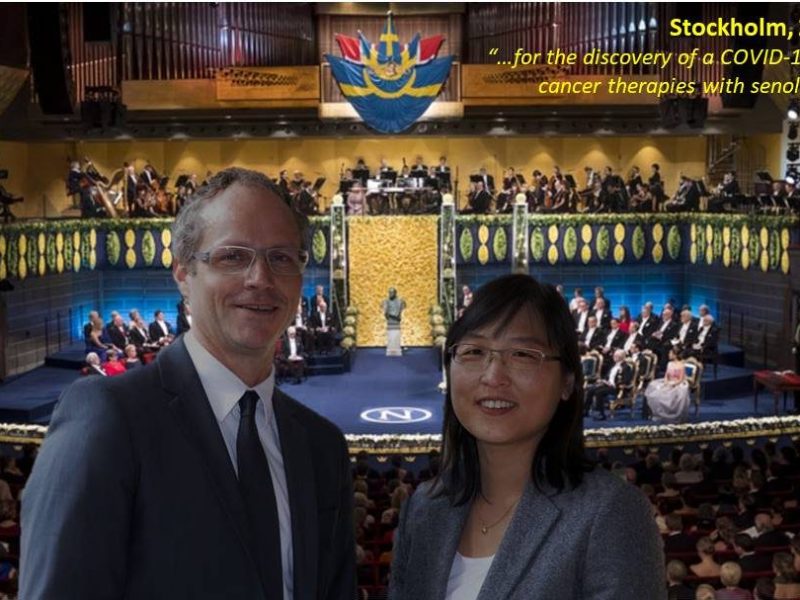
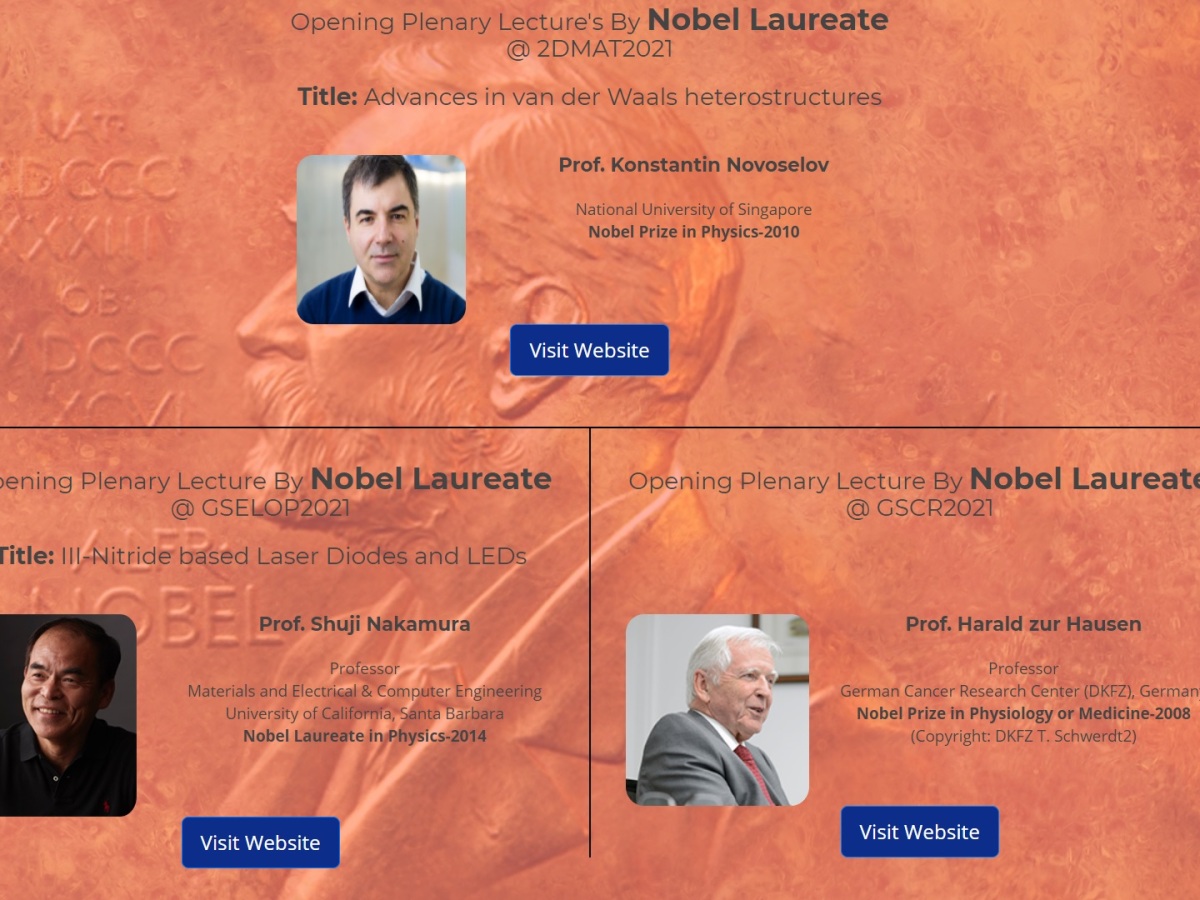
Nobel Prize Winner Harald Zur Hausen is dead. Who will go to predatory conferences now to warn the world of cancerous DNA vectors in milk?
The German Cancer Research Center (DKFZ) mourns the death of Harald zur Hausen. The Nobel Laureate in Medicine and long-time Chairman of the Management Board of the #DKFZ died last Sunday at the age of 87. pic.twitter.com/AcaaBICFeI
Smut Clyde tells you about some abysmally bad scamferences and the kind of scholars frequenting them, and I explain why Nobel Prize winner Harald zur Hausen is one of them.
The Americans, especially those at Harvard, cannot be that stupid. Judy Lieberman’s training prominent Chinese “scientists” such as Zusen Fan and Erwei Song in poorly executed Photoshopping is part of a cunning American plan to prevent a scientific China.
It all makes more sense now. The British are partners in the American plan to prevent a scientific China. Cunning old Imperial College milks wealthy Chinese parents by charging high prices for their offspring to attend Imperial and also trains secret weapons such as Eric Lam to infiltrate China and keep it dumb.
I still fail to understand how Laurens Buijs was able to get a fixed position as lecturer at UvA, apparently in 2014, while everyone was fully aware that he had failed to finish his PhD at UvA.
Both supervisors of Laurens Buijs, Paul de Beer and Jan Willem Duyvendak, are still working at UvA. Both are not anymore supervisors of Laurens Buijs for already several years.
This failed PhD project by Laurens Buijs also implied that UvA did not get alot of money from the Dutch government (in those days around at least 70,000 euro, the so-called ‘promotiebonus’ which any Dutch university from the Dutch government gets for a successfully defended PhD thesis).
There are other familiar faces on the Stadler’s retracted piece. Zeid A AlOthman, for example. A Highly Cited Researcher ™, as it usually happens. Mentioned in my post about HCRs; he is also a buddy of Luque.
“Nuclear war: the granzyme A-bomb
We remain on the topic of Ivy League universities and treating cancer with miRNA. Please proceed to Harvard and meet Judy Lieberman, professor of pediatrics at the Harvard Medical School and program chair at Boston Children’s Hospital.”
The previous item was about Stanford University. Stanford may be scientifically more influential than some of the Ivy League universities, but I don’t think it is an Ivy League University itself. “We remain on the topic of Ivy League universities” doesn’t fit.
I think you mean Erwei Song, not Erwei Sung as written in the text.
The more data fakers on China the better!
At one time I thought that it was a mistake to point out fakers in China as it might help a repressive regime improve its science, Pubpeer is choc- a-block with comments about scientific fakes from China, but have changed my opinion. It is better to point out faking wherever it is.
Harvard University maintained its position as the university with the largest endowment, valued in FY 2022 at $49.4 billion, a 4.7% decrease from the prior year.”
Harvard still has plenty of resources to clear up the Zusen Fan/Judy Lieberman problematic publications.
Harvard does retract papers, but can be slow, for example it took Harvard 10 years to retract 5 Edward E Whang/ Mark Duxbury papers in the field of cancer research.
Perhaps Harvard should pay more attention to its scientific quality and be more timely.
“Questions have loomed over Whang’s research for a decade, and more than 20 of his studies have been flagged on PubPeer for possible image problems. As one commenter wrote in 2014 about one of the now-retracted papers, “It is perhaps fortunate that figure assembly and liver surgery require such unrelated skill sets.””
AUTHOR CORRECTION Volume 77, no. 13, p. 7174–7181, 2003, https://doi.org/10.1128/jvi.77.13.7174-7181.2003. Figure 3: There was an inadvertent duplication of an image in the two flow cytometry images at the bottom of panel B that depict control irrelevant GFP siRNA transfected cultures on day 15 and day 20. Unfortunately, given the age of the article, we no longer have access to the source data. We regret any inconvenience caused to the scientific community and the readers. The error does not in any way impact the conclusions of our study.
Correction for Song et al., “Sustained Small Interfering RNA-Mediated Human Immunodeficiency Virus Type 1 Inhibition in Primary Macrophages”
Erwei Song, Sang-Kyung Lee, Derek M Dykxhoorn, Carl Novina, Dong Zhang, Keith Crawford, Jan Cerny, Phillip A Sharp, Judy Lieberman, N Manjunath, Premlata Shankar
PMID: 37830822 PMCID: PMC10617386 DOI: 10.1128/jvi.00936-23
Can we expect more of Judy Lieberman’s, Harvard, more seriously flawed data to be corrected, or retracted?
“Of course also this mentee of Lieberman made a great career in China. Erwei Sung is now President of Sun Yat-sen University of Medical Sciences, and a Communist Party’s congress delegate.”
In the paper you mention it is Erwei Song, so I tihnk you mean Erwei Song.
Expression of Concern for Erwei Song.
Expression of Concern: Reduced miR-128 in Breast Tumor–Initiating Cells Induces Chemotherapeutic Resistance via Bmi-1 and ABCC5 | Clinical Cancer Research | American Association for Cancer Research (aacrjournals.org)
EXPRESSION OF CONCERN| JULY 01 2024
Expression of Concern: Reduced miR-128 in Breast Tumor–Initiating Cells Induces Chemotherapeutic Resistance via Bmi-1 and ABCC5
The editors are publishing this note to alert readers to concerns about this article (1). In addition to the duplication noted previously (2), possible image irregularities exist within Figs. 2, 4, and 5. The Sun Yat-sen University Office of Research Integrity is aware of these concerns.
and denying them!
References
Reduced miR-128 in breast tumor-initiating cells induces chemotherapeutic resistance via Bmi-1 and ABCC5 – PubMed (nih.gov)
Editor’s Note: Reduced miR-128 in Breast Tumor-Initiating Cells Induces Chemotherapeutic Resistance via Bmi-1 and ABCC5 – PubMed (nih.gov)



















 For Better Science
“Nuclear war: the granzyme A-bomb”.
The Americans, especially those at Harvard, cannot be that stupid. Judy Lieberman’s training prominent Chinese “scientists” such as Zusen Fan and Erwei Song in poorly executed Photoshopping is part of a cunning American plan to prevent a scientific China.
LikeLike
It all makes more sense now. The British are partners in the American plan to prevent a scientific China. Cunning old Imperial College milks wealthy Chinese parents by charging high prices for their offspring to attend Imperial and also trains secret weapons such as Eric Lam to infiltrate China and keep it dumb.
https://www.aminer.org/profile/eric-w-lam/548eae17dabfaef989f095f0
Post return to China fake.
https://pubpeer.com/publications/66AF24687991FEDE942E0602E52687#5
LikeLike
See https://uitspraken.rechtspraak.nl/#!/details?id=ECLI:NL:RBAMS:2023:3388 for a recent decision by a Dutch court about Laurens Buijs, a disgraced lecturer without a PhD at UvA, the University of Amsterdam, The Netherlands. [unfortunatly in Dutch].
I still fail to understand how Laurens Buijs was able to get a fixed position as lecturer at UvA, apparently in 2014, while everyone was fully aware that he had failed to finish his PhD at UvA.
Laurens Buijs also fails to disclose on his CV that he was a PhD student in 2010-2013. People might wonder why this is the case. See https://laurensbuijs.org/over-mij/ The details about the PhD project of Laurens Buijs are listed at https://www.deburcht.nl/userfiles/file/Verslag%20Polak%20leerstoel%202011-13.pdf
Both supervisors of Laurens Buijs, Paul de Beer and Jan Willem Duyvendak, are still working at UvA. Both are not anymore supervisors of Laurens Buijs for already several years.
This failed PhD project by Laurens Buijs also implied that UvA did not get alot of money from the Dutch government (in those days around at least 70,000 euro, the so-called ‘promotiebonus’ which any Dutch university from the Dutch government gets for a successfully defended PhD thesis).
LikeLike
There are other familiar faces on the Stadler’s retracted piece. Zeid A AlOthman, for example. A Highly Cited Researcher ™, as it usually happens. Mentioned in my post about HCRs; he is also a buddy of Luque.
LikeLike
“Nuclear war: the granzyme A-bomb
We remain on the topic of Ivy League universities and treating cancer with miRNA. Please proceed to Harvard and meet Judy Lieberman, professor of pediatrics at the Harvard Medical School and program chair at Boston Children’s Hospital.”
The previous item was about Stanford University. Stanford may be scientifically more influential than some of the Ivy League universities, but I don’t think it is an Ivy League University itself. “We remain on the topic of Ivy League universities” doesn’t fit.
I think you mean Erwei Song, not Erwei Sung as written in the text.
The more data fakers on China the better!
At one time I thought that it was a mistake to point out fakers in China as it might help a repressive regime improve its science, Pubpeer is choc- a-block with comments about scientific fakes from China, but have changed my opinion. It is better to point out faking wherever it is.
LikeLike
“Judy Lieberman, professor of pediatrics at the Harvard Medical School and program chair at Boston Children’s Hospital.”
At the same place we have,
https://www.childrenshospital.org/directory/raif-s-geha
also with a spotless record.
https://pubpeer.com/search?q=Geha
LikeLike
https://www.forbes.com/sites/michaeltnietzel/2023/02/18/college-endowments-hit-the-skids-in-fiscal-year-2022/?sh=47c5f6ba1986
“Harvard Still Number One
Harvard University maintained its position as the university with the largest endowment, valued in FY 2022 at $49.4 billion, a 4.7% decrease from the prior year.”
Harvard still has plenty of resources to clear up the Zusen Fan/Judy Lieberman problematic publications.
Harvard does retract papers, but can be slow, for example it took Harvard 10 years to retract 5 Edward E Whang/ Mark Duxbury papers in the field of cancer research.
Perhaps Harvard should pay more attention to its scientific quality and be more timely.
LikeLike
“Questions have loomed over Whang’s research for a decade, and more than 20 of his studies have been flagged on PubPeer for possible image problems. As one commenter wrote in 2014 about one of the now-retracted papers, “It is perhaps fortunate that figure assembly and liver surgery require such unrelated skill sets.””
The 5 retractions took 10 years.
LikeLike
Pingback: Adattarsi come cozze e acclimatarsi come…? – ocasapiens
“Science Elites
Nuclear war: the granzyme A-bomb – how Judy Lieberman cures cancer in Harvard”
https://pubpeer.com/publications/499FEBCFCCF19E66660320609A4DDD
How Nobel! Philip A Sharp, https://www.nobelprize.org/prizes/medicine/1993/sharp/facts/
13 October 2023 correction. https://journals.asm.org/doi/10.1128/jvi.00936-23
AUTHOR CORRECTION Volume 77, no. 13, p. 7174–7181, 2003, https://doi.org/10.1128/jvi.77.13.7174-7181.2003. Figure 3: There was an inadvertent duplication of an image in the two flow cytometry images at the bottom of panel B that depict control irrelevant GFP siRNA transfected cultures on day 15 and day 20. Unfortunately, given the age of the article, we no longer have access to the source data. We regret any inconvenience caused to the scientific community and the readers. The error does not in any way impact the conclusions of our study.
Correction for Song et al., “Sustained Small Interfering RNA-Mediated Human Immunodeficiency Virus Type 1 Inhibition in Primary Macrophages”
Erwei Song, Sang-Kyung Lee, Derek M Dykxhoorn, Carl Novina, Dong Zhang, Keith Crawford, Jan Cerny, Phillip A Sharp, Judy Lieberman, N Manjunath, Premlata Shankar
PMID: 37830822 PMCID: PMC10617386 DOI: 10.1128/jvi.00936-23
Can we expect more of Judy Lieberman’s, Harvard, more seriously flawed data to be corrected, or retracted?
LikeLike
Christophe Len is now officially a RUDN employee. Together with Luque and some Luigi Vaccaro, whose primary affiliation appears to be in Perugia.
LikeLike
I hope a Ukrainian drone hits them.
LikeLike
“Of course also this mentee of Lieberman made a great career in China. Erwei Sung is now President of Sun Yat-sen University of Medical Sciences, and a Communist Party’s congress delegate.”
In the paper you mention it is Erwei Song, so I tihnk you mean Erwei Song.
Expression of Concern for Erwei Song.
Expression of Concern: Reduced miR-128 in Breast Tumor–Initiating Cells Induces Chemotherapeutic Resistance via Bmi-1 and ABCC5 | Clinical Cancer Research | American Association for Cancer Research (aacrjournals.org)
EXPRESSION OF CONCERN| JULY 01 2024
Expression of Concern: Reduced miR-128 in Breast Tumor–Initiating Cells Induces Chemotherapeutic Resistance via Bmi-1 and ABCC5
Clin Cancer Res (2024) 30 (13): 2847.
https://doi.org/10.1158/1078-0432.CCR-24-1528
The editors are publishing this note to alert readers to concerns about this article (1). In addition to the duplication noted previously (2), possible image irregularities exist within Figs. 2, 4, and 5. The Sun Yat-sen University Office of Research Integrity is aware of these concerns.
and denying them!
References
Reduced miR-128 in breast tumor-initiating cells induces chemotherapeutic resistance via Bmi-1 and ABCC5 – PubMed (nih.gov)
Editor’s Note: Reduced miR-128 in Breast Tumor-Initiating Cells Induces Chemotherapeutic Resistance via Bmi-1 and ABCC5 – PubMed (nih.gov)
LikeLike