

Schneider Shorts of 23 January 2026 – German professor accused of sexual assault defended by peers, Italian cheater defended by former mentor, Daddy’s darling wins in court, antivaxxer loses in court, retractions for elite US scholars and elite Malaysian papermillers, and finally, what to eat to live till 100!
Table of Discontent
Science Elites
- Marginalised and isolated in academic publishing activities – fellow historians demand justice for Andreas Eckert
- Take care – Giovanni Monteleone is completely honest, says his former mentor
- Damage to honour and reputation, and harm linked to deteriorated health – Katerina Aifantis successfully sued EU Commission
Retraction Watchdogging
- The court concluded retraction wouldn’t breach publication contract – antivax paper retracted despite lawsuit
- Potential processes that could cause mistakes – Mike Min and Mike Simons lose a paper
- Versatile images of tumours – yet another retraction for Sam Yoon
- Concerns regarding the editorial handling – Pau Loke Show earns 6 retractions in one go
Science Breakthroughs
- Meat is anti-aging superfood – only meat eaters can make it to 100!
Science Elites
Marginalised and isolated in academic publishing activities
A professor in Germany was accused of sexual assault, in a book chapter , published in 2023 and authored by his victim Aslı Vatansever. This, she writes, happened at a summer party in Berlin:
“At one point, I find him sitting in a chair next to me. Suddenly, I feel his fingers moving on my thigh where I sit. […] I move uncomfortably in my chair; I feel like I should cover this up on his behalf. There are people around. […] After all, everybody knows that he is a notorious sexual predator with past records of molesting female students […] I get up softly to avoid suspicion and go mingle with the other people. […] He is following me wherever I go. Sometimes with his eyes, sometimes physically. […]
“Aslı, could you come to my office for a sec? I want to show you
something”[…]when I was in that office for probably four to five minutes, biting his tongue when he forcefully stuck it into my mouth, pushing him away, struggling to rid myself off his bearish grasp, biting the arm with which he was squeezing my breast. […]
He literally uses brutal, physical force. A surreal scenery, an absurdly non-epic battle, a close-up from Rubens’ ‘Rape of the Sabine women’ reincarnated for the 21st-century German academia: a foreign female guest researcher in exile struggling to fight off a senior German professor in his office, biting and kicking around, trying to release herself from his violent grasp”
An August 2023 statement by the Student Committee at FU Berlin names the alleged harasser: Andreas Eckert, professor for history of Africa and colonialism at IAAW institute at Humboldt University (HU) Berlin. The statement is both in English and in German.
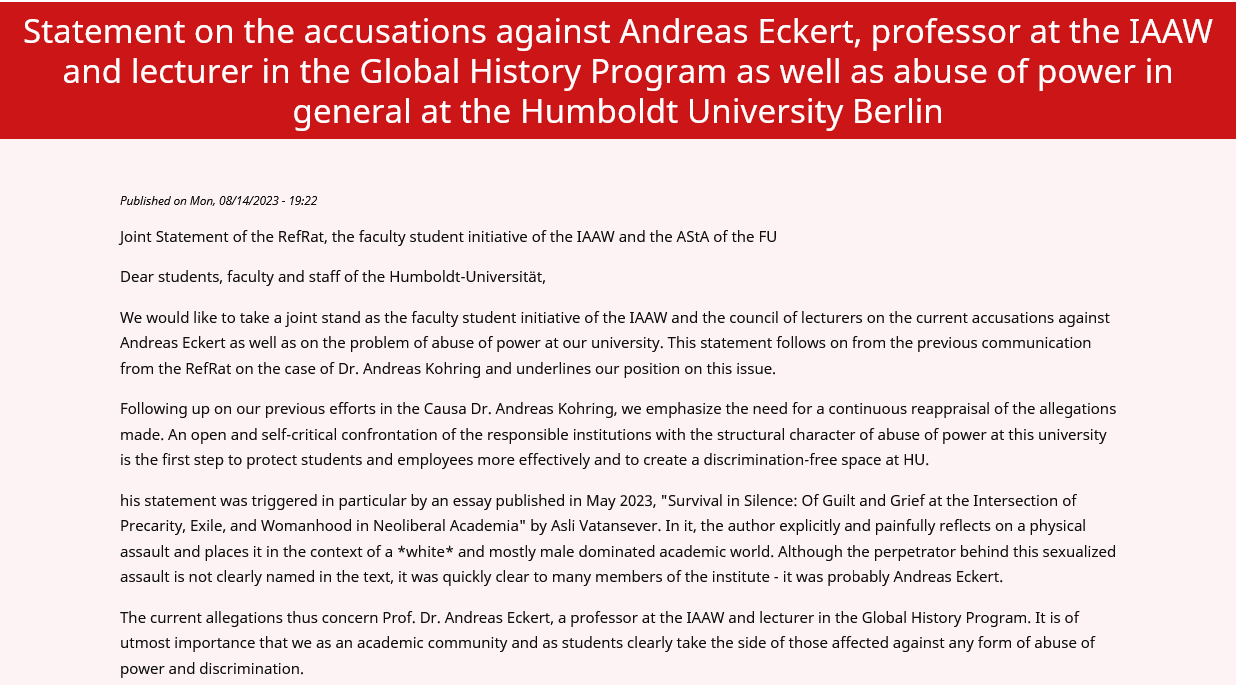
Quote:
“We would like to take a joint stand as the faculty student initiative of the IAAW and the council of lecturers on the current accusations against Andreas Eckert as well as on the problem of abuse of power at our university. […] [T]his statement was triggered in particular by an essay published in May 2023, “Survival in Silence: Of Guilt and Grief at the Intersection of Precarity, Exile, and Womanhood in Neoliberal Academia” by Asli Vatansever. […]
Although the perpetrator behind this sexualized assault is not clearly named in the text, it was quickly clear to many members of the institute – it was probably Andreas Eckert.
The current allegations thus concern Prof. Dr. Andreas Eckert, a professor at the IAAW and lecturer in the Global History Program. “
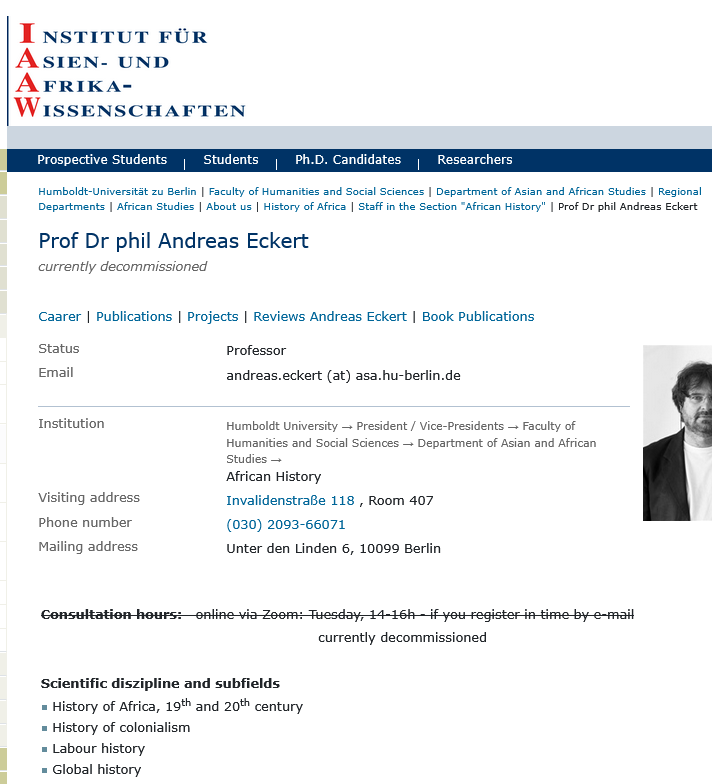
Presently, the Humblodt University lists Eckert as “currently decommissioned“:
The German newspaper Tagesspiegel covered this affair, of course without naming the professor because of German media laws. In November 2023, Tagesspiegel brought the main story, referencing Vatansever’s reported experience from 2019. The professor likes to get drunk with his students, we read. Another alleged victim was named – Lisa Hellman said she was invited to professor’s hotel room and offered wine. At a party in a rented Berlin pub, the professor got drunk, and then attacked another unnamed victim. Translated:
“That evening, he became “very pushy,” says a woman who was doing her doctorate with him at the time. He told her he wanted to dance. The doctoral student tried to brush him off. But he kept coming back to her. “At some point, he grabbed me by the arm, pulled me onto the dance floor and pressed me against him,” she recalls.”
The problem was known: “For example, a group of women objected to the professor being accommodated in the same hotel at a summer school in St. Petersburg in 2018“. After Vatansever’s book chapter, the university opened an investigation, according to professor’s lawyer, upon his own request, in order to clear his name.
Bullies and Harassers of Cologne
“the professor insults her doctoral students, calling them “stupid”, “useless” or “retarded”, for example. She is said to sometimes require her employees to work more than 80 hours a week. The report speaks of a “quasi-feudal relationship of dependence” and a “climate of fear” at the institute in question.”

In July 2024, Tagesspiegel reported that the professor was suspended. HU Berlin stated that “The civil servant is temporarily off duty for an indefinite period“, due to “ongoing disciplinary procedure“. In December 2024, Tagesspiegel informed that the professor accused of sexual harassment returned to university because a Berlin court decided that his personal rights were infringed. He started teaching in April 2025, as the investigation continued. In October 2025, Tagesspiegel informed that criminal charges were raised against this professor, a court hearing was due to start in January 2026:
“”Specifically, this concerns an incident that allegedly took place on 5 July 2019 in the office of the defendant,” said the court spokeswoman. […] Humboldt University informed the Tagesspiegel newspaper that “the civil servant has been prohibited from carrying out his official duties for compelling professional reasons”.”
But of course the academic peer community sees the whole situation very differently. No less than 37 professors in Germany and abroad signed a letter to the leadership of HU Berlin (I previously miscounted 44 professors due to page shift, apologies), which can only be understood as a letter of solidarity with their dear colleague, Eckert. Here is its version from 4 October 2025 which I obtained:
The letter refers to this public petition from June 2025, titled “Another case at the HU: Andreas Eckert – consequences for sexual violence“, translated:
“The signatories of this letter, which is not an open letter, have been observing for more than two years the circumstances of the disciplinary proceedings at your university, which Prof. Dr. Andreas Eckert himself requested in June 2023 in order to clarify the allegations of abuse that have been made against him. We regret that the investigation has still not been completed.
The strain on all those involved is considerable. The danger of prejudgement seems to us to grow with the duration of the proceedings. This is manifested, among other things, in the fact that Prof. Eckert is also being marginalised and isolated in his academic publishing activities.
We are following with great concern the actions that have been taken since the end of the summer semester, including an online petition, demonstrations and calls for a boycott, in an attempt to have Prof. Eckert’s teaching licence revoked.
This contradicts the principle that, just like any other accused person in a constitutional state, the presumption of innocence applies, unless and until a contrary judgement has been passed.
As far as we are aware, Humboldt University has not responded to this escalation. The online petition, which has now been signed by more than 2,000 people, accuses the university of negligent omissions and cover-ups. Above all, however, these actions are directed against the university lecturer named in the allegations, who is unable to defend himself against them. In our opinion, it is part of the university’s duty of care to protect its members against such attacks.
In view of the risk that similar actions could be repeated in the upcoming winter semester, we urge you to take active steps to ensure that Prof. Eckert is able to freely perform his duties, particularly in teaching.
Beyond this individual case, we believe it is also in the best interests of Humboldt University and its national and international reputation to defend the freedom of teaching and research, as well as the principles of appropriateness and the rule of law, and to fulfil its duty of care towards its employees.”
Yes, they demand that the university cracks down on those who support Eckert’s alleged victims. Not on Eckert, who is the real victim apparently.
The signatories include leading German historians, some of whom I contacted for comment: Martin Schulze-Wessel (LMU Munich), Jürgen Kocka (FU Berlin), Hans van Ess (LMU Munich), Lutz Raphael (University of Trier), Stefan Berger (U. Bochum), Thomas Maissen (U. Heidelberg), Sven Reichardt (U. Konstanz) and Andreas Mehler (U. Freiburg). Nobody replied to comment on their letter.
Update 23.01.2026: soon after this article was published, the lawyer of Engel.Law wrote to me, representing Eckert, and demanded that his client’s name is to be removed from this article. The lawyer also wrote (translated):
“Although the allegations have been investigated for years, no criminal, illegal, or otherwise inappropriate behavior on the part of my client has been established. My client is also convinced that this will remain the case, especially since the Berlin Administrative Court highlighted the contradictions in the incriminating statements and clearly stated that the measures taken by Humboldt University against my client were not in order.“
Take care
Meet Giovanni Monteleone, professor of gastroenterology at University of Rome Tor Vergata and Top Italian Scientist. He trained at the best university on this planet (for cheaters): Queen Mary University of London (QMUL), in the lab of Thomas MacDonald, now emeritus professor.
Queen Mary and John Vane’s Cowboys
Welcome to the the William Harvey Research Institute in London. Meet two proteges of its founder, the late Nobelist Sir John Vane: Chris Thiemermann and Mauro Perretti. Then meet their own rotten mentees, especially Salvatore Cuzzocrea and Jesmond Dalli.
Monteleone has almost 30 very bad papers on PubPeer. Many with his mentor MacDonald, most flagged by the pseudonymous sleuth Claire Francis already in February 2017. Like this:
Giuseppe Mazzarella , Thomas T. MacDonald, Virginia M Salvati , Peter Mulligan , Luigi Pasquale , Rosita Stefanile , Paolo Lionetti , Salvatore Auricchio , Francesco Pallone , Riccardo Troncone , Giovanni Monteleone Constitutive activation of the signal transducer and activator of transcription pathway in celiac disease lesions American Journal Of Pathology (2003) doi: 10.1016/s0002-9440(10)64319-2
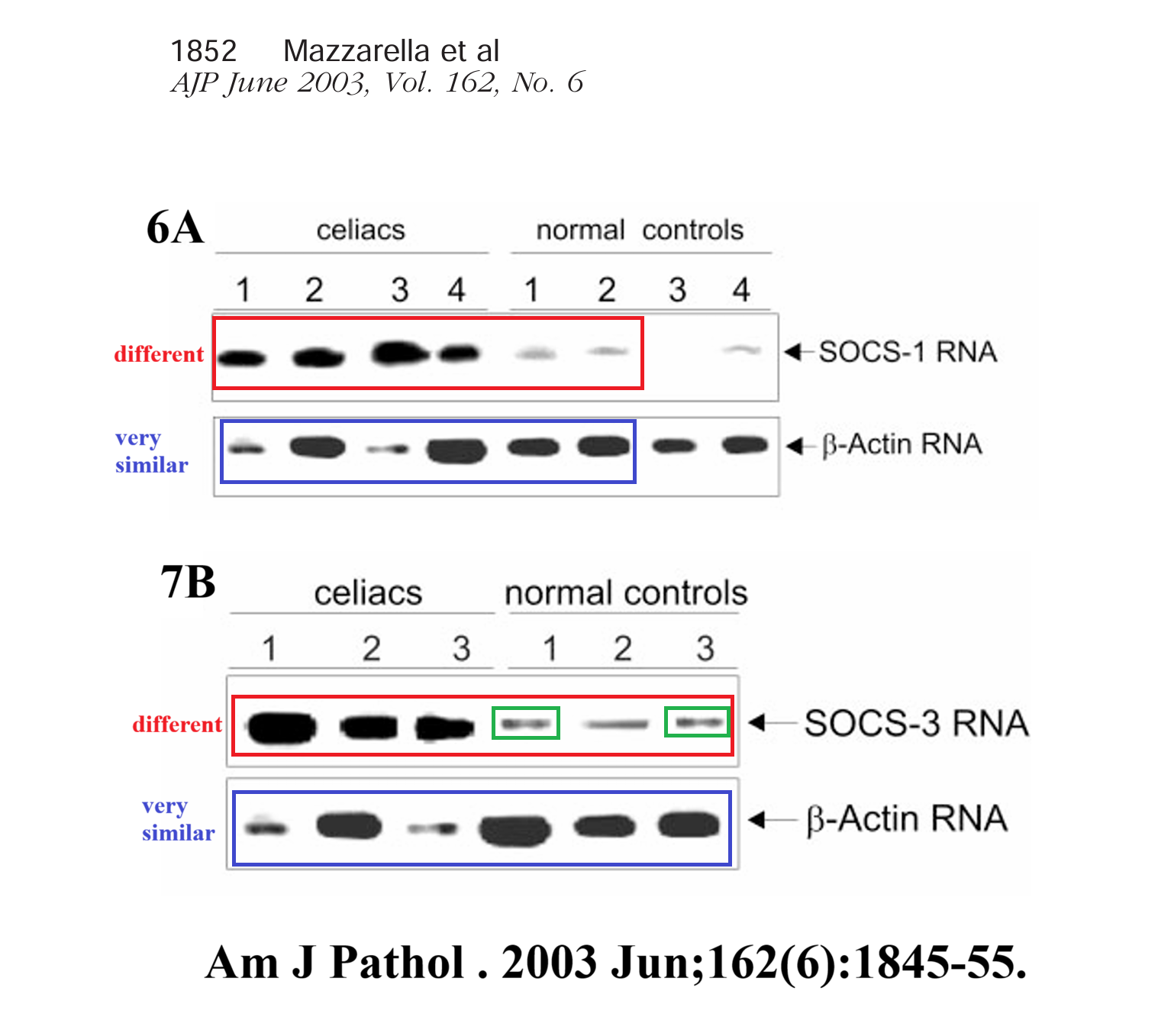
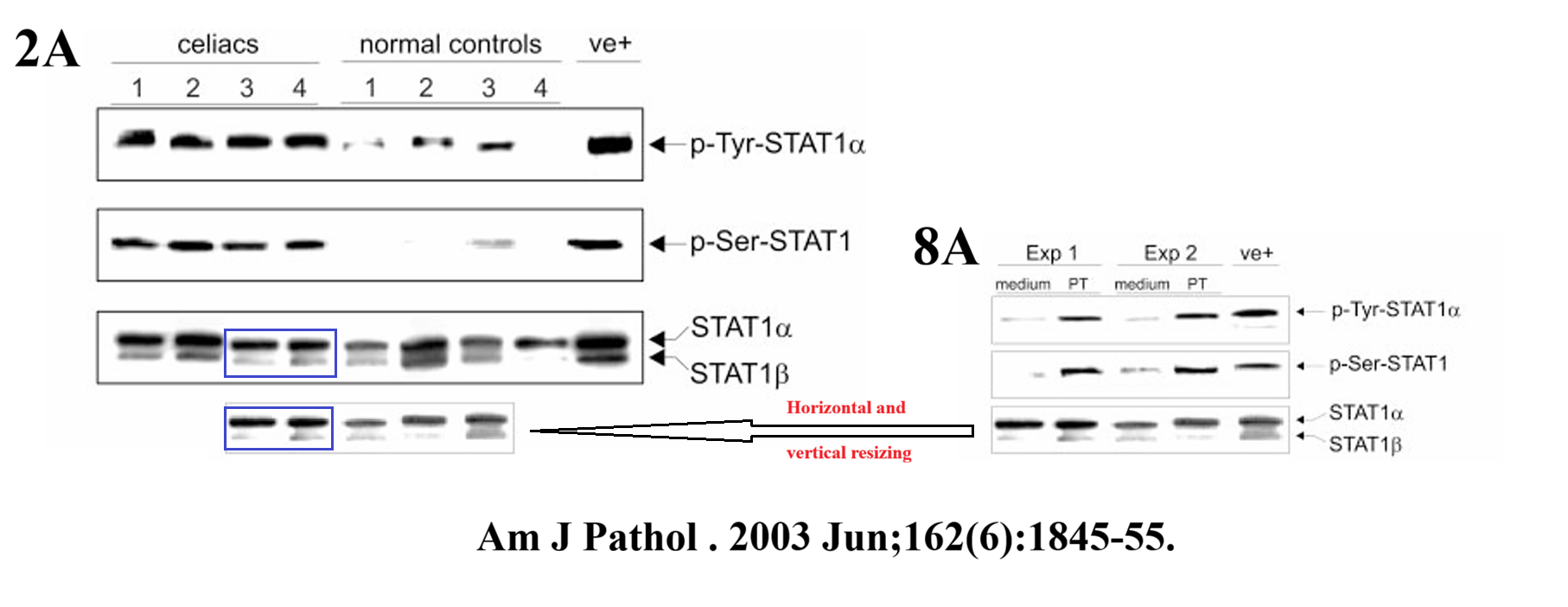
Monteleone replied on some threads in a series of comments in February 2023, exactly 6 years after the concerns were first raised. Like here:
Eleonora Franzè , Roberta Caruso , Carmine Stolfi , Massimiliano Sarra , Maria Laura Cupi , Marta Ascolani , Silvia Sedda , Claudia Antenucci , Alessandra Ruffa , Flavio Caprioli , Thomas T. MacDonald , Francesco Pallone , Giovanni Monteleone High expression of the “A Disintegrin And Metalloprotease” 19 (ADAM19), a sheddase for TNF-α in the mucosa of patients with inflammatory bowel diseases Inflammatory Bowel Diseases (2013) doi: 10.1097/mib.0b013e31828028e8
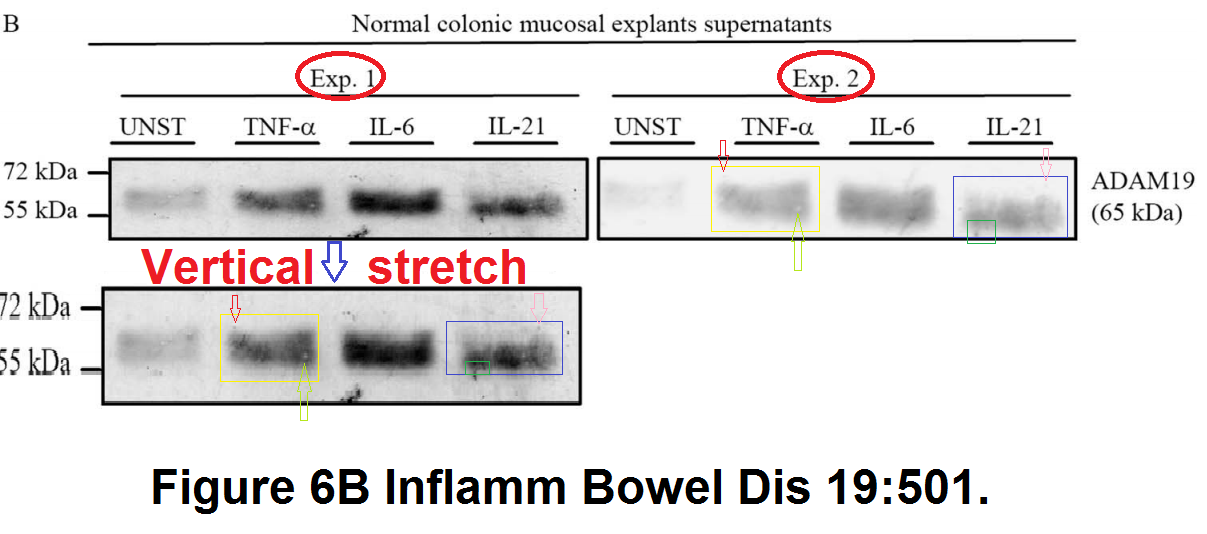
On PubPeer, Monteleone spoke of “non-specific dots” and that “an accurate evaluation (at higher magnification) reveals that the bands annotated have a different outline thus indicating that they are distinct“. Also in the next thread, Monteleone replied in February 2023 that “all bands have a different form/outline“. My own PubPeer reply to him was banned by moderators as libellous, fraudulent and offensive, judge for yourself how out of line I was:
Giovanni Monteleone, Andrea Kumberova , Nicholas M. Croft, Catriona McKenzie, Howard W. Steer , Thomas T. MacDonald Blocking Smad7 restores TGF-beta1 signaling in chronic inflammatory bowel disease Journal of Clinical Investigation (2001) doi: 10.1172/jci12821
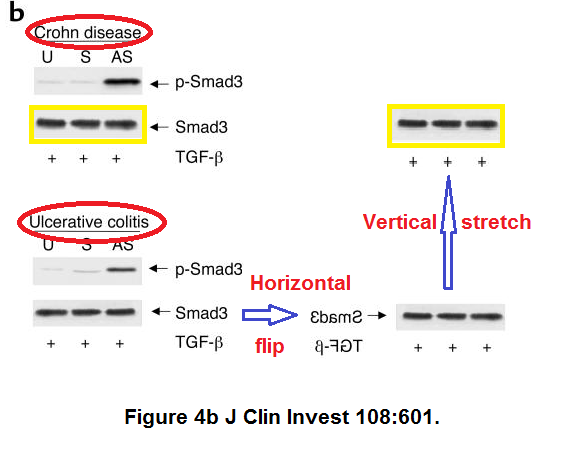
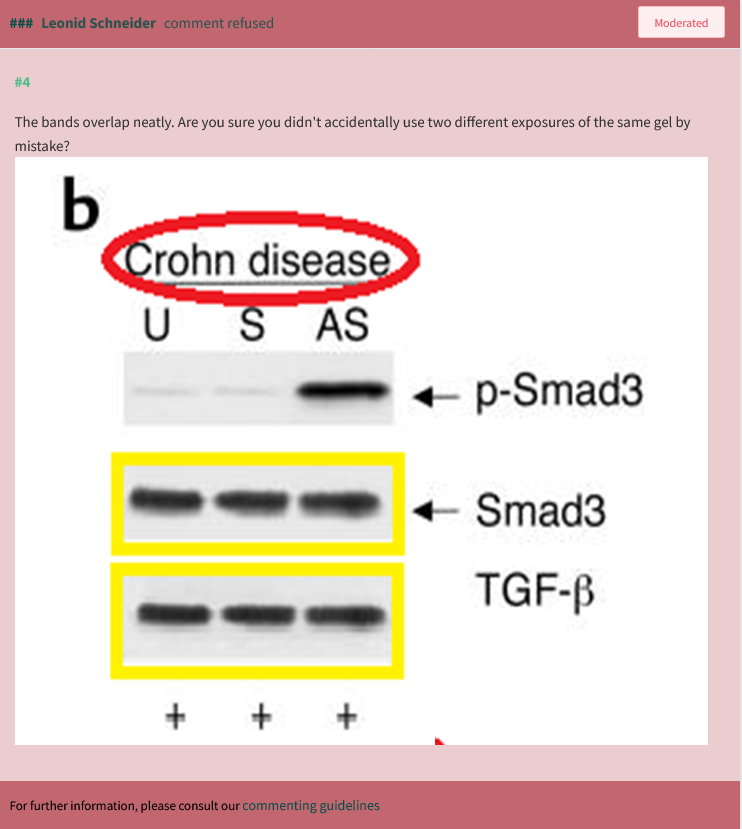
Also from 2017. the coauthor Ivan Monteleone is Giovanni’s cousin (btw, the name Ivan is the Slavic version of Giovanni or John); as family member Ivan is of course also a professor at Tor Vergata University. Another coauthor, the Tor Vergata professor Francesco Pallone, used to be Ivan’s PhD mentor:
Giovanni Monteleone, Jelena Mann , Ivan Monteleone , Piero Vavassori , Ronald Bremner , Massimo Fantini , Giovanna Del Vecchio Blanco , Roberto Tersigni , Luciano Alessandroni , Derek Mann, Francesco Pallone , Thomas T. MacDonald A failure of transforming growth factor-beta1 negative regulation maintains sustained NF-kappaB activation in gut inflammation Journal of Biological Chemistry (2004) doi: 10.1074/jbc.m303654200
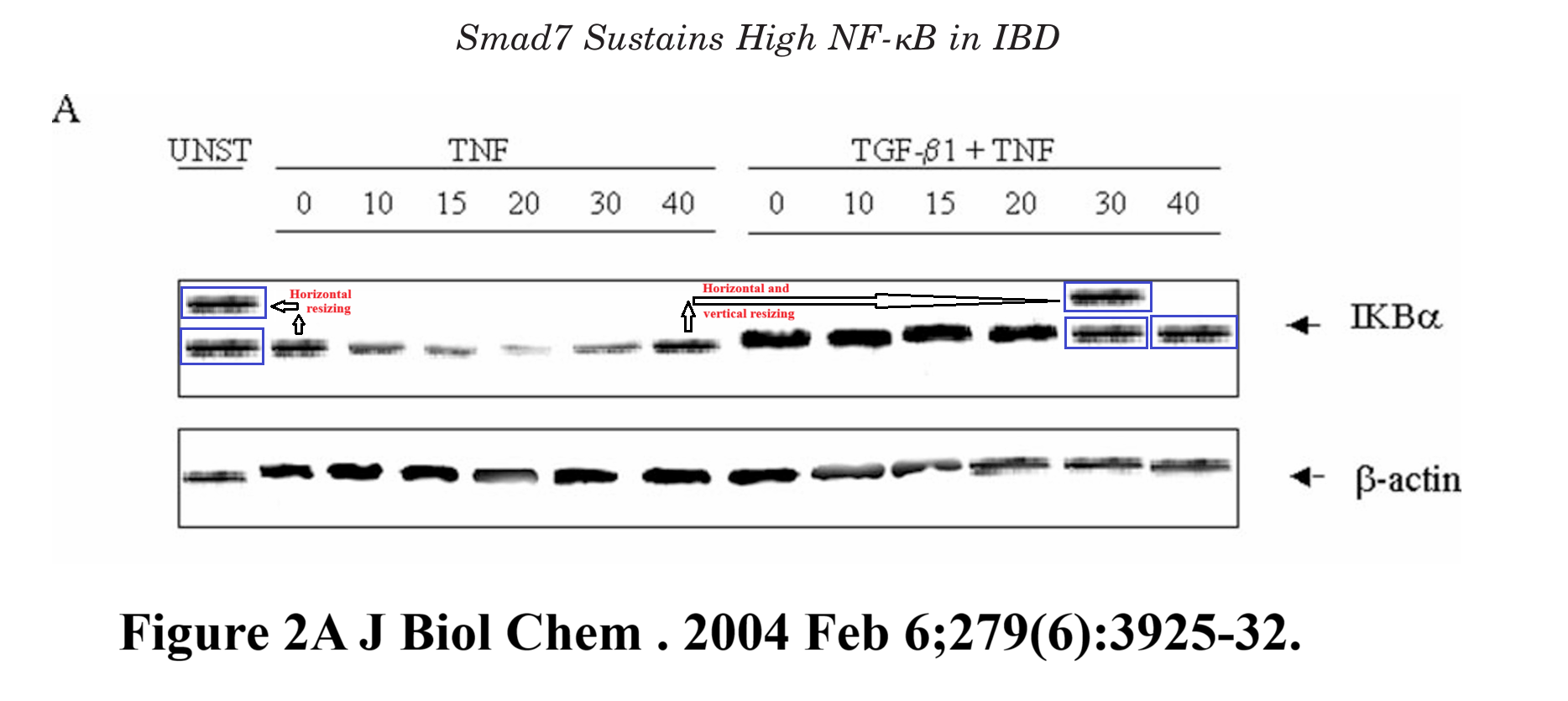
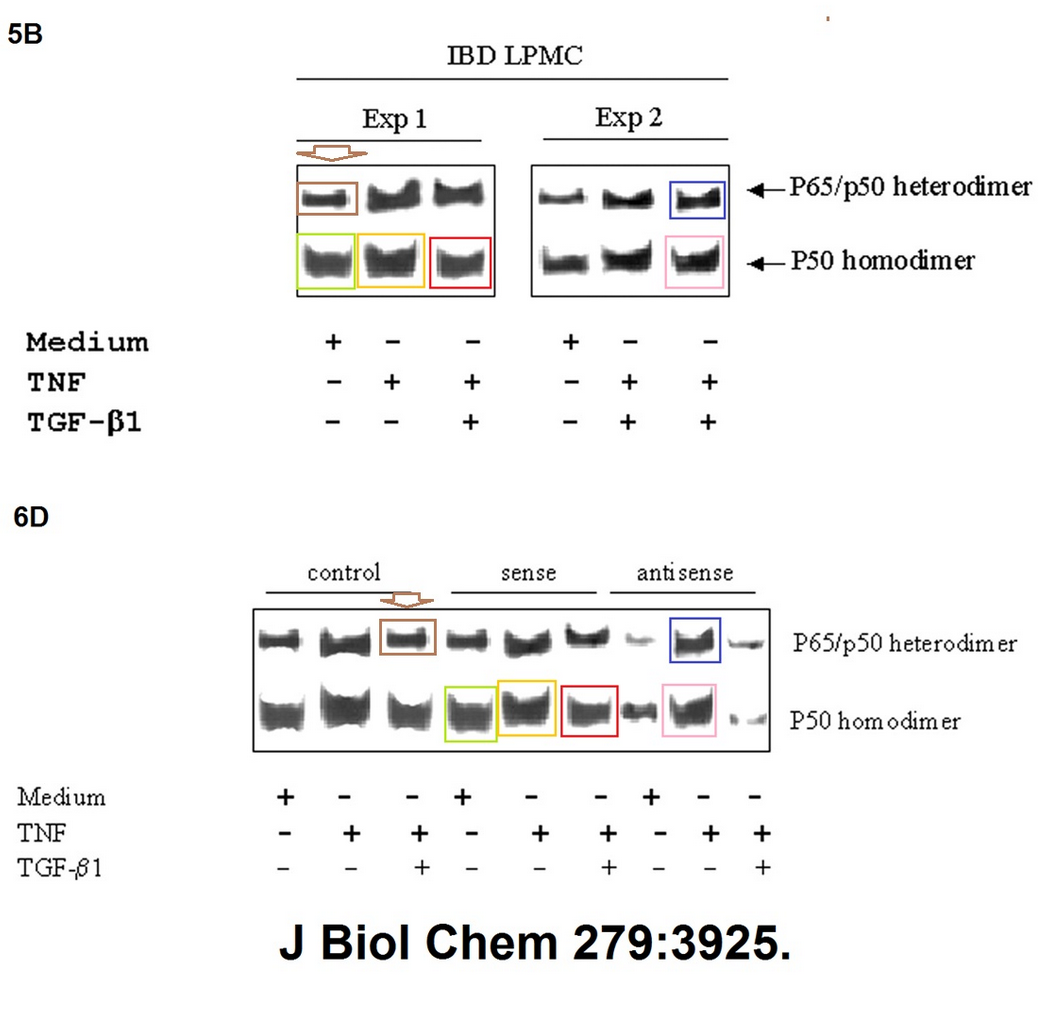
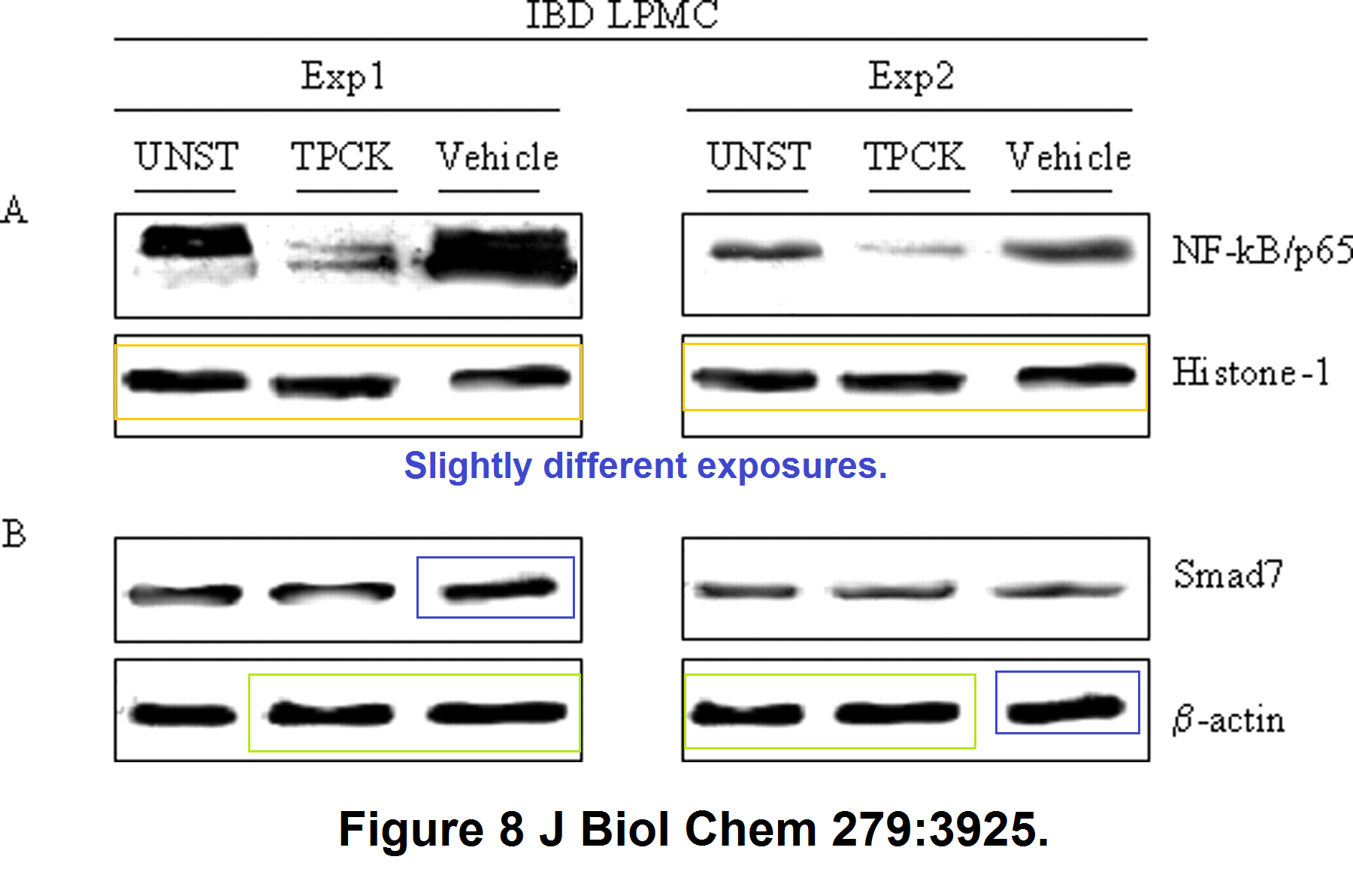
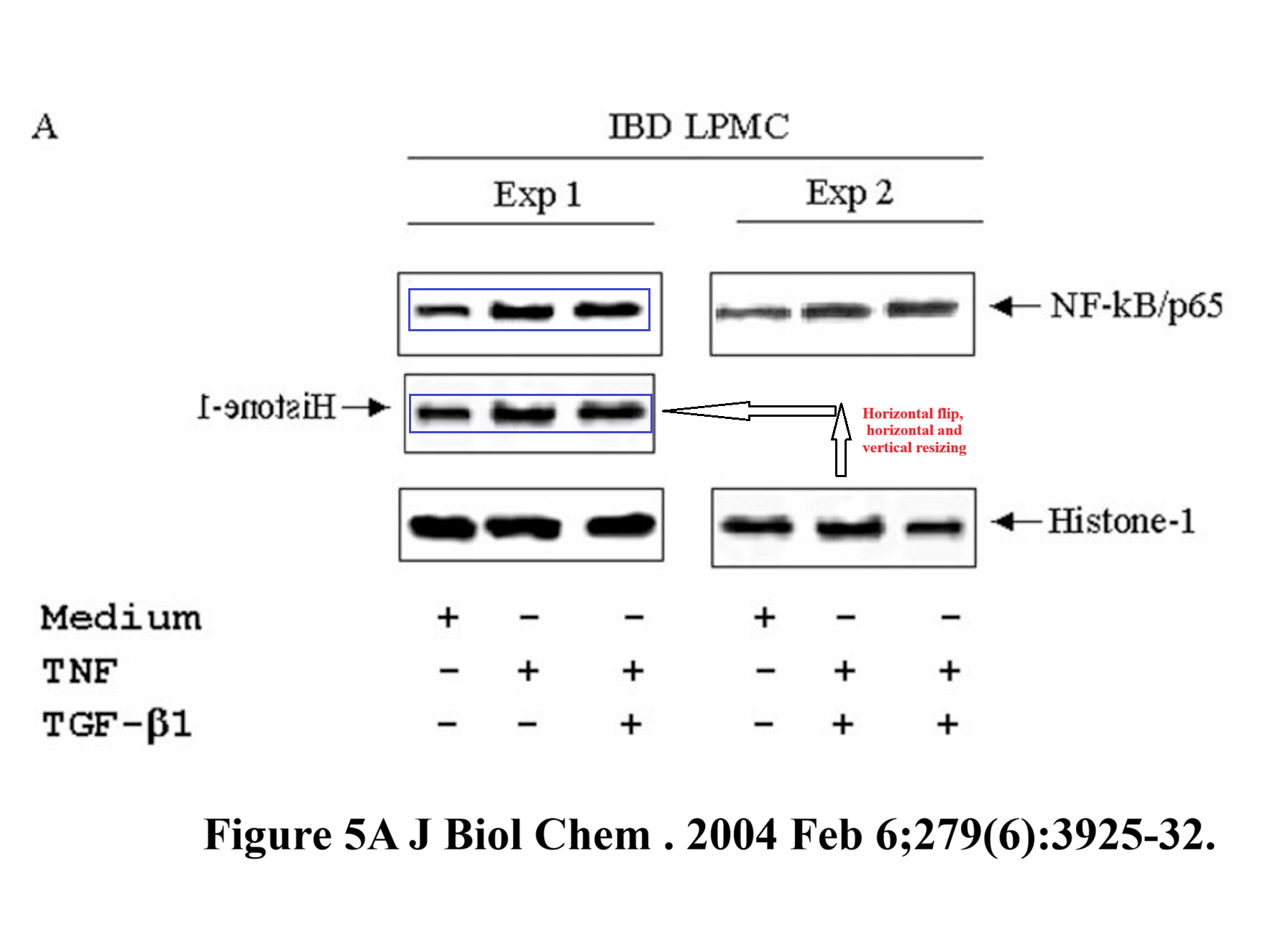
In February 2023, exactly 6 years after the concerns were raised, G. Monteleone replied on PubPeer that “some non-specific dots […] are different” as demonstrated “with Photoshop subtraction analysis“. Indeed, the man is a Photoshop expert.
Gels from that JBC paper somehow appeared here:
Giovanni Monteleone, Giovanna Del Vecchio Blanco , Giampiero Palmieri , Piero Vavassori , Ivan Monteleone , Alfredo Colantoni , Serena Battista , Luigi Giusto Spagnoli , Marco Romano , Melissa Borrelli , Thomas T. MacDonald, Francesco Pallone Induction and regulation of Smad7 in the gastric mucosa of patients with Helicobacter pylori infection Gastroenterology (2004) doi: 10.1053/j.gastro.2003.11.048
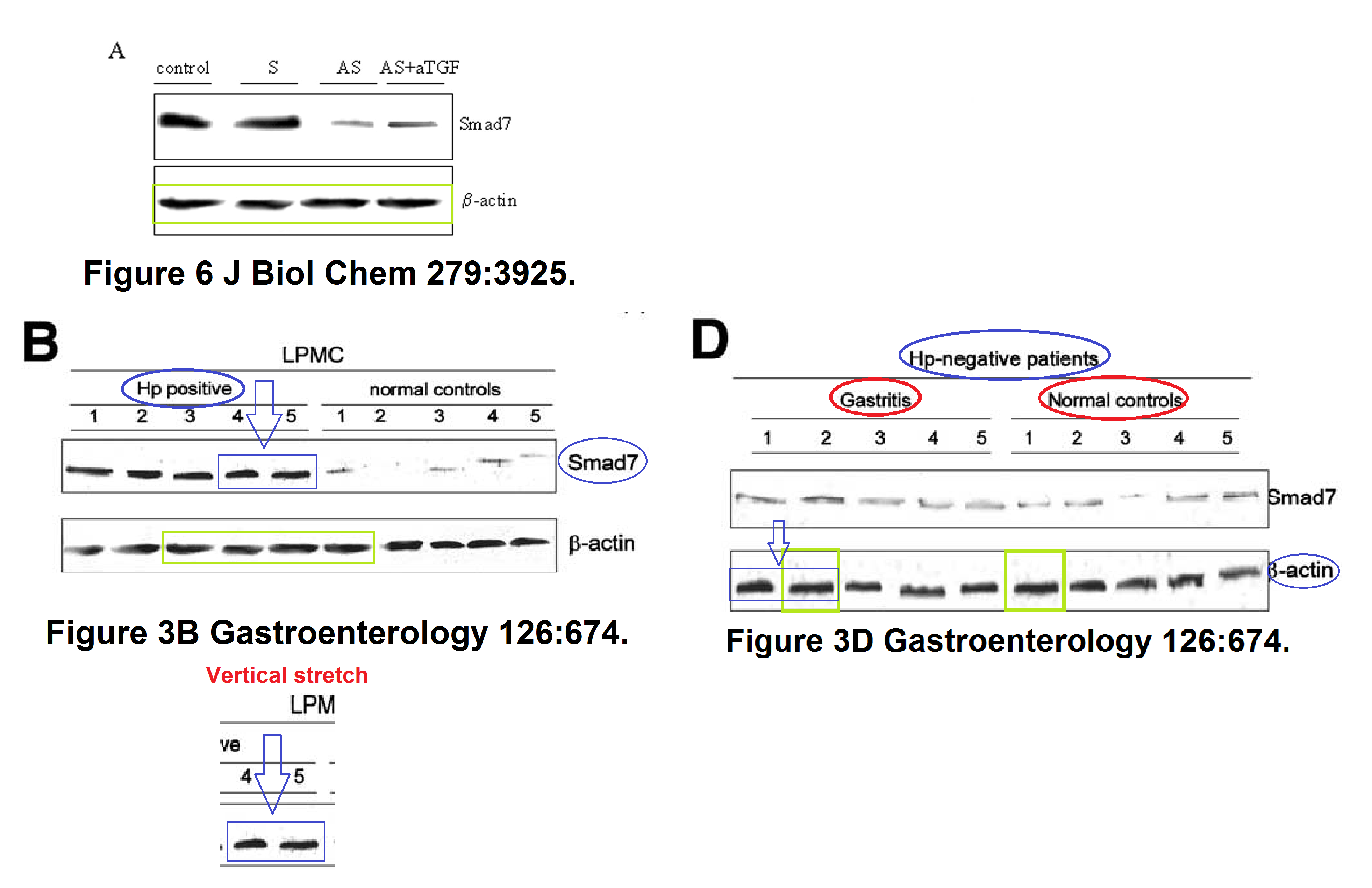
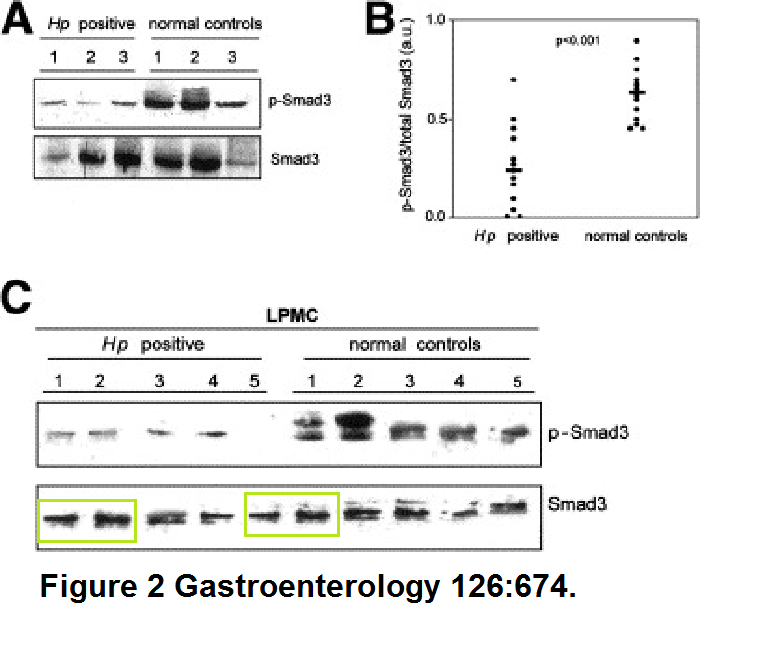
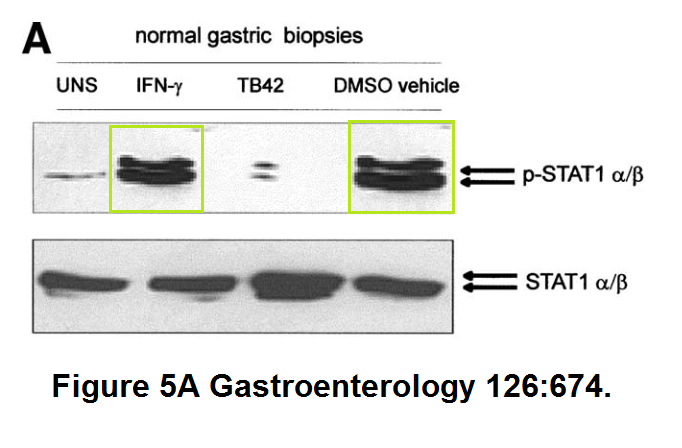
Here the Monteleone cousins again defecated into the society journal Gastroenterology, pleaseclick on PubPeer links to see even more forged gels:
- Giovanni Monteleone, Giovanna Del Vecchio Blanco , Ivan Monteleone , Daniele Fina , Roberta Caruso , Valentina Gioia , Sabrina Ballerini , Giorgio Federici , Sergio Bernardini , Francesco Pallone , Thomas T. MacDonald Post-transcriptional regulation of Smad7 in the gut of patients with inflammatory bowel disease Gastroenterology (2005) doi: 10.1053/j.gastro.2005.09.005
- Giovanni Monteleone, Ivan Monteleone , Daniele Fina , Piero Vavassori , Giovanna Del Vecchio Blanco , Roberta Caruso , Roberto Tersigni , Luciano Alessandroni , Livia Biancone , Gian Carlo Naccari , Thomas T. MacDonald, Francesco Pallone Interleukin-21 enhances T-helper cell type I signaling and interferon-gamma production in Crohn’s disease Gastroenterology (2005) doi: 10.1053/j.gastro.2004.12.042
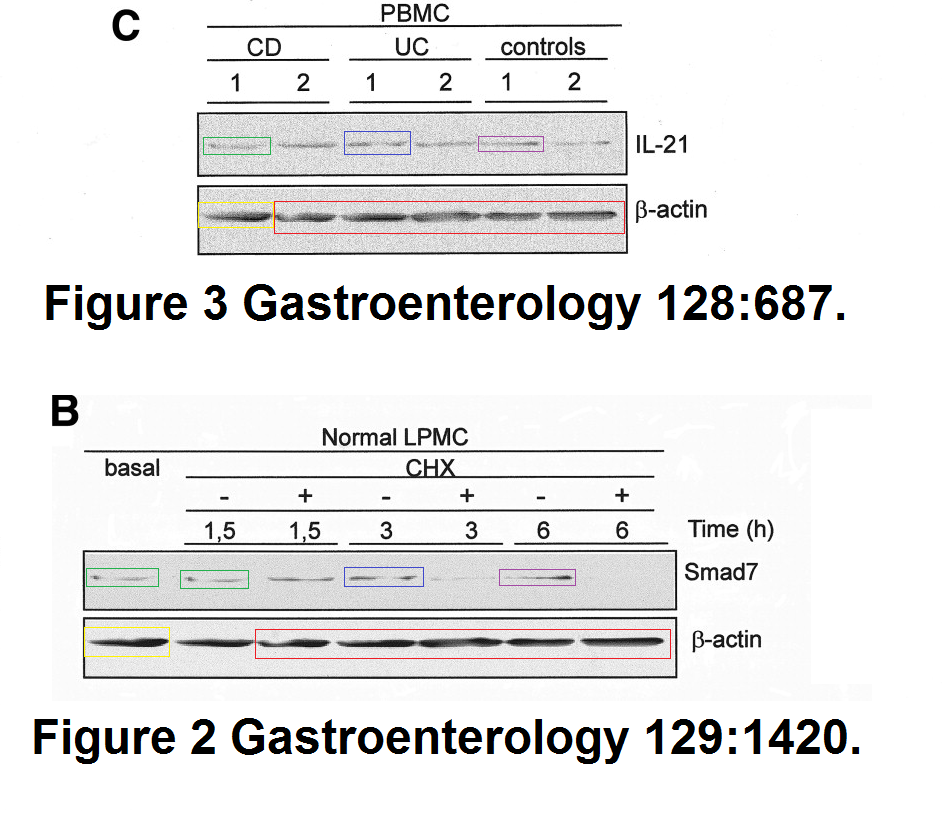
Monteleone again spoke of “non-specific dots” that are “proving the authenticity of these data“, and that western blots “tend to look usually very similar but this does not imply that these blots have been subject to any falsification.” Well, as an old gastroenterology joke goes – opinions are like a**holes, everyone’s got one.
The bullshittery continued with the next academic generation. Here we have as first author Monteleone’s former PhD student, Roberta Caruso, since 2017 assistant professor at the University of Michigan in USA:
Roberta Caruso , Francesco Pallone , Daniele Fina , Valentina Gioia , Ilaria Peluso , Flavio Caprioli , Carmine Stolfi , Alessandra Perfetti , Luigi Giusto Spagnoli , Giampiero Palmieri , Thomas T. MacDonald, Giovanni Monteleone Protease-activated receptor-2 activation in gastric cancer cells promotes epidermal growth factor receptor trans-activation and proliferation American Journal Of Pathology (2006) doi: 10.2353/ajpath.2006.050841
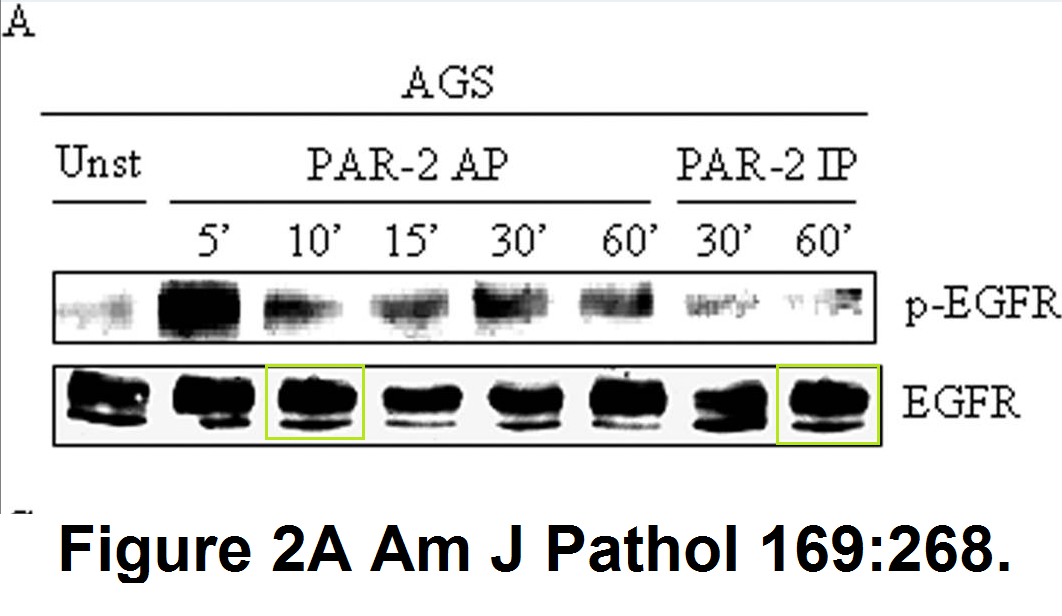
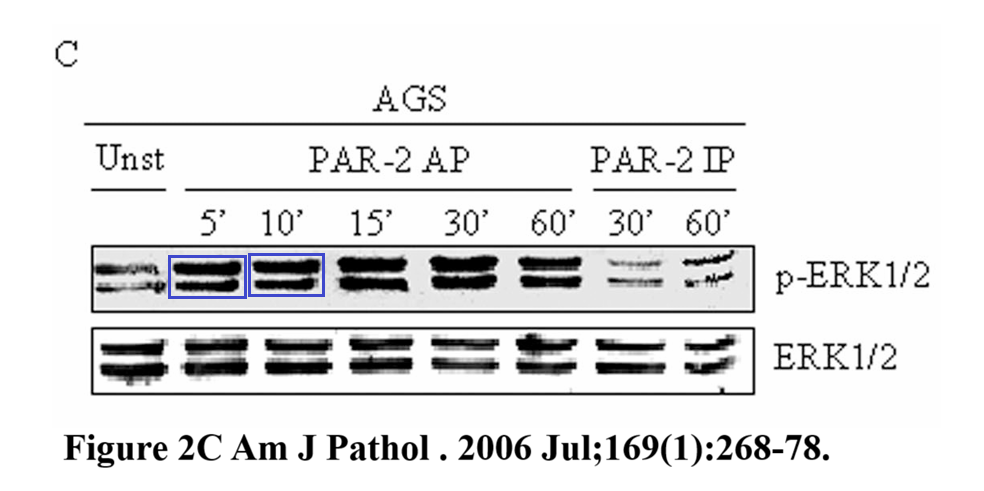
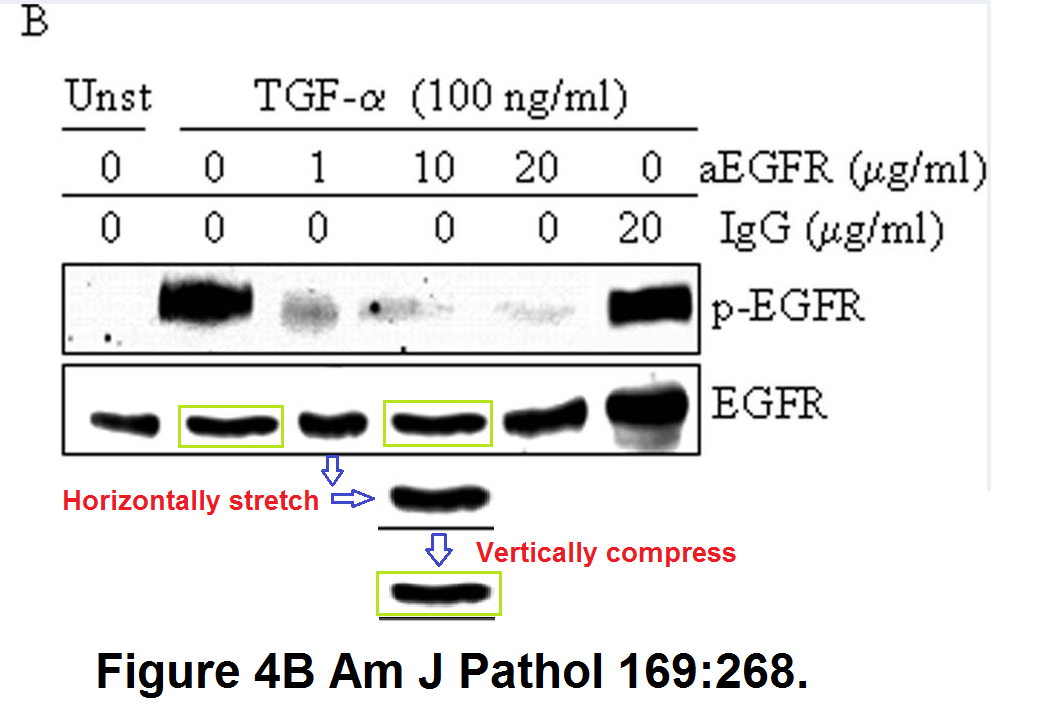
Caruso explained on PubPeer in February 2023 that “a more detailed evaluation” reveals “a few differences instead […] thus negating the allegation that these data were fabricated“. Mind you, nobody ever offers raw data, not even higher resolution images. Gosh, I wonder why – do you have an idea why they are so stingy?
The Michigan scholar, whose replies sound very much like those of her mentor in Rome, posted the same stupid nonsense (“a more thorough examination (at a higher magnification) […] reveals that […] these bands are distinct“) about clearly duplicated gel bands in this paper:
Roberta Caruso , Daniele Fina , Ilaria Peluso , Massimo Claudio Fantini , Claudio Tosti , Giovanna Del Vecchio Del Vecchio Blanco , Omero Alessandro Paoluzi , Flavio Caprioli , Fabio Andrei , Carmine Stolfi , Marco Romano , Vittorio Ricci , Thomas T. MacDonald, Francesco Pallone , Giovanni Monteleone IL-21 is highly produced in Helicobacter pylori-infected gastric mucosa and promotes gelatinases synthesis The Journal of Immunology (2007) doi: 10.4049/jimmunol.178.9.5957
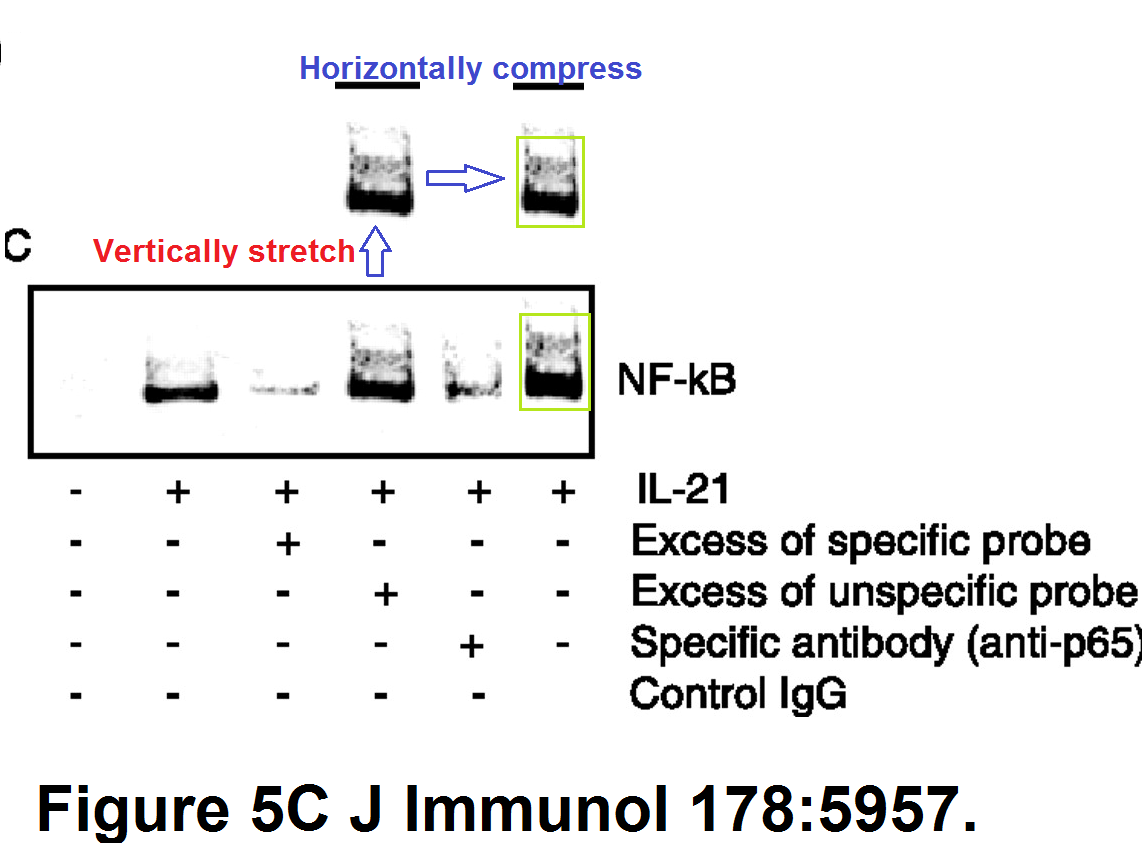
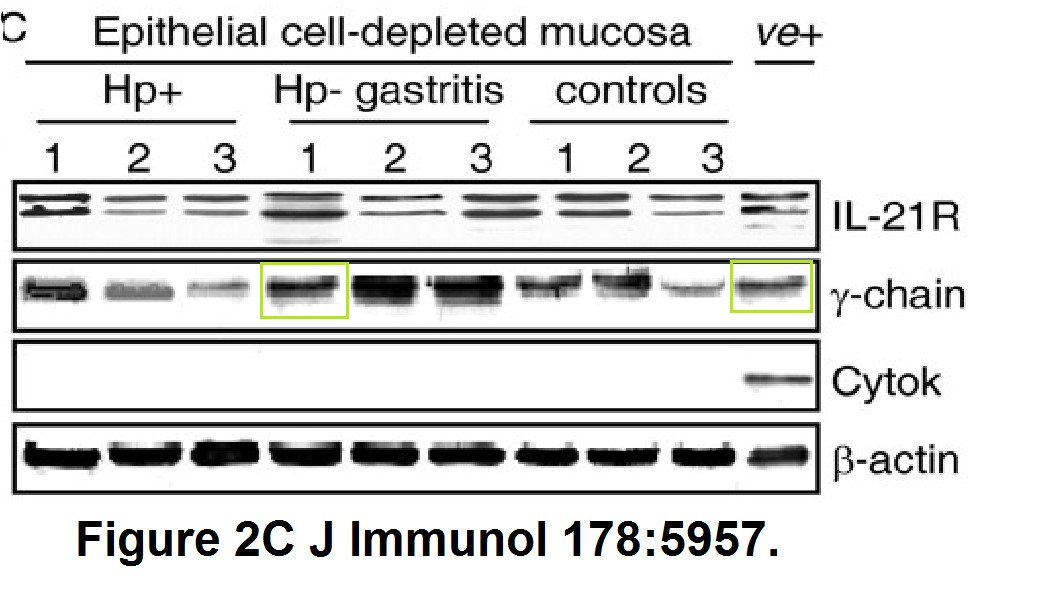
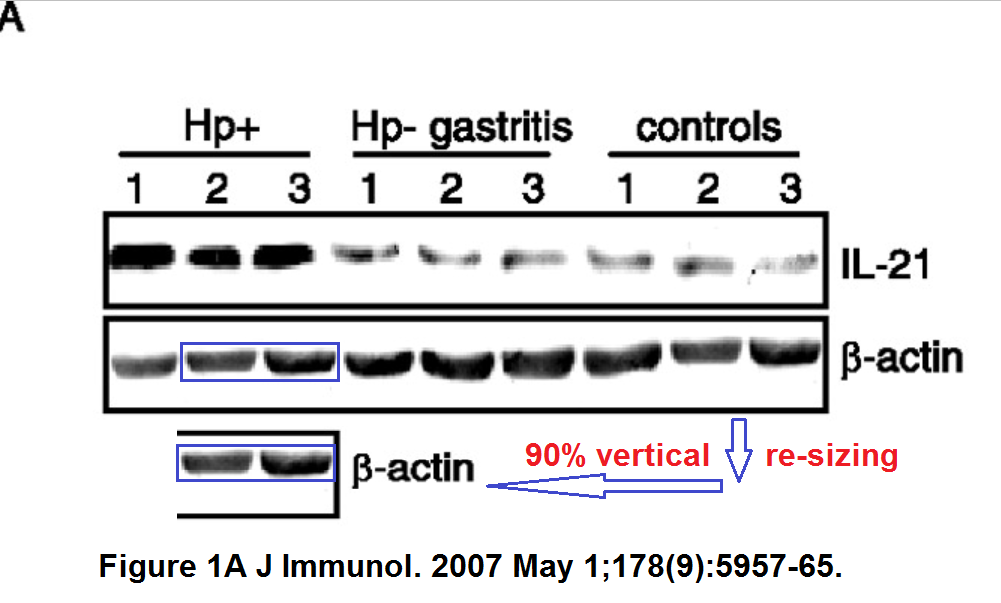
Caruso also shared her expert opinions here, where even flow cytometry data contains duplicated sections:
Roberta Caruso, Daniele Fina , Omero Alessandro Paoluzi , Giovanna Del Vecchio Blanco, Carmine Stolfi, Angelamaria Rizzo, Flavio Caprioli, Massimiliano Sarra, Fabio Andrei , Massimo Claudio Fantini, Thomas T. MacDonald, Francesco Pallone , Giovanni Monteleone IL-23-mediated regulation of IL-17 production in Helicobacter pylori-infected gastric mucosa European Journal of Immunology (2008) doi: 10.1002/eji.200737635
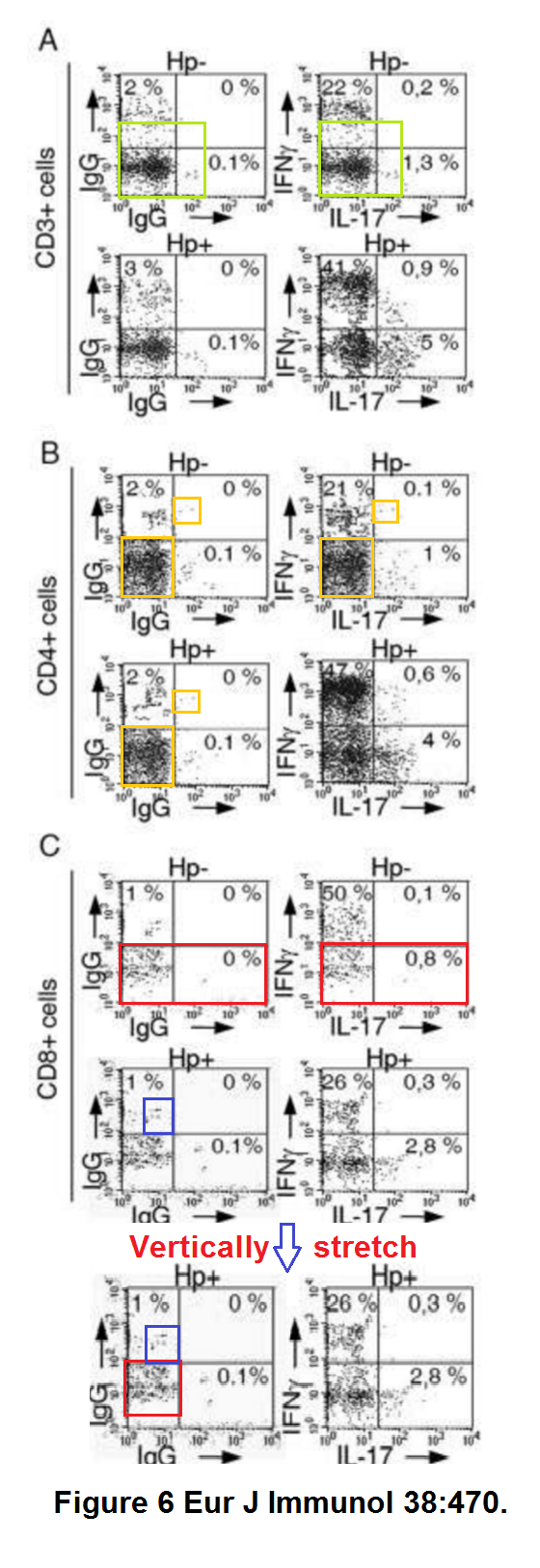
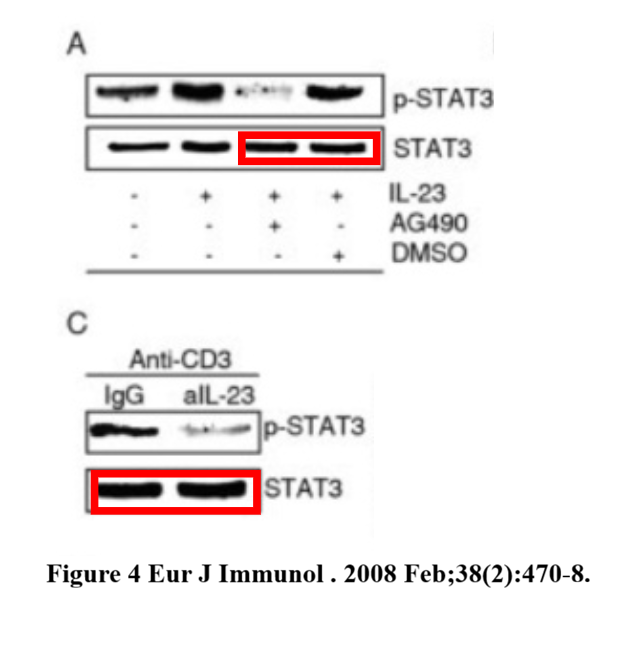
Dr Caruso argued that because that the FACS plots were identical only in parts, and not entirely, it made the claim that “dot plots were forged […] puzzling and very unrealistic.” Quite the opposite is true, Dr Caruso!
Similar attitude for the fake flaw cytometry in Caruso et al 2009, where Caruso blathered about “similarity in the distribution is a result of randomness and is purely coincidental“. To be fair to Caruso, same kind of Franken-FACS was found in a paper by Monteleone cousins without her input:
Ivan Monteleone , Massimo Federici , Massimiliano Sarra , Eleonora Franzè , Viviana Casagrande , Francesca Zorzi , Michele Cavalera , Angelamaria Rizzo , Renato Lauro , Francesco Pallone , Thomas T. MacDonald , Giovanni Monteleone Tissue Inhibitor of Metalloproteinase-3 Regulates Inflammation in Human and Mouse Intestine Gastroenterology (2012) doi: 10.1053/j.gastro.2012.07.016
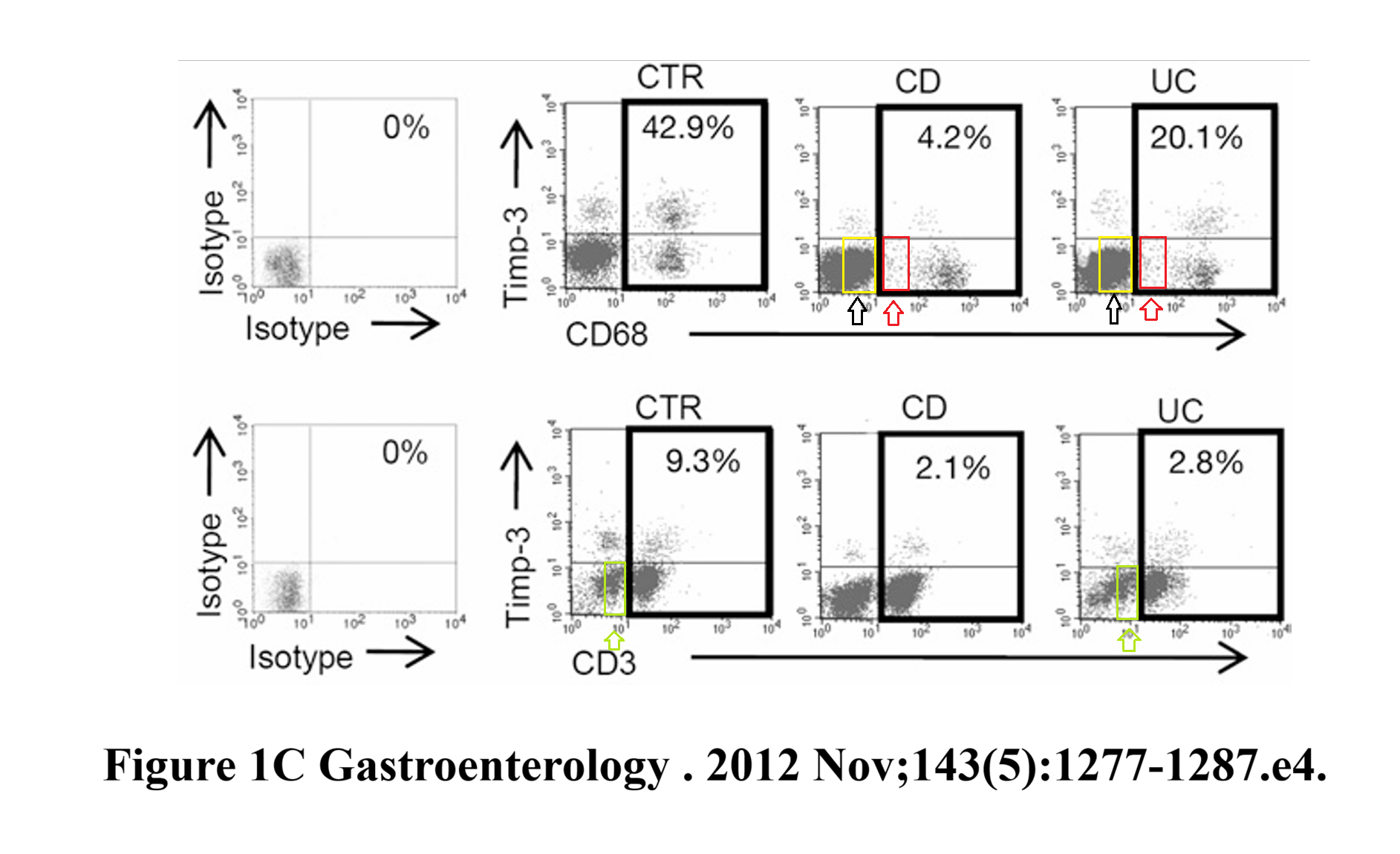
Yes, Gastroenterology again. Monteleone had to correct only one paper so far, with Pallone, and it was 12 years ago. Because someone overdid the Photoshop fraud there:
Ladislava Sebkova , Antonia Pellicanò , Giovanni Monteleone, Barbara Grazioli , Giovanni Guarnieri , Maria Imeneo , Francesco Pallone , Francesco Luzza Extracellular signal-regulated protein kinase mediates interleukin 17 (IL-17)-induced IL-8 secretion in Helicobacter pylori-infected human gastric epithelial cells Infection and Immunity (2004) doi: 10.1128/iai.72.9.5019-5026.2004
The Correction from April 2014 went like this:
“Volume 72, no. 9, p. 5019–5026, 2004. Fig. 1, 7, and 8. During preparation of figures showing the results of Western blots, the following bands from control samples were inadvertently duplicated:
- Page 5021: Fig. 1B: ERK 1/2 lanes 1 and 2.
- Page 5021: Fig. 1B: ERK 1/2 lanes 5 and 7.
- Page 5024: Fig. 7A: ERK 1/2 lanes 3 and 5.
- Page 5025: Fig. 8A: p-ERK 1/2 lanes 1 and 4.
- Page 5025: Fig. 8A: ERK 1/2 lanes 1 and 4.
- Page 5025: Fig. 8A: ERK 1/2 lanes 5 and 6.
The original blot is no longer available, so corrected bands cannot be provided. The conclusions of the paper are unaffected by these errors.”
This is what was corrected:
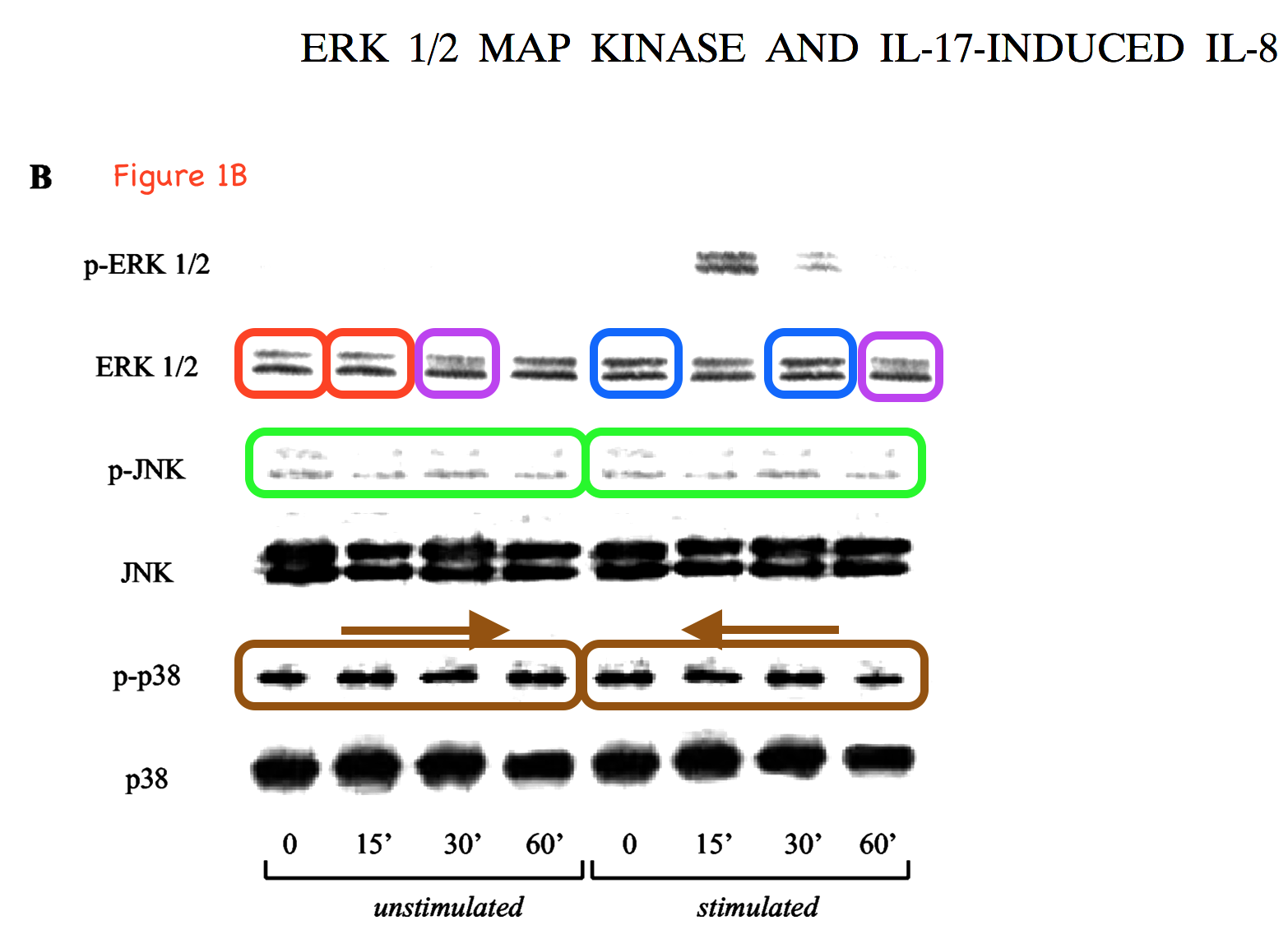
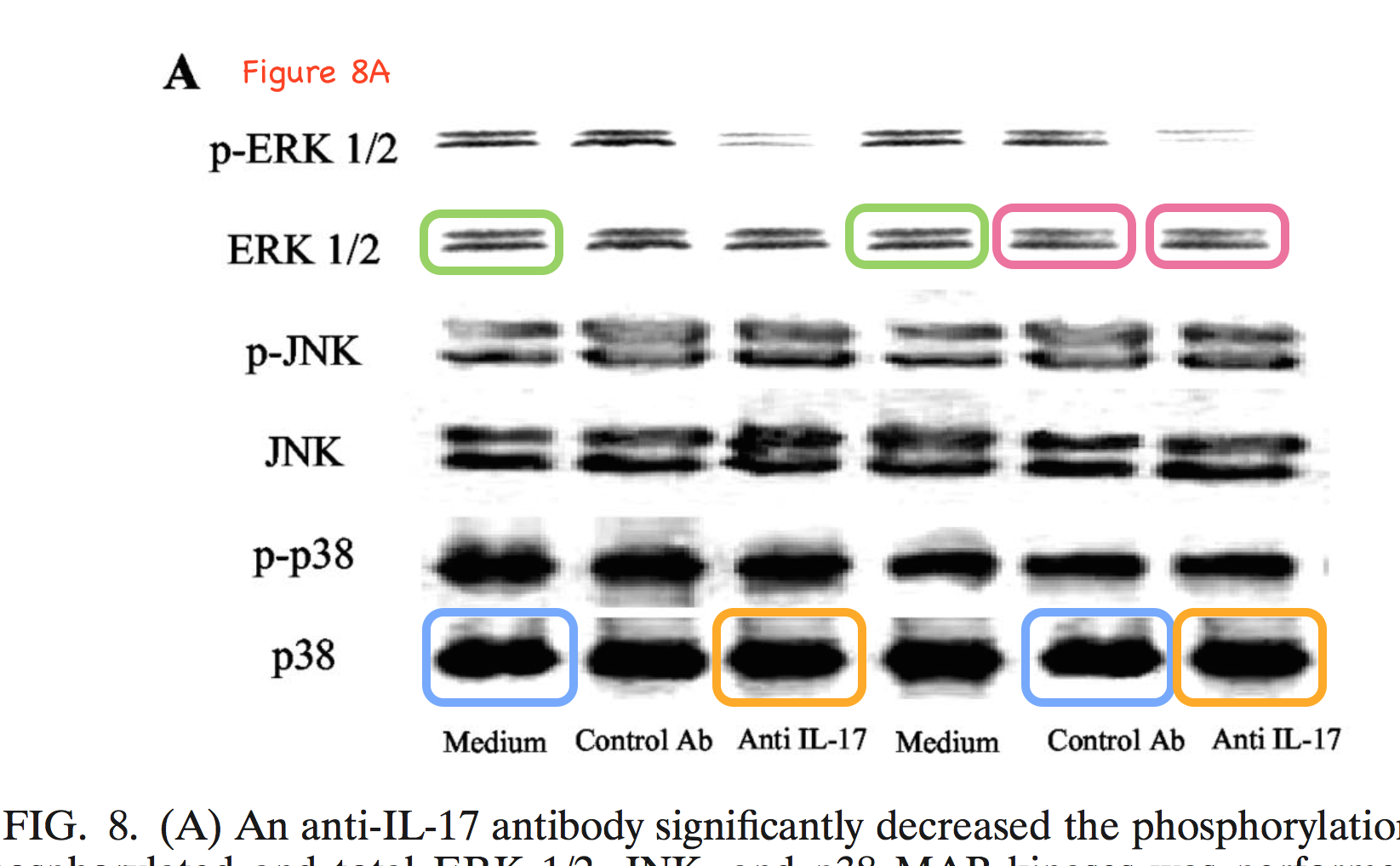
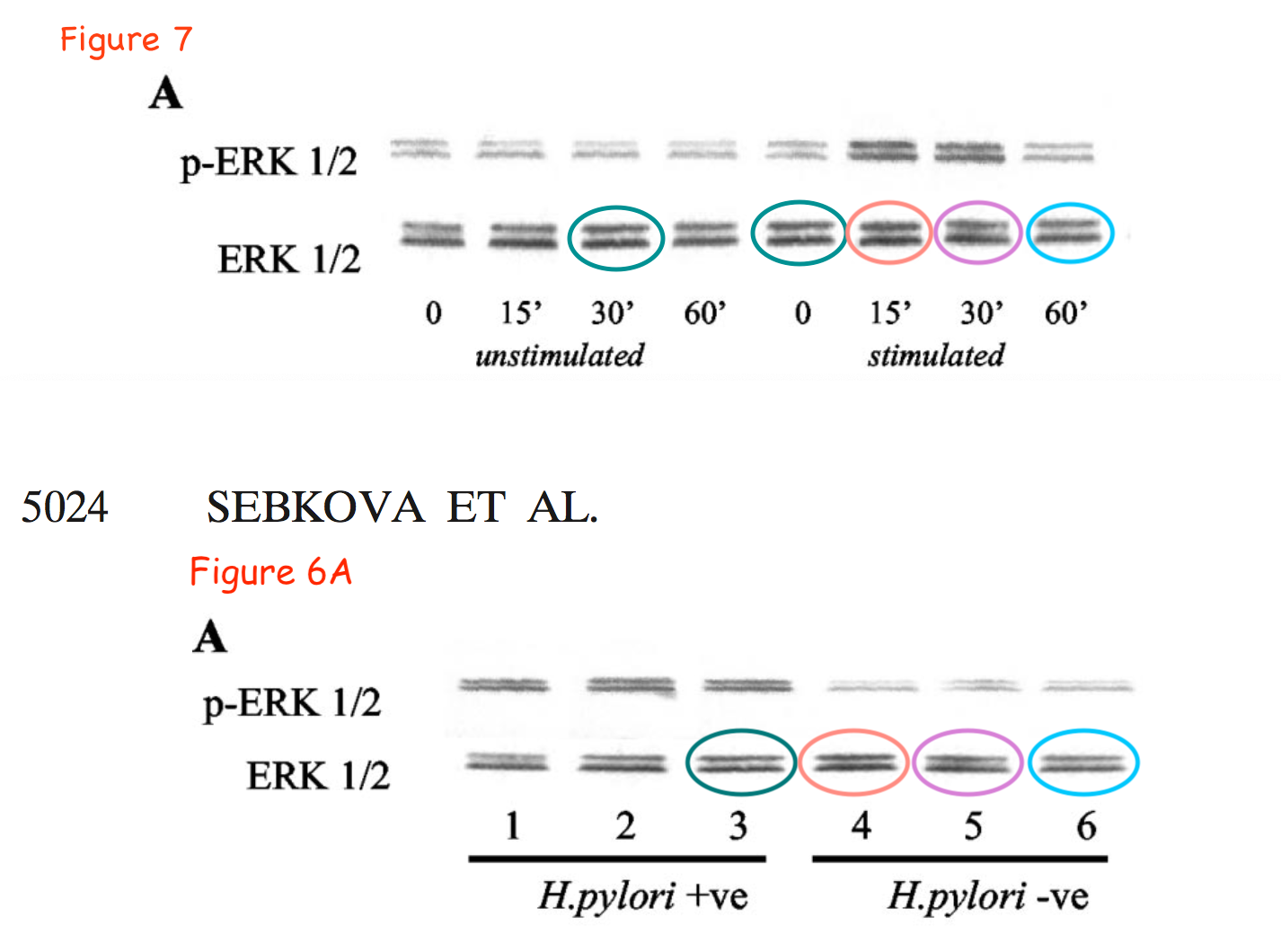
The sleuth found more issues which would require a second editorial action, but hey. Nobody cares.
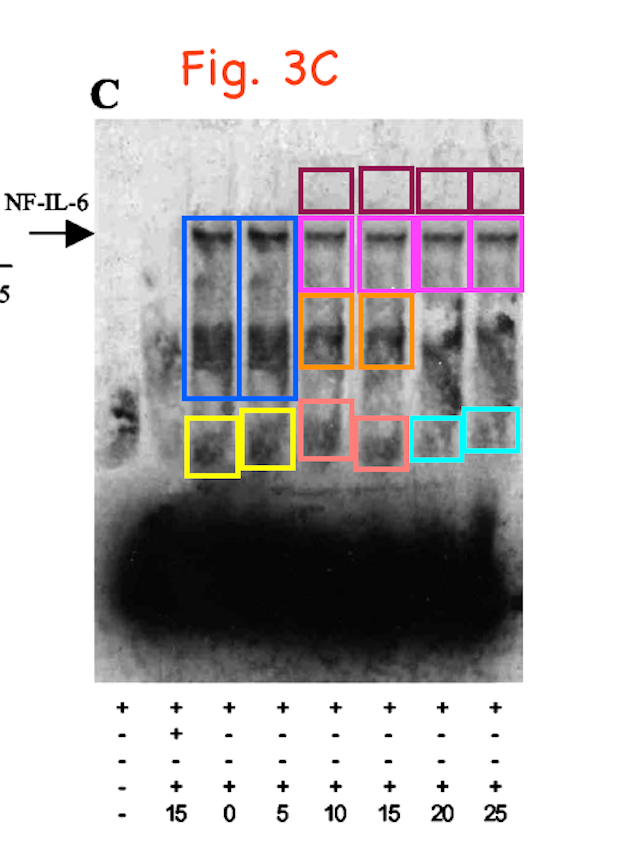
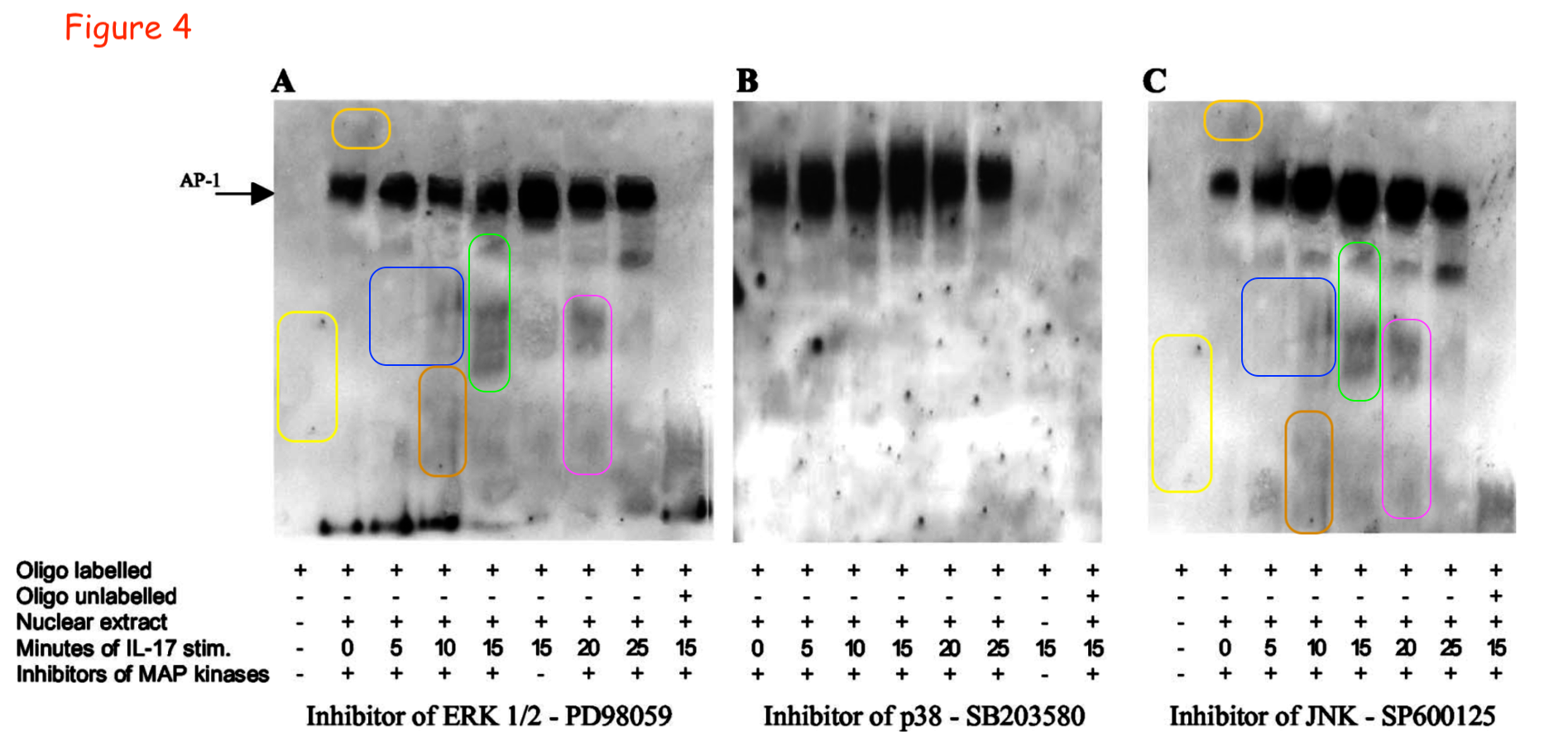
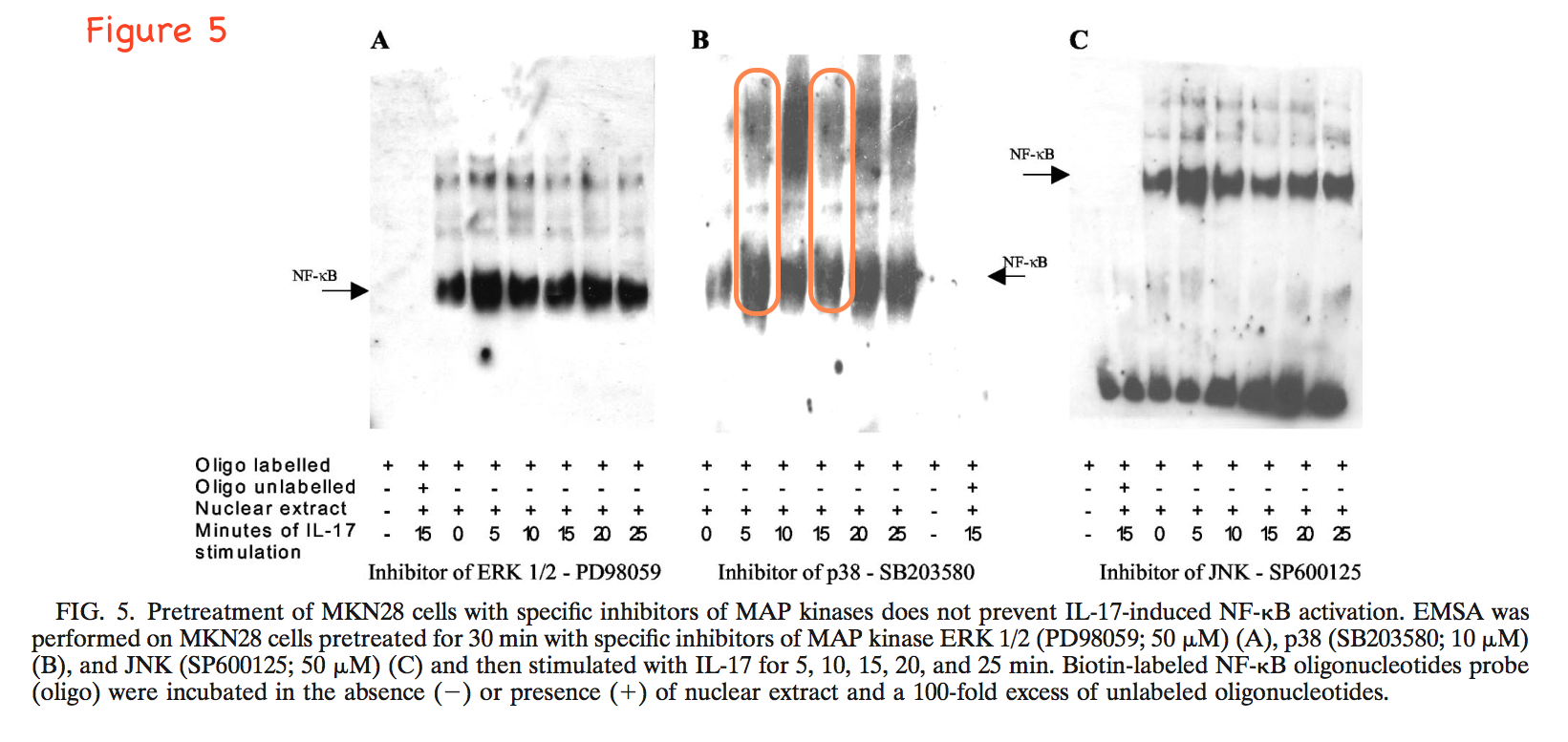
Monteleone’s paper Pellicano et al 2007, with the same team of Francesco Luzza of University of Catanzaro “Magna Graecia”, is also very fake. As I mentioned, there are almost 30 papers by Monteleone on PubPeer, all with the same problems shown above.
I contacted the Montelone cousins and MacDonald. The latter assured: “Giovanni […] is completely honest in my opinion“. Well, I disagree. And Giovanni himself proved his dishonesty when he replied to me:
“we addressed the comments that appeared on PubPeer regarding our publications and provided sufficient data to justify the originality of the published data and images.“
He never shared any raw data on PubPeer. In his later email to MacDonald (with me in cc), Monteleone admitted:
“Unfortunately, we no longer have the original blots, and our university does not have a policy concerning the storage of original data.”
Montecorleone ominously ended his last email to me with: “Take care“, when I asked, he didn’t deny that that was meant as a threat. Now I am very scared, can hardly type this, being paralysed by fear.
Oh well, the cousins are welcome to sue me in Italian court, even though For Better Science is already blocked in Italy, because another crooked gastroenterologist already is suing me there – Gabrio Bassotti.
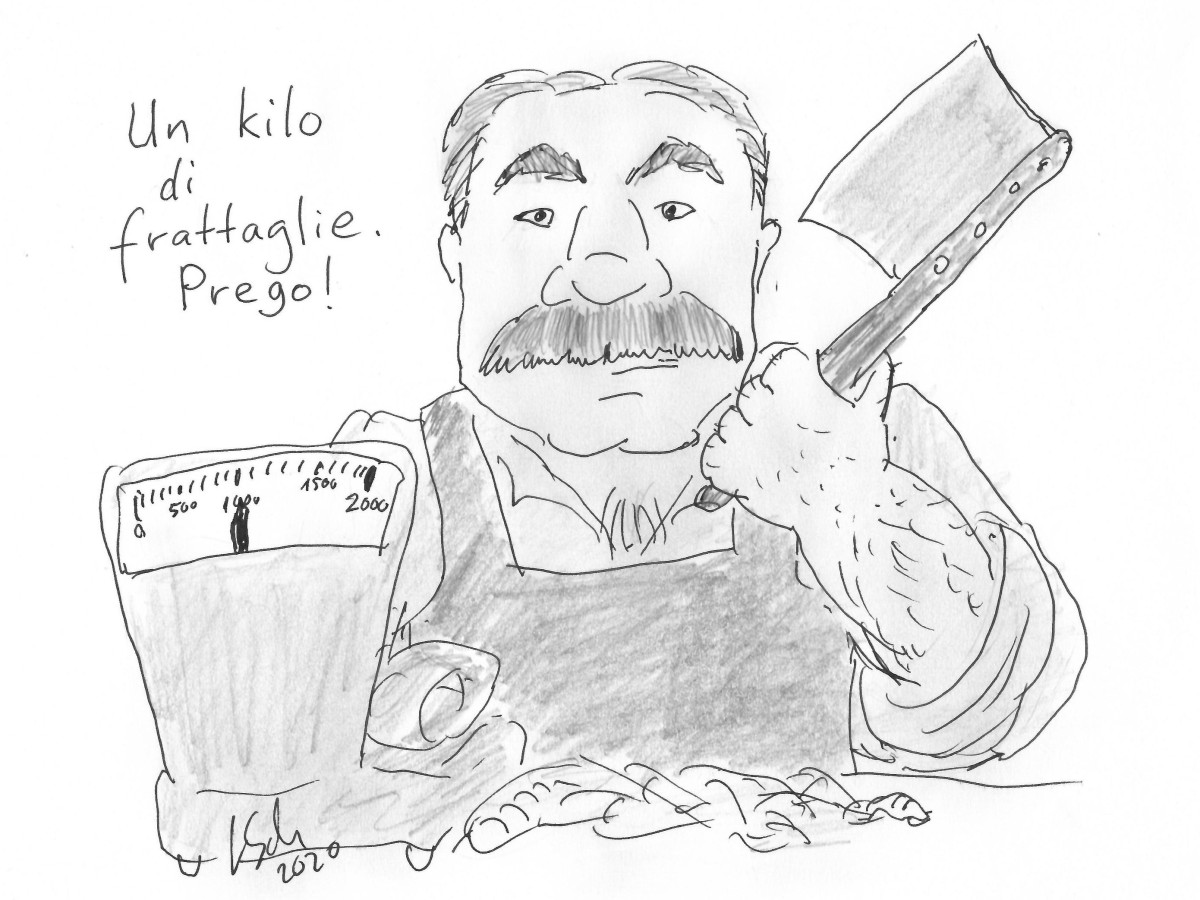
Italian Prosecutor orders seizure of Gabrio Bassotti reporting
“…request for preventive seizure made on 12.4.2024 by the Public Prosecutor in charge, concerning the article under indictment, still accessible on the website called forbetterscience.com, although it appears to have been removed from the blog.repubblica.it website (referred to in the indictment)…”
Damage to honour and reputation, and harm linked to deteriorated health
In May 2020, I quoted a press release by EU Commission’s European Anti-Fraud Office OLAF, which has been since deleted because the guilty scientist sued for infringement of her privacy:
“The case involves a grant of around €1.1 million from the European Research Council Executive Agency (ERCEA) to a Greek university. The money was intended to finance a research project run by a promising young scientist, whose father was employed at the university in question […]
the lead scientist had set up the bank accounts used to ‘pay’ the international researchers and made herself a co-beneficiary of the accounts in order to gain access to the money. OLAF followed the financial trails and was able to prove that large sums were either withdrawn in cash by the scientist or were transferred into her private account. […]
The investigation was concluded in November last year with recommendations to ERCEA to recover approximately €190,000 (the share of the €1.1m grant allegedly paid to the international researchers) as well as to the national authorities to initiate judicial proceedings against the persons involved.”
As I wrote in the article below, the description fits neatly to the University of Florida professor and nanotechnologist Katerina Aifantis, a genius scientist, who graduated with PhD aged merely 21 and has been the youngest ever ERC grant recipient aged just 24:
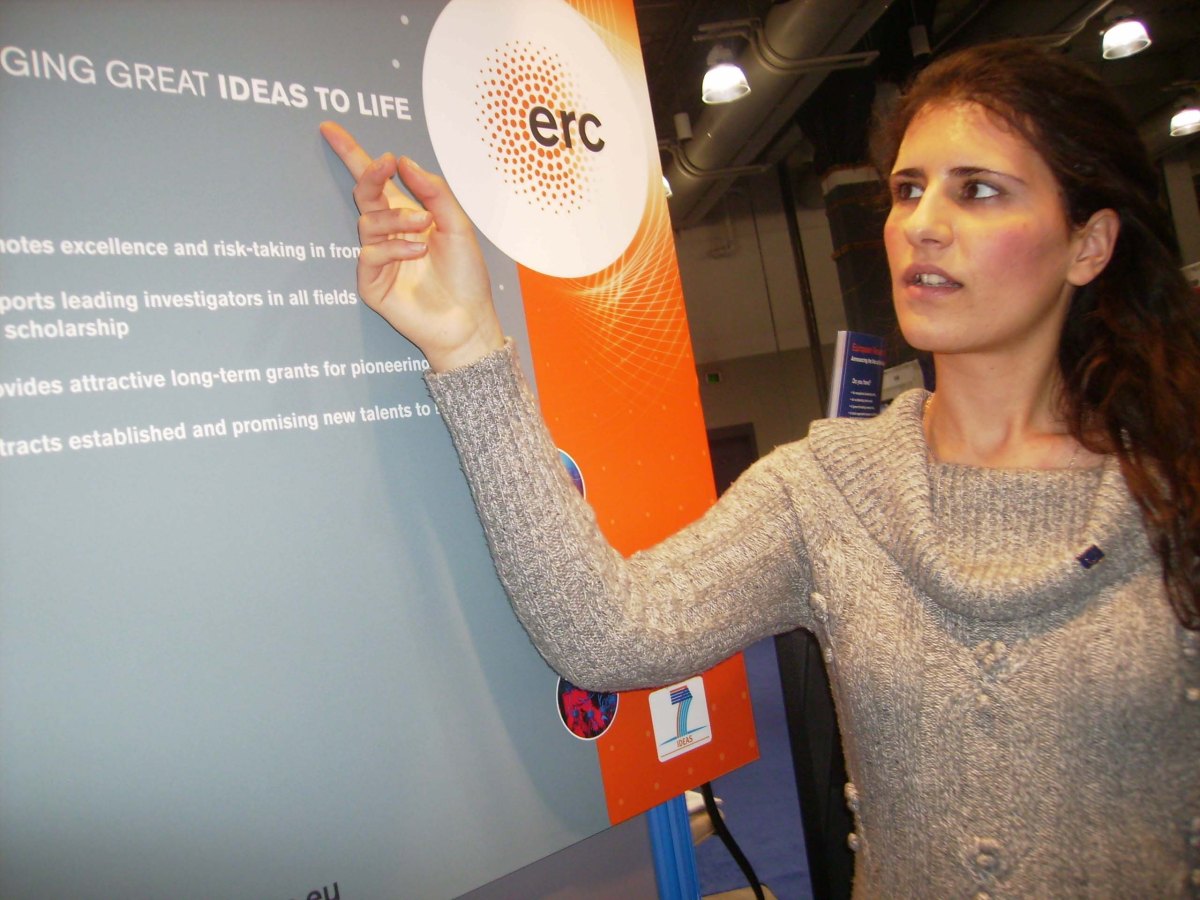
My heart belongs to Daddy, So I simply couldn’t be bad
“A complex fraud involving a Greek scientist and her network of international researchers has been uncovered by investigators from the European Anti-Fraud Office (OLAF).”
Katerina is the prodigy child of the Greek professor Elias Aifantis, a toxic control freak and best friend of Florian Kongoli, owner of the FLOGEN scamferences. In September 2024, Elias Aifantis was sentenced to 17 months prison for defrauding and extorting money from his own lab members (read September 2024 Shorts).
Menawhile, his daughter was suing OLAF, also for money. She obviously didn’t manage to overturn OLAF’s fraud findings against her, so she sued against that press release (backups also available on Scribd and on Science Business) which back in 2020 allowed me to identify her.
Aifantis apparently lost her appeal hearing in March 2024, the case was referred back to the General Court. On 14 October 2025, the OLAF-financed website eucrim brought this announcement under the headline “General Court Orders Compensation for Damage Caused by OLAF Press Release“:
“On 1 October 2025, the General Court (GC) ruled in favour of a Greek academic researcher seeking compensation for damage allegedly caused by a 5 May 2020 press release from the European Anti-Fraud Office (OLAF) that unlawfully processed her personal data and conveyed false information about her. The case is referred as T-384/20 RENV (OC v Commission). […]
The Court identified three unlawful aspects of OLAF’s press release:
- Unlawful processing of personal data […] Although the name of the applicant was not explicitly mentioned, the press release included information on age, nationality, gender, father’s employment at the Greek university, and the amount of the grant that enabled indirect identification. […]
- Violation of the presumption of innocence: The wording implied the applicant’s guilt before judicial adjudication, notably by characterising her actions as “fraud”[…]
- Breach of neutrality and impartiality […] By using the term “fraud” in the press release […]
On damage and causation, the Court found the applicant had sufficiently established non-material damage to honour and reputation, prejudice to her professional career, and harm linked to deteriorated health. It confirmed a causal link to OLAF’s (serious) breaches and ordered the Commission to pay €50,000. […]
It should also be noted that Greek courts deemed the researcher innocent regarding all of OLAF’s charges.”
It is most obvious that Aifantis’s lawyers used my article as evidence of how much she suffered due to exposure. In case you wonder why Greek courts found Katerina innocent but jailed Elias: the father extorted money from his Greek PhD students, the daughter was charged with “withdrawing” EU’s public money, which in Greek understanding belongs to nobody and is therefore there for the taking, like plums on a tree.
Katerina is doing great, never mind the health damage she allegedly suffered. She made it to associate professor AFTER I informed her University of Florida of the OLAF fraud findings. The university also eagerly shares with us Aifantis’s photos and videos at Kongoli’s scamference, and proudly informs us of her phony “Stoddart International Scientific Award” from FLOGEN. Read about these scamferences here:

USERN-friendly Nobelists
Nobel Prize laureates and predatory conferences – why such mutual attraction?
Retraction Watchdogging
The court concluded retraction wouldn’t breach publication contract
An antivax paper has been finally retracted, and that despite its authors suing the publisher Taylor & Francis to prevent just that.
The lead author Greg Marchand is a gynaecologist and the proud honour of The Marchand Institute for Minimally Invasive Surgery in Arizona, USA. The second author is his employee.
Greg Marchand, Ahmed Taher Masoud , Sai Medi Risk of all-cause and cardiac-related mortality after vaccination against COVID-19: A meta-analysis of self-controlled case series studies Human Vaccines & Immunotherapeutics (2023) doi: 10.1080/21645515.2023.2230828
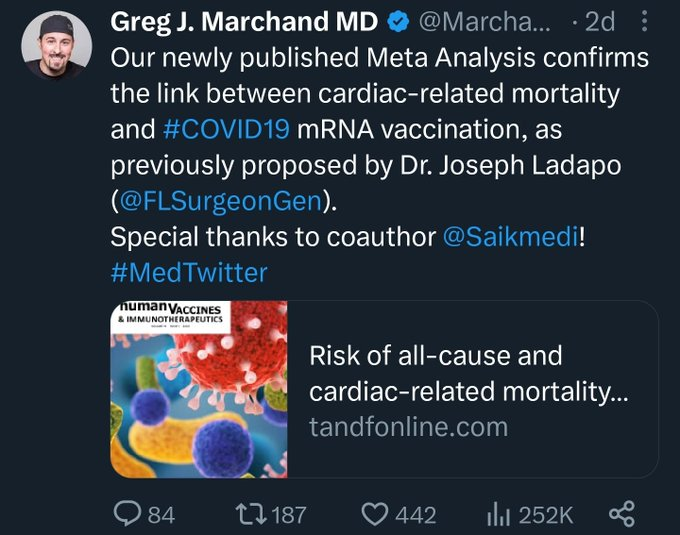
The study claimed to have uncovered that “COVID-19 vaccination may be associated with a small increase in cardiac-related mortality, especially among males“. It was immediately debunked by several experts on Twitter, as referenced on PubPeer. In October 2023, Borja Somovilla Del Saz managed to publish a rebuttal to Marchand et al 2020 in the same journal, to which Marchand and Masoud published their own rebuttal, to which Somovilla Del Saz replied again. titled: “Reconsidering the inclusion of Ladapo’s work in the meta-analysis: Validity concerns and implications“. Joseph Ladapo, on whose work Marchand et al based their analysis, earned himself in September 2021 the office of Surgeon General of Florida due to his unhinged and frankly homicidal views on COVID-19 restrictions, masks and vaccines (he even compared vaccine mandates to slavery). and suggested to use hydroxychloroquine and ivermectin instead.
In December 2023, another rebuttal of Marchand et al 2020 study was published in Human Vaccines & Immunotherapeutics, authored by the Twitter critics Tyler Black, Gideon Meyerowitz-Katz, Nana Owusu-Boaitey and Susan Oliver.
In November 2025, Marchand sued the publisher in an Arizona court because the publisher informed him of the decision to retract his dangerous and false paper. Marchand argued in court that because he paid Taylor & Francis (T&F) $3,175 for Open Access publishing, the publisher entered some kind of contractual obligations towards him to never retract his paper. Here Eugene Volokh‘s reporting on Reason from 15 December 2025:
“The court concluded that a retraction likely wouldn’t breach any publication contract, and that under the circumstances a temporary restraining order would be especially unjustified given the publisher’s First Amendment rights. […]
The court concluded that there likely was no contract between the parties limiting T & F’s power to retract an article—and that, even if there was a contractual requirement of a “full investigation” before a retraction, such a requirement likely wasn’t breached”
The court argued:
“Absent clear contractual obligations that would limit these rights, the Court declines to impose restraints on a publisher’s editorial discretion, which would go against the very firmament on which the First Amendment stands. The public interest is best served by not granting Marchand’s requested injunctive relief.”
Right Men and Anti-Cassandras
“These people are anti-Cassandras… they are optimistic and always wrong, receiving endless interviews about the censorship of their views, while their confident opinionation is always taken respectively by other Public Intellectuals because they are Serious People.” – Smut Clyde

Soon after. on 16 January 2026, the retraction statement was published:
“After publication, concerns were raised regarding the methodology and the integrity of the data reported in the article. When approached for an explanation, the authors have provided a full response to the queries raised. However, after assessment by an editorial board member, the Editor and Publishers have determined that the validity of the findings remains in question due to these data and methodology concerns.
In addition, after publication, a major dataset that formed a central part of the evidence presented in the paper has been removed from public access by the issuing government authority; therefore, key portions of the published analysis are unverifiable using publicly available data.
As verifying the validity of published work is core to the integrity of the scholarly record, we are, therefore, retracting the article. The corresponding author listed in this publication has been informed. The Editor and Publisher confirm that there is no allegation of research misconduct on the part of the authors.”
If you think such lawsuits to prevent retractions are bizarre, well, a cheater named Raju Reddy sued a society publisher to reverse his retractions! Read here:

Reddy vs JBC
Pittsburgh associate professor Raju Reddy and a colleague sued JBC over a retraction. The case has been settled in January 2021, the baddies won and the precedent is set.
Potential processes that could cause mistakes
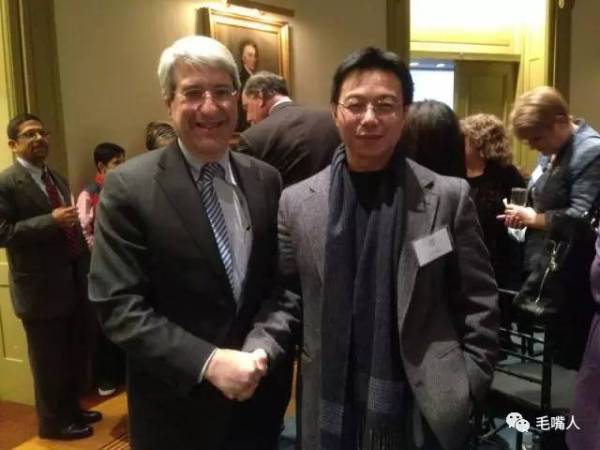
Retraction for Yale researchers, including the sexual harasser Michael Simons, and led by Wang “Mike” Min. Sholto David wrote about this and other fake studies by Min in this article:
Yale Fayle
“An attractive new prospect: Install the Chinese paper mill directly at Yale University, where research oversight is presumably less stringent than at the PRC and NIH funds are more easily accessed to piss up the wall.” – Sholto David

In this paper, even the uploaded raw data was fake:
Huanjiao Jenny Zhou, Zhe Xu, Zongren Wang, Haifeng Zhang, Zhen W. Zhuang, Michael Simons, Wang Min SUMOylation of VEGFR2 regulates its intracellular trafficking and pathological angiogenesis Nature Communications (2018) doi: 10.1038/s41467-018-05812-2


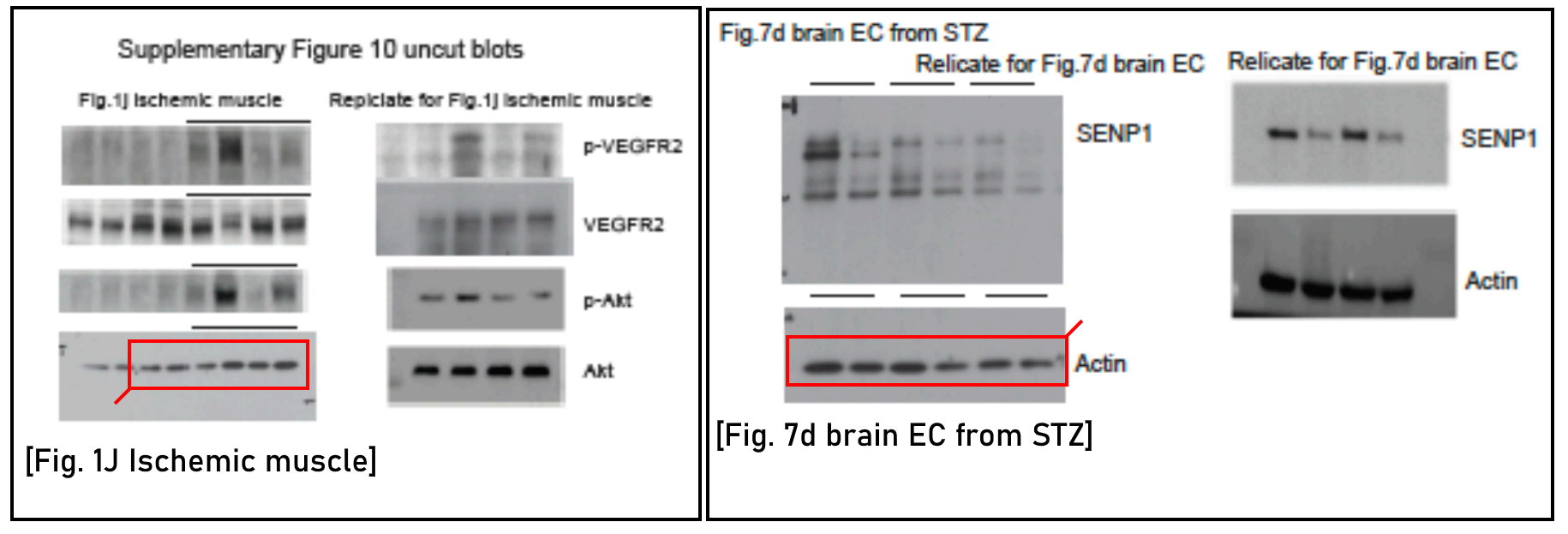
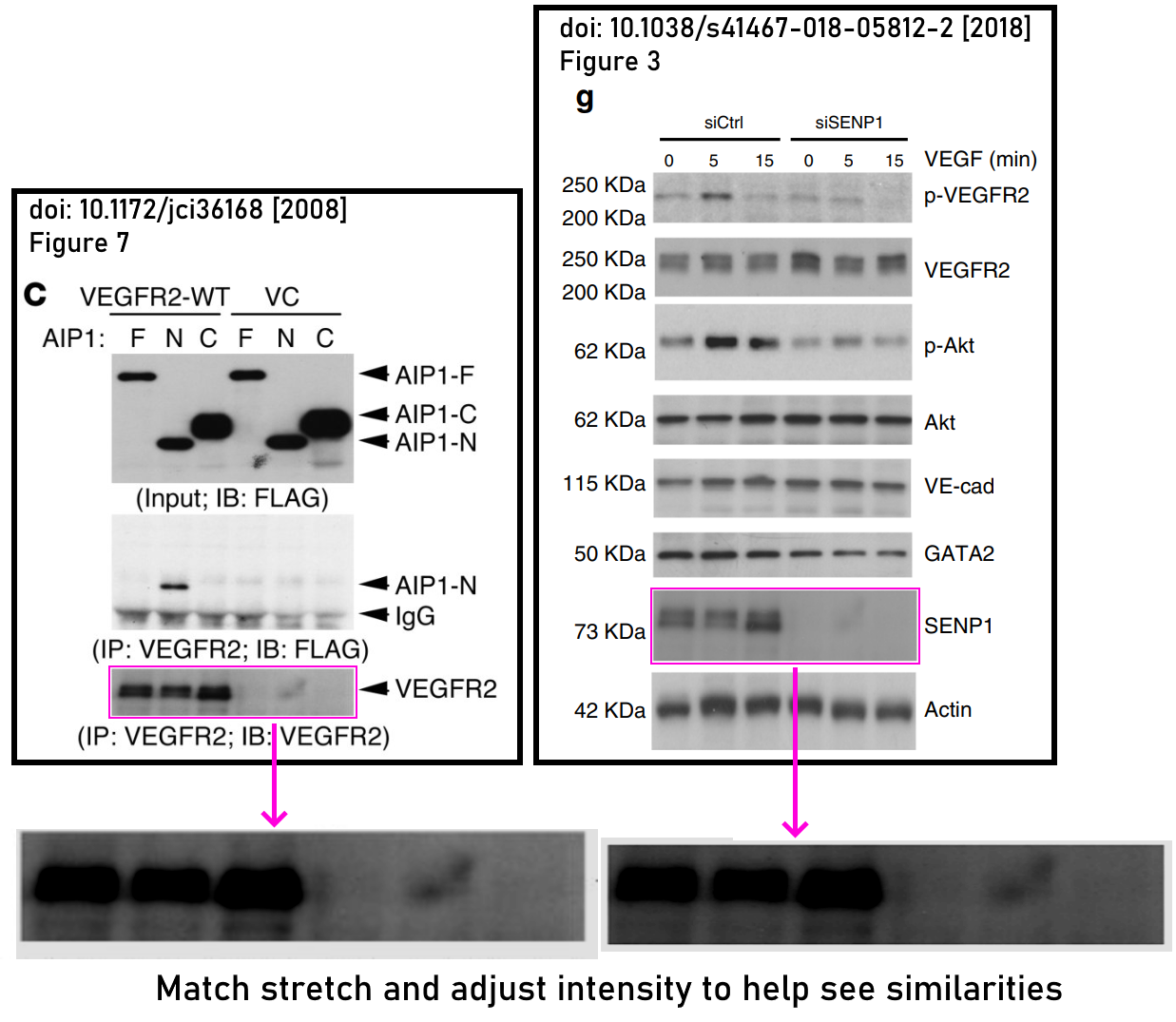
“Figure 3g: Surprisingly, a western blot in this paper was previously published with a different label in”:
Haifeng Zhang, Yun He, Shengchuan Dai, Zhe Xu, Yan Luo, Ting Wan, Dianhong Luo, Dennis Jones, Shibo Tang, Hong Chen, William C Sessa, Wang Min AIP1 functions as an endogenous inhibitor of VEGFR2-mediated signaling and inflammatory angiogenesis in mice Journal of Clinical Investigation (2008) doi: 10.1172/jci36168
In May 2025, Min assured on PubPeer:
“We have identified the potential processes that could cause the mistakes, including file transfer, image processing and figure assembly. All these mistakes were made unintentionally and inadvertently during the processes.”
He then supplied replacement data from “replicates” or proposed “to delete the blots“. On 21 January 2026, this Yale paper was retracted:
“The Editors have retracted this article. After publication, concerns were raised regarding some of the images presented in the figures, specifically:
- Fig. 2b Ad-LacZ ECKO and 7f Ad-LacZ R2-SUMO1 images appear to overlap;
- Fig. 2b Ad-VEGF WT and 7f WT Empty vector Ad-VEGF and STZ R2-WT Ad-VEGF images appear to overlap;
- Fig. 2b Ad-VEGF ECKO and 7f Ad-VEGF R2-SUMO1 images appear to overlap (rotated 180 degrees);
- Fig. 3g SENP1 blot appears highly similar to Fig. 7c VEGFR2 in the authors’ earlier study1;
- Fig. 5e siSENP1/R2-SUMO1 0 h and siSENP1/R2-KR 0 h images appear to overlap;
- Fig. 7f STZ Empty vector Ad-VEGF and R2-SUMO1 Ad-VEGF images appear to overlap.
Further issues have been identified in the uncut blots provided in the supplementary materials.
Due to the high number of concerns, the Editors no longer have confidence in the presented data.
Huanjiao Jenny Zhou and Wang Min do not agree with this retraction. None of the other authors have responded to any correspondence from the publisher about this retraction.”
Dirty Old Men
Does being a science genius entitle you to sexual harassment, as academic authorities in Yale and elsewhere insist? Let’s look at papers by Michael Simons, Joseph Schlessinger and Arnold Levine.
The aforementioned Zhang et al 2008 paper received in September 2025 an Expression of Concern:
“The authors recently became aware of errors in the Western blot data presented in Figures 6A and 3F and Supplemental Figure 6B, which included duplicated blot images that were used to represent distinct samples. Given the time that has elapsed since publication, some of the primary data related to these figures is no longer available. As we are unable to evaluate the integrity of all of these figure panels, the Editors are publishing this notice to alert readers to the concern.”
Versatile images of tumours
Yet another retraction for Sam S. Yoon, Chief of Surgical Oncology and Vice-Chair of Surgical Oncology Research and Education at Columbia University Irving Medical Center (CUIMC) in New York, USA. Yoon’s fraud was first exposed by Sholto David, then featured in new York Times, earned him a pile of retraction and… a name change. Columbia University lists him now as S. Sunghyun Yoon (read June 2024 Shorts), so nobody will ever associate this totally unrelated man with Sam Yoon’s retractions and negative media presence.

Memorial Sloan Kettering Paper Mill
“Why do successful and apparently intelligent surgeons feel the need to play pretend at biology research? Has Sam S. Yoon ever performed an invasion or migration assay? […] if this is how he “supervises” his research does anyone trust his supervision of surgery?” – Sholto David
This newly retracted paper is coauthored by Yoon’s wife and faculty colleague, Sandra Ryeom, the last author is Chang-Ming Huang, Director of Department of Gastric Surgery at Fujian Medical University Union Hospital in China (Huang has other papers on PubPeer). It shares images with 4 other papers by Yoon, all of them meanwhile retracted:
Jian-xian Lin, Changhwan Yoon, Ping Li, Sandra W. Ryeom, Soo-Jeong Cho, Chao-hui Zheng, Jian-wei Xie, Jian-bin Wang, Jun Lu, Qi-yue Chen, Sam S. Yoon, Chang-ming Huang CDK5RAP3 as tumour suppressor negatively regulates self-renewal and invasion and is regulated by ERK1/2 signalling in human gastric cancer British Journal of Cancer (2020) doi: 10.1038/s41416-020-0963-y
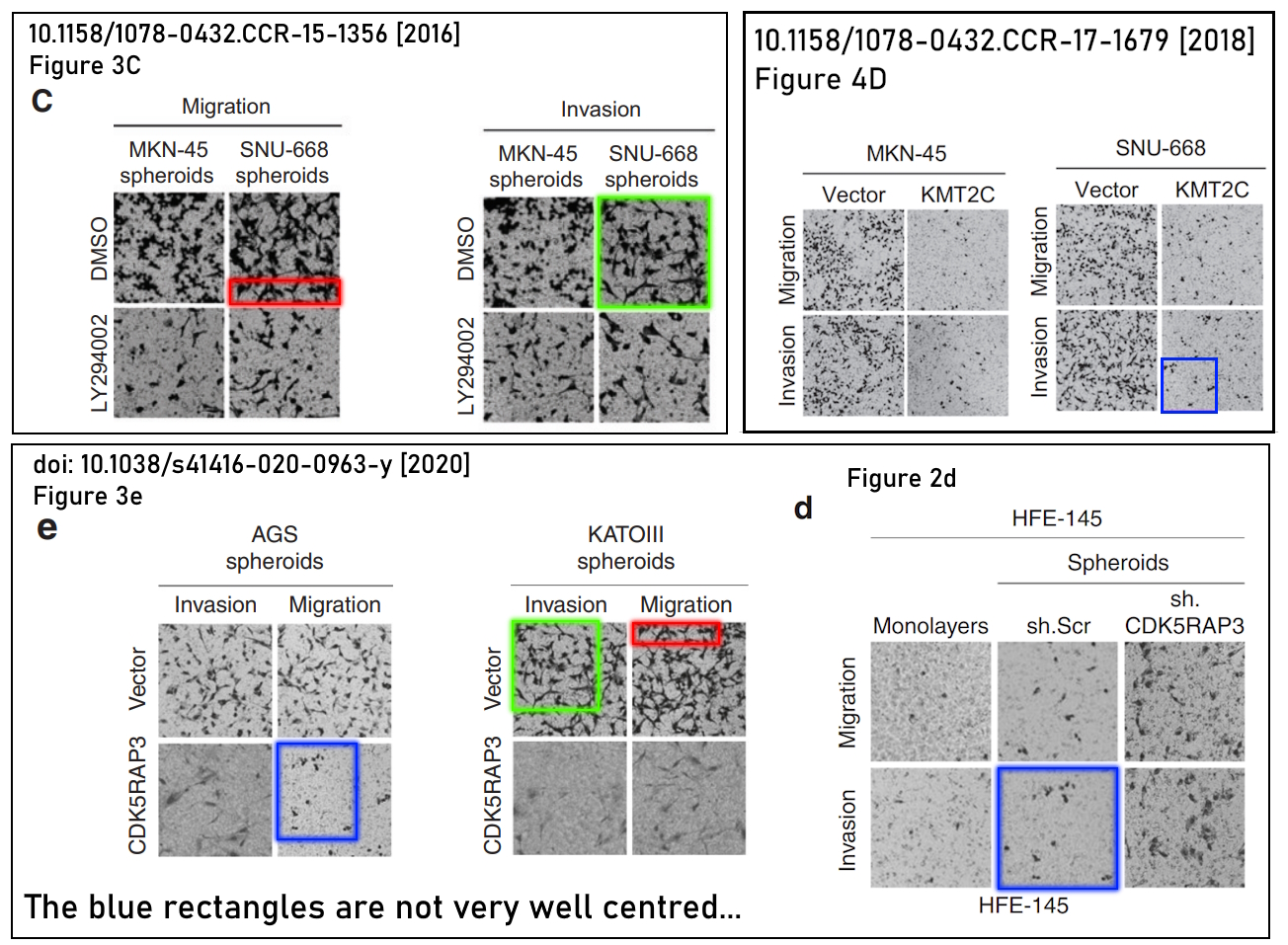
Changhwan Yoon, Soo-Jeong Cho, Bülent Arman Aksoy, Do Joong Park, Nikolaus Schultz, Sandra W. Ryeom, Sam S. Yoon Chemotherapy Resistance in Diffuse-Type Gastric Adenocarcinoma Is Mediated by RhoA Activation in Cancer Stem-Like Cells Clinical Cancer Research (2016) doi: 10.1158/1078-0432.ccr-15-1356 October 2024 Retraction
Soo-Jeong, Changhwan Yoon, Jun Ho Lee, Kevin K. Chang, Jian-xian Lin, Young-Ho Kim, Myeong-Cherl Kook, Bülent Arman Aksoy, Do Joong Park, Hassan Ashktorab, Duane T. Smoot, Nikolaus Schultz, Sam S. Yoon KMT2C Mutations in Diffuse-Type Gastric Adenocarcinoma Promote Epithelial-to-Mesenchymal Transition Clinical Cancer Research (2018) doi: 10.1158/1078-0432.ccr-17-1679 October 2024 Retraction
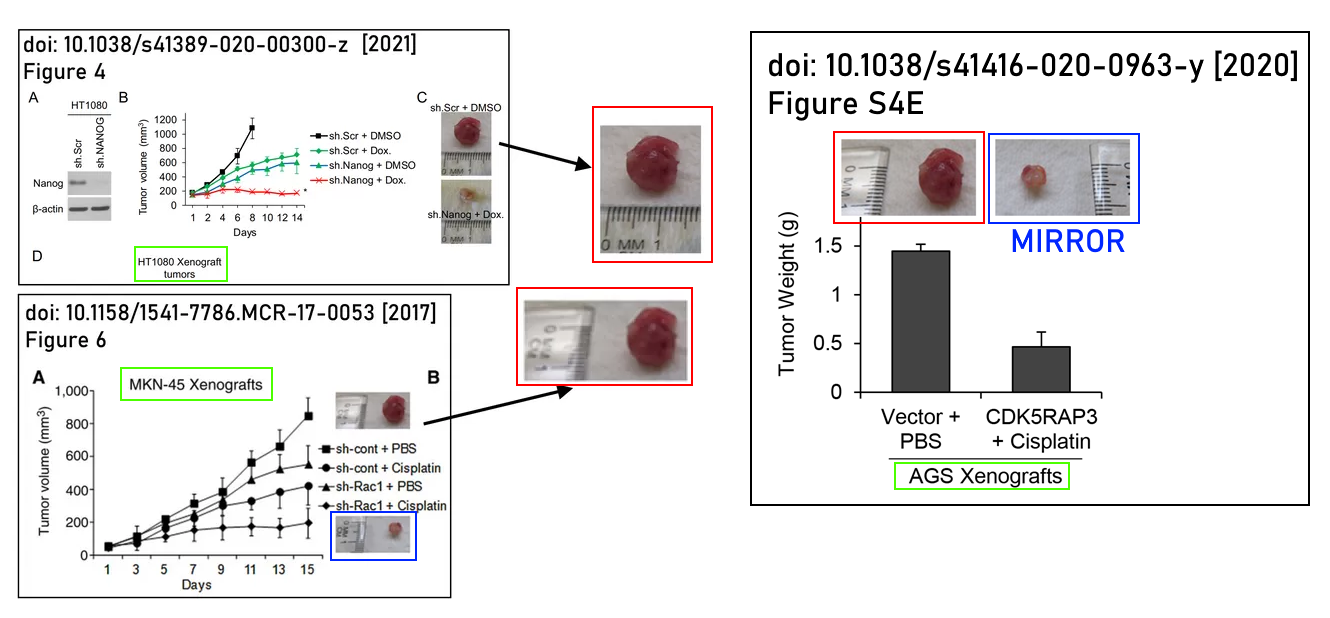
Changhwan Yoon , Jun Lu , Brendan C. Yi , Kevin K. Chang , M. Celeste Simon, Sandra Ryeom, Sam S. Yoon PI3K/Akt pathway and Nanog maintain cancer stem cells in sarcomas Oncogenesis (2021) doi: 10.1038/s41389-020-00300-z May 2024 Retraction
Changhwan Yoon, Soo-Jeong Cho, Kevin K. Chang , Do Joong Park, Sandra W. Ryeom, Sam S. Yoon Role of Rac1 Pathway in Epithelial-to-Mesenchymal Transition and Cancer Stem-like Cell Phenotypes in Gastric Adenocarcinoma Molecular cancer research (2017) doi: 10.1158/1541-7786.mcr-17-0053 November 2024 Retraction
So now also this paper was retracted by Springer Nature, on 20 January 2025. Highlights mine:
“The Editor-in-Chief has retracted this article because the authors have not provided documents confirming that appropriate ethics approval was obtained for the human and animal studies. Additionally, concerns were raised regarding the data presented in some of the figures. Specifically:
- In Figure 2d, the sh.Scr Invasion panel has elements that appear highly similar to the Figure 3e AGS, CDK5RAP3 Migration panel.
- In Figure 3e, the KATOIII Vector Invasion panel has elements that appear highly similar to the Figure 3C SNU-668 DMSO Invasion panel of [1].
- In Figure 3e, the KATOIII Vector Migration panel has elements that appear highly similar to the Figure 3C SNU-668 DMSO Migration panel of [1].
- In Figure S4E, the tumor images appear highly similar to the Figure 6A tumour images of [2].
Sandra W. Ryeom and Sam S. Yoon agree with this retraction. Jian-xian Lin has not stated whether they agree or disagree with this retraction. Changhwan Yoon, Ping Li, Soo-Jeong Cho, Chao-hui Zheng, Jian-wei Xie, Jian-bin Wang, Jun Lu, Qi-yue Chen, and Chang-ming Huang have not responded to correspondence regarding this retraction.”
Stupid question from me: why doesn’t Springer Nature ask the authors to prove the existence of ethics approvals already at the manuscript submission stage?
Another stupid question from me: does S. Sunghyun Yoon also agree with this retraction?
Concerns regarding the editorial handling
We remain on the topic of Taylor & Francis. The papermiller Pau Loke Show earned 6 retractions in one go: five for the papers he coauthored, and one for the editorial for his special issue of a Taylor & Francis journal where those were published.
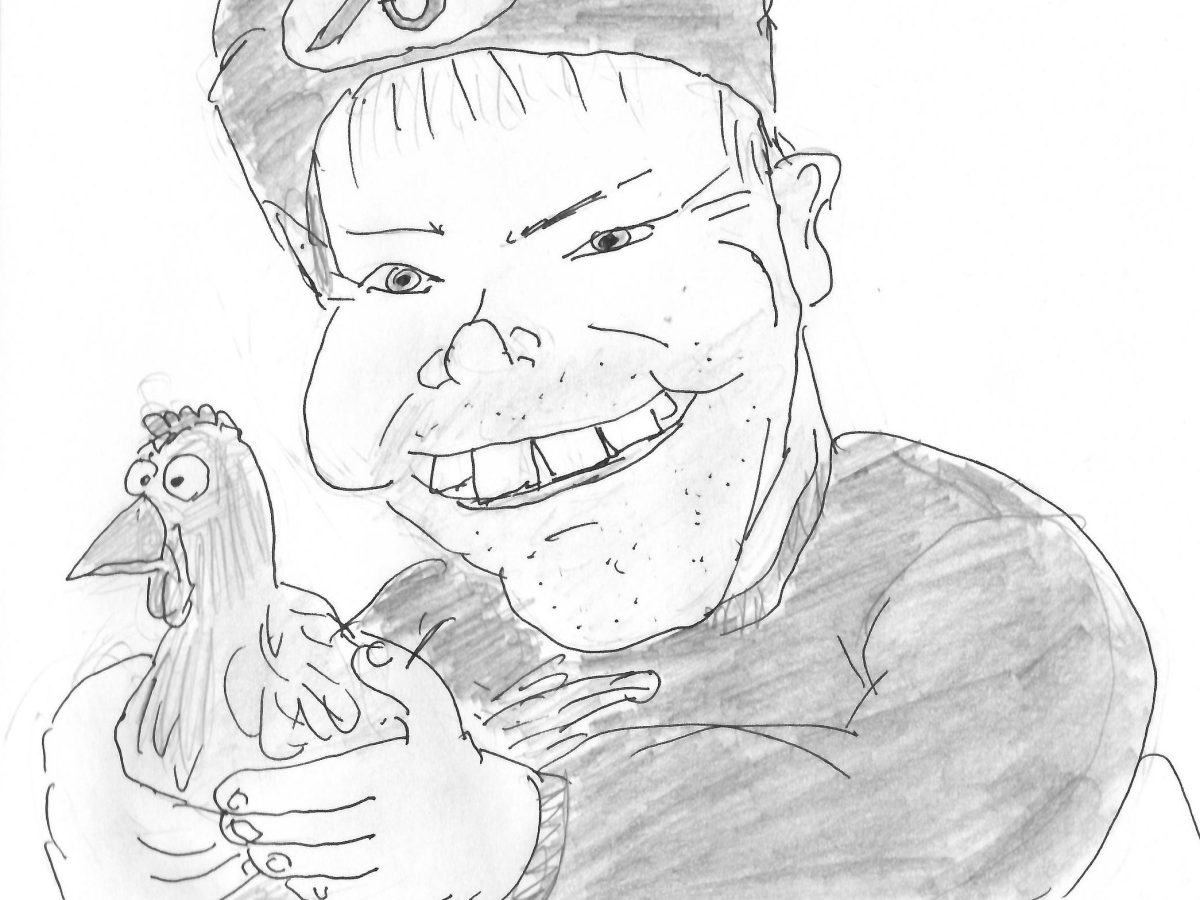

The Malaysian native Show, currently professor at Khalifa University in the Emirates, is a central figure of an enormous vortex of papermill fraudsters who edit and peer-review each others papermilled papers. His co-editor, co-author and fellow Malaysian Kit Wayne Chew is a member of that vortex. Here the retracted editorial:
Pau Loke Show , Kit Wayne Chew , Jo-Shu Chang Special issue on algae bioprocess engineering Bioengineered (2020) doi: 10.1080/21655979.2020.1729546
Here is the retraction from 19 January 2026, I added PubPeer hyperlinks, highlights mine also:
“We, the Editor-in-Chief and Publisher of Bioengineered (the “Journal”), have retracted the following articles which were published in the Special Issue titled “Algal Bioprocess Engineering”, guest edited by Pau Loke Show, Kit Wayne Chew & Jo-Shu Chang, Bioengineered, 11(S12), originally published in 10(01) and 11(01).
- Show, P. L., Chew, K. W., & Chang, J. S. (2020). Special issue on algae bioprocess engineering. Bioengineered, 11(SI2), 188. https://doi.org/10.1080/21655979.2020.1729546
- Koyande, A. K., Show, P. L., Guo, R., Tang, B., Ogino, C., & Chang, J. S. (2019). Bio-processing of algal bio-refinery: a review on current advances and future perspectives. Bioengineered, 11(SI2), 574–592. https://doi.org/10.1080/21655979.2019.1679697
- Ghanbariasad, A., Taghizadeh, S. M., Show, P. L., Nomanbhay, S., Berenjian, A., Ghasemi, Y., & Ebrahiminezhad, A. (2019). Controlled synthesis of iron oxyhydroxide (FeOOH) nanoparticles using secretory compounds from Chlorella vulgaris microalgae. Bioengineered, 11(SI2), 390–396. https://doi.org/10.1080/21655979.2019.1661692
- Cheah, W. Y., Show, P. L., Yap, Y. J., Mohd Zaid, H. F., Lam, M. K., Lim, J. W., … Tao, Y. (2019). Enhancing microalga Chlorella sorokiniana CY-1 biomass and lipid production in palm oil mill effluent (POME) using novel-designed photobioreactor. Bioengineered, 11(SI2), 61–69. https://doi.org/10.1080/21655979.2019.1704536
- Tan, J. S., Lee, S. Y., Chew, K. W., Lam, M. K., Lim, J. W., Ho, S. H., & Show, P. L. (2020). A review on microalgae cultivation and harvesting, and their biomass extraction processing using ionic liquids. Bioengineered, 11(SI2), 116–129. https://doi.org/10.1080/21655979.2020.1711626
- Taghizadeh, S. M., Berenjian, A., Chew, K. W., Show, P. L., Mohd Zaid, H. F., Ramezani, H., … Ebrahiminezhad, A. (2020). Impact of magnetic immobilization on the cell physiology of green unicellular algae Chlorella vulgaris. Bioengineered, 11(SI2), 141–153. https://doi.org/10.1080/21655979.2020.1718477
Following publication, the Publisher identified concerns regarding the editorial handling of the Special Issue and the peer review process.
An investigation by the Taylor & Francis Publishing Ethics & Integrity team in full cooperation with the Editor-in-Chief concluded that the articles included in this Special Issue were not peer-reviewed appropriately, in line with the Journal’s peer review standards and policy.
As the stringency of the peer review process is core to the integrity of the publication process, the Editor-in-Chief and Publisher have decided to retract all the articles within the above-named Special Issue. The Editor-in-Chief and the Publisher have not confirmed if all the authors were aware of the concerns with the peer review process.
The Journal is committed to correcting the scientific record and will fully cooperate with any institutional investigations into this matter. The authors have been informed of this decision.”
Maybe Show and Chew demanded to be added as coauthors, on top of other things. Only Koyande et al 2019 was previously flagged on PubPeer, for nonsense references.
Science Breakthroughs
Meat is anti-aging superfood
The real anti-aging superfood is meat, science has spoken!
Daily Mail informed on 7 January 2026 under the headline “Want to live to 100? DON’T turn vegetarian: Meat eaters are more likely to hit the milestone, new study reveals“:
“According to a major Chinese study, meat eaters are actually more likely to reach the milestone age than their plant-eating counterparts.
Even after accounting for factors like exercise and smoking, people who cut meat out of their diet were 19 per cent less likely to make it to 100 compared to omnivores.
This trend was the most pronounced among vegans, who are a staggering 29 per cent less likely to become centenarians.
Vegetarians, who still eat eggs and dairy, were only slightly more likely to make it to 100, with their odds being 14 per cent worse than those of meat eaters.
Even trendy pescetarian diets, which include fish, were linked with reduced odds of reaching 100. […]
The study looked at 5,203 participants in the Chinese Longitudinal Healthy Longevity Survey, who were all 80 or older when the survey began in 1998.”
Yes, meat is the real anti-aging drug. Presumably raw. This is the paper, the corresponding author is Xiang Gao, former professor at Penn State University and now Dean of Institute of Nutrition at Fudan University in Shanghai:
Yaqi Li , Kaiyue Wang , Yuebin Lv , Guliyeerke Jigeer , Yilun Huang , Xiuhua Shen , Xiaoming Shi , Xiang Gao Vegetarian diet and likelihood of becoming centenarians in Chinese adults aged 80 y or older: a nested case-control study The American Journal of Clinical Nutrition (2025) doi: 10.1016/j.ajcnut.2025.101136
In a study published just before (Jigeer et al 2025), Gao and his colleagues determined that “modest inclusion of animal-based foods may improve the overall health status of healthy older adults“. and in Huang et al 2025 they proved that “vegetarian diets were observed to be associated with higher frailty risk, compared to the omnivorous diet in Chinese older adults“.
Donate!
If you are interested to support my work, you can leave here a small tip of $5. Or several of small tips, just increase the amount as you like (2x=€10; 5x=€25). Your generous patronage of my journalism will be most appreciated!
€5.00

 For Better Science
This one is really special. I like the style of the person, who brought out the full artistic potential of the paper. Very odd that the editor-in-chief of Infection and Immunity and the reviewers couldn’t see the true talent. Sometimes it really is as Jesus said: ‘don’t cast your pearls before swine’
“Ladislava Sebkova , Antonia Pellicanò , Giovanni Monteleone, Barbara Grazioli , Giovanni Guarnieri , Maria Imeneo , Francesco Pallone , Francesco Luzza Extracellular signal-regulated protein kinase mediates interleukin 17 (IL-17)-induced IL-8 secretion in Helicobacter pylori-infected human gastric epithelial cells Infection and Immunity (2004) doi: 10.1128/iai.72.9.5019-5026.2004 “
PubPeer – Extracellular signal-regulated protein kinase mediates inter…
LikeLike
Monteleone now went to PubPeer to share this sad news:
“Unfortunately, most of the original blots are no longer available, and the quality of the remaining images (which were kept exclusively in lab notebooks) is not sufficient for publication. In fact, these studies were conducted more than 10 years ago, and the blots were printed on photographic paper, which has faded due to light and humidity.”
https://pubpeer.com/publications/03ED65961D0E5B83FEAC28BBD5BD4D#7
He forgot termites.
LikeLike