

The hero of this German story is the oncologist Andrea Tannapfel, since 2005 head of Institute of Pathology and dean of the medical faculty at the University of Bochum. Prior to that she worked for almost two decades at the Institute of Pathology at University of Leipzig, where she in 1996 joined its freshly recruited director Christian Wittekind, who himself retired in 2019.
Now allow me to show you how Tannapfel (and Wittekind) helped cure cancer, according to their PubPeer record, established by the sleuths Sholto David and pseudonymous Claire Francis.
Here, tissue samples of 29 patients operated for head and neck cancer were used, but apparently not in the way the patients imagined this research to happen:
Anette Weber , Ulf Bellmann , Friedrich Bootz, Christian Wittekind , Andrea Tannapfel INK4a-ARF alterations and p53 mutations in primary and consecutive squamous cell carcinoma of the head and neck Virchows Archiv (2002) doi: 10.1007/s00428-002-0637-6

A closer look raises further question about apparent geometrical irregularities in Fig 1a:

Wittekind’s and Tannapfel’s coauthor Friedrich Bootz used to be head of otolaryngology clinic at the University of Leipzig and is now heading such a clinic at the University of Bonn. His successor in Leipzig, Andreas Dietz is now President of the German Society for Otolaryngology, and coauthor on this study with head and neck tumour samples from 94 patients:
Anette Weber , Ulrich R Hengge , Walter Bardenheuer , Iris Tischoff , Florian Sommerer , Annett Markwarth , Andreas Dietz , Christian Wittekind, Andrea Tannapfel SOCS-3 is frequently methylated in head and neck squamous cell carcinoma and its precursor lesions and causes growth inhibition Oncogene (2005) doi: 10.1038/sj.onc.1208818

Also this figure reveals unusual edges and structures at a closer look:

The next bigwig coauthor is Johann Hauss, head of surgery clinic at University of Leipzig, on this study with 71 patients with hepatocellular carcinoma:
Andrea Tannapfel , Claudia Busse , Lars Weinans , Markus Benicke , Alexander Katalinic , Felix Geißler , Johann Hauss , Christian Wittekind INK4a-ARF alterations and p53 mutations in hepatocellular carcinomas Oncogene (2001) doi: 10.1038/sj.onc.1204902


Again Hauss, plus academician and Leipzig’s retired head of gastroenterology and former dean of medicine Joachim Mössner; this study with tumour samples from 41 cholangiocellular carcinoma patients is from the previous century, but the evidence is convincing:
A Tannapfel , K Engeland , L Weinans , A Katalinic , J Hauss , J Mössner , Ch Wittekind Expression of p73, a novel protein related to the p53 tumour suppressor p53, and apoptosis in cholangiocellular carcinoma of the liver British Journal of Cancer (1999) doi: 10.1038/sj.bjc.6690465

At least Mössner must know about potential problems with Tannapfel’s science, he had to correct a joint paper in 2019:
Katja Spiesbach , Andrea Tannapfel , Joachim Mössner , Kurt Engeland TAp63gamma can substitute for p53 in inducing expression of the maspin tumor suppressor International Journal of Cancer (2005) doi: 10.1002/ijc.20766

The Erratum from December 2019 stated:
“There is a mistake in the β-actin bands presented in the Western Blot in Figure 1 as follows:
The authors accidently presented identical bands for the β-actin loading control in the left and right panel although the experimental setup of these panels was different. Because considerable time has passed since the paper was published, the original electronic scan of the Western Blot could not be located. However, a scan of the paper printout was retrieved and has now been used to compose the figure.”
Yet the authors forgot to mention and explain in their Erratum that they have introduced splice lines for all four gel images. The splicing was done extremely professionally and is barely detectable. Why would anyone do that? And since the authors can’t provide raw data to prove those experiments were indeed done on the same gel, the whole figure becomes completely pointless at best:

Onto the next case. A study with samples from 31 angiosarcoma patients, led by Tannapfel, Wittekind and their collaborator Renate Wrbitzky, who until her retirement was institute director at Hannover Medical School (MHH):
Markus Weihrauch , Anett Markwarth , Gerhard Lehnert , Christian Wittekind, Renate Wrbitzky , Andrea Tannapfel Abnormalities of the ARF-p53 pathway in primary angiosarcomas of the liver Human Pathology (2002) doi: 10.1053/hupa.2002.126880

Some parts of Figure 1 re-appeared in another paper by Tannapfel and Wittekind, this time with Hauss, and suddenly those 31 angiosarcoma patients transformed into 51 cholangiocarcinomas patients:
Andrea Tannapfel , Florian Sommerer , Markus Benicke , Lars Weinans , Alexander Katalinic , Felix Geißler , Dirk Uhlmann , Johann Hauss , Christian Wittekind Genetic and epigenetic alterations of the INK4a–ARF pathway in cholangiocarcinoma The Journal of Pathology (2002) doi: 10.1002/path.1139

The Weihrauch et al 2002 paper also shares data with this paper, at least the cancer remained as angiosarcoma (17 patients):
Andrea Tannapfel, Markus Weihrauch , Markus Benicke , Dirk Uhlmann, Johann Hauss , Renate Wrbitzky , Christian Wittekind p16INK4A – alterations in primary angiosarcoma of the liver Journal of Hepatology (2001) doi: 10.1016/s0168-8278(01)00046-0


Luckily, despite the gel duplication, this strange boxed structure exists only in the Fig3 of the Weihrauch et al 2002 paper (see left), and not in the Tannapfel et al 2001 study.
There are also Tannapfel papers on PubPeer without Wittekind, and some were published after the then 39 year old shooting star left Leipzig to run her own pathology institute in Bochum. Like some studies with the dermatologist Ulrich Remigius Hengge, owner of two private clinics in Düsseldorf area (one for dermatology and another for phlebology) and adjunct professor at the University of Düsseldorf. Here is one common paper:
M. Hassan , A. Mirmohammadsadegh , D. Selimovic , S. Nambiar , A. Tannapfel , U. R. Hengge Identification of functional genes during Fas-mediated apoptosis using a randomly fragmented cDNA library Cellular and molecular life sciences (2005) doi: 10.1007/s00018-005-5172-6

And here is another:
Alireza Mirmohammadsadegh , Mohamad Hassan , Walter Bardenheuer , Alessandra Marini , Annett Gustrau , Sandeep Nambiar , Andrea Tannapfel , Hans Bojar , Thomas Ruzicka , Ulrich R. Hengge STAT5 phosphorylation in malignant melanoma is important for survival and is mediated through SRC and JAK1 kinases Journal of Investigative Dermatology (2006) doi: 10.1038/sj.jid.5700385

This study on samples from over a hundred of cancer patients plus twenty healthy controls, by Hengge, Bochum University’s dean Tannapfel and her Vice-Dean Wolfgang Schmidt in Gut, ist nicht gut:
I Tischoff , U R Hengge , M Vieth , C Ell , M Stolte , A Weber , W E Schmidt , A Tannapfel Methylation of SOCS-3 and SOCS-1 in the carcinogenesis of Barrett’s adenocarcinoma Gut (2007) doi: 10.1136/gut.2006.111633


The yellow-framed duplication in Fig 2 is clear, and the red-framed fragments in Fig 1 are also identical (but after stretching!), however the purple-framed bits in Fig 2 seem to contain both identical fragments over a wider distance than originally labelled by Sholto, but also dissimilar gel bands and background noise like dots (on the left).
Whoever assembled that figure, must have invested a lot of skill and effort into Photoshop. But then again, in love, war and cancer research all is fair, because the end justifies the means. Like most Tannapfel papers, this masterpiece was funded by the German Federal Ministry for Education and Research (BMBF) and the Interdisciplinary Centre for Clinical Research (IZKF) at the University of Leipzig. Money well invested!
Another collaboration of Tannapfel’s, the last author Sonja Sievers is now Head of Screening Facility at the Max Planck Institute in Dortmund. The Düsseldorf connection is still there: Guido Reifenberger is institute director at the University Clinic Düsseldorf.
Silke Götze , Valeska Feldhaus , Thilo Traska , Marietta Wolter , Guido Reifenberger , Andrea Tannapfel , Cornelius Kuhnen , Dirk Martin , Oliver Müller , Sonja Sievers ECRG4 is a candidate tumor suppressor gene frequently hypermethylated in colorectal carcinoma and glioma BMC Cancer (2009) doi: 10.1186/1471-2407-9-447

Another one, this time with colleagues from University of Erlangen (last author Gisa Tiegs is now professor at the University of Hamburg):
Gabriele Sass , Noula Dattu Shembade , Florian Haimerl , Nicolas Lamoureux , Said Hashemolhosseini , Andrea Tannapfel, Gisa Tiegs TNF pretreatment interferes with mitochondrial apoptosis in the mouse liver by A20-mediated down-regulation of Bax The Journal of Immunology (2007) doi: 10.4049/jimmunol.179.10.7042


Tannapfel’s oldest PubPeer post is interesting, it includes as coauthor Peter Krammer, emeritus institute director at DKFZ and University of Heidelberg, Leopoldina Academy member, and an old associate of Klaus-Michael Debatin and Simone Fulda, as some problematic threads on PubPeer showcase.
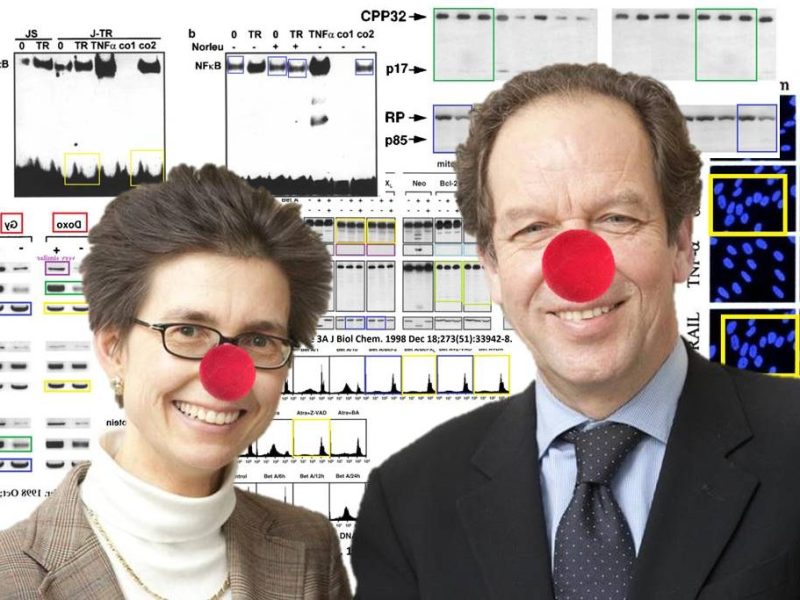
Fulda & Debatin: Reproducibility of Results in Medical and Biomedical Research
“Basic and advanced training for researchers should focus much more on self-reflection, openness and a culture of error acceptance.”

Also on board are Moshe Oren of Weizmann Institute, plus Gerry Melino, the Editor-in-Chief of the Nature portfolio journal where this was published:
M Müller, T Schilling , A E Sayan , A Kairat , K Lorenz , H Schulze-Bergkamen , M Oren , A Koch , A Tannapfel , W Stremmel , G Melino, P H Krammer TAp73/Delta Np73 influences apoptotic response, chemosensitivity and prognosis in hepatocellular carcinoma Cell Death and Differentiation (2005) doi: 10.1038/sj.cdd.4401774

Basically, also with Tannapfel the Schneider Rules applies. You can read about Melino and his journal here:
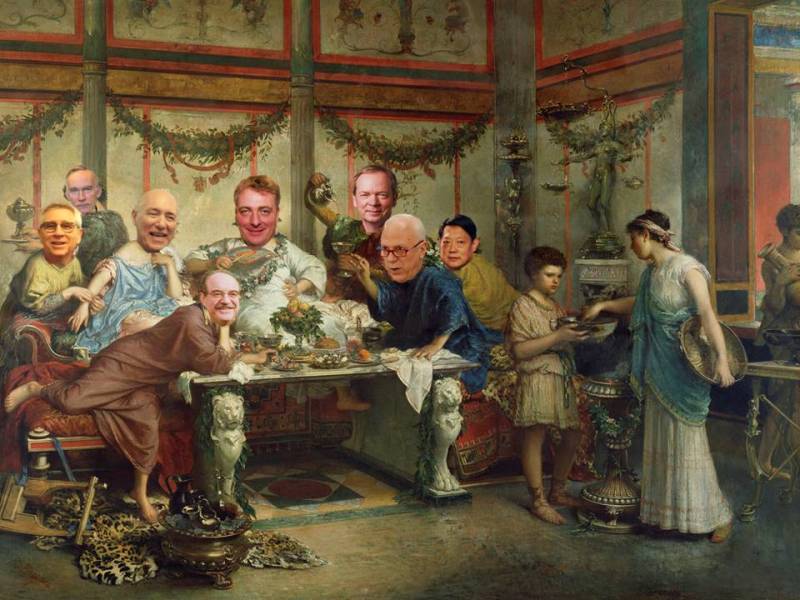
Cell Death and Depravity
Is the journal Cell Death and Disease a disease itself, parasitised by Chinese paper mills? Can it be cured? Not with this team of doctors on editorial board.
Many papers by Tannapfel either don’t list the research funding, or report funding from the German Ministry for Research and University of Leipzig, but not from the German Research Council (DFG) which unfortunately is the only national investigative body in Germany. The Ombudspersons of the Universities of Bochum and of Leipzig announced to investigate.
Problem is, Tannapfel is the Dean, thus in charge of all such investigations. Her Vice-Dean Schmidt is coauthor on a very bad paper. In Leipzig, current clinic heads are involved. Plus, the papers are old. Let’s see what comes out of it.

In a 2022 interview, Tannapfel said she is driven by “doing well what I do” and that her values are “patience, intellectuality and consistency“. She also said that as a child she wanted to become a forest ranger. Maybe that (or a lumberjack?) would have been a better job choice.
Neither Wittekind nor Tannapfel replied to my email.
Donate!
If you are interested to support my work, you can leave here a small tip of $5. Or several of small tips, just increase the amount as you like (2x=€10; 5x=€25). Your generous patronage of my journalism will be most appreciated!
€5.00

 For Better Science
“In Gut, ist nicht gut” 😄
For our dear German readers, let me add:
Der Tannapfel fällt nicht weit vom Stamm!
LikeLike
I discarded that joke because Wittekind doesn’t seem to be the tree-trunk here.
You are mixing Tannäpfel with pears (or oranges).
Oh Tannapfelbaum oh tannapfelbaum
du kannst mir sehr gefallen.
LikeLike
Huh… I couldn’t see the trunk for the trees!
LikeLike