

In case you have been wondering who Archasia belfragei really is: the sleuth now outs himself to you as Fabian Wittmers, the German marine biologist now doing postdoc in USA.
The story which Fabian belfragei wishes to tell you is of a Chinese materials scientist in the UK, a Professor Zhanhu Guo, who is steadily working towards becoming both very rich and the most cited researcher on the planet.
The following contribution is Fabian’s personal view and not of any of his academic employers, past or present. I provided some editing.

How to create your own citation vehicle journal – powered by Springer-Nature
by Fabian Wittmers
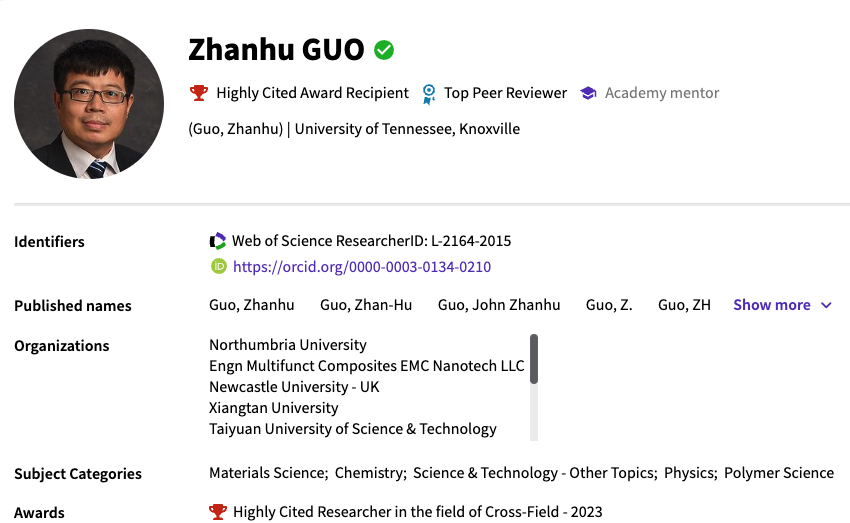
When you think you have seen all possible variants of rather questionable scientific integrity and forms of ethical misconduct after reading this blog and others for years, someone will appear out of nowhere to surprise you: Zhanhu Guo, who is currently Professor of Mechanical & Construction Engineering at Northumbria University Newcastle upon Tyne in the UK (although Web of Science still lists his old affiliation in USA). According to Google Scholar, he has been cited a whopping 105.586 times (as of April 3rd 2025).
This story involves a lot of puzzle pieces and might sound completely outrageous and unbelievable at times, but I brought receipts and it will hopefully all make sense at the end. Disclaimer: I am a marine biologist and not a materials scientist and frankly do not have the background to critically judge most of Guo’s papers; my knowledge of composite materials (which he mostly publishes on) is restricted to the carbon fibres in my road bike. That said, this article is less a critique of the content itself and more of the conduct surrounding it. I also want to be clear that this is not a critique of the person. I have never met or interacted with Zhanhu Guo. This article is purely related to the integrity of his scientific record. I will be mentioning some personal details because they are directly related to his activity as a researcher. All of this information was obtained through publicly accessible records available online.
First, we need to establish some background information: Before moving to England, Guo spend almost 23 years as a researcher in the United States, first, obtaining his PhD at Louisiana State University between 2000 and 2005. After a few years at Lamar University in Texas, he became Associate Professor at the University of Tennessee in Knoxville in 2015, where he was also the director of the Integrated Composites Laboratory. Guo spend 8 years there, and much of what this article is about took place (or started) while he was holding that position, before moving across the Atlantic to Northumbria in 2023.
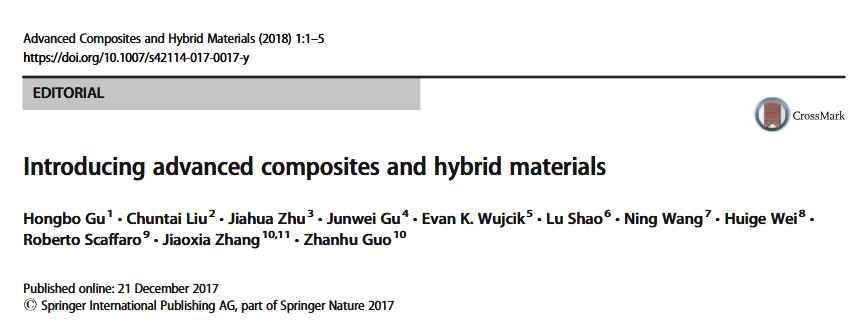
Importantly, in 2017 Guo became the Founding Editor and Editor-in-Chief of the journal Advanced Composites and Hybrid Materials, which is published by Springer-Nature. The first articles came out in 2018 and the journal has been doing very (VERY!) well, with now a total of ~1250 papers published and an impact factor of 23.2 (2023). If it was a cryptocurrency, people would say it went to the moon. In its first article, an editorial with Guo as senior author introducing the journal, Guo’s work is cited 14 times (out of 42 citations total, 33%). Rookie numbers for what he and the journal were about to “accomplish”.
Getting caught
I stumbled upon the mess which I am about to untangle here completely by accident, flagging some papers by Mohamed Moustafa Ibrahim from the University of Tennessee, an eye doctor who casually published dozens of papers on materials sciences and engineering in the past few years (totally normal, right?). When I shared this with other sleuths, Valentin Rodionov pointed out that some of those very new papers were gathering dozens of citations very quickly. A closer look led me to focus on Zhanhu Guo, often a senior author on these papers. We will come back to that and other related papers from 2025, but let’s continue chronologically.
Guo already had an old PubPeer record thanks to Elisabeth Bik and other sleuths. It is important to appreciate the real quality of his research before deciding if it really was worth being cited so much.
For example this, cited 112 times:
Jiangyang Tian , Qian Shao, Xiaojie Dong , Jinlong Zheng , Duo Pan , Xiyu Zhang , Huili Cao , Luhan Hao , Jiurong Liu, Xianmin Mai , Zhanhu GuoBio-template synthesized NiO/C hollow microspheres with enhanced Li-ion battery electrochemical performance Electrochimica Acta (2018) doi: 10.1016/j.electacta.2017.12.094

Elisabeth Bik: “Figures 2, 7, and 8.
Blue boxes: Figure 7C (600C, 2h calcification) and Figure 8B (12h ageing) appear to show the same sample, with an overlap
Green boxes: Figure 2C (600C) and Figure 7B (450C) appear to show the same sample at a different magnification”
This Guo study has been cited 119 times so far, and successfully corrected already 5 years ago:
Bin Qiu , Yiran Wang , Dezhi Sun, Qiang Wang , Xin Zhang , Brandon L. Weeks , Ryan O’Connor , Xiaohua Huang , Suying Wei , Zhanhu Guo Cr(vi) removal by magnetic carbon nanocomposites derived from cellulose at different carbonization temperatures Journal of Materials Chemistry A (2015) doi: 10.1039/c5ta01227a

According to figure caption XRD patterns represent different samples. Patterns are identical.”


The Royal Society of Chemistry corrected this paper in June 2020:
“Parts of the data presented in Fig. 2 and 3 are incorrect. The authors have repeated the experiments to provide replacement data for Fig. 2(B) and (C), Fig. 3(B) and (C). The new XRD patterns of the samples were measured in Prof. Luyi Sun’s Lab at University of Connecticut, and the new Raman spectra were measured in Prof. Xiaohua Huang’s Lab at The University of Memphis, USA. This correction does not alter the conclusions presented in this Journal of Materials Chemistry A paper.”
The same journal decided against correcting this paper by Guo, despite it being flagged on PubPeer since 2019. Maybe because it was cited 162 times already:
Bin Qiu, Hongbo Gu, Xingru Yan, Jiang Guo, Yiran Wang, Dezhi Sun, Qiang Wang, Mojammel Khan, Xin Zhang, Brandon L. Weeks, David P. Young, Zhanhu Guo, Suying Wei Cellulose derived magnetic mesoporous carbon nanocomposites with enhanced hexavalent chromium removal Journal of Materials Chemistry A (2014) doi: 10.1039/c4ta04040f

XRD patterns before and after air storage are identical a)=b), c)=d) including all noise.”

This Guo study in an ACS journal was cited 230 times:
Huige Wei, Xingru Yan, Shijie Wu, Zhiping Luo, Suying Wei, Zhanhu Guo Electropolymerized Polyaniline Stabilized Tungsten Oxide Nanocomposite Films: Electrochromic Behavior and Electrochemical Energy Storage The Journal of Physical Chemistry C (2012) doi: 10.1021/jp3090777

Elisabeth Bik: Figure 5.
Green boxes: The section profiles of a (WO3) and c (PANI/WO3) appear to show the same photo.”
The older, the more citations, and this one was cited 356 times!
Di Zhang , Amar B. Karki , Dan Rutman , David P. Young, Andrew Wang , David Cocke , Thomas H. Ho, Zhanhu Guo Electrospun polyacrylonitrile nanocomposite fibers reinforced with Fe3O4 nanoparticles: Fabrication and property analysis Polymer (2009) doi: 10.1016/j.polymer.2009.06.062

Elisabeth Bik: “Figure 9:
Red arrows: Plots b (pure fibers) and c (1wt% Fe3O4) look remarkably similar.”
More is on PubPeer. Let’s see now why Guo’s questionable papers had nevertheless such an immense influence in the scientific community.
Excessive self-citation
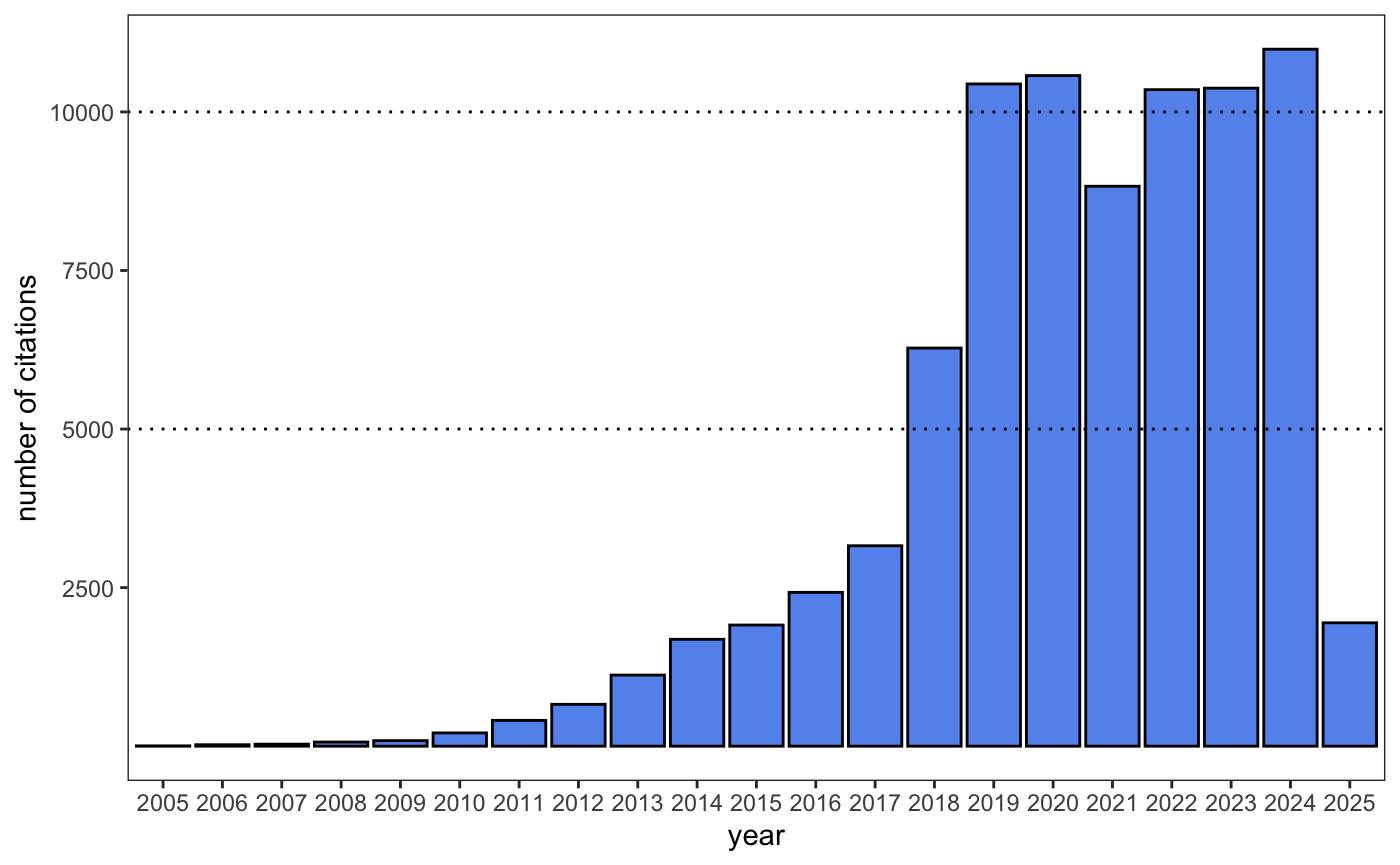
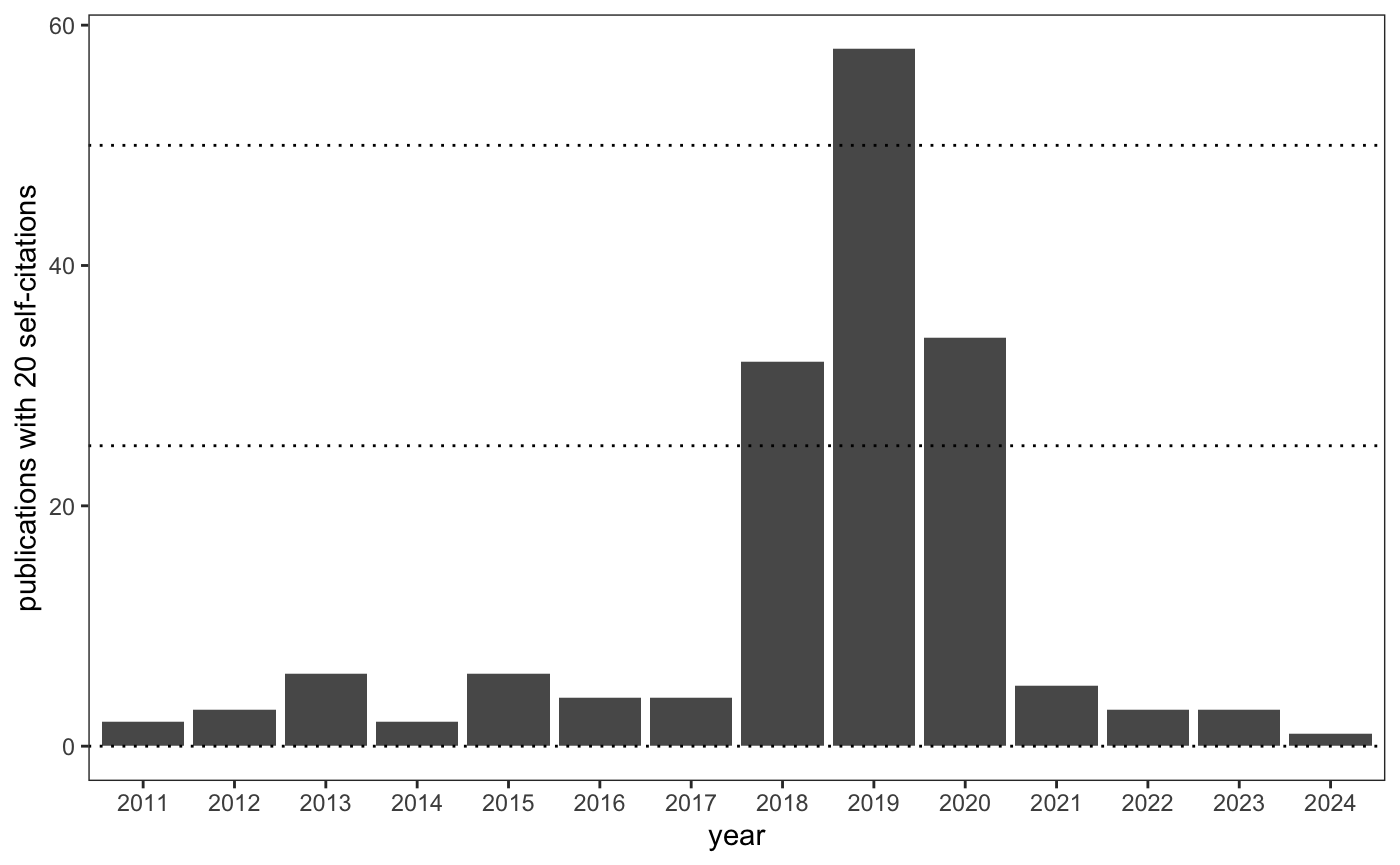
Guo cites himself a lot, like, A LOT. Over 150 papers he co-authored each cite 20 or more of his own papers. These papers with seemingly excessive self-citation coincide beautifully with his galactic ascent to glory and 10.000 citations a year between 2017 and 2020. If we visualize his papers with excessive self-citations over time, it looks a lot like a metaphorical middle-finger directed at the scientific community:
To illustrate what this looks like within one of his papers, take, for example this paper by his group from 2019:
Min Zhang, Jun Meng, Qingyu Liu, Shiyan Gu, Ling Zhao, Mengyao Dong, Jiaoxia Zhang, Hua Hou, Zhanhu Guo Corn stover–derived biochar for efficient adsorption of oxytetracycline from wastewater Journal of Materials Research (2019) doi: 10.1557/jmr.2019.198
“Therefore, researching new materials and expanding the application range of materials is an important issue that researchers need to solve urgently [1, 2, 3, 4, 5, 6, 7, 8, 9, 10, 11, 12, 13, 14, 15, 16, 17, 18, 19, 20, 21, 22, 23, 24, 25, 26, 27, 28, 29, 30, 31, 32, 33].”
23 of those totally appropriate 33 stacked references are to his own papers. It the entire paper, 49 references (2/3 of the whole reference section) are authored by Guo. But that paper is not yet unhinged enough to get onto Guo’s own leaderboard of self-citations. The next piece of 71 self-citations, also achieved in 2019, is rather unhinged, too:
Yuxin He, Qiuyu Chen, Hu Liu, Li Zhang, Dongyang Wu, Chang Lu, Wei OuYang, Danfeng Jiang, Mingfang Wu, Jiaoxia Zhang, Yingchun Li, Jincheng Fan, Chuntai Liu, Zhanhu Guo Friction and Wear of MoO3/Graphene Oxide Modified Glass Fiber Reinforced Epoxy Nanocomposites Macromolecular Materials and Engineering (2019) doi: 10.1002/mame.201900166
But this “minireview” from 2020 in a Wiley journal takes the crown with 116 self-citations (56% of all references):
Huige Wei , Hui Wang , Ang Li , Dapeng Cui , Zinian Zhao , Liqiang Chu , Xin Wei , Lin Wang , Duo Pan , Jincheng Fan , Yingchun Li , Jiaoxia Zhang , Chuntai Liu , Suying Wei , Zhanhu Guo Multifunctions of Polymer Nanocomposites: Environmental Remediation, Electromagnetic Interference Shielding, And Sensing Applications Chemnanomat (2020) doi: 10.1002/cnma.201900588
More examples can be found on PubPeer.
All data to figure this and much more out is easily obtainable through the great OpenAlex database. I guess publishers are not using it to check their own journals for the same reason Donald Trump didn’t want to test for COVID: If you don’t test (i.e. search) for it, it’s not a problem.
In total, Guo cited himself more than 10.000 times over his career.
Citation shilling through peer review
Guo has reviewed a crazy amount of papers. He has 1600 verified peer-reviews (according to his WOS profile). I think I am not speculating too much by assuming that he probably did many more peer reviews, which were not verified to WOS. This activity, predominantly between 2017 and 2019, again coincides perfectly with a blow-up in his own citation-numbers. He did all this while publishing on average around 100 papers a year at the same time. A paper published every 3-4 days while reviewing at least one every single day. Mind-boggling productivity!

I believe there are indications that not all of those peer reviews were done for the greater good of science. It is a known phenomenon that reviewers request a list of (their) papers be cited for them to accept publication of the article. Here a case study by M. Angeles Oviedo-Garcia:

The Extortionists, by M. Angeles Oviedo-Garcia
“The preference of Thippa Reddy Gadekallu et al. (Abdul Rehman Javed, Celestine O. Iwendi, Sharnil Nitin Pandya and Gaurav Jay Dhiman) for coercive citation and copy-pasting their review comments” – Maria de los Ángeles Oviedo García

I think that citation extortion is also the case here, and it has resulted in some rather cringeworthy sentences with totally not insane citation patterns. For example this article in Materials Science and Engineering: C, a journal for which Guo reviewed at least 34 articles (WOS verified reviews):
Toktam Nezakati, Aaron Tan, Jing Lim, Robert D Cormia, Swee-Hin Teoh, Alexander M Seifalian Ultra-low percolation threshold POSS-PCL/graphene electrically conductive polymer: Neural tissue engineering nanocomposites for neurosurgery Materials Science and Engineering: C (2019) doi: 10.1016/j.msec.2019.109915
“The field of nanocomposite materials research has also been gaining traction in recent years [9–33].
Graphene has recently been of particular interest in the biomedical field due to its novel physical, electrical and mechanical properties [34–37]. Indeed, graphene has also been used as an additive in various nanocomposites in different fields of research to improve their performance [38–56].”
More than half of the citations go to papers by Guo. All of the citations to Guo are related to a single paragraph in the introduction. We know he also reviewed for Journal of Materials Science a lot, too, particularly in 2019.
[The last author above, Alexander Seifalian, should be well known to readers of this site. He is a failed trachea transplanter, regmed entrepreneur and maker of artificial noses, ears and vaginas, after his sacking from UCL Seifalian also became a papermiller. – LS]
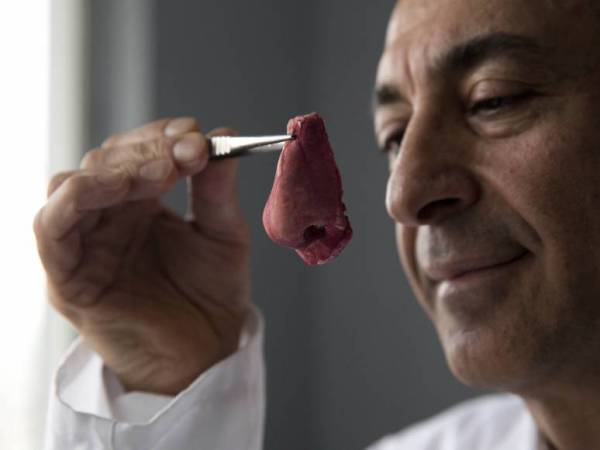
UCL trachea transplant inquiry: scapegoating, obfuscation and a lost nose
In 2017, UCL invited an external expert commission to investigate the deadly trachea transplants performed by the former UCL honorary professor Paolo Macchiarini. An already sacked UCL nanotechnology professor, Alexander Seifalian, whose lab made the two UCL plastic POSS-PCU tracheas in 2011, was announced as the main culprit on UCL side. All this despite Seifalian’s…
This article is a good candidate for a paper Guo might have reviewed:
Yuefang Hu, Zhenming Chen, Feiyan Lai, Jinfang Li Biomass-codoped carbon dots: efficient fluorescent probes for isocarbophos ultrasensitive detection and for living cells dual-color imaging Journal of Materials Science (2019) doi: 10.1007/s10853-019-03494-9
“During the past 10 years, carbon materials have been used in many fields because of having many advantages, such as energy storage [15–18], EMI shielding [19–23], polluted water treatments [24–28], functional coating [29–31] and other applications [32–37].”
Again, the same pattern. About half of the papers’ citations go to Guo, almost all in the introduction and as part of one rather questionable sentence. There are hundreds more articles that show these anomalies, especially for the period in which he was reviewing truckloads of papers a year. I have flagged a few dozens on PubPeer but I have a long to-do list of papers awaiting analysis…
Systematic exploitation and abuse of scientific publishing systems
Since its inception in 2018 and under Guo’s leadership, the journal Advanced Composites and Hybrid Materials (ACHM) has become a powerhouse in its field, with a current impact factor of 23.2 (2023). I have compiled extensive circumstantial evidence that suggests that Guo systematically abused his role as Editor-in-Chief of ACHM, benefiting both the journal and especially Guo, personally. All data that I have analysed to come to this conclusion points to three main avenues of unethical behaviour by Guo: Papers published in ACHM disproportionally often cite…
- …other ACHM artiles, inflating ACHM‘s impact factor.
- …papers co-authored by Zhanhu Guo, artificially boosting his own h-index.
- …papers from journals published by the Engineered Science Publisher LLC, a young scientific publisher that is owned (officially) by his partner (wife, presumably).
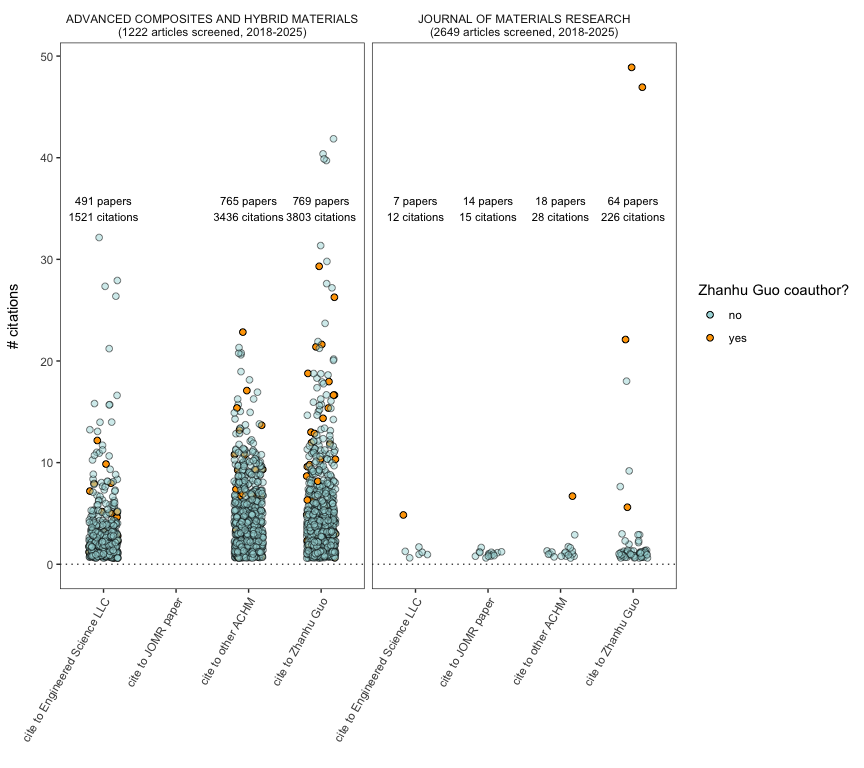
917 papers published in ACHM articles published between the beginning of 2020 and the end of 2024 contributed 4000+ citations to other papers in ACHM. Now, maybe the journal publishes so much groundbreaking science that this self-citation is justified? Not likely. Do other journals in the field behave the same? I therefore calculated how often papers published in the same time-frame in the Journal of Materials Research cite this same journal (I picked a “control” material science journal here, where Gao did publish but has otherwise no influence). 27 times (in 1796 articles). Quite the difference, right? I won’t go into more detail on this here, but I think it’s fair to assume that something isn’t quite adding up here.
What initially tipped me off was how fast and frequently some new papers by Guo would get cited. If we look at all of his papers from 2024 and 2025 more systematically, they have been cited a cumulative 1785 times already (as of 3 April 2025). 1/3 of those are self-citations or they come from ONE journal; you probably can guess which: Advanced Composites and Hybrid Materials.
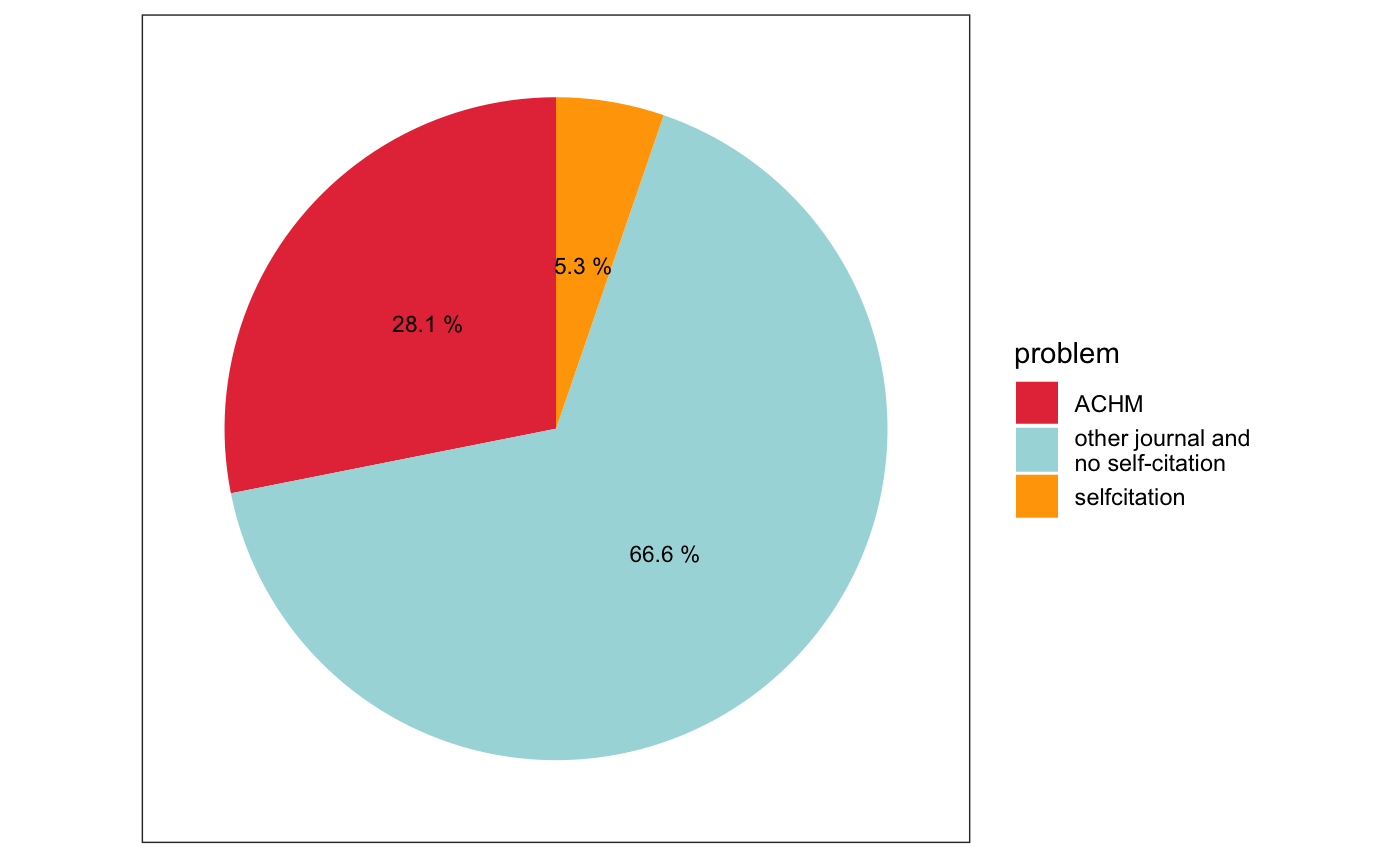
What better way to give your papers a boost than to make sure they get cited by authors who wish to publish in the journal where you are the Founding Editor and Editor-in-Chief of, right? Remember the eye doctor from the University of Tennessee, Mohamed Moustafa Ibrahim, whom I mentioned above? Guo and him have a paper that came out on 10 November 2024 and has already been cited 28 times. 20 of those come from Advanced Composites and Hybrid Materials papers.
Jiang Guo, Yukun Sun, Xu Li, Shaohua Xi, Mohamed M. Ibrahim, Hua Qiu, Gaber A.M. Mersal, Zeinhom M. El-Bahy, Vignesh Murugadoss, Waras Abdul, Fujian Zhou, Juanna Ren, Zhanhu Guo, Jianfeng Zhu Hollow core-shell structured Fe3O4@Polypyrrole composites for enhanced electromagnetic wave absorption Composites Science and Technology (2024) doi: 10.1016/j.compscitech.2024.110917
Okay, so if you have been reading this blog for a few years, none of the above behavior, outrageously unethical as it might be, will be completely new to you. While Zhanhu Guo hasn’t been mentioned on For Better Science before, there have been various other examples like this in the past. Top tier meme scientist Ali Chamkha and the Journal of Nanofluids come to mind, discussed in all its glory & cringiness by Maarten van Kampen two years ago:

Bottom of the barrel: Nanofluids & Chamkha
“Did you know that Chamkha is “Ranked in the World’s Top 0.02267% Scientist”? Or that he “Completed all degrees in a record time of five years”?” – Maarten van Kampen

Now, Guo is maybe a somewhat different case because he has been working at (supposedly) prestigious US and UK institutions for decades, but there is one other key puzzle piece that makes this case special. I found it when I looked at this paper that came out the same week when Guo’s long reign as Editor-in-Chief at the journal came to an end in December 2024:
Juanna Ren, Wenhao Dong, Ethan Burcar, Ashley DeMerle, Zhe Wang, Hua Hou Magnetic magnetite/epoxy nanocomposites with polyaniline as coupling agent: preparation, characterization, and property Advanced Composites and Hybrid Materials (2024) doi: 10.1007/s42114-024-01166-0
It doesn’t matter what it’s about (it never does at this journal, it’s all about how many citations the Editor-in-Chief can extort from the authors). This paper is interesting because it has a preprint available that was posted on 13 December 2024. The published article states that it was accepted 12 December 2024, meaning the preprint was posted after the article was accepted for publication.
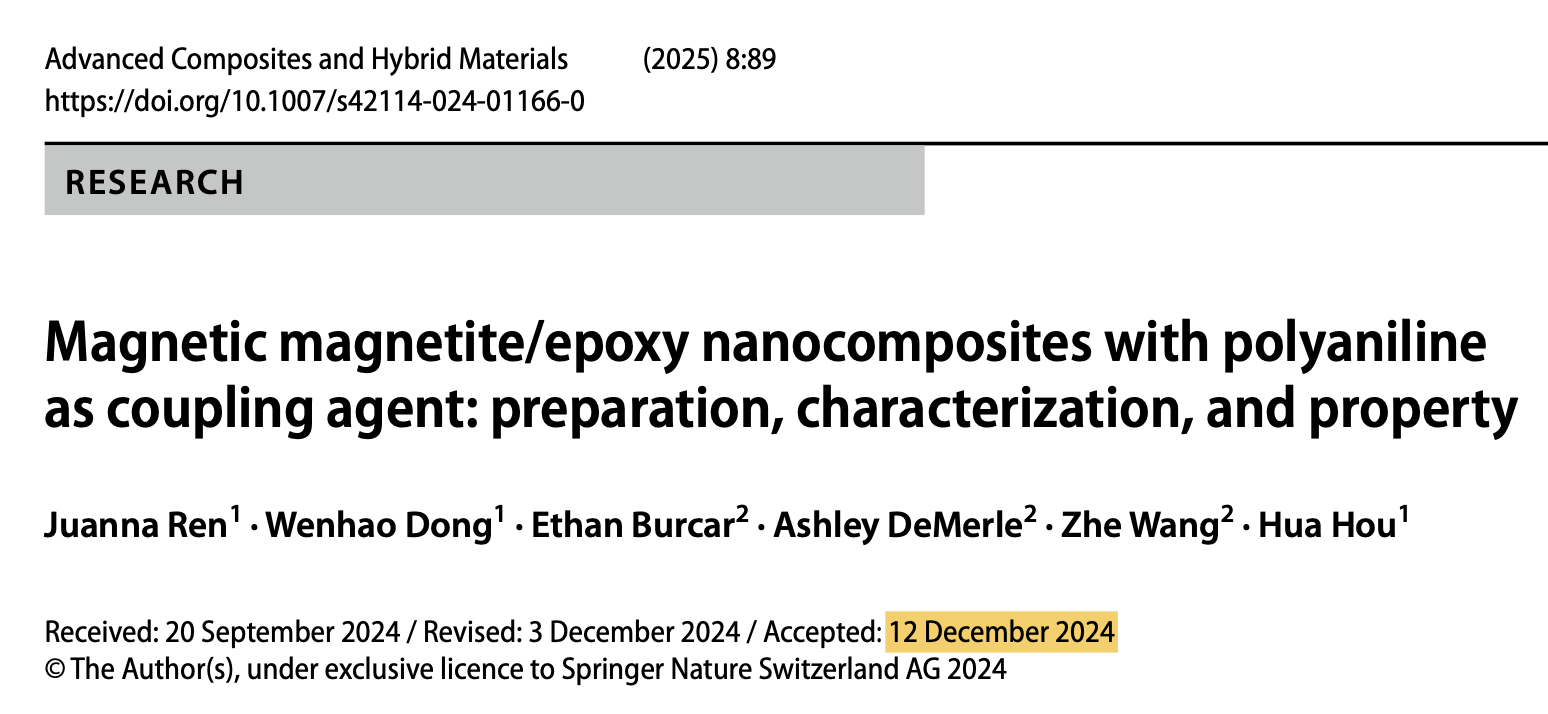
Things get very interesting when we compare the preprint, assuming it reflects the accepted paper, and the published version of the article. The reference section more than doubled in size POST acceptance of the article for publication. An additional 32 citations were added to the original 28. If we look at the new references, we can see two things that we already expected: a couple of additional references for ACHM and personal references to Guo’s papers. But to my surprise, that wasn’t the whole extend of it. 16 of the added references cited obscure papers by a tiny & relatively young scientific publisher focused on engineering and materials sciences, which is:
Engineered Science Publisher LLC
This is where things get completely unhinged. Around the same time Guo’s ACHM started publishing its first articles in 2018, Guo also introduced a journal called Engineered Science, the main journal of the newly founded publishing company Engineered Science Publisher LLC. What a strange coincidence!
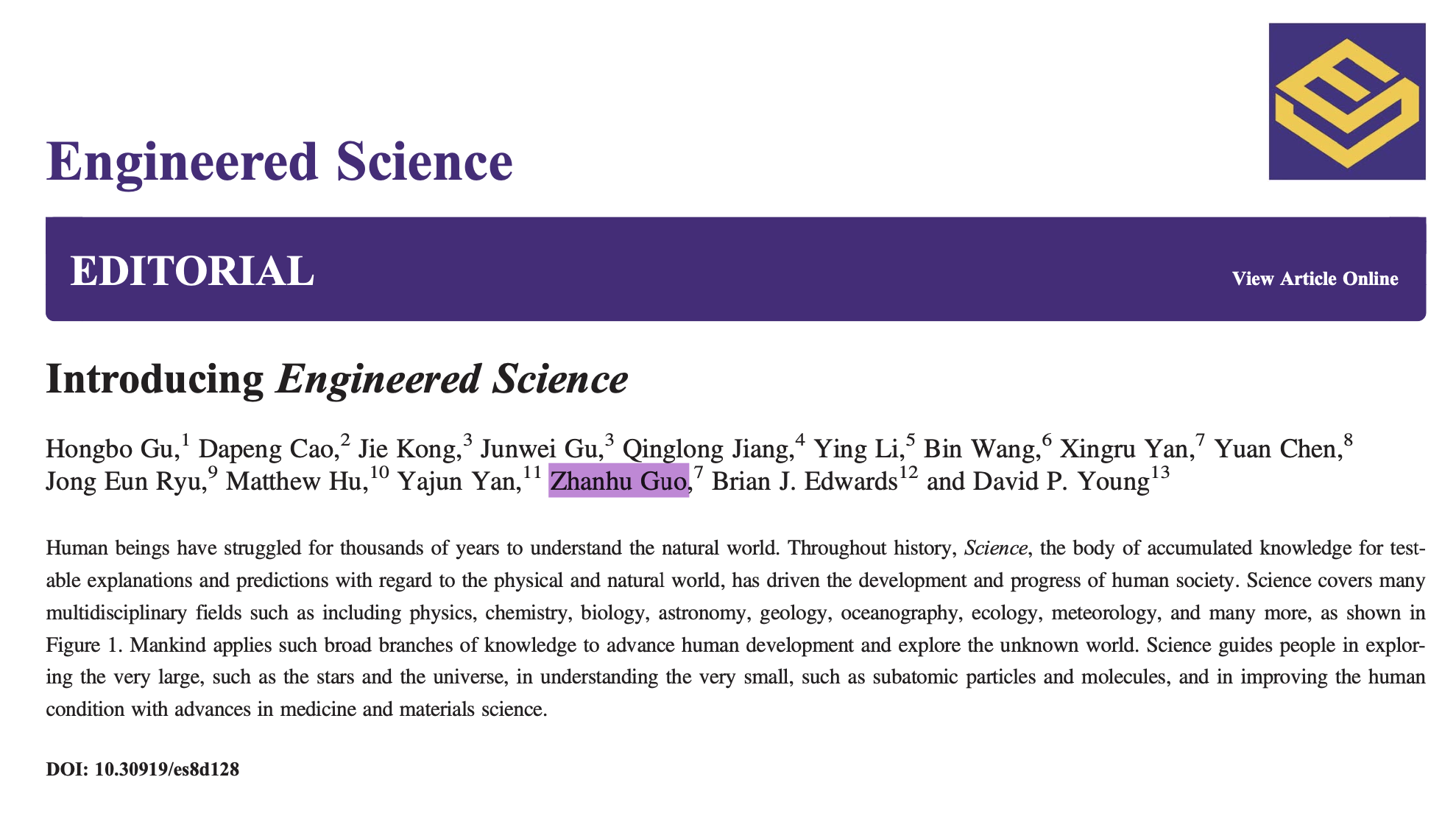
Guo is also their superstar reviewer! Engineered Science has published 664 papers as of 19 March 2025. Guo is the verified reviewer of 213 of those (according to WOS). Sounds like he is quite intertwined with the publisher, right? That is, unfortunately, not all of it.
From public business records and tax statements we know that Engineered Science Publisher LLC was first registered in March 2018 in Knoxville, Tennessee (remember where Guo was before he came to Northumbria University a couple years ago? At the University of Tennessee in Knoxville). Could be a another coincidence, right?
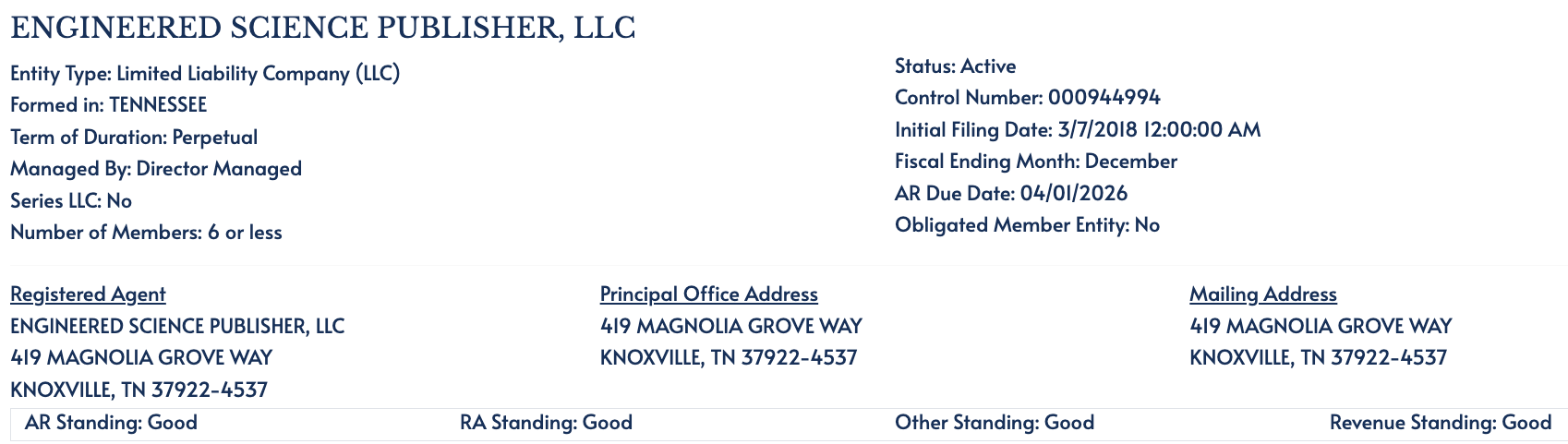
In an interesting development, a company under the same name was registered in the UK on 8 November 2024. Take a wild guess now in which city:
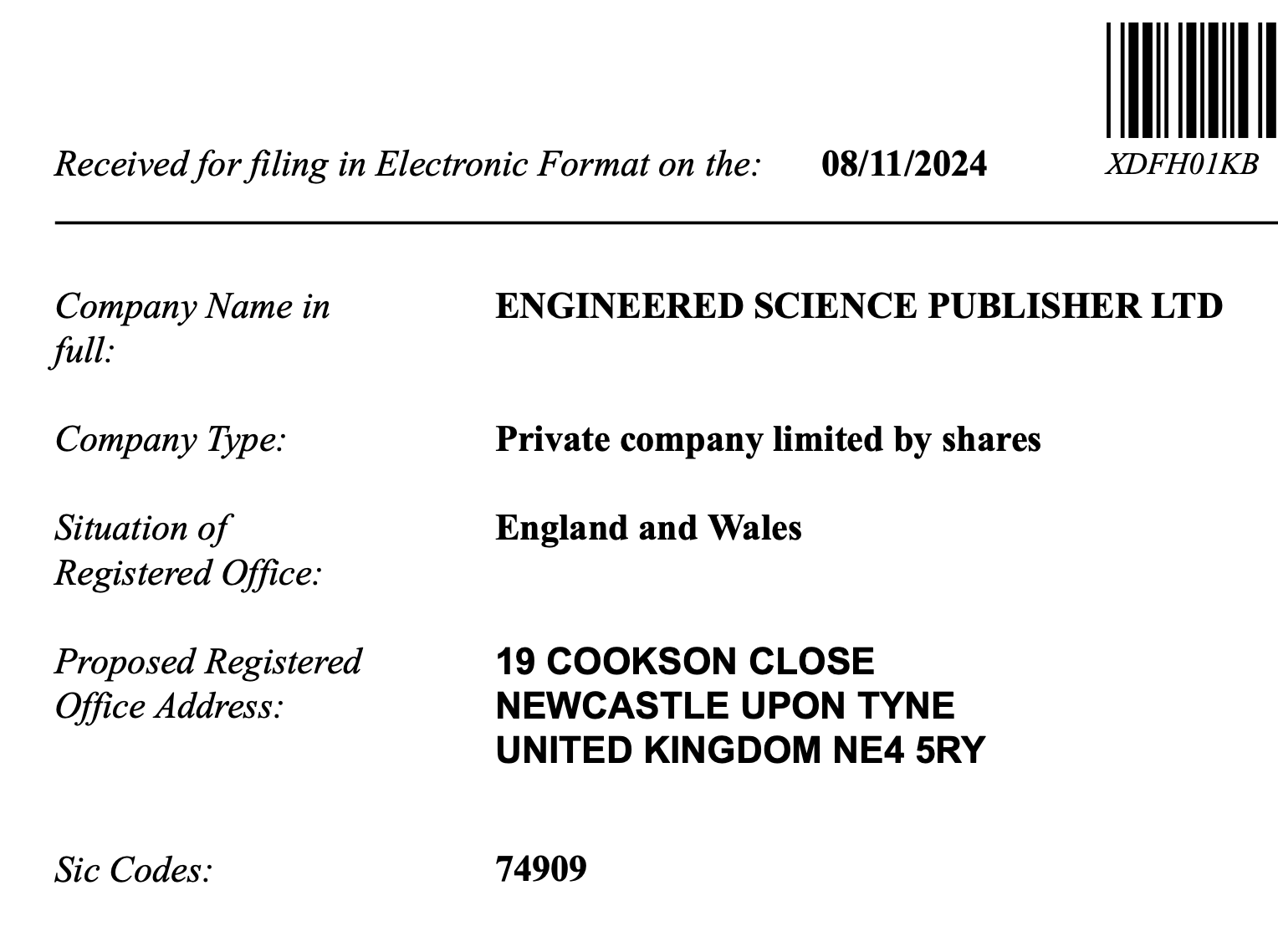
The filing history of the British company reveals another interesting detail; the CEO’s name is Peizhen Yin. This creates another direct link to Zhanhu Guo: both Peizhen Yin and Zhanhu Guo share multiple former addresses in the US. Most importantly, they were both formerly registered at 419 Magnolia Grove Way, Knoxville, Tennessee, the registered business address of Engineered Science Publisher LLC. They not only lived together but also co-signed a contract to buy a house in the US a few years ago. I think all of this makes it fair to say that Yin is Guo’s wife or at least long-term partner. Both moved from Tennessee to Newcastle together when Guo took his new position there, and they recently moved the company there, too.
Given what we know I must include a real quote from Research.com’s profile for ES Materials & Manufacturing, another journal by Engineered Science Publisher LLC (the duplicates are not mine):
“A number of leading researchers have published their research contributions at this Journal among them Zhanhu Guo, Zhanhu Guo, Zhanhu Guo, Vignesh Murugadoss and Vignesh Murugadoss.”
Now, it’s not illegal for the partner of a superstar material science professor to own a publishing company with a portfolio of journals in the same field, right? I don’t think so, but where it gets sketchy is this: Guo has been using (abusing) his position at the Springer-Nature journal Advanced Composites and Hybrid Materials to systematically boost the papers in the publishing business which he owns via his wife. Citations are the best advertisement for a journal, and Guo earns money with each paper his business publishes. Authors are not told however how much until submission, because Guo seems to make up the price on the spot:
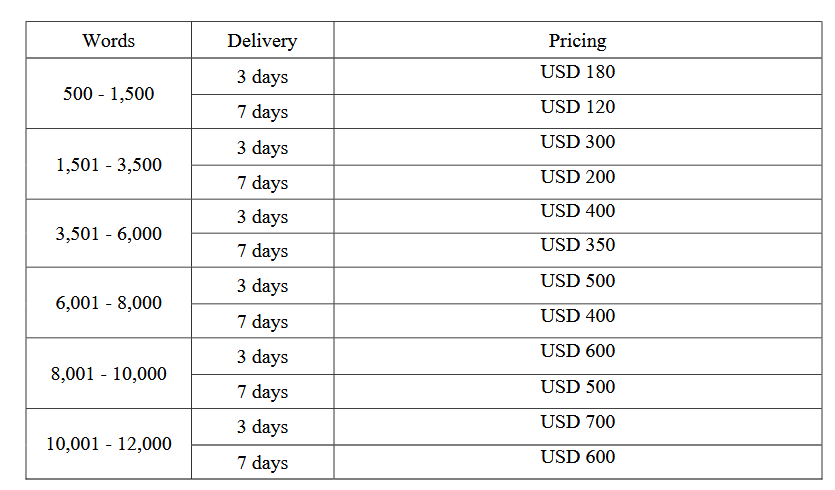
“The articles accepted for publication will be charged a one-time Article processing fee (APC). […] Engineered Science Publisher’s APC pricing for each journal depends on its maturity and community support.”
Nevertheless, authors are instructed to surrender all copyright to Guo’s business. Also Editing Services are offered, and are quite possibly a precondition for acceptance.
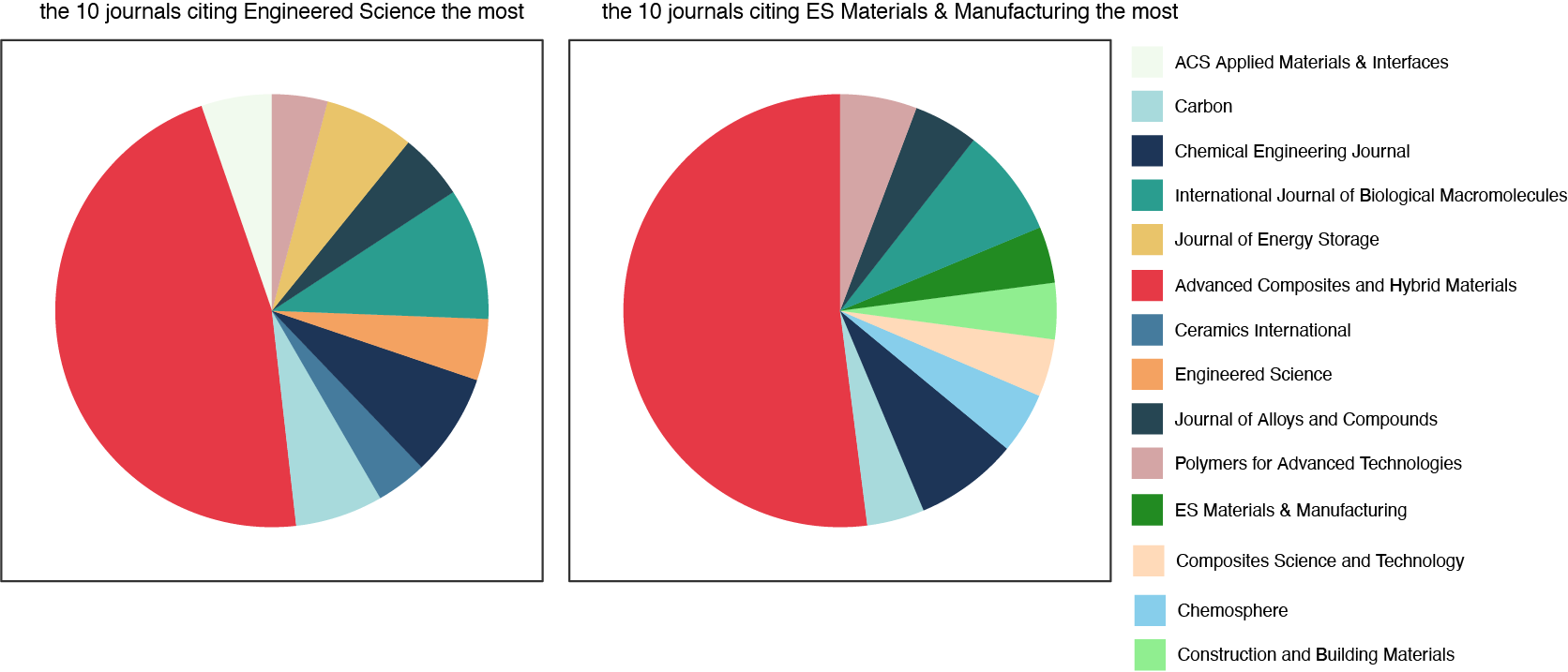
The two pie-charts below show the 10 journals that cite papers from Engineered Science (left) and ES Materials & Manufacturing (right) the most. ACHM is, by a huge margin, the most significant channel for citations to both.
I have made an attempt to visualize the insanity of all of this in one figure. The left panel comprises all published articles in ACHM, the right panel is a negative control and covers all articles from the Journal of Materials Research from the same time. I have calculated how often ES LLC, Guo or an ACHM paper get cited depending on the journal it is published in. As you can see, it’s a completely different magnitude. Guo has accumulated at least 3800 citations between 2018 and 2025 from the journal he founded.
Zhanhu Guo passed on the role as Editor-in-Chief in Tony McNally, Professor at the University of Warwick and Director of the International Institute for Nanocomposites Manufacturing (IINM), in January of 2025. I cannot speak to what effect this change in leadership might have, but I remain concerned about future papers by the journal. Multiple problematic articles have been published after this leadership change, although that might be due to the backlog of articles handled and accepted in 2024. Guo was listed as an advisor for the journal (left screenshot from 17 March 2025 below, and preserved through the internet archive). After I contacted the new Editor-in-Chief and the Research Integrity office of Springer-Nature on 17/18 March, Guo has been removed from the website (see screenshot on the right below).
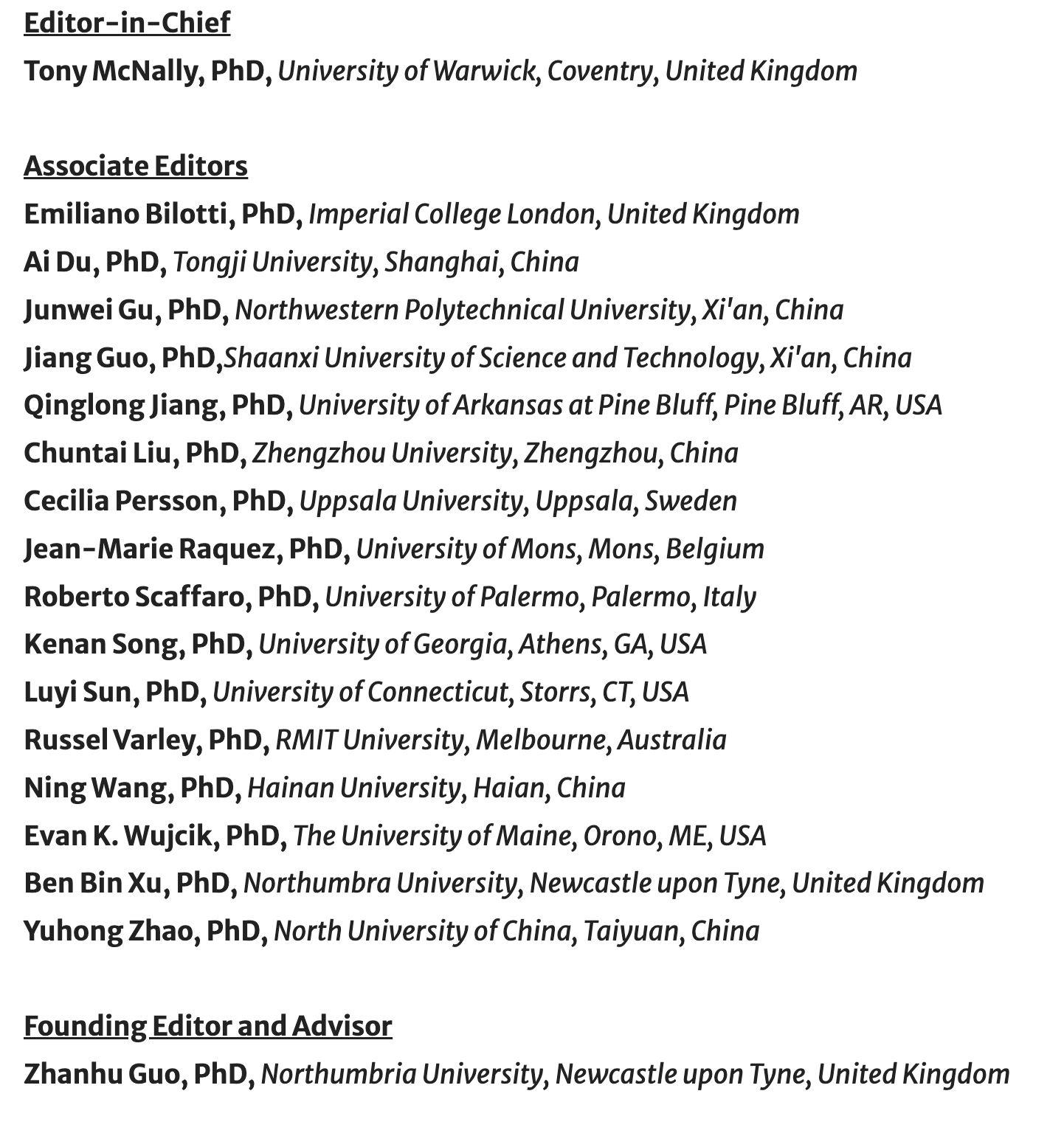

I also heard back from the publisher as well as the head of the Springer-Nature Research Integrity team who assured me that this matter will be investigated. They certainly have their work cut out for them. Jiang Guo is still Associate Editor of ACHM as of today. He has authored over 100 papers with Zhanhu Guo over many years, including the November 2024 paper with a lot citations that set off this whole deep-dive in the first place. Hard to imagine that Jiang Guo and other long-term associates didn’t know anything fishy was (is) going on.
Zhanhu Guo’s network is a mess of hundreds of authors from all-over-the-world, many of whom are known papermillers. He publishes at a lightening pace (23 articles in 2025 already as of March 17th, almost one every three days). One of his 2025 papers has already been cited dozens of times. People he has published with extensively or who were part of his lab in Tennessee are now on the editorial board of ACHM, other Springer-Nature journals, ES LLC journals & elsewhere. Guo himself is also an editor for the journal Nano-Micro Letters. There is probably a lot more to be uncovered, but I will end it here (for now), I think it is obvious that this conduct is deeply unethical and that it should have some consequences. But will it? Not sure, Guo raked in a metric ton of cash for Springer Nature in building this card-house-like “high-impact” journal. Let’s hope he at least won’t get a badge of honour instead.
I want to be clear here that I am not blaming the publishers’ research integrity offices directly here, some of which are doing a very good job (some others, frankly, not so much), but I want to highlight instead that they are often criminally understaffed and have an abysmal backlog of open cases to go through. Responsible for this situation is the leadership of the publishing companies, which is, in the best-case scenario, extremely naive, or, more realistically, cares about profit margins more than about the integrity of the journals they own and articles they publish.
Donate!
If you are interested to support my work, you can leave here a small tip of $5. Or several of small tips, just increase the amount as you like (2x=€10; 5x=€25). Your generous patronage of my journalism will be most appreciated!
€5.00

 For Better Science
Great work. Any idea about the views of Zhanhu Guo and the views of the Northumbria University Newcastle upon Tyne, the current enployer of Zhanhu Guo, about the topics discussed in this blog?
LikeLike
Thank you!
Both have been contacted, including the ethics committee of the University, but we are yet to hear back. I am very curious what they have to say, but as of now, we remain in the dark.
LikeLiked by 1 person
I have a hunch that the outcome might be: ‘we investigated but found no evidence of fraud’. As usual with these investigations.
LikeLiked by 1 person
I think that is not a far-fetched prediction… but hey, maybe we are all wrong and it will actually be taken serious? Chances are near 0 but != 0. It will, regardless of the outcome, probably take a year or two…
LikeLike
Good to hear that also the ethics committee of this University has been informed. I am looking forwards to a response from them and from the others.
LikeLike
More evidence, hopefully relegated to posterity to join with mounting reports, that the enterprise of research is nothing but a business, and is manipulated as a business, with little to no nexus with actual science or truth.
LikeLike
This dude moved from Canada to USA and is on his way to be similar to Zhanhu Guo: https://scholar.google.ca/citations?user=6WNtJa0AAAAJ&hl=en Most of the papers are written by coauthors from China, most probably gift authorship to a prestigious dude in canada/usa.
LikeLike
Springer seems to be taking action behind the scenes on this matter to some degree:
The journal Advanced Composites and Hybrid Materials has removed two close associates of Zhanhu Guo (both benefited substantially from the citation coercion or might have been involved themselves) from their Editorial Board:
Jiang Guo PhD – Shaanxi University of Science and Technology, Xi’an, China
Ben Bin Xu PhD – Northumbria University, Newcastle upon Tyne, United Kingdom
The ethics complaint I filed with Northumbria University is also moving to the next stage but there has been no further information since early May.
A couple of articles with image issues mentioned above have been corrected but the dozens of articles with citation blocks remain to be addressed.
LikeLiked by 2 people
Fabian Wittmers has been kicked off from his postdoctoral advisor completely. The curent wittmersf@oregonstate.edu is not working at all.
LikeLike
I am sorry to inform you that I have not been kicked off from my postdoctoral advisor.
It seems though that the email on the website is indeed wrong, it should be fabian.wittmers@oregonstate.edu.
LikeLiked by 1 person