

Professor Xuetao Cao is former President of the Chinese Academy of Medical Sciences and now the Chairman of research integrity in all Chinese research. The immunologist is also a genius, whose wise words are mandatory for the academic working masses to learn and presumably also to recite.
As per official hagiography, Cao was awarded his PhD at the age of 26, because his Master thesis was so excellent that his examiners gave him a doctorate instead. At 28, Cao was made the youngest medical professor in China, at 40 he was appointed Vice President of the Second Military Medical University in Shanghai. In 2005, the 41 year old genius was elected as the youngest member of the Chinese Academy of Engineering, of which the Medical Academy is part, and he simultaneously rose to the military rank of a general, the youngest in China.

Chairman Cao is also EMBO member, and among other things, fellow of German Academy of Sciences (Leopoldina), French Academy of Medicine, US National Academy of Medicine and American Academy of Arts and Sciences. In 2015, Nature bestowed the Lifetime Achievement Award for Mentoring in Science to Cao, the Chairman of Chinese Academy of Medical Sciences. Nature argued:
“if China is to become a true scientific superpower, it must be able to produce great scientists who are not just knowledgeable but also creative and skilled in innovation. And great scientists need great mentors to lead the way.“
It is apparently another case where Nature was confused about what skills a scientist is supposed to mentor. Hint: it is not the art of data falsification.
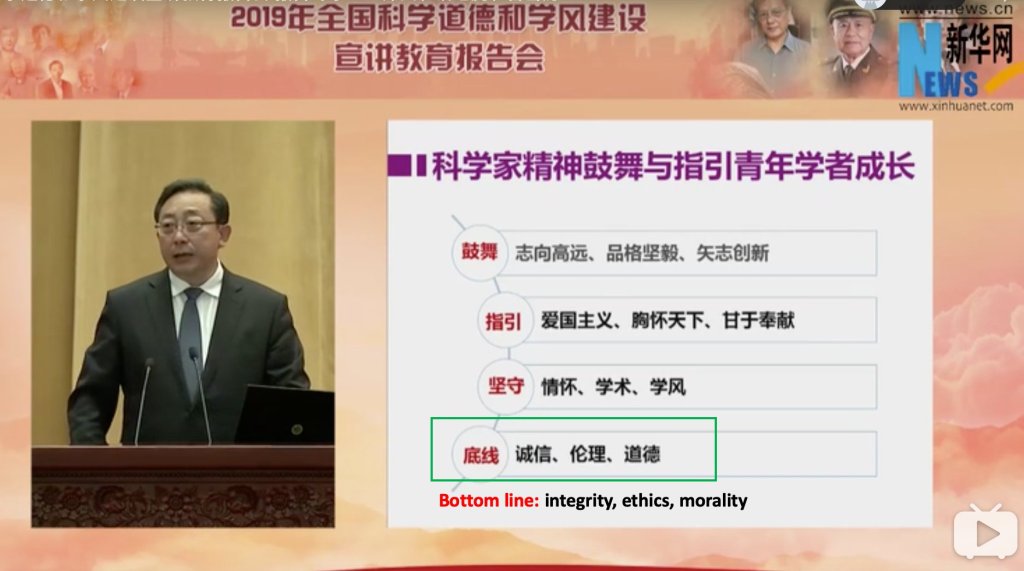
On 13 November 2019, Chairman Cao spoke to the masses at The Great Hall of People in Beijing, where usually only the Communist Party leadership holds its most important rallies. The topic of the Chairman Cao speech (full video available here) was Research Integrity.

The great teacher of the pipetting masses spoke of the need to educate students on research ethics from the very beginning: “the first button should be tied well in scientistic research” and of the “red lines in scientific research that we should never cross“. As a warning, the shining rod of research integrity spoke of the mass-retraction of 107 Chinese papers in 2017, but also of foreign fraud cases, Piero Anversa in Harvard and Jan-Hendrik Schön at the Bell Labs, where he remarked: “these cases have more profound negative effects around the globe than Chinese cases”

Six thousands graduate students, postdocs, professors and Academy members were raptly listening in the audience, but the event was also broadcasted to the entire nation, every university in China live-streamed the speech and all students and faculty were ordered to watch. To make sure they did, everyone had to fill in a form, testifying to have watched the event and reporting what they have learned. As the China’s First Scientist Cao said:
“Bottom Line: Integrity, Ethics, Morality“

And now it comes out, Cao’s research works contain elaborately falsified research data. The discovery was made by data integrity sleuth Elisabeth Bik, assisted by Smut Clyde and others. It all started with a fraudulent paper, Wang et al Clin Cancer Research 2005 from Cao’s lab, which Bik reported to the publisher AACR in 2014. Despite 4 falsified figures, only an embarrassing correction was issued in March 2015. So now Bik had another look at Chairman Cao’s collected works.
Chairman Cao’s PubPeer record stood at 54 papers when this article first went online. It seems, not everyone in China believes the Party version of Cao’s scientific genius. The hints to scrutinise his works, and even direct evidence, reached Bik namely from behind the Great Firewall which blocks Twitter. Like this here, from Rui et al J Immunology 2007:

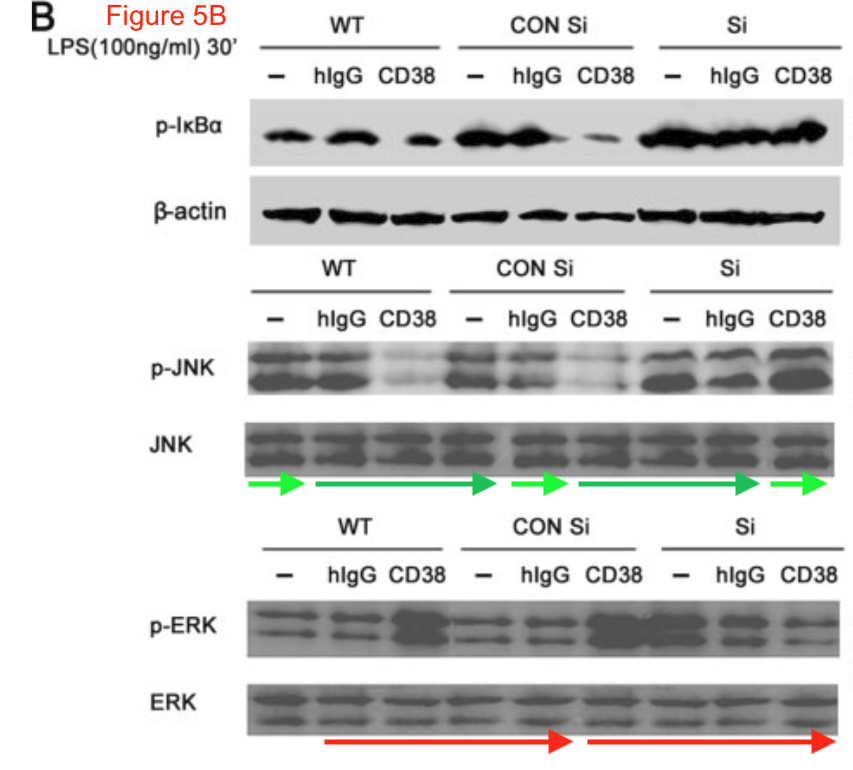
Cao is former editorial board member of the Journal of Immunology, “the largest and oldest journal in the field” which seems to regularly fall prey to fraudulent research, having apparently surrendered to its fate while trying to make the best of it. As if to prove that, another Cao paper Gu et al J Immunology 2014 was half-heartedly corrected soon after it was published. Maybe someone blew the whistle already 5 years ago, but thing is: there was much more to discover that the manipulated Figure 7, specifically also Figures 2, 5 and 6. Did Journal of Immunology really not know? Or preferred not to know?

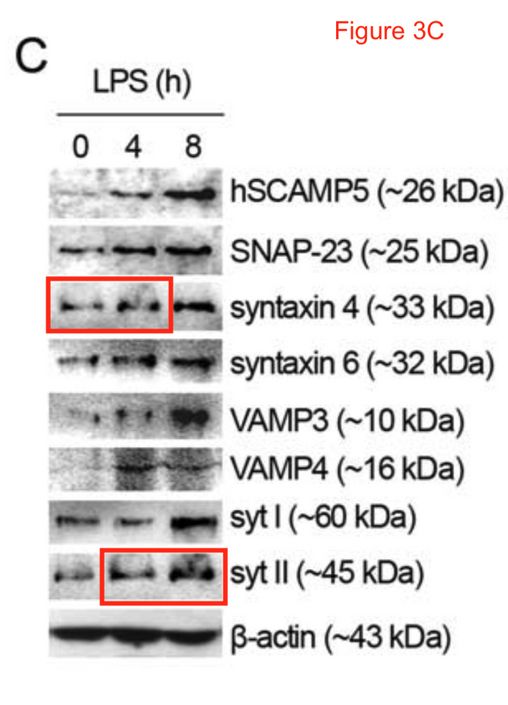
There are several other highly problematic Cao papers in that same society journal, published by the American Association of Immunologists. Both the Journal of Immunology and the society previously refused all communication with me, one senior executive blocked me on Twitter after I criticised a major journal contributor and society member. There is now nobody to complain to about Cao’s papers, the journal policy has been made abundantly clear.
The papers from Cao’s lab which Bik and others analysed span almost two decades, limited not by past honesty, but by insufficient image quality in old publications to allow a proper scrutiny. The oldest paper is Sui et al BBRC 2003, its western blots were recycled one year later in Yang et al JBC 2004, and all the samples received new identities.

This blot recycling orgy inside one and same Figure 5 is among the freshest catch, in Liu et al Cell Mol Immunology 2018. Someone felt very safe, and bold:

The highest-ranking paper Bik exposed is this Chen et al Cancer Cell 2014, another safe heaven for manipulated data. A confocal microscopy image was re-used for different cells, once with the green signal, once without. Hardly an accident:

Everything which is falsifiable, was falsified. Microscopy images, western blots galore of course, but also quite a lot of flow cytometry. Or flaw cytometry, as Bik put it to describe Cao’s publications. For example this in He at al Mol Immunology 2007:

The highlighted similarities in otherwise different flow cytometry plots suggest that the same sample was re-gated and passed off as an utterly different sample, from a different experiment, a technique I described here.
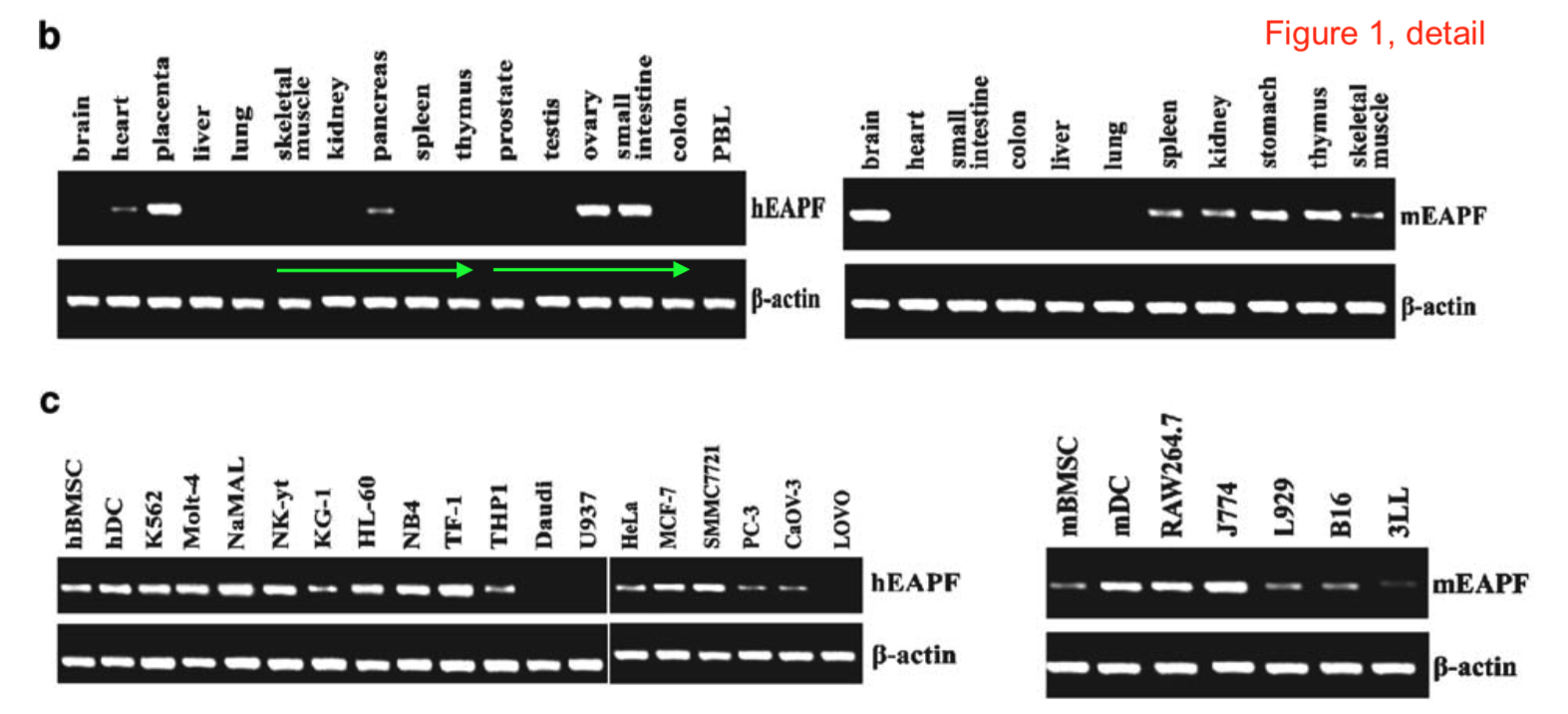
If someone can photoshop western blots, it is no trouble to do same to RT-PCR gel images, as apparently happened in Li et al J Mol Med 2008:
And where one is used to reusing fluorescence microscopy images, one can do same for immunohistochemistry just as well, in Li et al Eur J Immunology 2008:

Some blogs tentatively raised concerns early on, like this here:

Even the state-gagged Chinese media soon tested the waters, sensing the scandal may be too big for the Communist Party to ignore or suppress it. Journalists reached out to Bik, but were initially ordered to remain silent.
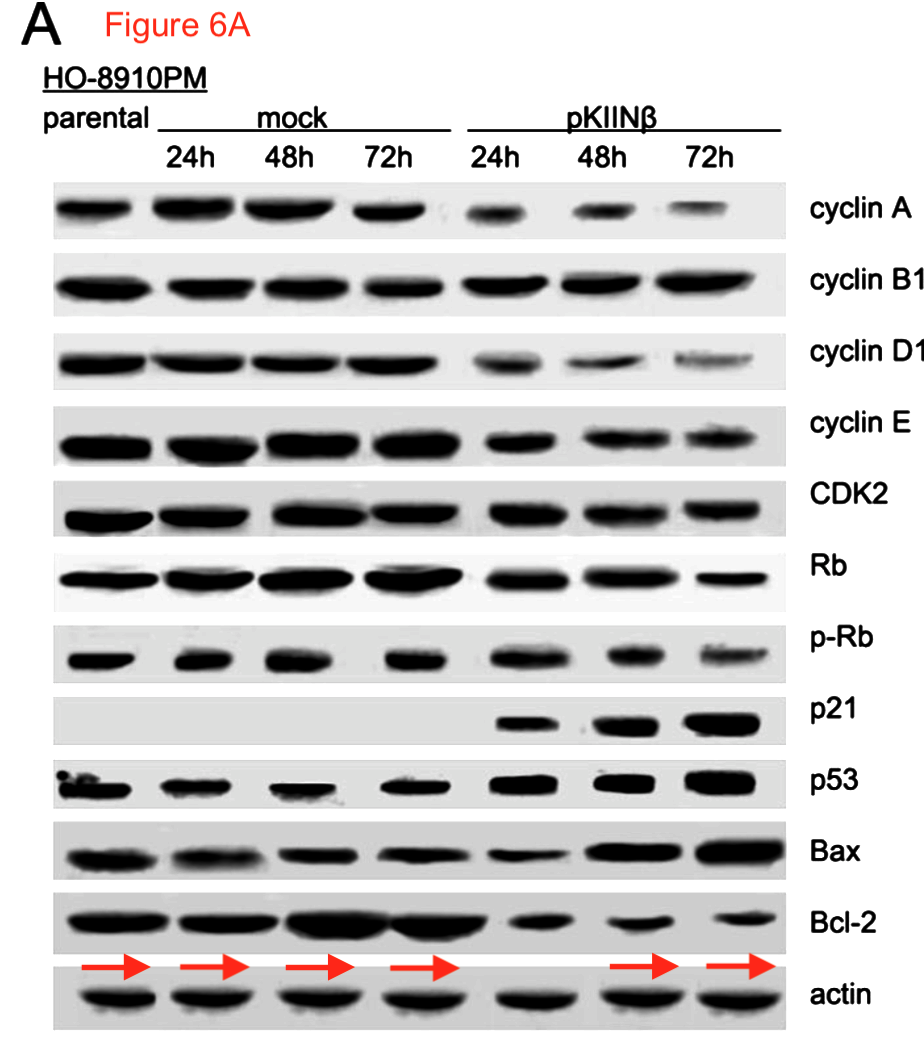
It got worse and worse for Chairman Cao, his PubPeer record grew on hourly base. Some data duplications were seemingly minor, and authors promptly replied on PubPeer, thanking Bik and promising corrections. Other issues were so serious that it was indeed better for the perpetrators to remain silent. How to explain this western blot loading control in Ma et al J Biol Chem 2009?, which was apparently brought to Bik’s attention by a concerned scientist in China?
Eventually, the reporting ban was either lifted, or maybe rather the regime was unable to keep the lid on. This report appeared in China Newsweek on 17 November:

Faced with the massive evidence of fabricated data in over 50 papers, Cao told this to China Newsweek:

“I just arrived in Shanghai lab, check to make all these things. I know that we are concerned about this matter, when the investigation is over, I will give you a reply.”
The article mentioned Cao’s past research on Qigong breath exercise as a way to cure cancer with Qi, which was allegedly published in Nature (it was not, but in a Chinese copy-cat journal). I did find this hilarious comedy gold, from Cao’s reckless youth, presented in 1988 at a Qigong congress:
“The effect of the emitted qi preventing tumor metastased in vivo in tumor-bearing mice is reported in this paper. The experiment was conducted with the help of the famous qigong master Hu Jiefu who emitted his qi to C57BL/6 mice inoculated with 2 X 10[power 5] B16 melanoma tumor cells via the tail veins. On days 3, 5, 7, 9 after the tumor cell inoculation, the mice received the emitted qi for 30 min. each time.”
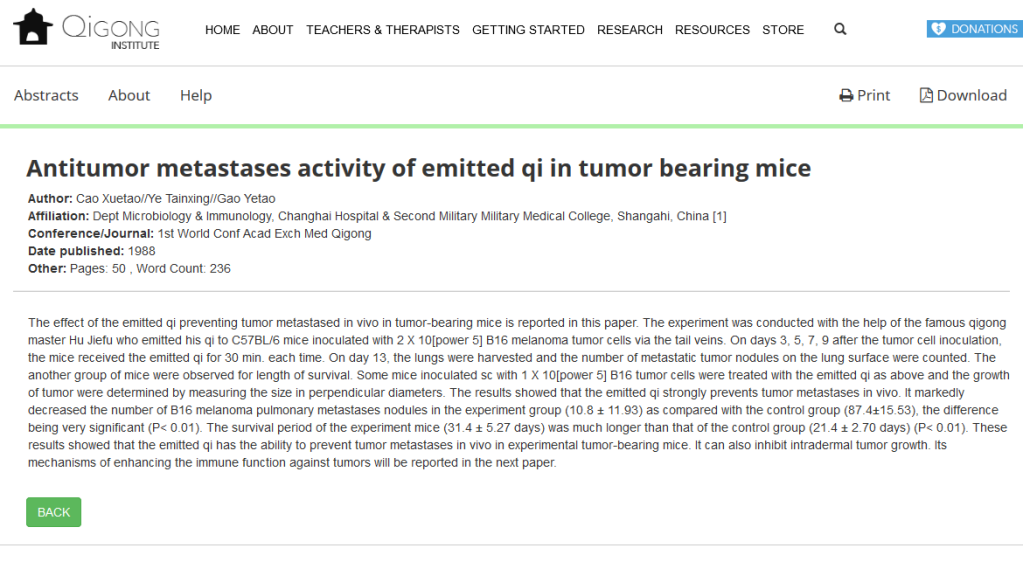
In case you wondered: yes, the emitted Qi cured mice of melanoma, spectacularly. At the tender age of 26, young Cao already cured cancer using his mighty Qi, and the Chinese Academy of Medical Sciences continued the exploration he began. But not only in China: even Harvard set on to cure cancer with Qigong energy.

No wonder his examiners gave him a PhD instead of a MSc he originally studied for, and made him professor 2 years later. Cao’s career, kicked off by Traditional Chinese Medicine woo and boosted by the massive use of Photoshop, soared towards all records: youngest General, youngest rector, youngest Academy member. And now Chairman Cao is in charge of research integrity in all China.
Also on 17 November, Chairman Cao publicly replied to his critic Bik, on PubPeer:

“Dear Dr. Bik,
I’m writing to you in response to recent inquiries you posted with regard to mentioned studies conducted at the National Key Laboratory of Medical Immunology and Institute of Immunology at the Second Military Medical University, with me being the corresponding author.
I appreciate your interest in our work and your commitment to protecting the accuracy of scientific records and the integrity of research pursuit. They are of utmost importance to me all along as well. Upon being notified of your inquiries, I have made them our highest priority and immediately took steps to look into the concerns you raised with the team and collaborators and carefully re-examined our manuscripts and raw data and lab records. We’ll work with the relevant journal editorial office(s) immediately if our investigation indicates any risk to the highest degree of accuracy of the published records.
Based on our analyses up to this point (still ongoing) and additional feedback we received from colleagues and peers, I would like to add that I remain confident about the validity and strength of the scientific conclusions made in those publications and our work’s reproducibility. Nevertheless, there is no excuse for any lapse in supervision or laboratory leadership and the concerns you raised serve as a fresh reminder to me just how important my role and responsibility are as mentor, supervisor, and lab leader; and how I might have fallen short. I feel therefore very heavy-hearted and tremendously sorry, to my current and former students, my staff and colleagues, my peers, and the larger community. I most sincerely apologize for any oversight on my part and any inconvenience it might have caused. I’ll use this as an invaluable learning opportunity to do better not only in advancing science, but also in safeguarding the accuracy and integrity of science.
Yours sincerely,
Xuetao Cao”

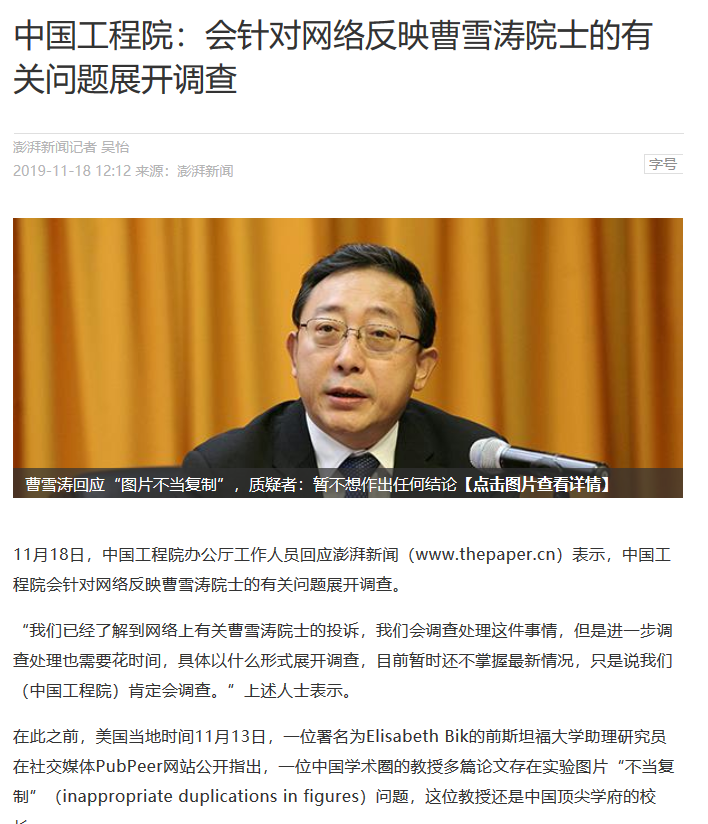
The next day, on 18 November, a source from the Chinese Academy of Engineering (of which Cao is member) was quoted in a newspaper:
“We have already learned about the complaints about Academician Xuetao Cao on the internet. We will investigate and handle this matter, but it will take time to further investigate and deal with it. Regarding how the investigation should be handled, I do not have information regarding the latest plan. All I can say is that we [The Academy of Engineering of China] will definitely investigate“
There was even English language coverage, as the dams broke. China’s top scientist Cao can now brace himself for retractions, especially since he unwisely published a number of problematic papers in the Journal of Biological Chemistry. Where he already had to retract one in 2015, for massive data fakery. This is what Wang et al JBC 2008 was hiding:

The Chairman Cao show is just beginning. His speech at The Great Hall of People, on research integrity no less, provoked a storm even this genius general won’t be able to ride out. The article will be updated.

There is now a sequel: please read this expose by Smut Clyde, on the subject of Chairman Cao’s Flaw Cytometry. Contains quotes from the Great Hall of People speech and recent updates!
Donate!
If you are interested to support my work, you can leave here a small tip of $5. Or several of small tips, just increase the amount as you like (2x=€10; 5x=€25). Your generous patronage of my journalism, however small it appears to you, will greatly help me with my legal costs.
€5.00

 For Better Science
Pingback: Acupuncture for xerostomia: Spin, spin, spin a negative study! - RESPECTFUL INSOLENCE
Pingback: The full-service paper mill and its Chinese customers – For Better Science
Have you happened yet to see the ongoing exploits of Kuo-Chen Chou?
https://pubpeer.com/publications/EA60465B9409D63D74C40D5C6C4C5C#6
Be sure to check the links provided in some of the comments
LikeLike
Pingback: L'anello mancante - Ocasapiens - Blog - Repubblica.it
Twelve (12) 26th June 2020 Expressions of Concern for Xuetao Cao in J Biol Chem.
They all read:
“The publisher of the Journal of Biological Chemistry is issuing an Expression of Concern to inform readers that credible concerns have been raised regarding some of the data and conclusions in the article listed above. The Journal of Biological Chemistry will provide additional information as it becomes available.”
Several of the papers were spotted by Elisabeth Bik on Pubpeer.
12 Expressions of Concern below:-
Expression of Concern: Cyclin L2, a novel RNA polymerase II-associated cyclin, is involved in pre-mRNA splicing and induces apoptosis of human hepatocellular carcinoma cells.
J. Biol. Chem. 2020 295: 8875. doi:10.1074/jbc.EC120.014562
Full TextView with LENS PDF
Expression of Concern: Bone marrow stromal cell-derived growth inhibitor inhibits growth and migration of breast cancer cells via induction of cell cycle arrest and apoptosis.
J. Biol. Chem. 2020 295: 8876. doi:10.1074/jbc.EC120.014563
Full TextView with LENS PDF
Expression of Concern: The lysosome-associated apoptosis-inducing protein containing the pleckstrin homology (PH) and FYVE domains (LAPF), representative of a novel family of PH and FYVE domain-containing proteins, induces caspase-independent apoptosis via the lysosomal-mitochondrial pathway.
J. Biol. Chem. 2020 295: 8877. doi:10.1074/jbc.EC120.014564
Full TextView with LENS PDF
Expression of Concern: A novel endogenous human CaMKII inhibitory protein suppresses tumor growth by inducing cell cycle arrest via p27 stabilization.
J. Biol. Chem. 2020 295: 8878. doi:10.1074/jbc.EC120.014565
Full TextView with LENS PDF
Expression of Concern: Ca2+/calmodulin-dependent protein kinase II promotes cell cycle progression by directly activating MEK1 and subsequently modulating p27 phosphorylation.
J. Biol. Chem. 2020 295: 8879. doi:10.1074/jbc.EC120.014566
Full TextView with LENS PDF
Expression of Concern: Melittin, a major component of bee venom, sensitizes human hepatocellular carcinoma cells to tumor necrosis factor-related apoptosis-inducing ligand (TRAIL)-induced apoptosis by activating CaMKII-TAK1-JNK/p38 and inhibiting IκBα kinase-NFκB.
J. Biol. Chem. 2020 295: 8880. doi:10.1074/jbc.EC120.014567
Full TextView with LENS PDF
Expression of Concern: Notch1 signaling sensitizes tumor necrosis factor-related apoptosis-inducing ligand-induced apoptosis in human hepatocellular carcinoma cells by inhibiting Akt/Hdm2-mediated p53 degradation and up-regulating p53-dependent DR5 expression.
J. Biol. Chem. 2020 295: 8881. doi:10.1074/jbc.EC120.014568
Full TextView with LENS PDF
Expression of Concern: Endogenous human CaMKII inhibitory protein suppresses tumor growth by inducing cell cycle arrest and apoptosis through down-regulation of the phosphatidylinositide 3-kinase/Akt/HDM2 pathway.
J. Biol. Chem. 2020 295: 8882. doi:10.1074/jbc.EC120.014569
Full TextView with LENS PDF
Expression of Concern: Human phosphatidylethanolamine-binding protein 4 promotes transactivation of estrogen receptor α (ERα) in human cancer cells by inhibiting proteasome-dependent ERα degradation via association with Src.
J. Biol. Chem. 2020 295: 8883. doi:10.1074/jbc.EC120.014570
Full TextView with LENS PDF
Expression of Concern: The E3 ubiquitin ligase neuregulin receptor degradation protein 1 (Nrdp1) promotes M2 macrophage polarization by ubiquitinating and activating transcription factor CCAAT/enhancer-binding protein β (C/EBPβ).
J. Biol. Chem. 2020 295: 8884. doi:10.1074/jbc.EC120.014571
Full TextView with LENS PDF
Expression of Concern: Zinc finger Protein 64 promotes Toll-like receptor-triggered proinflammatory and type I interferon production in macrophages by enhancing p65 subunit activation.
J. Biol. Chem. 2020 295: 8885. doi:10.1074/jbc.EC120.014572
Full TextView with LENS PDF
Expression of Concern: Blockade of Fas signaling in breast cancer cells suppresses tumor growth and metastasis via disruption of Fas signaling-initiated cancer-related inflammation.
J. Biol. Chem. 2020 295: 8886. doi:10.1074/jbc.EC120.014573
LikeLike
I wonder what the American shill for Chairman Cao, Nicholas Peppas, who insures that the chairman get ts sit with Nobel prize winners, thinks of all this?
Reading is puffy twitter feed suggests to me that he may be too busy/stuffy to enter his own lab. Might make his publication record ripe for close examination.
LikeLike
I looked at Nicholas Peppas’s papers. Result: I got a headache.
Many looked very samey.
LikeLike
Chemical Engineering can give anybody a headache. I would need a metal plate in my skull inducing periodic light electric currents to read his papers.
From his site, a listing of his honorary doctorates:
Dipl. Eng., National Technical University of Athens, Greece (1971)
Sc. D., Massachusetts Institute of Technology (1973)
Doc. Hon. Causa, University of Ghent, Belgium (1999)
Pharm. D. Hon. Causa, University of Parma, Italy (1999)
Doc. Hon. Causa, University of Athens, Greece (2000)
Doc. Hon. Causa, University of Ljubljana, Slovenia (2012)
Hon. Prof., Sichuan University, Chengdu, China (2012)
Doc. Hon. Causa, National Technical University of Athens, Greece (2016)
Hon. Prof., Peking Union Medical College, Beijing, China (2016)
Hon. Prof., PLA Hospital and University, Beijing, China (2017)
Doc. Hon. Causa, University of Santiago de Compostela, Spain (2018)
Hon. Prof., Beihang University, Beijing, China (2017)
This kind of goes against my image of a humble faculty member in tweed. Where is the modesty? Jesus.
LikeLike
Just noticed: Hon. Prof., PLA Hospital and University, Beijing, China (2017)
meaning…. People’s Liberation Army. That PLA.
Could be Peppas is another member of the thousand “talents” program, similar to the Dept of Chem chair prof at Harvard Charles Lieber, who was busted for lying to the FBI for not mentioning his monetary payments from China.
However, doesn’t seem to have a lot of grad students with Chinese-like last names, unlike Lieber.
I wonder if the PLA is learning a good deal of Chem Engineering from Peppas.
I’m always struck by how little sense of nationalism these very well paid esteemed professors have, they have absolutely no problem giving competitors (and potentially enemies) our ideas.
LikeLike
In reply to NMH June 26, 2020
“I’m always struck by how little sense of nationalism these very well paid esteemed professors have, they have absolutely no problem giving competitors (and potentially enemies) our ideas.”
https://www.justice.gov/opa/pr/harvard-university-professor-indicted-false-statement-charges
LikeLike
I wonder if the intrepid cat (Cheshire) can photoshop Peppa’s or Lieber’s face on top of the photo of Cao’s while he’s in the PLA uniform? But then again, I don’t want him to get sued or be on the PLA “to poison” list.
LikeLike
https://en.wikipedia.org/wiki/Julius_and_Ethel_Rosenberg
I remember in the mid-1990s one of their sons giving a speech on campus about how they were innocent.
https://en.wikipedia.org/wiki/Venona_project
Women the U.S. should be proud of:-
https://en.wikipedia.org/wiki/Gene_Grabeel
https://en.wikipedia.org/wiki/Genevieve_Grotjan_Feinstein
and a man
https://en.wikipedia.org/wiki/Meredith_Gardner
LikeLike
2020 retraction.
J Biol Chem. 2007 Sep 21;282(38):27587-97. doi: 10.1074/jbc.M704579200. Epub 2007 Jul 27.
Leptin induces CD40 expression through the activation of Akt in murine dendritic cells
Queenie Lai Kwan Lam 1, Bo-Jian Zheng, Dong-Yan Jin, Xuetao Cao, Liwei Lu
Affiliations collapse
Affiliation
1Department of Pathology, The University of Hong Kong, China.
2020 retraction.
https://www.jbc.org/content/295/34/12329
This article has been withdrawn by Bo-Jian Zheng, Dong-Yan Jin, Xuetao Cao, and Liwei Lu. Queenie Lai Kwan Lam could not be reached. The JAK2 immunoblot in Fig. 2A was duplicated as STAT-1α in Fig. 2B. The GAPDH immunoblot in Fig. 2A was duplicated in Fig. 2B in the MEK1/2 panel. In Fig. 2B, the GAPDH immunoblots in the NF-κB and STAT-1α panels are the same. In Fig. 2C, the Akt, mTOR, STAT-1α, and MEK1/2 immunoblots are the same. The withdrawing authors apologize for not detecting the duplicated panels at the submission and publication of this article. When this issue was brought to their attention, the original data obtained 15 years ago could not be located. However, the withdrawing authors state that they have repeated the experiments shown in Fig. 2 (B and C) and that they were able to confirm the results shown in these two panels.
LikeLike
Pingback: Antonio Giordano and the Sbarro Pizza Temple – For Better Science
Pingback: Communist Party gives Xuetao Cao, Meiyu Geng, Hongliang Li a slap on the wrist – For Better Science
Pingback: Akupunktur, Teil 5 – Vorbehalte über RCTs bei Akupunktur – Der Post hoc ergo propter hoc-Blog
Pingback: The 16 secret retractions of Xuetao Cao at JBC – For Better Science
2 Expressions of Concern for Chairman Cao.
https://pubmed.ncbi.nlm.nih.gov/37782858/
https://pubmed.ncbi.nlm.nih.gov/21242526/
LikeLike