

Sholto David broke all the rules. You see, when you write about research fraud, especially on a scale of a papermill, it is supposed to happen somewhere in Asia. Never in USA. Never in the most prestigious American universities and medical institutions. And even if some foreigners do commit massive fraud, it certainly can’t involve white elites of US cancer research like M Celeste Simon. Yet here were are.
But the main character of this story is the Columbia University’s surgeon Sam S Yoon. And his magic postdoc, also named Yoon.
A Visit from the Yoon Squad: PaperMill at Memorial Sloan Kettering
By Sholto David
Please allow me to introduce the work of Dr. Sam S. Yoon, who spent the last decade (2012 to 2021) publishing his seminal research at Memorial Sloan Kettering Cancer Center (probably the second-best cancer hospital in the world according to most listings). Sam graduated from Harvard University and received his medical degree from University of California at San Diego. He has also worked as an associate professor of surgery at Harvard Medical School, and is currently at Columbia University, where he is now chief of the division of surgical oncology. In fact, this blog will be a whistle-stop tour of elite institutions and cancer centres around the US.
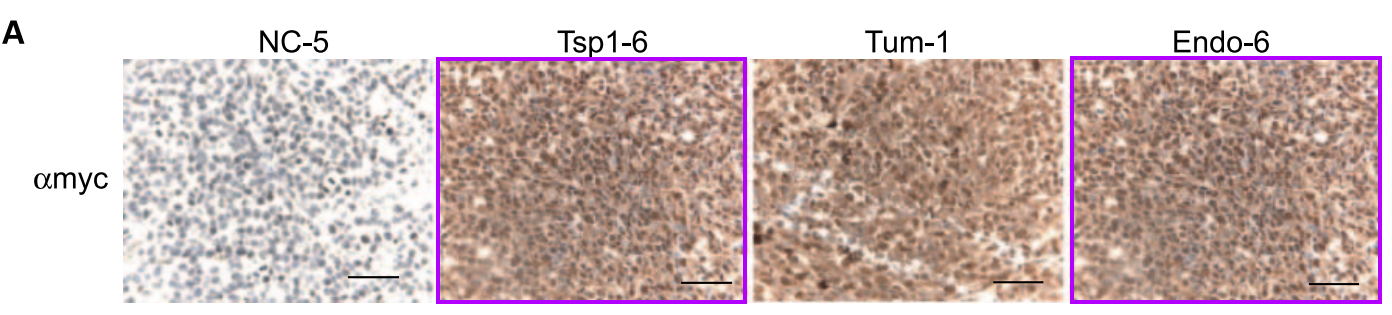
Starting back in 2008 when Sam was at Harvard Medical School, a fairly innocuous example of image duplication, which by itself, does not earn a blog post… although it is notable that seven employees of Harvard Medical School did not identify this error.
Namali T. Fernando, Moritz Koch, Courtney Rothrock, Lila K. Gollogly, Patricia A. D’Amore, Sandra Ryeom, Sam S. Yoon Tumor Escape from Endogenous, Extracellular Matrix–Associated Angiogenesis Inhibitors by Up-Regulation of Multiple Proangiogenic Factors Clinical Cancer Research (2008) doi: 10.1158/1078-0432.ccr-07-4126
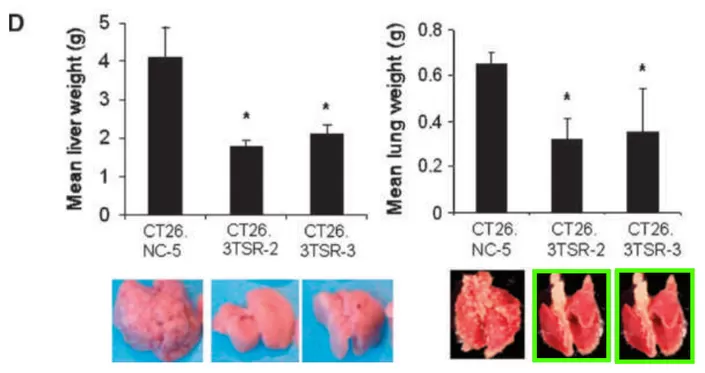
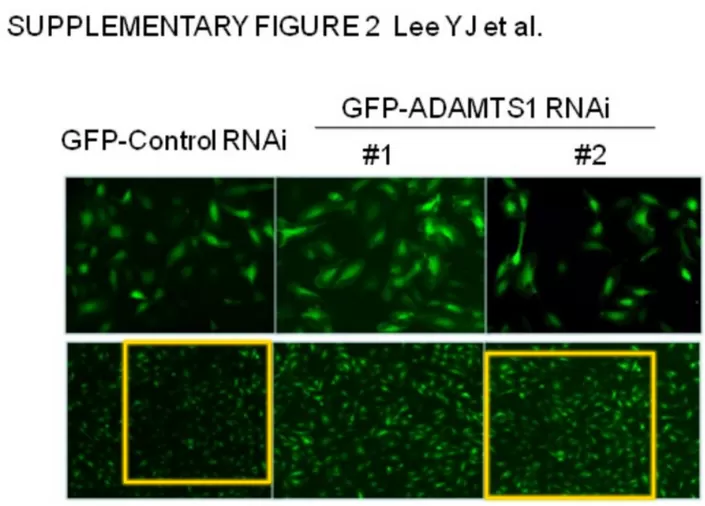
Moving on to a pair of duplication errors in a 2010 paper with researchers from Harvard Medical School, UCLA, and Penn Medicine. Authored together with M. Luisa Iruela-Arispe (then at UCLA and now a department chair at Northwestern University Feinberg School of Medicine), and Daniel Karl (then at Harvard Medical School and now an associate director at AstraZeneca). Let’s hope everyone improved their spot-the-difference skills as their careers advanced!
Yoon-Jin Lee, Moritz Koch, Daniel Karl, Antoni X. Torres-Collado, Namali T. Fernando, Courtney Rothrock, Darshini Kuruppu, Sandra Ryeom, M. Luisa Iruela-Arispe, Sam S. Yoon Variable Inhibition of Thrombospondin 1 against Liver and Lung Metastases through Differential Activation of Metalloproteinase ADAMTS1 Cancer Research (2010) doi: 10.1158/0008-5472.can-09-3094
Soon after his stint at Memorial Sloan Kettering started, the following figure was put together by Sam and his colleagues, including Jeffrey A Toretsky at Georgetown university (now Chief of the Division of Pediatric Hematology) and David Guy Kirsch at Duke University (now a Distinguished Professor there).
Hae-June Lee, Changhwan Yoon, Benjamin Schmidt, Do Joong Park, Alexia Y. Zhang, Hayriye V. Erkizan, Jeffrey A. Toretsky, David G. Kirsch, Sam S. Yoon Combining PARP-1 Inhibition and Radiation in Ewing Sarcoma Results in Lethal DNA Damage Molecular Cancer Therapeutics (2013) doi: 10.1158/1535-7163.mct-13-0338
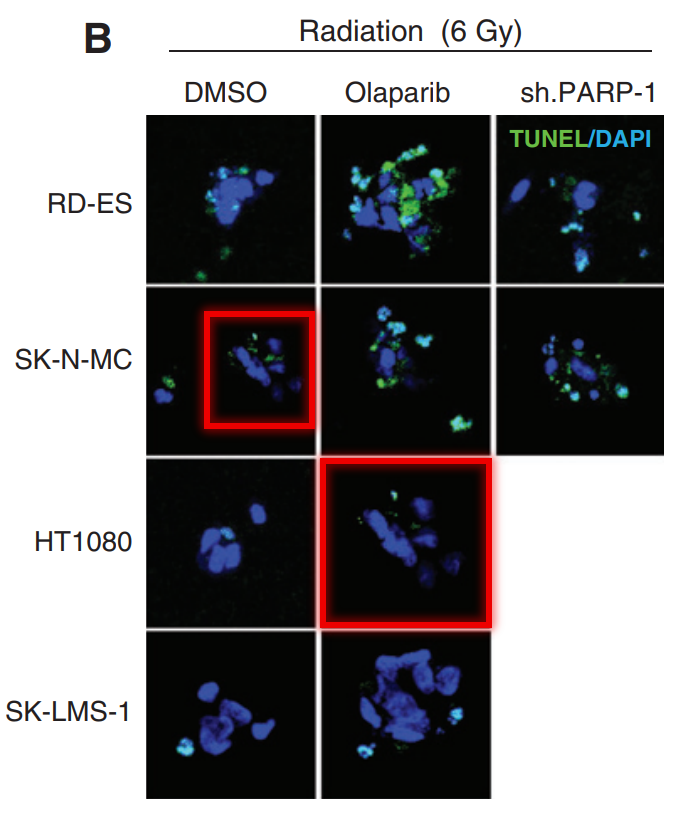
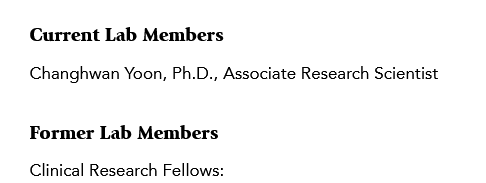
As far as I am concerned, these above examples are relatively minor infractions, but it is still puzzling that such muddles are possible with so many big brains on the team. But the trouble really started when a certain Changhwan Yoon migrated to Sam’s lab from South Korea in around 2014 (I don’t think he is any relation to Sam S. Yoon, but I may be mistaken). Changhwan Yoon is currently the only member of the Yoon lab, and you will now see why he is more productive than a few dozen regular postdocs.
At this point a series of papers including migration and invasion assays began to be published which would make even a traditional Chinese papermill sweat…
- Changhwan Yoon, Do Joong Park, Benjamin Schmidt, Nicholas J Thomas, Hae-June Lee, Teresa S Kim, Yelena Y Janjigian, Deirdre J Cohen, S. S. Yoon CD44 expression denotes a subpopulation of gastric cancer cells in which Hedgehog signaling promotes chemotherapy resistance Clinical Cancer Research (2014) doi: 10.1158/1078-0432.ccr-14-0011
- Kevin K. Chang, Changhwan Yoon, Brendan C. Yi, William D. Tap, M. Celeste Simon, Sam S. Yoon Platelet-derived growth factor receptor-α and -β promote cancer stem cell phenotypes in sarcomas Oncogenesis (2018) doi: 10.1038/s41389-018-0059-1
- Y Suh, C-H Yoon, R-K Kim, E-J Lim, Y S Oh, S-G Hwang, S An, G Yoon, M C Gye, J-M Yi, M-J Kim, S-J Lee Claudin-1 induces epithelial-mesenchymal transition through activation of the c-Abl-ERK signaling pathway in human liver cells Oncogene (2013) doi: 10.1038/onc.2012.505
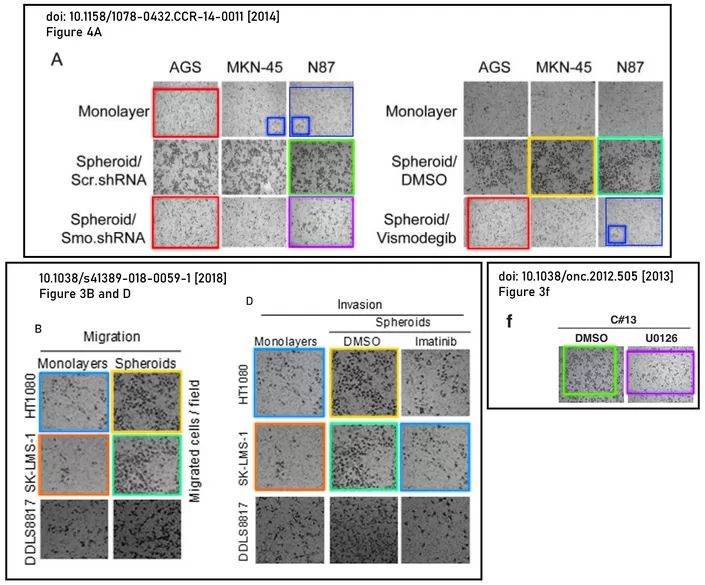
The above three papers include distinguished researchers such as Deirdre J. Cohen (currently Director of the Gastrointestinal Oncology Program for the Mount Sinai Health System), Yelena Y. Janjigian (now Chief of the Gastrointestinal Oncology Service at Memorial Sloan Kettering), and M. Celeste Simon (Scientific Director of The Abramson Family Cancer Research Institute, University of Pennsylvania Perelman School of Medicine) – we will hear more from M. Celeste Simon later, but first more migration and invasion assay difficulties:
- Changhwan Yoon, Soo-Jeong Cho, Bülent Arman Aksoy, Do Joong Park, Nikolaus Schultz, Sandra W. Ryeom, Sam S. Yoon Chemotherapy Resistance in Diffuse-Type Gastric Adenocarcinoma Is Mediated by RhoA Activation in Cancer Stem-Like Cells Clinical Cancer Research (2016) doi: 10.1158/1078-0432.ccr-15-1356
- Jian-xian Lin, Changhwan Yoon, Ping Li, Sandra W. Ryeom, Soo-Jeong Cho, Chao-hui Zheng, Jian-wei Xie, Jian-bin Wang, Jun Lu, Qi-yue Chen, Sam S. Yoon, Chang-ming Huang CDK5RAP3 as tumour suppressor negatively regulates self-renewal and invasion and is regulated by ERK1/2 signalling in human gastric cancer British Journal of Cancer (2020) doi: 10.1038/s41416-020-0963-y
- Soo-Jeong, Changhwan Yoon, Jun Ho Lee, Kevin K. Chang, Jian-xian Lin, Young-Ho Kim, Myeong-Cherl Kook, Bülent Arman Aksoy, Do Joong Park, Hassan Ashktorab, Duane T. Smoot, Nikolaus Schultz, Sam S. Yoon KMT2C Mutations in Diffuse-Type Gastric Adenocarcinoma Promote Epithelial-to-Mesenchymal Transition Clinical Cancer Research (2018) doi: 10.1158/1078-0432.ccr-17-1679
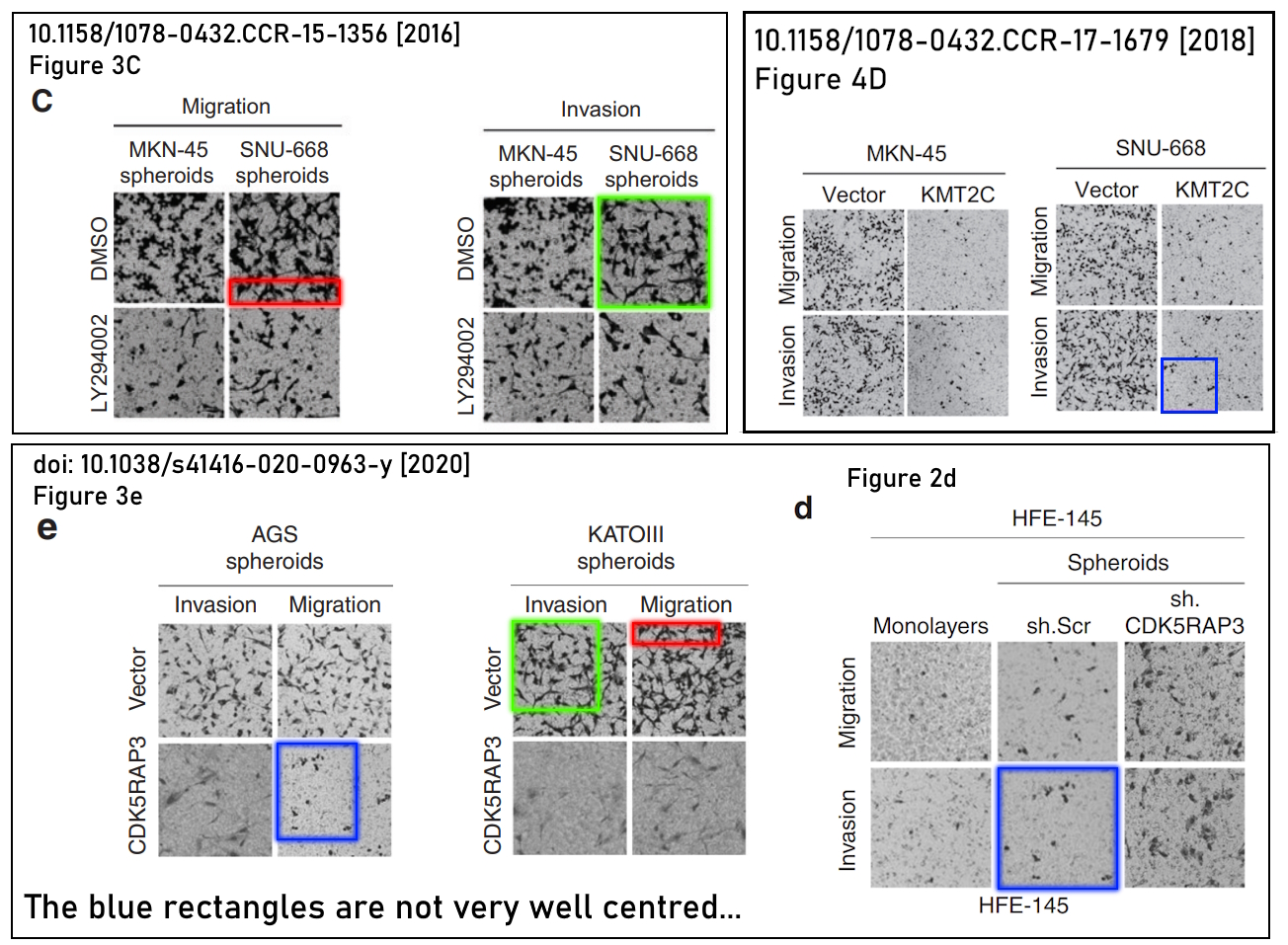
With the above three papers including (among others) co-authors from China (Chang-Ming Huang; Director of Department of Gastric Surgery, Fujian Medical University Union Hospital, China), and Korea (Do Joong Park and Soo Jeong Cho; both associate professors at Seoul National University). Hassan Ashktorab (currently Professor in the Department of Medicine at Howard University) and Duane T. Smoot (now Chair and Professor at the Department of Internal Medicine at Meharry Medical College). Another troublesome example follows:
- Changhwan Yoon, Jacob Till, Soo-Jeong Cho, Kevin K. Chang, Jian-xian Lin, Chang-ming Huang, Sandra Ryeom, Sam S. Yoon KRAS Activation in Gastric Adenocarcinoma Stimulates Epithelial-to-Mesenchymal Transition to Cancer Stem–Like Cells and Promotes Metastasis Molecular Cancer Research (2019) doi: 10.1158/1541-7786.mcr-19-0077
- Jun Lu, Heejin Bang, Su Mi Kim, Soo-Jeong Cho, Hassan Ashktorab, Duane T. Smoot, Chao-hui Zheng, Sandra W. Ryeom, Sam S. Yoon, Changhwan Yoon, Jun Ho Lee Lymphatic metastasis-related TBL1XR1 enhances stemness and metastasis in gastric cancer stem-like cells by activating ERK1/2-SOX2 signaling Oncogene (2021) doi: 10.1038/s41388-020-01571-x

And a final example of these images migrating between papers, with many of the same co-accused, including Sandra W. Ryeom, who is closely associated with Sam’s research and currently Associate Professor and Associate Dean for Postdoctoral Affairs at Columbia University.
- Changhwan, Jun Lu, Sandra W. Ryeom, M. Celeste Simon, Sam S. Yoon PIK3R3, part of the regulatory domain of PI3K, is upregulated in sarcoma stem-like cells and promotes invasion, migration, and chemotherapy resistance Cell Death and Disease (2021) doi: 10.1038/s41419-021-04036-5
- Sang Il Choi, Changhwan Yoon, Mi Ree Park, DaHyung Lee, Myeong-Cherl Kook, Jian-Xian Lin, Jun Hyuk Kang, Hassan Ashktorab, Duane T. Smoot, Sam S. Yoon, Soo-Jeong Cho CDX1 Expression Induced by CagA-Expressing Helicobacter pylori Promotes Gastric Tumorigenesis Molecular Cancer Research (2019) doi: 10.1158/1541-7786.mcr-19-0181
- Kevin K. Chang, Changhwan Yoon, Brendan C. Yi, William D. Tap, M. Celeste Simon, Sam S. Yoon Platelet-derived growth factor receptor-α and -β promote cancer stem cell phenotypes in sarcomas Oncogenesis (2018) doi: 10.1038/s41389-018-0059-1

In total, I have found ten papers published between 2013 and 2021 where these invasion and migration images appear and are labelled as showing a variety of contradicting cell lines and experimental conditions, there are many more overlapping examples between these papers that I have not annotated. The first paper in this series was published by a team of Korean authors in Oncogene (Sam was not an involved), and the images presumably made their way to America with one of the authors of that paper, Changhwan (or C-H) Yoon.
Y Suh, C-H Yoon, R-K Kim, E-J Lim, Y S Oh, S-G Hwang, S An, G Yoon, M C Gye, J-M Yi, M-J Kim, S-J Lee Claudin-1 induces epithelial-mesenchymal transition through activation of the c-Abl-ERK signaling pathway in human liver cells Oncogene (2013) doi: 10.1038/onc.2012.505
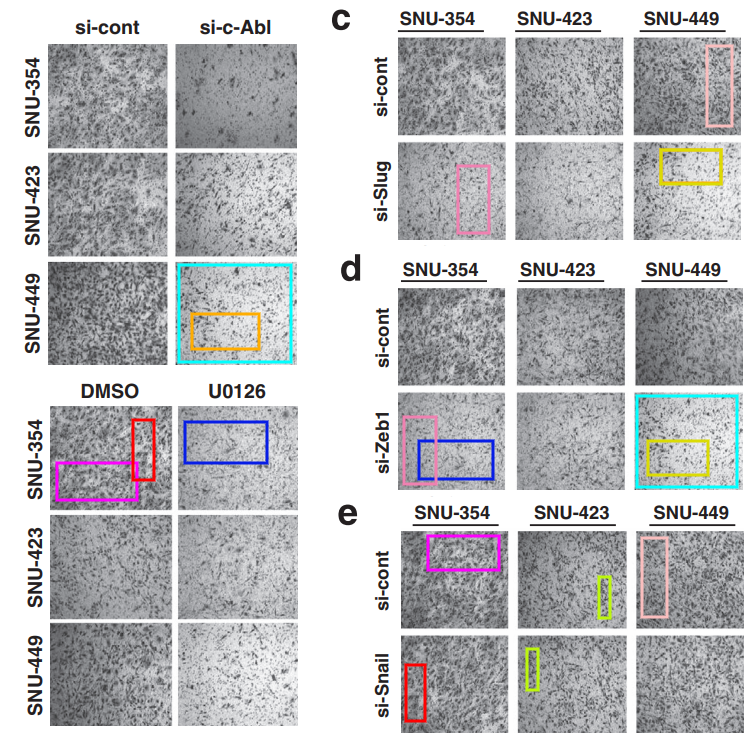
Interestingly, this first paper was subject to a correction in 2016 after a duplicated western blot was detected, this was noted on PubPeer as part of a project to screen 120 randomly selected papers for data duplication, this screening exercise was later published (Oksvold 2015). Neither the original author of the PubPeer comment, the journal editors, or any of the authors who corrected the article noticed the additional duplications in the invasion images. I think most of the blame lies with the editor and publisher in this case: If an article is flagged for duplications, why not request and check all of the raw data?
In any case, it isn’t clear to me why (in 2021) authors are still adding low resolution black and white images like these to their papers? A lot of this seems to be stocking-filler data, added to flesh out a paper which was written to flesh out a publication record. But we should move on! Obviously no one looks at these images anyway, certainly not the editors, reviews, least of all the authors.
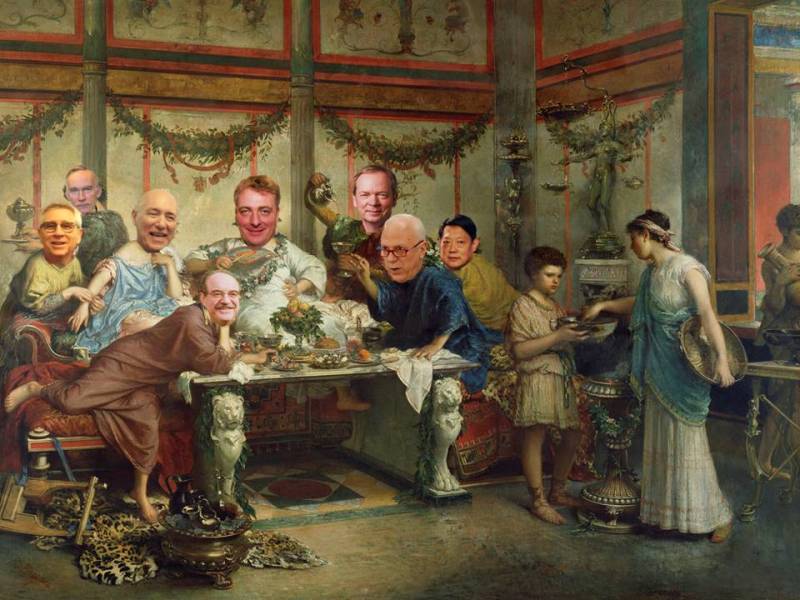
Cell Death and Depravity
Is the journal Cell Death and Disease a disease itself, parasitised by Chinese paper mills? Can it be cured? Not with this team of doctors on editorial board.

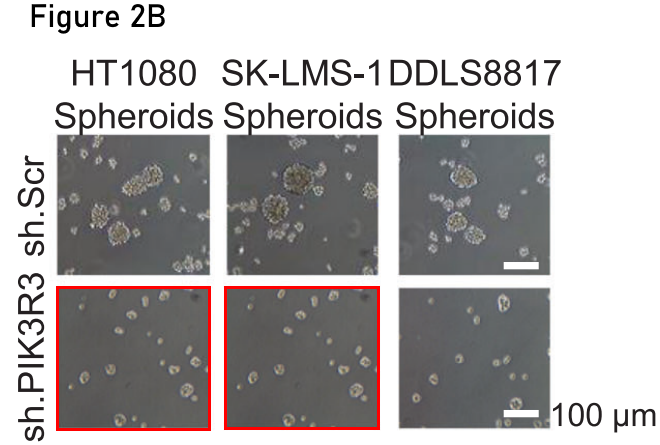
There are further troubled microscopy projects to explore. In just one paper, published in Nature’s odious tome Cell Death and Disease, apart from the ubiquitous invasion and migration problems detailed above, the following examples of duplication can be found:
Changhwan Yoon, Jun Lu, Sandra W. Ryeom, M. Celeste Simon, Sam S. Yoon PIK3R3, part of the regulatory domain of PI3K, is upregulated in sarcoma stem-like cells and promotes invasion, migration, and chemotherapy resistance Cell Death and Disease (2021) doi: 10.1038/s41419-021-04036-5

Jian-xian Lin, Changhwan Yoon, Ping Li, Sandra W. Ryeom, Soo-Jeong Cho, Chao-hui Zheng, Jian-wei Xie, Jian-bin Wang, Jun Lu, Qi-yue Chen, Sam S. Yoon, Chang-ming Huang CDK5RAP3 as tumour suppressor negatively regulates self-renewal and invasion and is regulated by ERK1/2 signalling in human gastric cancer
British Journal of Cancer (2020) doi: 10.1038/s41416-020-0963-y

Chuang Huang, Changhwan Yoon, Xiao-Hong Zhou, Ying-Chun Zhou, Wen-Wen Zhou, Hong Liu, Xin Yang, Jun Lu, Sei Young Lee, Kun Huang ERK1/2-Nanog signaling pathway enhances CD44(+) cancer stem-like cell phenotypes and epithelial-to-mesenchymal transition in head and neck squamous cell carcinomas Cell Death and Disease (2020)
doi: 10.1038/s41419-020-2448-6
Kevin K. Chang, Changhwan Yoon, Brendan C. Yi, William D. Tap, M. Celeste Simon, Sam S. Yoon Platelet-derived growth factor receptor-α and -β promote cancer stem cell phenotypes in sarcomas Oncogenesis (2018)
doi: 10.1038/s41389-018-0059-1
Confusing different cell types is a common theme in Sam’s research, here for example SNU-688 spheroids are confused with SCC-15 spheroids.
- Changhwan Yoon, Soo-Jeong Cho, Bülent Arman Aksoy, Do Joong Park, Nikolaus Schultz, Sandra W. Ryeom, Sam S. Yoon Chemotherapy Resistance in Diffuse-Type Gastric Adenocarcinoma Is Mediated by RhoA Activation in Cancer Stem-Like Cells Clinical Cancer Research (2016) doi: 10.1158/1078-0432.ccr-15-1356
- Chuang Huang, Changhwan Yoon, Xiao-Hong Zhou, Ying-Chun Zhou, Wen-Wen Zhou, Hong Liu, Xin Yang, Jun Lu, Sei Young Lee, Kun Huang ERK1/2-Nanog signaling pathway enhances CD44(+) cancer stem-like cell phenotypes and epithelial-to-mesenchymal transition in head and neck squamous cell carcinomas Cell Death and Disease (2020) doi: 10.1038/s41419-020-2448-6

In the following example the cell lines match, but the treatment conditions are different:
- Changhwan Yoon, Jacob Till, Soo-Jeong Cho, Kevin K. Chang, Jian-xian Lin, Chang-ming Huang, Sandra Ryeom, Sam S. Yoon KRAS Activation in Gastric Adenocarcinoma Stimulates Epithelial-to-Mesenchymal Transition to Cancer Stem–Like Cells and Promotes Metastasis Molecular Cancer Research (2019) doi: 10.1158/1541-7786.mcr-19-0077
- Jun Lu, Heejin Bang, Su Mi Kim, Soo-Jeong Cho, Hassan Ashktorab, Duane T. Smoot, Chao-hui Zheng, Sandra W. Ryeom, Sam S. Yoon, Changhwan Yoon, Jun Ho Lee Lymphatic metastasis-related TBL1XR1 enhances stemness and metastasis in gastric cancer stem-like cells by activating ERK1/2-SOX2 signaling Oncogene (2021) doi: 10.1038/s41388-020-01571-x

Another common confusion is between xenograft tumor images. For example, in the following paper there is at least one image overlapping between Figure 4D and Figure 6D.
Changhwan Yoon, Jun Lu, Brendan C. Yi, Kevin K. Chang, M. Celeste Simon, Sandra Ryeom, Sam S. Yoon PI3K/Akt pathway and Nanog maintain cancer stem cells in sarcomas Oncogenesis (2021) doi: 10.1038/s41389-020-00300-z
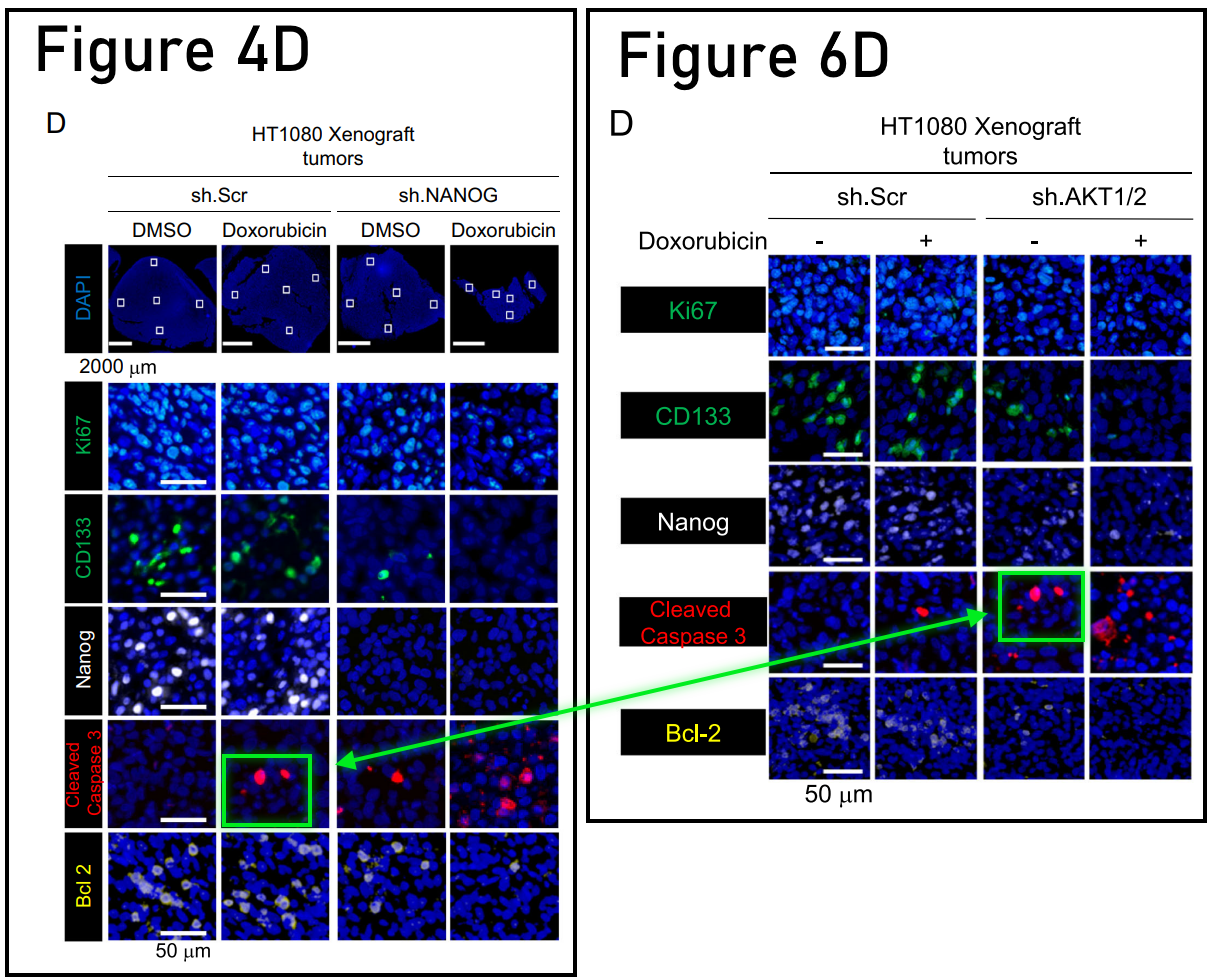
The following two figures include an overlap between papers (red rectangles) and an additional overlap within one of the papers (green rectangles). The intensity of the blue colour is different between these images.
- Jun Lu, Heejin Bang, Su Mi Kim, Soo-Jeong Cho, Hassan Ashktorab, Duane T. Smoot, Chao-hui Zheng, Sandra W. Ryeom, Sam S. Yoon, Changhwan Yoon, Jun Ho Lee Lymphatic metastasis-related TBL1XR1 enhances stemness and metastasis in gastric cancer stem-like cells by activating ERK1/2-SOX2 signaling Oncogene (2021) doi: 10.1038/s41388-020-01571-x
- Kevin K. Chang, Changhwan Yoon, Brendan C. Yi, William D. Tap, M. Celeste Simon, Sam S. Yoon Platelet-derived growth factor receptor-α and -β promote cancer stem cell phenotypes in sarcomas Oncogenesis (2018) doi: 10.1038/s41389-018-0059-1

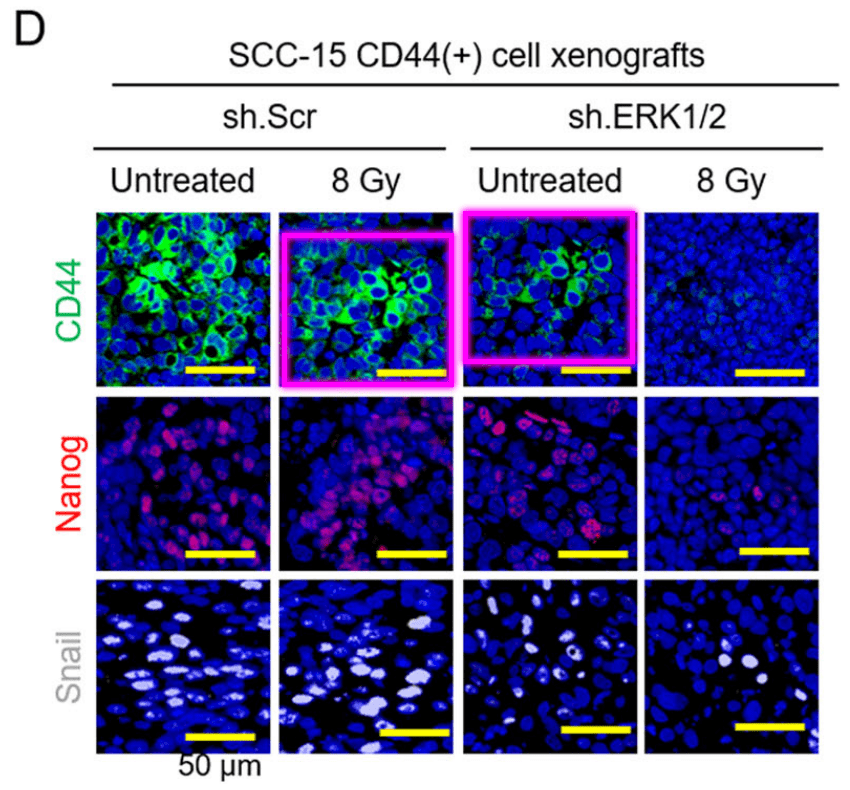
Another example of an overlapping tumor xenograft, this time with slightly different intensity in the green channel, but certainly an image of the same tumor. Apart from being given cancer, the mice were also blasted with a dose of radiation here for their sins, this being the second of Sam’s two papers in Cell Death and Depravity.
Chuang Huang, Changhwan Yoon, Xiao-Hong Zhou, Ying-Chun Zhou, Wen-Wen Zhou, Hong Liu, Xin Yang, Jun Lu, Sei Young Lee, Kun Huang ERK1/2-Nanog signaling pathway enhances CD44(+) cancer stem-like cell phenotypes and epithelial-to-mesenchymal transition in head and neck squamous cell carcinomas Cell Death and Disease (2020) doi: 10.1038/s41419-020-2448-6
Another example of recycled images with contradicting labels is shown below, including Edwin Choy (Associate Professor at Harvard), who is a frequent co-author with Francis J. Hornicek and Zhenfeng Duan who I previously wrote about.
Miami Vice: Francis Hornicek & Zhenfeng Duan
” I will only confirm that every conclusion offered in papers on which I am one of the authors is sound and can be relied upon.” Francis Hornicek

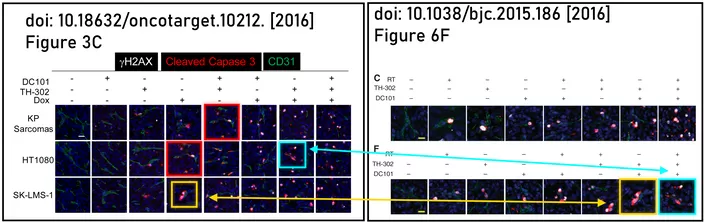
Also included as an author is Charles P. Hart, who at the time was an employee of Threshold Pharmaceuticals and worked as the “project leader for the global clinical development program for the hypoxia-targeted anticancer drug evofosfamide (TH-302)”. Given the title of the second paper (“Hypoxia-activated chemotherapeutic TH-302 enhances the effects of VEGF-A inhibition and radiation on sarcomas“) you might think a conflict-of-interest statement would have been useful, but you would be wrong, the British Journal of Cancer has no space for such information in the ancient history of 2016. You are free to rustle up some positive spin for your developmental drug with some cooked images and you must be spared the embarrassment of any unseemly appearance of bias.
- Changhwan Yoon, Kevin K. Chang, Jun Ho Lee , William D. Tap, Charles P. Hart, M. Celeste Simon, Sam S. Yoon Multimodal targeting of tumor vasculature and cancer stem-like cells in sarcomas with VEGF-A inhibition, HIF-1α inhibition, and hypoxia-activated chemotherapy Oncotarget (2016) doi: 10.18632/oncotarget.10212
- C Yoon, H-J Lee, D J Park, Y-J Lee, W D Tap, T S K Eisinger-Mathason, C P Hart, E Choy, M C Simon, S S Yoon Hypoxia-activated chemotherapeutic TH-302 enhances the effects of VEGF-A inhibition and radiation on sarcomas British Journal of Cancer (2015) doi: 10.1038/bjc.2015.186
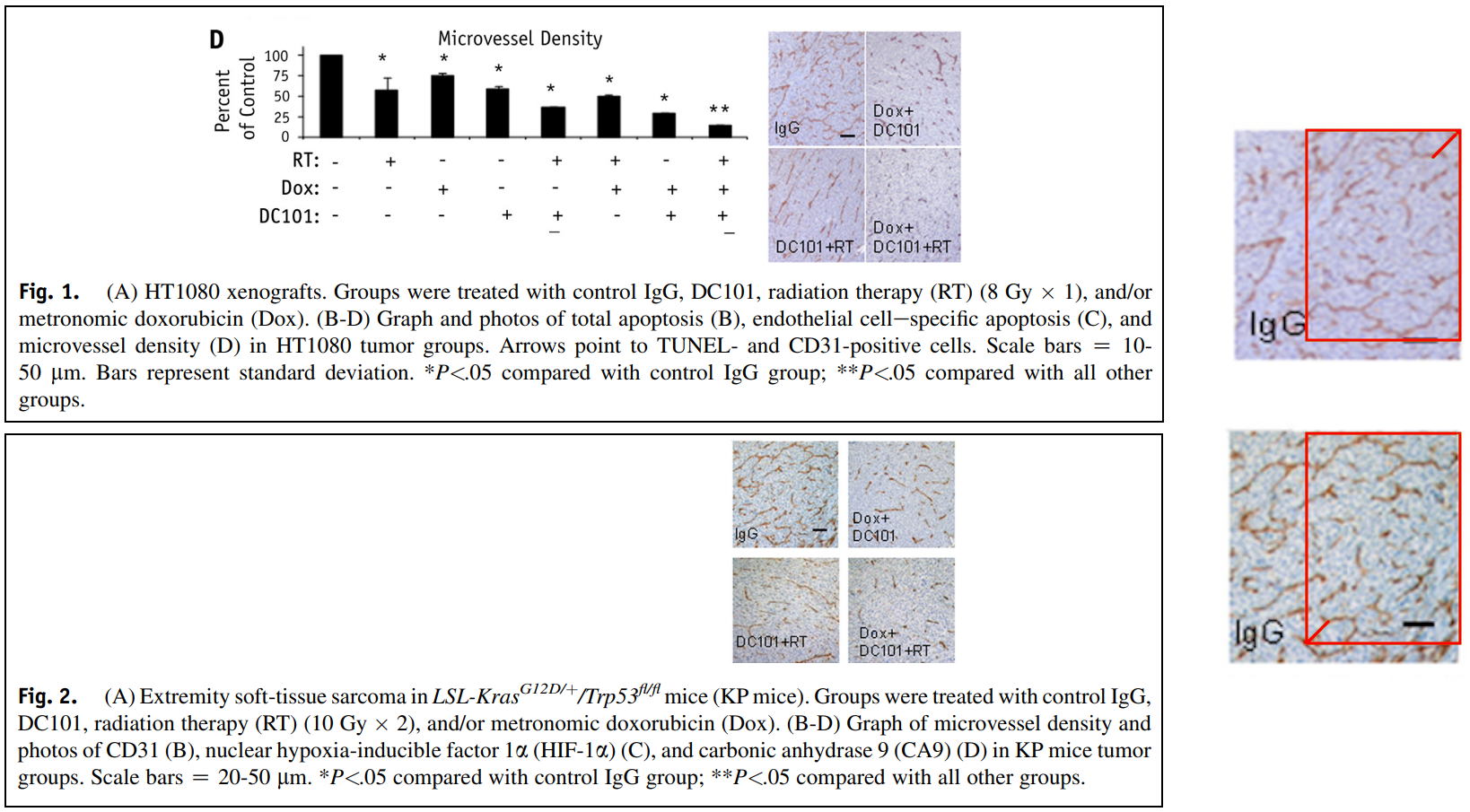
Another example of xenograft mislabelling, this time the authors finally found the rotate tool and changed the colour hue, which is still no match for ImageTwin.ai. Although these are control images, the mouse model in each case is different, so the image reuse is not acceptable.
Hae-June Lee, Changhwan Yoon, Do Joong Park, Yeo-Jung Kim, Benjamin Schmidt, Yoon-Jin Lee, William D. Tap, T.S. Karin Eisinger-Mathason, Edwin Choy, David G. Kirsch, M. Celeste Simon, Sam S. Yoon Inhibition of Vascular Endothelial Growth Factor A and Hypoxia-Inducible Factor 1α Maximizes the Effects of Radiation in Sarcoma Mouse Models Through Destruction of Tumor Vasculature International Journal of Radiation Oncology*Biology*Physics (2015) doi: 10.1016/j.ijrobp.2014.10.047
One last example in the theme of tumour xenografts, and this is in fact the image which sent me spiralling down this rabbit hole (Having set a target to check the last five years of BMC Cancer, I made it through only their 14 most recent research papers, left three comments, and then became diverted by this paper):
Changhwan Yoon, Jun Lu, Yukyung Jun, Yun-Suhk Suh, Bang-Jin Kim, Jacob E. Till, Jong Hyun Kim, Sara H. Keshavjee, Sandra Ryeom, Sam S. Yoon KRAS activation in gastric cancer stem-like cells promotes tumor angiogenesis and metastasis BMC Cancer (2023) doi: 10.1186/s12885-023-11170-0

Whilst looking through the author list here, I found one current medical student, which I think is a little sad, possibly their first publication, tainted by this careless behaviour before even graduating! But of course, it isn’t as sad as what happened to the mice! Not only are microscopic images of tumours muddled, but macroscopic too…
- Changhwan Yoon, Soo-Jeong Cho, Kevin K. Chang, Do Joong Park, Sandra W. Ryeom, Sam S. Yoon Role of Rac1 Pathway in Epithelial-to-Mesenchymal Transition and Cancer Stem-like Cell Phenotypes in Gastric Adenocarcinoma Molecular Cancer Research (2017) doi: 10.1158/1541-7786.mcr-17-0053
- Changhwan Yoon, Jun Lu, Brendan C. Yi, Kevin K. Chang, M. Celeste Simon, Sandra Ryeom, Sam S. Yoon PI3K/Akt pathway and Nanog maintain cancer stem cells in sarcomas Oncogenesis (2021) doi: 10.1038/s41389-020-00300-z
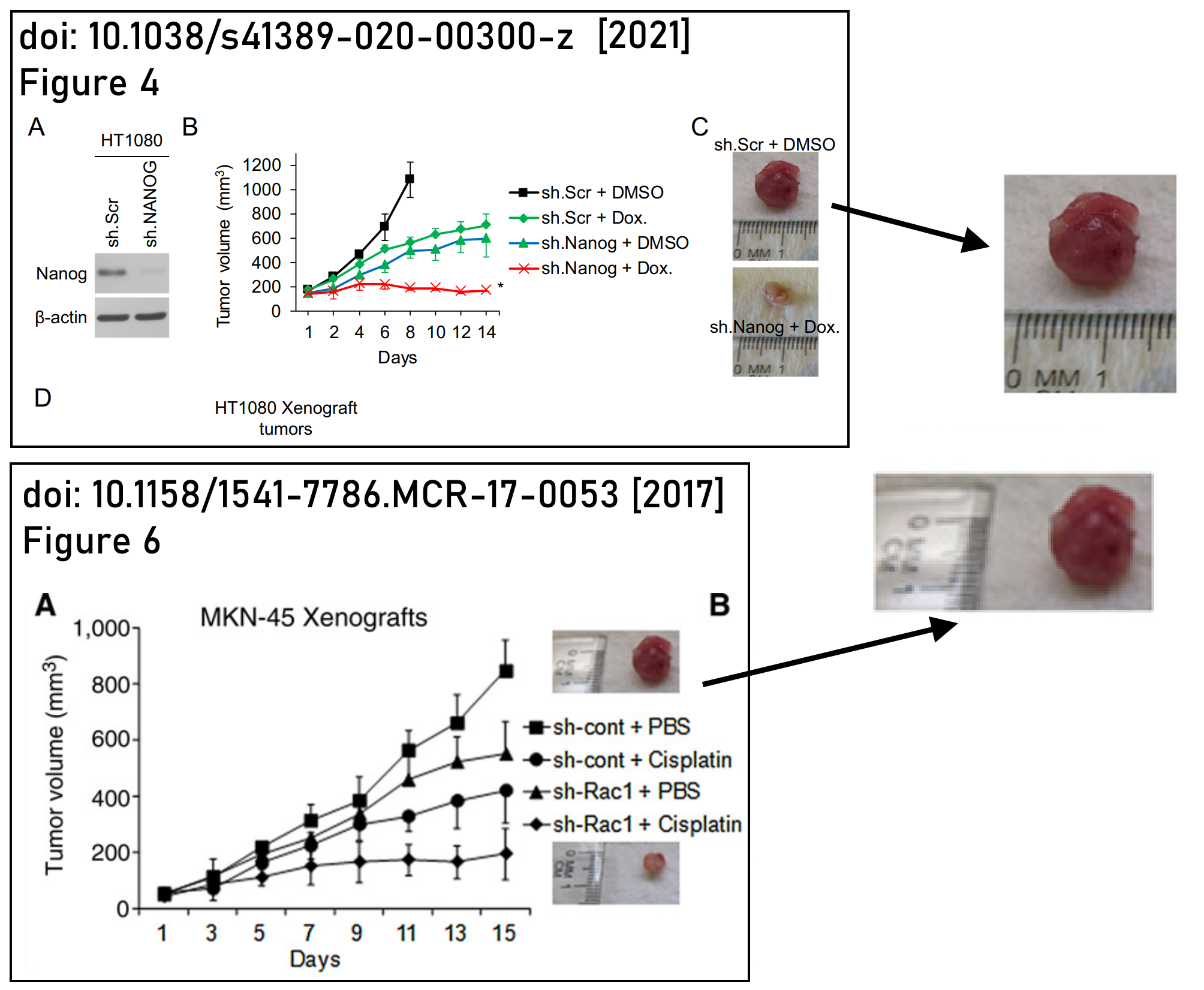
In this case one of the tumour images is only available in black and white because it was published (thousands of years ago) in 2016, fortunately the colour camera was working by 2021, so the same photo could be published after the ruler was moved.
- Changhwan Yoon, Jun Lu, Brendan C. Yi, Kevin K. Chang, M. Celeste Simon, Sandra Ryeom, Sam S. Yoon PI3K/Akt pathway and Nanog maintain cancer stem cells in sarcomas Oncogenesis (2021) doi: 10.1038/s41389-020-00300-z
- Changhwan Yoon, Soo-Jeong Cho, Bülent Arman Aksoy, Do Joong Park, Nikolaus Schultz, Sandra W. Ryeom, Sam S. Yoon Chemotherapy Resistance in Diffuse-Type Gastric Adenocarcinoma Is Mediated by RhoA Activation in Cancer Stem-Like Cells Clinical Cancer Research (2016) doi: 10.1158/1078-0432.ccr-15-1356

And finally in the following example I can confirm that the last author has admitted an error, but not without putting up a fight. Sam is only a co-author on the PNAS paper below, so the blame here can’t be laid entirely at his feet (I’m sure he has enough to answer for already).
- T. S. Karin Eisinger-Mathason, Vera Mucaj, Kevin M. Biju, Michael S. Nakazawa, Mercy Gohil, Timothy P. Cash, Sam S. Yoon, Nicolas Skuli, Kyung Min Park, Sharon Gerecht, M. Celeste Simon Deregulation of the Hippo pathway in soft-tissue sarcoma promotes FOXM1 expression and tumorigenesis Proceedings of the National Academy of Sciences (2015) doi: 10.1073/pnas.1420005112
- Michael S. Nakazawa, T. S. Karin Eisinger-Mathason, Navid Sadri, Joshua D. Ochocki, Terence P. F. Gade, Ruchi K. Amin, M. Celeste Simon Epigenetic re-expression of HIF-2α suppresses soft tissue sarcoma growth Nature Communications (2016) doi: 10.1038/ncomms10539
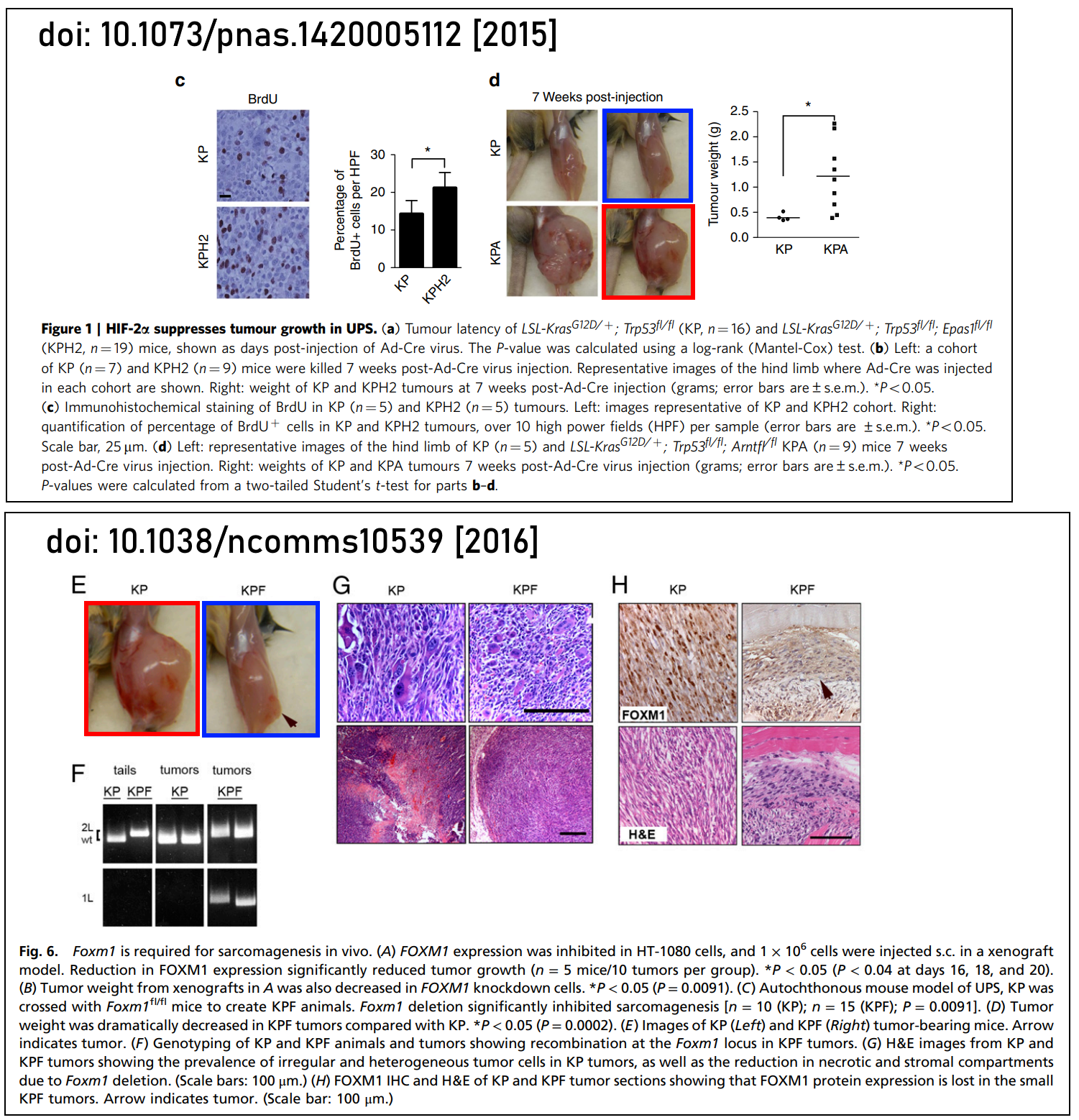
M. Celeste Simon is the last author on both of the above papers and a frequent co-author of Sam S. Yoon’s. As usual I have begun the fool’s errand of contacting universities regarding this swamp of misconduct. Simon was first out of the block with a response and her defence is a stupid one:
“I cannot comment on the work performed in another individual’s laboratory where we provided reagents, but the “duplications” you cite in our Nature Communications and PNAS papers were intended to be images from the same cohort of control mice for a number of other gene targeted animals.“
M. Celeste Simon
After further communication the esteemed Scientific Director, Investigator and Arthur H. Rubenstein MBBCh Professor agreed that two identical pictures of a mouse tumor can’t show different experiments and promised to correct the Nature Communications paper. No further explanation as to why she thinks it’s OK to add her name as the last and corresponding author to research if she merely “supplied reagents”.
Pound of Flesh, or Is Cancer Fraud Inevitable?
Ashani Weeraratna and Valerie Weaver, two women in STEM, harassed by trolls.
So how does one rise to such an important position at the Perelman School of Medicine, University of Pennysylvania? With research like this:
Liping Liu, Timothy P. Cash, Russell G. Jones, Brian Keith, Craig B. Thompson, M. Celeste Simon Hypoxia-induced energy stress regulates mRNA translation and cell growth Molecular Cell (2006) doi: 10.1016/j.molcel.2006.01.010
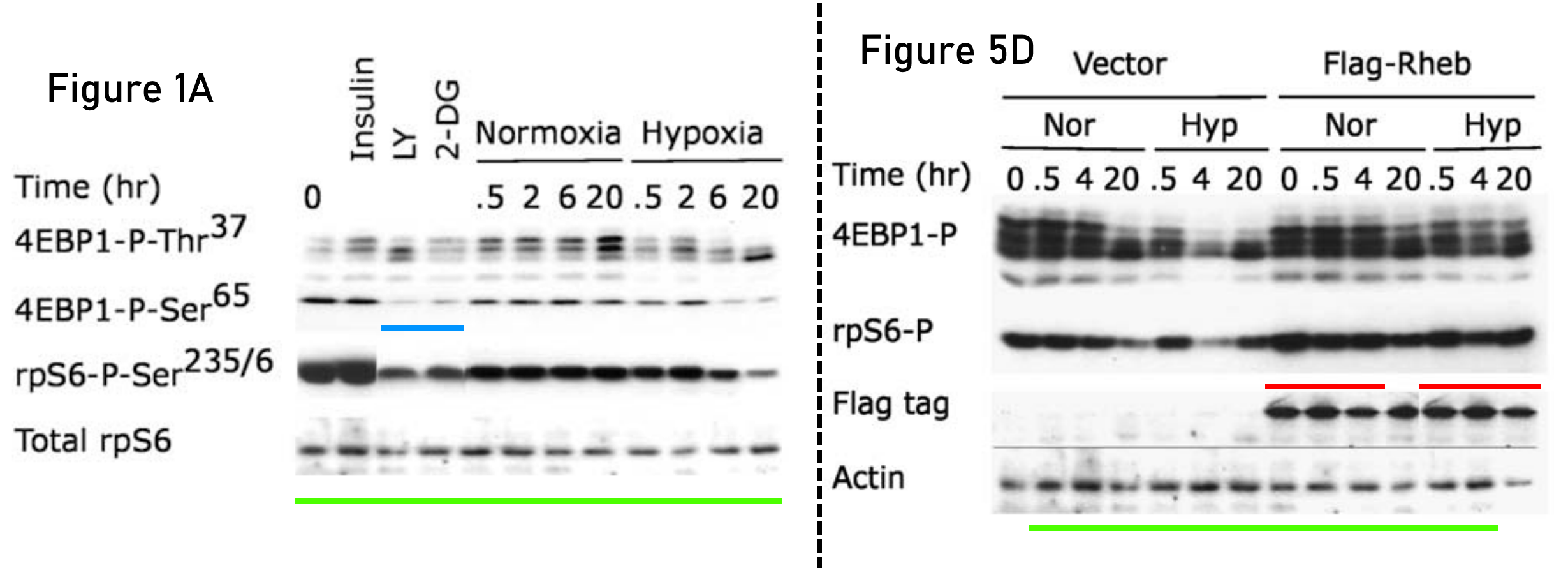
The above problems (duplicated Actin, Flag tag, and a painful splice) were first noted on PubPeer in 2015, an additional comment was added in 2016, and then in 2019 an anonymous account optimistically requested the raw data!
I added a few more comments to Simon’s PubPeer record following my initial communication with her taking her PubPeer record to sixteen entries, including the mix-up below. These were forwarded on to her university.
Nicolas Skuli, Amar J. Majmundar, Bryan L. Krock, Rickson C. Mesquita, Lijoy K. Mathew, Zachary L. Quinn, Anja Runge, Liping Liu, Meeri N. Kim, Jiaming Liang, Steven Schenkel, Arjun G. Yodh, Brian Keith, M. Celeste Simon Endothelial HIF-2α regulates murine pathological angiogenesis and revascularization processes Journal of Clinical Investigation (2012) doi: 10.1172/jci57322
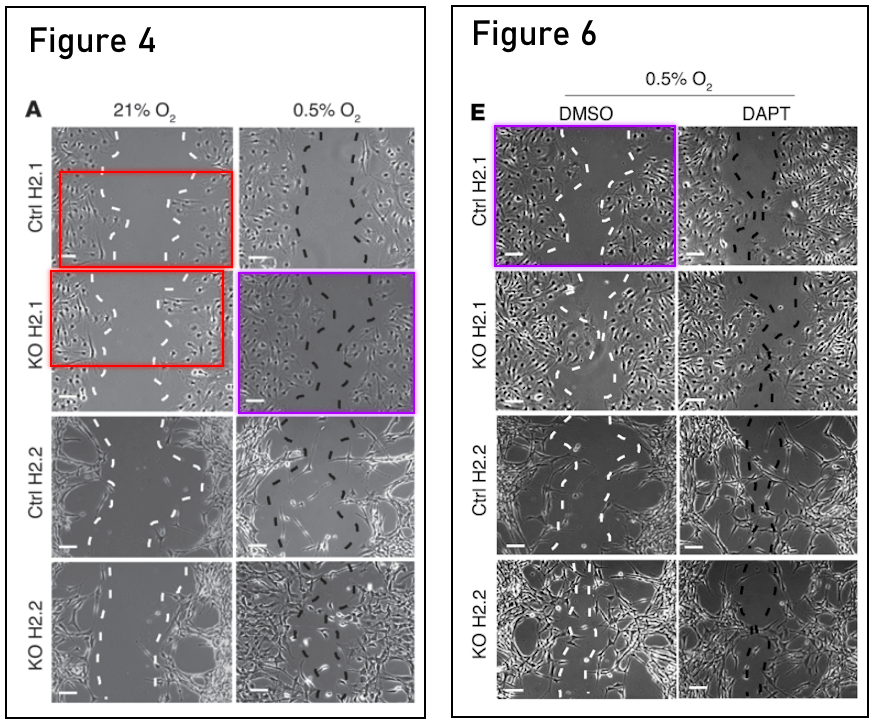
I subsequently received this response to my (admittedly antagonistic) emails:
“I have been advised not to engage with you further. I do appreciate your drawing attention to the error in the Nature Communications paper which we will formally correct.
However, you will not be hearing from me again.“
Celeste Simon
It is very gracious of Simon to agree to remedy just one of the sixteen documented errors but I am being sidetracked…
No response so far from Sam S. Yoon, Changhwan Yoon, or Sandra Ryeom who are the main characters of this story. How can they respond? Either they knowingly participated in the “illustration” of their own papers with what have become essentially stock photos, or they unwittingly signed as “authors” on research they could hardly have bothered to read, let alone write!
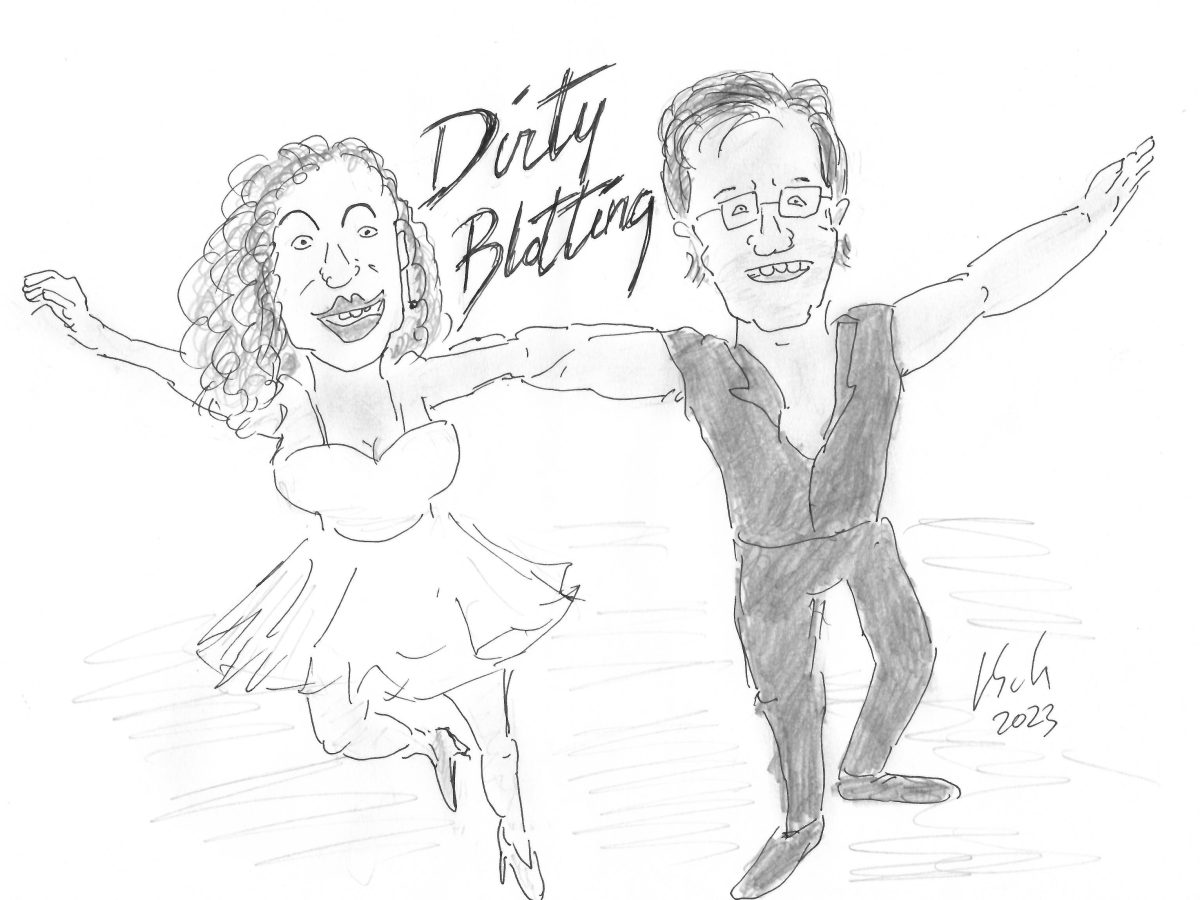
What Elsa Flores and Tyler Jacks taught each other
“PCR reactions run on agarose gels commonly look similar due to artifacts introduced by the agarose gel and comb.” Dr Elsa R Flores, Associate Director, Moffitt Cancer Center
The impressive list of distinguished researchers and institutions involved here (Memorial Sloan Kettering, Harvard Medical School, UCSF, Duke University, Mount Sinai Health System, etc etc) makes me wonder how exactly “research” is being conducted and authorship assigned. From my perspective it just looks like a lot of people endeavoured to dip their snout into a trough of citations! Why do successful and apparently intelligent surgeons feel the need to play pretend at biology research? Has Sam S. Yoon ever performed an invasion or migration assay? How many of the people who signed as his co-authors really understand the experiments being performed?
I’m always curious as to why some cases of misconduct go viral, and others are barely acknowledged. Francesca Gino generated a lot of media coverage (I suppose that is one of her skills) but she only meddled with some spreadsheets and taught a subject we know is mostly made up anyway. Sam S. Yoon is operating on people, training the next generation of surgeons, and surely being paid quite handsomely. No doubt somewhere along the way a bunch of mice really did get harmed, people’s tissue samples which were donated in good faith have been misused (OK, to be fair the cell lines are often just stolen, but the point remains that researchers should still use human research samples ethically). I expect (at best) several of his papers will eventually be retracted, essentially documenting the waste of (probably) millions in research funds, but such inconveniences will be taken in stride. I guess his defence will be that he was merely the supervisor of an errant researcher, but if this is how he “supervises” his research, does anyone trust his supervision of surgery?

Anil Sood and how much MD Anderson doesn’t care: whistleblowers speak out
“The graduate school at University of Texas MD Anderson does not care and keep sending students to his lab, Sood is a member of faculty there. RIO at MDACC doesn’t care because witnesses either left the country or are too afraid to speak.”
Please allow me to indulge myself in a postscript conspiracy theory: In 2021 a Molecular Therapy paper was withdrawn during the publication process, no further details are provided and there is no copy of the paper available online. The title of the paper was: “FOXC1 modulates stem-like cell properties and chemoresistance through hedgehog and EMT signaling in gastric adenocarcinoma”
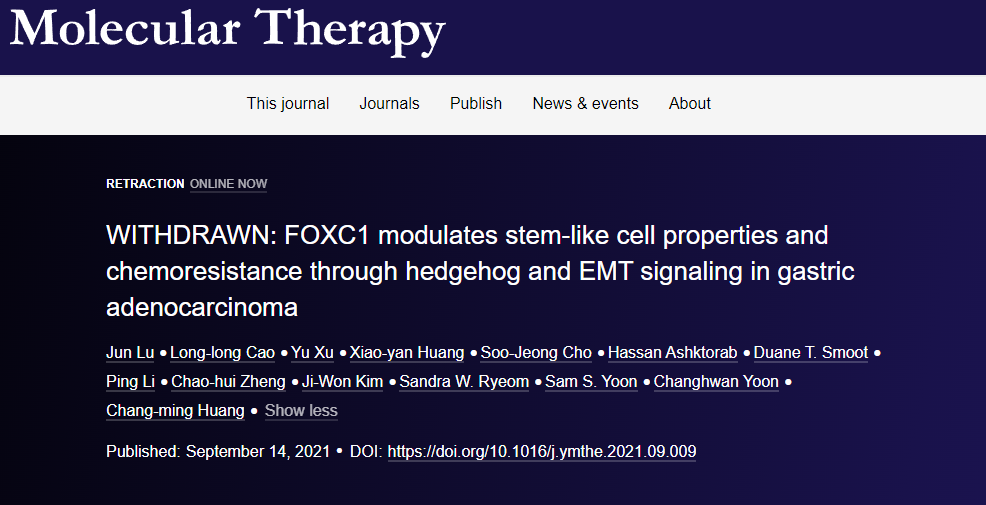
The submission included many of the same suspects as authors (Soo-Jeong Cho, Hassan Ashktorab, Duane T. Smoot, Sandra W. Ryeom, Sam S. Yoon, Chang-ming Huang, and others). It seems fair to guess from the title that it would have included some of the same problematic duplications noted above, and (to my knowledge) these same migration and invasion images have not resurfaced since this withdrawal. Around the same time Sam and his team departed Memorial Sloan Kettering. So, perhaps the gang finally got caught out, stopped publishing these images, and quietly moved on. Of course, if I am correct, it looks like even more people are asleep at the wheel! How many of Sam’s coauthors and colleagues at Memorial Sloan, Molecular Therapy editors, and peer-reviewers already know about what’s happened here? It has now been two years since this withdrawal, with no corrections or retractions on Sam’s record. Of course, my conspiracy rests on the tenuous assumption that Molecular Therapy actually cares about publishing bogus research; there is ample evidence to the contrary…
Fraud Simple
US cancer research professors Paul B Fisher, Paul Dent and Stephen Grant look like the characters of a Joel and Ethan Coen crime movie, unfortunately never filmed. Smut Clyde will give you a peek into their spree of data manipulation
I thank all my donors for supporting my journalism. You can be one of them!
Make a one-time donation:
I thank all my donors for supporting my journalism. You can be one of them!
Make a monthly donation:
Choose an amount
Or enter a custom amount
Your contribution is appreciated.
Your contribution is appreciated.
DonateDonate monthly
 For Better Science
8 February 2024 retraction for Sam S Yoon.
Retraction: Multimodal targeting of tumor vasculature and cancer stem-like cells in sarcomas with VEGF-A inhibition, HIF-1α inhibition, and… | Oncotarget
Oncotarget. 2024; 15:123-123. https://doi.org/10.18632/oncotarget.28560
Changhwan Yoon1, Kevin K. Chang1, Jun Ho Lee1, William D. Tap2, Charles P. Hart3, M. Celeste Simon4 and Sam S. Yoon1
1Department of Surgery, Memorial Sloan Kettering Cancer Center, New York, NY, USA
2Department of Medicine, Memorial Sloan Kettering Cancer Center, New York, NY, USA
3Threshold Pharmaceuticals, South San Francisco, CA, USA
4Abramson Family Cancer Research Institute, Perelman School of Medicine, University of Pennsylvania, Philadelphia, PA, USA
Published: February 08, 2024
This article has been retracted: Oncotarget has completed its investigation of this paper. A concerned reader informed the journal of several instances of image duplication. Namely, there is internal duplication between two images in Figure 3C. In addition, two images in Figure 3C are duplicates of images in Figure 6F from a previously published paper [1]. There is also a second internal duplication of one image in both Figures 4B and 6B. In light of these issues, the journal requested clarification regarding these images from the authors. The provided explanations were deemed unacceptable by the Scientific Integrity Office. Based on these facts, Oncotarget has decided to retract this paper.
REFERENCES
1. Yoon C, Lee HJ, Park DJ, Lee YJ, Tap WD, Eisinger-Mathason TS, Hart CP, Choy E, Simon MC, Yoon SS. Hypoxia-activated chemotherapeutic TH-302 enhances the effects of VEGF-A inhibition and radiation on sarcomas. Br J Cancer. 2015; 113:46–56. https://doi.org/10.1038/bjc.2015.186.
LikeLike
This blog has been covered by the New York Times: https://www.nytimes.com/2024/02/15/science/columbia-cancer-surgeon-sam-yoon-flawed-data.html?unlocked_article_code=1.Vk0.n_wj.6MINMOGIitlv&smid=url-share
Benjamin Mueller was able to obtain the withdrawn paper which also contained problematic images, thus proving my conspiracy theory correct. One paper so far has been retracted by Oncotarget:
https://pubpeer.com/publications/A78AF5E5D101678E04CDEC32152FF0
LikeLike
Top NYC Cancer Center Probes Surgeon’s ‘Suspicious’ Research, Report Says (thedailybeast.com)
LikeLike
https://www.dailymail.co.uk/sciencetech/article-13089381/Top-NYC-surgeon-Sam-S-Yoon-suspicious-data-cancer-treatment-studies.html
LikeLike
https://www.newser.com/story/346490/26-papers-by-renowned-cancer-surgeon-flagged-for-iffy-data.html
LikeLike
3 retractions for Sam S Yoon:-
WITHDRAWN: FOXC1 modulates stem-like cell properties and chemoresistance through hedgehog and EMT signaling in gastric adenocarcinoma: Molecular Therapy
Retraction: Multimodal targeting of tumor vasculature and cancer stem-like cells in sarcomas with VEGF-A inhibition, HIF-1α inhibition, and… | Oncotarget
Retraction Note: Lymphatic metastasis-related TBL1XR1 enhances stemness and metastasis in gastric cancer stem-like cells by activating ERK1/2-SOX2 signaling | Oncogene (springer.com)
LikeLike
FOXC1 modulates stem-like cell properties and chemoresistance through hedgehog and EMT signaling in gastric adenocarcinoma: Molecular Therapy
Molecular Therapy withdrew this in-press article in January 2022 after investigating concerns of image duplication raised by an editor. At the editors’ request, the reasons for the withdrawal are being shared below.
The initial withdrawal was based on evidence for image duplication in identical or altered fashion in Figures 2A, 3C, and 4B within the Molecular Therapy article.
Since the publication of the withdrawal, additional findings have come to light. These findings include the following:
Reuse of images published in Figures 2B, 3C, and 4C of “CDK5RAP3 as tumour suppressor negatively regulates self-renewal and invasion and is regulated by ERK1/2 signalling in human gastric cancer” (Lin et al., 2020, Br. J. Cancer 123, 1131–1144, https://doi.org/10.1038/s41416-020-0963-y)
in Figures 3F and 4B of the Molecular Therapy article.
Reuse of images published in Figures 2A and 3E of “PIK3R3, part of the regulatory domain of PI3K, is upregulated in sarcoma stem-like cells and promotes invasion, migration, and chemotherapy resistance” (Yoon et al., 2021, Cell Death Dis. 12, 749, https://doi.org/10.1038/s41419-021-04036-5 )
) in Figures 4B and 6A of the Molecular Therapy paper.
This reuse (and in part, misrepresentation) of data without appropriate attribution represents a severe abuse of the scientific publishing system.
LikeLike
Pingback: Sholto David avslöjar slarv och fusk i forskningsvärldens finrum | Forskning & Framsteg
4th retraction for Sam S Yoon.
PubPeer – PIK3R3, part of the regulatory domain of PI3K, is upregulate…
LikeLike
LikeLike
More Studies by Columbia Cancer Researchers Are Retracted – The New York Times (nytimes.com)
“Despite that study’s removal, the researchers — Dr. Sam Yoon, chief of a cancer surgery division at Columbia University’s medical center, and Changhwan Yoon, a more junior biologist there — continued publishing studies with suspicious data. Since 2008, the two scientists have collaborated with other researchers on 26 articles that the sleuth, Sholto David, publicly flagged for misrepresenting experiments’ results.
One of those articles was retracted last month after The Times asked publishers about the allegations. In recent weeks, medical journals have retracted three additional studies, which described new strategies for treating cancers of the stomach, head and neck. Other labs had cited the articles in roughly 90 papers.”
“Columbia’s medical center declined to comment on allegations facing Dr. Yoon’s lab. It said the two scientists remained at Columbia and the hospital “is fully committed to upholding the highest standards of ethics and to rigorously maintaining the integrity of our research.”
The lab’s web page was recently taken offline. Columbia declined to say why. Neither Dr. Yoon nor Changhwan Yoon could be reached for comment. (They are not related.)”
LikeLike
More Studies by Columbia Cancer Researchers Are Retracted – The New York Times (nytimes.com)
“Columbia has sought to reinforce the importance of sound research practices. Hours after the Times article appeared last month, Dr. Michael Shelanski, the medical school’s senior vice dean for research, sent an email to faculty members titled “Research Fraud Accusations — How to Protect Yourself.” It warned that such allegations, whatever their merits, could take a toll on the university.
“In the months that it can take to investigate an allegation,” Dr. Shelanski wrote, “funding can be suspended, and donors can feel that their trust has been betrayed.””
He spake it himself.
PubPeer – Search publications and join the conversation.
LikeLike
Columbia now lists him as S. Sunghyun Yoon. I guess he uses the Korean middle name as needed.
LikeLike
This is genius. i look forward to hear of the Ohio State professor Charles Croix.
LikeLiked by 1 person
15 October 2024 retraction for Sam S Yoon.
Retraction: KMT2C Mutations in Diffuse-Type Gastric Adenocarcinoma Promote Epithelial-to-Mesenchymal Transition | Clinical Cancer Research | American Association for Cancer Research (aacrjournals.org)
LikeLike
15 October 2024 retraction for Sam S Yoon.
Retraction: Chemotherapy Resistance in Diffuse-Type Gastric Adenocarcinoma Is Mediated by RhoA Activation in Cancer Stem-Like Cells | Clinical Cancer Research | American Association for Cancer Research (aacrjournals.org)
LikeLike
15 October 2024 retraction for Sam S Yoon.
Retraction: CD44 Expression Denotes a Subpopulation of Gastric Cancer Cells in Which Hedgehog Signaling Promotes Chemotherapy Resistance | Clinical Cancer Research | American Association for Cancer Research (aacrjournals.org)
LikeLike
15 October 2024 retraction for Sam S Yoon.
Retraction: Differential Effects of VEGFR-1 and VEGFR-2 Inhibition on Tumor Metastases Based on Host Organ Environment | Cancer Research | American Association for Cancer Research (aacrjournals.org)
LikeLike
15 October 2024 retraction for Sam S Yoon.
Retraction: Variable Inhibition of Thrombospondin 1 against Liver and Lung Metastases through Differential Activation of Metalloproteinase ADAMTS1 | Cancer Research | American Association for Cancer Research (aacrjournals.org)
LikeLike
https://www.nytimes.com/2024/10/16/science/sam-yoon-columbia-cancer-surgeon-5-more-retractions.html
LikeLike
Rebranding! It was first and foremost an image problem anyway..
‘Since the Times article in February, Dr. Yoon’s name has been changed from Sam Yoon to S. Sunghyun Yoon on a Columbia website advertising surgical treatment options. Because of the change, the Columbia surgeon who is being promoted to many patients has a name that no longer matches the one Dr. Yoon used to publish his retracted studies. A Columbia hiring announcement from several years ago was also recently edited to change the rendering of Dr. Yoon’s name, according to web page archives.’
LikeLike
Not only that, but he has set up a website/blog with AI generated articles on the health benefits of golf and other such nonsense, presumably to try and compete in the search rankings for “Sam S. Yoon”. I won’t link it here, because that will only help his project 😂 I hope he didn’t pay too much for reputation management because it’s a transparent effort.
LikeLike
Nothing will happen. The science sleuths inhabit Middle-earth, or some other mythical lands, whereas the fraudsters inhabit the real world. Many look up to fraudsters as folk heroes, pushing back the boundaries, defying the authorities!
LikeLike
Still doing very nicely. Propaganda machine behind him. Also in Manhattan, one of the world addresses.
Augustine M.K. Choi, M.D. | Weill Cornell Medicine
“An internationally renowned physician-scientist in the field of lung disease, Dr. Augustine M.K. Choi has focused his research on understanding how chronic and acute lung diseases develop in response to molecular, cellular and genetic triggers. His laboratory studies how oxidative stress and inflammation affect stress response genes and antioxidant enzymes in the lung, and it has contributed much to our understanding of the molecular regulation and function of heme oxygenase-1 and gaseous molecule carbon monoxide in lung and vascular disease. Dr. Choi is currently examining whether inhaled carbon monoxide can be an effective therapy in human disease.”
Retraction Watch Database
LikeLike
The lesser Yoon loses another paper. Only took a couple of years. https://link.springer.com/article/10.1038/s41388-025-03673-w
LikeLiked by 1 person
Sam S Yoon loses another: https://pubpeer.com/publications/AF99B2BEEEE447B05FFE8B459F1DE7
LikeLike