
There is a popular academic saying: science is a mafia. Well, sometimes quite literally, as Aneurus Inconstans has found out about the University of Messina in Sicily. I hope he won’t get us both killed now.
The story follows Aneurus’s earlier reporting, and it was bad enough already then. There is again massive Sicilian nepotism and dynastic faculty chairs, corruption starting from the very top at the rectorate, but now with actual mafia ties which make one wonder if research fraud is just another way for the organised crime to make money. Just like toxic waste buried in the countryside, like half-built roads and bridges leading nowhere, those bizarrely photoshopped western blots of Messina are what you get when mafia infiltrates public enterprise.
Now join our Sultan of Sting for his follow-up of The Fraud Squad.
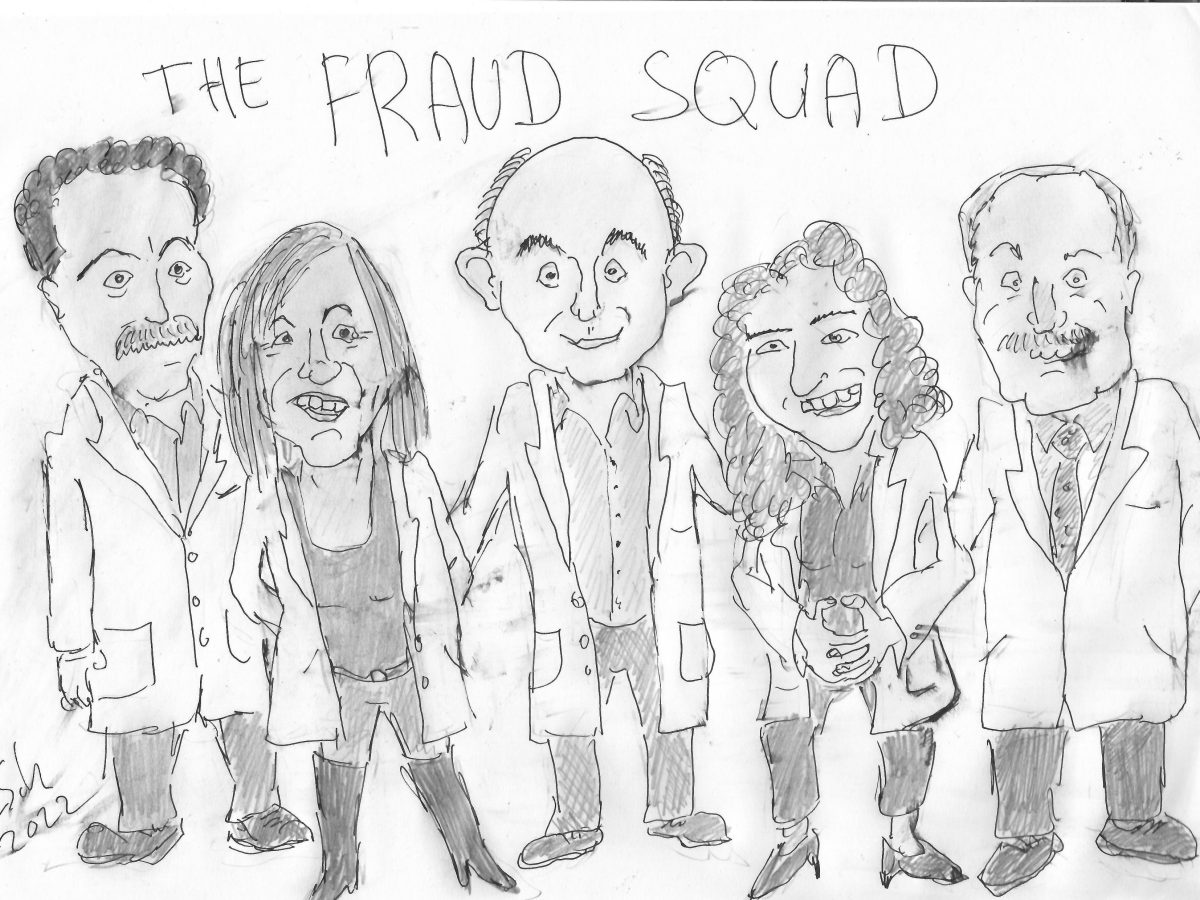
The Fraud Squad
Either a Muslim colleague or a retired technician did it. Or so these Sicilian professors insist.

Uni Messina, money for nothing & brothers in arms
By Aneurus Inconstans
It was just over a year ago when we had a blast unearthing one of the biggest science scandals in Italy, namely the case of Francesco Squadrito and his gang of academicians at the University of Messina (UNIME).
Ten retractions and seven expression of concern have been earned by the Fraud Squad as of today. We wish many more to come, and we will further work to put these crooks in dire straits.
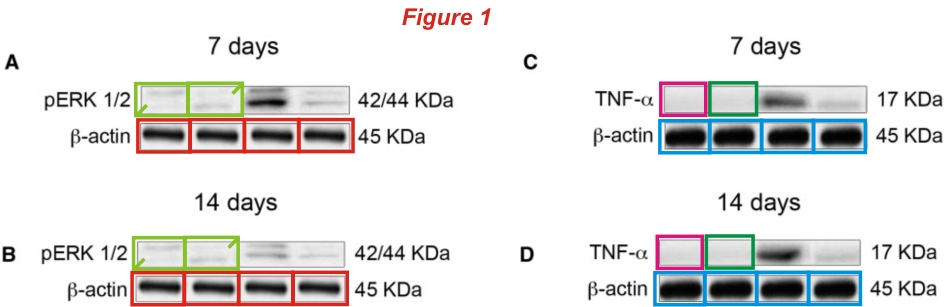
This incredible lab has scored 113 (one hundred and thirteen) entries on PubPeer as of today. Dozens, sometimes hundreds of identical bands copy-pasted next to each other in all the figures of any given paper are the trademark of these scammers. It would be inexplicable already if stuff of this level had passed peer-review even once, yet here we have hundreds of cases. In comparison, even papermill products are light-years ahead for the quality of (fake) data presentation. One example is below here, the now retracted Minutoli et al. 2015:


But as in any self-respecting Italian comedy, tragedy was soon added to the farce. I’m not referring to the untimely departure of professor Domenica Altavilla, wife of Squadrito, who passed away few days after the For Better Science article was released.
I’m rather talking about the clinical trials which these fools set up on twenty kids, aged between 4 and 16, affected by Duchenne muscular dystrophy. The trials were designed for testing of Flavocoxid (a mixture of various flavanols), which is the subject of many bogus articles by these impostors. Among these papers are the aforementioned Minutoli et al. 2015, Bitto et al. 2012 and Altavilla et al. 2012, which are all three now retracted. Here is below Bitto et al. 2012, flagged by Cheshire:

Flavocoxid was then marketed as a cure for osteoarthritis under the tradename of Limbrel 500 in the USA through a company called Primus Pharmaceuticals of Scottsdale, Arizona. It turned out the drug was causing rare but serious side effects to the liver, and the Food and Drug Administration (FDA) requested a recall, which took place in 2018.
This story is so stinging, to put it mildly, that I had tried for months to inform the Italian community and press on the matter. Eventually I found the journalist Francesco Margiocco, who got interested in the case and wrote an article for the Italian newspaper Il Secolo XIX, published on February 5th, 2023.
Through Margiocco’s commitment, the Italian Ministry of University and Research (MUR) was informed on the case. Alessandra Bitto (87 papers flagged on PubPeer), a loyal Squadrito’s associate and full professor at UNIME, was awarded in 2019 a grant of €850,000 (truly exceptional for Italian standards) for a project entitled “Use of Graphene Quantum Dots as carrier of theranostics agents for solid tumours” (GRATA). The title and the topic are a joke, but the money are real. Money for nothing but damage.
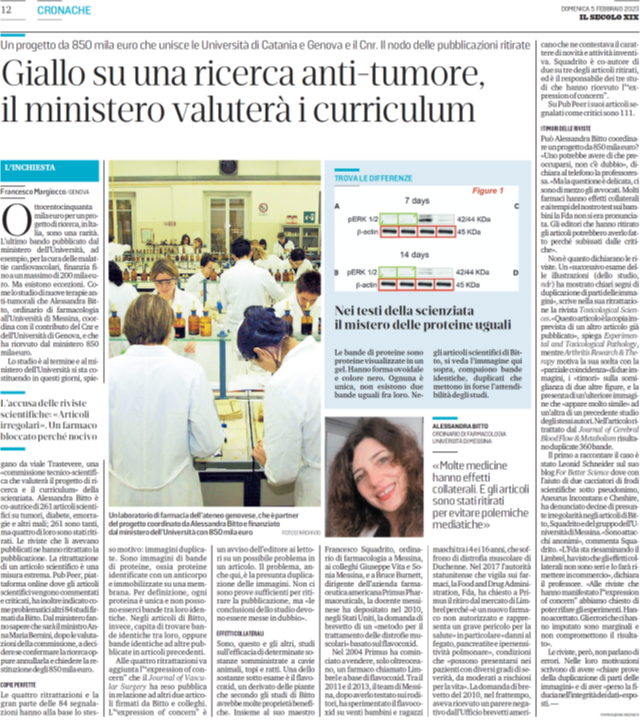
Bitto sports 87 entries in PubPeer, all of them for outrageous fabrications of data.

The ministry has declared that, upon the evaluation of the case by a committee, it will be Minister Anna Maria Bernini herself who will decide whether to confirm the project or cancel it and ask for the return of the 850,000 euros.
Bernini is a long-time politician and a loyal Berlusconi associate, hence there are indeed reasons to be fully optimistic in believing that justice will take its course, no? A few days ago Margiocco asked again for updates to the ministry, the committee is still working and will release a document when done. No news on the “when”.
During Margiocco’s telephone interview with Squadrito, the latter stated that “the errors are marginal”, “the attacks come from anonymous individuals” [Leonid is not – A.], “the FDA is reviewing Limbrel and the side effects are not serious and will have it put back on the market“, and “the journals have already agreed to correct the articles“.
All lies.
But he also said they will go ahead to serenely publish without any hesitation or concern, and unfortunately this is partly true. In fact, after the article at For Better Science came out in May 2022, and despite several journals were already investigating at the time, these charlatans published yet more crap as if nothing had happened. Look what Cheshire found in October 2022 (please also enjoy the revisited MDPI logo):
Federica Mannino, Tommaso D’Angelo, Giovanni Pallio, Antonio Ieni, Igor Pirrotta, Domenico Antonio Giorgi, Alessandro Scarfone, Silvio Mazziotti, Christian Booz, Alessandra Bitto, Francesco Squadrito*, Natasha Irrera The Nutraceutical Genistein-Lycopene Combination Improves Bone Damage Induced by Glucocorticoids by Stimulating the Osteoblast Formation Process Nutrients (2022) doi: 10.3390/nu14204296

Bitto was interviewed too and added something interesting. When asked by Margiocco to comment on the retractions and on the controversy of Limbrel, she declared:
“The matter is delicate, the lawyers are involved. Many drugs have side effects, and at the time of our test on children the FDA was silent. Publishers who withdrew articles may have done so because they were overwhelmed by criticism.“
Yet another lie. Publishers weren’t overwhelmed by criticisms, they have clearly stated in their retraction notes the reason for each and all those retractions: data manipulation. The falsity of this statement by Bitto was correctly underlined by Margiocco in his article.
And we learn that lawyers are involved. Lawyers? Paid by the cheaters privately or by the University of Messina with yet more wasted public money?
One thing is certain: it doesn’t seem the mood over there in Messina is so serene and peaceful, given that the lawyers are involved, retractions are pouring in and the ministry may be breathing down their necks. They must be really going crazy there in Messina, and we are immensely pleased with this.
Big impact
What is the impact of these bogus articles by the Fraud Squad within the pharmacology and biomedical research field?
Web of Science (WoS) informs us that Squadrito sports 13,300 citations in total.
The count at Google Scholar goes up to the mind-boggling score of 21,500.
Dimensions informs that the number of self-citations is negligible.
One of the Squadrito’s papers slapped with an expression of concern, Guarini et al. 2003, has been cited 273 times (WoS) as of today.
Indeed fake data have a significant impact on real science, as well as on taxpayers’ wallets.
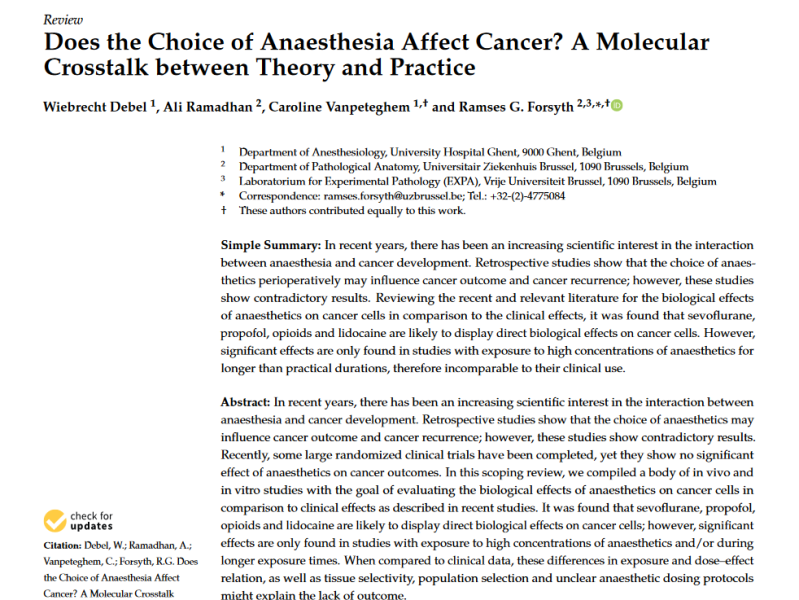
Cancer and anesthesia – a question of trust
Morty reviews a review, on an important topic and written by Belgian scholars. Turns out, it is mostly referencing fraudulent and papermilled trash from China.
Important reminder: Francesco Squadrito has published about 200 more articles not yet flagged on PubPeer, consisting of just tables and histograms, therefore difficult to assess. I’m absolutely sure all these articles are completely fake, too. Perhaps my statement may sound risky and unfounded, but it is not so. Already eight graph-only articles have been flagged on PubPeer. Those “works” are from the 1990s, the same identical graph appears in a bunch of papers where the experiments are completely different. Below here is one example:
Patrizia Canale, Francesco Squadrito, Domenica Altavilla, Mariapatrizia Ioculano, Giuseppe M. Campo, Giovanni Squadrito, Giuseppe Urna, Aurora Sardella, Achille P. Caputi Beneficial effects of BAY u3405, a novel thromboxane A2 receptor antagonist, in splanchnic artery occlusion shock Pharmacology (1994) doi: 10.1159/000139256

The publisher Karger AG Basel, Switzerland, although informed who these people really are, accepted a shameful correction dated February 9th, 2023. Were the authors in this case able to retrieve the raw data after 29 years and correct an unintended mistake? Of course not. Since the data are just a graph, they re-drew it a bit different. Here is below the correction:

The Squadrito dynasty and their loyalists
As mentioned, the PubPeer entries for Squadrito are 113, of which 104 were co-signed by his late wife Altavilla, while 43 include his younger brother Giovanni Squadrito, who is full professor in the same department. Francesco and Giovanni are the sons of Giuseppe Squadrito, who was naturally also professor at UNIME and active from the 1950s up to mid 1990s.
Moreover, Francesco Squadrito and his wife have worked to ensure that the family legacy does not end with their disappearance. Their beloved daughter Violetta Squadrito is already in the rear, clawing at a permanent position at UNIME. Violetta, who finished her undergraduate studies in 2018, already boasts 12 publications in her curriculum, all of them with her parents. Because children are a piece of the heart, especially in Italy.

You may be wondering why we haven’t informed the university leaders about this toxic dump. Unfortunately, the Rector of the University of Messina, Salvatore Cuzzocrea, has his own PubPeer record, and this is just one of the reasons he is gonna fight tooth and nail to defend everyone there. Cuzzocrea is a character deserving a separate chapter later in this article.
And then, how to forget other first-magnitude members of the Fraud Squad, like the full professor Letteria Minutoli (75 papers on PubPeer), the assistant professor Natasha Irrera (47 on PubPeer), the associate professor Herbert Marini (44 on PubPeer), the full professor M’hammed Aguennouz (16 on PubPeer) and many, too many others.


Deeper into the Messina mess: the Campos
The overall number of PubPeer entries for UNIME groups that I’m aware of stands at about 170 as of today, but I may have missed a few. Some of those groups have branched out from the Fraud Squad and started thriving by their own means.
A brilliant example are the Campo brothers, Giuseppe M. Campo (35 papers on PubPeer) and Salvatore Campo (22 on PubPeer), full professor of Biochemisry and associate professor of Molecular Biology, respectively, at UNIME. In the last few weeks I posted my concerns on about twenty more bogus articles authored by these brothers in arms.
“The Campos” have perfectly learned and masterfully employed the fine technique of CTRL+C/CTRL+V from Squadrito, and they have later reached their own heights.


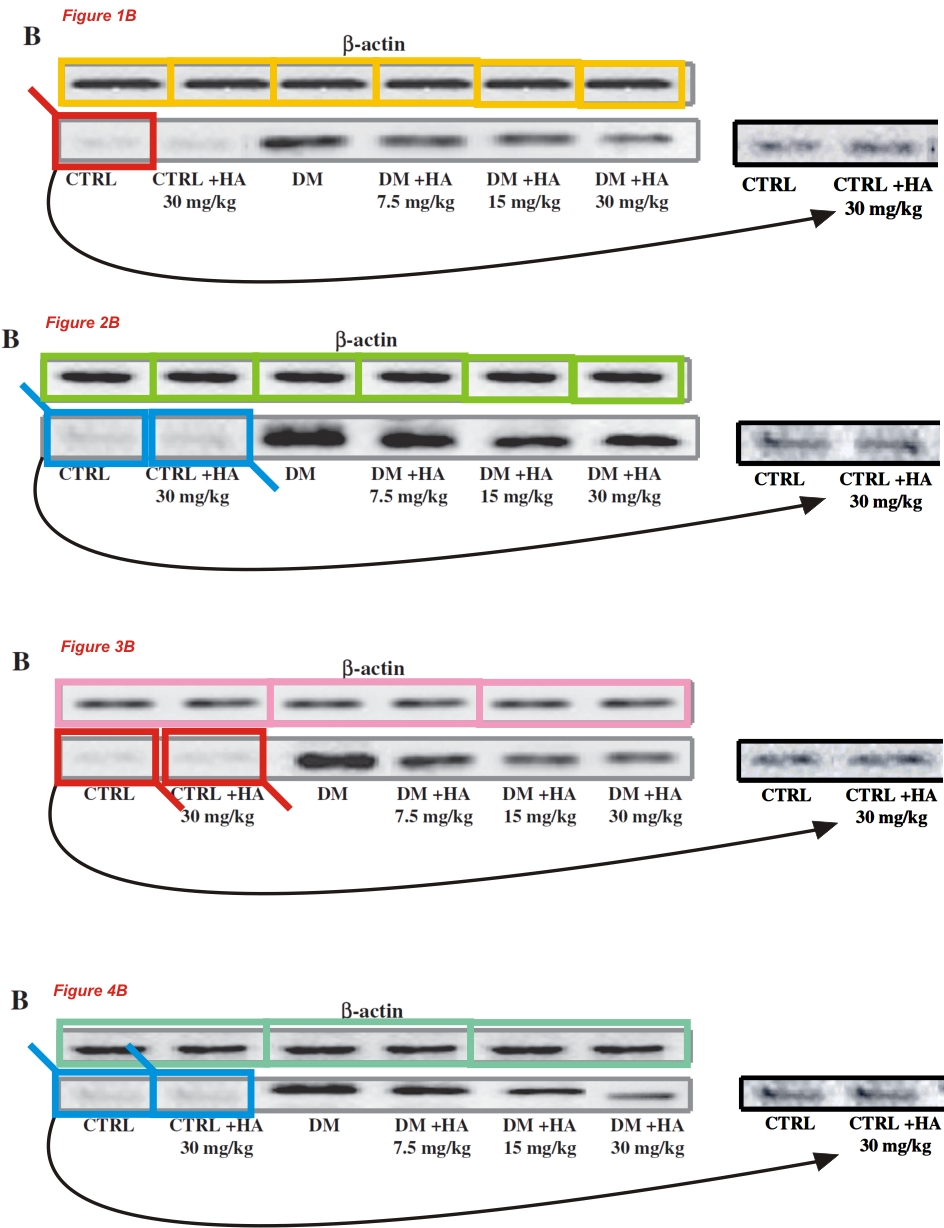
Please admire this gem below (only Figure 1 shown) about the reduction of arthritis in mice by the inhibition of hyaluronic acid degradation. If at first glance you had the impression some bands look DIFFERENT, it’s just because they’ve been slightly rescaled and/or rotated:
Giuseppe M. Campo*, Angela Avenoso, Angela D’Ascola, Michele Scuruchi, Vera Prestipino, Giancarlo Nastasi, Alberto Calatroni, and Salvatore Campo. The inhibition of hyaluronan degradation reduced pro-inflammatory cytokines in mouse synovial fibroblasts subjected to collagen-induced arthritis J Cell Biochem (2012) doi: 10.1002/jcb.24054

More quackery on hyaluronic acid by the magic Campos below, this time with our beloved Bitto, Altavilla & Squadrito:
Giuseppe M. Campo*, Angela Avenoso, Antonio Micali , Giancarlo Nastasi , Francesco Squadrito, Domenica Altavilla, Alessandra Bitto, Francesca Polito, Maria Grazia Rinaldi , Alberto Calatroni , Angela D’Ascola , Salvatore Campo High-molecular weight hyaluronan reduced renal PKC activation in genetically diabetic mice Biochim Biophys Acta (2010) doi: 10.1016/j.bbadis.2010.08.004
Yet another lovely example below, again on hyaluronan, where the duplicated bands could be even more numerous than those outlined. Everything is beautifully fake:
Giuseppe M. Campo*, Angela Avenoso, Salvatore Campo, Angela D’Ascola, Giancarlo Nastasi, Alberto Calatroni Small hyaluronan oligosaccharides induce inflammation by engaging both toll-like-4 and CD44 receptors in human chondrocytes Biochemical Pharmacology (2010) doi: 10.1016/j.bcp.2010.04.024


The burst of colours below pays homage to the supreme creativity of these fraudsters, this time about glycosaminoglycans:
Giuseppe M. Campo*, Angela Avenoso, Salvatore Campo, Paola Traina, Angela D’Ascola, Alberto Calatroni Glycosaminoglycans reduced inflammatory response by modulating toll-like receptor-4 in LPS-stimulated chondrocytes Archives of Biochemistry and Biophysics (2009) doi: 10.1016/j.abb.2009.09.017


Occasionally the Campos also dabble in microscopy. Below, five micrographs overlap and of course each is supposed to show a different condition:

Giuseppe M. Campo*, Angela Avenoso, Angela D’Ascola, Vera Prestipino, Michele Scuruchi, Giancarlo Nastasi, Alberto Calatroni, Salvatore Campo Hyaluronan differently modulates TLR-4 and the inflammatory response in mouse chondrocytes BioFactors (2012) doi: 10.1002/biof.202
The next one is again on hyaluronic oligigosaccharides published in an Elsevier journal called Matrix Biology, the perfect title to host unreal data.
Giuseppe M. Campo*, Angela Avenoso, Angela D’Ascola, Vera Prestipino, Michele Scuruchi, Giancarlo Nastasi, Alberto Calatroni, Salvatore Campo The stimulation of adenosine 2A receptor reduces inflammatory response in mouse articular chondrocytes treated with hyaluronan oligosaccharides Matrix Biology (2012) doi: 10.1016/j.matbio.2012.07.001

Yet another joke below:
Giuseppe M. Campo*, Angela Avenoso, Salvatore Campo, Angela D’Ascola, Giancarlo Nastasi, Alberto Calatroni Molecular size hyaluronan differently modulates toll-like receptor-4 in LPS-induced inflammation in mouse chondrocytes Biochimie (2010) doi: 10.1016/j.biochi.2009.10.006


All Campos’ papers are of this same “quality”, thus I’ll stop here showing their scientific atrocities, I believe the message is pretty clear. Several papers by the Campos were flagged also by anonymous commentor Johanneshowellia crateriorum.
Recurring co-authors with the Campos are the associate professor Angela D’Ascola (22 papers on PubPeer) and the technician Angela Avenoso (23 on PubPeer), whom I speculate could be the Campos wives. [note by LS: the Campos brothers and their purported wives did not reply to my email to clarify who is married to whom and whether any of their papers are NOT fake.]
Another recurring co-author is the now retired full professor Alberto Calatroni (20 on PubPeer), and then Paola Traina (9 on PubPeer) and Giancarlo Nastasi (9 on PubPeer) both currently out of academia, and Michele Scuruchi (7 on PubPeer) currently assistant professor at UNIME and likely destined to become the next tenured fraudster at the Department of Clinical and Experimental Medicine.
It’s truly a mess in Messina.
Even more brothers, sisters, cats and dogs
Full professor Sonia Messina (8 papers on PubPeer) is the sister of associate professor Maria Francesca Messina and daughter of the late Corrado Messina, former professor of neurology at UNIME. Please note the coincidence of the surname and the city name.
Gian Luca Vita (9 on PubPeer) is the son of Giuseppe Vita (13 on PubPeer), the latter is one of the applicants of the Flavocoxid patent and co-protagonist in the Limblel scandal together with Squadrito, Bitto, Altavilla but also with Sonia Messina.
Here below a recent masterpiece by Vita Jr. and Aguennouz as co-corresponding authors, signed also by Vita Sr., Sonia Messina and others:
Gian Luca Vita*, Mhammed Aguennouz*, Maria Sframeli, Francesca Sanarica, Paola Mantuano, Rosaria Oteri, Francesca Polito, Norma Licata, Sara Romeo, Maria Grazia Distefano, Matteo La Rosa, Carmen Bonanno, Giulia Nicocia, Giuseppe Vita, Annamaria De Luca, Sonia Messina Effect of exercise on telomere length and telomere proteins expression in mdx mice Molecular and Cellular Biochemistry (2020) doi: 10.1007/s11010-020-03761-3


The next paper, casting the almost ubiquitous Letteria Minutoli in first position, includes Salvatore Arena (11 papers on PubPeer), paediatric surgeon and associate professor at UNIME, and a certain Francesco Arena, affiliated to the same hospital and likely Salvatore’s brother.
The corresponding author is the full professor of urology Giuseppe Morgia (5 papers on PubPeer), who is not affiliated to UNIME but to the nearby University of Catania, which you may remember for being another dreadful place for biomedical research. You’ll soon see why this man is very shady.

The Name of the Foes
“I am Jorge de Burgos. I believe research should pause in searching for the progress of knowledge. Right now, we don’t need more papers, we rather need more knowledge by going through a continuous and sublime recapitulation to figure out what is true and what is fake” – Aneurus Inconstans

Here is the paper:
Letteria Minutoli, Salvatore Arena, Giulio Bonvissuto , Alessandra Bitto, Francesca Polito, Natasha Irrera, Francesco Arena, Eugenia Fragalà , Carmelo Romeo, Piero Antonio Nicotina , Carmine Fazzari , Herbert Marini , Alessandra Implatini , Silvia Grimaldi , Noemi Cantone , Vincenzo Di Benedetto , Francesco Squadrito, Domenica Altavilla, Giuseppe Morgia* Activation of adenosine A2A receptors by polydeoxyribonucleotide increases vascular endothelial growth factor and protects against testicular damage induced by experimental varicocele in rats Fertility and Sterility (2011) doi: 10.1016/j.fertnstert.2010.07.1047
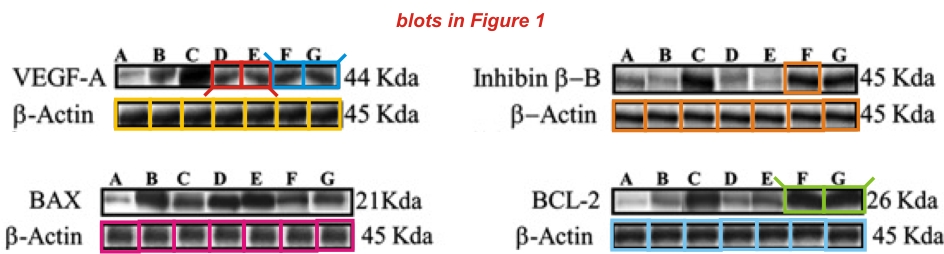
The next one is hilarious, and Minutoli is the corresponding author. The author list includes again the shady Giuseppe Morgia. I’ll show you just Figure 1, for the whole set of atrocities please refer to the PubPeer thread. These people cannot count to seventeen:
Giulio Bonvissuto, Letteria Minutoli*, Giuseppe Morgia, Alessandra Bitto, Francesca Polito, Natasha Irrera, Herbert Marini, Francesco Squadrito, Domenica Altavilla Effect of Serenoa repens, Lycopene, and Selenium on Proinflammatory Phenotype Activation: An In Vitro And In Vivo Comparison Study Urology (2011) doi: 10.1016/j.urology.2010.07.514

Figure 1C: Western blot analysis of the antiapoptotic molecule Bcl-2 (upper panel) and respective actin control (lower panel) in macrophages. Same problems as in 1B.
Look at this one, again with the shady Morgia as corresponding author:
Letteria Minutoli, Domenica Altavilla , Herbert Marini, Mariagrazia Rinaldi , Natasha Irrera , Gabriele Pizzino , Alessandra Bitto , Salvatore Arena , Sebastiano Cimino , Francesco Squadrito, Giorgio Ivan Russo, Giuseppe Morgia* Inhibitors of apoptosis proteins in experimental benign prostatic hyperplasia: effects of serenoa repens, selenium and lycopene Journal of Biomedical Science (2014) doi: 10.1186/1423-0127-21-19


The next one consists of one figure only and includes just two authors. The paper was likely assembled in a couple of hours by two grand men of Sicilian science. The protein bands are randomly taken from their archive, then glued with Photoshop, and voilà:
Francesco Squadrito, Giuseppe Morgia* The Association of Serenoa Repens, Lycopene and Selenium is Superior to Serenoa Repens Alone in Reducing Benign Prostatic Hyperplasia Urologia (2011) doi: 10.5301/ru.2011.8520

And now brace yourself.
Professor Giuseppe Morgia was arrested in February 2019 for corruption, incitement to corruption, extortion and money laundering. Morgia was charged in relation to a tender dated 17 July 2018 announced by the “Vittorio Emanuele” University Hospital of Catania for the three-year supply of medical devices for urology needed by hospitals and universities in eastern Sicily. The tender was sub-divided into 209 contracts for a total of 55 Million euros. Luxury hotel stays, travels and bribes would have been given to Morgia in exchange for help to companies in getting one or more of those contracts. Morgia was put under house arrest.
Extra joke: the fraudsters used a “photomontage” of non-existent catalogue pages to sell fictional medical products.
Despite this, and despite having confessed to having received money from private companies when he was questioned, and since the trial has not yet concluded, meanwhile Morgia obtained the appointment as Chief Physician at the Hospital of Enna in February 2022.
Can you believe it, dear readers?
The “Magnifico” Rector Cuzzocrea
The rectors of Italian universities are awarded the honorary title of “Magnifico” (= Magnificent). Why this adjective is used is something that has never been well clarified in history. One hypothesis is that “magnificent” is used because it indicates a title that in the past was used for great figures of power, such as Lorenzo the Magnificent.
If it’s about power, the current Rector of UNIME Salvatore Cuzzocrea certainly deserves this title. He is full professor of pharmacology and was elected Rector in 2018. Cuzzocrea sports 15 entries on PubPeer and one expression of concern. He co-authored a staggering 880 articles in total. I haven’t scrutinized them all. Not yet.
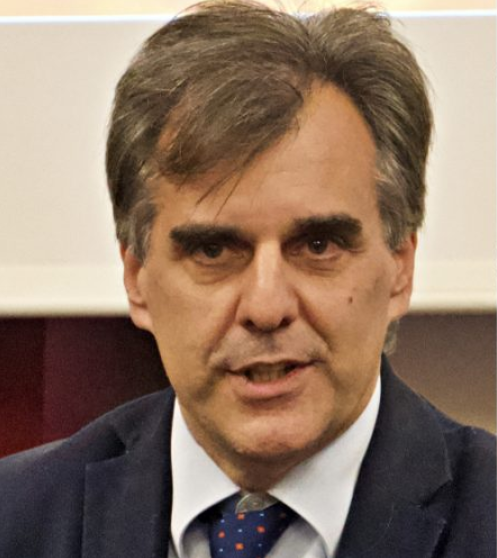
Here is a paper from 2007, with Cuzzocrea in second position, slapped with an expression of concern in January 2023. The paper was flagged by our sleuth colleague Clare Francis and is blatantly fake. The corresponding author is Giuseppe Cirino from the University of Naples “Federico II”:
F Roviezzo , S Cuzzocrea , A Di Lorenzo , V Brancaleone , E Mazzon , R Di Paola , M Bucci , G Cirino* Expression of Concern: Protective role of PI3‐kinase‐Akt‐eNOS signalling pathway in intestinal injury associated with splanchnic artery occlusion shock British Journal of Pharmacology (2007) doi: 10.1038/sj.bjp.0707233

Here are two problematic articles with Cuzzocrea as the corresponding author:
Emanuela Esposito, Irene Paterniti, Rosaria Meli, Placido Bramanti, Salvatore Cuzzocrea GW0742, a High-Affinity PPAR-δ Agonist, Mediates Protection in an Organotypic Model of Spinal Cord Damage Spine (2012) doi: 10.1097/brs.0b013e3182276d88

Emanuela Mazzon, Emanuela Esposito, Daniela Impellizzeri, Rosanna DI Paola, Alessia Melani, Placido Bramanti, Felicita Pedata, Salvatore Cuzzocrea CGS 21680, an Agonist of the Adenosine (A2A) Receptor, Reduces Progression of Murine Type II Collagen-induced Arthritis The Journal of Rheumatology (2011) doi: 10.3899/jrheum.110111


The no-profit association Trasparenza e Merito, which includes over a thousand researchers and professors from Italy, wrote an open letter to Cuzzocrea asking for explanations regarding several matters. Among other things, the association found out that:
- Cuzzocrea is accountable of blatant irregularities in the formation of the committee of many public exams for the recruitment of professors and tenured researchers at UNIME and elsewhere, and he took part as a member himself on some of the committees even when he was in conflict of interest with the winning candidate.
- As rector, in 2018 he granted a long (too long) 48-month instalment to his uncles Aldo Cuzzocrea and Dino Cuzzocrea, who had to return 462,000 euros to the University of Messina for a fraud.
- During the academic year 2014-2015, Cuzzocrea apparently obtained a degree in Medicine and Surgery from the University of Tirana, in Albania (although this degree is not mentioned in his latest curriculum). This happened while he was simultaneously pro-rector for research at UNIME and director of a department of the Messina Polyclinic Hospital, therefore while bearing enormous responsibilities in other offices. Since personal attendance (at least 67%) of training activities is required in degree courses in medicine and surgery, how did Cuzzocrea manage to get that degree in Albania?
Despite all these issues, in December 2022, Cuzzocrea was elected president of the CRUI (Conference of Italian University Rectors), which is the association of all Italian universities and an official advisor to the Italian government.
The can of worms
Salvatore Cuzzocrea’s father, Diego Cuzzocrea, was himself full professor and also the former Rector of UNIME from 1995 to 1998. During his office as rector, the gastroenterology professor Matteo Bottari was killed by the mafia. The murder remains without culprits to date, although the main suspect for being the instigator was Bottari’s colleague and associate professor Giuseppe Longo. Longo was a well-known mobster, and was found dead in his seaside mansion in 2013, he apparently committed suicide. The motive of Bottari’s murder is also uncertain, however, the judges have always suspected that Bottari was killed for conflicts in the management of contracts a the Polyclinic Hospital: pharmaceutical supplies, cleaning, financing and renovations. There were also rumours of rigged competitions, bought exams and fake degrees printed by one single printing house. The University of Messina was, in short, a good business that appealed to many, including organized crime on both sides of the Strait of Messina.

At the time, Messina was described as governed by a “lump of interests” in which politics, business and the mafia were involved. This lump had its fulcrum at the university.
A question arises: has anything changed today?
The reason for the centrality of the university is soon explained: it managed (and still does) a procurement budget of hundreds of millions of euros each year. The Bottari homicide was the beginning of what was then dubbed by the Anti-Mafia Investigation Division (DIA) as the “can of worms of Messina”, in which the city’s university was the epicenter.
Investigations were carried out in every direction. Soon the first heads rolled following the DIA’s report. Prime Minister Romano Prodi forced Undersecretary Angelo Giorgianni to resign for his relations with controversial entrepreneurs, and some magistrates were removed from their office for conflict of interests, including Antonio Zumbo, who was the brother-in-law of the brother of the Rector Diego Cuzzocrea. Years later, all these people were acquitted for the charges against them.
At the time, Rector Diego Cuzzocrea was also investigated. Despite the revelations by the DIA, Diego Cuzzocrea was again put forward as candidate for the rectorship, on May 4th 1998, he was re-elected in the first round. But on June 10th, 1998, he was forced to suspend himself: he was accused, with his brother and brother-in-law, of having simulated the theft of his car and threatening letters. After four days he was forced to resign. Years later, the charge against him was dismissed for lack of evidence.
Troubles with justice didn’t stop there for the Cuzzocrea family.
In February 2021, Diego’s brother and Salvatore’ uncle Dino Cuzzocrea was sentenced for tax evasion and money laundering by the first criminal section of the Court of Messina to two years and six months in jail.
I thank all my donors for supporting my journalism. You can be one of them!
Make a one-time donation:
I thank all my donors for supporting my journalism. You can be one of them!
Make a monthly donation:
Choose an amount
Or enter a custom amount
Your contribution is appreciated.
Your contribution is appreciated.
DonateDonate monthly
 For Better Science

RETRACTION to Campo et al. 2003 Glycoconj J, 09 November 2023:
https://link.springer.com/article/10.1007/s10719-023-10139-2
“The Editor-in-Chief has retracted this article because concerns were raised regarding a number of highly similar images presented in Fig. 2 with different brightness, stretching or rotation. The authors have shared the raw data for validation; however, further checks by the publisher found additional cases of image similarities and inconsistencies in the original images. The Editor-in-Chief therefore no longer has confidence in the presented data. Giuseppe M. Campo does not agree to this retraction. None of the other authors have responded to any correspondence from the editor or publisher about this retraction.”
LikeLike
<b>Expression of Concern</b> to <i>Campo et al. 2008 Exp Biol Med</i>, 27 November 2023:
EXPRESSION OF CONCERN: Chondroitin-4-Sulphate Reduced Oxidative Injury in Caerulein-Induced Pancreatitis in Mice: The Involvement of NF-κB Translocation and Apoptosis Activation, 2023 (sagepub.com)
Very weak decision by the EiC and SAGE Press to not issue a Full Retraction and just an Expression of Concern because underlying data cannot be verified.
The authors provided “raw data” where the Western blots are cropped exactly like in the published version, the resolution is worse, and bands have been modified to enhance differences. Here is below the comparison between the “Raw Data” and the original version after contrast enhancement (see here also PubPeer – Chondroitin-4-Sulphate Reduced Oxidative Injury in Caerulein…):
LikeLike
RETRACTION to Campo et al. 2010 Innate Immun., 29 February 2024:
PubPeer – Differential effect of molecular mass hyaluronan on lipopoly…
Retraction notice, 2024 (sagepub.com)
Sage was alerted to a discussion surrounding the article on PubPeer.
Following an internal investigation, several concerns have been raised about multiple images in the article:
The authors provided some images representing findings underlying these figure panels, and some data underlying the graphs. Sage and the Journal Editor assessed these materials and determined that they do not resolve the concerns raised.
Due to the nature of the original concern, lack of appropriate raw images or data to resolve the concerns raised, the Journal Editor believes there are outstanding questions about the validity of the findings and retracts this article.
The authors did not agree with the retraction.
LikeLike
RETRACTION to Campo et al. 2008 Innate Immun., dated 21 March 2024:
PubPeer – Purified human plasma glycosaminoglycans reduced NF-κB activ…
Retraction notice, 2024 (sagepub.com)
At the request of the journal Editor and Sage the following article has been retracted:
Sage was alerted to a discussion surrounding the article on PubPeer.
Following an internal investigation, several concerns have been raised about multiple images in the article:
The authors provided some images representing findings underlying these figure panels, and some data underlying the graphs. Sage and the Journal Editor assessed these materials and determined that they do not resolve the concerns raised.
Due to the nature of the original concern, lack of appropriate raw images or data to resolve the concerns raised, the Journal Editor believes there are outstanding questions about the validity of the findings and retracts this article.
The authors did not agree with the retraction.
LikeLike
11th RETRACTION for the Fraud Squad –> Minutoli et al 2014 J Biomed Sci, 02 August 2024:
PubPeer – Inhibitors of apoptosis proteins in experimental benign pros…
Retraction Note: Inhibitors of apoptosis proteins in experimental benign prostatic hyperplasia: effects of Serenoa repens, selenium and lycopene | Journal of Biomedical Science (springer.com)
LikeLike
Sadly, Francesco Squadrito passed away in March 2024, aged 65.
The obituary doesn’t specify the cause:
Morto il professore ed ex assessore Squadrito, la rettrice: “La Farmacologia perde uno dei suoi maestri” (messinatoday.it)
He follows his spouse Domenica Altavilla, who passed away in May 2022, aged 64.
LikeLike
Double homicide, Aneurus.
LikeLike
RETRACTION to Minutoli et al. 2008 Eur J Pharmacol., 14 December 2024:
PubPeer – Trehalose: A biophysics approach to modulate the inflammator…
Retraction notice to “Trehalose: A biophysics approach to modulate the inflammatory response during endotoxic shock” [Europ. J. Pharmacol. 589 (2008) 272–280] – ScienceDirect
This is the 12th retraction for Squadrito and his gang (who sport 8 EoC too).
LikeLike
” The corresponding author of the article was asked to provide an explanation, but a satisfactory answer was not provided. ”
Dead people are really uncommunicative
LikeLike
RETRACTION to Mannino et al. 2023 Int J Mol Sci, 20 Feb 2025:
PubPeer – Beta-Caryophyllene, a Plant-Derived CB2 Receptor Agonist, Pr…
RETRACTED: Mannino et al. Beta-Caryophyllene, a Plant-Derived CB2 Receptor Agonist, Protects SH-SY5Y Cells from Cadmium-Induced Toxicity. Int. J. Mol. Sci. 2023, 24, 15487
Thi is reraction Nr 13 for the Fraud Squad, and 8 EoC.
LikeLike